
Effective Communication Angie Guggino MS ATC LAT Learning
- Slides: 31
Effective Communication Angie Guggino, MS, ATC, LAT
Learning Targets How communication is promoted and impaired when interacting with residents/patients/clients in healthcare. The appropriate use of technology in healthcare.
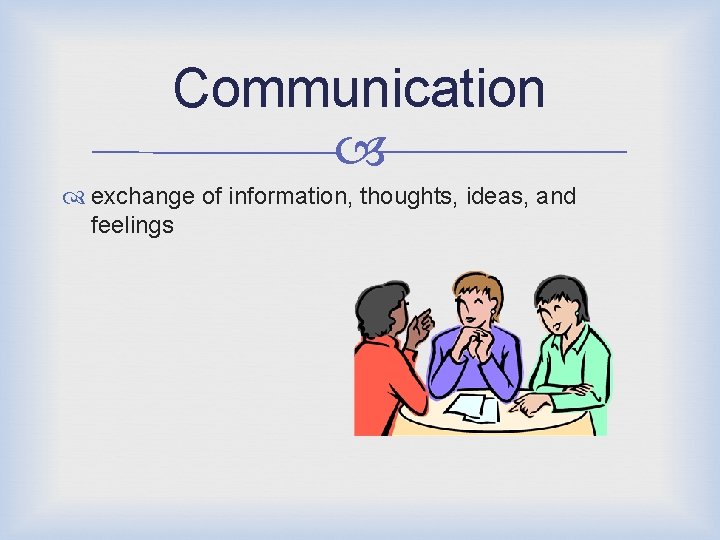
Communication exchange of information, thoughts, ideas, and feelings
The Ways We Communicate Verbal Spoken words Written communication Non-verbal Facial expressions Body language Touch
Effective Patient Communication Engagement Connection between the healthcare professional and patient Understanding Understand the healthcare professional will make patient s feel accepted Education Increase knowledge and minimize anxiety Creating a sense of partnership Working together on a treatment plan
Communication Process Sender Individual who creates a message to convey information or ideas to another person Message Information, idea or thought Receiver Individual who receives the message from the sender
Effective Communication Message must be clear Sender must deliver message in clear and concise manner Receiver must be able to hear and receive the message Receiver must be able to understand the message Interruption or distraction must be avoided
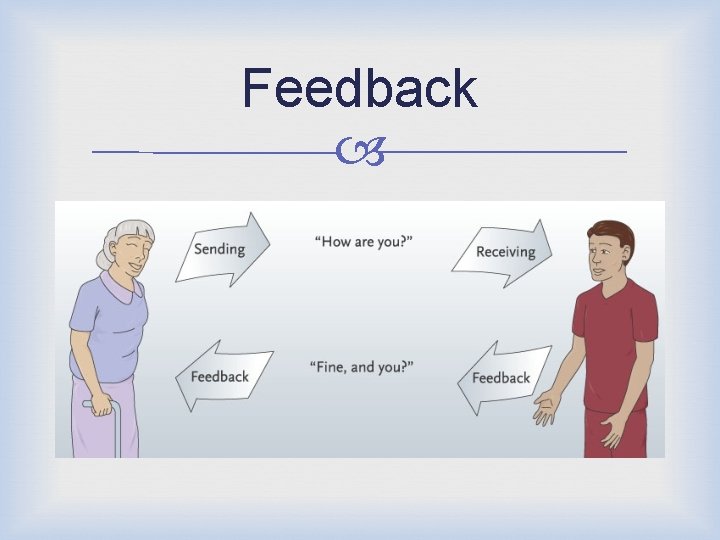
Feedback is a method that can be used to determine if communication was successful. Occurs when the receiver responds to the message Allows the original sender to evaluate how the message was interpreted and to make any necessary adjustments or clarification.
Feedback
Listening Paying attention to and making an effort to hear what the person is saying Allows you to perceive the entire message that a person is trying to convey
Good Listening Skills Show interest and concern Maintain eye contact Avoid interrupting Pay attention Avoid thinking about how to respond Eliminate your own prejudices Watch speaker to see if actions contradict what they are saying Reflect statements back to the speaker Ask for clarification if you do not understand Keep temper under control
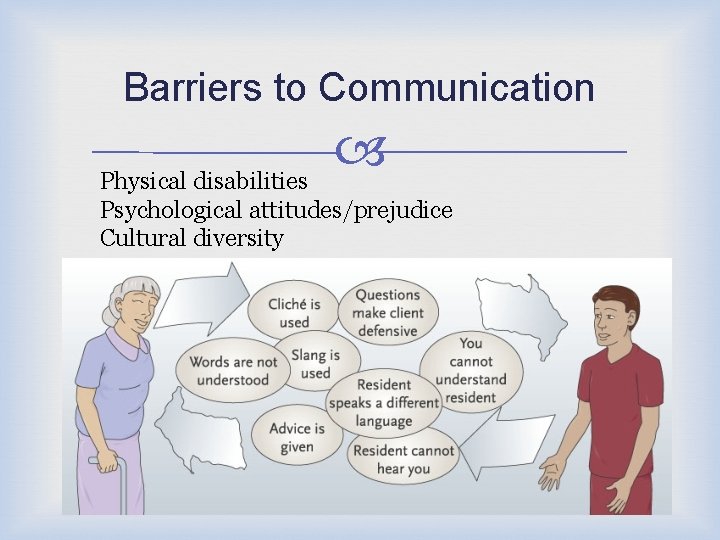
Barriers to Communication Physical disabilities Psychological attitudes/prejudice Cultural diversity
Physical Disability Deafness/hearing loss Blindness/impaired vision Aphasia/speech impairments
Psychological Caused by prejudice, attitudes, and personality Moralizing Lecturing Over-reacting Arguing Prejudging Advising
Cultural Diversity Beliefs regarding health care Language differences Eye contact Ways of dealing w/ terminal illness and/or severe disability Touch
Assertive Communication Honest and direct Allows you to express your feelings and thoughts Example: asking for what you need to complete a task Passive or aggressive types of communication do not create a partnership
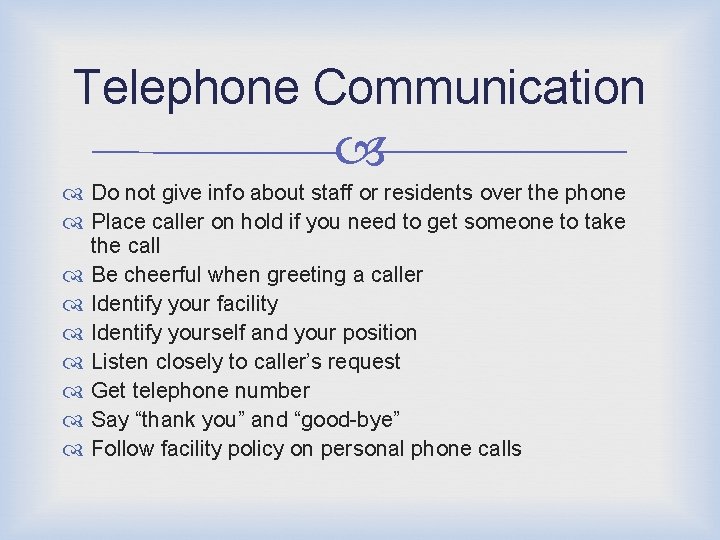
Telephone Communication Do not give info about staff or residents over the phone Place caller on hold if you need to get someone to take the call Be cheerful when greeting a caller Identify your facility Identify yourself and your position Listen closely to caller’s request Get telephone number Say “thank you” and “good-bye” Follow facility policy on personal phone calls
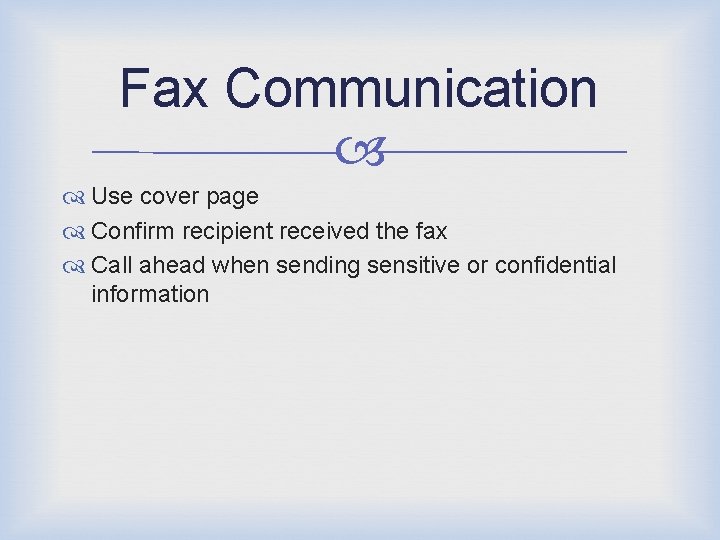
Fax Communication Use cover page Confirm recipient received the fax Call ahead when sending sensitive or confidential information
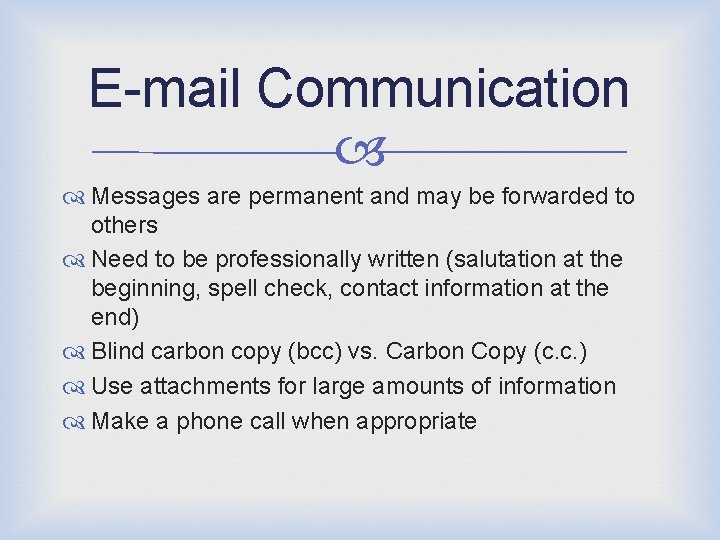
E-mail Communication Messages are permanent and may be forwarded to others Need to be professionally written (salutation at the beginning, spell check, contact information at the end) Blind carbon copy (bcc) vs. Carbon Copy (c. c. ) Use attachments for large amounts of information Make a phone call when appropriate
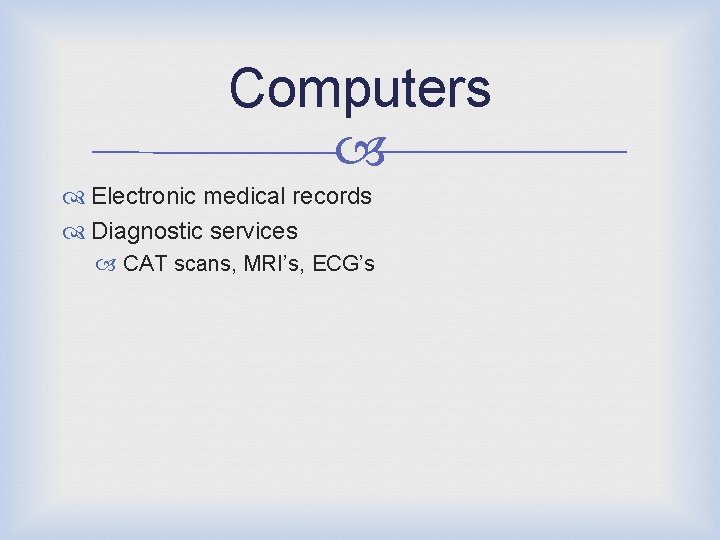
Computers Electronic medical records Diagnostic services CAT scans, MRI’s, ECG’s
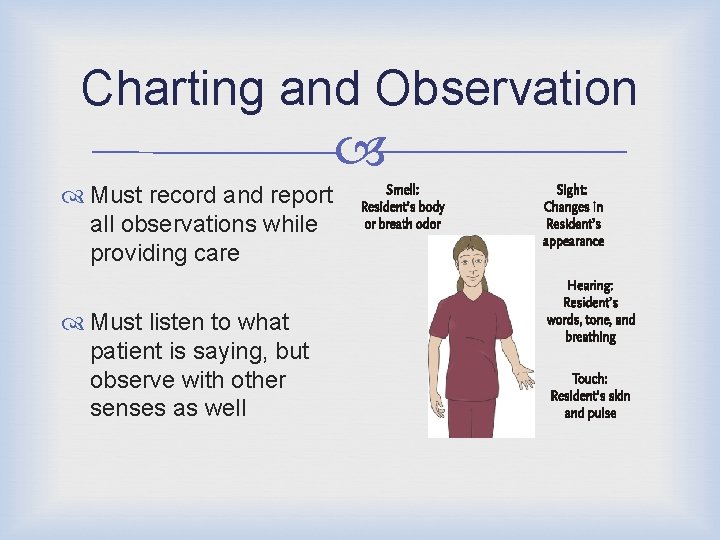
Charting and Observation Must record and report all observations while providing care Must listen to what patient is saying, but observe with other senses as well
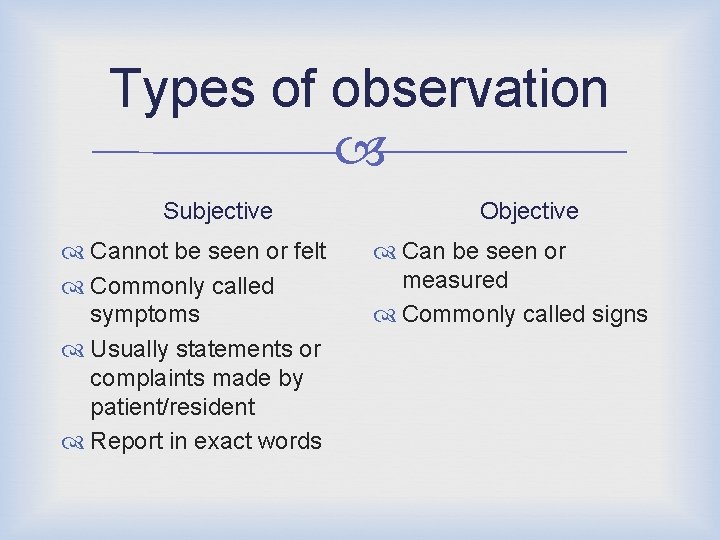
Types of observation Subjective Cannot be seen or felt Commonly called symptoms Usually statements or complaints made by patient/resident Report in exact words Objective Can be seen or measured Commonly called signs
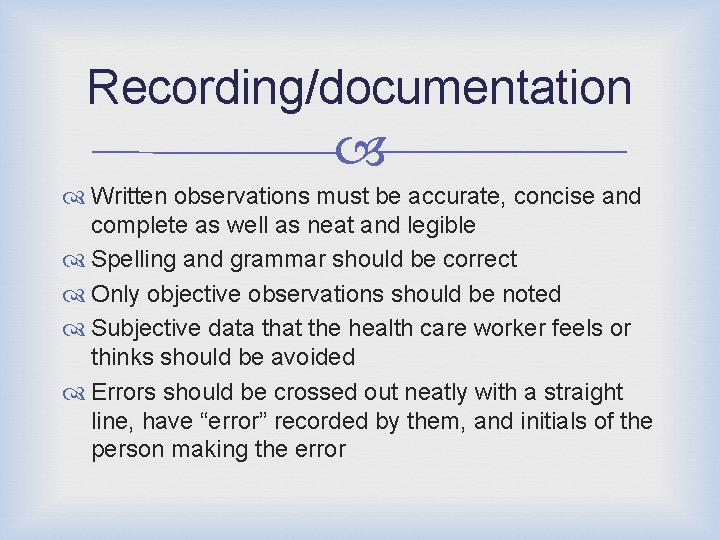
Recording/documentation Written observations must be accurate, concise and complete as well as neat and legible Spelling and grammar should be correct Only objective observations should be noted Subjective data that the health care worker feels or thinks should be avoided Errors should be crossed out neatly with a straight line, have “error” recorded by them, and initials of the person making the error
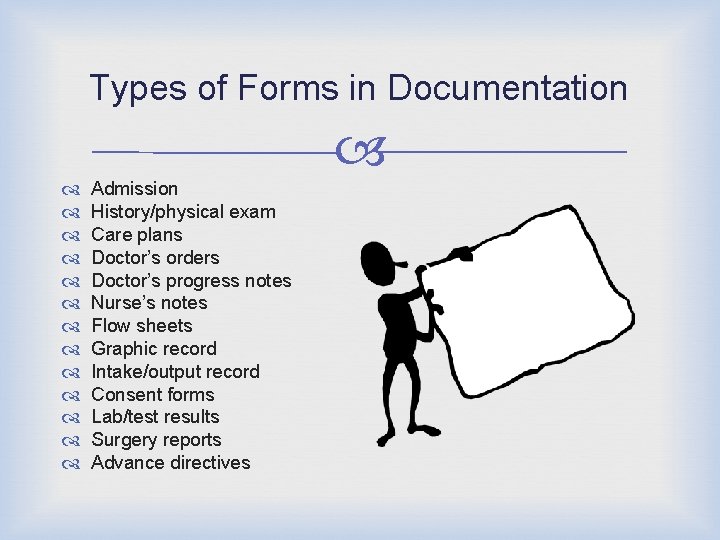
Types of Forms in Documentation Admission History/physical exam Care plans Doctor’s orders Doctor’s progress notes Nurse’s notes Flow sheets Graphic record Intake/output record Consent forms Lab/test results Surgery reports Advance directives
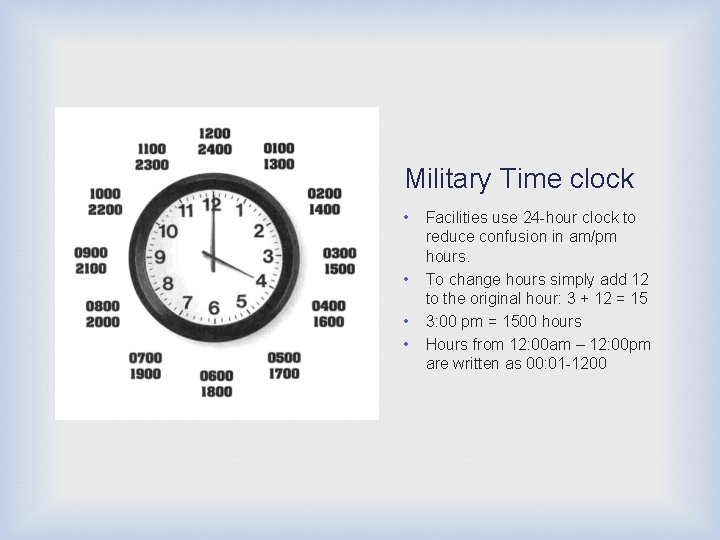
Military Time clock • • Facilities use 24 -hour clock to reduce confusion in am/pm hours. To change hours simply add 12 to the original hour: 3 + 12 = 15 3: 00 pm = 1500 hours Hours from 12: 00 am – 12: 00 pm are written as 00: 01 -1200
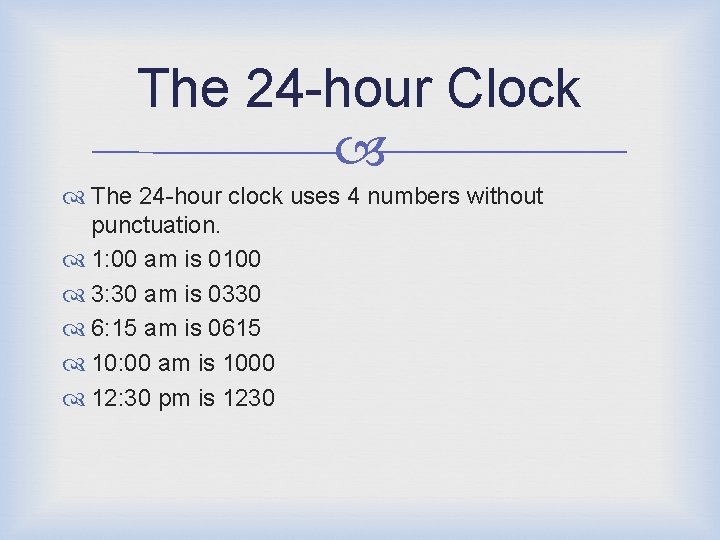
The 24 -hour Clock The 24 -hour clock uses 4 numbers without punctuation. 1: 00 am is 0100 3: 30 am is 0330 6: 15 am is 0615 10: 00 am is 1000 12: 30 pm is 1230
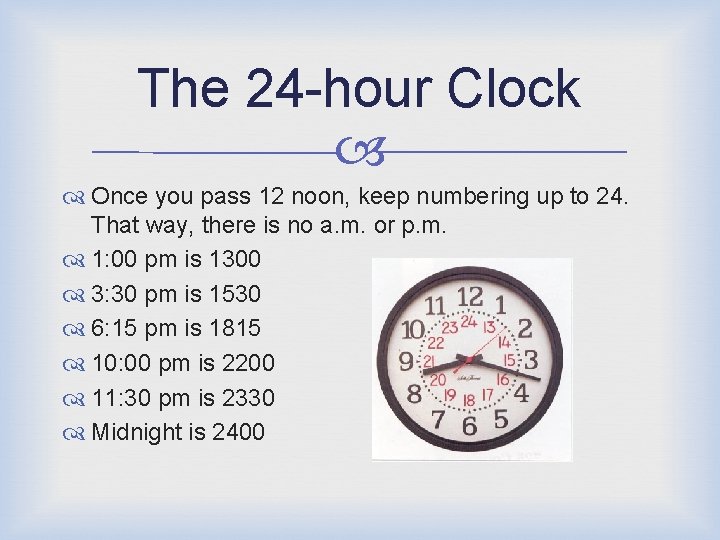
The 24 -hour Clock Once you pass 12 noon, keep numbering up to 24. That way, there is no a. m. or p. m. 1: 00 pm is 1300 3: 30 pm is 1530 6: 15 pm is 1815 10: 00 pm is 2200 11: 30 pm is 2330 Midnight is 2400
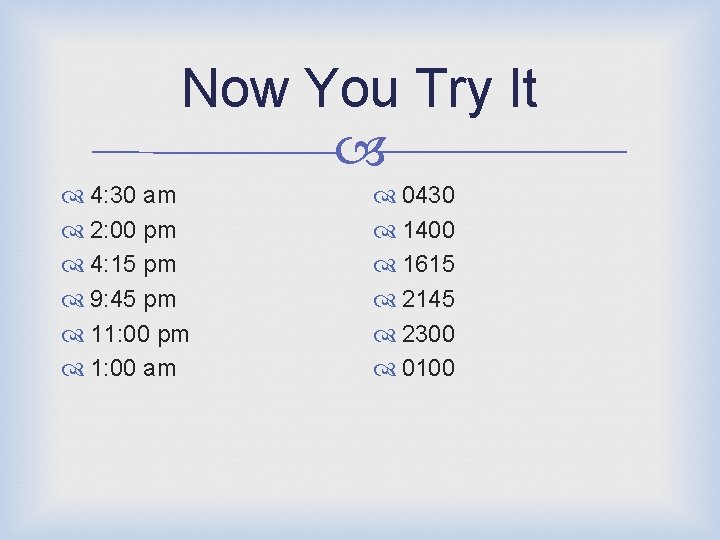
Now You Try It 4: 30 am 2: 00 pm 4: 15 pm 9: 45 pm 11: 00 pm 1: 00 am 0430 1400 1615 2145 2300 0100
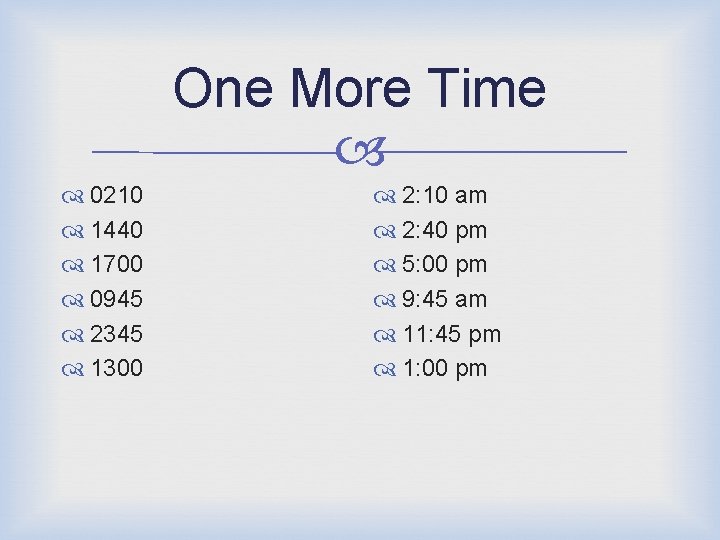
One More Time 0210 1440 1700 0945 2345 1300 2: 10 am 2: 40 pm 5: 00 pm 9: 45 am 11: 45 pm 1: 00 pm
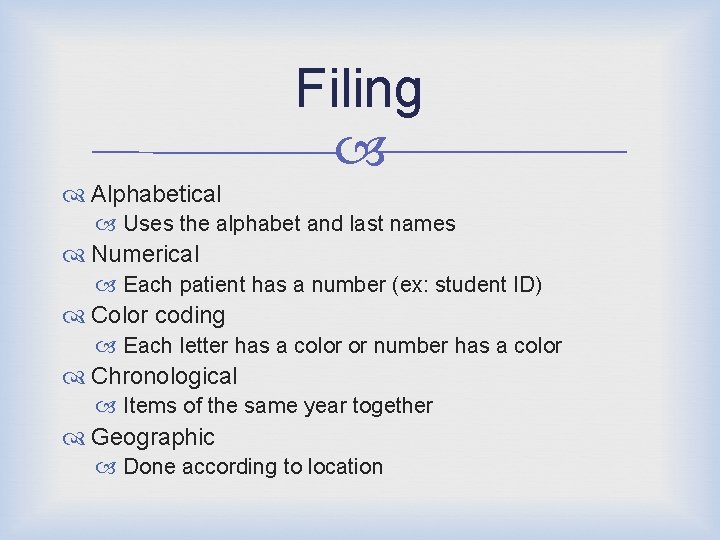
Filing Alphabetical Uses the alphabet and last names Numerical Each patient has a number (ex: student ID) Color coding Each letter has a color or number has a color Chronological Items of the same year together Geographic Done according to location
The End