
Effective Communication and Documentation Use of Language and


- Slides: 33
Effective Communication and Documentation: Use of Language and Images
Law Enforcement Responsibilities First Responders/Patrol • Maintain role as objective fact finders • Complete required forms specific to victimization (when appropriate) • Minor victims/witnesses—ask about custodial status and obtain contact information • Contact Child Protective Services/Adult Protective Services (when indicated) • Determine need for arrest • Determine need for victim services response/referral 2
Law Enforcement Responsibilities (continued) Investigators • Conduct bias-free, offender-focused investigations • Determine predominant aggressor (when appropriate) • Present case and discuss with prosecutor for charging decisions Supervisors • • Ensure communication and documentation includes needed information Ensure victim’s needs were addressed by first responders and investigators Ensure appropriate investigative actions were taken Ensure appropriate case status
Victim Services Personnel Responsibilities Victim Services Personnel • Discuss trauma and possible responses • Provide information on victimization dynamics and law enforcement reporting options • Provide information on medical forensic exams (when appropriate) • Provide information about the investigative process • Discuss Child /Adult Protective Services referrals and custody/visitation concerns • Discuss safety planning • Provide information about protective orders (when appropriate) • Provide referrals to appropriate agencies
Secondary Victimization Indirect post-crime harm that occurs through responses of individuals and institutions around the victim International Association of Chiefs of Police, Establishing or Enhancing Law Enforcement-Based Victim Services: What Are the Key Considerations? (Law Enforcement-Based Victim Services (LEV), June 2019).
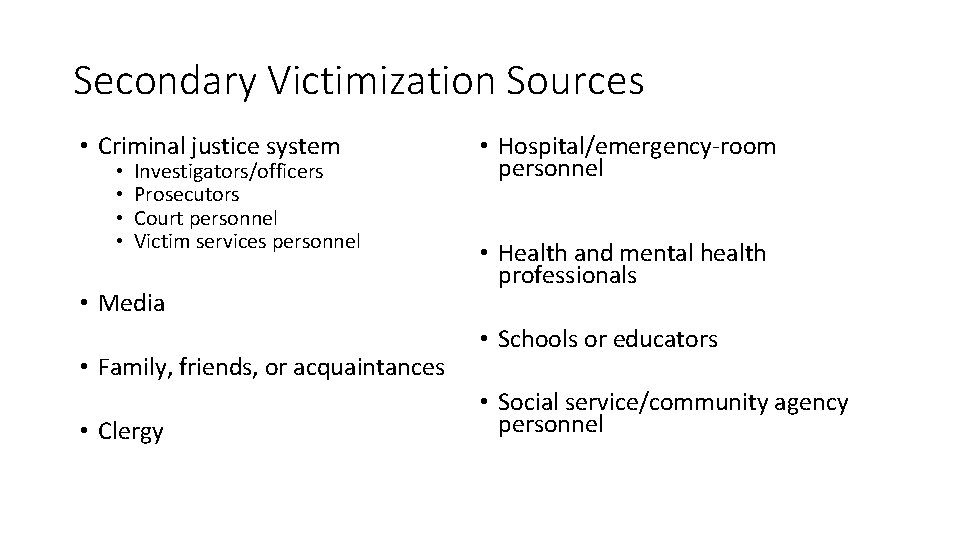
Secondary Victimization Sources • Criminal justice system • • Investigators/officers Prosecutors Court personnel Victim services personnel • Media • Family, friends, or acquaintances • Clergy • Hospital/emergency-room personnel • Health and mental health professionals • Schools or educators • Social service/community agency personnel
What Can Be Done to Help? • Use a trauma-informed response • Complete thorough, accurate, victim-centered, trauma-informed documentation • Use agency and community resources 7
Trauma. Informed Response Law enforcement is most effective when trained to recognize and address psychological and emotional trauma. Viktoria Kristiansson and Charlene Whitman-Barr, “Integrating a Trauma-Informed Response in Violence Against Women and Human Trafficking Prosecutions, ” Strategies 13 , February 2015.
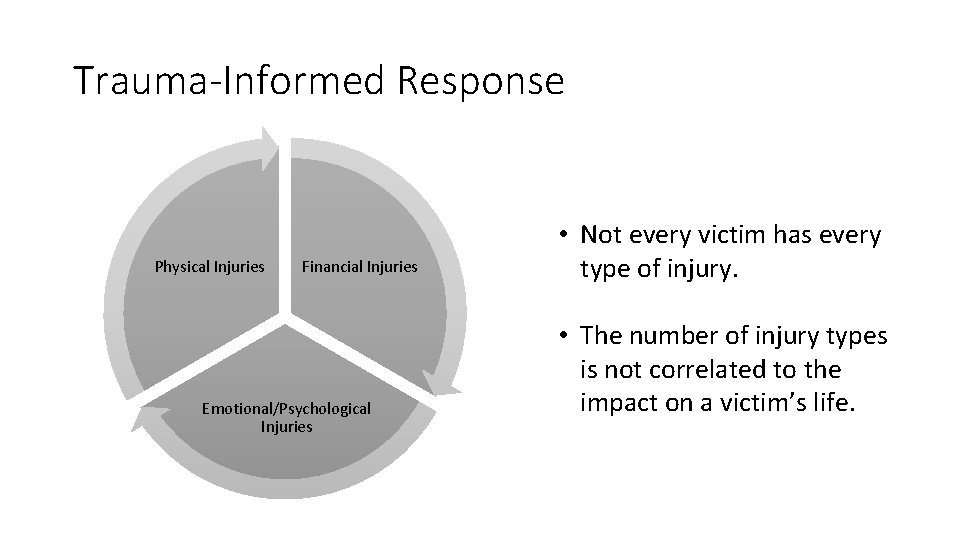
Trauma-Informed Response Physical Injuries Financial Injuries Emotional/Psychological Injuries • Not every victim has every type of injury. • The number of injury types is not correlated to the impact on a victim’s life. 9
Trauma-Informed Response (continued) • Acknowledge the trauma caused by the current victimization and its impact on the victim and her/his family • Consider that the victim may also have experienced significant past trauma (independent of or related to the current victimization) • Be mindful of the impact of past trauma on the victim’s current response • Respond in a manner that supports the victim and avoids any retraumatization 10
Why Does It Matter? Language and Documentation
Language and Documentation • Flawed documentation can inflict further harm to victims, both individually and collectively. • Trauma-informed language and documentation can decrease shame and encourage reporting and engagement. 12
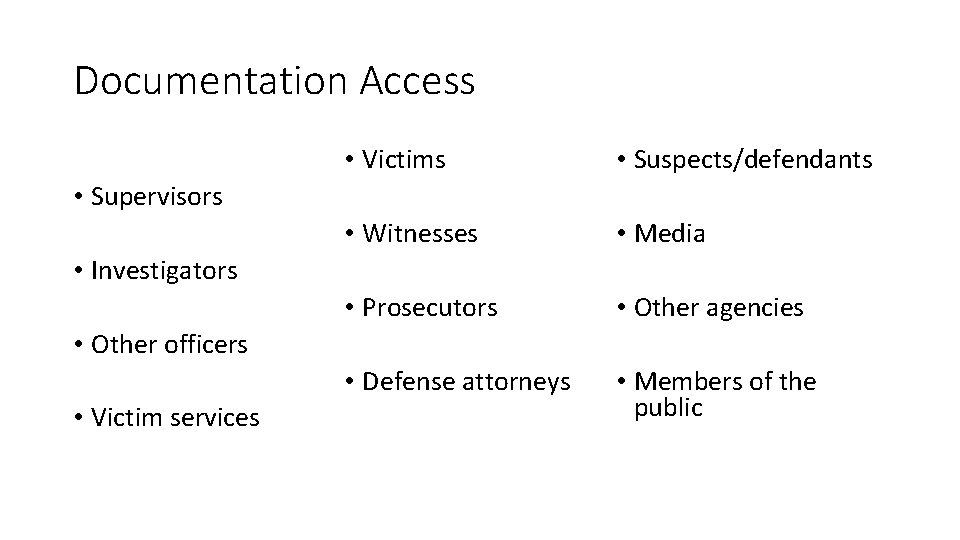
Documentation Access • Victims • Suspects/defendants • Witnesses • Media • Prosecutors • Other agencies • Defense attorneys • Members of the public • Supervisors • Investigators • Other officers • Victim services
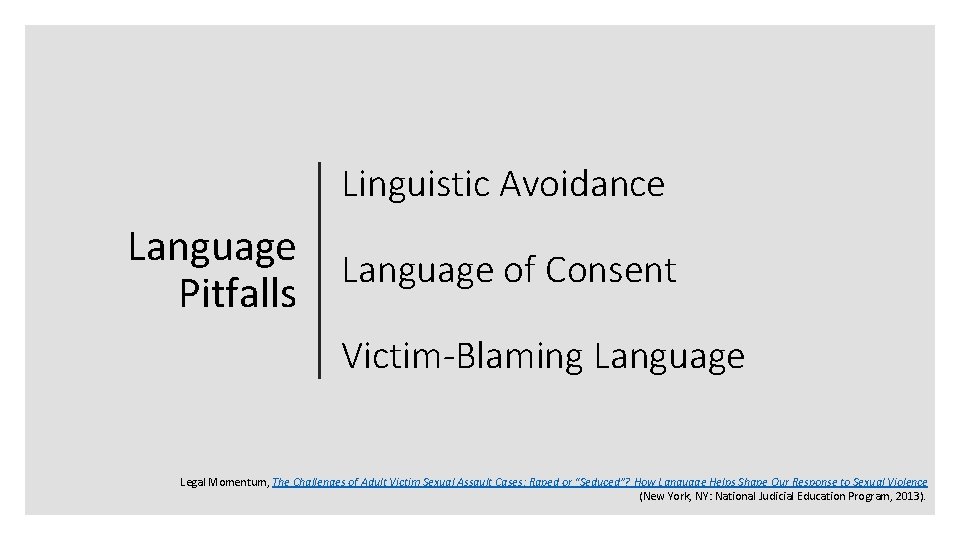
Linguistic Avoidance Language Pitfalls Language of Consent Victim-Blaming Language Legal Momentum, The Challenges of Adult Victim Sexual Assault Cases: Raped or “Seduced”? How Language Helps Shape Our Response to Sexual Violence (New York, NY: National Judicial Education Program, 2013).
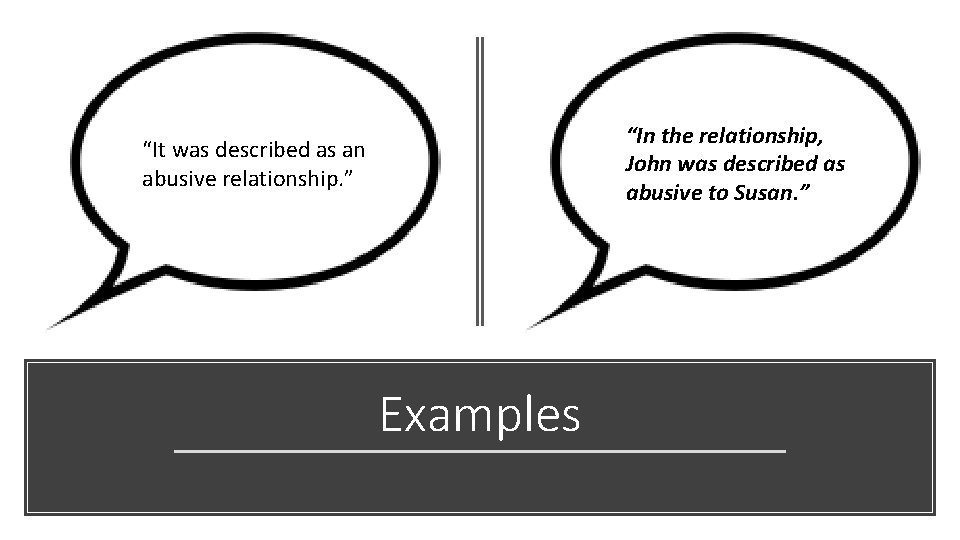
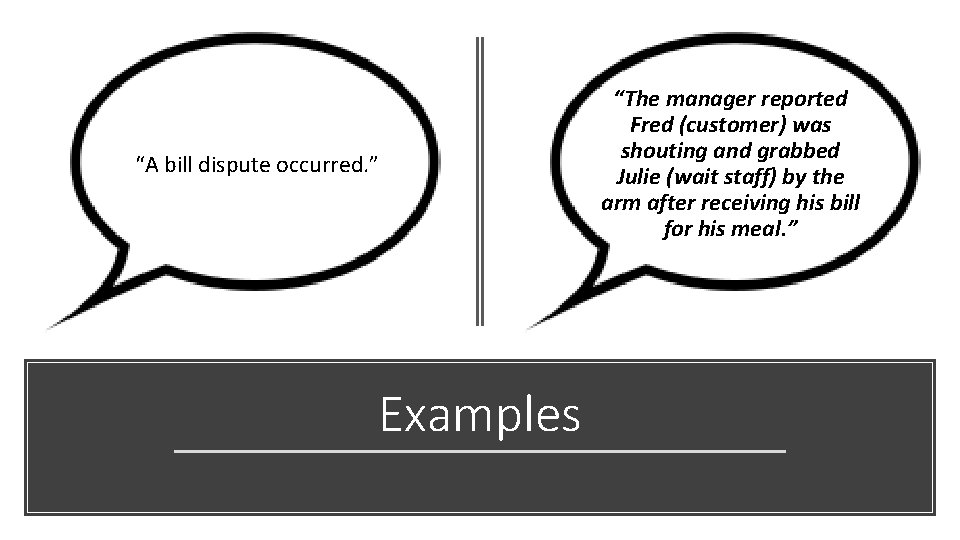
Linguistic Avoidance • Uses language to create an “invisible perpetrator” • Uses language to deflect responsibility for the violence away from the perpetrator • Diffuses responsibility by creating a situation where there is no identified perpetrator 15
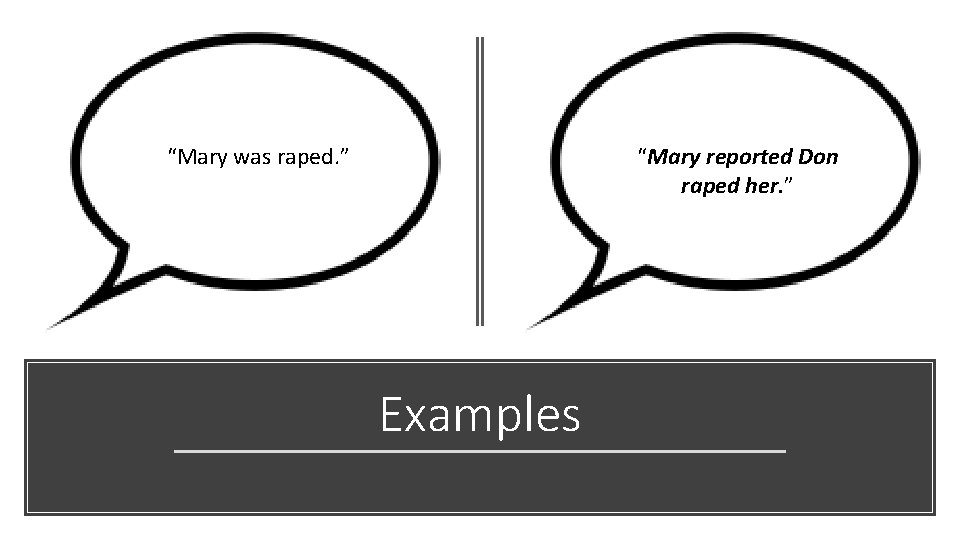
“Mary was raped. ” “Mary reported Don raped her. ” Examples
“In the relationship, John was described as abusive to Susan. ” “It was described as an abusive relationship. ” Examples
“A bill dispute occurred. ” Examples “The manager reported Fred (customer) was shouting and grabbed Julie (wait staff) by the arm after receiving his bill for his meal. ”
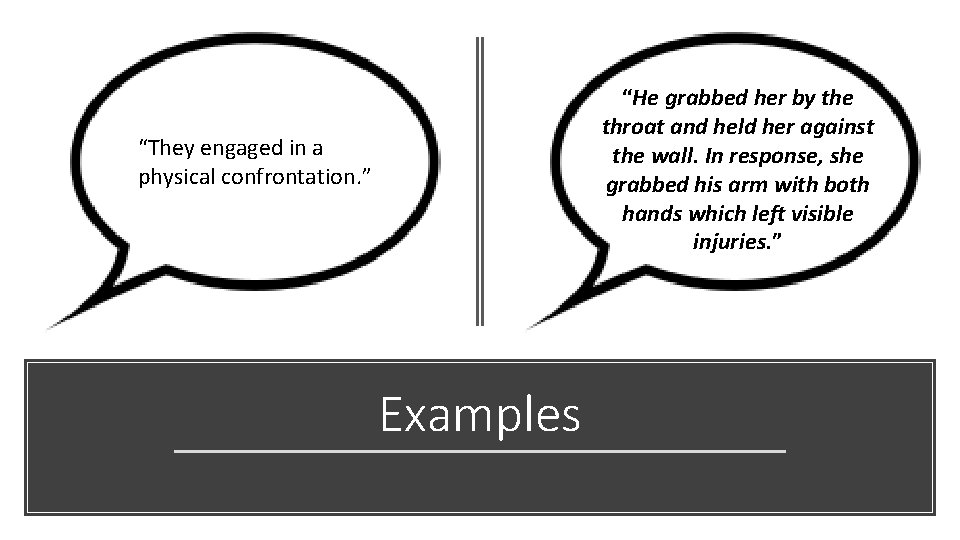
Language of Consent • Minimizes and hides the intrinsic violence of an assault • Makes it harder to visualize the acts as unwanted violations • Allows society to rationalize, justify, and excuse aggressive, violent, and criminal behavior • Misleads and misdirects 19
“He grabbed her by the throat and held her against the wall. In response, she grabbed his arm with both hands which left visible injuries. ” “They engaged in a physical confrontation. ” Examples
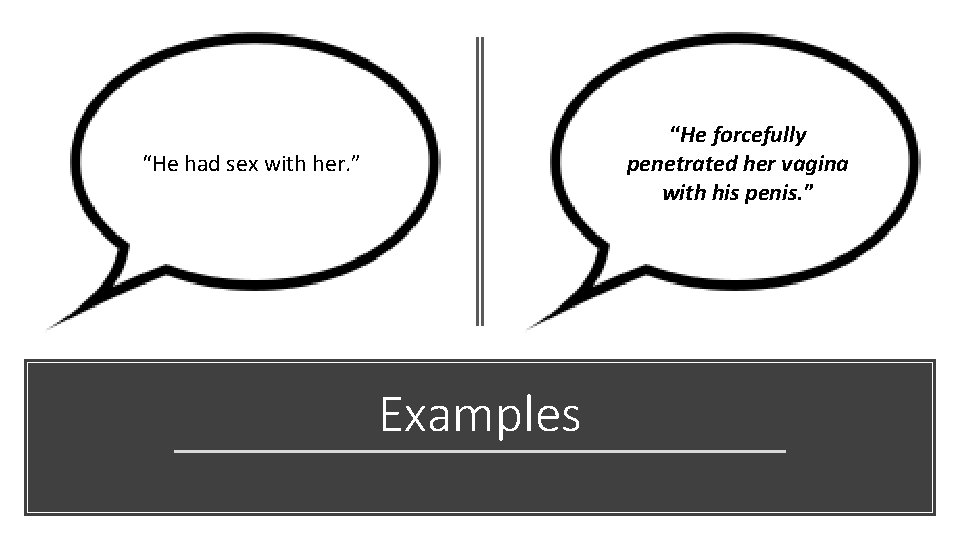
“He forcefully penetrated her vagina with his penis. ” “He had sex with her. ” Examples
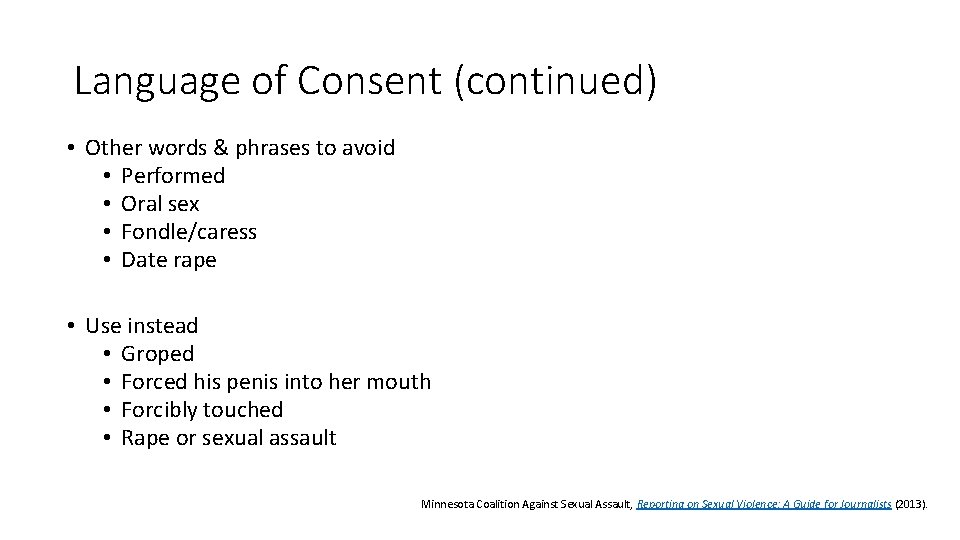
Language of Consent (continued) • Other words & phrases to avoid • Performed • Oral sex • Fondle/caress • Date rape • Use instead • Groped • Forced his penis into her mouth • Forcibly touched • Rape or sexual assault Minnesota Coalition Against Sexual Assault, Reporting on Sexual Violence: A Guide for Journalists (2013). 22
Victim-Blaming Language • Occurs when the victim of a crime or any wrongful act is held entirely or partially responsible for the transgressions committed against them • Blames/pathologizes victims by portraying them as catalysts who caused the behavior of an otherwise good person • Reformulates victims into perpetrators (responsible for acts committed against them) and perpetrators into victims (not responsible for their own actions) 23
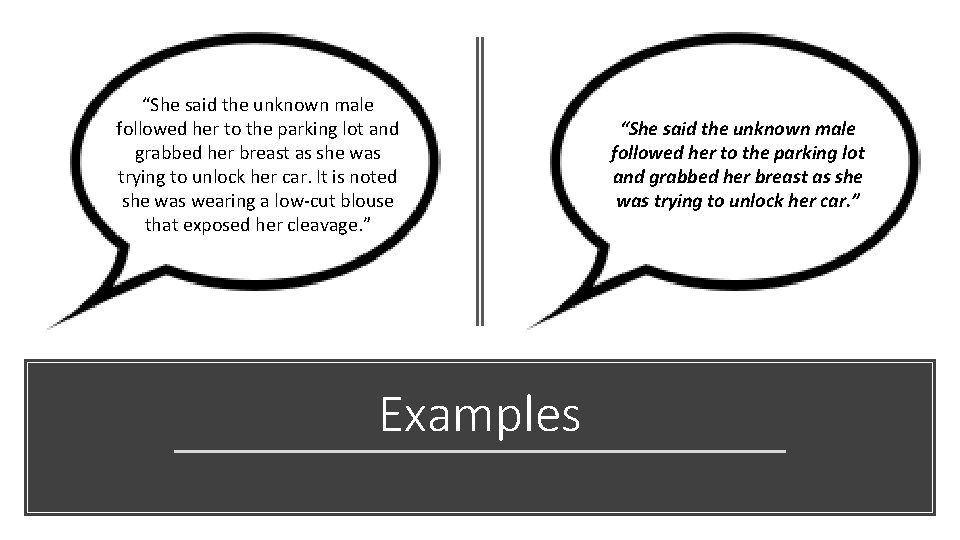
“She said the unknown male followed her to the parking lot and grabbed her breast as she was trying to unlock her car. It is noted she was wearing a low-cut blouse that exposed her cleavage. ” Examples “She said the unknown male followed her to the parking lot and grabbed her breast as she was trying to unlock her car. ”
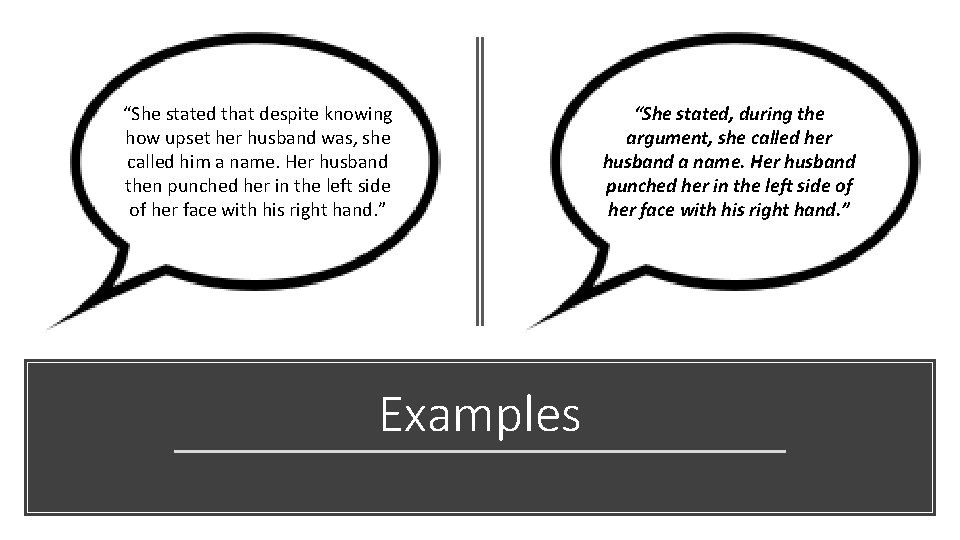
“She stated that despite knowing how upset her husband was, she called him a name. Her husband then punched her in the left side of her face with his right hand. ” Examples “She stated, during the argument, she called her husband a name. Her husband punched her in the left side of her face with his right hand. ”
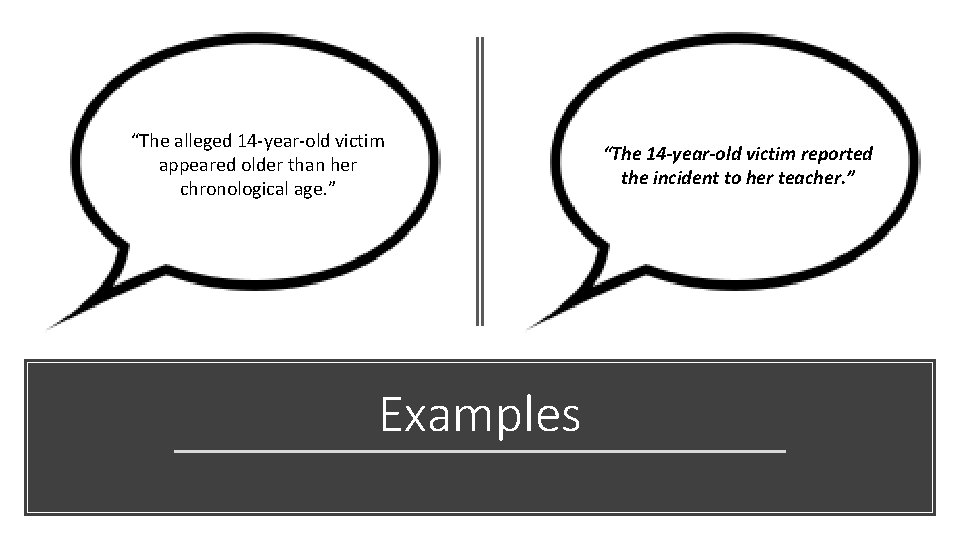
“The alleged 14 -year-old victim appeared older than her chronological age. ” Examples “The 14 -year-old victim reported the incident to her teacher. ”
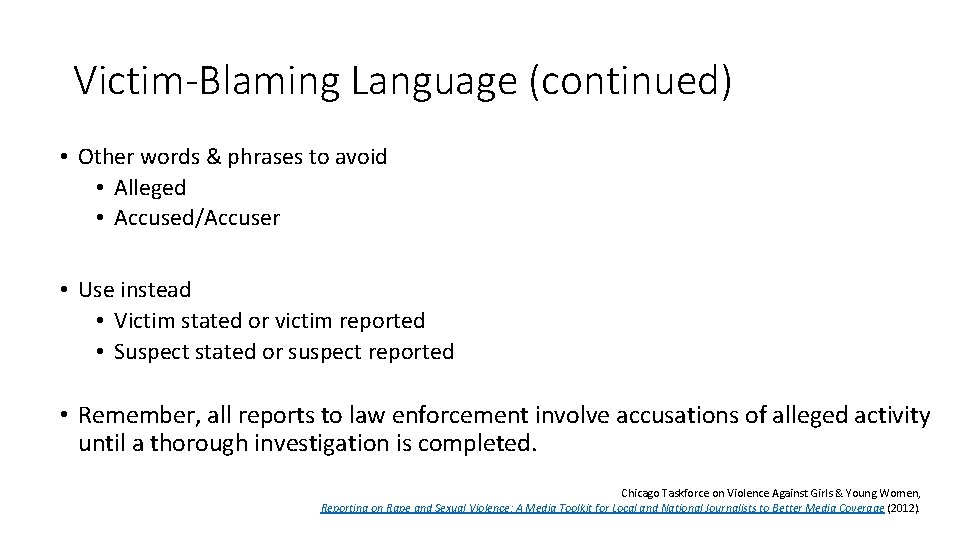
Victim-Blaming Language (continued) • Other words & phrases to avoid • Alleged • Accused/Accuser • Use instead • Victim stated or victim reported • Suspect stated or suspect reported • Remember, all reports to law enforcement involve accusations of alleged activity until a thorough investigation is completed. Chicago Taskforce on Violence Against Girls & Young Women, Reporting on Rape and Sexual Violence: A Media Toolkit for Local and National Journalists to Better Media Coverage (2012). 27
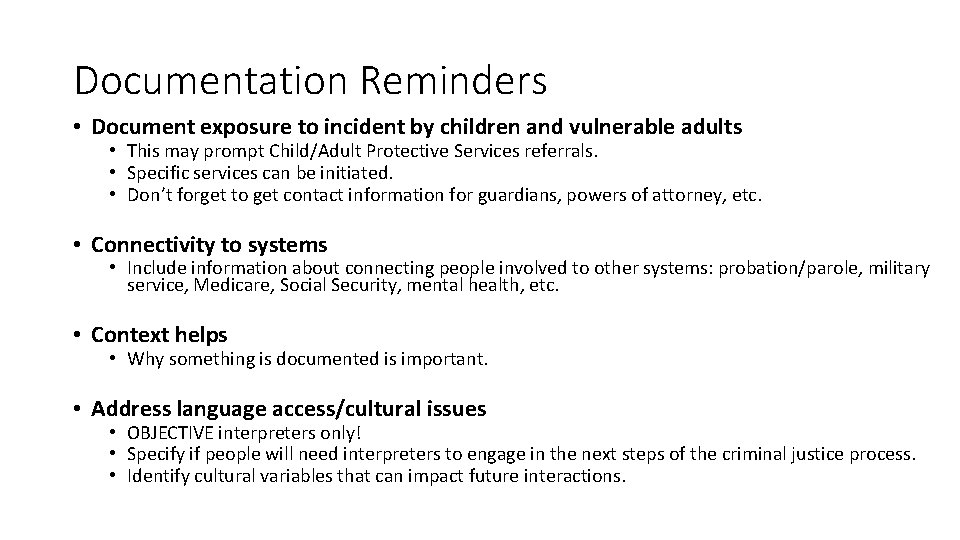
Documentation Reminders • Document exposure to incident by children and vulnerable adults • This may prompt Child/Adult Protective Services referrals. • Specific services can be initiated. • Don’t forget to get contact information for guardians, powers of attorney, etc. • Connectivity to systems • Include information about connecting people involved to other systems: probation/parole, military service, Medicare, Social Security, mental health, etc. • Context helps • Why something is documented is important. • Address language access/cultural issues • OBJECTIVE interpreters only! • Specify if people will need interpreters to engage in the next steps of the criminal justice process. • Identify cultural variables that can impact future interactions. 28
Media Relations • Take a proactive approach to media relations—don’t wait for the media to respond to your actions, tell your own story. • Media interactions are a chance to— • highlight positive actions of your agency, • educate jury pools about crime, and • send a message to victims that they matter. • Be transparent—the media has a lot of power to subtly shape the perception of crimes. • Train personnel on how to interact with the media.
The Power of Images
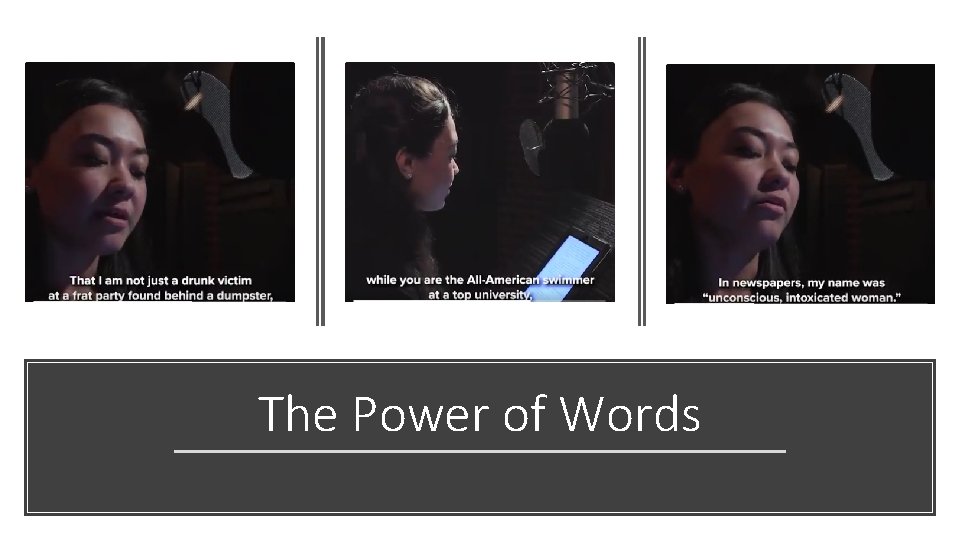
The Power of Words
What resources are available in your agency? Agency and Community Resources What resources are available in your community? Do you know how to reach them? Do you know basic information about their services?
Questions