
Effective Communication Agend a Introduction to communication What

- Slides: 27
Effective Communication
Agend a • • • • Introduction to communication……. . What is effective communication? . . . Uses of effective Communication …. 7 Cs of communication………………. . Barriers of effective communication …. . Activity …. What is listening……. . Stages of listening……. . Relationship between speaking and Listening…………. . Importance of Effective Listening…… Techniques of Effective Listening ……. Path of good of communication ……. . Conclusion ………. .
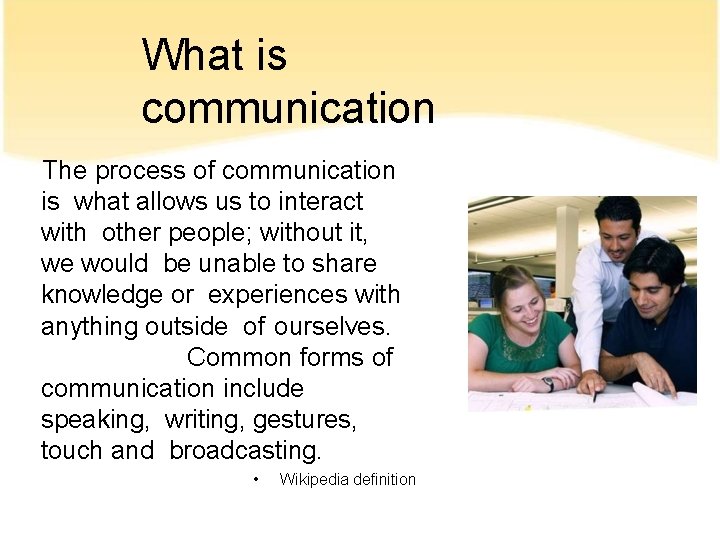
What is communication The process of communication is what allows us to interact with other people; without it, we would be unable to share knowledge or experiences with anything outside of ourselves. Common forms of communication include speaking, writing, gestures, touch and broadcasting. • Wikipedia definition
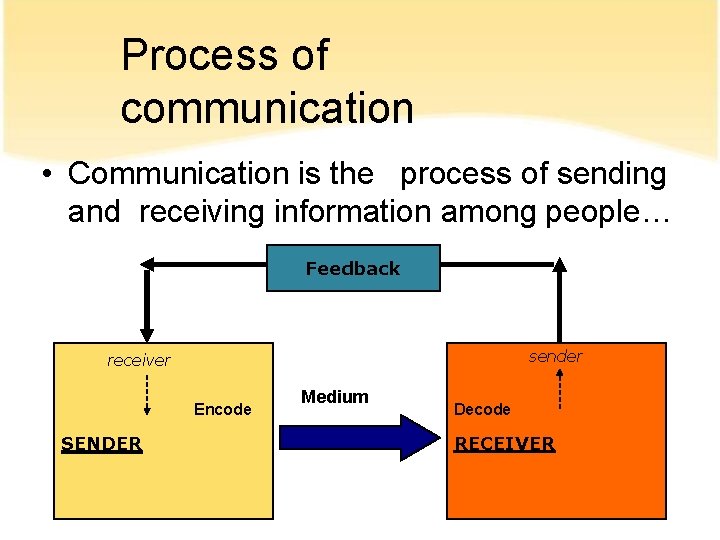
Process of communication • Communication is the process of sending and receiving information among people… Feedback sender receiver Encode SENDER Medium Decode RECEIVER
Effective communication • Meaning and Definition • Uses of Effective Communication • The 7 C‟s of Effective Communication • Facts about Effective communication
Meaning and Meaning- definition Effective Communication is a two way process – sending the right message and to the right person. It is important to know the psychology of the people you are interacting with for communication to be effective. For communication to be effective it is necessary to know the circumstances of the counter entity. Effective communication includes all the aspects of visual, auditory and kinaesthetic language to appeal the listener. Definition“Effective communication is the communication which produces intended or desired result”
Uses of effective communication • Effective communication helps to understand a person or situation in a better way. • It enables us to solve the differences, build trust and respect in the organization. • Sometimes our message is misunderstood or we misunderstand the received message, effective communication helps us to resolve problems with both‟s point of view. • Effective communication helps us to connect well with kids, spouse, boss, colleagues, etc. • It helps us in decision making.
The 7 c‟s of effective communication 1. Completeness 2. Conciseness 3. Consideration 4. Clarity 5. Concreteness 6. Courtesy 7. Correctness.
Completene ss ` • The information conveyed in the message should be complete for the communication to be effective. • The sender must take into consideration the receiver‟s mind set and convey the message accordingly. • Complete communication enhances the reputation of the organization. • Complete information always gives additional information wherever required, it leaves no question in the minds of the receiver. • Complete information helps in better decision making as it serves all the desired and crucial information. • Complete information persuades the audience.
Concisene ss • Conciseness means communicating what you want to convey in least possible words. • Conciseness is a necessity for effective communication. • Concise communication provides short and essential message in limited words. • Concise message is more appealing and comprehensive to the audience. • Concise messages are non repetitive in nature.
Consideratio n • Effective communication must take audience into consideration by knowing the viewpoints, back ground, mindset, educational level, etc. • Consideration implies „stepping into the shoes of others‟. • Consideration ensures that the self respect of the audience is maintained and their emotions are not harmed. • Consider the needs and requirements of the audience to achieve effective communication.
Clarity • Clarity implies emphasizing on a specific goal or objective at a time, rather than trying to move away from track. • Clarity helps to understand the message easily. • Complete clarity of thoughts and ideas enhances the meaning of message. • Clarity comes with the use of exact, appropriate and concrete words.
Concretene ss • Concrete communication implies being particular and clear rather being fuzzy and general. • Concrete communication shows good level of confidence. • Concrete information helps to strengthen the reputation of the organization. • Concrete information cannot be misinterpreted.
Courtes y • Courtesy means being polite, kind, judicious, enthusiastic and convincing. • Courtesy is an important element of effective communication. • Courtesy reflects the nature and character of the sender of the message. • It is the same as give respect and then expect the same. • Courtesy is not at all bias in nature.
Correctne ss • Correctness in the communication implies that the correct information is conveyed through message. • Correct communication boosts up the confidence level of the sender. • Correct information has greater impact on the audience. • Free from grammatical errors and use of appropriate and correct language. • Correct information includes the precision and accurateness of
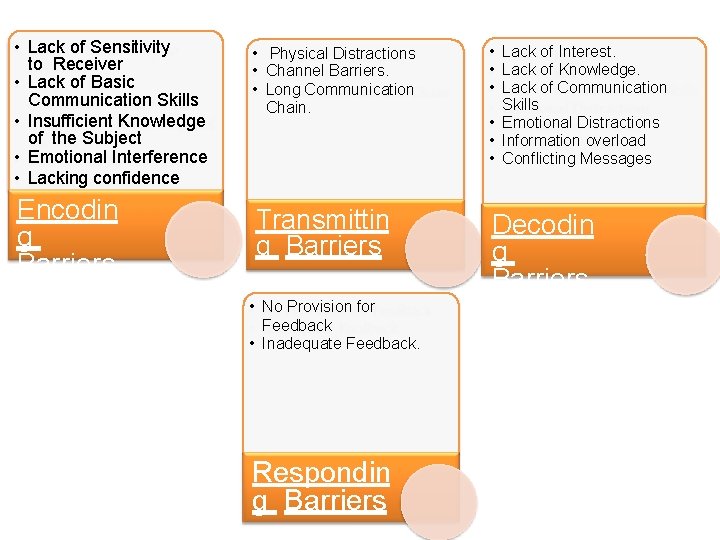
• Lack of Sensitivity to Receiver • Lack of Basic Communication Skills • Insufficient Knowledge of the Subject • Emotional Interference • Lacking confidence Encodin g Barriers • Physical Distractions • Channel Barriers. • Long Communication Chain. • Lack of Interest. • Lack of Knowledge. • Lack of Communication Skills • Emotional Distractions • Information overload • Conflicting Messages Transmittin g Barriers Decodin g Barriers. • No Provision for Feedback • Inadequate Feedback. Respondin g Barriers
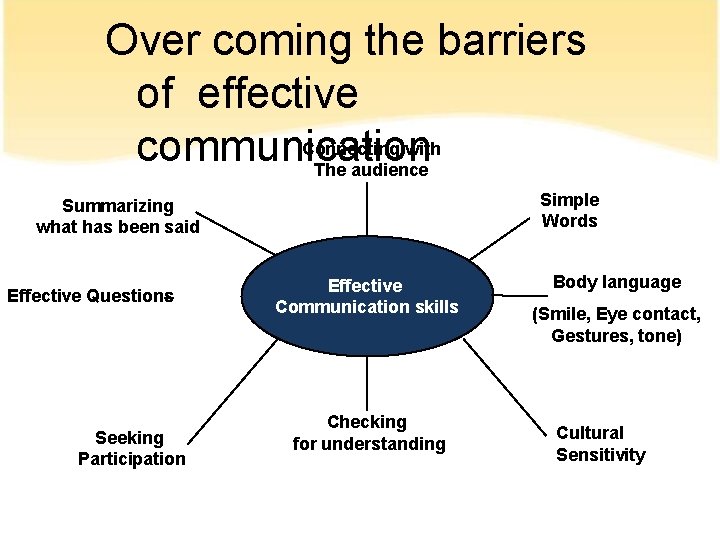
Over coming the barriers of effective Connecting with communication The audience Simple Words Summarizing what has been said Effective Questions Seeking Participation Effective Communication skills Checking for understanding Body language (Smile, Eye contact, Gestures, tone) Cultural Sensitivity
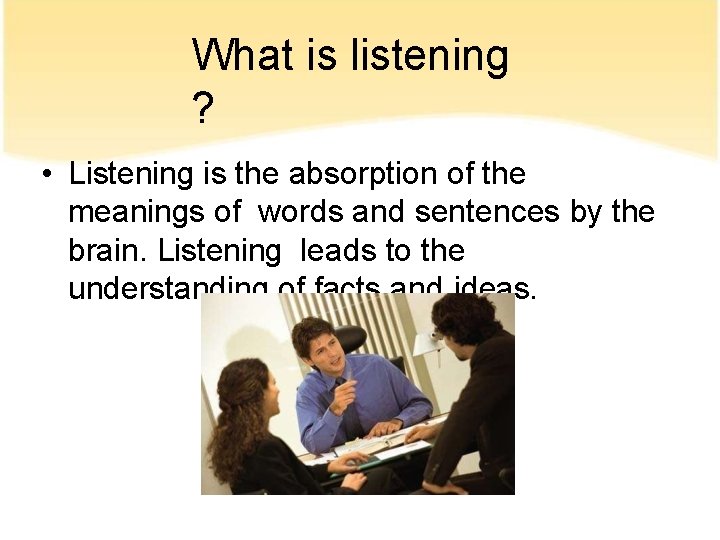
What is listening ? • Listening is the absorption of the meanings of words and sentences by the brain. Listening leads to the understanding of facts and ideas.
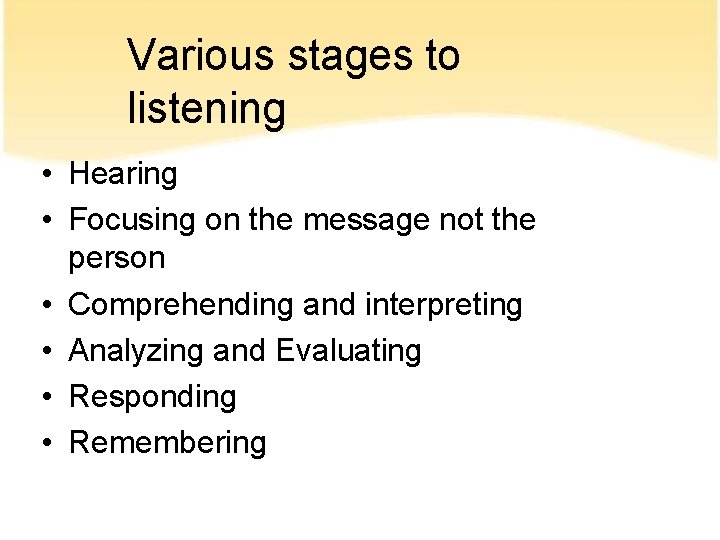
Various stages to listening • Hearing • Focusing on the message not the person • Comprehending and interpreting • Analyzing and Evaluating • Responding • Remembering
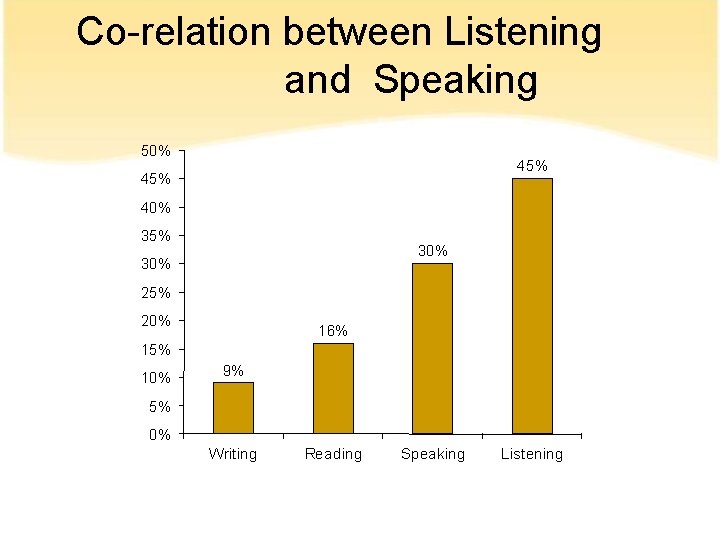
Co-relation between Listening and Speaking 50% 45% 40% 35% 30% 25% 20% 16% 15% 10% 9% 5% 0% Writing Reading Speaking Listening
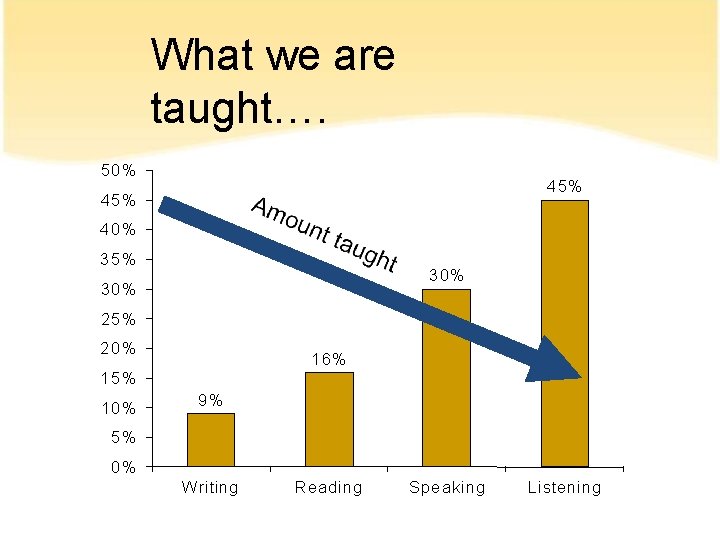
What we are taught…. 50% 45% 40% 35% 30% 25% 20% 16% 15% 10% 9% 5% 0% W riting Reading Speaking Listening
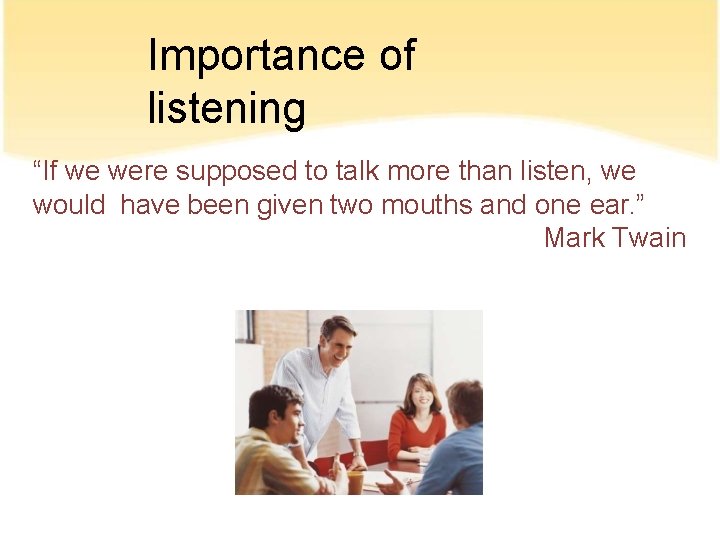
Importance of listening “If we were supposed to talk more than listen, we would have been given two mouths and one ear. ” Mark Twain
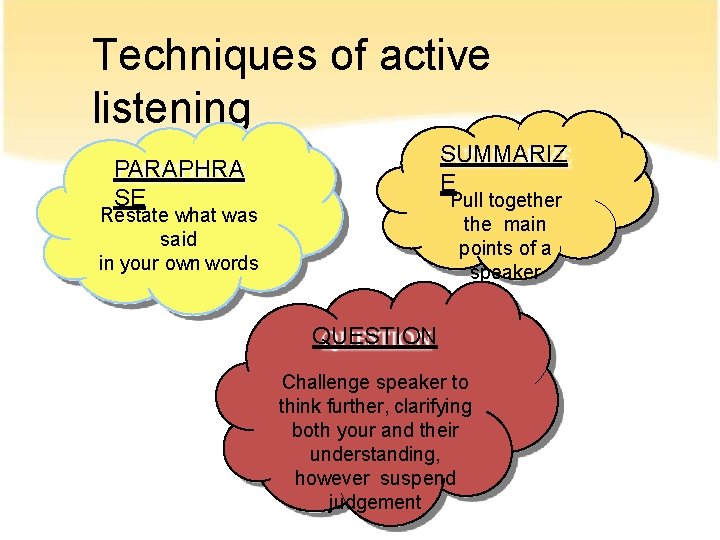
Techniques of active listening SUMMARIZ E PARAPHRA SE Pull together the main points of a speaker Restate what was said in your own words QUESTION Challenge speaker to think further, clarifying both your and their understanding, however suspend judgement
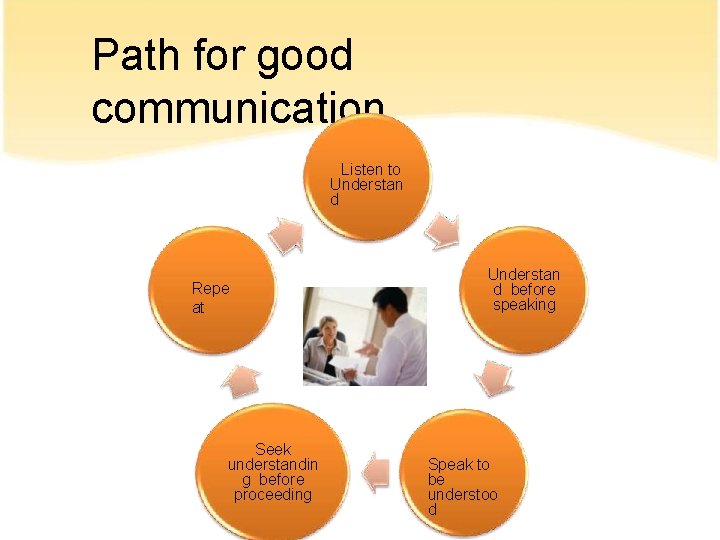
Path for good communication Listen to Understan d Repe at Seek understandin g before proceeding Understan d before speaking Speak to be understoo d
Conclusio n A man is seldom better than his conversation - German Proverb