
Effective Command The Thinking Commander By Dr Katherine
Effective Command ‘The Thinking Commander’ By Dr Katherine Lamb
Incident Command is easy?
Questions? § What makes an Effective Incident Commander? § What is the best way to develop & practice command skills? § When should that development start? § How should competence be assessed or measured?
Professional Judgement Risk Based Approach Operational Discretion Inter & Intra Operability Organisational Assurance Public Expectations Assertive, Effective & Safe Commanders Operational Accountability
Effective Command? An Effective Commander can be defined as: The Right person & With the Right technical proficiencies & knowledge & Making the Right Decisions at the Right time
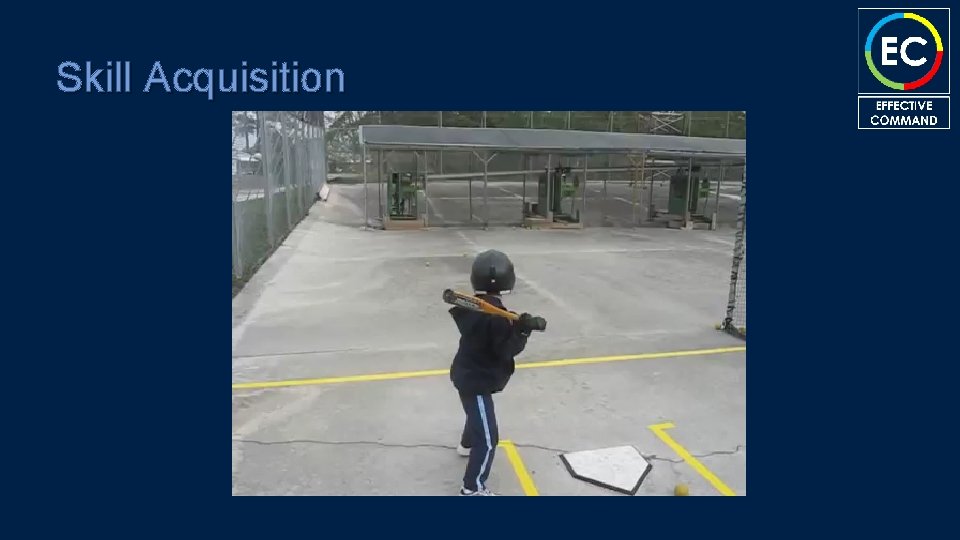
Skill Acquisition
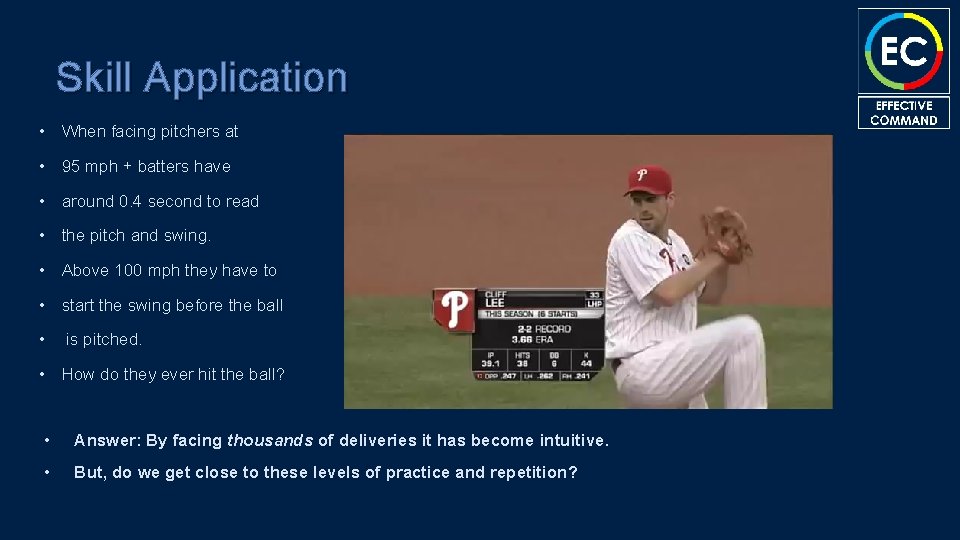
Skill Application • When facing pitchers at • 95 mph + batters have • around 0. 4 second to read • the pitch and swing. • Above 100 mph they have to • start the swing before the ball • is pitched. • How do they ever hit the ball? • Answer: By facing thousands of deliveries it has become intuitive. • But, do we get close to these levels of practice and repetition?
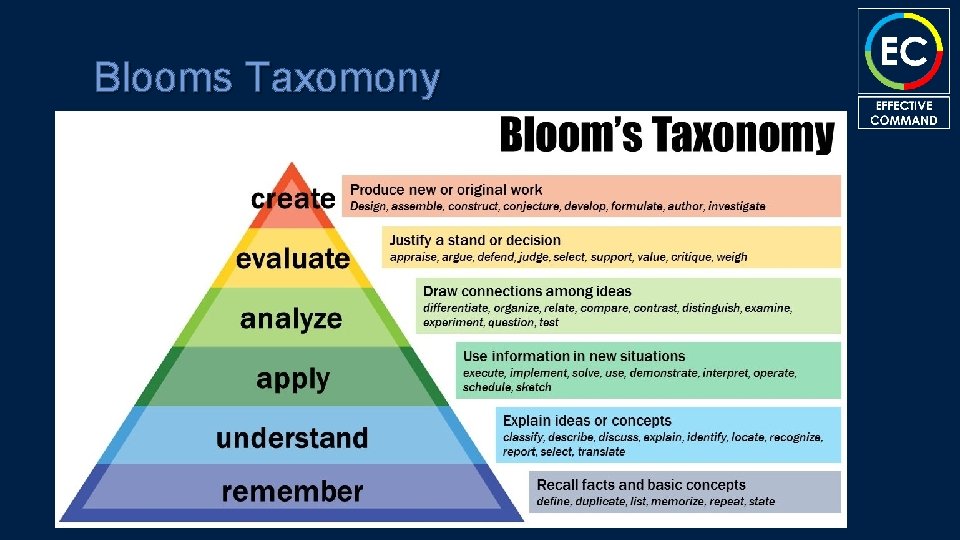
Blooms Taxomony
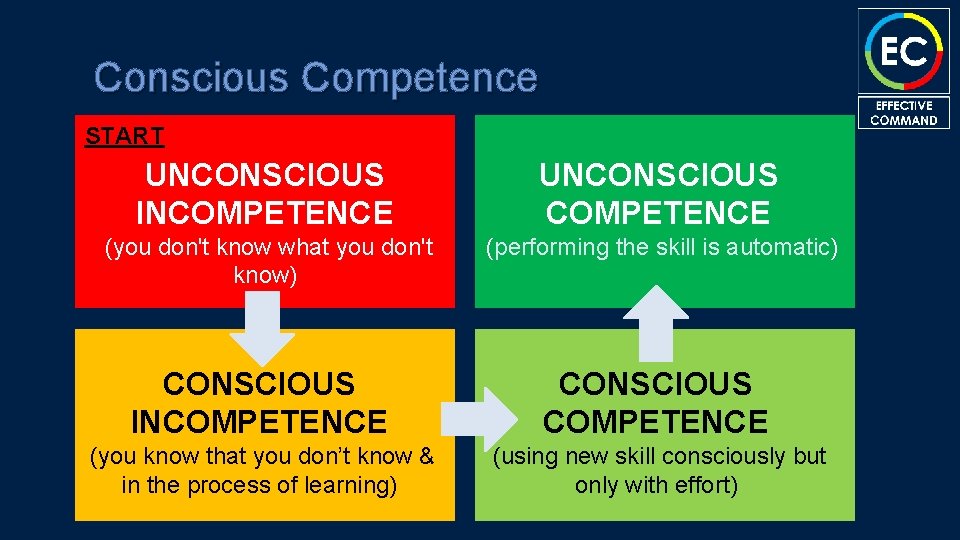
Conscious Competence START UNCONSCIOUS INCOMPETENCE UNCONSCIOUS COMPETENCE (you don't know what you don't know) (performing the skill is automatic) CONSCIOUS INCOMPETENCE CONSCIOUS COMPETENCE (you know that you don’t know & in the process of learning) (using new skill consciously but only with effort)
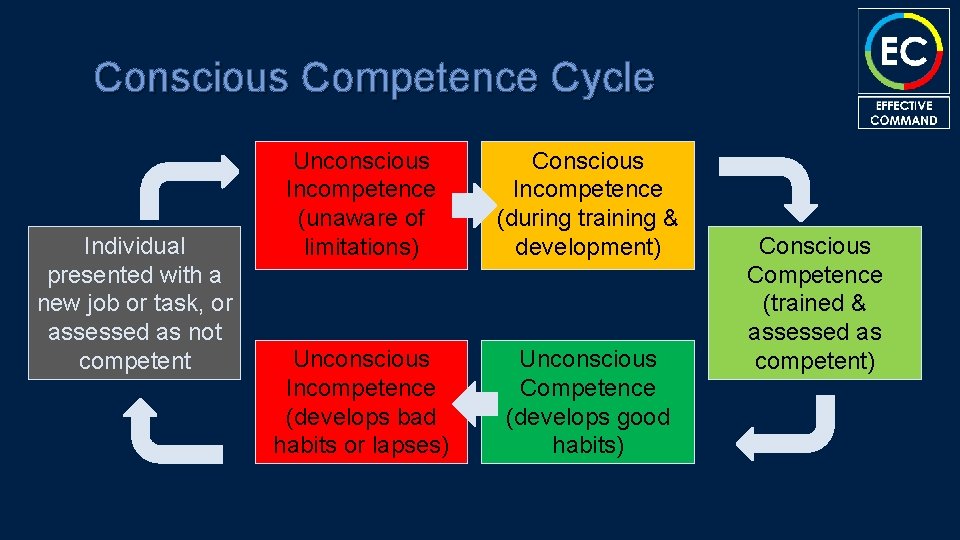
Conscious Competence Cycle Individual presented with a new job or task, or assessed as not competent Unconscious Incompetence (unaware of limitations) Conscious Incompetence (during training & development) Unconscious Incompetence (develops bad habits or lapses) Unconscious Competence (develops good habits) Conscious Competence (trained & assessed as competent)
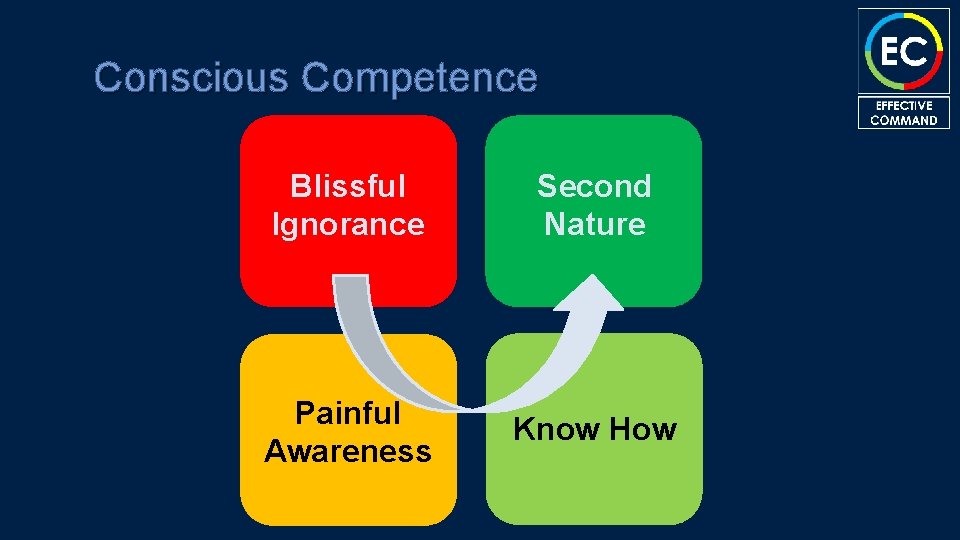
Conscious Competence Blissful Ignorance Second Nature Painful Awareness Know How
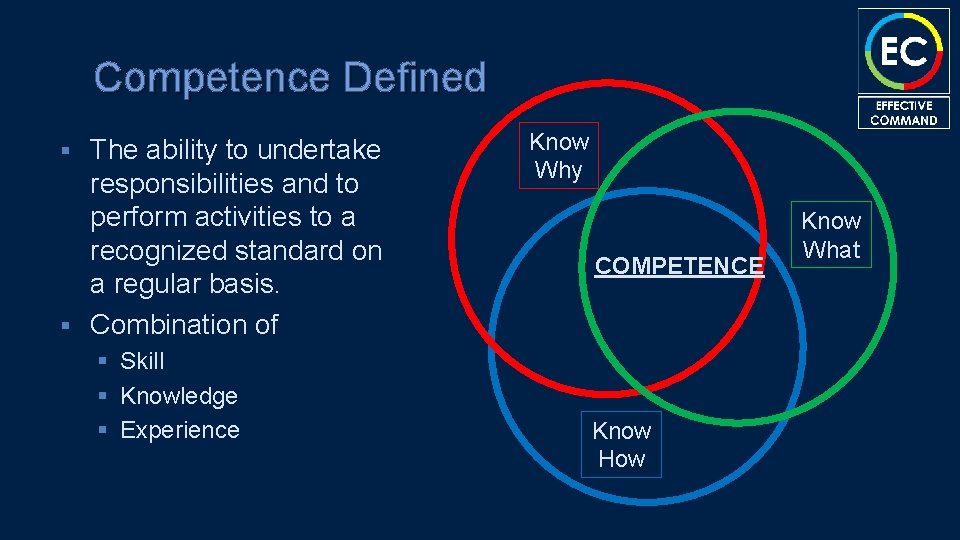
Competence Defined The ability to undertake responsibilities and to perform activities to a recognized standard on a regular basis. § Combination of § § Skill § Knowledge § Experience Know Why COMPETENCE Know How Know What
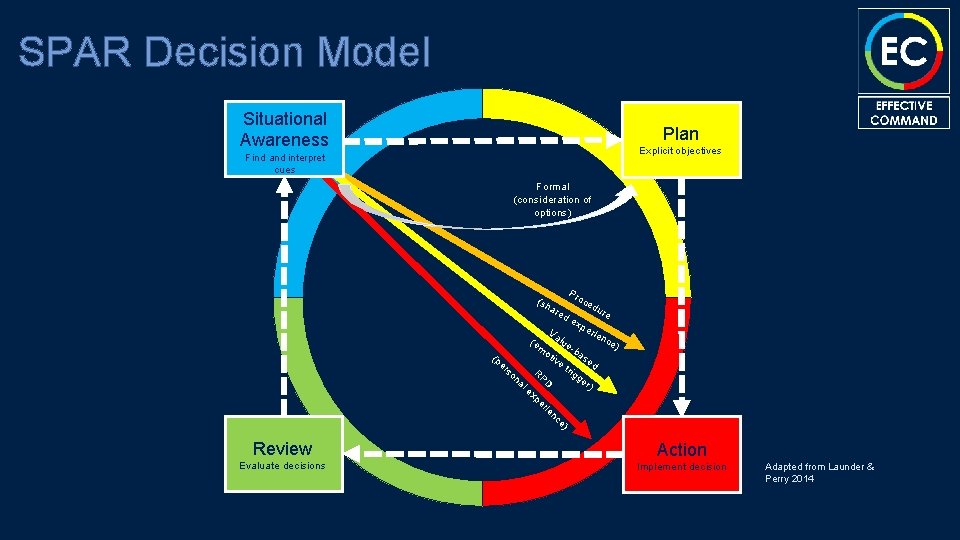
SPAR Decision Model Situational Awareness Plan Explicit objectives Find and interpret cues Formal (consideration of options) (sh Pr oc ed are ure de xp eri Va en l ce u (e e) m ba o tiv (p s e e er d tri so R g P g na er le D ) xp er ie nc e) Review Evaluate decisions Action Implement decision Adapted from Launder & Perry 2014
How to achieve Effective Command Create thinking individuals § Develop decision making behaviours rather than focus on specific competencies § § Apply the philosophy throughout the service from operational to strategic management. § Effective and accredited training, compensates for skill fade and provides organisational assurance
Scenario building & Delivery § § § Appropriate to role Complex incidents Time critical actions required Scripted injects Reactive scenarios leading to variability Appropriate actions – appropriate outcomes
Utilising Effective Command § § § Sector Competent Facilitators and Assessors Structured debrief Decision Rationale explored Candidates self assess - metacognition Progress to an ‘All Hazards Commander’
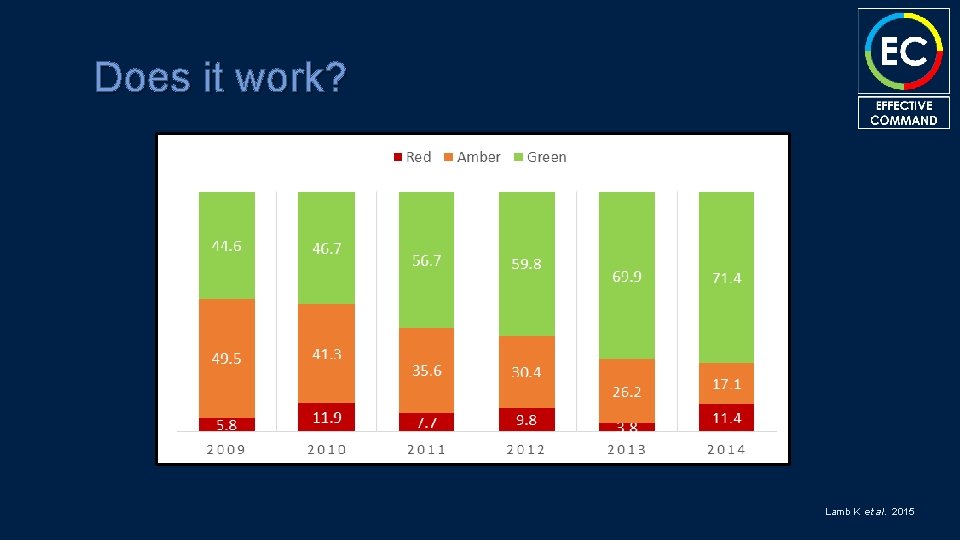
Does it work? Lamb K et al. 2015
Applications of Effective Command § § § Practical training scenarios Simulation based command training and assessment Live incident monitoring or mentoring Case studies & Post incident debriefs (PIAs) Embed decision making behaviours throughout the organisation – cohesive, progressive and dynamic workforce
Assertive, Effective & Safe Commanders § § § Confident & Self aware Well trained & competent Good situational awareness Able to lead Plan & Implement actions Sound judgement § Good decision making § Adaptable § Calm & controlled §
‘Right Person, making the Right Decisions, at the Right time for the Right reasons’

Any Questions?
- Slides: 21