
Effective Classroom Management Strategies A smooth running classroom





- Slides: 58
Effective Classroom Management Strategies A smooth running classroom is the result of implementing appropriate rules and procedures so that students know what is expected. Either you set the standards, or your students will.
Successful professionals are: efficient effective
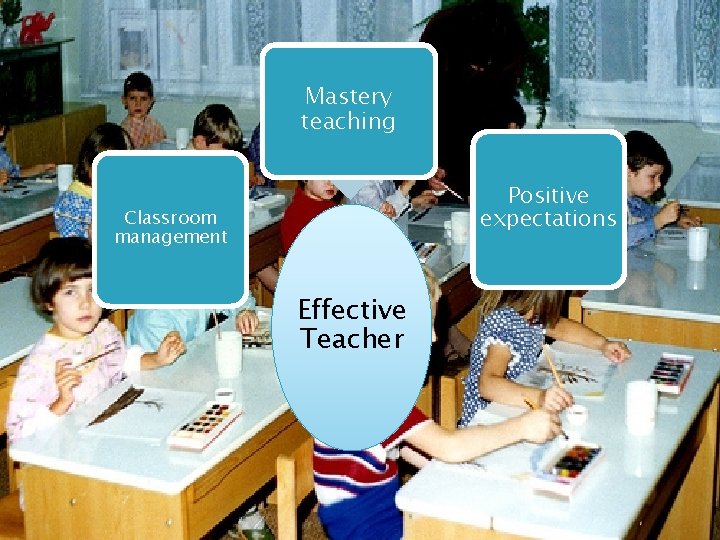
Mastery teaching Positive expectations Classroom management Effective Teacher
Well managed classroom High achievement level Positive expectations
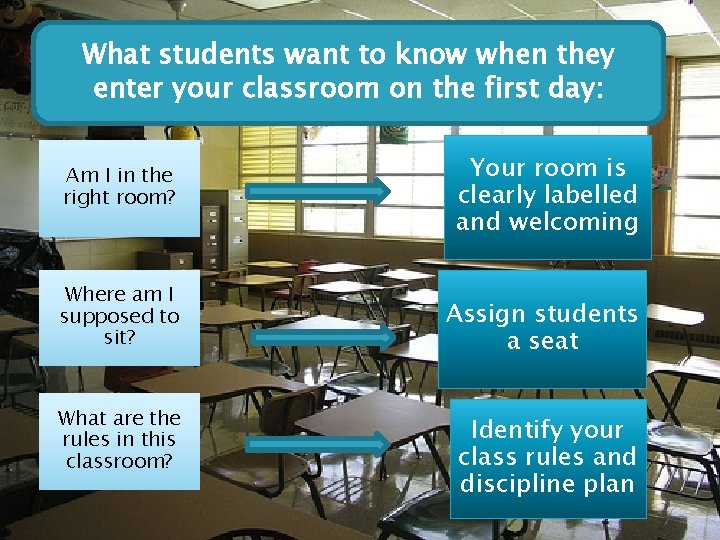
What students want to know when they enter your classroom on the first day: Am I in the right room? Where am I supposed to sit? What are the rules in this classroom? Your room is is Your clearly labelled clearly and welcoming and Assign students a seat Identify your class rules and discipline plan
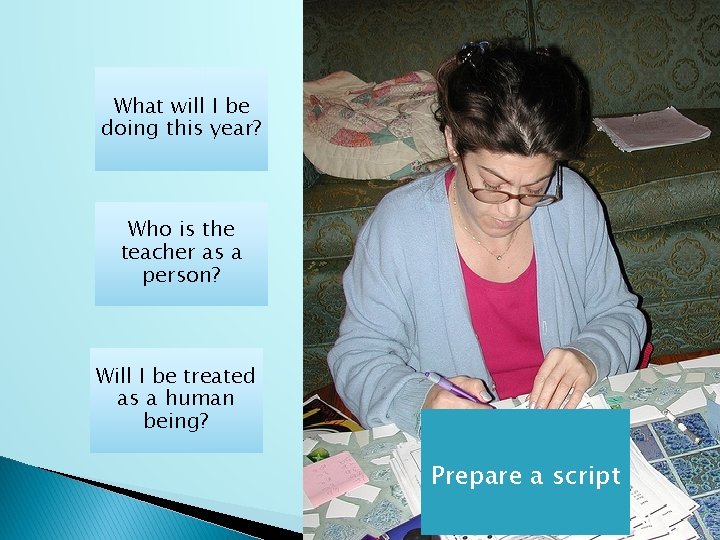
What will I be doing this year? Who is the teacher as a person? Will I be treated as a human being? Prepare a script
Why the First Day of School is so important What is done on the first day will to a large extent, determine the success of that class.
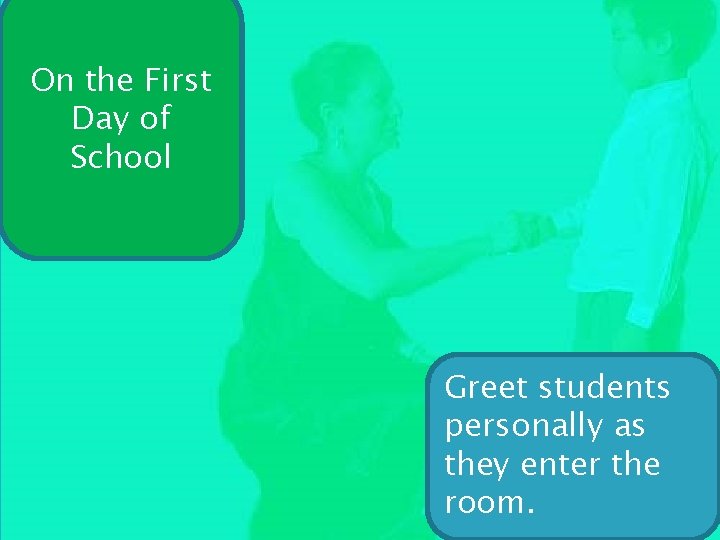
On the First Day of School Greet students personally as they enter the room.
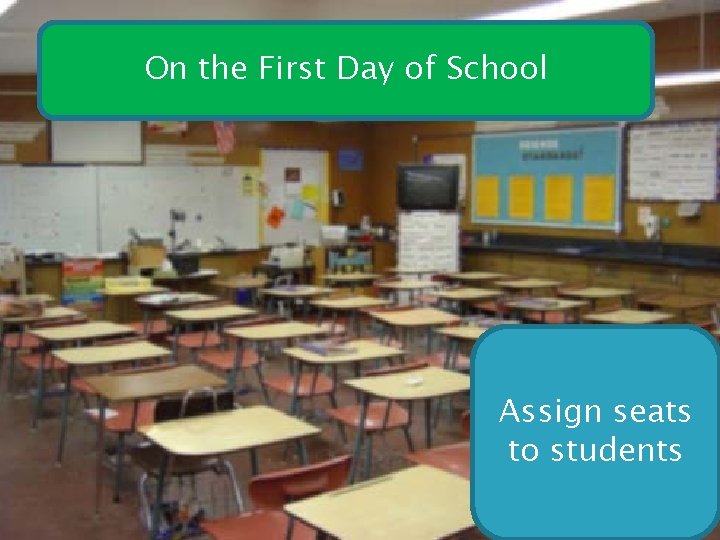
On the First Day of School Assign seats to students
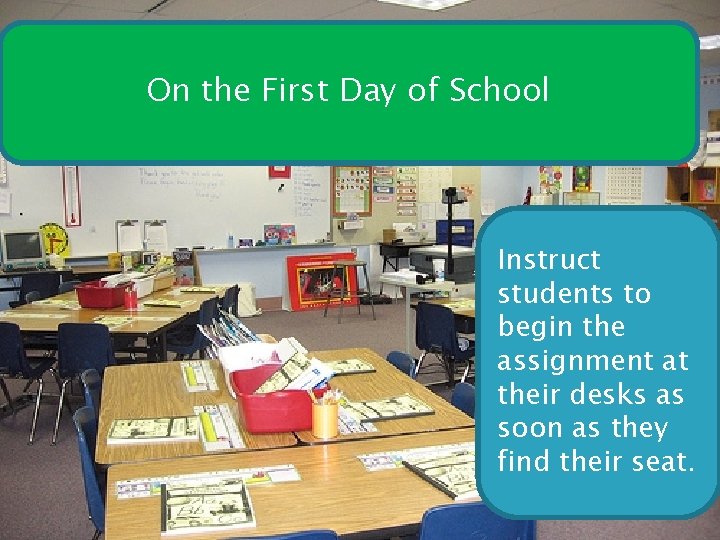
On the First Day of School Instruct students to begin the assignment at their desks as soon as they find their seat.
I put an assignment on the board every single I putbefore an assignment on came the board day the students in to every my classes. day one before the smoothest students came in to Isingle now have of the running my classes. and I now have one ofproduce the classrooms, the students more smoothest classrooms, and the for me now running than at any other time. students produce more me now than Shirley Bert Lee, for Elementary Teacher at any other time. The First Days of School Shirley Bert Lee, Elementary Teacher The First Days of School
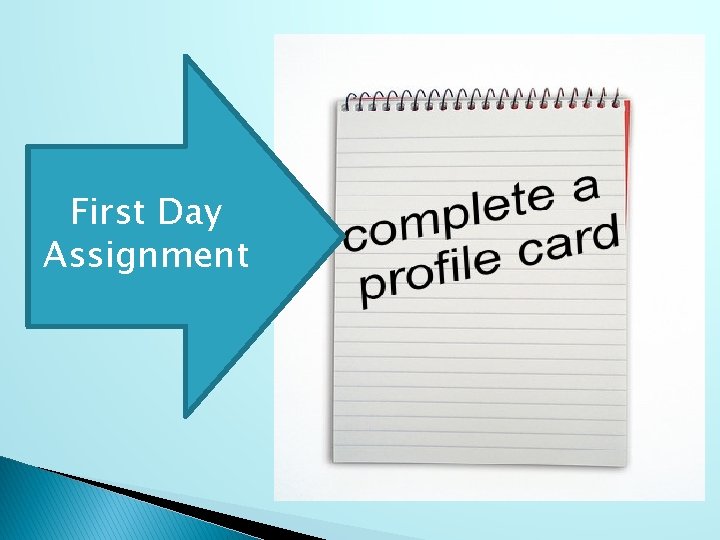
First Day Assignment
‘Bell Work’ reading math revision spelling colouring drawing
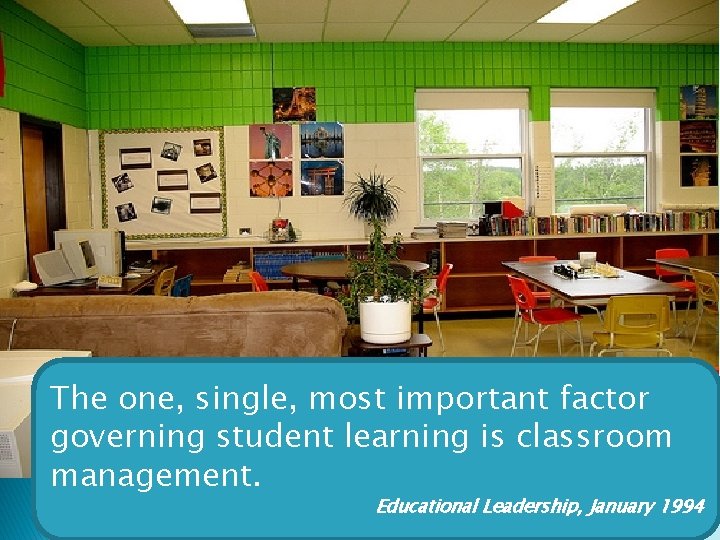
The one, single, most important factor governing student learning is classroom management. Educational Leadership, January 1994
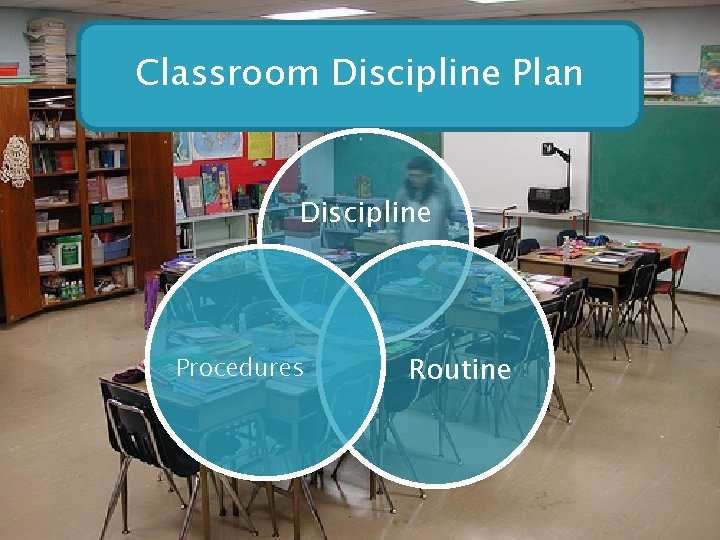
Classroom Discipline Plan Discipline Procedures Routine
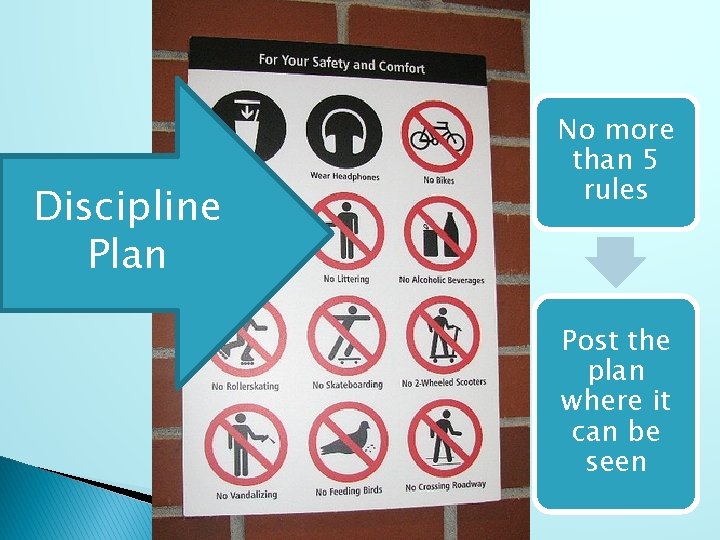
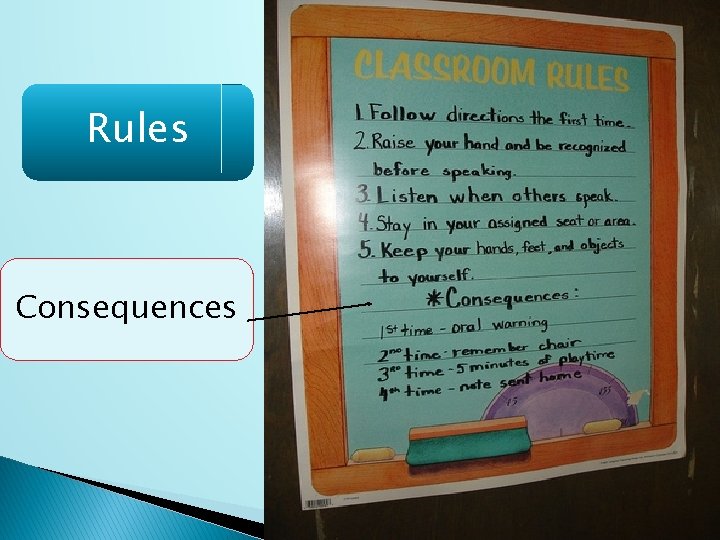
Discipline Plan No more than 5 rules Post the plan where it can be seen
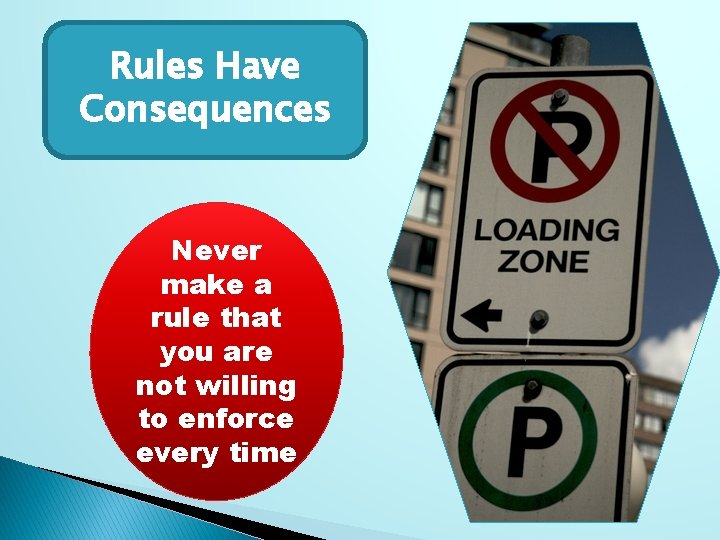
Rules Have Consequences Never make a rule that you are not willing to enforce every time
Rules Consequences
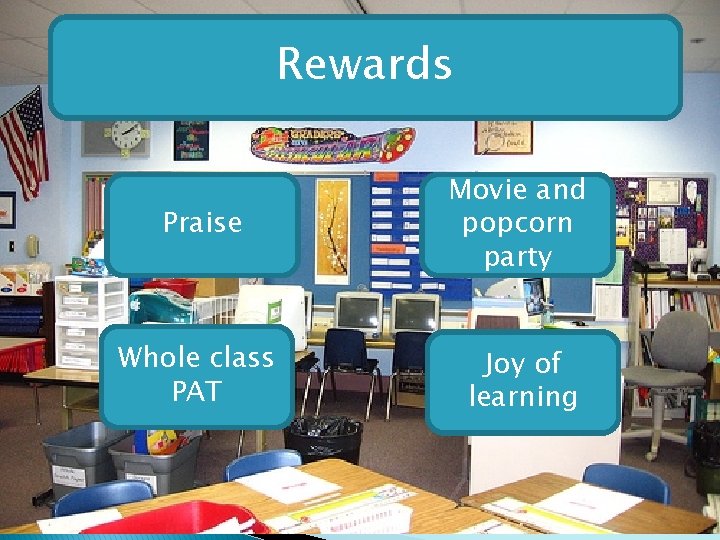
Rewards Praise Movie and popcorn party Whole class PAT Joy of learning
The number one problem in classrooms is not discipline; it is the lack of procedures and routines. The First Days of School, p 167
Procedures to teach On the First Day of School Entering the classroom Movement of students Starting work as soon as they enter “bell work” Quieting a class Students seeking help End of lesson
Without procedures and routines there is no structure. Without structure, no one knows what to do.
Teaching Procedures: Explain, Rehearse, Reinforce
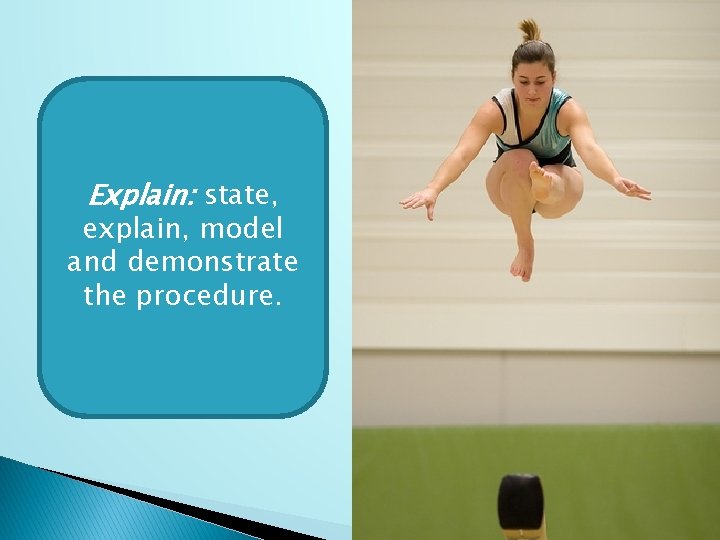
Explain: state, explain, model and demonstrate the procedure.
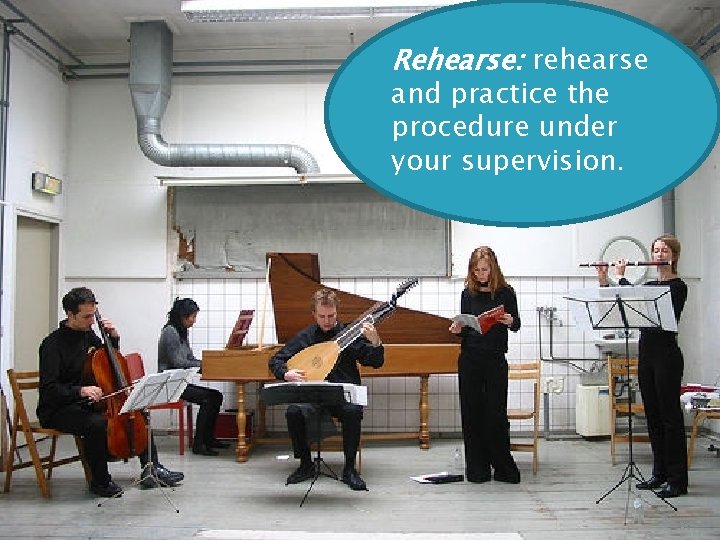
Rehearse: rehearse and practice the procedure under your supervision.
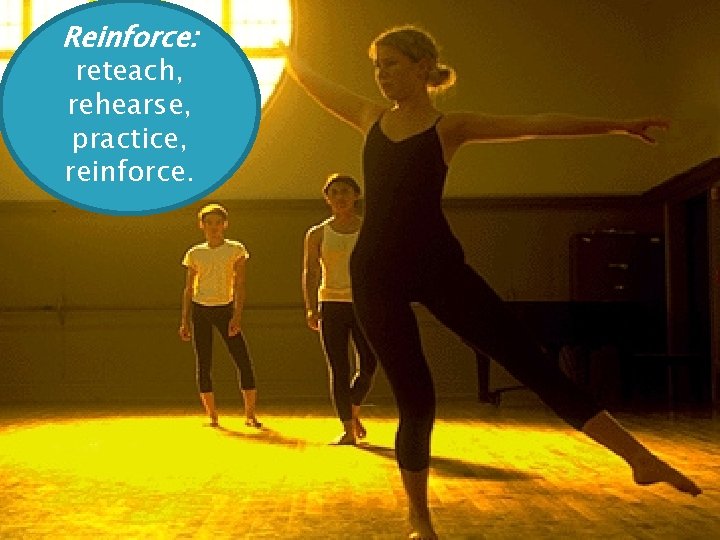
Reinforce: reteach, rehearse, practice, reinforce.
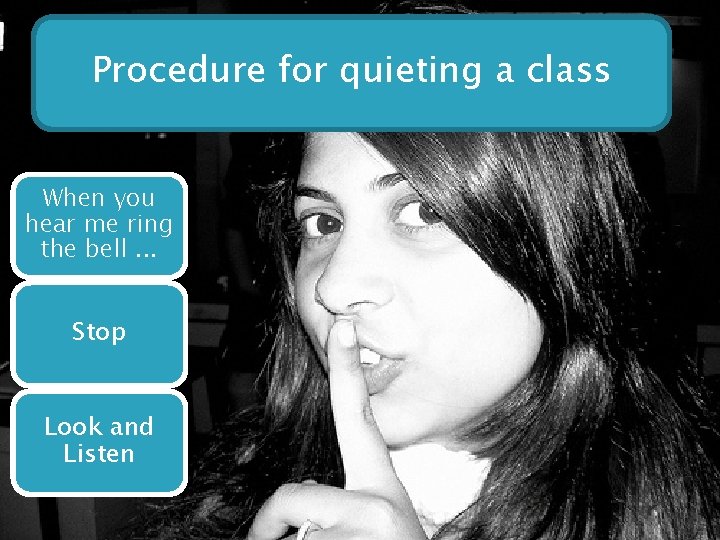
Procedure for quieting a class When you hear me ring the bell. . . Stop Look and Listen
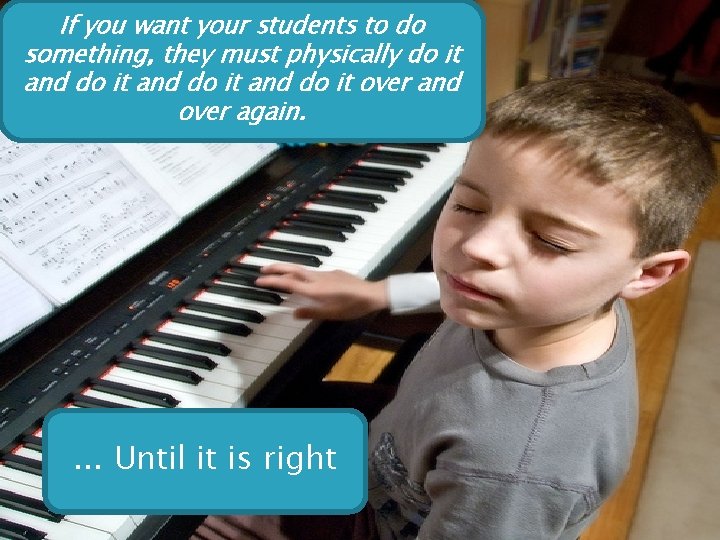
If you want your students to do something, they must physically do it and do it over and over again. . Until it is right
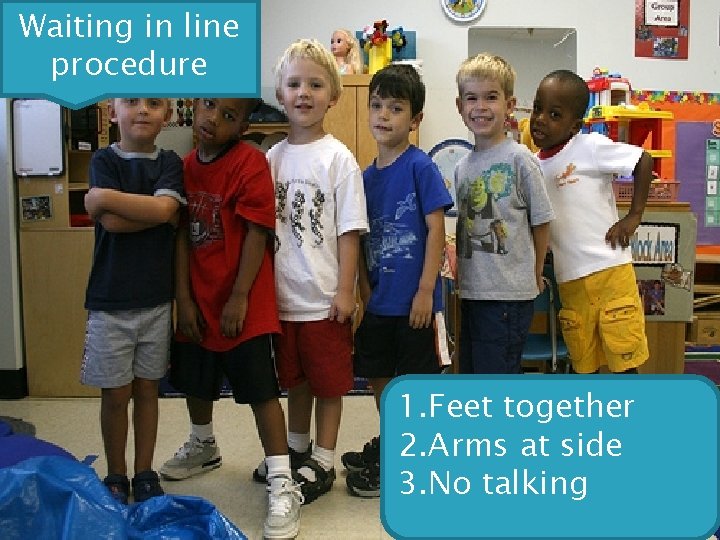
Waiting in line procedure 1. Feet together 2. Arms at side 3. No talking
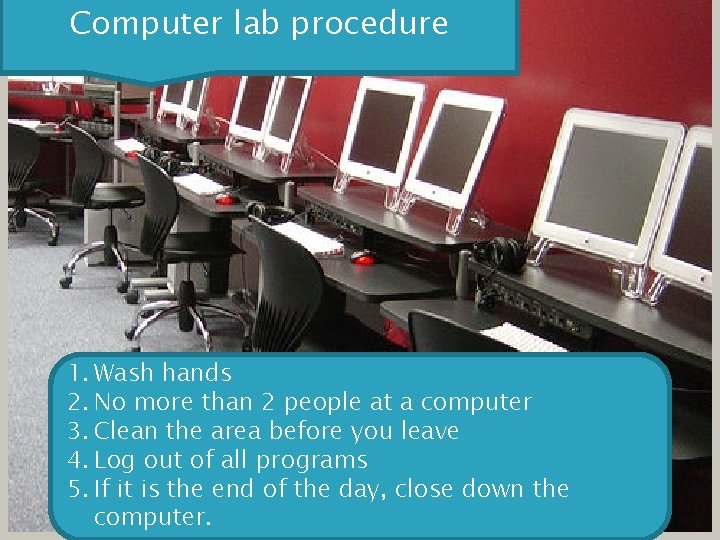
Computer lab procedure 1. Wash hands 2. No more than 2 people at a computer 3. Clean the area before you leave 4. Log out of all programs 5. If it is the end of the day, close down the computer.
Your procedures will become routines Keep rehearsing Congratulate Do it again • Until procedures become routine • On doing it correctly • At the next opportunity until it becomes a routine
Procedures = achievement and responsible behaviour
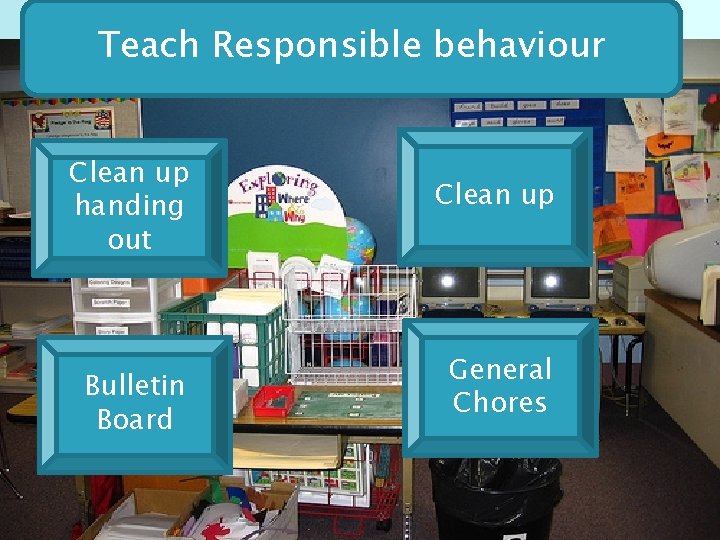
Teach Responsible behaviour Clean up handing out Bulletin Board Clean up General Chores
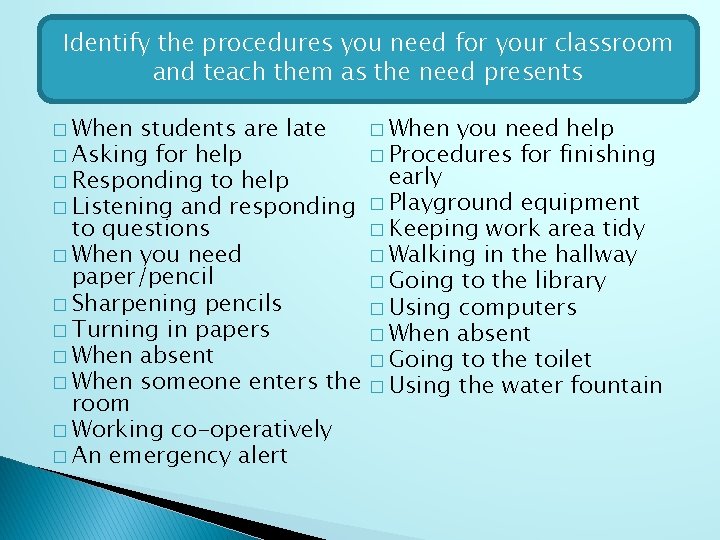
Identify the procedures you need for your classroom and teach them as the need presents � When students are late � Asking for help � Responding to help � Listening and responding to questions � When you need paper/pencil � Sharpening pencils � Turning in papers � When absent � When someone enters the room � Working co-operatively � An emergency alert � When you need help � Procedures for finishing early � Playground equipment � Keeping work area tidy � Walking in the hallway � Going to the library � Using computers � When absent � Going to the toilet � Using the water fountain
Managing Behaviour It has been estimated that a teacher makes more decisions in an hour than an air traffic controller. Tools for Teaching, Fred Jones
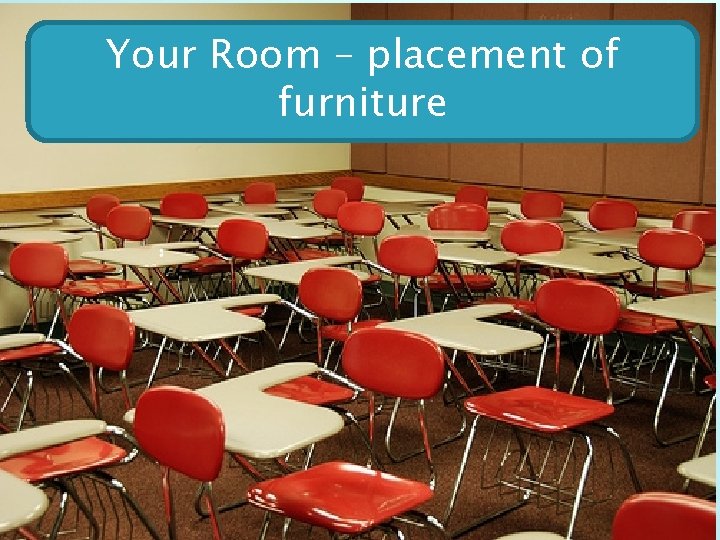
Your Room – placement of furniture
‘work the crowd’ Make eye contact with those at a distance
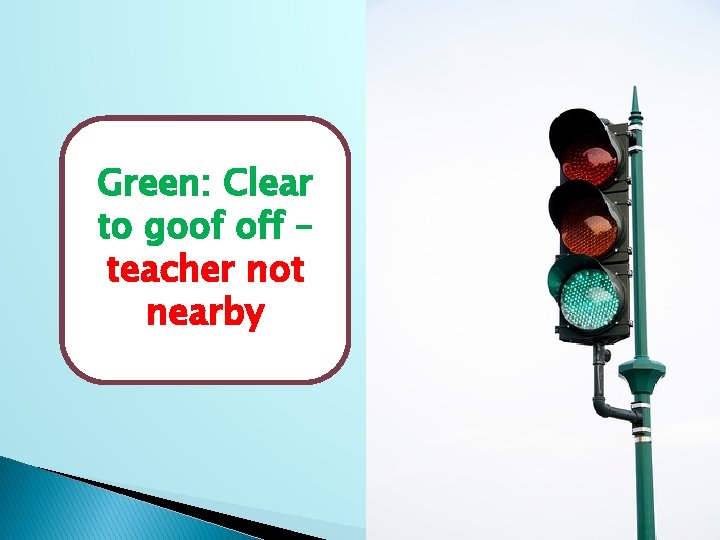
Green: Clear to goof off – teacher not nearby
Managing stress will enable you to manage the classroom more effectively Remaining calm in the face of stress, is a skill If you are calm, you will have a calming effect on those around you
What you say non-verbally will have a greater impact than what you say verbally Bod lan y lang gua u and ge age is inte of em the ntio otio n. n
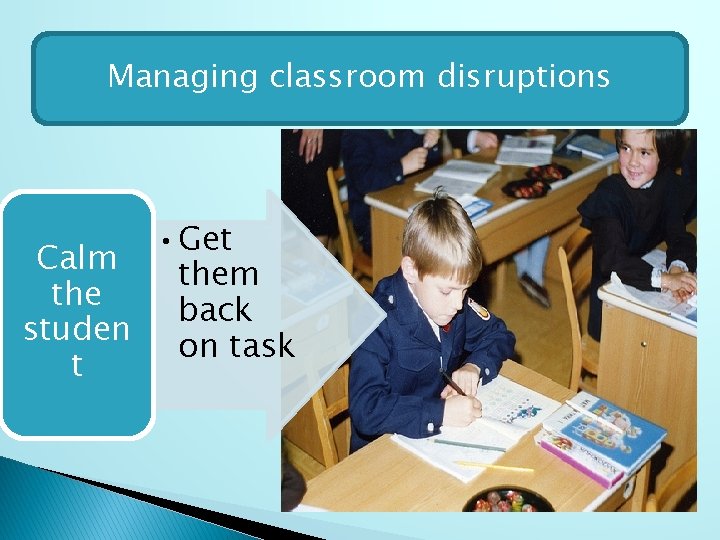
Managing classroom disruptions • Get Calm the back studen on task t
Focus on small disruptions Big disruptions grow from small disruptions
Discipline or instruction? �A difficult choice? How big is the disruption How important is the assignment?
Of course the problem is small of course the lesson is important But you cannot turn a blind eye No means no every time
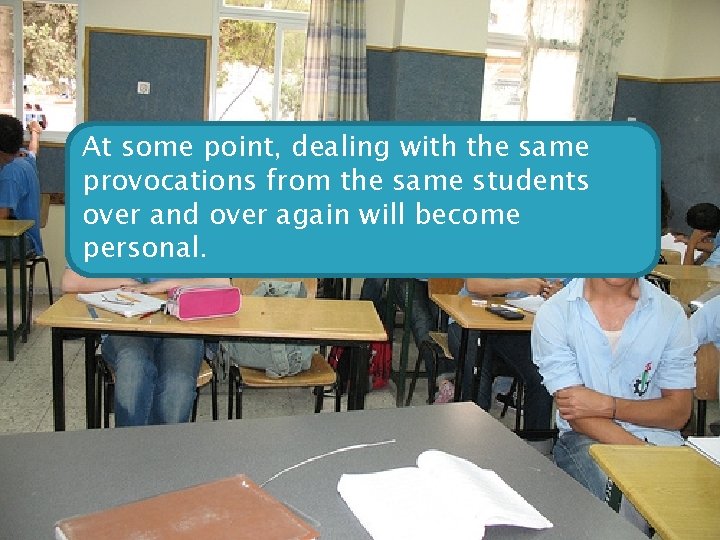
At some point, dealing with the same provocations from the same students over and over again will become personal.
Being consistent If you respond based upon your feelings, you can never be consistent.
Managing classroom disruptions Learn to Relax
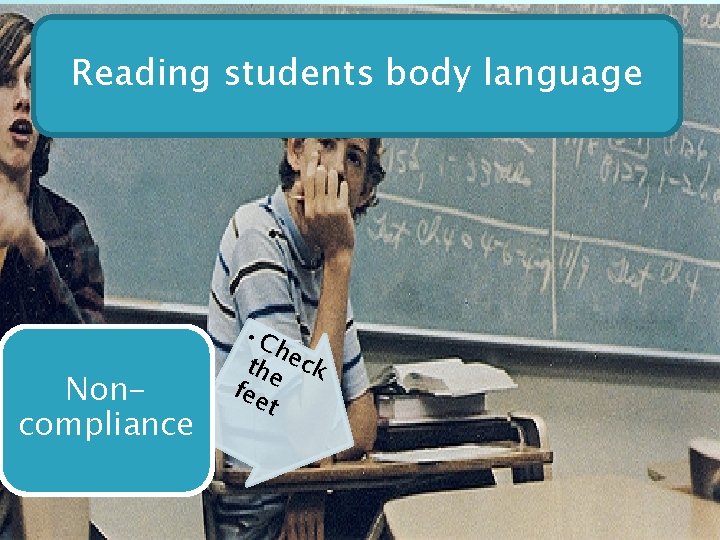
Reading students body language Noncompliance • C he the ck fee t
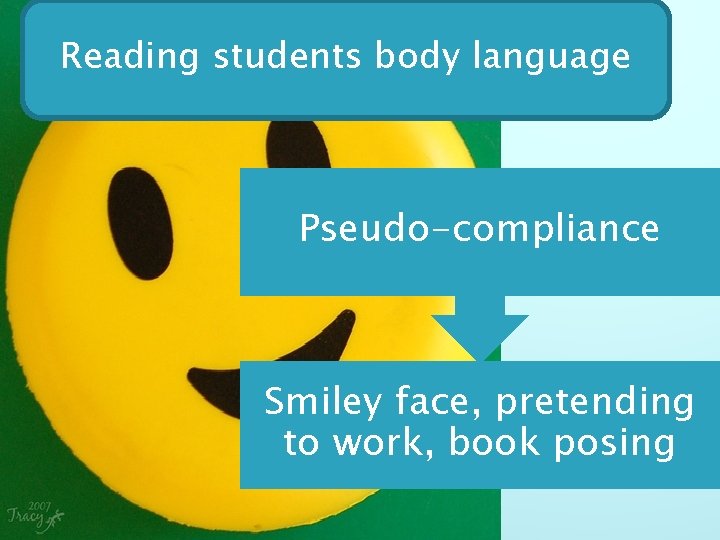
Reading students body language Pseudo-compliance Smiley face, pretending to work, book posing
With good eye contact there is a tension between the teacher and the student that builds with each passing second.
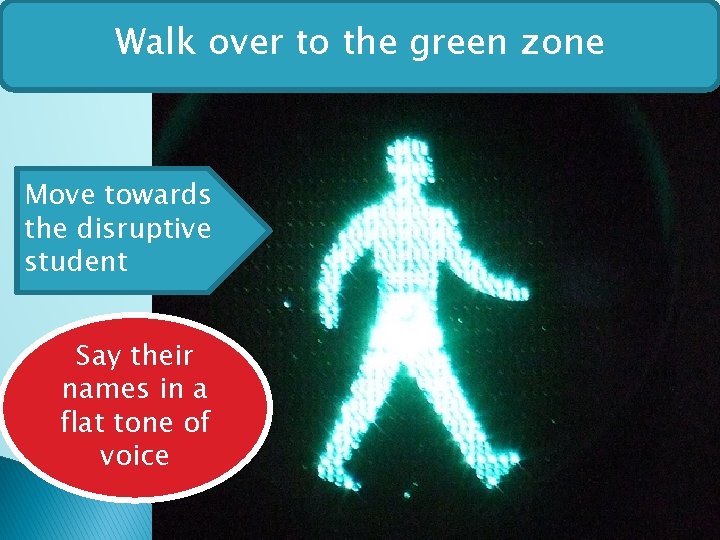
Walk over to the green zone Move towards the disruptive student Say their names in a flat tone of voice
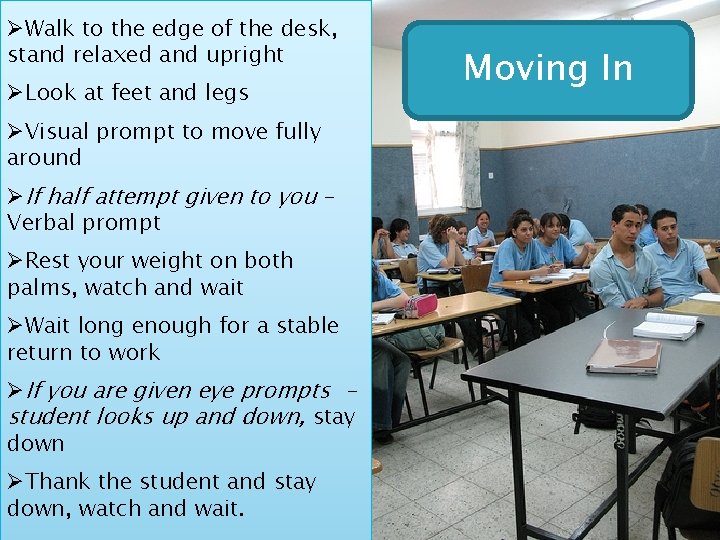
ØWalk to the edge of the desk, stand relaxed and upright ØLook at feet and legs ØVisual prompt to move fully around ØIf half attempt given to you Verbal prompt ØRest your weight on both palms, watch and wait ØWait long enough for a stable return to work ØIf you are given eye prompts student looks up and down, stay down ØThank the student and stay down, watch and wait. Moving In
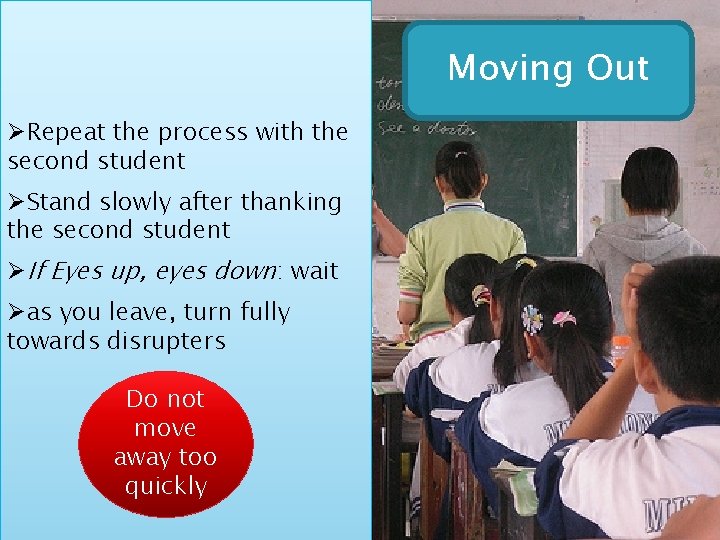
Moving Out ØRepeat the process with the second student ØStand slowly after thanking the second student ØIf Eyes up, eyes down: wait Øas you leave, turn fully towards disrupters Do not move away too quickly
Camouflage Work the crowd Protect student from embarrassment Use eye contact Arrive at the disrupter’s desk and give a knowing look
Effective teachers: � Apply Rules, consequences and rewards � Implement Procedures � Plan ahead � Assignments posted daily
Be a top professional � Join Associations � Attend Conferences � Subscriptions � Internet groups � Set up a personal learning network � Learn from experts around you
References � � � � � � � Images: lightbulb, Joe Colburn Classroom by Dave_mcmt Kids Painting, image by pingu 1963 School entrance by Dave-mcmt Teacher, by Editor. B Blackboard kid, image taken from friendofsnails Handshake by sudama http: //www. flickr. com/photos/35468150609@N 01/16557880 Chalkboard background to school boy, by winged photography School boy, by tomfhaines Desks, by Ben Werdmuller Slide 11, classroom by Liz Marie Notepad image by efekt Bell work, school door image by Dave_mcmt Discipline classroom by Editor. B Rules by faeryboots Classroom rules by szlea Rewards image by (classroom) Liz. Marie Shhh by said&done Responsible behavour, tidy area in classroom by Liz. Marie Cloud question mark by fontplaydotcom School building by Dave_mcmt Rehearse image by yeowatzup Gymnastic image (poutre) by Raoheal Goetter Rehearse 2 by markwick Ballet image by nayrb 7
� � � � � � � � Classroom rules by Linda. H Parking image by Jaako Broken light bulb image by Kyle May Slide 25, Well ordered classroom by glassbeednorth Classroom 2, by glassbeednorth Slide 34, Forming a line image, by woodleywonderworks Pencil image by arquera Computer lab, laffy 4 K Practising routine, image by pingu 1963 Playing piano by flickrized Classroom (empty desks) by saibotregeel Clock image by tamelyn Crowd control (image for fill) by James Cridland Traffic light image by Johnmarchan Calm picture, island, by eindzel On task, image by pingu 1963 Mad expression by kevin dooley Discipline image by hyperscholar Blind eye, image by Derrek. T Students at desks by hoyasmeg Expression, body language by Editor. B Relax by *Hini* Student sitting at desk, image by foundphotosli Smiley face image by xtheowl Portrait by flikr Green light by James Cridland Moving In image, classroom by hoyasmeg Moving Out image by peidianlong Camouflage by jmurawski Jones, F, 2007, Tools for Teaching, Fredric Jones & Associates Wong, H & R, 2004, The First Days of School, Harry K Wong Publications