
Effect of UV Light on Standard Plastic and
- Slides: 23
Effect of UV Light on Standard Plastic and Bio-Plastic Bags By: Anthony Disbrow, and Tyler Ista ENG 45 SRJC 12/13/06
Factors Reflection Ambient temperature Humidity Impurities
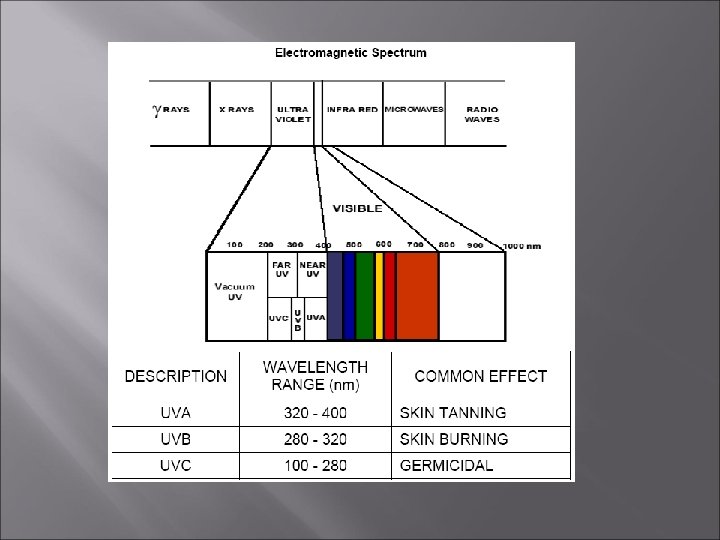
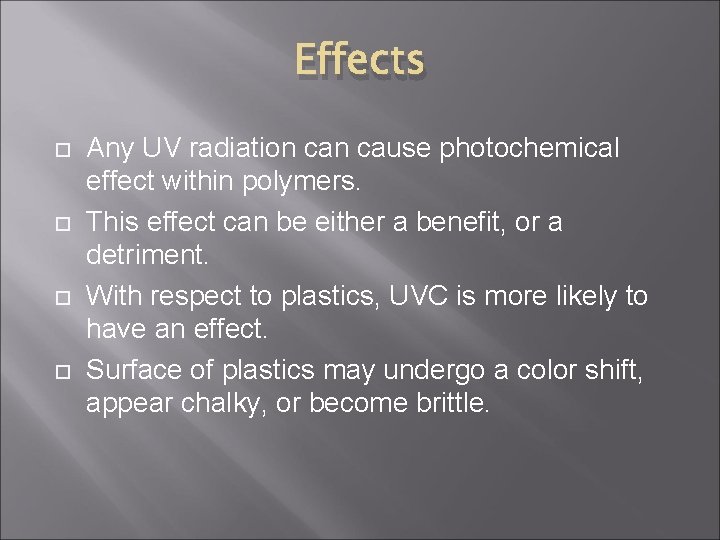
Effects Any UV radiation cause photochemical effect within polymers. This effect can be either a benefit, or a detriment. With respect to plastics, UVC is more likely to have an effect. Surface of plastics may undergo a color shift, appear chalky, or become brittle.
Effects Continued Certain polymer systems are able to be cured under UV light at room temperature. UV curing can also be used on some glasses, semiconductors, optical fibers, dental fillings, inks, paper finishes, and much more. UV curing can take place in a matter of seconds.
What Happens UV energy can excite photons, which result in free radicals (atoms or molecules with unpaired electrons). Small impurities (ppb) can act as free radical receptors, leading to degradation.
Plastic Statistics One ton of recycled plastic saves: 5, 774 Kwh of energy 16. 3 barrels (685 gallons) of oil 98 million Btu's of energy 30 cubic yards of landfill space Recycled plastic saves 88% of the energy used to produce plastic from raw materials. Only 26% of HDPE plastic are recycled Plastics cannot be naturally degraded.
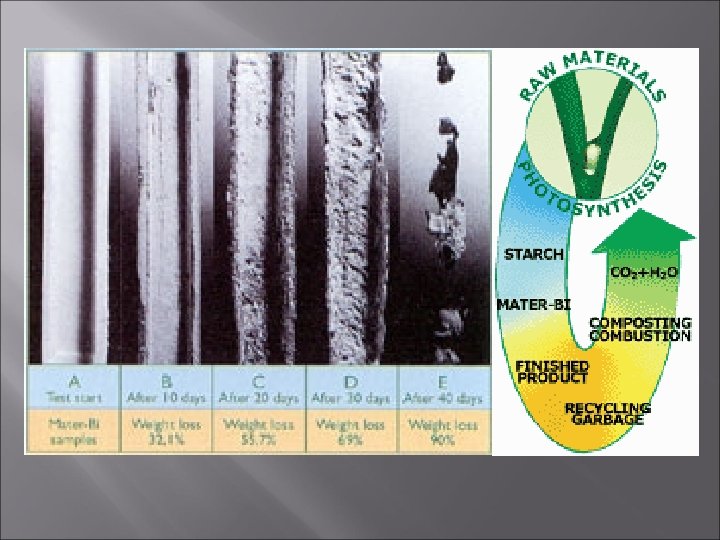
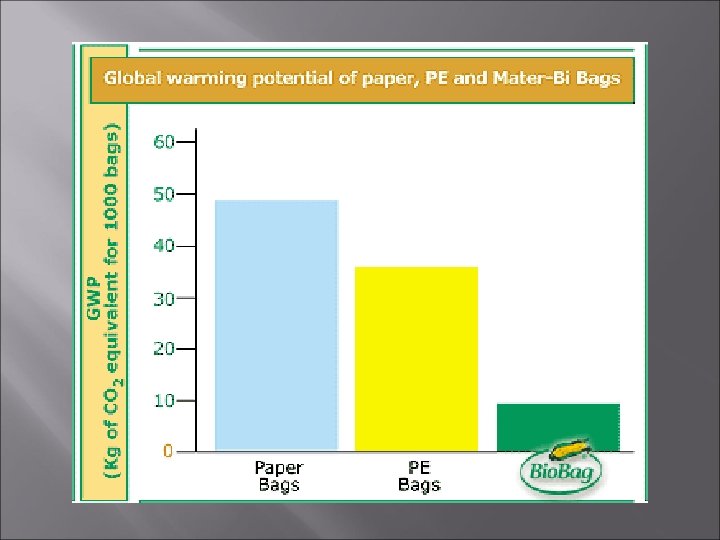
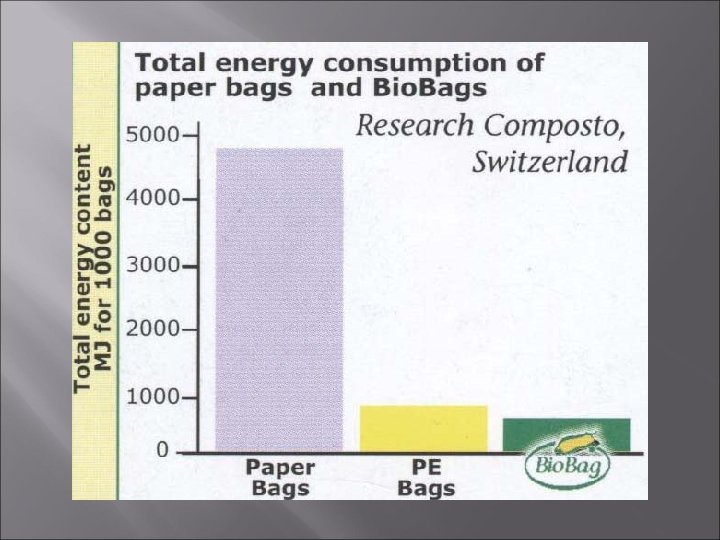
No polyethylene is used. Made from cornstarch, vegetable oil and other renewable resources. The Mater-Bi process is protected by more than 70 patents. Compostable, disposable
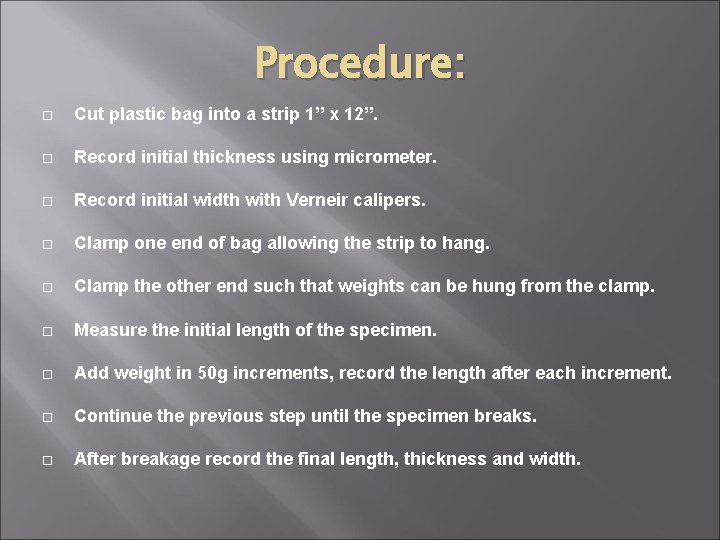
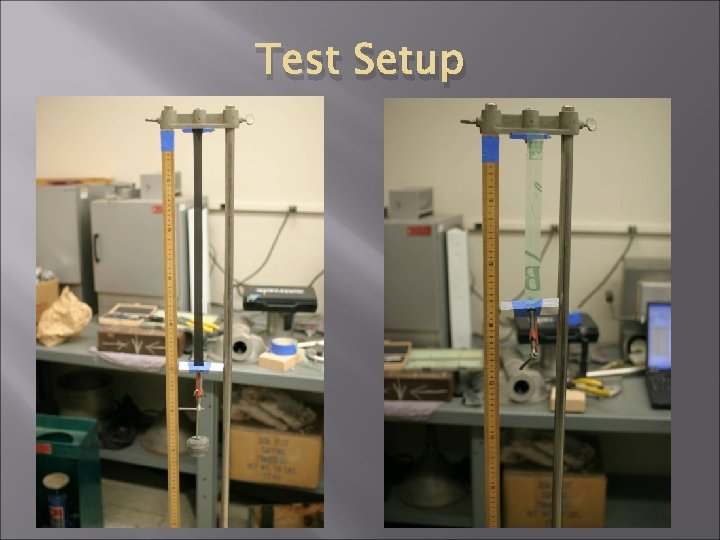
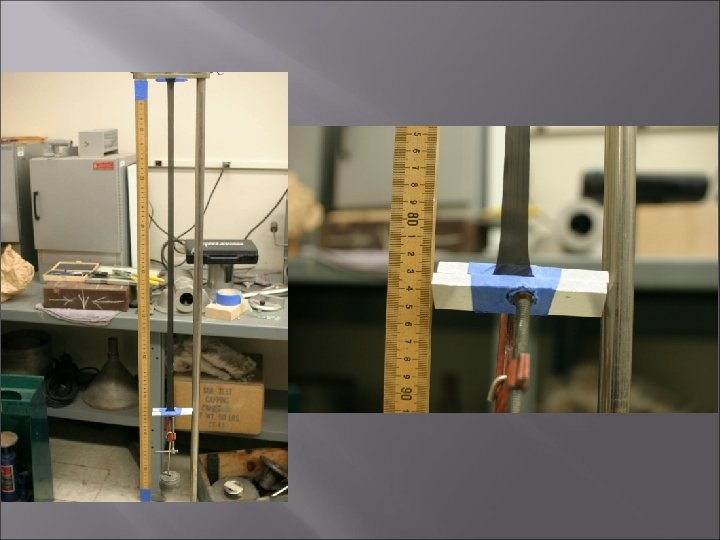
Procedure: Cut plastic bag into a strip 1” x 12”. Record initial thickness using micrometer. Record initial width with Verneir calipers. Clamp one end of bag allowing the strip to hang. Clamp the other end such that weights can be hung from the clamp. Measure the initial length of the specimen. Add weight in 50 g increments, record the length after each increment. Continue the previous step until the specimen breaks. After breakage record the final length, thickness and width.
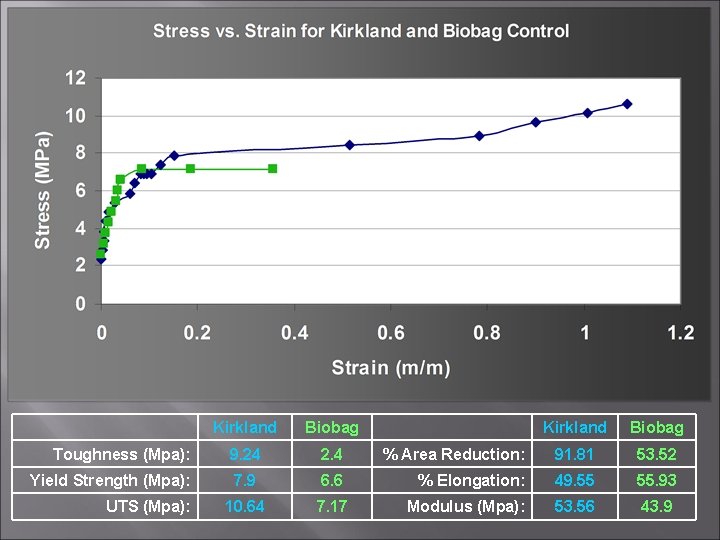
Kirkland Biobag Toughness (Mpa): 9. 24 2. 4 Yield Strength (Mpa): 7. 9 10. 64 UTS (Mpa): Kirkland Biobag % Area Reduction: 91. 81 53. 52 6. 6 % Elongation: 49. 55 55. 93 7. 17 Modulus (Mpa): 53. 56 43. 9
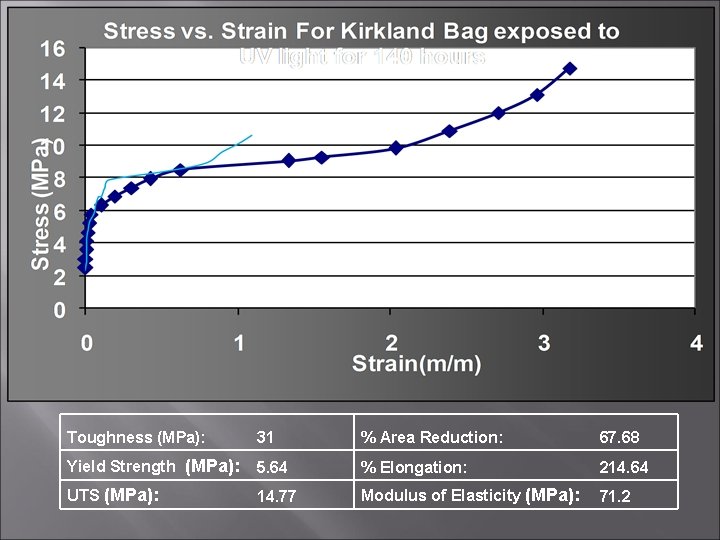
Toughness (MPa): 31 % Area Reduction: 67. 68 Yield Strength (MPa): 5. 64 % Elongation: 214. 64 UTS (MPa): 14. 77 Modulus of Elasticity (MPa): 71. 2
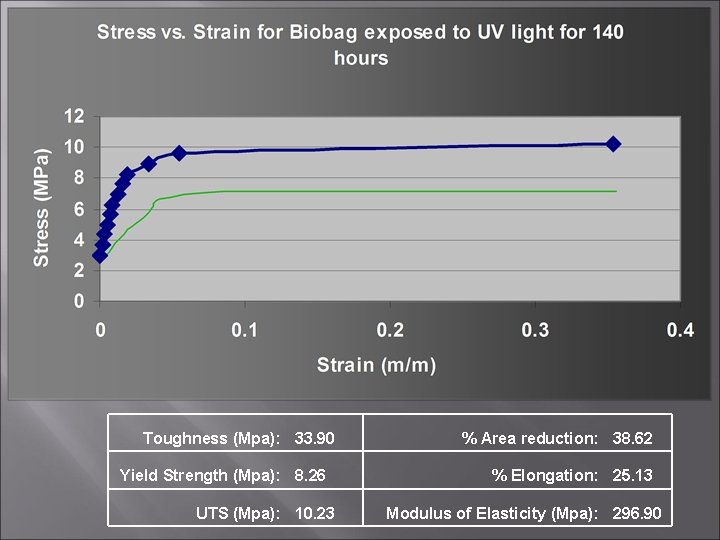
Toughness (Mpa): 33. 90 Yield Strength (Mpa): 8. 26 UTS (Mpa): 10. 23 % Area reduction: 38. 62 % Elongation: 25. 13 Modulus of Elasticity (Mpa): 296. 90
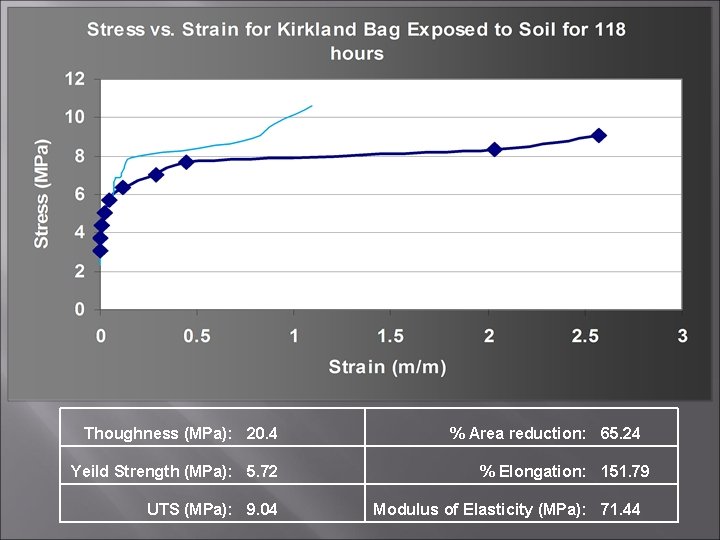
Thoughness (MPa): 20. 4 Yeild Strength (MPa): 5. 72 UTS (MPa): 9. 04 % Area reduction: 65. 24 % Elongation: 151. 79 Modulus of Elasticity (MPa): 71. 44
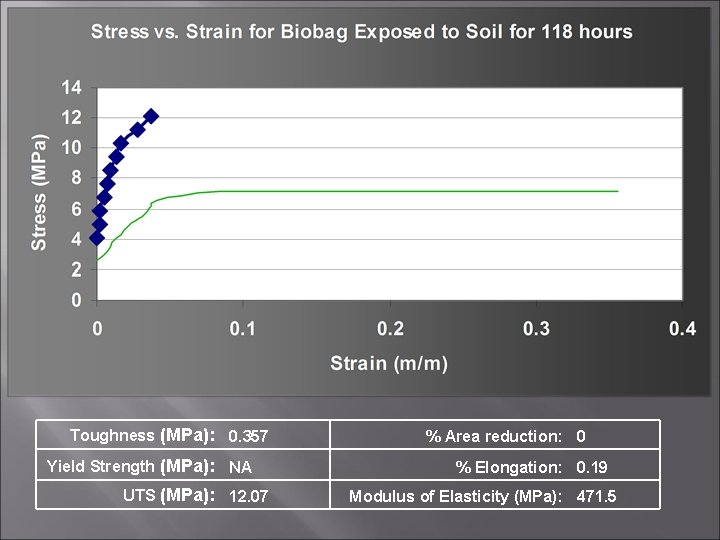
Toughness (MPa): 0. 357 Yield Strength (MPa): NA UTS (MPa): 12. 07 % Area reduction: 0 % Elongation: 0. 19 Modulus of Elasticity (MPa): 471. 5
Test Setup
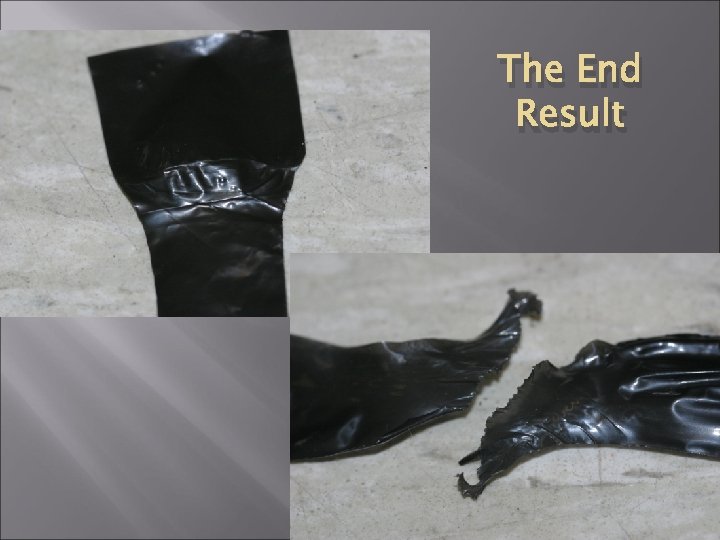
The End Result
Conclusions Just the tensile test alone was not enough to reach a solid conclusion. The creep properties of the plastic appeared to be affected. The stress strain curve alone cannot show the elongation for a given time period. We observed the samples exposed to more UV light crept the slowest.
Sources http: //www. zeusinc. com/cgibin/search. exe? q=UV http: //www. masterbond. com/wbarticles/wbuv. ht ml http: //en. wikipedia. org/wiki/Ultraviolet http: //www. biogroupusa. com/catering. htm http: //www. biobag. at/produkte/bio_bag/bag_4_l ife/ http: //www. greenerchoices. org/products. cfm? pr oduct=plastic&pcat=homegarden http: //www. deq. state. ms. us/MDEQ. nsf/page/Re cycling_Recycling. Trivia? Open. Document