
Effect Of Temperature Strain Rate On Flow Properties
- Slides: 21
Effect Of Temperature & Strain Rate On Flow Properties 1
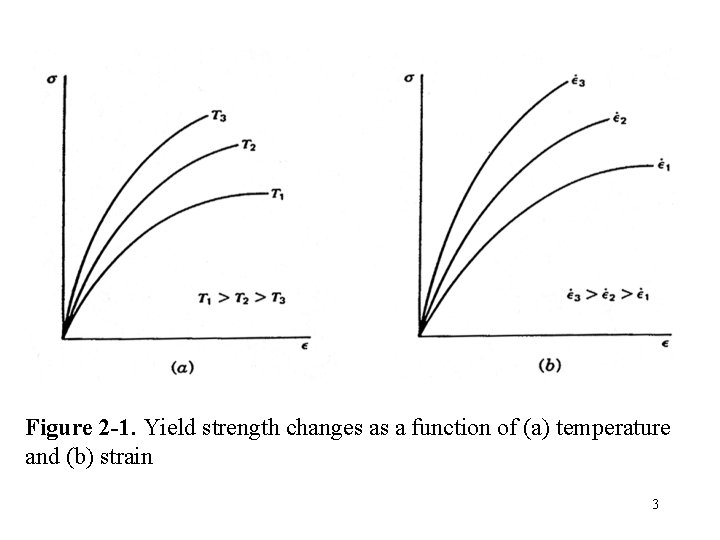
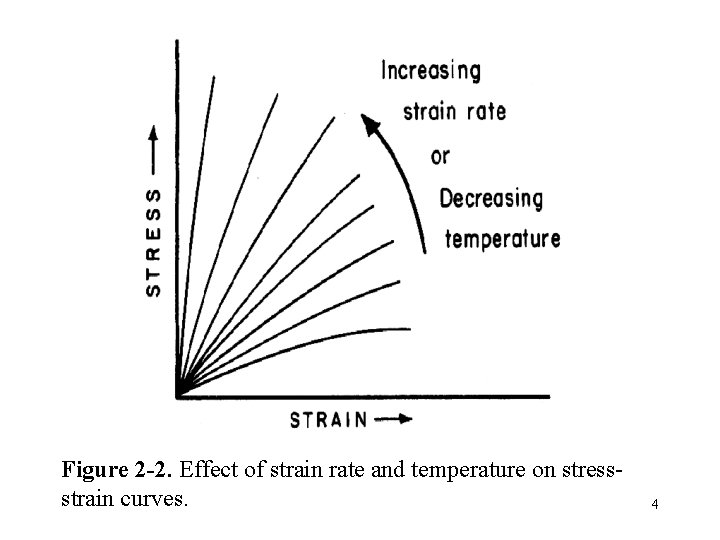
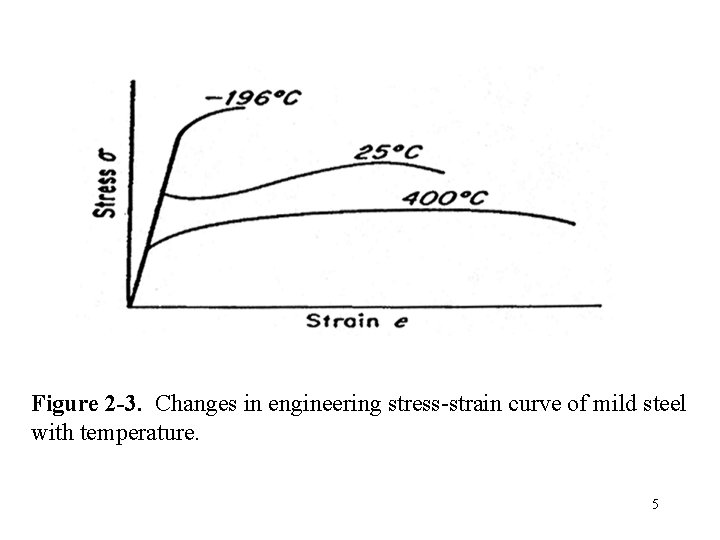
• The stress-strain curve and the flow and fracture properties of a material are strongly dependent on: - strain rate - temperature at which the test was conducted. • In general strength decreases and ductility increases as: - strain rate is decreased, or - the test temperature is increased. 2
Figure 2 -1. Yield strength changes as a function of (a) temperature and (b) strain 3
Figure 2 -2. Effect of strain rate and temperature on stressstrain curves. 4
Figure 2 -3. Changes in engineering stress-strain curve of mild steel with temperature. 5
• This general behavior may not take place in certain temperature ranges if structural changes such as precipitation, strain aging, or recrystallization occur. • The above thermally activated processes can assist deformation and reduce or increase strength at elevated temperatures. • When materials are deformed at high temperatures and/or long exposure, structural changes can occur resulting in time-dependent deformation or creep. 6
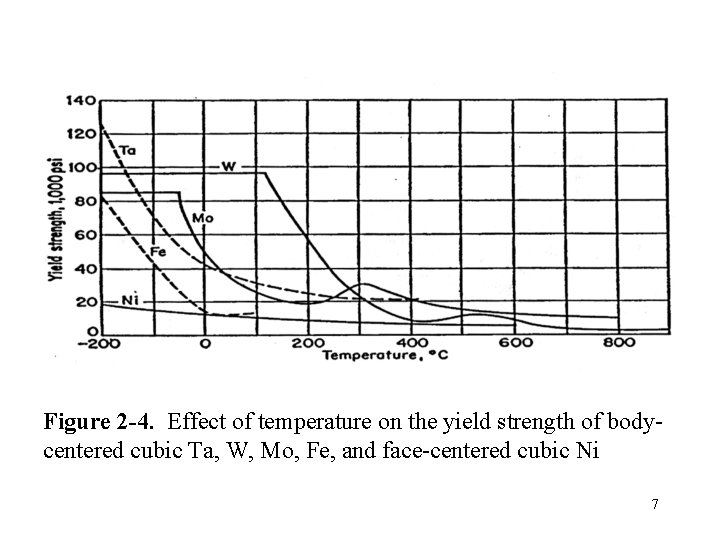
Figure 2 -4. Effect of temperature on the yield strength of bodycentered cubic Ta, W, Mo, Fe, and face-centered cubic Ni 7
Note • For the bcc metals (see Fig. 2. 4), the yield stress increases rapidly with decreasing temperature. • For Ni and most fcc metals, the yield stress is only slightly temperature dependent. • Fig. 2. 4 can also be used to understand why most bcc metals exhibit brittle fracture at low temperatures. • A comparison of the flow stress of two materials at elevated temperature requires a correction for the effect of temperature on Elastic Modulus. 8
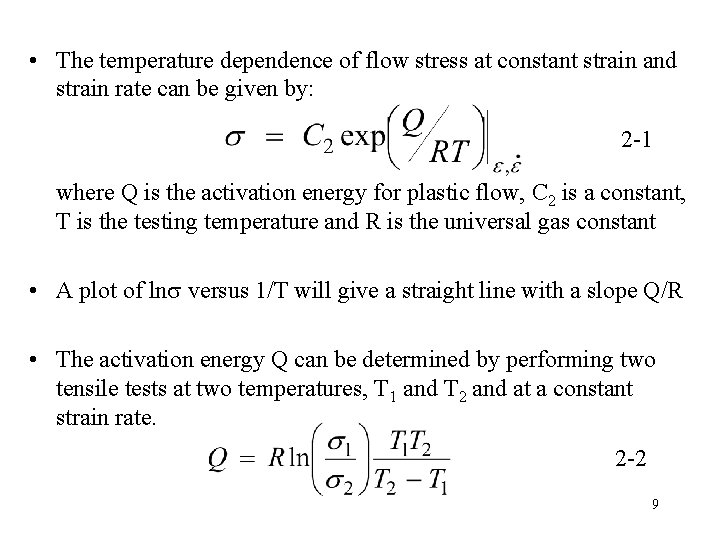
• The temperature dependence of flow stress at constant strain and strain rate can be given by: 2 -1 where Q is the activation energy for plastic flow, C 2 is a constant, T is the testing temperature and R is the universal gas constant • A plot of ln versus 1/T will give a straight line with a slope Q/R • The activation energy Q can be determined by performing two tensile tests at two temperatures, T 1 and T 2 and at a constant strain rate. 2 -2 9
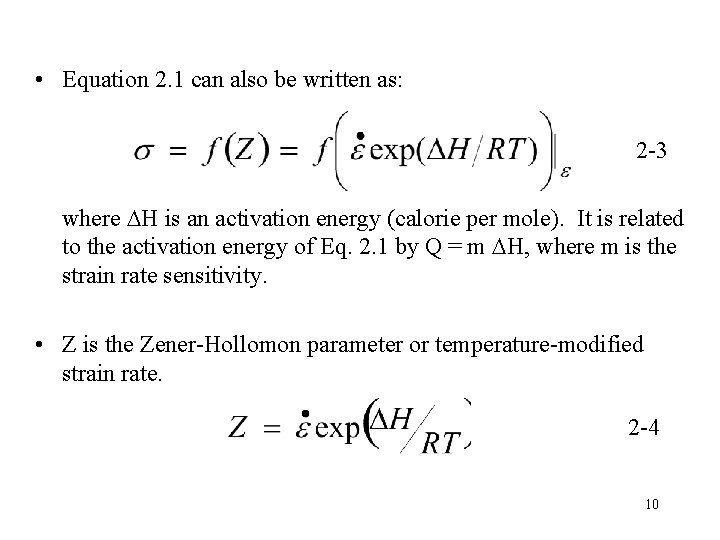
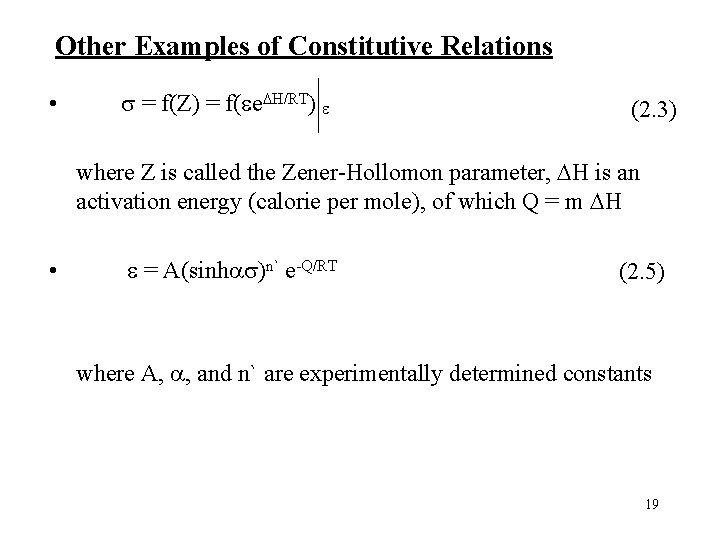
• Equation 2. 1 can also be written as: 2 -3 where H is an activation energy (calorie per mole). It is related to the activation energy of Eq. 2. 1 by Q = m H, where m is the strain rate sensitivity. • Z is the Zener-Hollomon parameter or temperature-modified strain rate. 2 -4 10
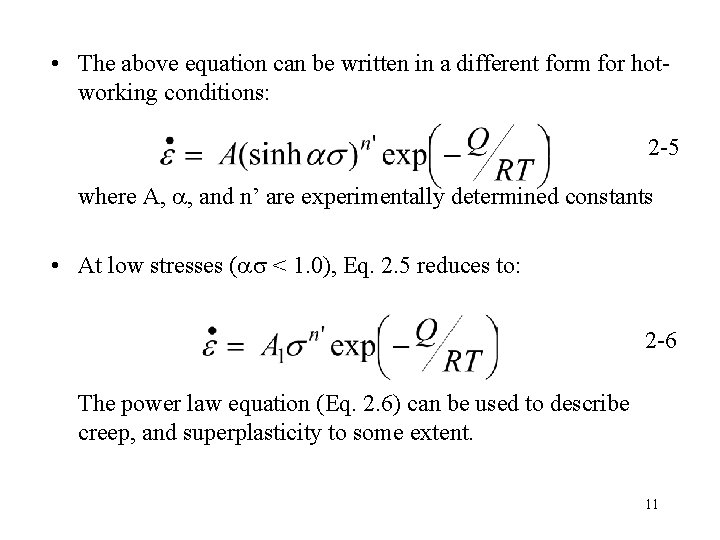
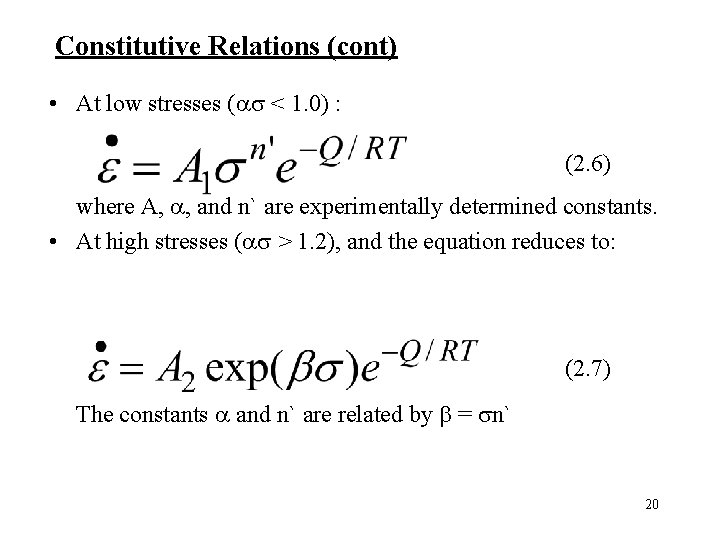
• The above equation can be written in a different form for hotworking conditions: 2 -5 where A, , and n’ are experimentally determined constants • At low stresses ( < 1. 0), Eq. 2. 5 reduces to: 2 -6 The power law equation (Eq. 2. 6) can be used to describe creep, and superplasticity to some extent. 11
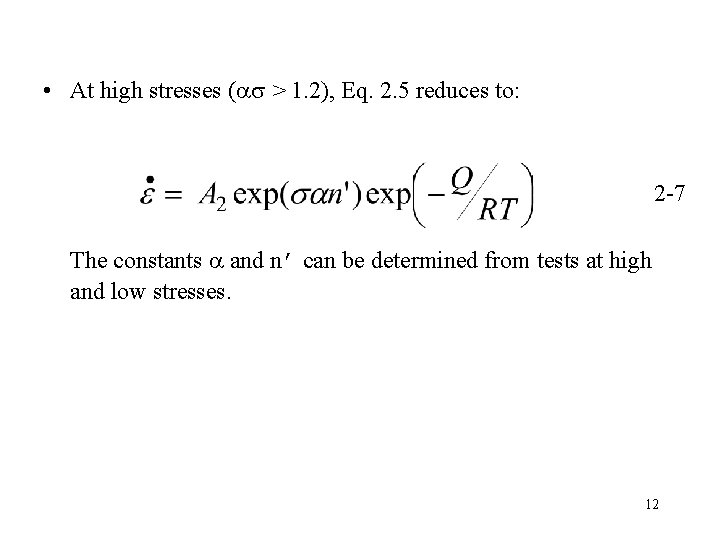
• At high stresses ( > 1. 2), Eq. 2. 5 reduces to: 2 -7 The constants and n’ can be determined from tests at high and low stresses. 12
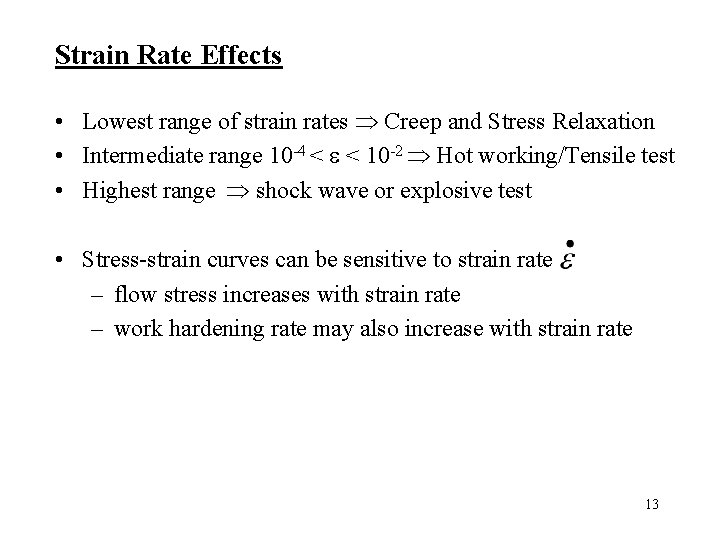
Strain Rate Effects • Lowest range of strain rates Creep and Stress Relaxation • Intermediate range 10 -4 < < 10 -2 Hot working/Tensile test • Highest range shock wave or explosive test • Stress-strain curves can be sensitive to strain rate – flow stress increases with strain rate – work hardening rate may also increase with strain rate 13
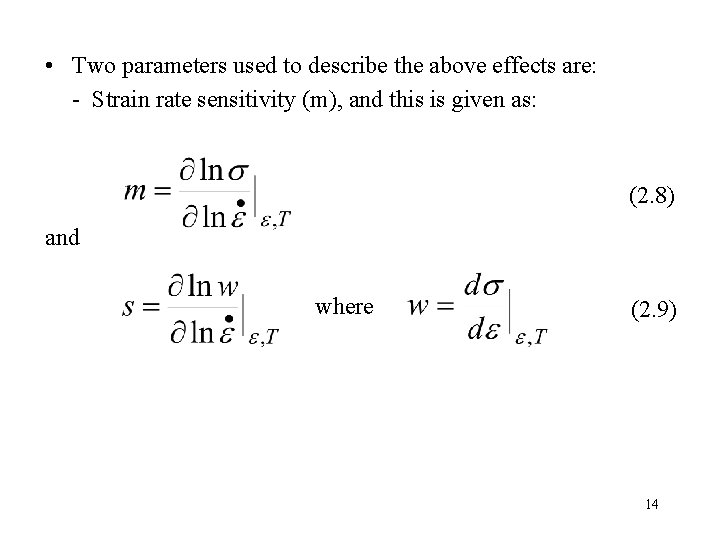
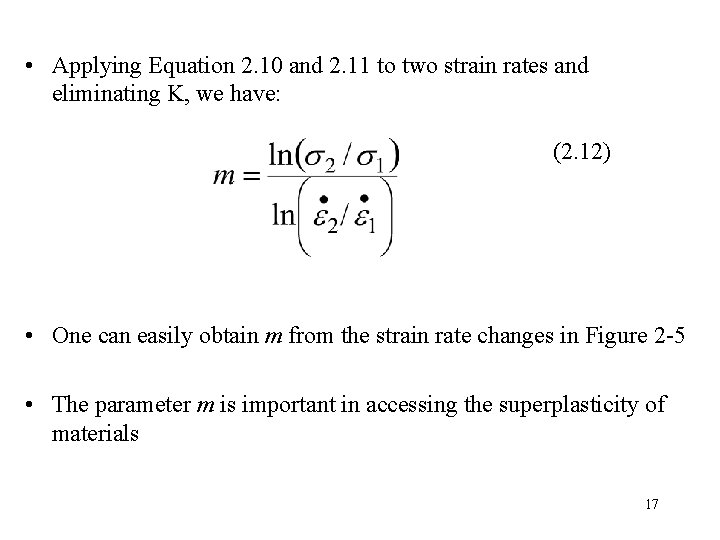
• Two parameters used to describe the above effects are: - Strain rate sensitivity (m), and this is given as: (2. 8) and where (2. 9) 14
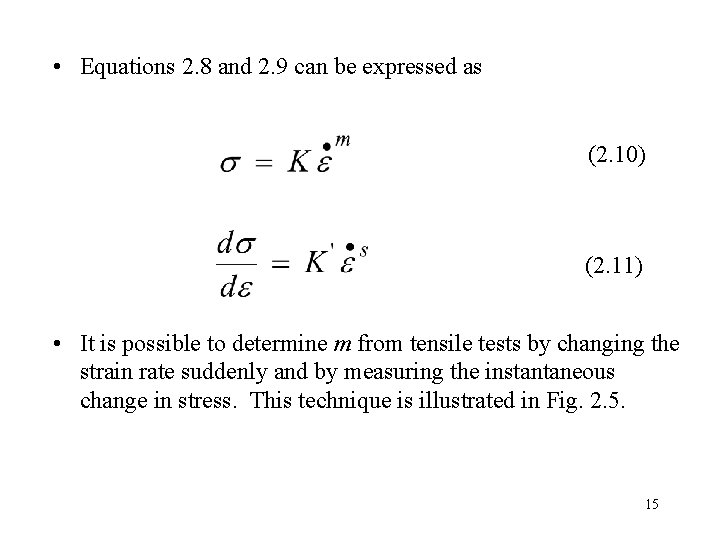
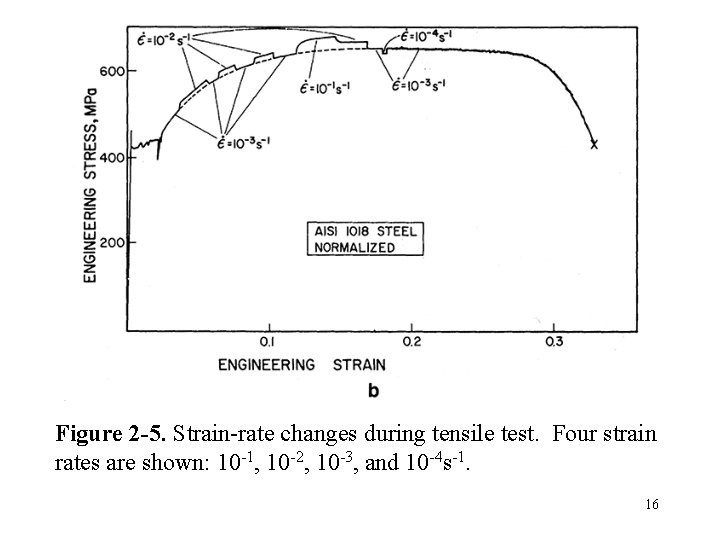
• Equations 2. 8 and 2. 9 can be expressed as (2. 10) (2. 11) • It is possible to determine m from tensile tests by changing the strain rate suddenly and by measuring the instantaneous change in stress. This technique is illustrated in Fig. 2. 5. 15
Figure 2 -5. Strain-rate changes during tensile test. Four strain rates are shown: 10 -1, 10 -2, 10 -3, and 10 -4 s-1. 16
• Applying Equation 2. 10 and 2. 11 to two strain rates and eliminating K, we have: (2. 12) • One can easily obtain m from the strain rate changes in Figure 2 -5 • The parameter m is important in accessing the superplasticity of materials 17
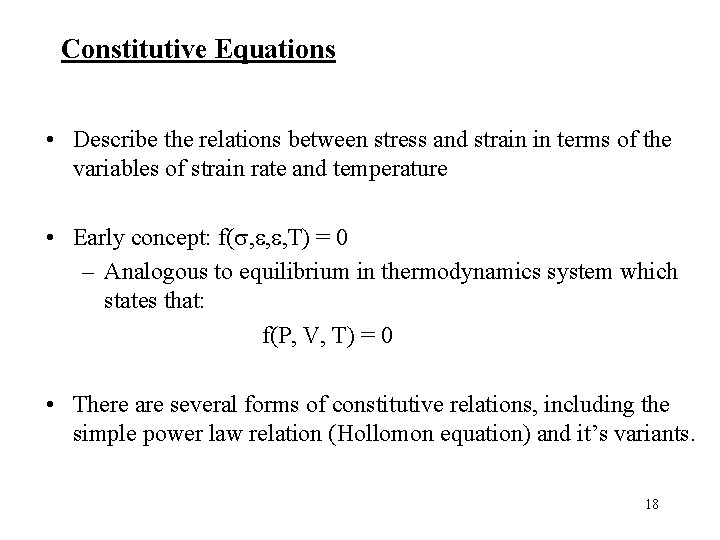
Constitutive Equations • Describe the relations between stress and strain in terms of the variables of strain rate and temperature • Early concept: f( , , , T) = 0 – Analogous to equilibrium in thermodynamics system which states that: f(P, V, T) = 0 • There are several forms of constitutive relations, including the simple power law relation (Hollomon equation) and it’s variants. 18
Other Examples of Constitutive Relations • = f(Z) = f( e H/RT) (2. 3) where Z is called the Zener-Hollomon parameter, H is an activation energy (calorie per mole), of which Q = m H • = A(sinh )n` e-Q/RT (2. 5) where A, , and n` are experimentally determined constants 19
Constitutive Relations (cont) • At low stresses ( < 1. 0) : (2. 6) where A, , and n` are experimentally determined constants. • At high stresses ( > 1. 2), and the equation reduces to: (2. 7) The constants and n` are related by = n` 20
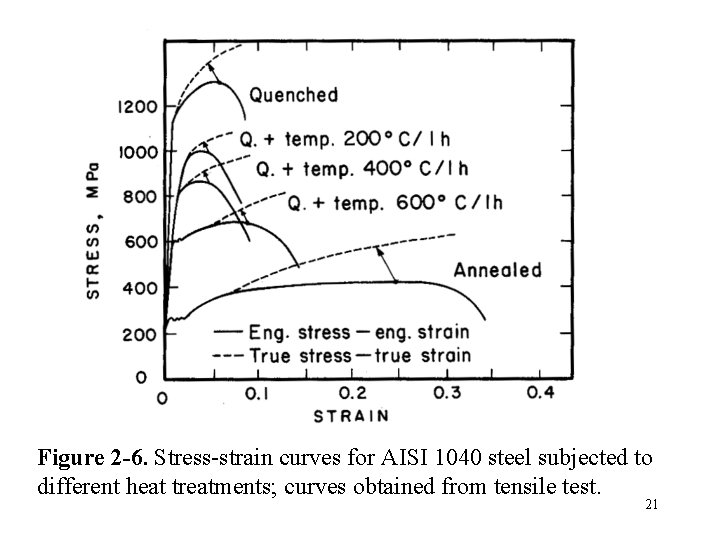
Figure 2 -6. Stress-strain curves for AISI 1040 steel subjected to different heat treatments; curves obtained from tensile test. 21