
Effect of Repair Before Failure Equipment Management Overview
Effect of Repair Before Failure Equipment Management

Overview i. Why repair before failure? ii. Determining when to repair iii. Repair options
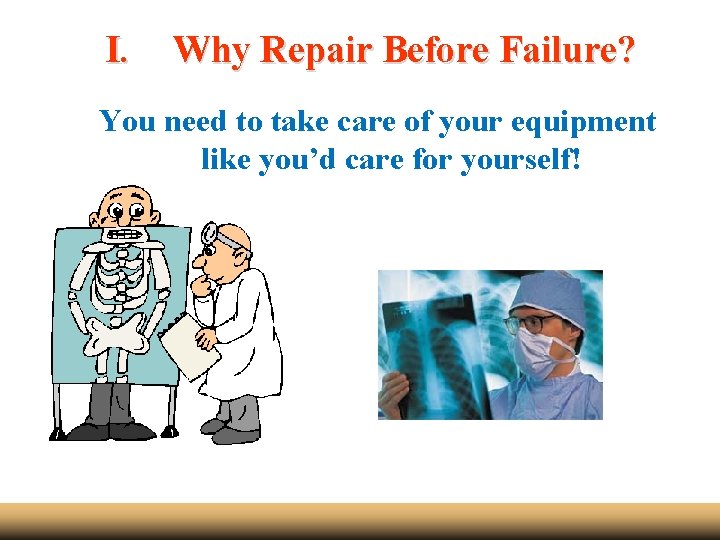
I. Why Repair Before Failure? You need to take care of your equipment like you’d care for yourself!
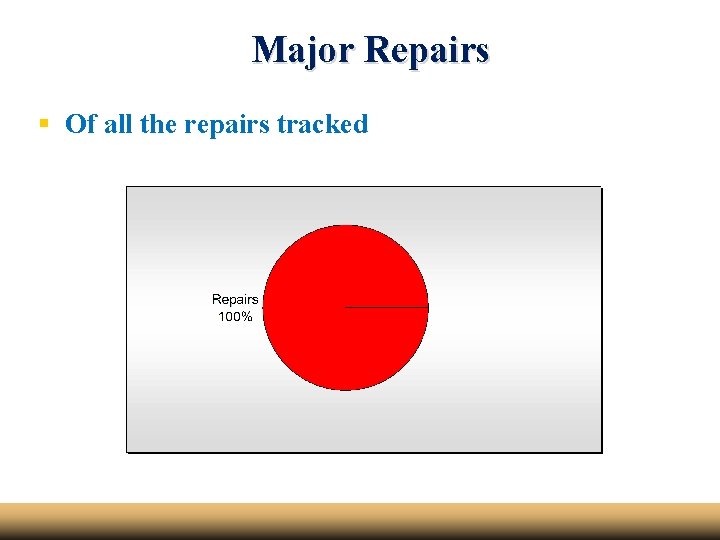
Major Repairs § Of all the repairs tracked

Major Repairs § 80% were performed after failure
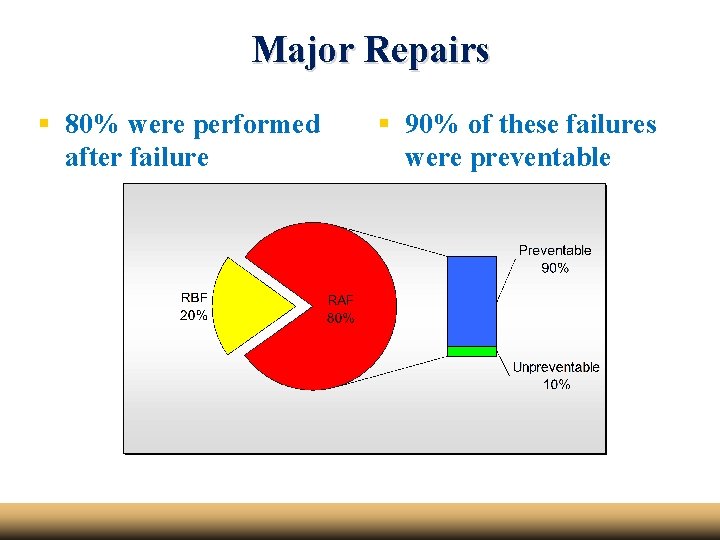
Major Repairs § 80% were performed after failure § 90% of these failures were preventable
Objective Our Goal: Unplanned downtime Component life To Reduce Your Owning and Operating Costs
Overview I. Why repair before failure II. Determining when to repair III. Repair options
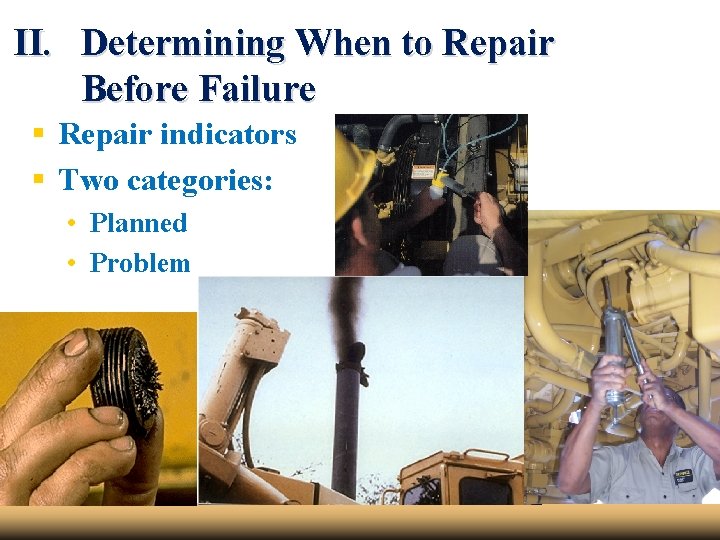
II. Determining When to Repair Before Failure § Repair indicators § Two categories: • Planned • Problem
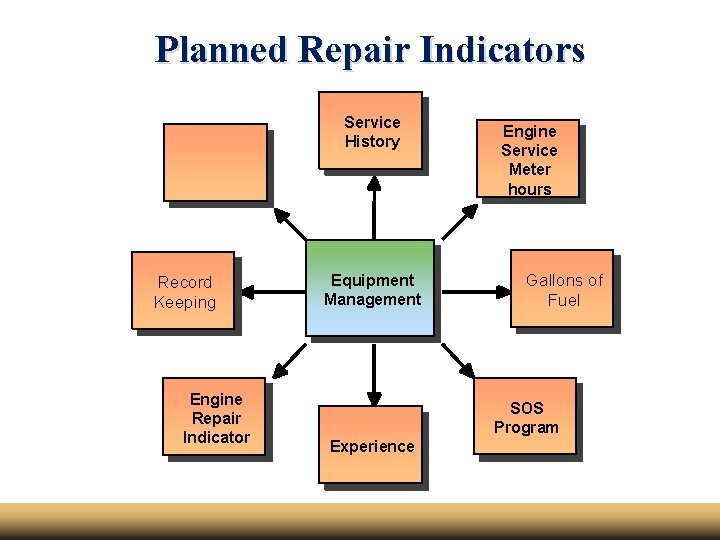
Planned Repair Indicators Service History Record Keeping Engine Repair Indicator Equipment Management Engine Service Meter hours Gallons of Fuel SOS Program Experience
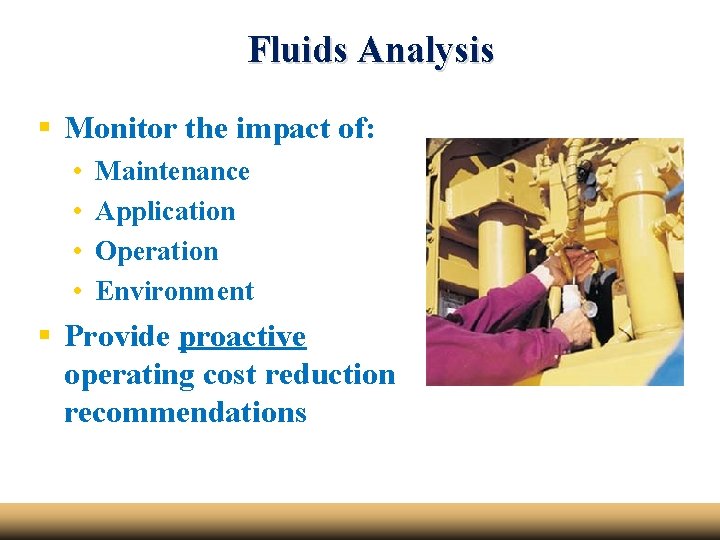
Fluids Analysis § Monitor the impact of: • • Maintenance Application Operation Environment § Provide proactive operating cost reduction recommendations
Planned Repair Indicators Your best tools to timely repairs “Anyone can run a machine to failure. . . The real skill is being able to determine the best time to do a before-failure repair. ”
Problem Indicators § Inspections § Component indicators • Engine • Transmission • Final Drives
Inspections § Visual - daily walk-arounds § Operational - operator feedback • • Odd noise Smoke Lack of power leaks § Catch small problems before they become major catastrophes
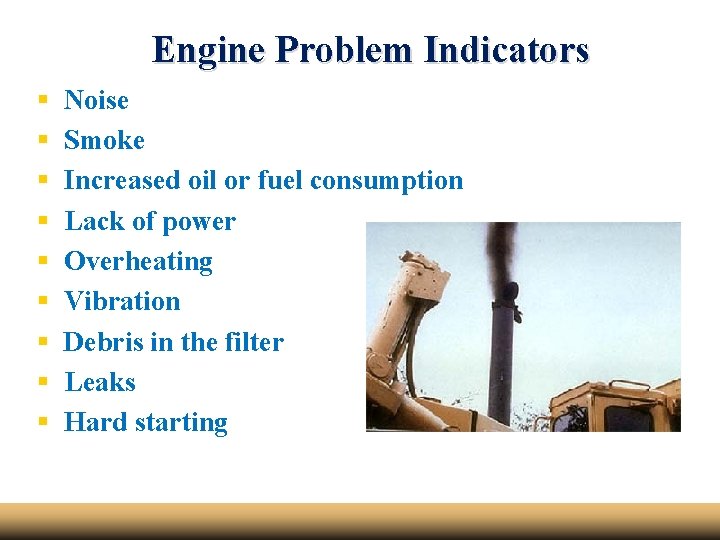
Engine Problem Indicators § § § § § Noise Smoke Increased oil or fuel consumption Lack of power Overheating Vibration Debris in the filter Leaks Hard starting
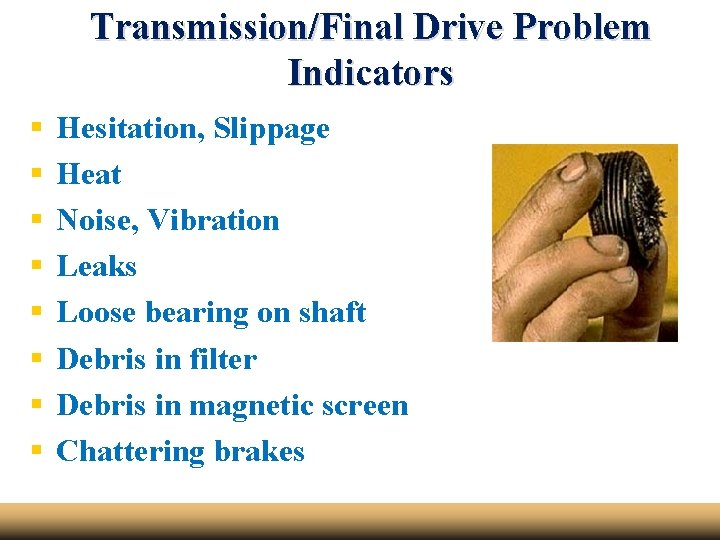
Transmission/Final Drive Problem Indicators § § § § Hesitation, Slippage Heat Noise, Vibration Leaks Loose bearing on shaft Debris in filter Debris in magnetic screen Chattering brakes
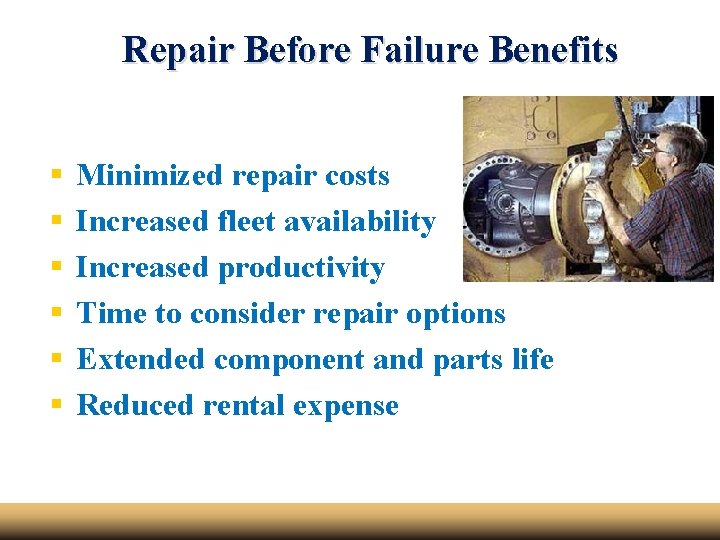
Repair Before Failure Benefits § § § Minimized repair costs Increased fleet availability Increased productivity Time to consider repair options Extended component and parts life Reduced rental expense
Overview I. Why repair before failure II. Determining when to repair III. Repair options
III. Repair Options § Repair costing options, according to: • Time & material • Flat rate labor & cost of parts used • Flat rate parts & labor
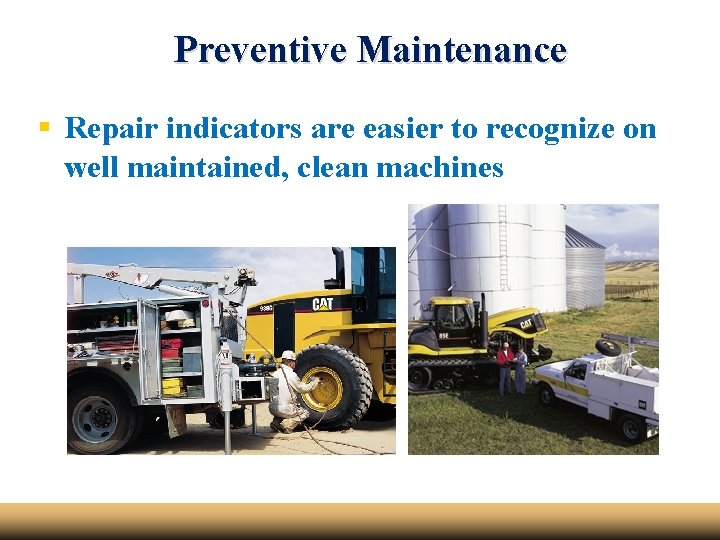
Preventive Maintenance § Repair indicators are easier to recognize on well maintained, clean machines
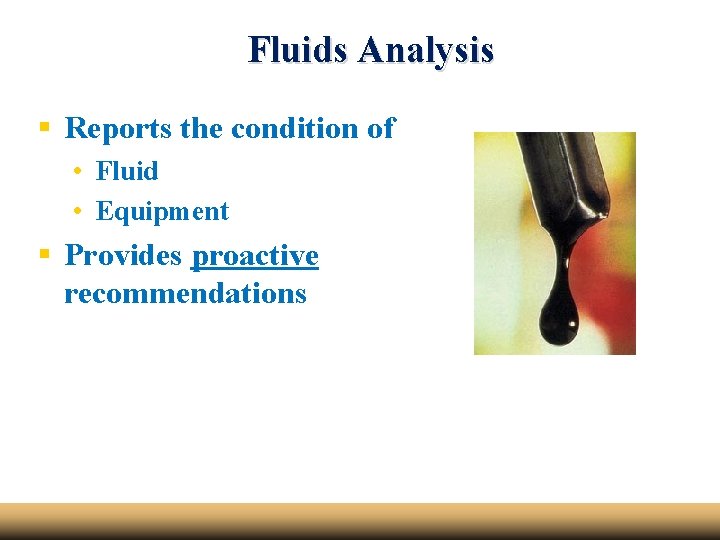
Fluids Analysis § Reports the condition of • Fluid • Equipment § Provides proactive recommendations
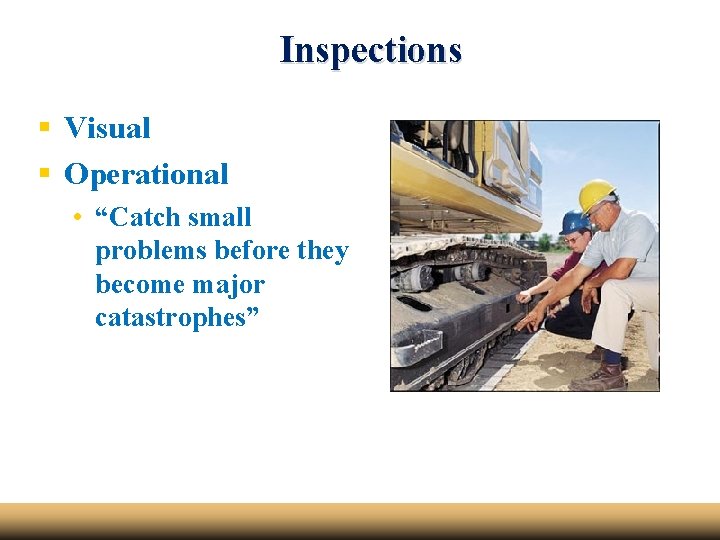
Inspections § Visual § Operational • “Catch small problems before they become major catastrophes”
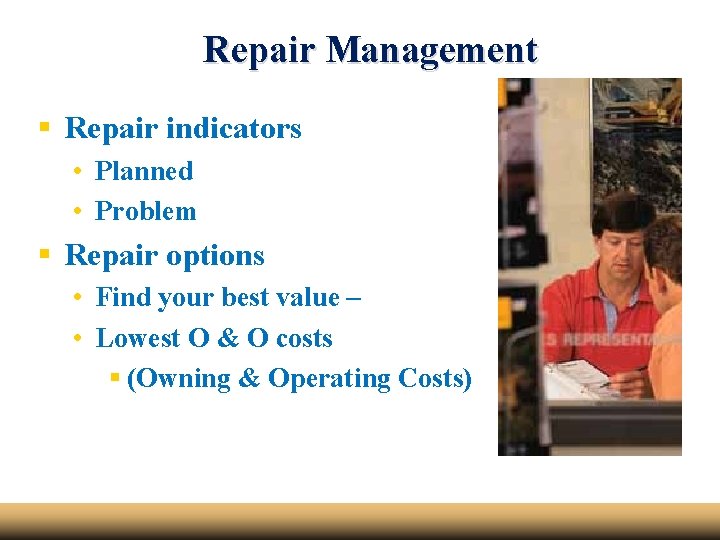
Repair Management § Repair indicators • Planned • Problem § Repair options • Find your best value – • Lowest O & O costs § (Owning & Operating Costs)
Scheduling § Comprehensive • Maintenance, inspections and planned repairs § Prevent failures • Catch problems when they’re small § Resources • Record-keeping & control systems manual • Related software
Record-keeping § § Document component history Locate problem areas Increase machine resale value Use record-keeping resources
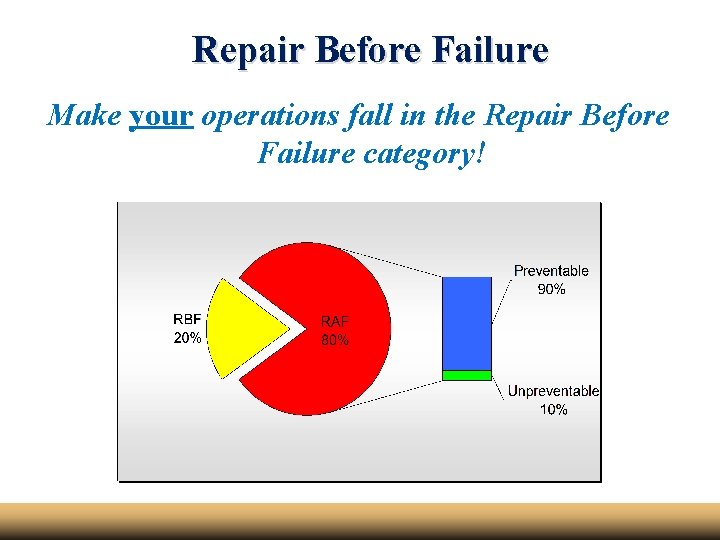
Repair Before Failure Make your operations fall in the Repair Before Failure category!
- Slides: 26