
Effect of Managerial overconfidence asymmetric Info and moral
- Slides: 20
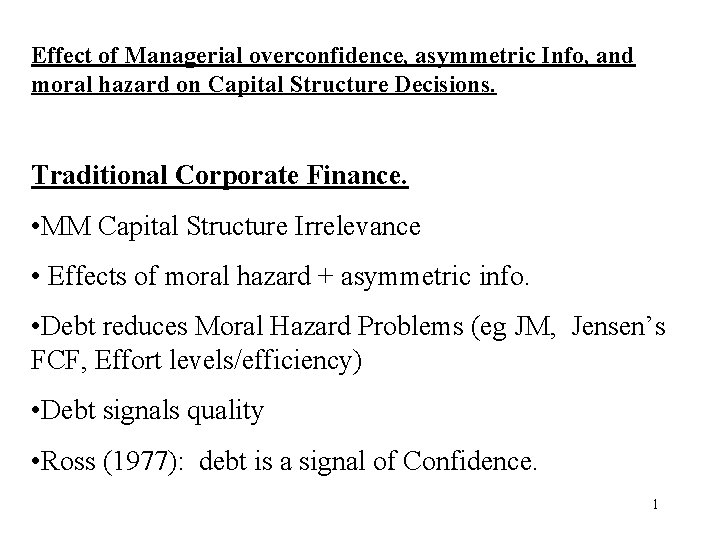
Effect of Managerial overconfidence, asymmetric Info, and moral hazard on Capital Structure Decisions. Traditional Corporate Finance. • MM Capital Structure Irrelevance • Effects of moral hazard + asymmetric info. • Debt reduces Moral Hazard Problems (eg JM, Jensen’s FCF, Effort levels/efficiency) • Debt signals quality • Ross (1977): debt is a signal of Confidence. 1
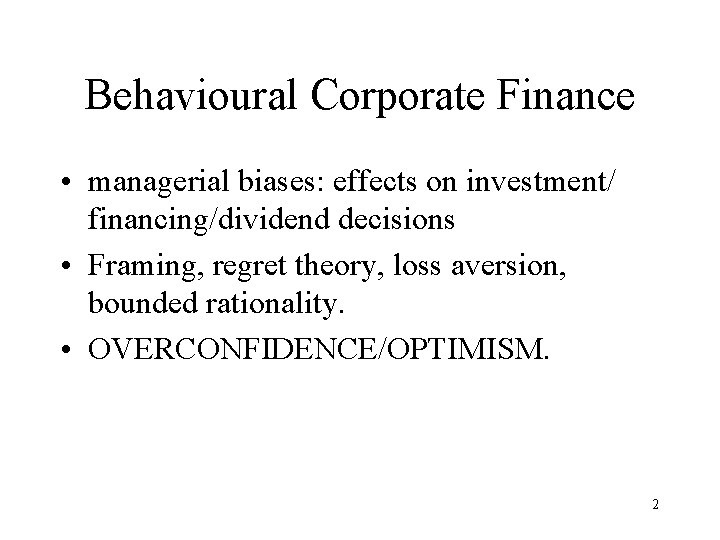
Behavioural Corporate Finance • managerial biases: effects on investment/ financing/dividend decisions • Framing, regret theory, loss aversion, bounded rationality. • OVERCONFIDENCE/OPTIMISM. 2
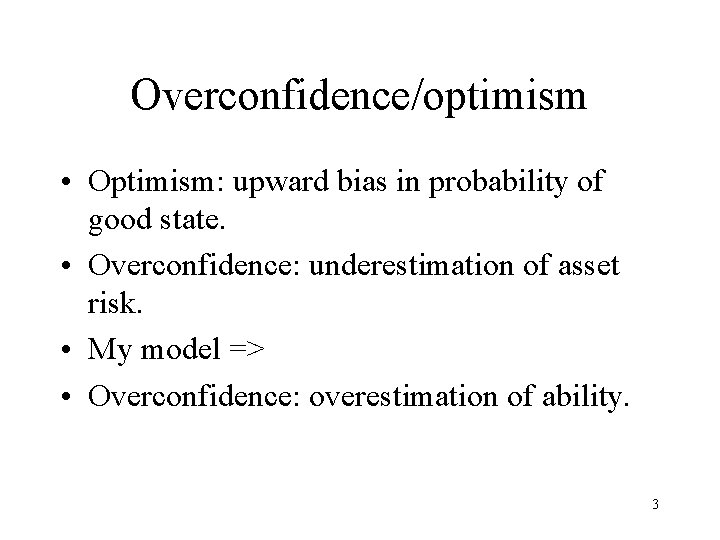
Overconfidence/optimism • Optimism: upward bias in probability of good state. • Overconfidence: underestimation of asset risk. • My model => • Overconfidence: overestimation of ability. 3
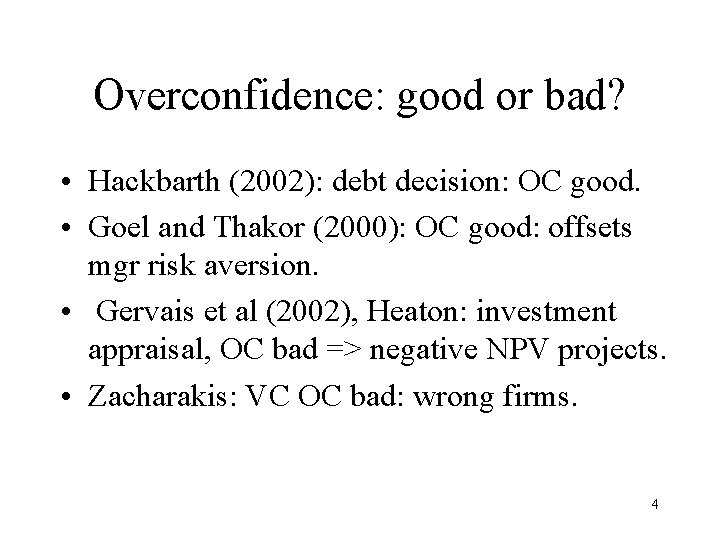
Overconfidence: good or bad? • Hackbarth (2002): debt decision: OC good. • Goel and Thakor (2000): OC good: offsets mgr risk aversion. • Gervais et al (2002), Heaton: investment appraisal, OC bad => negative NPV projects. • Zacharakis: VC OC bad: wrong firms. 4
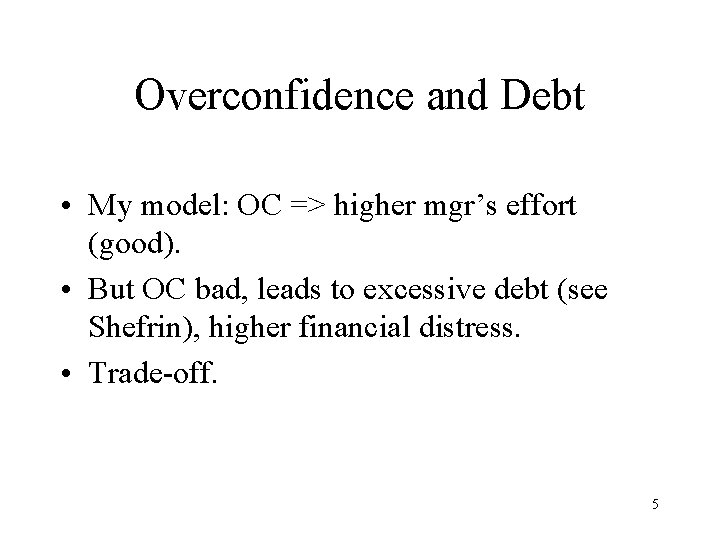
Overconfidence and Debt • My model: OC => higher mgr’s effort (good). • But OC bad, leads to excessive debt (see Shefrin), higher financial distress. • Trade-off. 5
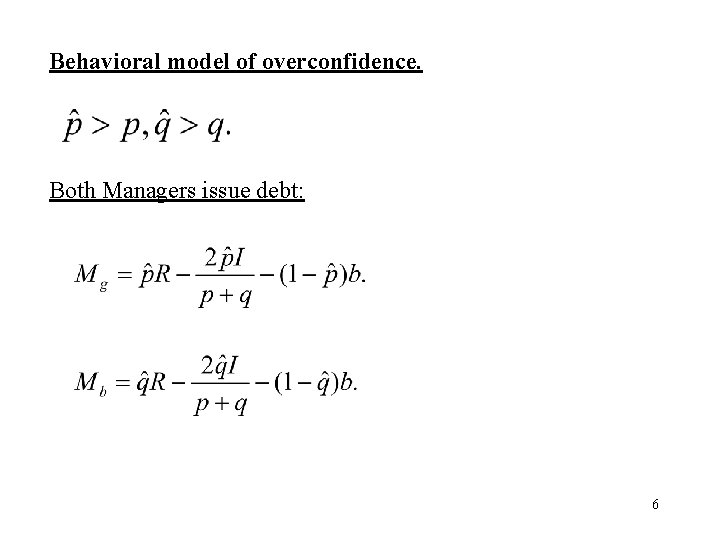
Behavioral model of overconfidence. Both Managers issue debt: 6
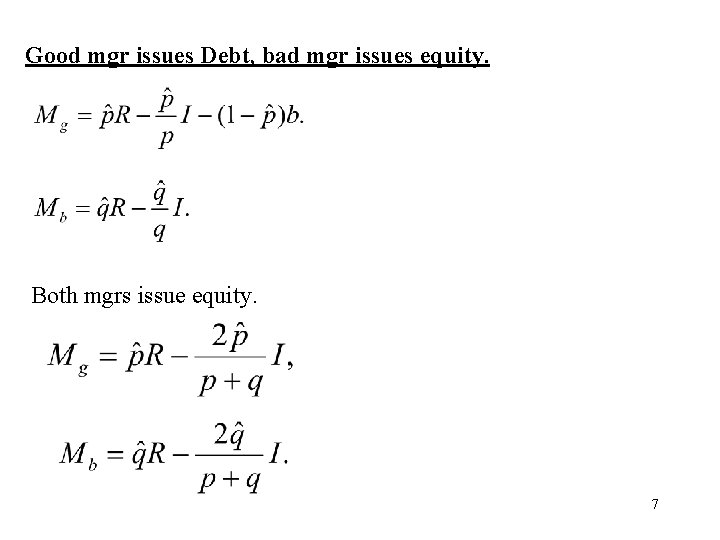
Good mgr issues Debt, bad mgr issues equity. Both mgrs issue equity. 7
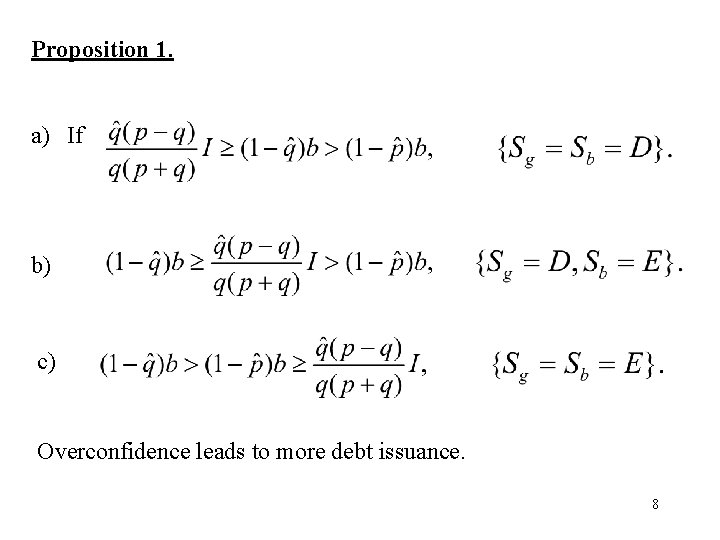
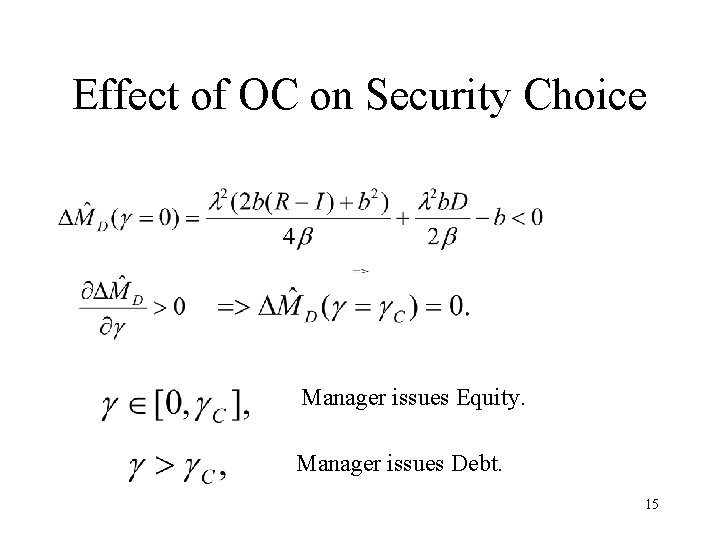
Proposition 1. a) If b) c) Overconfidence leads to more debt issuance. 8
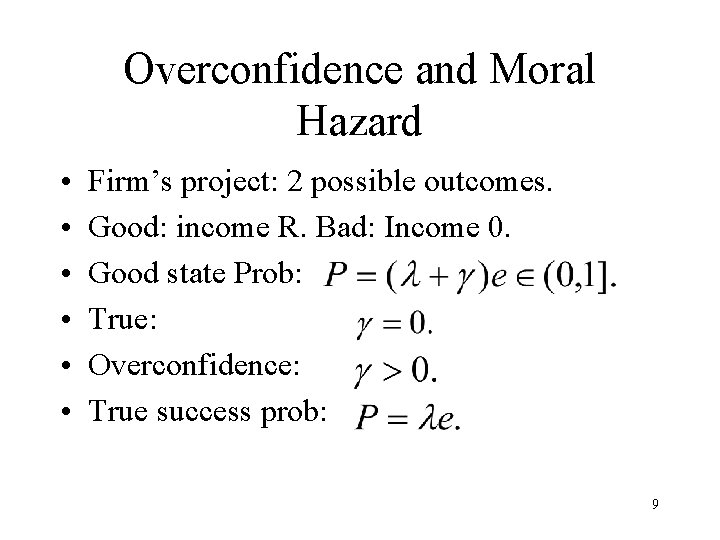
Overconfidence and Moral Hazard • • • Firm’s project: 2 possible outcomes. Good: income R. Bad: Income 0. Good state Prob: True: Overconfidence: True success prob: 9
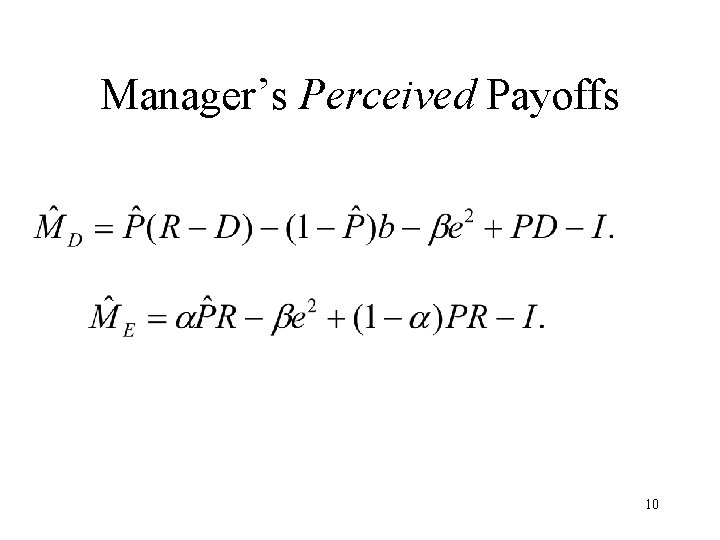
Manager’s Perceived Payoffs 10
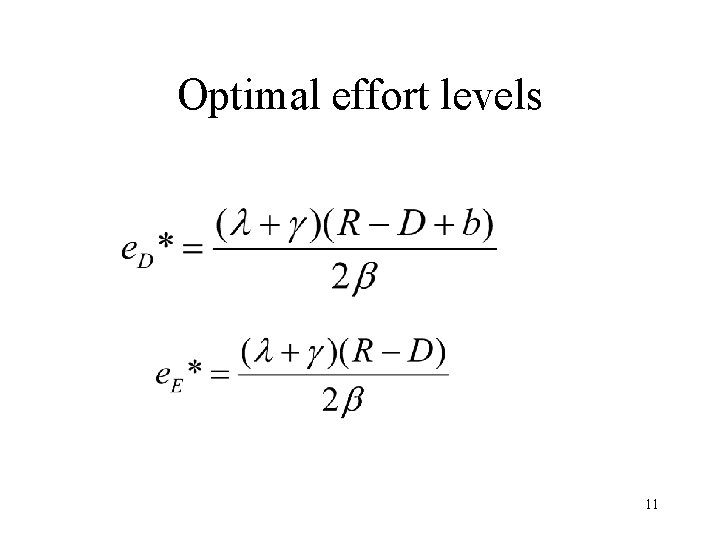
Optimal effort levels 11
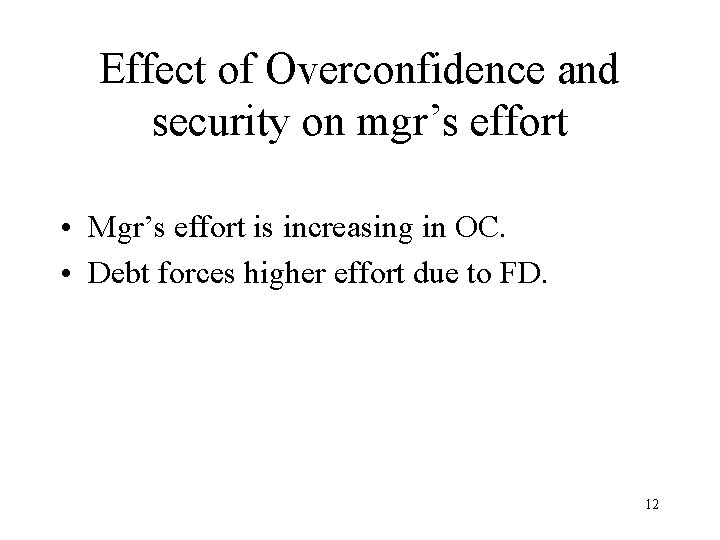
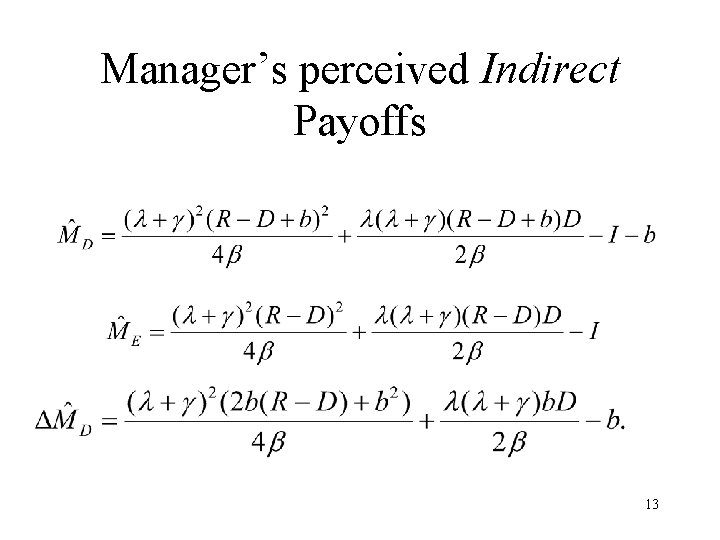
Effect of Overconfidence and security on mgr’s effort • Mgr’s effort is increasing in OC. • Debt forces higher effort due to FD. 12
Manager’s perceived Indirect Payoffs 13
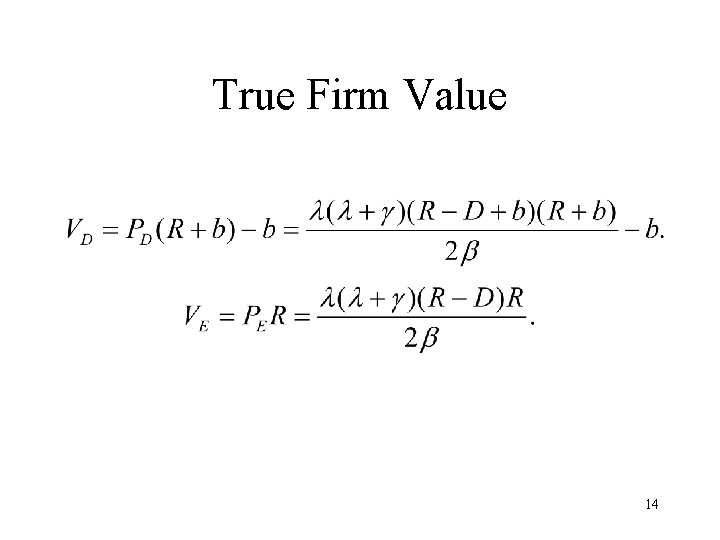
True Firm Value 14
Effect of OC on Security Choice Manager issues Equity. Manager issues Debt. 15
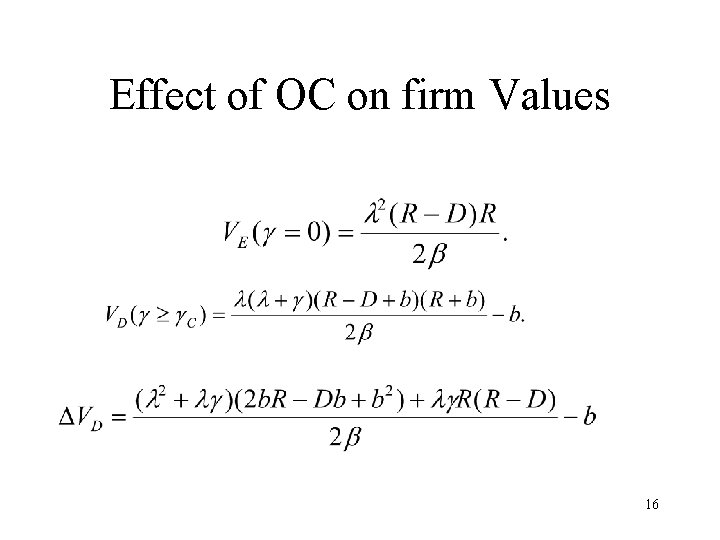
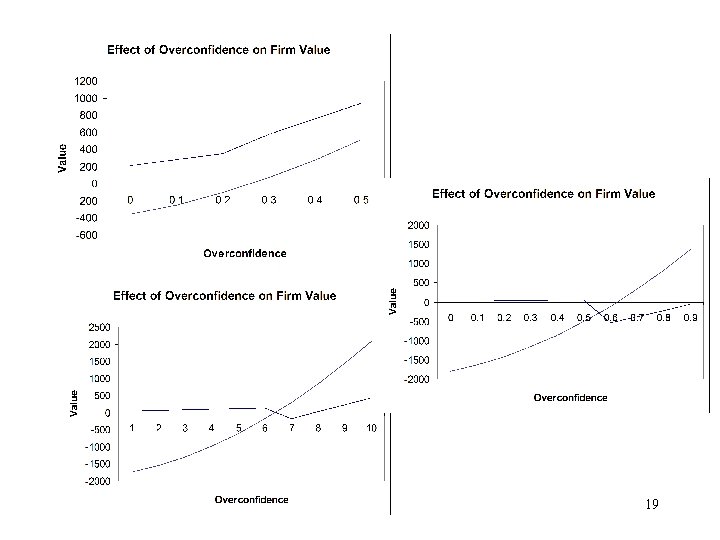
Effect of OC on firm Values 16
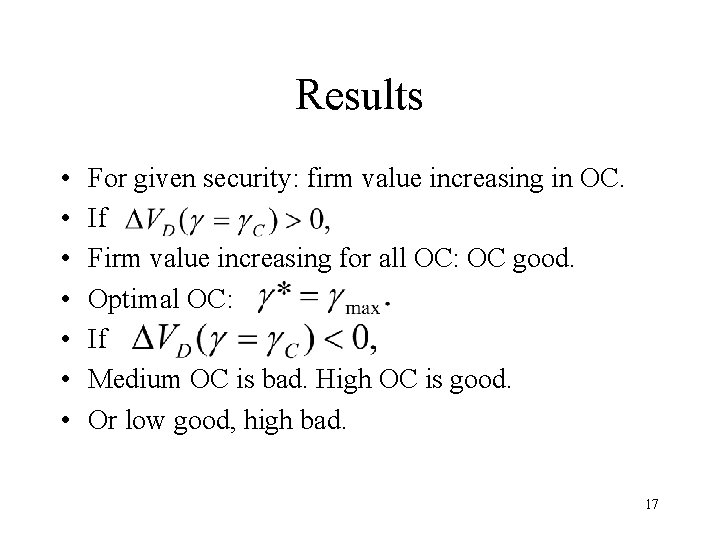
Results • • For given security: firm value increasing in OC. If Firm value increasing for all OC: OC good. Optimal OC: If Medium OC is bad. High OC is good. Or low good, high bad. 17
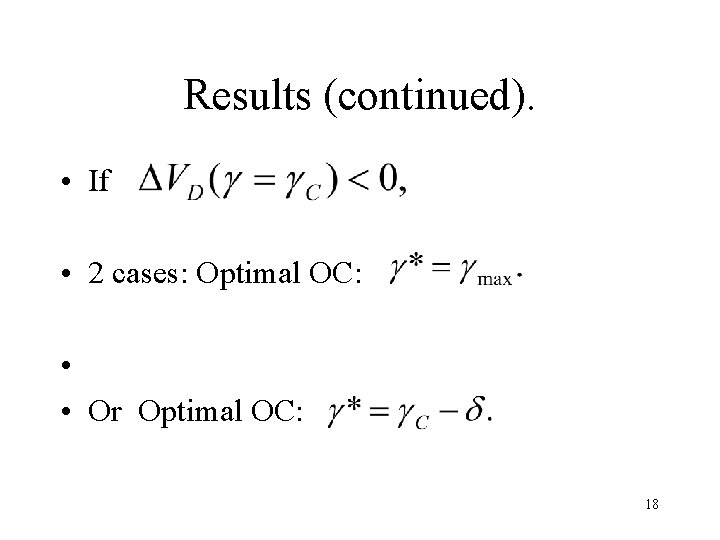
Results (continued). • If • 2 cases: Optimal OC: • • Or Optimal OC: 18
19
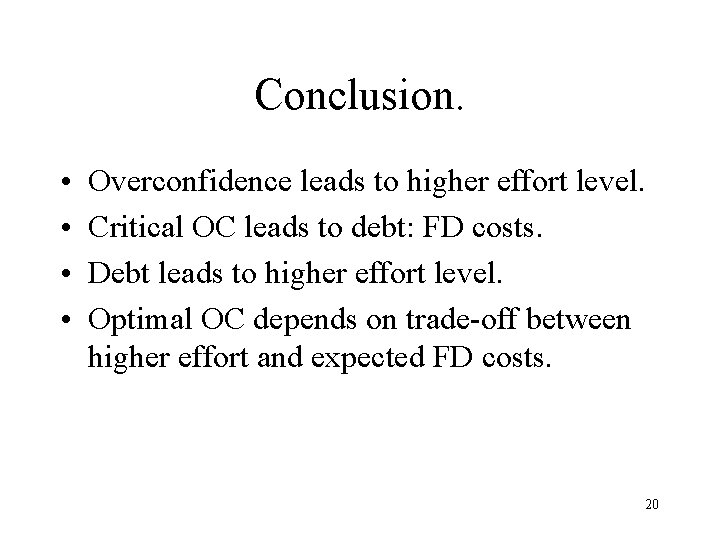
Conclusion. • • Overconfidence leads to higher effort level. Critical OC leads to debt: FD costs. Debt leads to higher effort level. Optimal OC depends on trade-off between higher effort and expected FD costs. 20