
Effect of fire and herbivory on basaltderived savanna
Effect of fire and herbivory on basalt-derived savanna soils Tercia Strydom, Thomas Rowe, Eddie Riddell, Navashni Govender, Simon Lorentz & Pieter Le Roux (tercia. strydom@sanparks. org) Centre for Water Resources Research
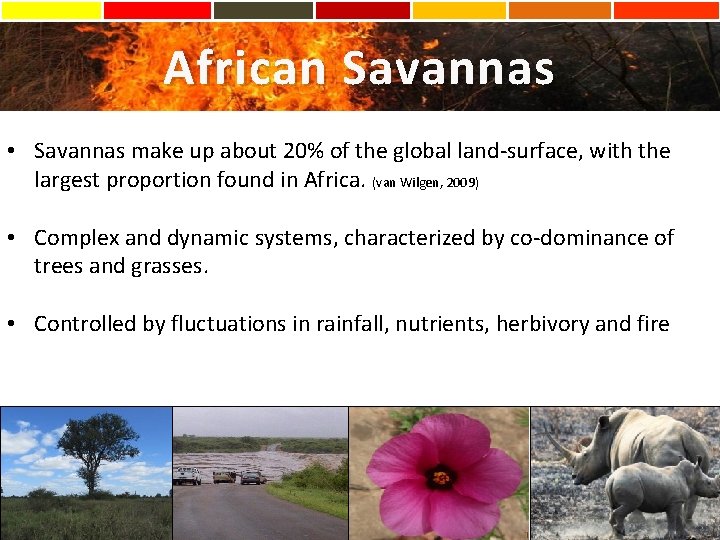
African Savannas • Savannas make up about 20% of the global land-surface, with the largest proportion found in Africa. (van Wilgen, 2009) • Complex and dynamic systems, characterized by co-dominance of trees and grasses. • Controlled by fluctuations in rainfall, nutrients, herbivory and fire

Savanna Fires • Savannas are considered as fire-driven systems (Bond and Keeley, 2005; Furley et al. , 2008) • Fire is a key abiotic driver influencing ecosystem processes and functioning • Savanna fires are ignited either by humans (accidental or on purpose) or naturally by lightning. (Archibald et al. , 2009) • Fire - important management tool in Kruger National Park (KNP)
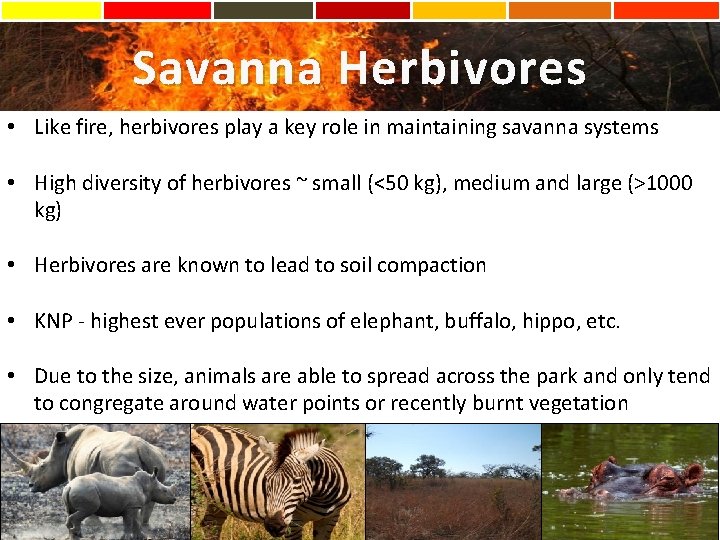
Savanna Herbivores • Like fire, herbivores play a key role in maintaining savanna systems • High diversity of herbivores ~ small (<50 kg), medium and large (>1000 kg) • Herbivores are known to lead to soil compaction • KNP - highest ever populations of elephant, buffalo, hippo, etc. • Due to the size, animals are able to spread across the park and only tend to congregate around water points or recently burnt vegetation
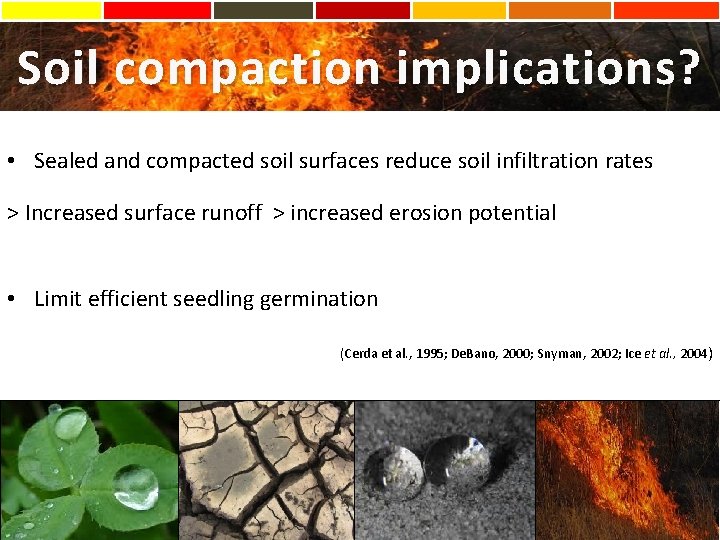
Soil compaction implications? • Sealed and compacted soil surfaces reduce soil infiltration rates > Increased surface runoff > increased erosion potential • Limit efficient seedling germination (Cerda et al. , 1995; De. Bano, 2000; Snyman, 2002; Ice et al. , 2004)
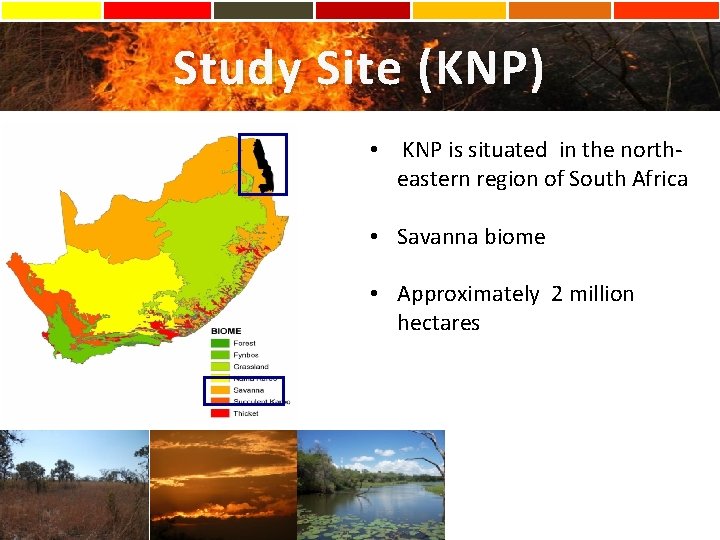
Study Site (KNP) • KNP is situated in the northeastern region of South Africa • Savanna biome • Approximately 2 million hectares
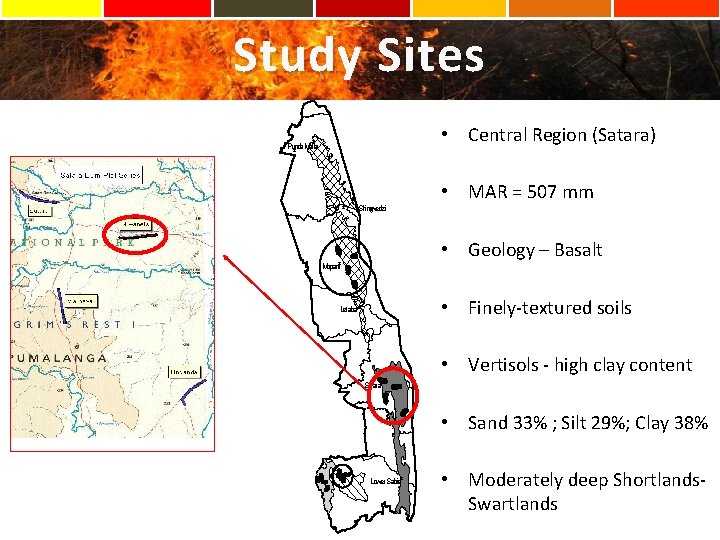
Study Sites • Central Region (Satara) Pund â a. Maria â • MAR = 507 mm Shingwedzi • Geology – Basalt â Mopani • Finely-textured soils Letaba â Satara â • Vertisols - high clay content • Sand 33% ; Silt 29%; Clay 38% Lower Sabieâ • Moderately deep Shortlands. Swartlands
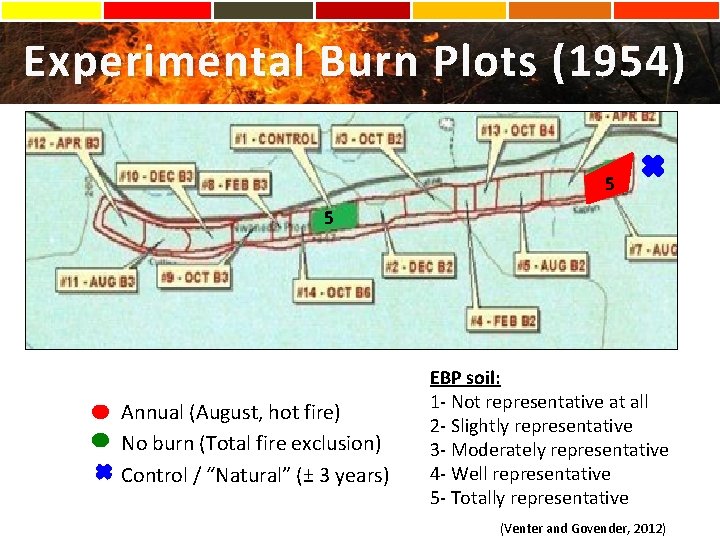
Experimental Burn Plots (1954) 5 5 5 Annual (August, hot fire) No burn (Total fire exclusion) Control / “Natural” (± 3 years) EBP soil: 1 - Not representative at all 2 - Slightly representative 3 - Moderately representative 4 - Well representative 5 - Totally representative (Venter and Govender, 2012)
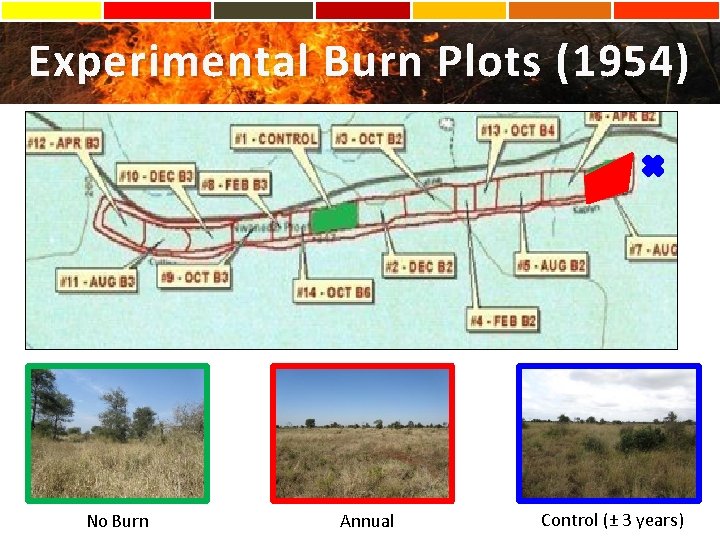
Experimental Burn Plots (1954) 5 No Burn Annual Control (± 3 years)
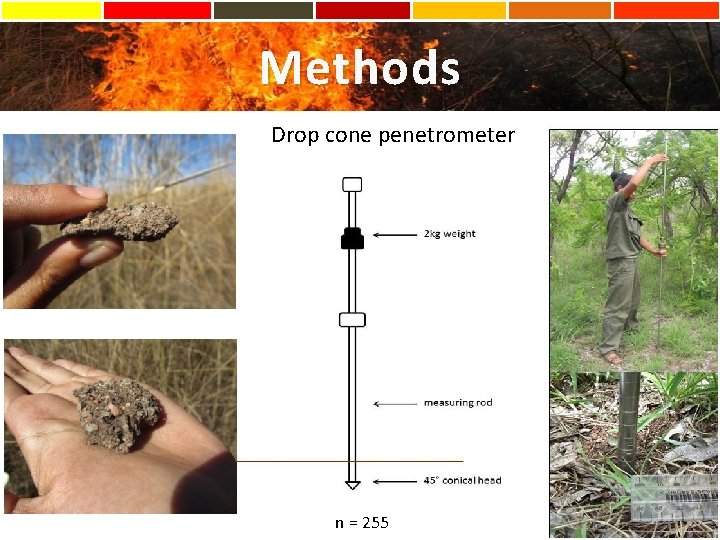
Methods Drop cone penetrometer n = 255
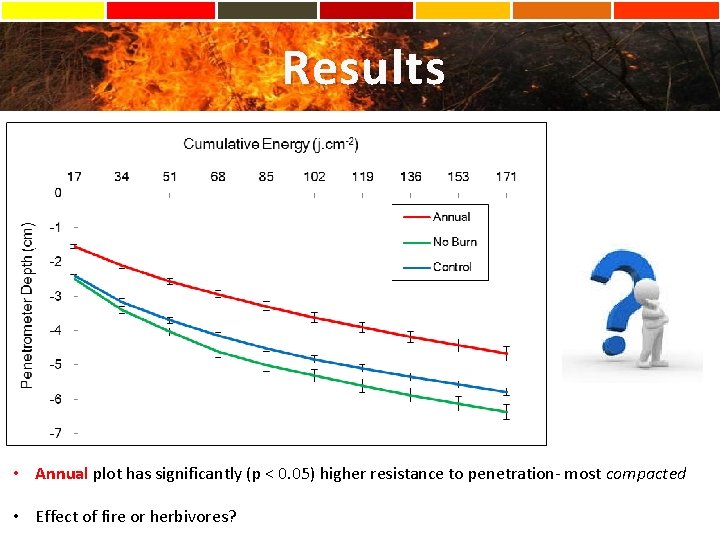
Results • Annual plot has significantly (p < 0. 05) higher resistance to penetration- most compacted • Effect of fire or herbivores? T Strydom
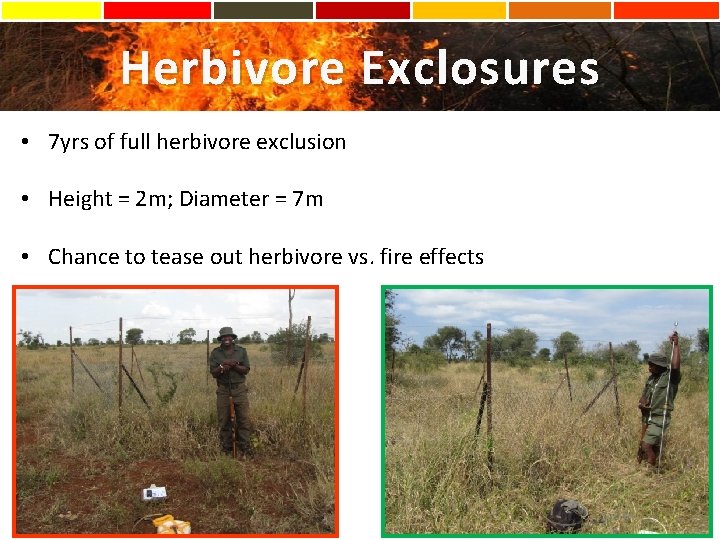
Herbivore Exclosures • 7 yrs of full herbivore exclusion • Height = 2 m; Diameter = 7 m • Chance to tease out herbivore vs. fire effects
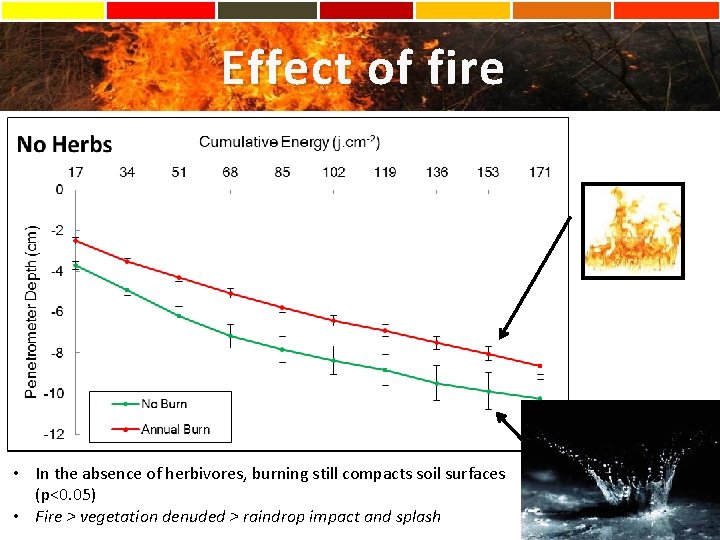
Effect of fire • In the absence of herbivores, burning still compacts soil surfaces (p<0. 05) • Fire > vegetation denuded > raindrop impact and splash T Strydom
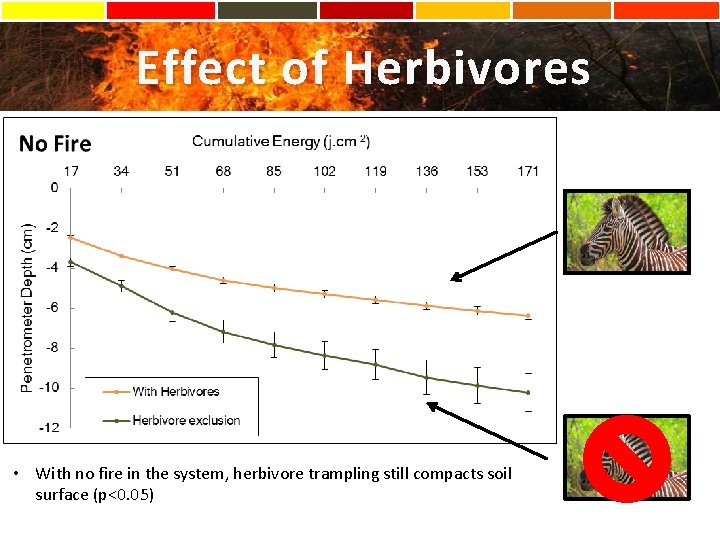
Effect of Herbivores • With no fire in the system, herbivore trampling still compacts soil surface (p<0. 05) T Strydom
So what? ? ? Did the raindrop impact and herbivore trampling lead to compacted and crusted soil surfaces which negatively influenced the soil hydrology?
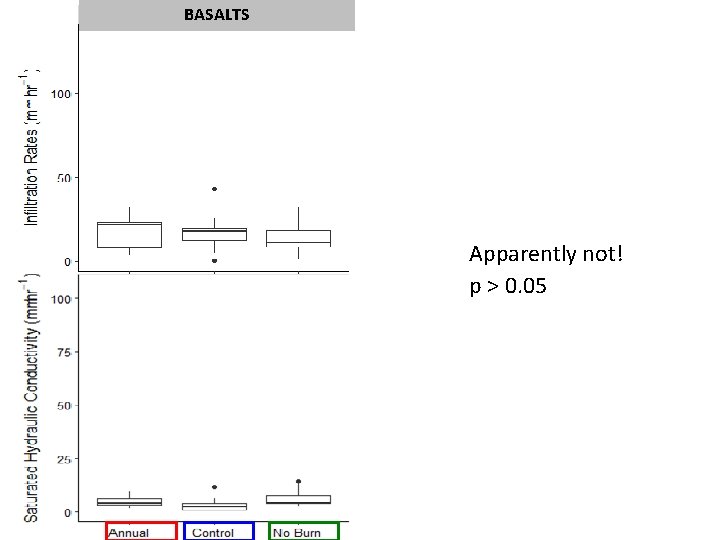
BASALTS Apparently not! p > 0. 05
Conclusion • In savannas, where both fire and herbivores are key drivers controlling ecosystem processes and functions, they also contribute significantly to soil compaction. • However, this compaction does not negatively affect soil infiltration rates or Ksat. Possible thresholds?
Acknowledgements • Junior Scientist Programme • Water Research Commission • Andrew Mellon Foundation • SANParks Staff • UKZN Staff • Game guards T Strydom
Thank you T Strydom
- Slides: 19