
EFFECT OF ELEVATED PISTON TEMPERATURE ON COMBUSTION CHAMBER
EFFECT OF ELEVATED PISTON TEMPERATURE ON COMBUSTION CHAMBER DEPOSIT GROWTH
COMBUSTION CHAMBER DEPOSITS o Combustion chamber deposits are recognized as a major contributor to the deterioration of SI engine performance o Their build-up leads to increased charge emissions, and increased tendency for knock o The factors influencing deposit formation are changes in fuel composition, coolant temperatures, engine speed and load, and spark timing
EFFECT OF CCD o The effect of combustion chamber deposits include octane requirement increase, decreased volumetric efficiency, combustion chamber deposit interference (CCDI) o Combustion chamber deposit interference is the result of physical contact between deposits on the piston top and cylinder head o combustion chamber deposits increases engineout emissions of pollutants such as unburned hydrocarbons and nitric oxides
EFFECT OF WALL TEMPERATURE ON CCD o formation of fuel deposits is due to the condensation of components like aromatics o With increased wall temperature hydrocarbon condensation decreases, deposit formation reduces
PURPOSE OF THIS STUDY o An experimental study was conducted to investigate the effect of elevated wall temperature on deposit growth o This study monitors CCD growth as a function of metal wall temperature o Attempts are made to determine critical wall temperature for no growth
EXPERIMENTAL SETUP TEST ENGINE CONFIGURATION o Performed on a single cylinder, variable compression ratio, cooperative fuel research engine o The fuel delivery system was converted from the CFR system to a modern EFI setup o Engine oil and water jacket cooling was provided by tube type heat exchanger o Oil temperature in the crankcase sump was maintained at 90± 2 ºC
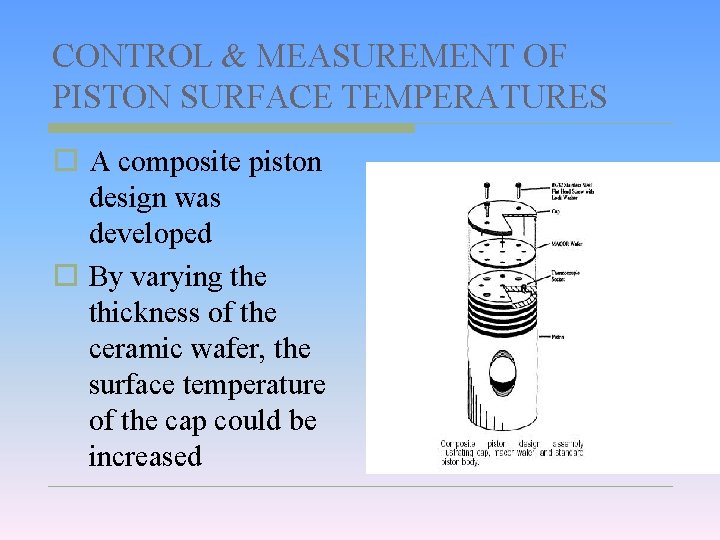
CONTROL & MEASUREMENT OF PISTON SURFACE TEMPERATURES o A composite piston design was developed o By varying the thickness of the ceramic wafer, the surface temperature of the cap could be increased
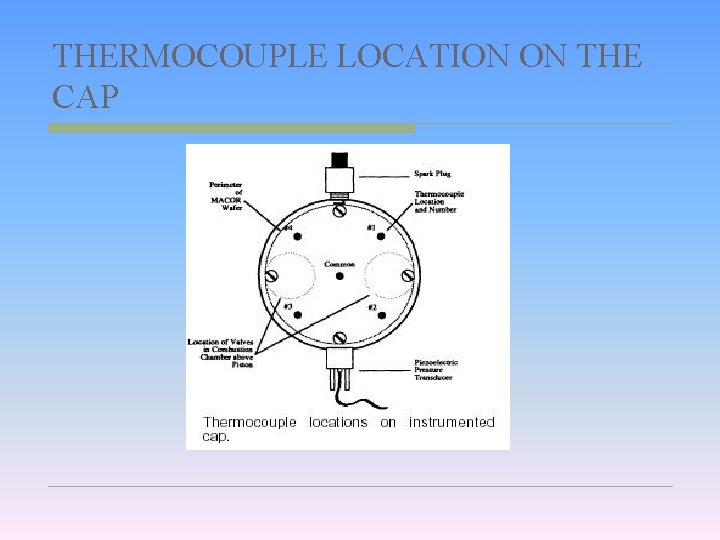
THERMOCOUPLE LOCATION ON THE CAP
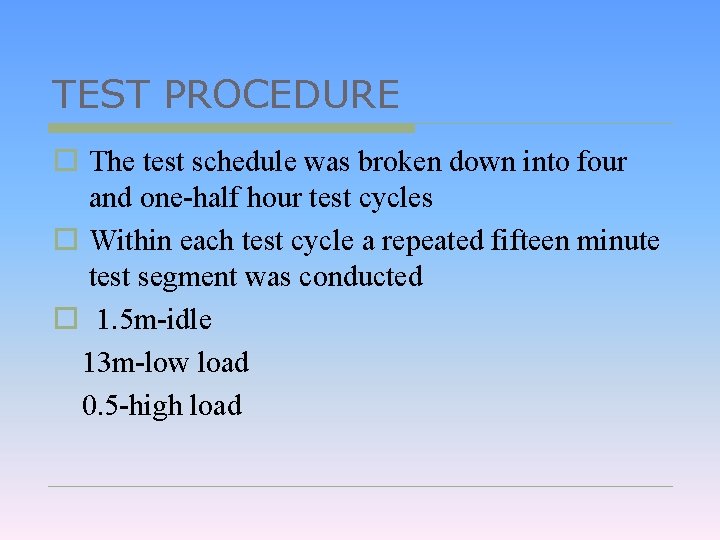
TEST PROCEDURE o The test schedule was broken down into four and one-half hour test cycles o Within each test cycle a repeated fifteen minute test segment was conducted o 1. 5 m-idle 13 m-low load 0. 5 -high load

MONITORING OF DEPOSIT GROWTH o A technique for monitoring deposit growth is through the measurement of local surface temperature using thermocouples o As deposit buildup on the surface, forms insulation barrier, reduces heat flow, reduces wall’s surface temperature o Rate of change of wall surface temperature is indicative of rate of deposit growth
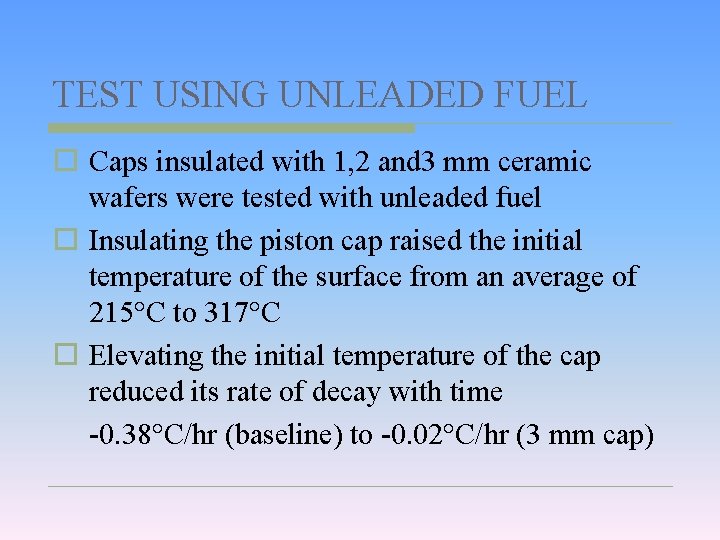
TEST USING UNLEADED FUEL o Caps insulated with 1, 2 and 3 mm ceramic wafers were tested with unleaded fuel o Insulating the piston cap raised the initial temperature of the surface from an average of 215°C to 317°C o Elevating the initial temperature of the cap reduced its rate of decay with time -0. 38°C/hr (baseline) to -0. 02°C/hr (3 mm cap)
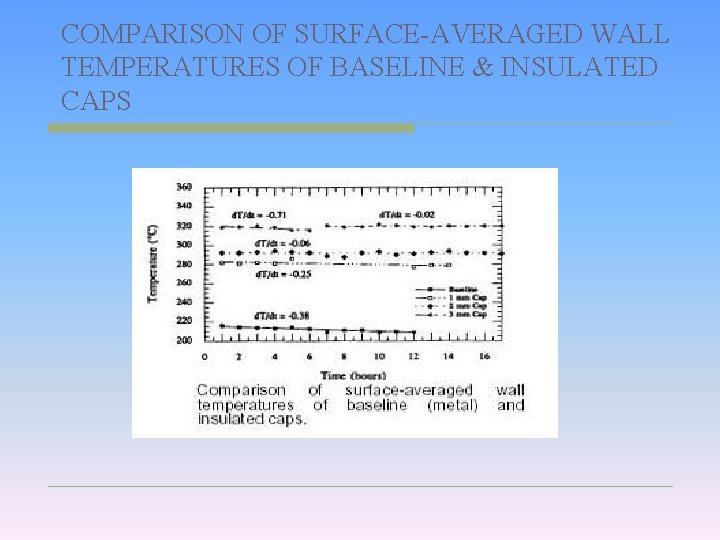
COMPARISON OF SURFACE-AVERAGED WALL TEMPERATURES OF BASELINE & INSULATED CAPS
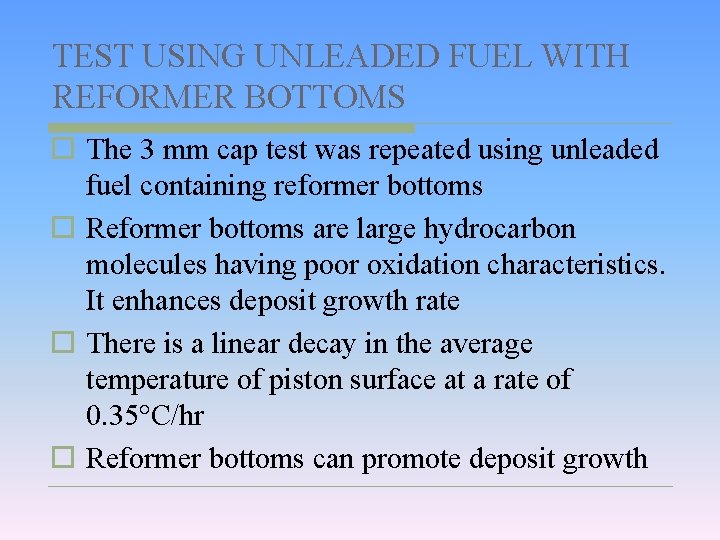
TEST USING UNLEADED FUEL WITH REFORMER BOTTOMS o The 3 mm cap test was repeated using unleaded fuel containing reformer bottoms o Reformer bottoms are large hydrocarbon molecules having poor oxidation characteristics. It enhances deposit growth rate o There is a linear decay in the average temperature of piston surface at a rate of 0. 35°C/hr o Reformer bottoms can promote deposit growth
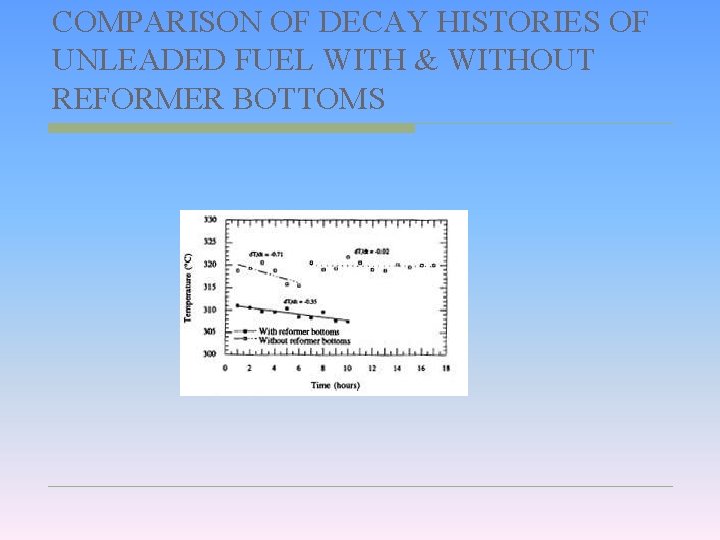
COMPARISON OF DECAY HISTORIES OF UNLEADED FUEL WITH & WITHOUT REFORMER BOTTOMS
TEST ANALYSIS-PHYSICAL ANALYSIS o At the end of baseline test(12 hr) region 1, 2 &4 -dark brown in color region 3 -lighter shade of brown using 1 mm insulated cap average deposit thickness-6. 28μm using 2 mm insulated cap-1. 83µm using 3 mm insulated cap-negligible deposit accumulation
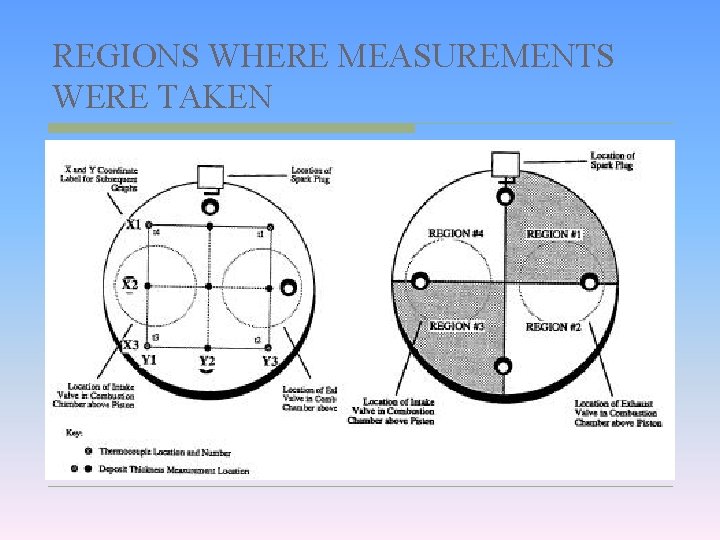
REGIONS WHERE MEASUREMENTS WERE TAKEN
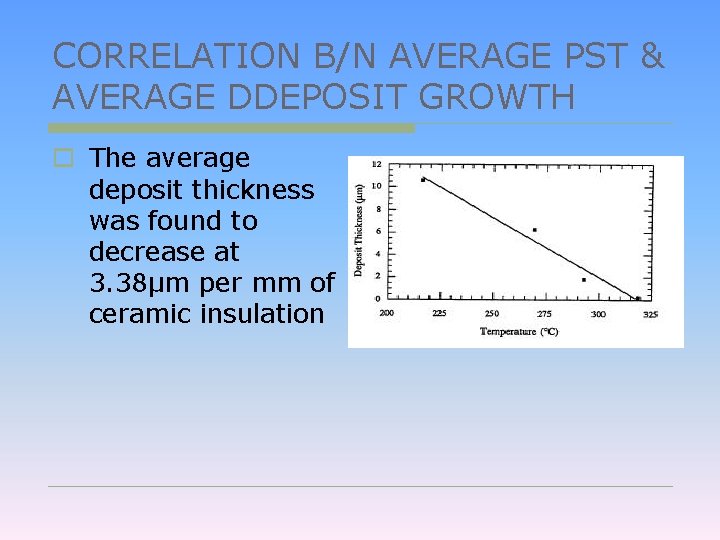
CORRELATION B/N AVERAGE PST & AVERAGE DDEPOSIT GROWTH o The average deposit thickness was found to decrease at 3. 38µm per mm of ceramic insulation
CHEMICAL ANALYSIS o According to test data, the deposits in the end gas region have highest fuel content. It is due to the deposition of unburned hydrocarbon products o The region b/n sparkplug and intake valve have lower fuel content. This is due to fuel vaporization (16ºC more hotter) o Deposits in the cap’s edge have highest oil content
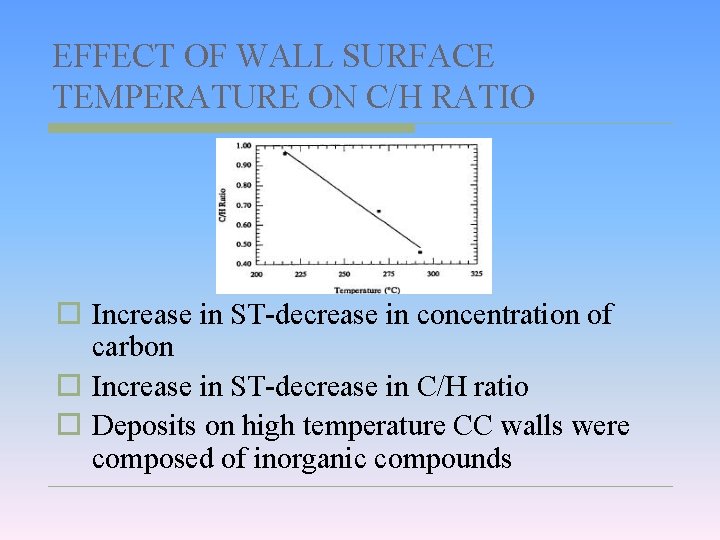
EFFECT OF WALL SURFACE TEMPERATURE ON C/H RATIO o Increase in ST-decrease in concentration of carbon o Increase in ST-decrease in C/H ratio o Deposits on high temperature CC walls were composed of inorganic compounds
CONCLUSION o Elevating piston temperature critically affected deposit formation in SI engine combustion chamber o No deposit growth was obtained when operating with a WST of 320°C o Test using unleaded fuel with reformer bottoms yielded a 55% increase in deposit growth o Elevating WT, decrease C/H ratio of deposits

o. THANK YOU
- Slides: 21