
Effect of Anthropogenic Activities on the Environment INCREASE




- Slides: 51
Effect of Anthropogenic Activities on the Environment
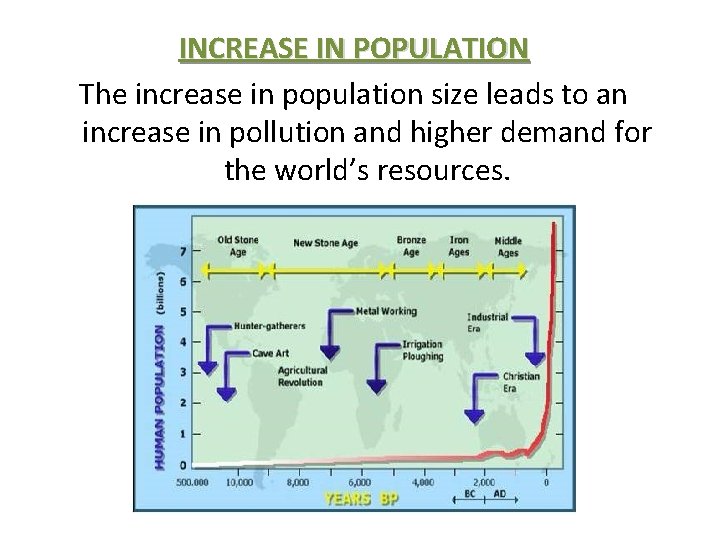
INCREASE IN POPULATION The increase in population size leads to an increase in pollution and higher demand for the world’s resources.
Deforestation Definition large areas of land are logged Problems • flooding • landslides and mudslides can occur • topsoil is washed away • trees are also an important component of the water cycle • forests home to a large number of animals • The slash-and-burn method of clearing tropical rain forests for agriculture increases atmospheric CO 2, which contributes to the greenhouse effect. • Because most of the nutrients in a tropical rain forest are stored in the vegetation, burning the forest destroys the nutrients.
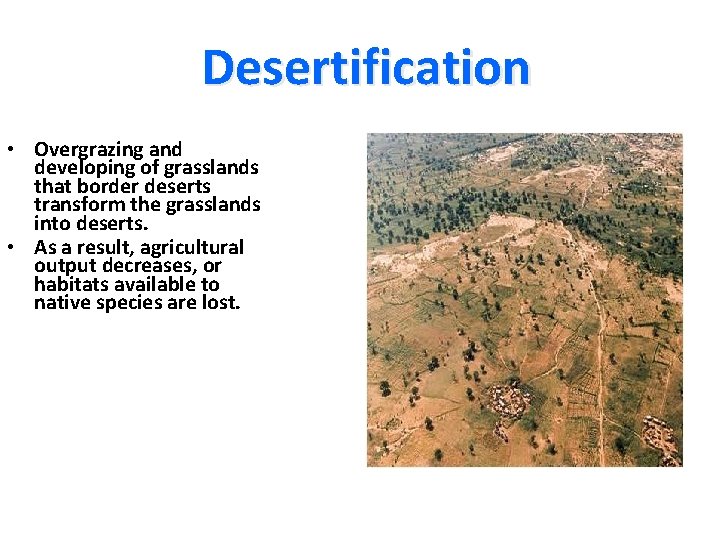
Desertification • Overgrazing and developing of grasslands that border deserts transform the grasslands into deserts. • As a result, agricultural output decreases, or habitats available to native species are lost.
Over harvesting Definition Removal of plants or animals to the point that it is challenging for them to maintain viable population level. Problems • imbalance in the food chain • coming to an end or dying out of a species
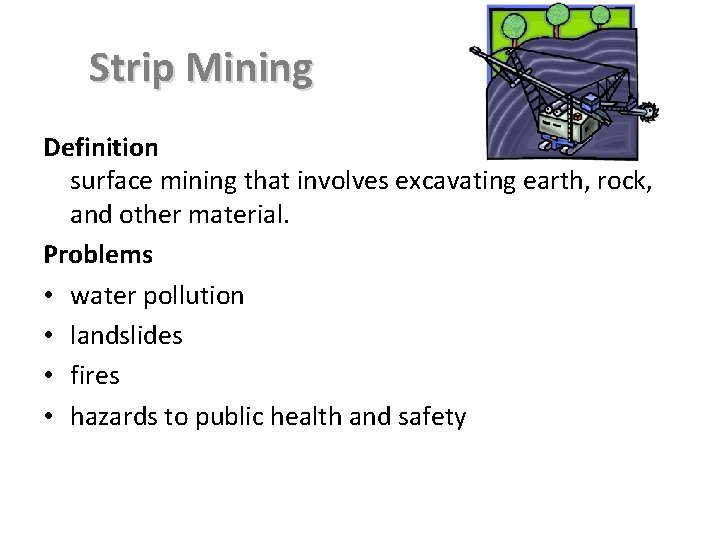
Strip Mining Definition surface mining that involves excavating earth, rock, and other material. Problems • water pollution • landslides • fires • hazards to public health and safety
Intensive Farming • Farming has become more intensive to provide a higher % yield from land. • Many people regard intensive farming of animals to be cruel. • In order to produce more food from the land farmers have to use more fertilizers and pesticides.
Problems with Fertilizers • Fertilizers enable farmers to grow more food as they are replacing the nutrients removed from the soil by plants. • However, if too much fertilizer is added and it then rains, the fertilizer finds its way into rivers and lakes. • This causes the water plants to grow and as there is competition for light, some will die.
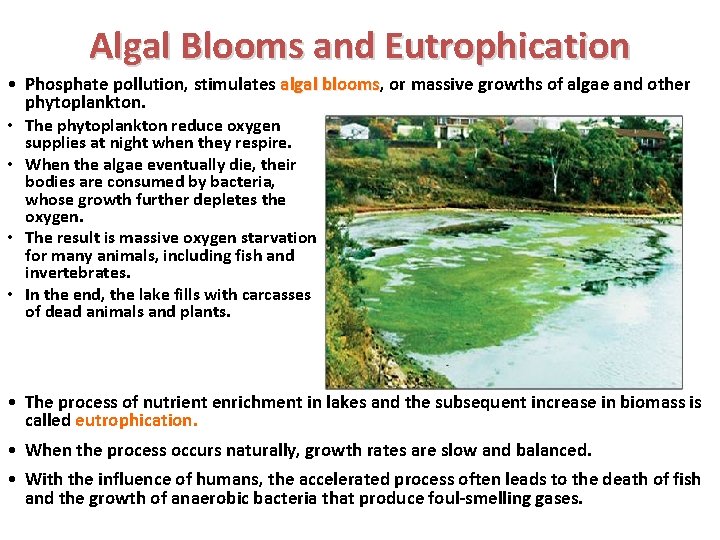
Algal Blooms and Eutrophication • Phosphate pollution, stimulates algal blooms, blooms or massive growths of algae and other phytoplankton. • The phytoplankton reduce oxygen supplies at night when they respire. • When the algae eventually die, their bodies are consumed by bacteria, whose growth further depletes the oxygen. • The result is massive oxygen starvation for many animals, including fish and invertebrates. • In the end, the lake fills with carcasses of dead animals and plants. • The process of nutrient enrichment in lakes and the subsequent increase in biomass is called eutrophication. • When the process occurs naturally, growth rates are slow and balanced. • With the influence of humans, the accelerated process often leads to the death of fish and the growth of anaerobic bacteria that produce foul-smelling gases.
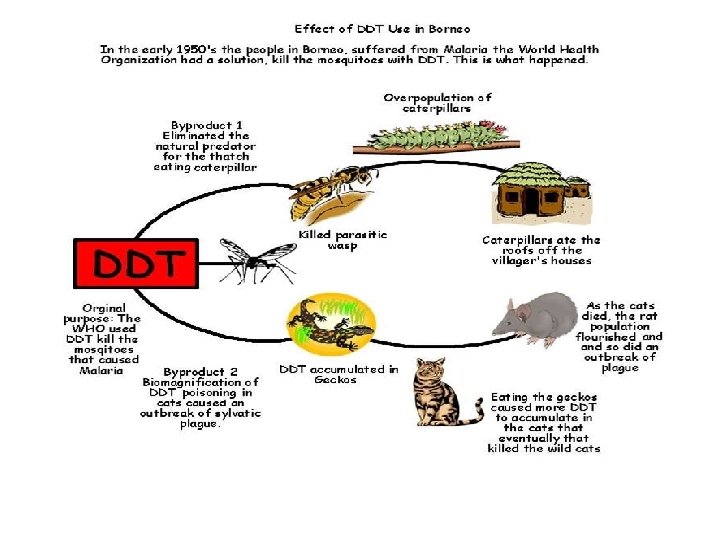
Pesticides • Pesticides kill insects that will damage crops • They also kill harmless insects or can get washed into rivers and pollute the water • They may even end up in the food chain
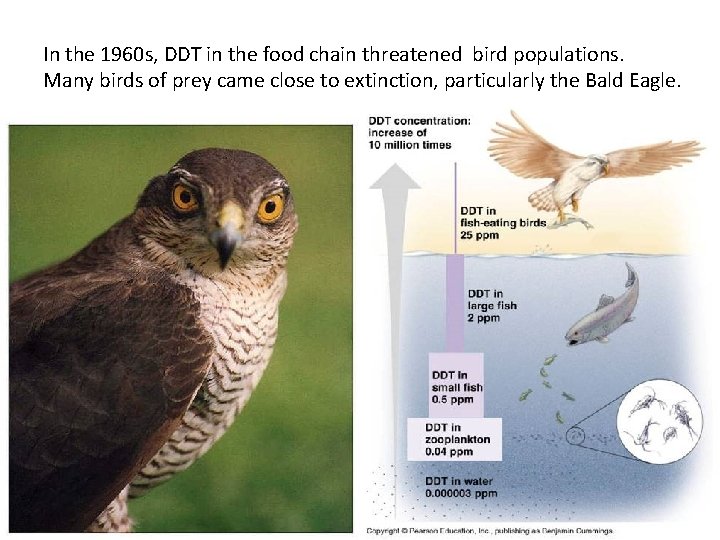
In the 1960 s, DDT in the food chain threatened bird populations. Many birds of prey came close to extinction, particularly the Bald Eagle.
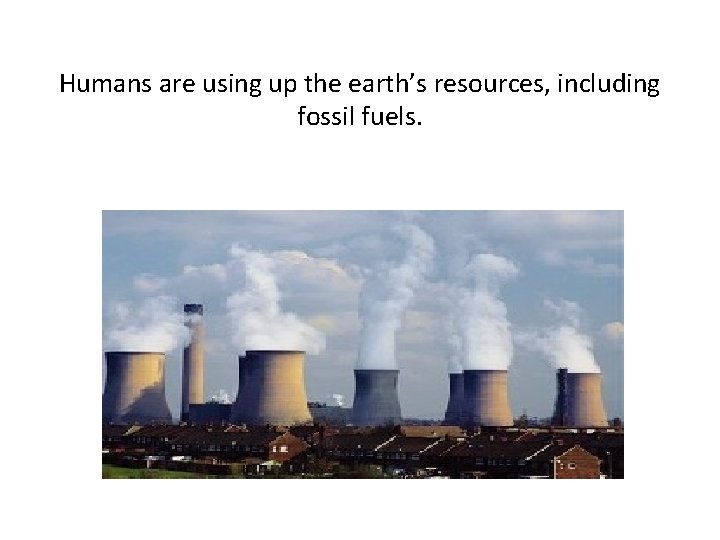
Humans are using up the earth’s resources, including fossil fuels.
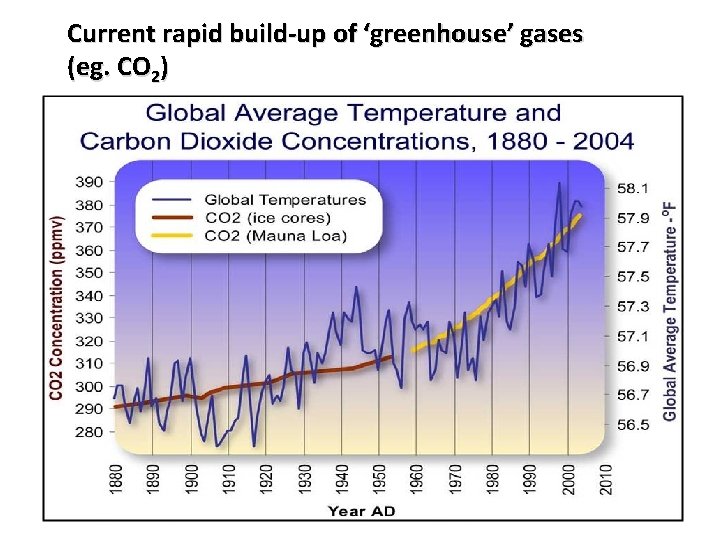
Current rapid build-up of ‘greenhouse’ gases (eg. CO 2)
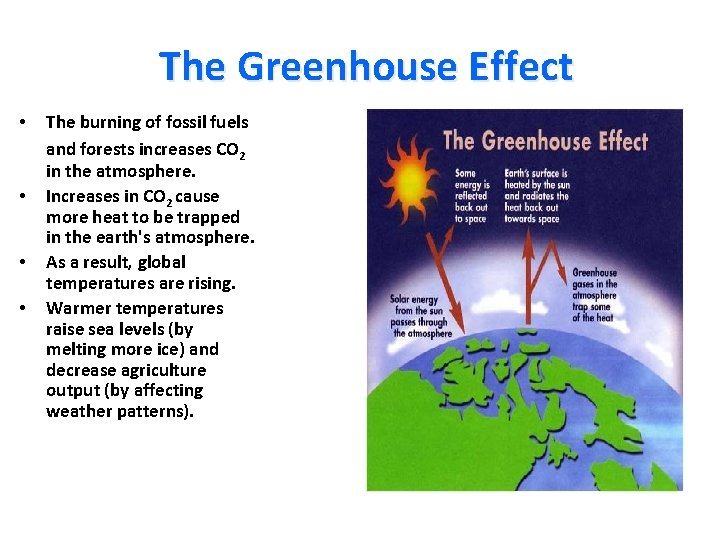
The Greenhouse Effect • • The burning of fossil fuels and forests increases CO 2 in the atmosphere. Increases in CO 2 cause more heat to be trapped in the earth's atmosphere. As a result, global temperatures are rising. Warmer temperatures raise sea levels (by melting more ice) and decrease agriculture output (by affecting weather patterns).
Global Warming Definition Increase in the temperatures of the earth due to release of greenhouse gases like carbon dioxide and methane from industries and vehicles Problems • Glacier melting causes flooding to the low lying areas including Bangladesh, parts of Africa and even major cities like London and New York. • changing weather patterns around the world.
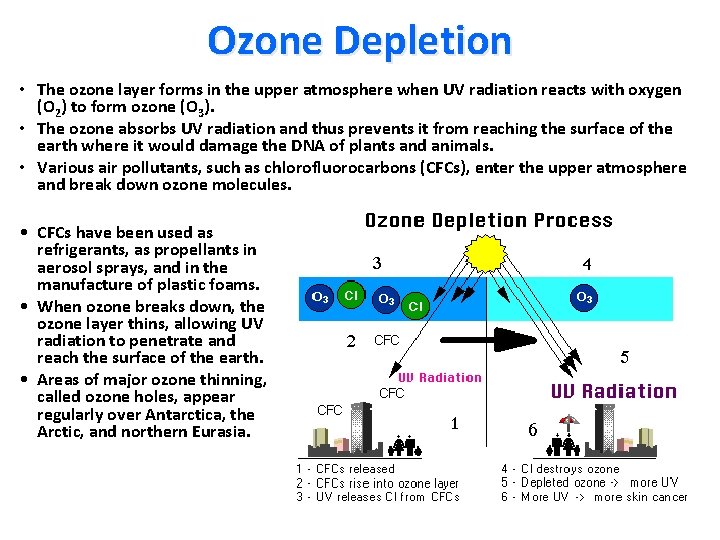
Ozone Depletion • The ozone layer forms in the upper atmosphere when UV radiation reacts with oxygen (O 2) to form ozone (O 3). • The ozone absorbs UV radiation and thus prevents it from reaching the surface of the earth where it would damage the DNA of plants and animals. • Various air pollutants, such as chlorofluorocarbons (CFCs), enter the upper atmosphere and break down ozone molecules. • CFCs have been used as refrigerants, as propellants in aerosol sprays, and in the manufacture of plastic foams. • When ozone breaks down, the ozone layer thins, allowing UV radiation to penetrate and reach the surface of the earth. • Areas of major ozone thinning, called ozone holes, appear regularly over Antarctica, the Arctic, and northern Eurasia.
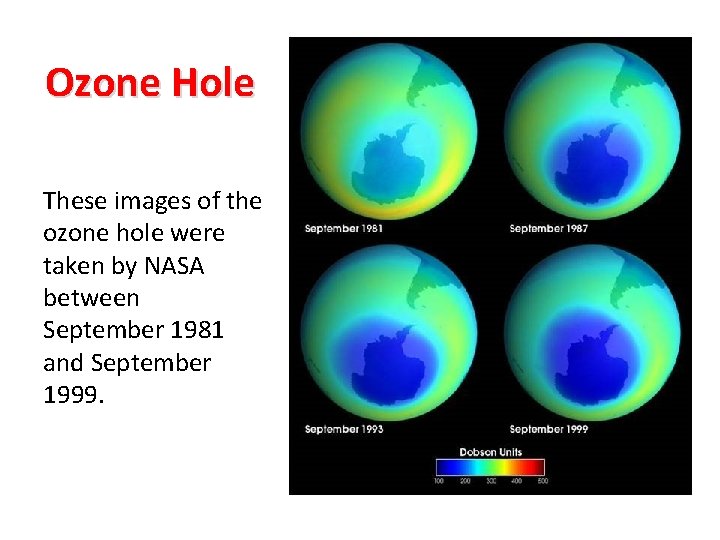
Ozone Hole These images of the ozone hole were taken by NASA between September 1981 and September 1999.
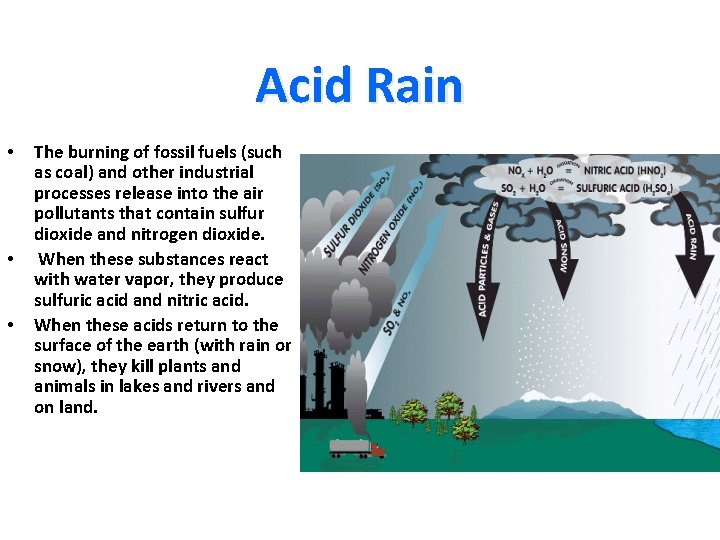
Acid Rain • • • The burning of fossil fuels (such as coal) and other industrial processes release into the air pollutants that contain sulfur dioxide and nitrogen dioxide. When these substances react with water vapor, they produce sulfuric acid and nitric acid. When these acids return to the surface of the earth (with rain or snow), they kill plants and animals in lakes and rivers and on land.
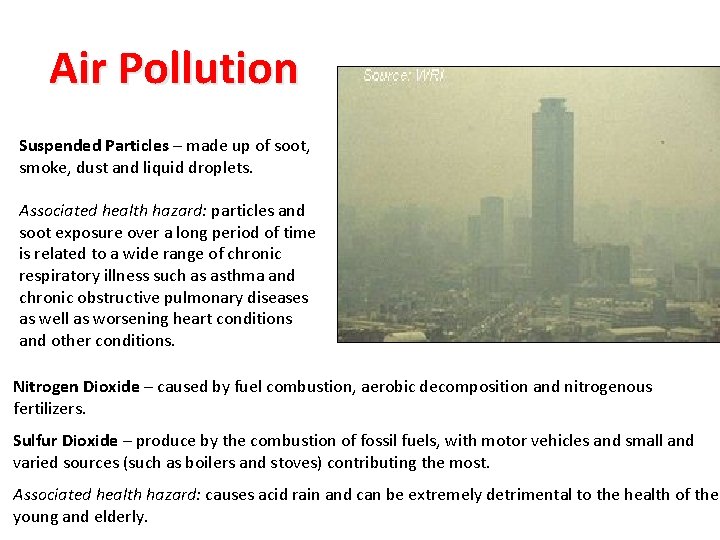
Air Pollution Suspended Particles – made up of soot, smoke, dust and liquid droplets. Associated health hazard: particles and soot exposure over a long period of time is related to a wide range of chronic respiratory illness such as asthma and chronic obstructive pulmonary diseases as well as worsening heart conditions and other conditions. Nitrogen Dioxide – caused by fuel combustion, aerobic decomposition and nitrogenous fertilizers. Sulfur Dioxide – produce by the combustion of fossil fuels, with motor vehicles and small and varied sources (such as boilers and stoves) contributing the most. Associated health hazard: causes acid rain and can be extremely detrimental to the health of the young and elderly.
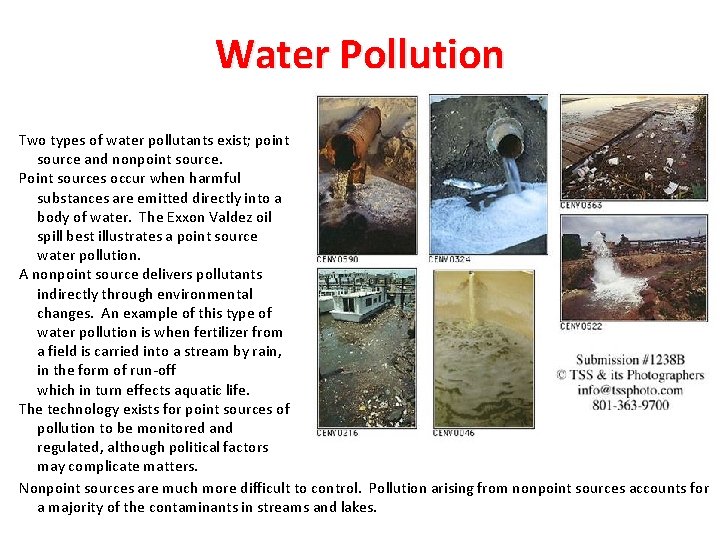
Water Pollution Two types of water pollutants exist; point source and nonpoint source. Point sources occur when harmful substances are emitted directly into a body of water. The Exxon Valdez oil spill best illustrates a point source water pollution. A nonpoint source delivers pollutants indirectly through environmental changes. An example of this type of water pollution is when fertilizer from a field is carried into a stream by rain, in the form of run-off which in turn effects aquatic life. The technology exists for point sources of pollution to be monitored and regulated, although political factors may complicate matters. Nonpoint sources are much more difficult to control. Pollution arising from nonpoint sources accounts for a majority of the contaminants in streams and lakes.
Oil Spills Definition an accidental release of oil Problems • hypothermia in birds and marine mammals • marine mammals and birds become easy prey • birds and animals sink or drown • wild life can not feed due to contamination of their environment • damage to the insides of animals and birds bodies
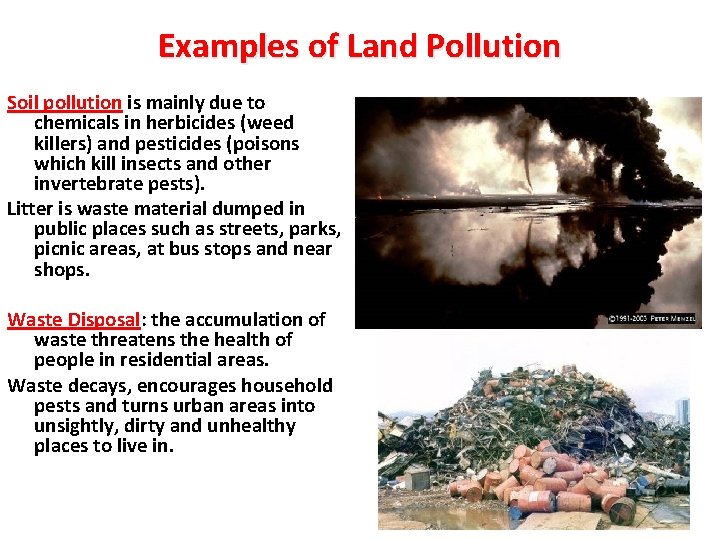
Examples of Land Pollution Soil pollution is mainly due to chemicals in herbicides (weed killers) and pesticides (poisons which kill insects and other invertebrate pests). Litter is waste material dumped in public places such as streets, parks, picnic areas, at bus stops and near shops. Waste Disposal: the accumulation of waste threatens the health of people in residential areas. Waste decays, encourages household pests and turns urban areas into unsightly, dirty and unhealthy places to live in. U. S. Oil Field
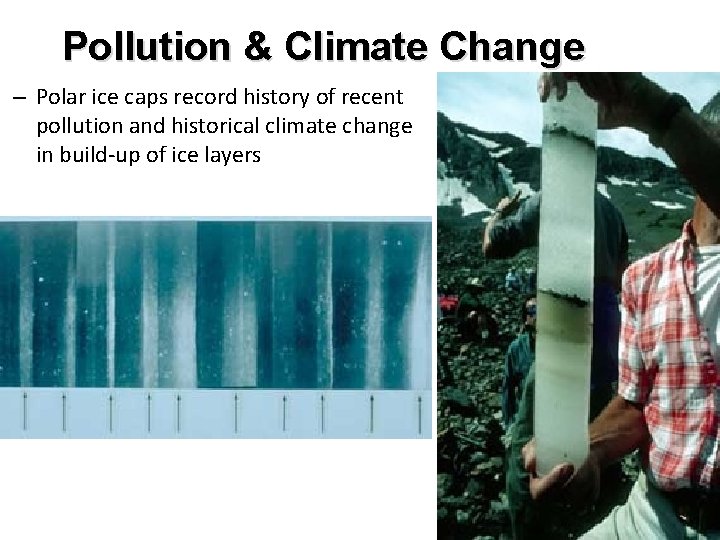
Pollution & Climate Change – Polar ice caps record history of recent pollution and historical climate change in build-up of ice layers
INTERNATIONAL BIODIVERSITY SCENARIOS • 2010 -2020: Decade of Biodiversity • 2010: International Year of Biodiversity • 2011: International Year of Forests
Reduction in Species Diversity As a result of human activities, especially the destruction of tropical rain forests and other habitats, plants and animals are becoming extinct at a faster rate than the planet has ever previously experienced. If they were to survive, scientists believe many of the disappearing plants could become useful to humans as medicines, foods, and industrial products.
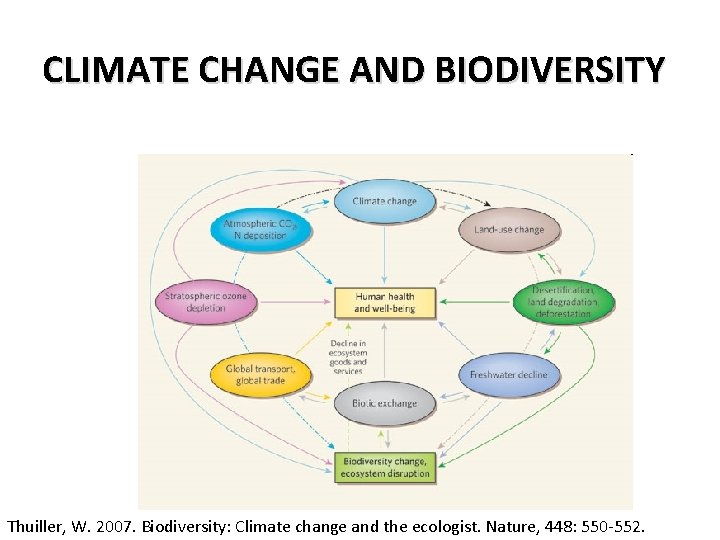
CLIMATE CHANGE AND BIODIVERSITY Thuiller, W. 2007. Biodiversity: Climate change and the ecologist. Nature, 448: 550 -552.
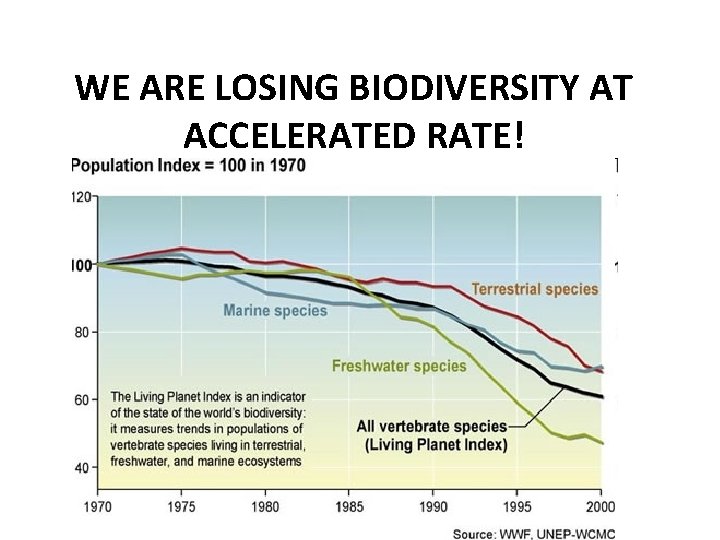
WE ARE LOSING BIODIVERSITY AT ACCELERATED RATE!
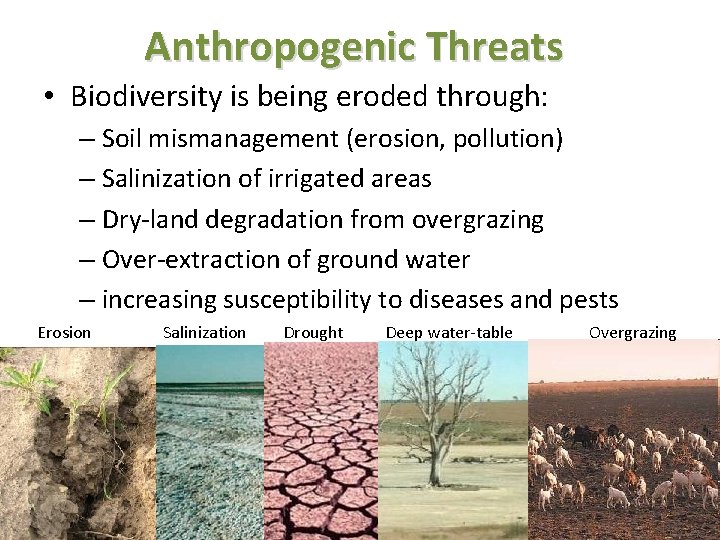
Anthropogenic Threats • Biodiversity is being eroded through: – Soil mismanagement (erosion, pollution) – Salinization of irrigated areas – Dry-land degradation from overgrazing – Over-extraction of ground water – increasing susceptibility to diseases and pests Erosion Salinization Drought Deep water-table Overgrazing
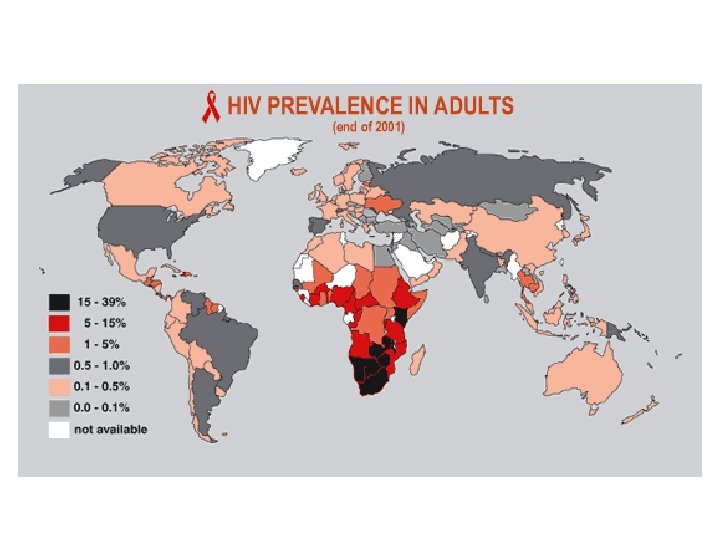
Other major human impacts 1) Movement of/ increased exposure to exotic species (including pathogens) • Problems of invasive species • Emerging Infectious Disease – never known before or absent for 20 years • Schistosomiasis, AIDS, SARS, etc.
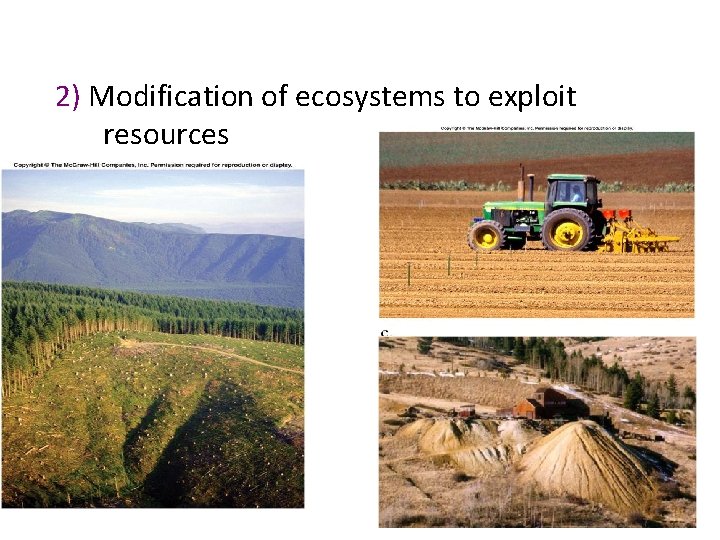
2) Modification of ecosystems to exploit resources
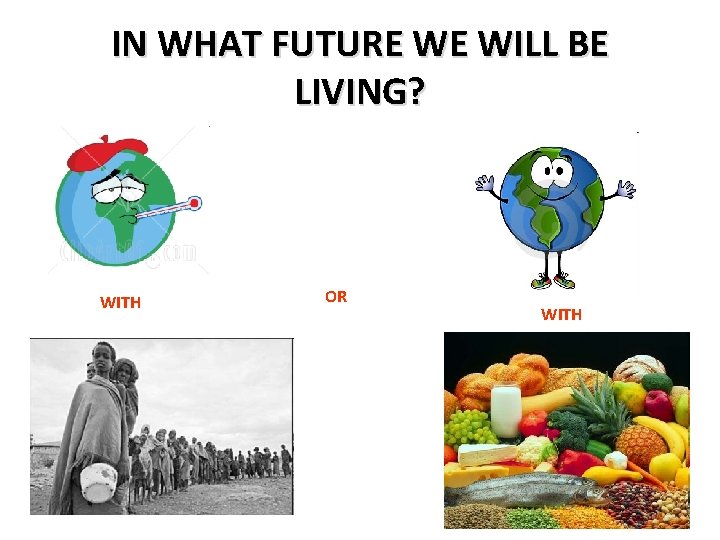
IN WHAT FUTURE WE WILL BE LIVING? WITH OR WITH
What can we Do?
Check Population Growth Rate There must be a check on the population growth rate. The rate of birth should be in accordance with rate of death.
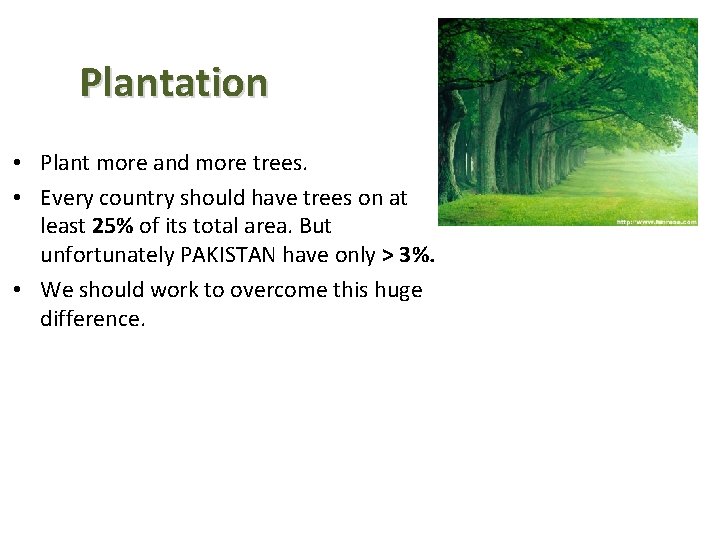
Plantation • Plant more and more trees. • Every country should have trees on at least 25% of its total area. But unfortunately PAKISTAN have only > 3%. • We should work to overcome this huge difference.
Organic Farming • This produces less food and is more expensive but it does not produce the pollution problems of intensive farming.
Use farmyard manure as a fertiliser and set aside land for growth of wild plants.
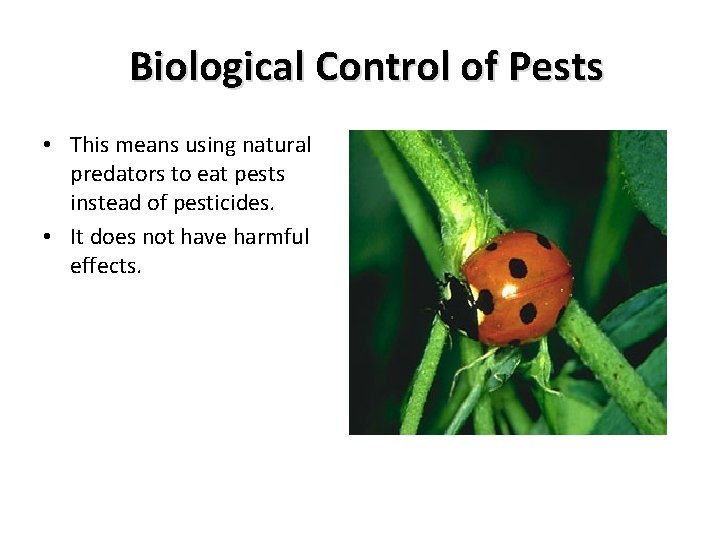
Biological Control of Pests • This means using natural predators to eat pests instead of pesticides. • It does not have harmful effects.
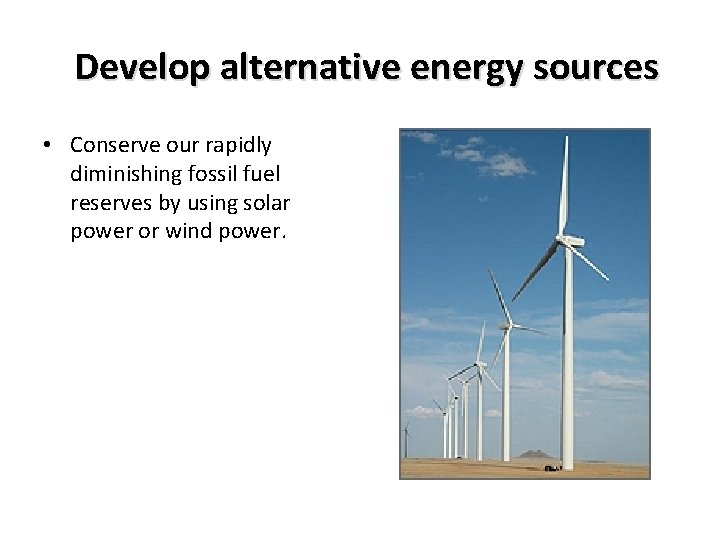
Develop alternative energy sources • Conserve our rapidly diminishing fossil fuel reserves by using solar power or wind power.
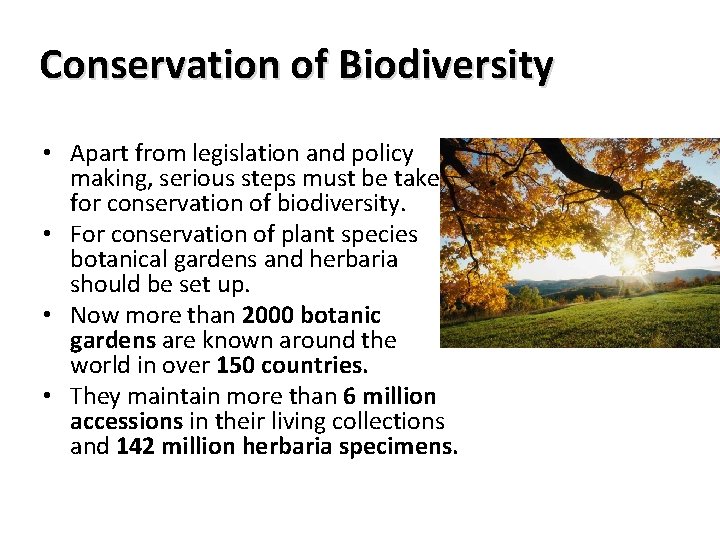
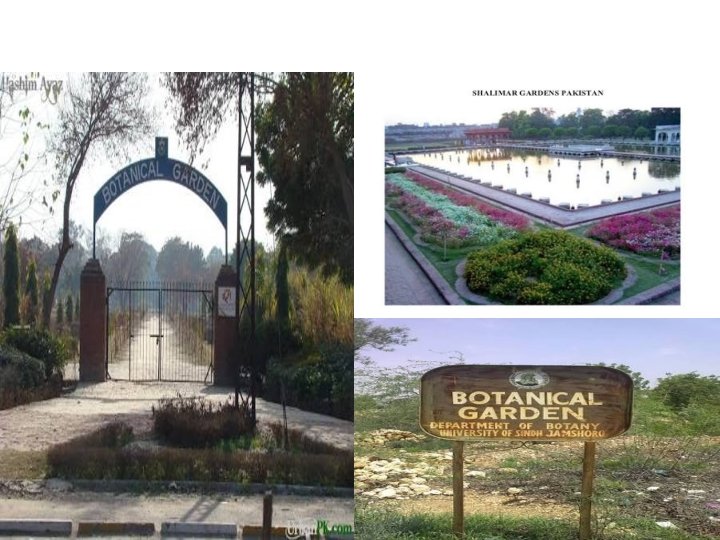
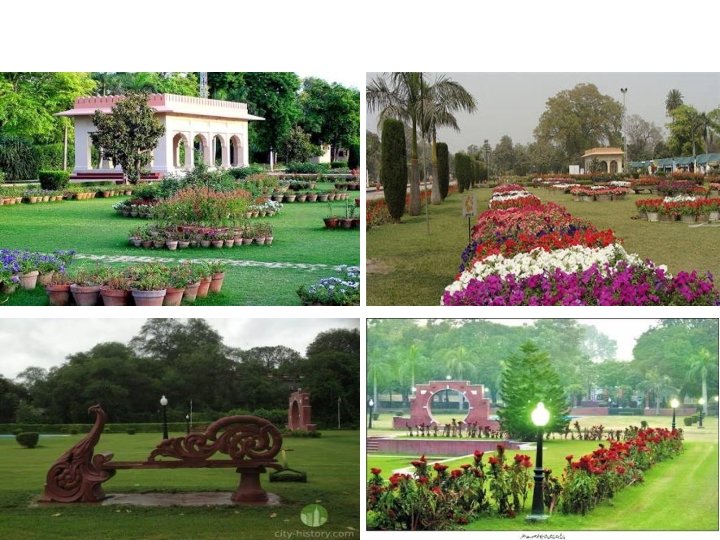
Conservation of Biodiversity • Apart from legislation and policy making, serious steps must be taken for conservation of biodiversity. • For conservation of plant species botanical gardens and herbaria should be set up. • Now more than 2000 botanic gardens are known around the world in over 150 countries. • They maintain more than 6 million accessions in their living collections and 142 million herbaria specimens.
FIRSRT CENTER FOR BIODIVERSITY AND CONSERVATION IN PAKISTAN • Established at Shah Abdul Latif University, Khairpur, Sindh, Pakistan on December 24, 2009 • The Centre includes three divisions: – 1. Floristic Diversity Division – 2. Faunistic Diversity Division – 3. Environmental Science Division
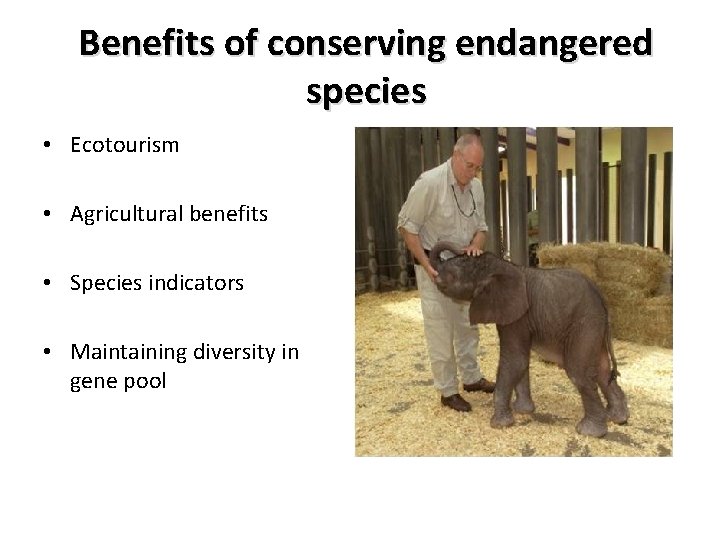
Benefits of conserving endangered species • Ecotourism • Agricultural benefits • Species indicators • Maintaining diversity in gene pool
We do not inherit earth from our ancestors, we have just borrowed it from our children - Native American Proverb
References • Thuiller, W. 2007. Biodiversity: Climate change and the ecologist. Nature, 448: 550 -552. • /http: //www. brainpop. com/science/ourfragileenviro nment/airpollution • http: //www. brainpop. com/science/ourfragileenviron ment/waterpollution/ • http: //www. brainpop. com/science/ourfragileenviron ment/globalwarming/