
EFFC Incident Investigation Process Training Proposal Lorenzo Alessi

- Slides: 12
EFFC Incident Investigation Process Training Proposal Lorenzo Alessi QHSE Director - Soletanche Freyssinet
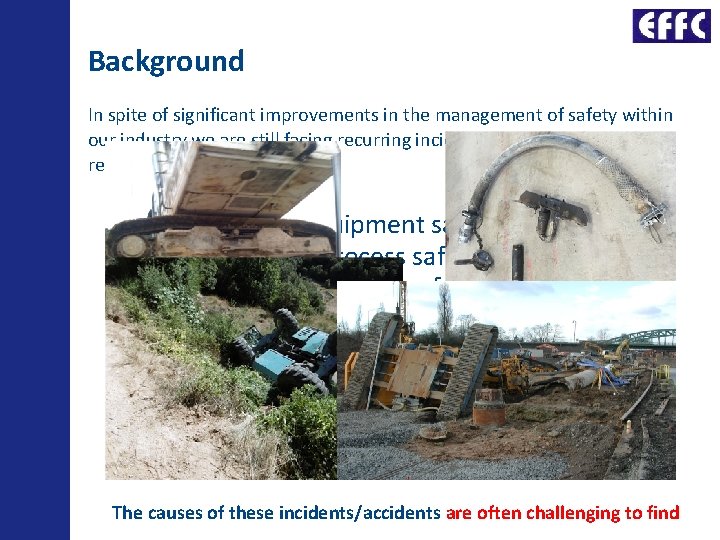
Background In spite of significant improvements in the management of safety within our industry we are still facing recurring incidents/accidents particularly related with: • Equipment safety • Process safety • Design safety 2 The causes of these incidents/accidents are often challenging to find
Background: Where are we? Lack of systematic investigation of serious accidents and high potential near misses in our industry (especially involving process and/or equipment) Some Members not structured with an efficient safety department Investigation reports are often poor, not clear and fail to identify the real root causes (an initiating cause of a causal chain that leads to an undesired outcome) Lack of involvement of management in the investigation process
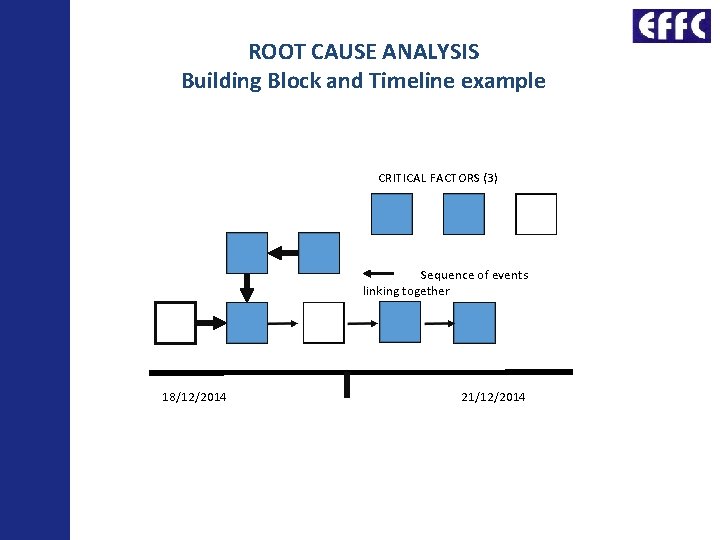
ROOT CAUSE ANALYSIS Building Block and Timeline example CRITICAL FACTORS (3) Sequence of events linking together 18/12/2014 21/12/2014
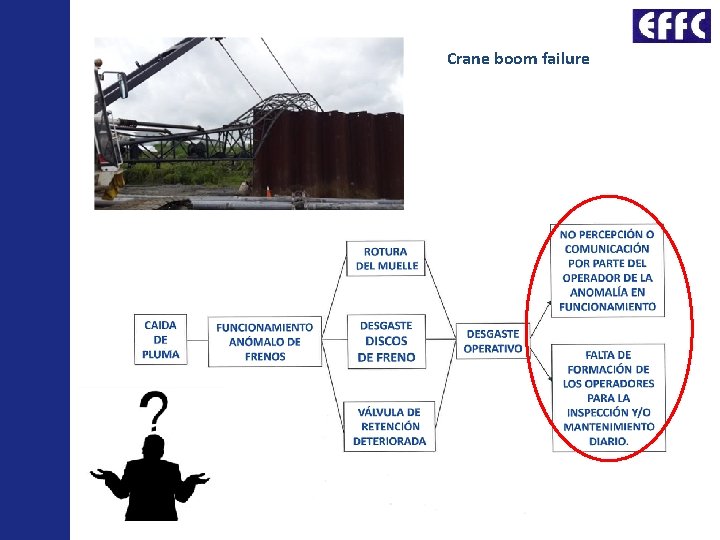
Crane boom failure
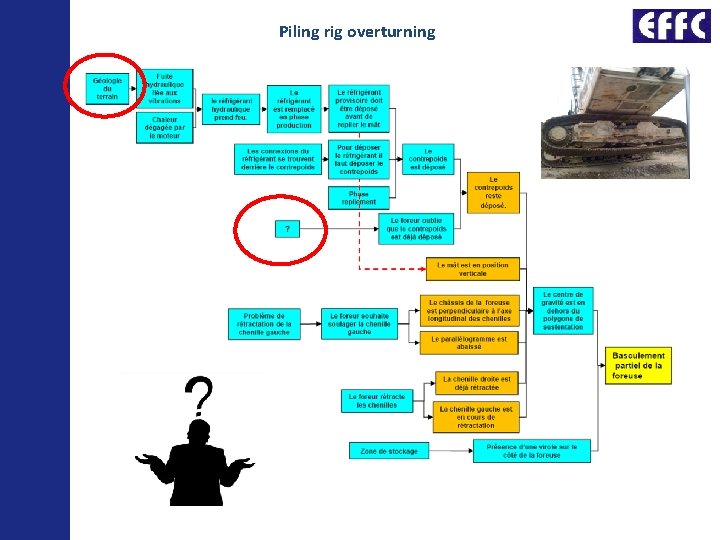
Piling rig overturning 6
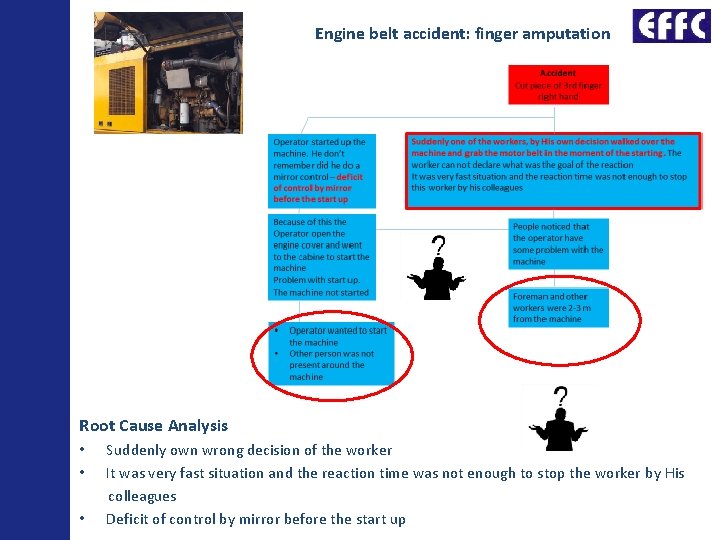
Engine belt accident: finger amputation Root Cause Analysis • • • Suddenly own wrong decision of the worker It was very fast situation and the reaction time was not enough to stop the worker by His colleagues Deficit of control by mirror before the start up
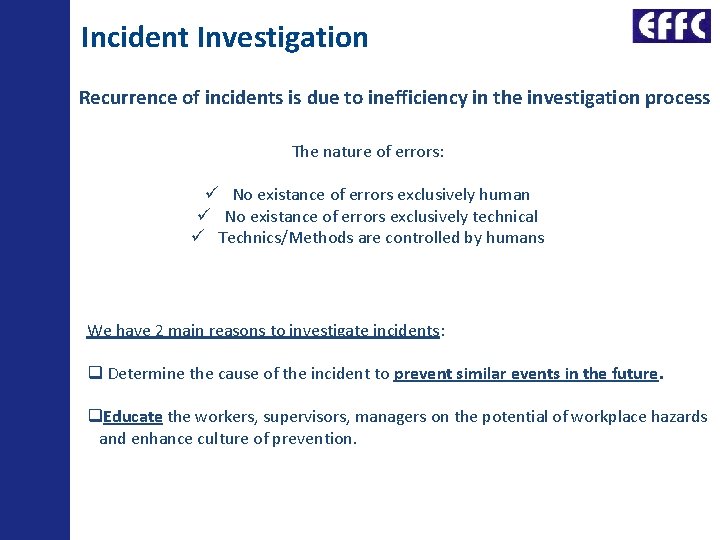
Incident Investigation Recurrence of incidents is due to inefficiency in the investigation process The nature of errors: ü No existance of errors exclusively human ü No existance of errors exclusively technical ü Technics/Methods are controlled by humans We have 2 main reasons to investigate incidents: Determine the cause of the incident to prevent similar events in the future. Educate the workers, supervisors, managers on the potential of workplace hazards and enhance culture of prevention.
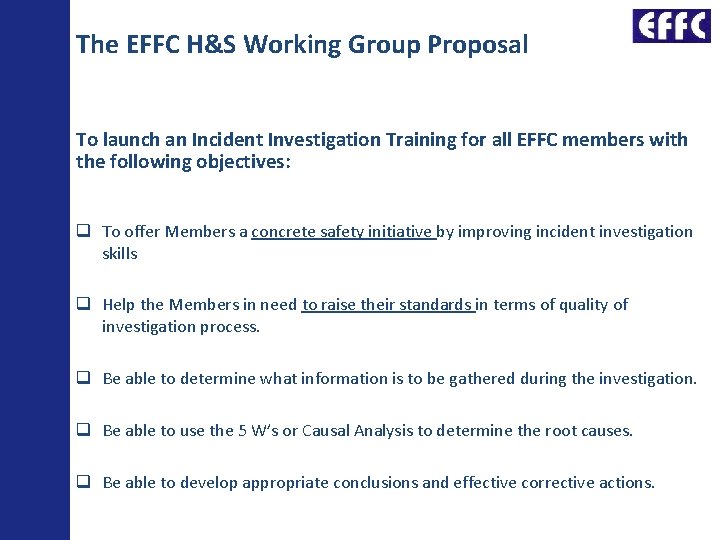
The EFFC H&S Working Group Proposal To launch an Incident Investigation Training for all EFFC members with the following objectives: To offer Members a concrete safety initiative by improving incident investigation skills Help the Members in need to raise their standards in terms of quality of investigation process. Be able to determine what information is to be gathered during the investigation. Be able to use the 5 W’s or Causal Analysis to determine the root causes. Be able to develop appropriate conclusions and effective corrective actions.
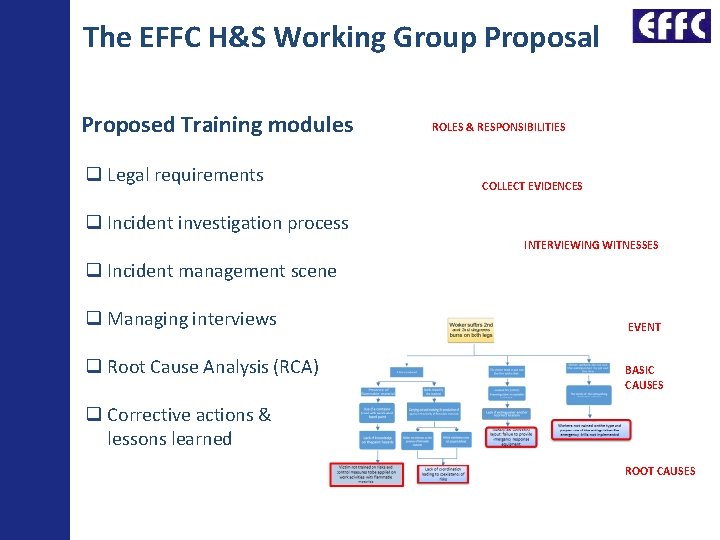
The EFFC H&S Working Group Proposal Proposed Training modules Legal requirements ROLES & RESPONSIBILITIES COLLECT EVIDENCES Incident investigation process INTERVIEWING WITNESSES Incident management scene Managing interviews Root Cause Analysis (RCA) EVENT BASIC CAUSES Corrective actions & lessons learned ROOT CAUSES
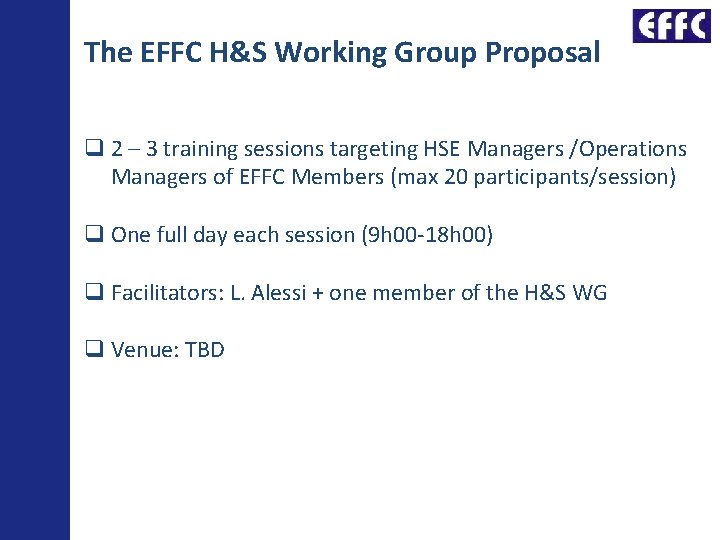
The EFFC H&S Working Group Proposal 2 – 3 training sessions targeting HSE Managers /Operations Managers of EFFC Members (max 20 participants/session) One full day each session (9 h 00 -18 h 00) Facilitators: L. Alessi + one member of the H&S WG Venue: TBD
Thank you for your attention