
EFFC DFI GEOTECHNICAL CARBON CALCULATOR PROJECT Eng Luca
EFFC / DFI GEOTECHNICAL CARBON CALCULATOR PROJECT Eng. Luca Bruni , EFFC-DFI Carbon Calculator Working Group 23 June 2015, Transamerica Expo Center, Sao Paulo
EFFC / DFI Carbon Calculator 1 Why a carbon calculator? 2 Which process? 3 Which methodology? 4 Presentation of the calculator 5 Future developments EFFC-DFI Carbon Calculator 2
Why a carbon calculator? 1 Context • Climate change is seen as a key issue by most of the local authorities and also private companies • • Capability to evaluate with specific method is now mandatory and will be potential differentiation in tenders No carbon calculator tool at European or International level for Deep Foundation and Ground Improvement Works exists need for a specific development EFFC-DFI Carbon Calculator 3
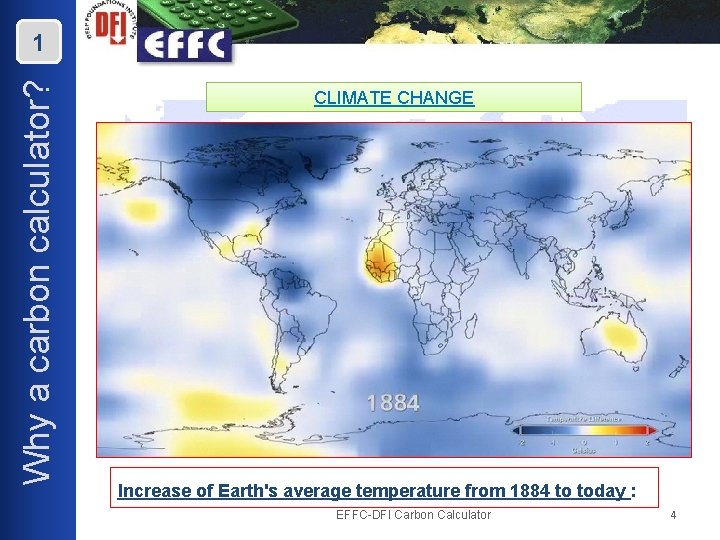
Why a carbon calculator? 1 CLIMATE CHANGE Increase of Earth's average temperature from 1884 to today : EFFC-DFI Carbon Calculator 4
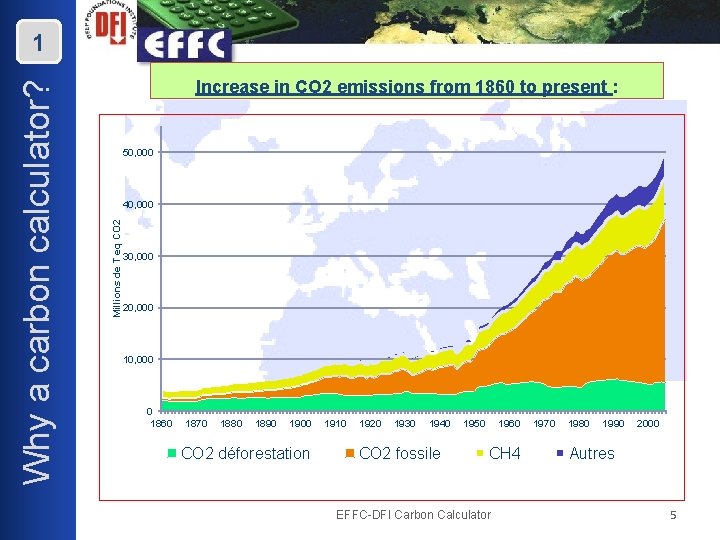
Increase in CO 2 emissions from 1860 to present : 50, 000 40, 000 Millions de T eq CO 2 Why a carbon calculator? 1 30, 000 20, 000 10, 000 0 1860 1870 1880 1890 1900 CO 2 déforestation 1910 1920 1930 1940 CO 2 fossile 1950 1960 CH 4 EFFC-DFI Carbon Calculator 1970 1980 1990 2000 Autres 5
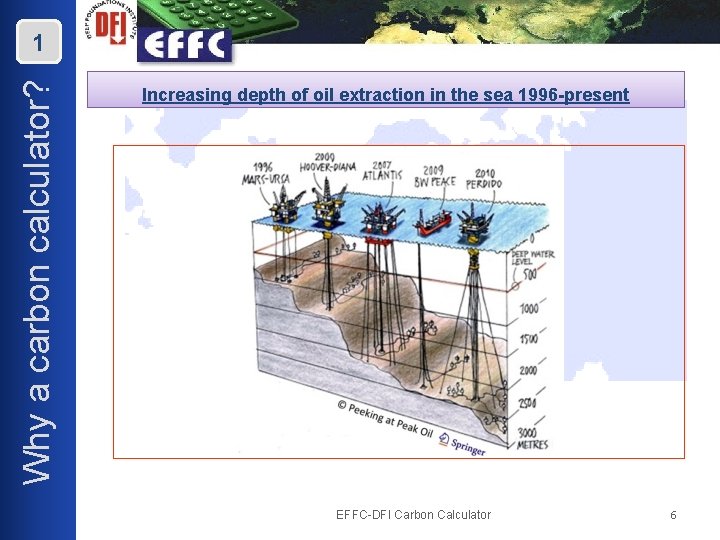
Why a carbon calculator? 1 Increasing depth of oil extraction in the sea 1996 -present EFFC-DFI Carbon Calculator 6

Why a carbon calculator? 1 EFFC-DFI AMBITION AND OBJECTIVES • Provide all EFFC-DFI members with a Carbon calculator for Deep Foundation and Ground Improvement Works, allowing for absolute calculation and projects comparisons • The tool should be simple, open, though comprehensive, methodologically sound and usable by all EFFC-DFI Carbon Calculator 7
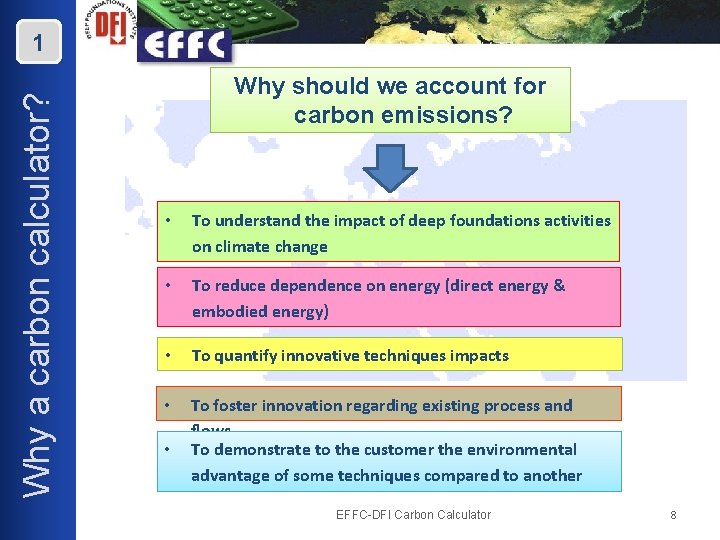
Why a carbon calculator? 1 Why should we account for carbon emissions? • To understand the impact of deep foundations activities on climate change • To reduce dependence on energy (direct energy & embodied energy) • To quantify innovative techniques impacts • To foster innovation regarding existing process and flows To demonstrate to the customer the environmental advantage of some techniques compared to another • EFFC-DFI Carbon Calculator 8
Why a carbon calculator? 1 Why a Carbon Calculator? • Quantify impacts is a key starting point in all improvement strategies • A sectorial method and tool will improve the credibility of the calculations and confidence of the customers EFFC-DFI Carbon Calculator 9
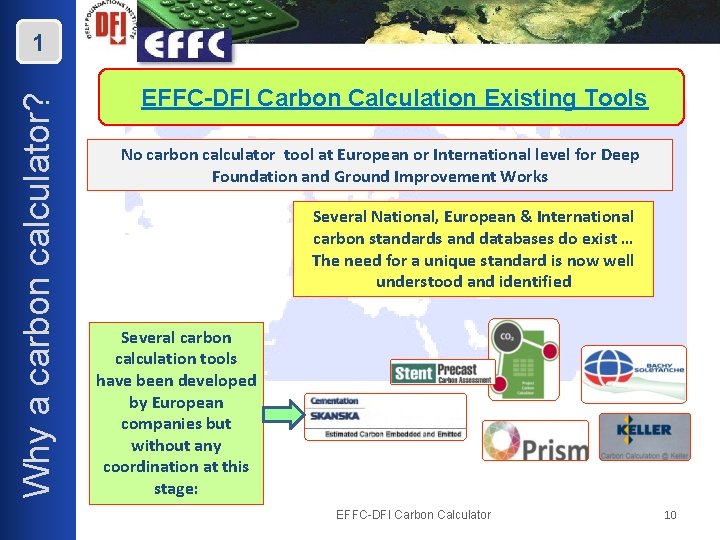
Why a carbon calculator? 1 EFFC-DFI Carbon Calculation Existing Tools No carbon calculator tool at European or International level for Deep Foundation and Ground Improvement Works Several National, European & International carbon standards and databases do exist … The need for a unique standard is now well understood and identified Several carbon calculation tools have been developed by European companies but without any coordination at this stage: EFFC-DFI Carbon Calculator 10
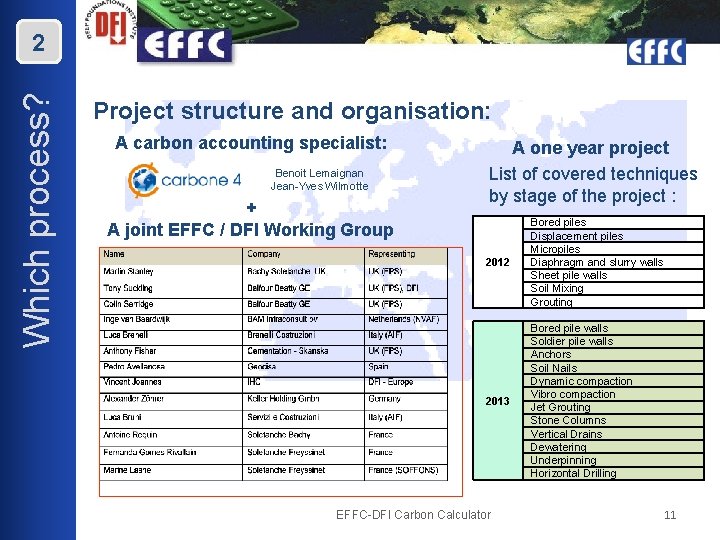
Which process? 2 Project structure and organisation: A carbon accounting specialist: Benoit Lemaignan Jean-Yves Wilmotte + A joint EFFC / DFI Working Group A one year project List of covered techniques by stage of the project : 2012 Bored piles Displacement piles Micropiles Diaphragm and slurry walls Sheet pile walls Soil Mixing Grouting 2013 Bored pile walls Soldier pile walls Anchors Soil Nails Dynamic compaction Vibro compaction Jet Grouting Stone Columns Vertical Drains Dewatering Underpinning Horizontal Drilling EFFC-DFI Carbon Calculator 11

2 Consultant choice Financing and contract Kick-off & working group set up Definition of calculator specifications Collection of samples Existing standards and from members tool review Methodology and Excel calculator development & review Phase 1 2012 Scope of work & tender Collection of example Dissemination data from members Methodology and Excel calculator updating 2013 Phase 2 tool + user / methodological guide delivery Phase 2 2012 Phase 1 tool + user / methodological guide delivery 2013 Which process? Development Process 12
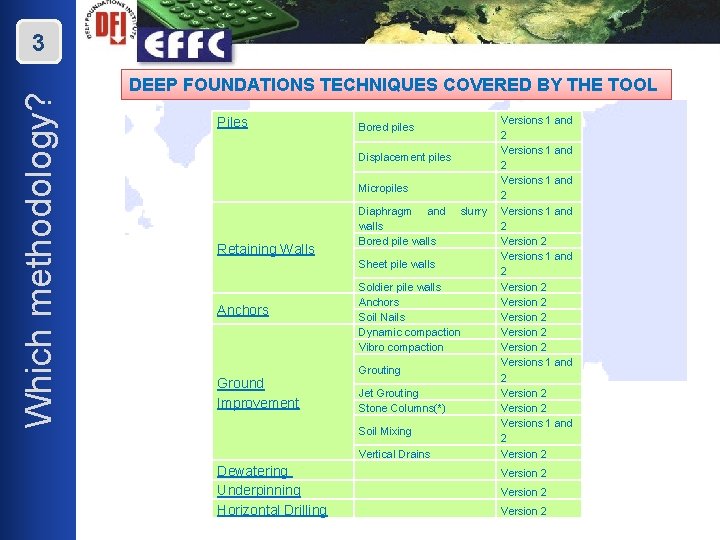
Which methodology? 3 DEEP FOUNDATIONS TECHNIQUES COVERED BY THE TOOL Piles Retaining Walls Anchors Ground Improvement Dewatering Underpinning Horizontal Drilling Versions 1 and 2 Versions 1 and Displacement piles 2 Versions 1 and Micropiles 2 Diaphragm and slurry Versions 1 and walls 2 Bored pile walls Version 2 Versions 1 and Sheet pile walls 2 Soldier pile walls Version 2 Anchors Version 2 Soil Nails Version 2 Dynamic compaction Version 2 Vibro compaction Version 2 Versions 1 and Grouting 2 Jet Grouting Version 2 Stone Columns(*) Version 2 Versions 1 and Soil Mixing 2 Vertical Drains Version 2 Bored piles Version 2
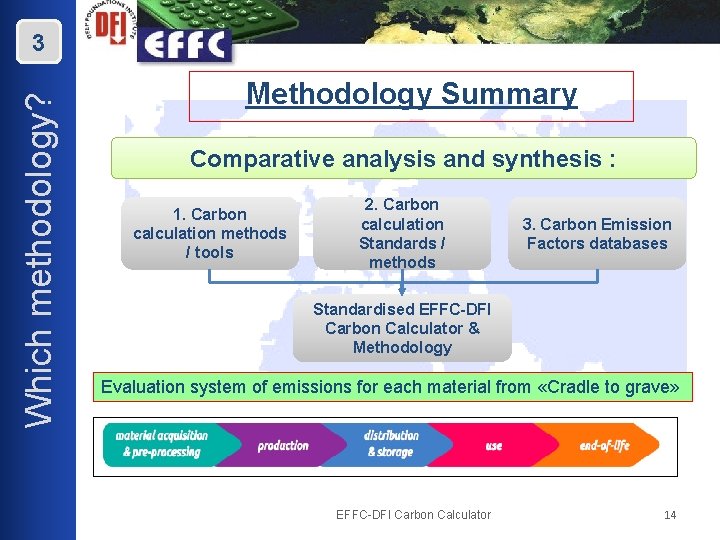
Which methodology? 3 Methodology Summary Comparative analysis and synthesis : 1. Carbon calculation methods / tools 2. Carbon calculation Standards / methods 3. Carbon Emission Factors databases Standardised EFFC-DFI Carbon Calculator & Methodology Evaluation system of emissions for each material from «Cradle to grave» EFFC-DFI Carbon Calculator 14

Which methodology? 3 How do we account for carbon emissions? Carbon Calculation Principle The calculator was developed by adapting existing, general standards to the specific application of deep foundations and ground improvement activities to produce an easy to use, project focused tool The principle of any carbon calculation is to multiply activity data (which characterize the project in a physical way) by corresponding emission factors (which convert the quantity of the activity data into quantity of CO 2 equivalent emissions) EFFC-DFI Carbon Calculator 15
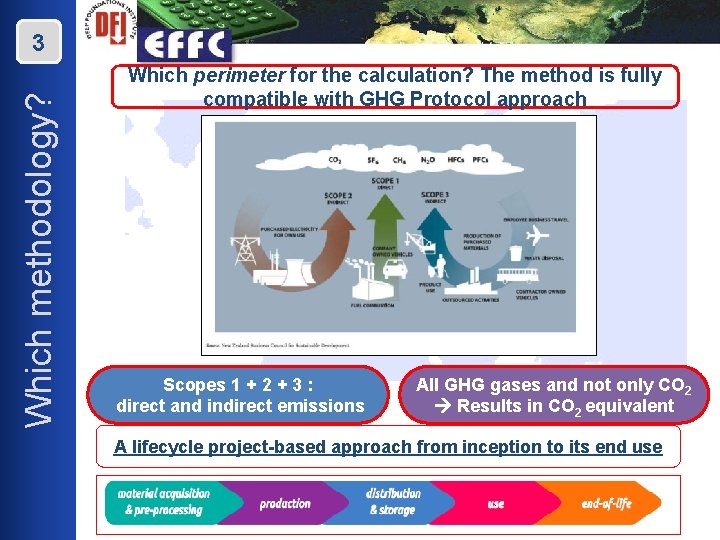
Which methodology? 3 Which perimeter for the calculation? The method is fully compatible with GHG Protocol approach Scopes 1 + 2 + 3 : direct and indirect emissions All GHG gases and not only CO 2 Results in CO 2 equivalent A lifecycle project-based approach from inception to its end use 16

Which methodology? 3 2. Carbon Footprinting Standards/Methods The calculator was developed by adapting existing, general standards to the specific application of deep foundations and ground improvement activities to produce an easy to use, project focused tool. The working group reviewed the main carbon accounting standards existing in 2012 listed below EFFC-DFI Carbon Calculator 17
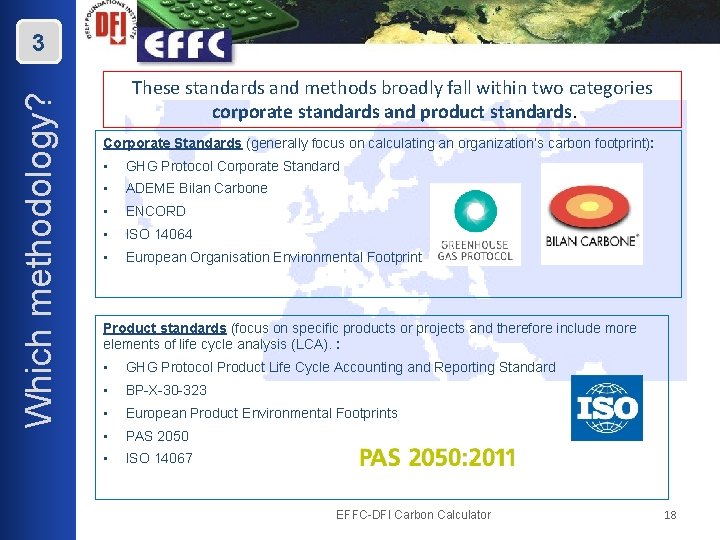
Which methodology? 3 These standards and methods broadly fall within two categories corporate standards and product standards. Corporate Standards (generally focus on calculating an organization’s carbon footprint): • GHG Protocol Corporate Standard • ADEME Bilan Carbone • ENCORD • ISO 14064 • European Organisation Environmental Footprint Product standards (focus on specific products or projects and therefore include more elements of life cycle analysis (LCA). : • GHG Protocol Product Life Cycle Accounting and Reporting Standard • BP-X-30 -323 • European Product Environmental Footprints • PAS 2050 • ISO 14067 EFFC-DFI Carbon Calculator 18
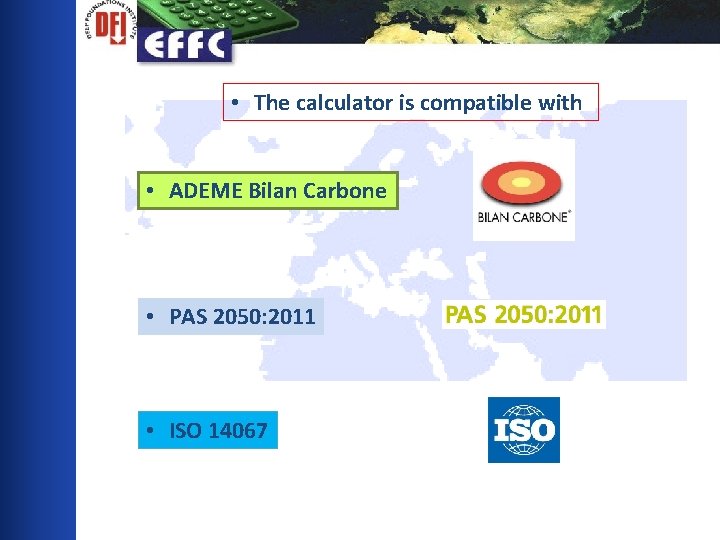
• The calculator is compatible with • ADEME Bilan Carbone • PAS 2050: 2011 • ISO 14067
Emission sources The generic emission sources considered in a deep foundation or ground improvement project are the following, with ranking depending on the technique: • Material manufacturing, (cement, bentonite, steel, etc) • Materials transportation, from factory to construction site, • Energy consumed on the construction site • People’s transport to the construction site • Equipment transportation (machines etc) • Equipment manufacturing (depreciation) • Waste transportation (from construction site to treatment site) and Waste treatment

Which methodology? 3 What are the emission factors database used? A specific EFFC-DFI recommended database has been built from different databases Materials Energy Transportation Assets EFFC-DFI recommended database Ecoinvent v 2. 2 Bilan Carbone V 7 Sustainableconcrete ICE v 2 DEFRA 2012 IEA 2012 DEFRA 2012 Eco. Transit Bilan Carbone V 7 The tool contains also a French and a UK specific database in case of specific demand in tenders. EFFC-DFI Carbon Calculator 21
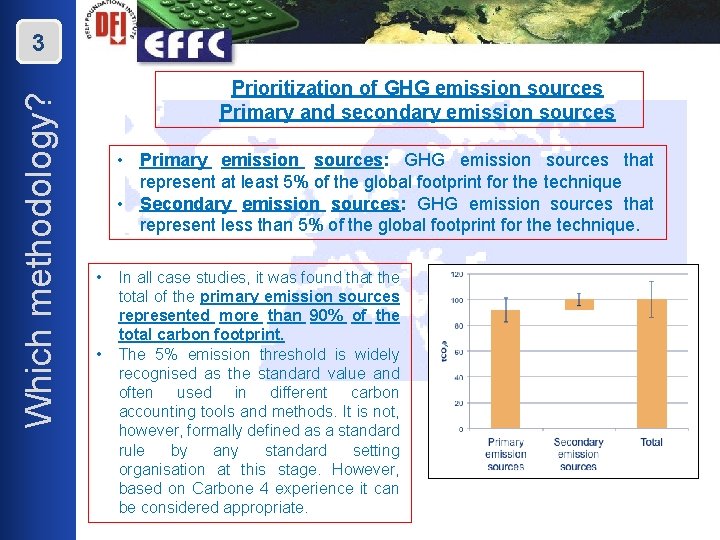
Which methodology? 3 Prioritization of GHG emission sources Primary and secondary emission sources • Primary emission sources: GHG emission sources that represent at least 5% of the global footprint for the technique • Secondary emission sources: GHG emission sources that represent less than 5% of the global footprint for the technique. • • In all case studies, it was found that the total of the primary emission sources represented more than 90% of the total carbon footprint. The 5% emission threshold is widely recognised as the standard value and often used in different carbon accounting tools and methods. It is not, however, formally defined as a standard rule by any standard setting organisation at this stage. However, based on Carbone 4 experience it can be considered appropriate.
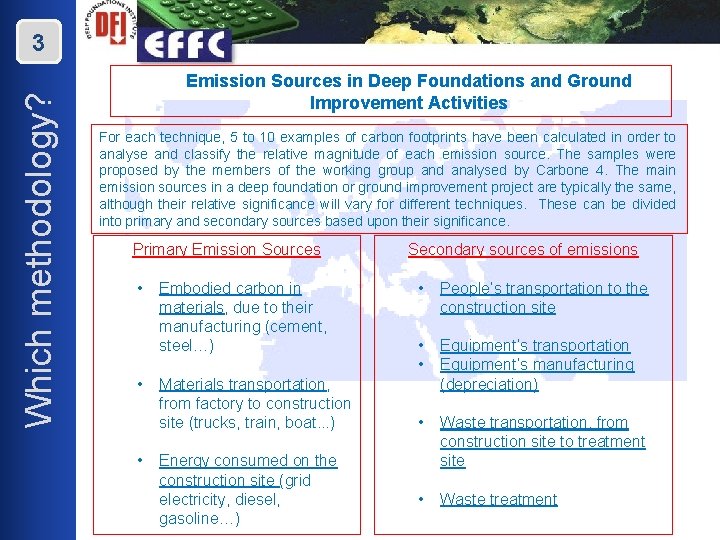
Which methodology? 3 Emission Sources in Deep Foundations and Ground Improvement Activities For each technique, 5 to 10 examples of carbon footprints have been calculated in order to analyse and classify the relative magnitude of each emission source. The samples were proposed by the members of the working group and analysed by Carbone 4. The main emission sources in a deep foundation or ground improvement project are typically the same, although their relative significance will vary for different techniques. These can be divided into primary and secondary sources based upon their significance. Primary Emission Sources • • • Embodied carbon in materials, due to their manufacturing (cement, steel…) Materials transportation, from factory to construction site (trucks, train, boat. . . ) Energy consumed on the construction site (grid electricity, diesel, gasoline…) Secondary sources of emissions • People’s transportation to the construction site • • Equipment’s transportation Equipment’s manufacturing (depreciation) • Waste transportation, from construction site to treatment site • Waste treatment
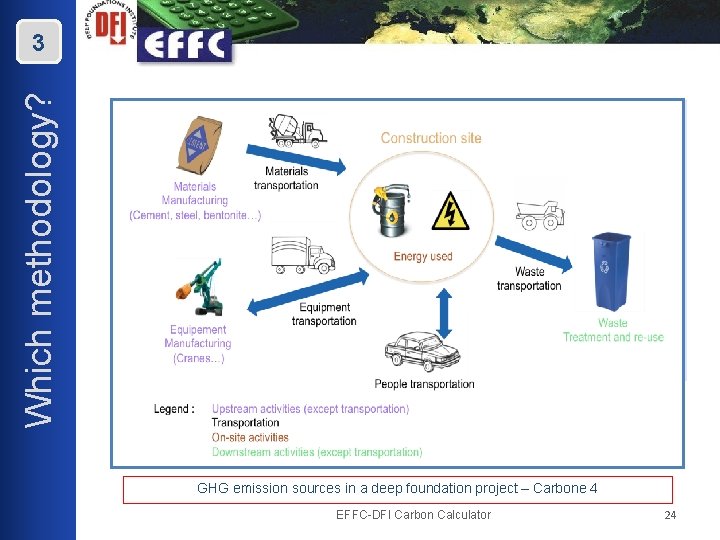
Which methodology? 3 GHG emission sources in a deep foundation project – Carbone 4 EFFC-DFI Carbon Calculator 24
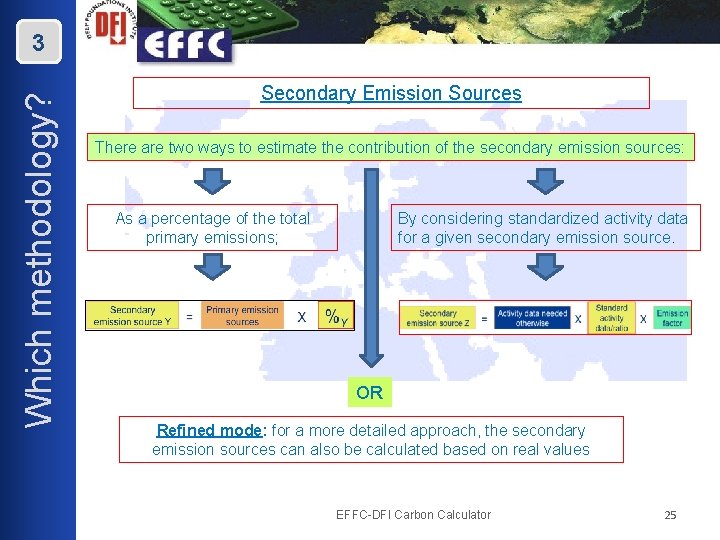
Which methodology? 3 Secondary Emission Sources There are two ways to estimate the contribution of the secondary emission sources: By considering standardized activity data for a given secondary emission source. As a percentage of the total primary emissions; OR Refined mode: for a more detailed approach, the secondary emission sources can also be calculated based on real values EFFC-DFI Carbon Calculator 25
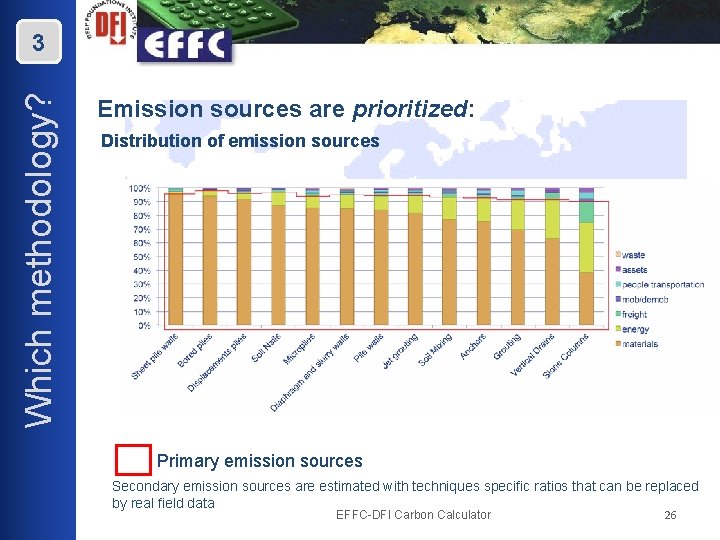
Which methodology? 3 Emission sources are prioritized: Distribution of emission sources Primary emission sources Secondary emission sources are estimated with techniques specific ratios that can be replaced by real field data EFFC-DFI Carbon Calculator 26
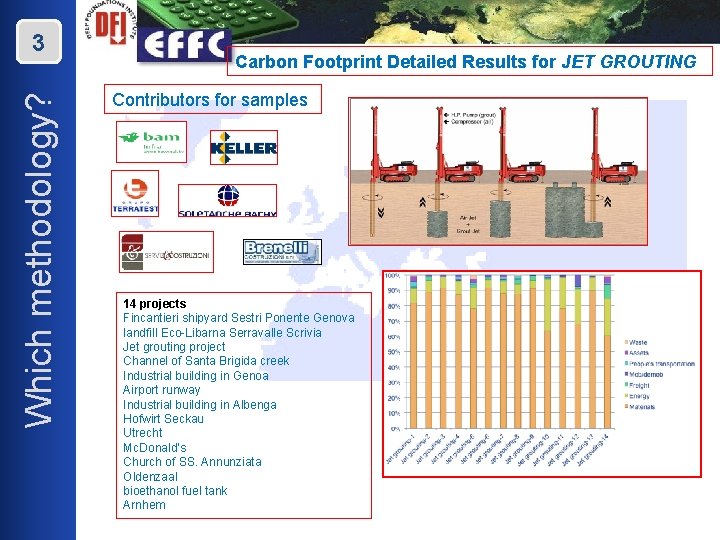
Which methodology? 3 Carbon Footprint Detailed Results for JET GROUTING Contributors for samples 14 projects Fincantieri shipyard Sestri Ponente Genova landfill Eco-Libarna Serravalle Scrivia Jet grouting project Channel of Santa Brigida creek Industrial building in Genoa Airport runway Industrial building in Albenga Hofwirt Seckau Utrecht Mc. Donald's Church of SS. Annunziata Oldenzaal bioethanol fuel tank Arnhem
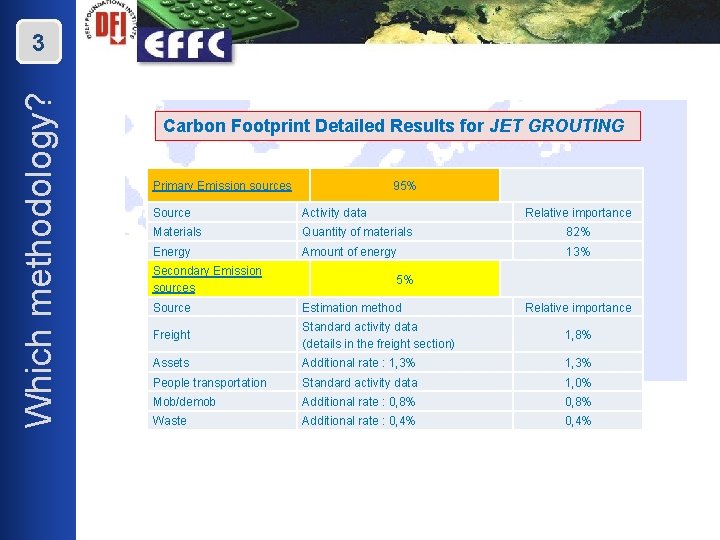
Which methodology? 3 Carbon Footprint Detailed Results for JET GROUTING Primary Emission sources 95% Source Activity data Materials Quantity of materials 82% Energy Amount of energy 13% Secondary Emission sources Relative importance 5% Source Estimation method Relative importance Freight Standard activity data (details in the freight section) 1, 8% Assets Additional rate : 1, 3% People transportation Standard activity data 1, 0% Mob/demob Additional rate : 0, 8% Waste Additional rate : 0, 4%
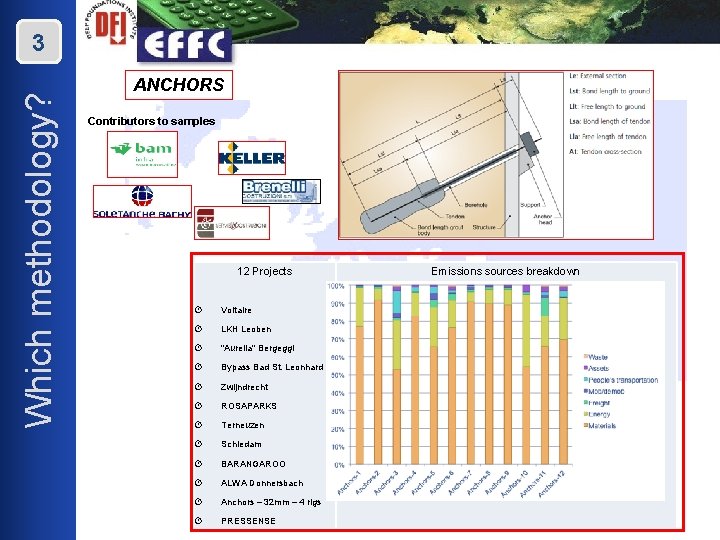
Which methodology? 3 ANCHORS Contributors to samples 12 Projects Voltaire LKH Leoben "Aurelia" Bergeggi Bypass Bad St. Leonhard Zwijndrecht ROSAPARKS Terneuzen Schiedam BARANGAROO ALWA Donnersbach Anchors – 32 mm – 4 rigs PRESSENSE Emissions sources breakdown
Which methodology? 3 Summary of general principles of the carbon accounting method for EFFC-DFI (derived from the GHG Protocol) • Relevance By using a project-based carbon calculator, companies are able to compare the carbon footprints of their different techniques and promote low-carbon offers to their customers. The tool calculates the carbon footprint of projects based on real activity data, ensuring the relevance of the calculation made. • Completeness The tool always considers the same perimeter (shown in Emission sources). The emission sources that are not calculated using activity data are estimated based on statistical data obtained from various relevant projects and made publicly available. • Consistency The proposed tool and method is documented and a version numbering system proposed in order to allow change tracking. Emission factor databases will have to be updated regularly by the EFFC and DFI to keep the tool up to date and to ensure comparability of the calculation made with other similar approaches.
Which methodology? 3 General principles of the carbon accounting method for EFFC -DFI (derived from the GHG Protocol) • Transparency A Microsoft Excel based tool has the advantage that all the calculations are visible. All the values already in the tool are sourced with no “black box” approach. The methodology will disclose all the assumptions and the tool will be transparent (all proposed emission factors are documented with complete references and from available public sources). As a consequence of this principle, all emission factors integrated by the users must also be transparently sourced. • Accuracy “This principle is integrated by evaluating an emission source’s importance for the covered techniques. The uncertainty is evaluated and simple ratios proposed for secondary emission sources.

Presentation of the calculator 4 Carbon Calculator Presentation • The tool aims to calculate the carbon footprint of a deep foundation or ground improvement project. • A project can be subdivided into different subprojects. Each of these subprojects corresponds to the use of one technique. • Subprojects are created simply by adding as many worksheets as required for each technique used in the project. • The tool allows project comparisons, enabling the user to select the techniques with the lowest associated emissions and to compare the performance of different solutions for the same customer need EFFC-DFI Carbon Calculator 32

Presentation of the calculator 4 CARBON FOOTPRINTING CALCULATION The basic steps for performing carbon calculations List all the physical inputs to the (sub)project, for the primary emission sources: • Materials: types of materials. • Energy: energy sources. • Freight and mobilization/demobilization and waste: vehicles. • People transportation: transportation modes. • Assets: machines. Select the category corresponding to the activity data (this step will set up the corresponding emission factor for the calculation). Enter the activity data corresponding to the unit proposed: if relevant specify options. The results of the calculation appear automatically Repeat this for all the activity data of the primary emission sources. The results are displayed on the top of the worksheet. If activities data of the secondary emission sources are known, these may be entered in the same way. EFFC-DFI Carbon Calculator 33
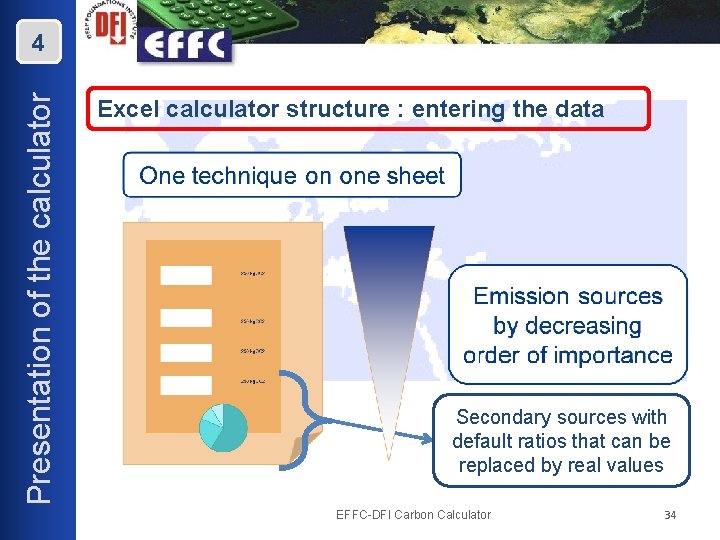
Presentation of the calculator 4 Excel calculator structure : entering the data Secondary sources with default ratios that can be replaced by real values EFFC-DFI Carbon Calculator 34
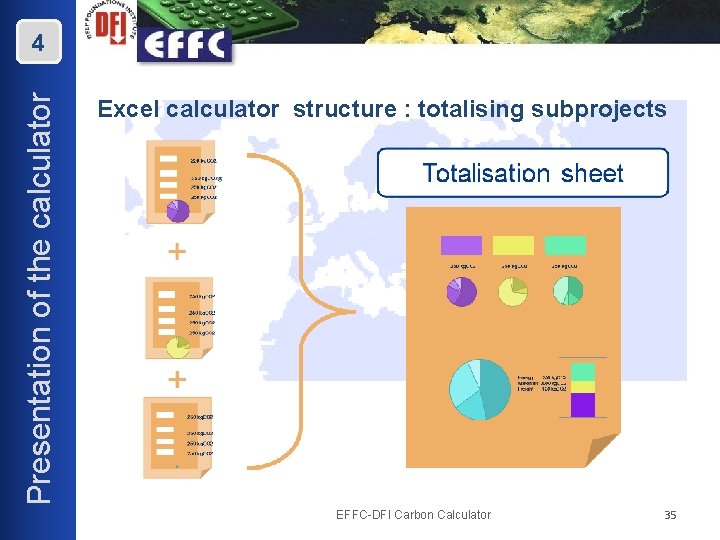
Presentation of the calculator 4 Excel calculator structure : totalising subprojects EFFC-DFI Carbon Calculator 35
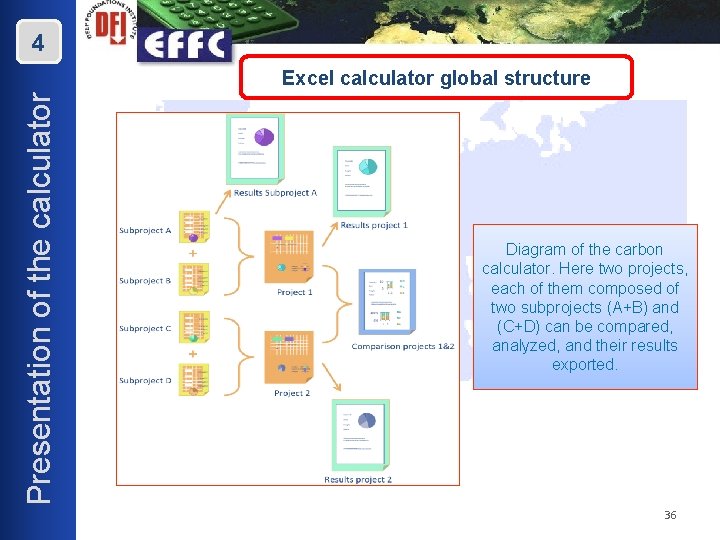
4 Presentation of the calculator Excel calculator global structure Diagram of the carbon calculator. Here two projects, each of them composed of two subprojects (A+B) and (C+D) can be compared, analyzed, and their results exported. 36
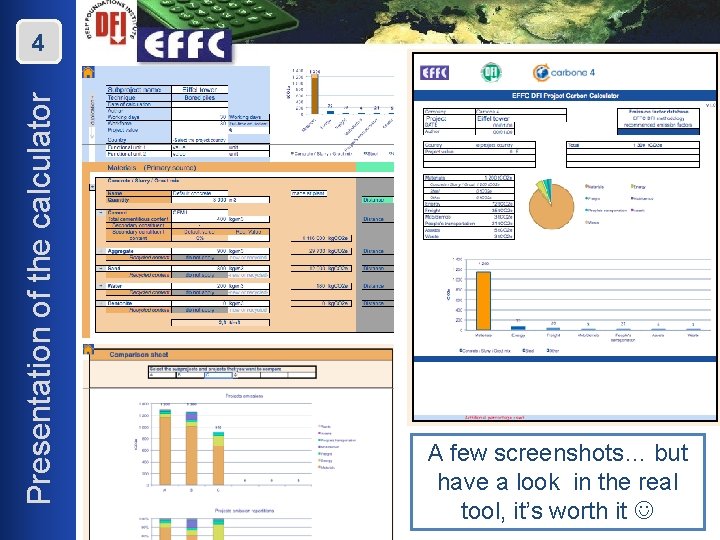
Presentation of the calculator 4 A few screenshots… but have a look in the real tool, it’s worth it
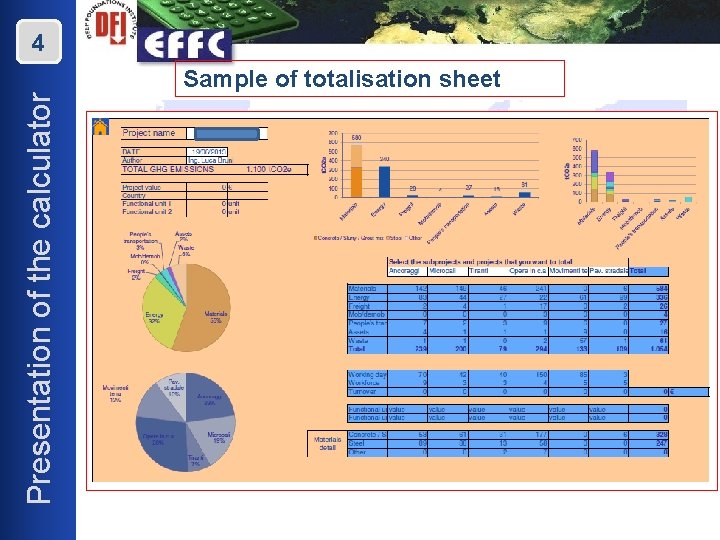
Presentation of the calculator 4 Sample of totalisation sheet
5 FUTURE STRATEGIES OF THE GROUP Future strategies «Technical» targets: Updating the Software «Geotechnical Carbon Calculator» : • Update management and relationships with consultants "Carbone 4" and with the partner "DFI“ • Review of the graphic interface • Continue implementation of the data relating to each processing technique, sending simple “forms” to be filled from each national federation according with DFI in order to make them more comparable and Homogeneous. • Updating database emissions on the materials used EFFC-DFI Carbon Calculator 39
5 FUTURE STRATEGIES OF THE GROUP Future strategies «Institutional» aims: • Presentation of the software and the activity of the group to Third Party Authorities in order to obtain external certification on the validity and reliability of the software: 1. European Union (EU) 2. International Institutions 3. International Universities • Handling of presentation of the Software by individual Federations at government agencies and national and international technicians EFFC-DFI Carbon Calculator 40
EFFC / DFI Carbon Calculator http: //geotechnicalcarboncalculator. com/ SOFTWARE METHODOLOGICAL AND USER GUIDE
SPECIAL THANKS • Eng. Marine Lasne • Dianne Jennings • All Working Group • Eng. Carlos Englert • Mary Ellen Bruce Large • All Working Group • Eng. Benoit Lemaignan • Eng. Jean Yves Wilmotte THANK YOU VERY MUCH FOR YOUR ATTENTION! MUITO OBRIGADO PELA SUA ATENÇÃO!
- Slides: 42