
EECS 373 Design of MicroprocessorBased Systems Prabal Dutta
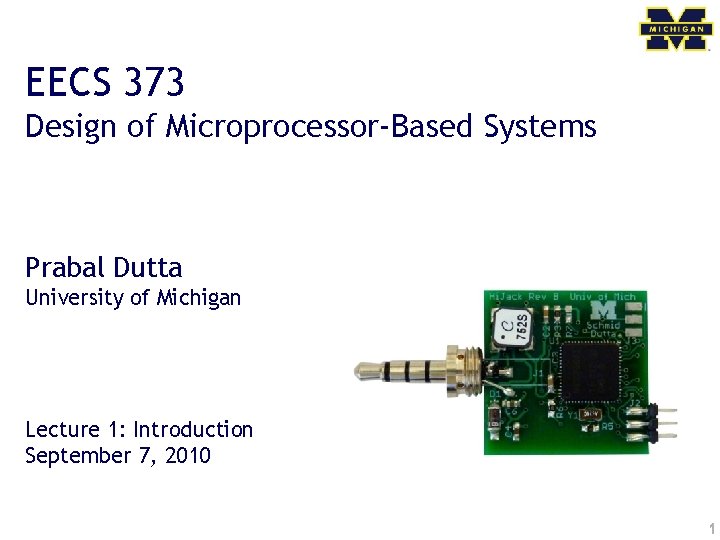
EECS 373 Design of Microprocessor-Based Systems Prabal Dutta University of Michigan Lecture 1: Introduction September 7, 2010 1
What is an embedded system? 2

3
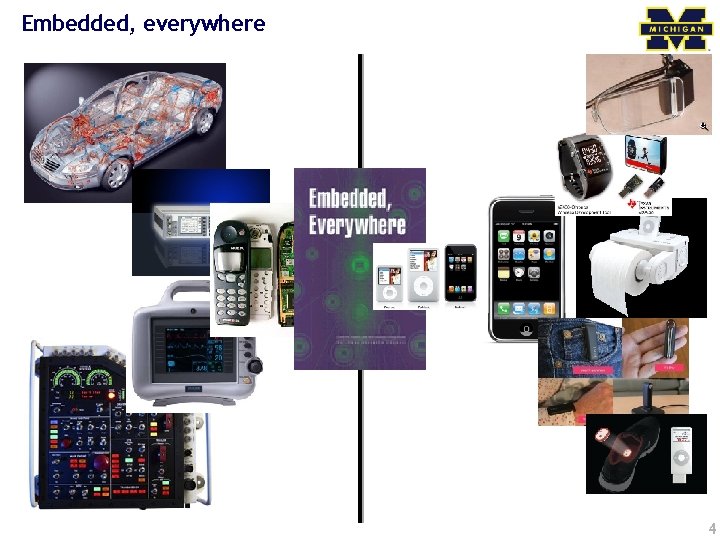
Embedded, everywhere 4
What is driving the embedded everywhere explosion? 5
Outline Technology Trends Design Questions Course Administrivia 6
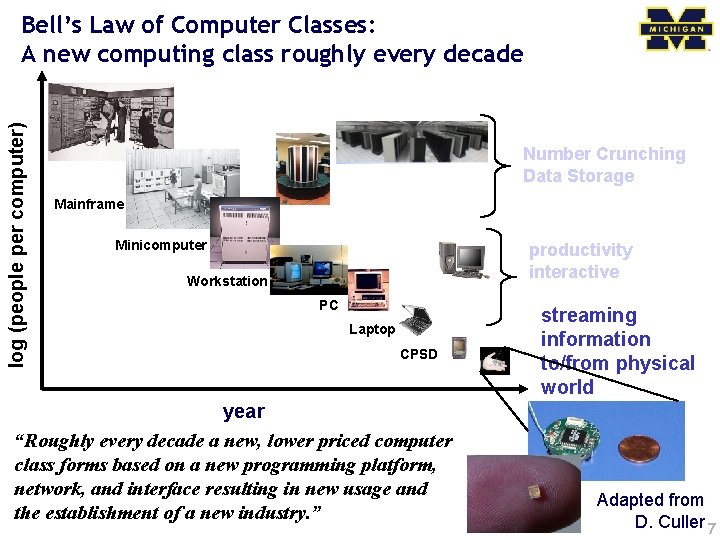
log (people per computer) Bell’s Law of Computer Classes: A new computing class roughly every decade Number Crunching Data Storage Mainframe Minicomputer productivity interactive Workstation PC Laptop CPSD year “Roughly every decade a new, lower priced computer class forms based on a new programming platform, network, and interface resulting in new usage and the establishment of a new industry. ” streaming information to/from physical world Adapted from D. Culler 7
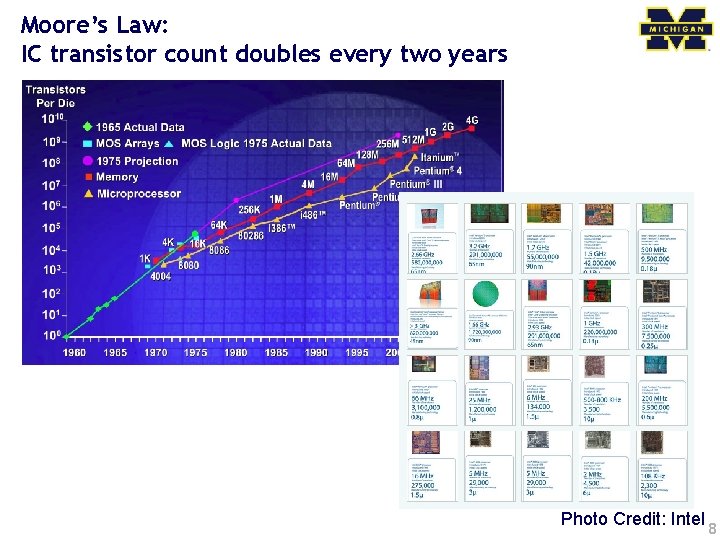
Moore’s Law: IC transistor count doubles every two years Photo Credit: Intel 8
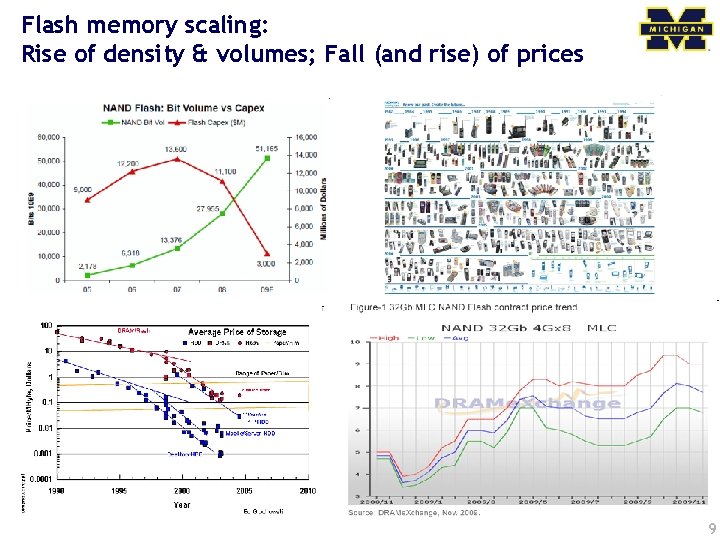
Flash memory scaling: Rise of density & volumes; Fall (and rise) of prices 9
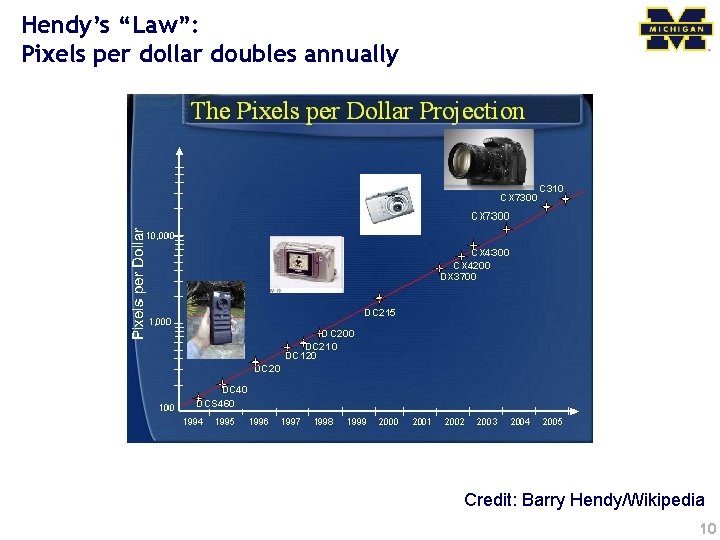
Hendy’s “Law”: Pixels per dollar doubles annually Credit: Barry Hendy/Wikipedia 10
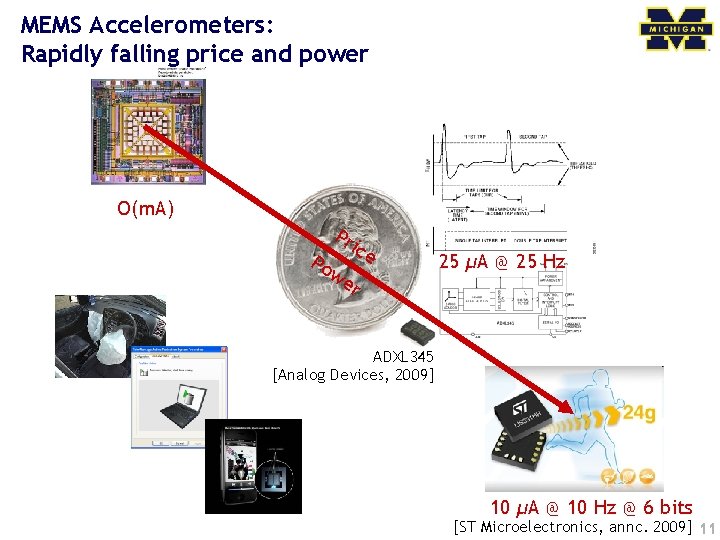
MEMS Accelerometers: Rapidly falling price and power O(m. A) Po Pr ice we 25 µA @ 25 Hz r ADXL 345 [Analog Devices, 2009] 10 µA @ 10 Hz @ 6 bits [ST Microelectronics, annc. 2009] 11
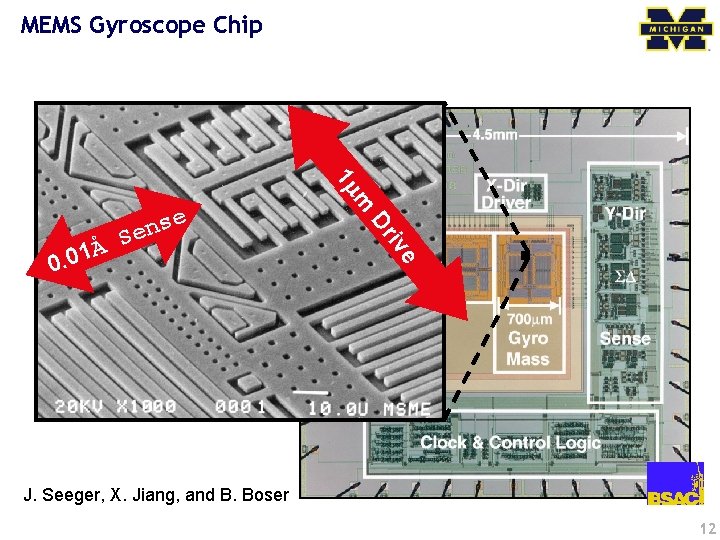
MEMS Gyroscope Chip 1 m m e iv Dr Å 1 0. 0 e s n Se J. Seeger, X. Jiang, and B. Boser 12
![Energy harvesting and storage: Small doesn’t mean powerless… RF [Intel] Thin-film batteries Piezoelectric [Holst/IMEC]](http://slidetodoc.com/presentation_image_h2/cacae1b8ee609af6070ebcead6db5e3a/image-13.jpg "Energy harvesting and storage: Small doesn’t mean powerless… RF [Intel] Thin-film batteries Piezoelectric [Holst/IMEC]")
Energy harvesting and storage: Small doesn’t mean powerless… RF [Intel] Thin-film batteries Piezoelectric [Holst/IMEC] Clare Solar Cell Shock Energy Harvesting CEDRAT Technologies Electrostatic Energy Harvester [ICL] Thermoelectric Ambient Energy Harvester [PNNL] 13
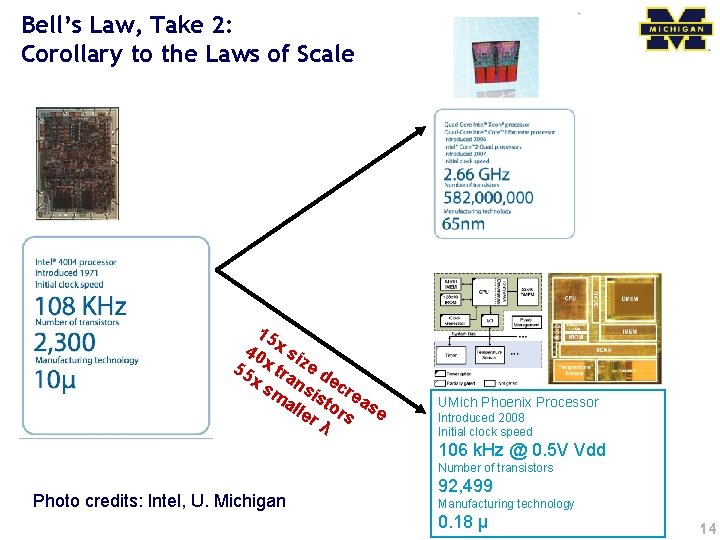
Bell’s Law, Take 2: Corollary to the Laws of Scale 15 40 x si 55 x tra ze d x s n ec ma sis rea lle tors se rλ UMich Phoenix Processor Introduced 2008 Initial clock speed 106 k. Hz @ 0. 5 V Vdd Number of transistors Photo credits: Intel, U. Michigan 92, 499 Manufacturing technology 0. 18 µ 14
Outline Technology Trends Design Questions Course Administrivia 15
Learning happens when assumptions are challenged and invalidated, so… 16
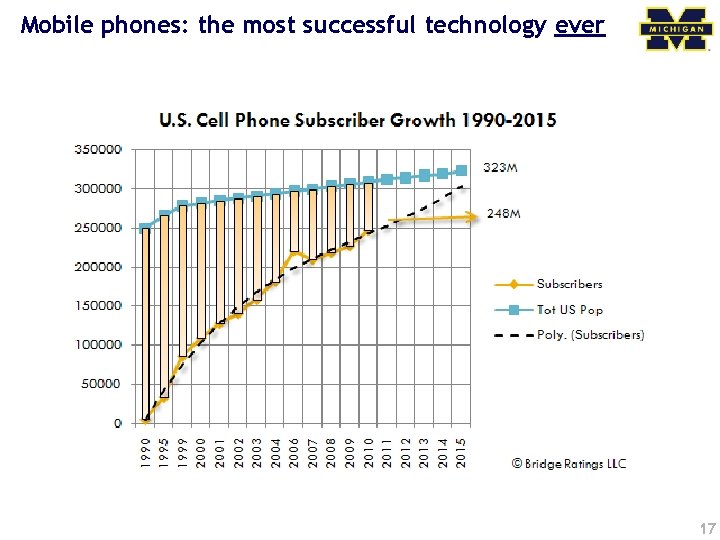
Mobile phones: the most successful technology ever 17
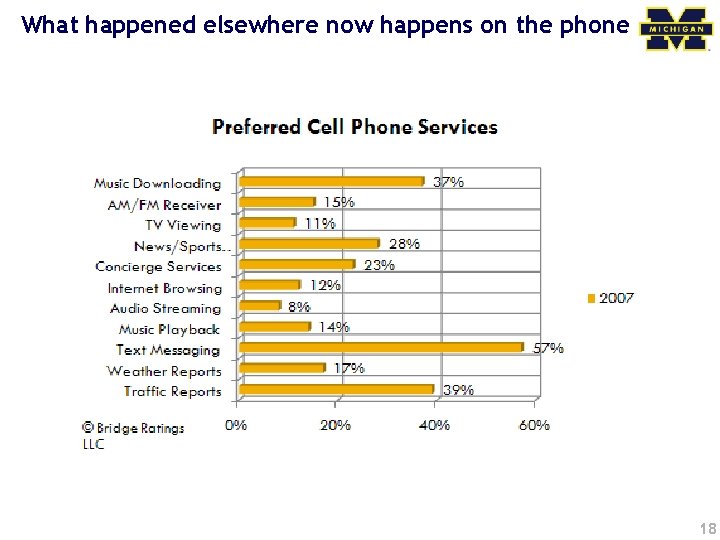
What happened elsewhere now happens on the phone 18
What happens when you press the power switch on your mobile phone? 19
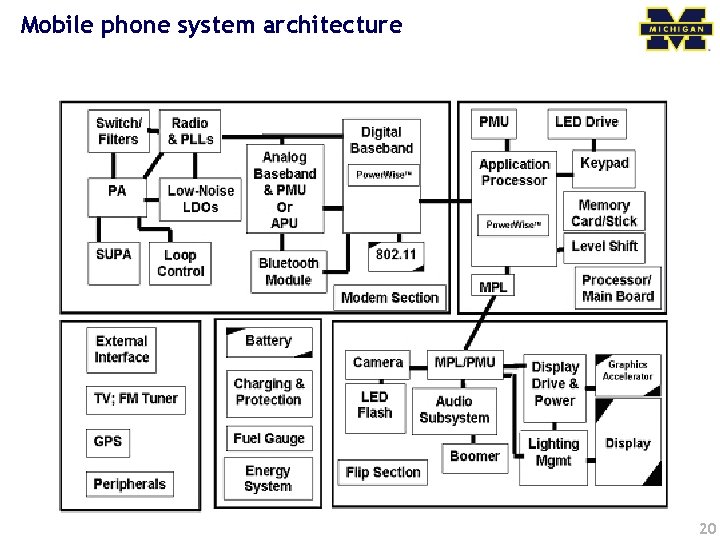
Mobile phone system architecture 20
What’s inside a DSL modem? 21
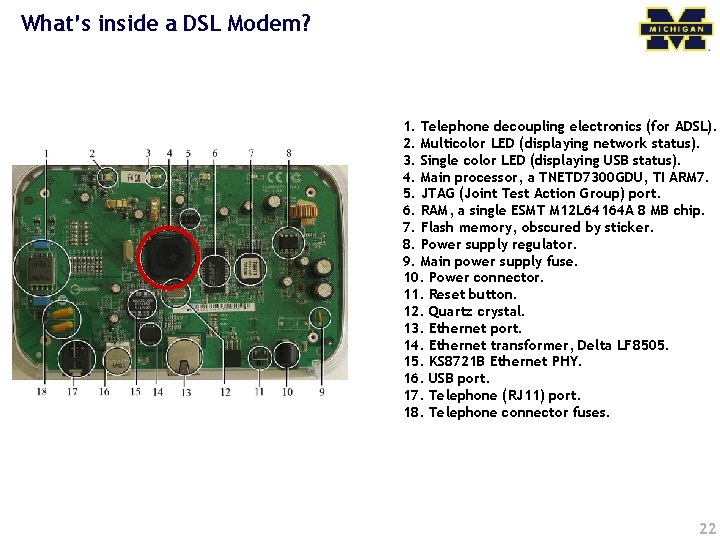
What’s inside a DSL Modem? 1. Telephone decoupling electronics (for ADSL). 2. Multicolor LED (displaying network status). 3. Single color LED (displaying USB status). 4. Main processor, a TNETD 7300 GDU, TI ARM 7. 5. JTAG (Joint Test Action Group) port. 6. RAM, a single ESMT M 12 L 64164 A 8 MB chip. 7. Flash memory, obscured by sticker. 8. Power supply regulator. 9. Main power supply fuse. 10. Power connector. 11. Reset button. 12. Quartz crystal. 13. Ethernet port. 14. Ethernet transformer, Delta LF 8505. 15. KS 8721 B Ethernet PHY. 16. USB port. 17. Telephone (RJ 11) port. 18. Telephone connector fuses. 22
Why study 32 -bit MCUs and FPGAs? 23
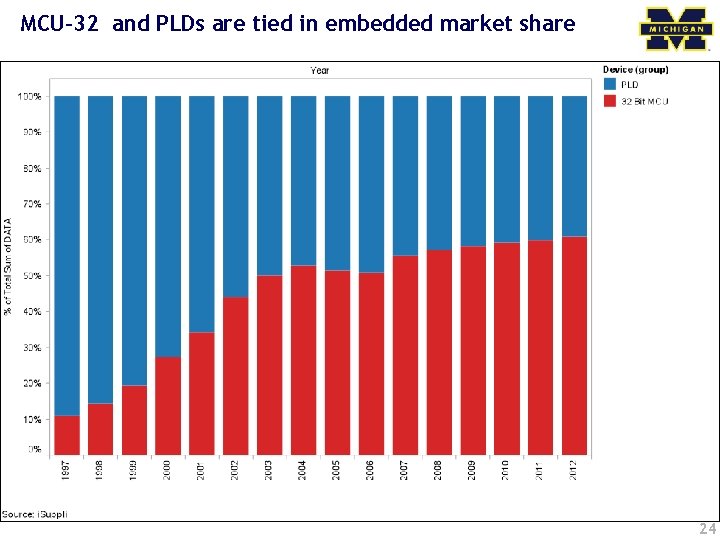
MCU-32 and PLDs are tied in embedded market share 24
Why study the ARM architecture (and the Cortex-M 3 in particular)? 25
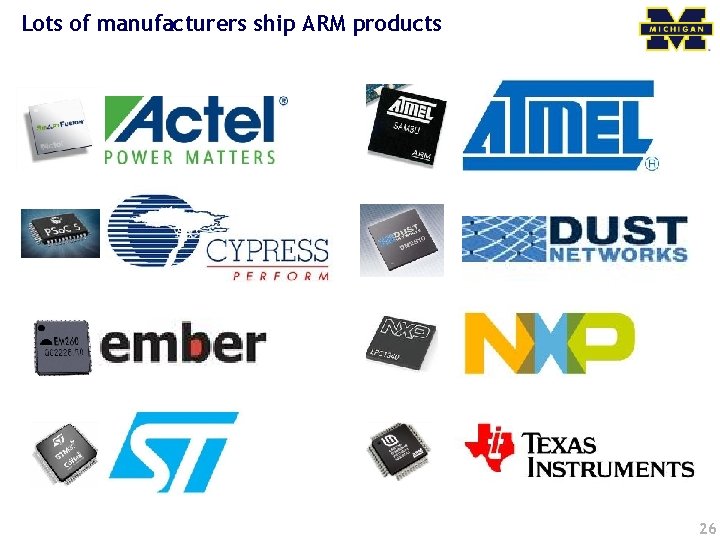
Lots of manufacturers ship ARM products 26
What differentiates these products from one another? 27
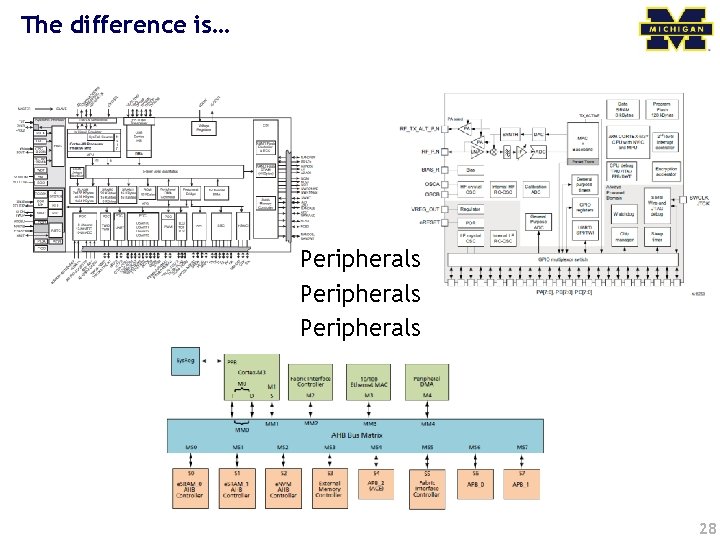
The difference is… Peripherals 28
A embedded systems design example: Turning the mobile phone into an oscilloscope 29
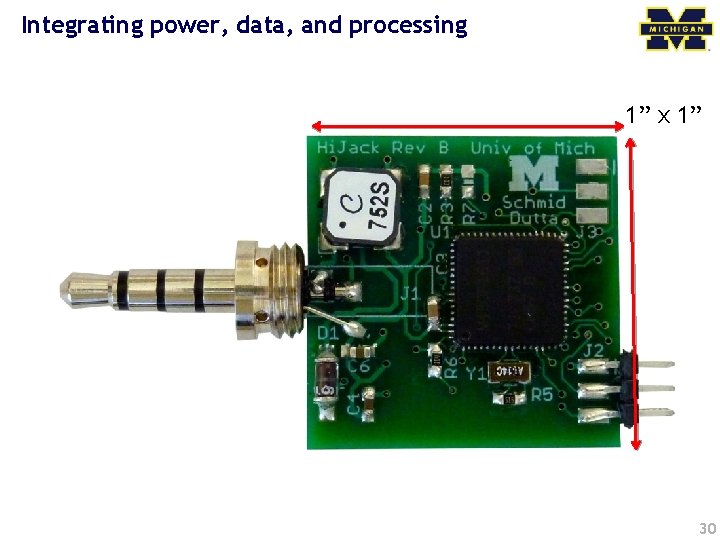
Integrating power, data, and processing 1” x 1” 30
Outline Technology Trends Design Questions Course Administrivia 31
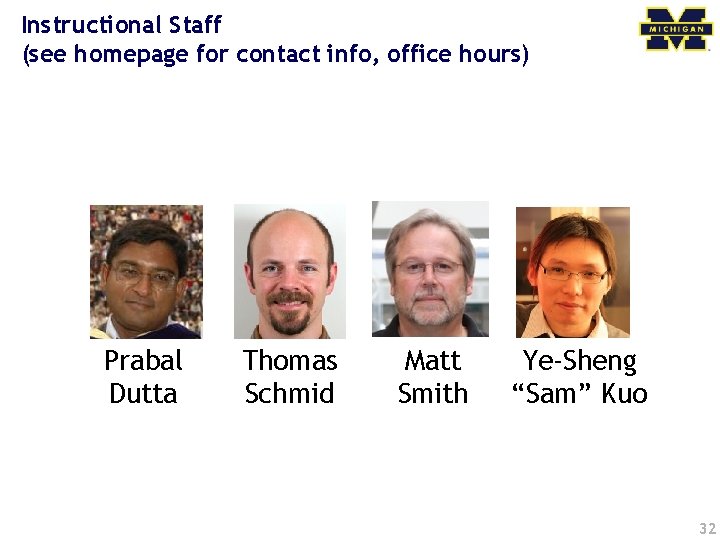
Instructional Staff (see homepage for contact info, office hours) Prabal Dutta Thomas Schmid Matt Smith Ye-Sheng “Sam” Kuo 32
Prerequisites • EECS 270: Introduction to Logic Design – Combinational and sequential logic design – Logic minimization, propagation delays, timing • EECS 280: Programming and Intro Data Structures – C programming – Algorithms (e. g. sort) and data structures (e. g. lists) • EECS 370: Introduction to Computer Organization – Basic computer architecture – CPU control/datapath, memory, I/O – Compiler, assembler 33
Course Syllabus (tentative) • See course homepage: – http: //www. eecs. umich. edu/~prabal/teaching/eecs 373 -f 10 • Roughly – 50%: Lab-centric – 50%: Project-centric • Labs – – – – FPGA + Hardware Tools MCU + Software Tools Memory + Memory-Mapped I/O Interrupts Timers and Counters Serial Bus Interfacing Data Converters (e. g. ADCs/DACs) Wireless Communications 34
Labs • Start TODAY! • Tutorials to familiarize you ARM, Actel tools • Should be fun – Learn how to sensor/control physical world – Build hardware (include PCBs) • Should be instructive – – Program in Verilog Program in C, and assembly Learn debugging skills Learn how to interface peripherals to the CPU/MCU • Are challenging and time-consuming - plan ahead 35
Open-ended Project • Goal: learn how to build embedded systems – – By building an embedded system Work in teams Pick a problem of your own interest Meet with instructors to discuss other ideas • Should be related to the class and emphasize topics • Scope of project must grow with size of team 36
Exams • Midterm (October 21, 2010) – Emphasize problem solving fundamentals • Final (Date TBD) – Cumulative topics • Minute Quizzes – Short, Random – Over previous day’s material 37
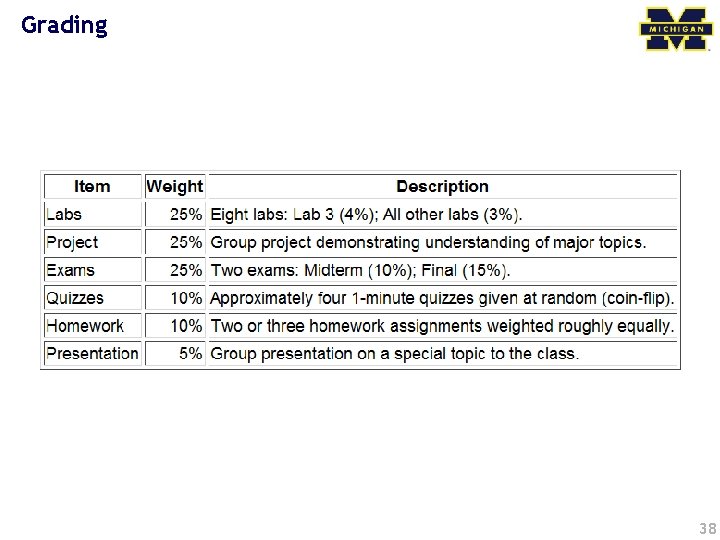
Grading 38
Questions? Comments? Discussion? 39
- Slides: 39