
EECS 373 Design of MicroprocessorBased Systems Prabal Dutta
EECS 373 Design of Microprocessor-Based Systems Prabal Dutta University of Michigan Lecture 10: Serial buses Oct 6, 2011 1

2
Announcements • Homework #1 – Due now • ABET procedure 3
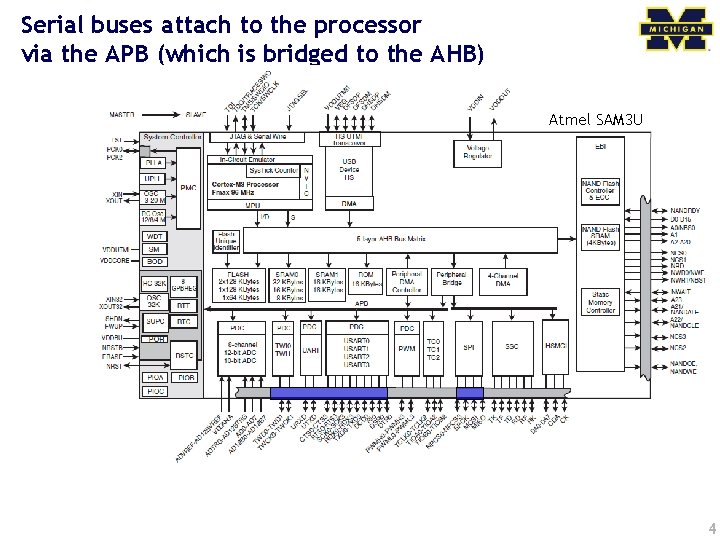
Serial buses attach to the processor via the APB (which is bridged to the AHB) Atmel SAM 3 U 4
Outline • Minute quiz • Announcements • UART • SPI • I 2 C 5
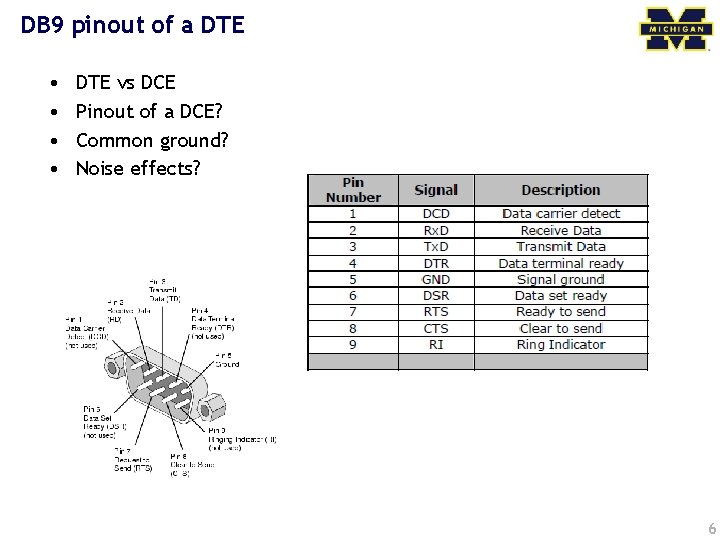
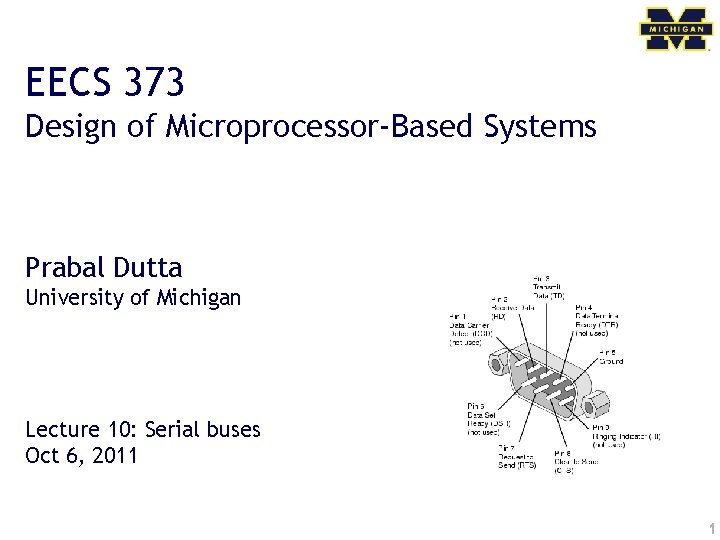
DB 9 pinout of a DTE • • DTE vs DCE Pinout of a DCE? Common ground? Noise effects? 6
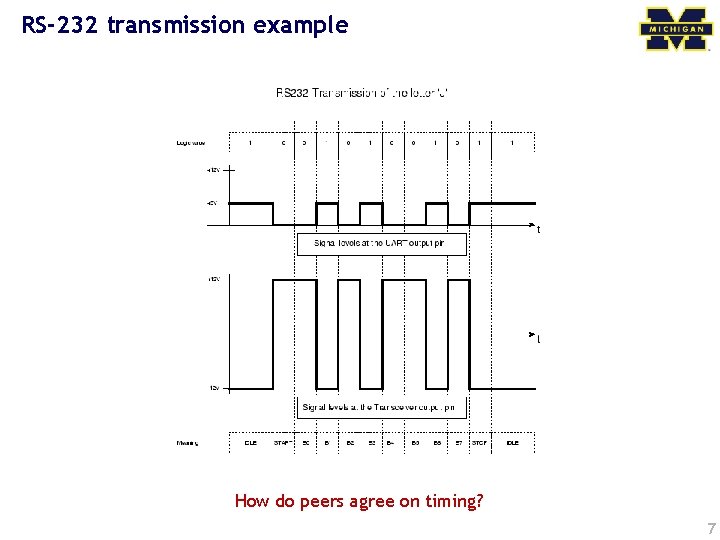
RS-232 transmission example How do peers agree on timing? 7
Outline • Minute quiz • Announcements • UART • SPI • I 2 C 8
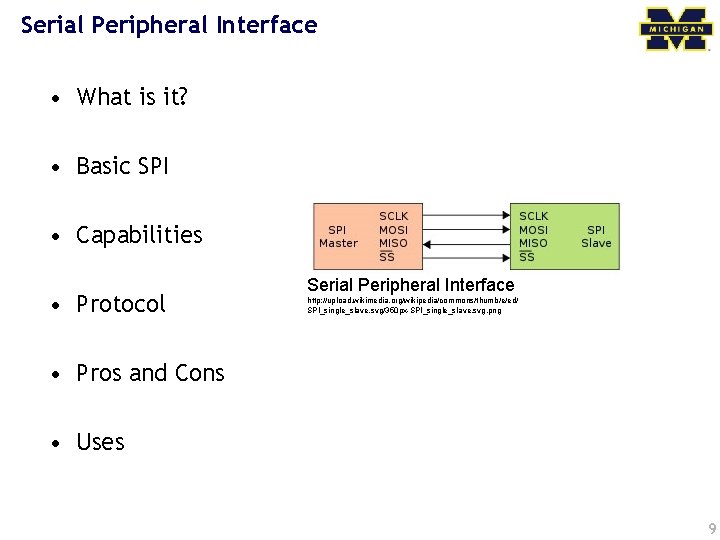
Serial Peripheral Interface • What is it? • Basic SPI • Capabilities • Protocol Serial Peripheral Interface http: //upload. wikimedia. org/wikipedia/commons/thumb/e/ed/ SPI_single_slave. svg/350 px-SPI_single_slave. svg. png • Pros and Cons • Uses 9
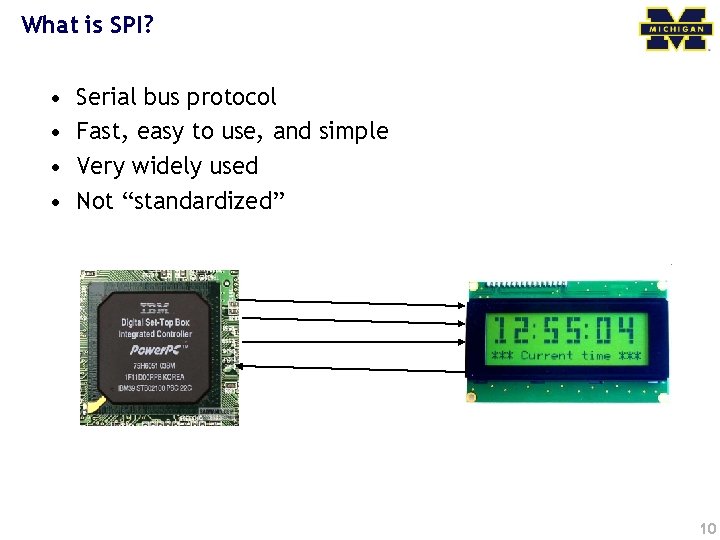
What is SPI? • • Serial bus protocol Fast, easy to use, and simple Very widely used Not “standardized” 10
SPI Basics • A 4 -wire communications bus • Typically communicate across short distances • Supports – Single master – Multiple slaves • Synchronized – Communications are “clocked” 11
SPI Capabilities • Always full-duplex – Communicates in both directions simultaneously – Transmitted (or received) data may not be meaningful • Multiple Mbps transmission speeds – 0 -50 MHz clock speeds not uncommon • Transfer data in 4 to 16 bit characters • Supports multiple slaves 12
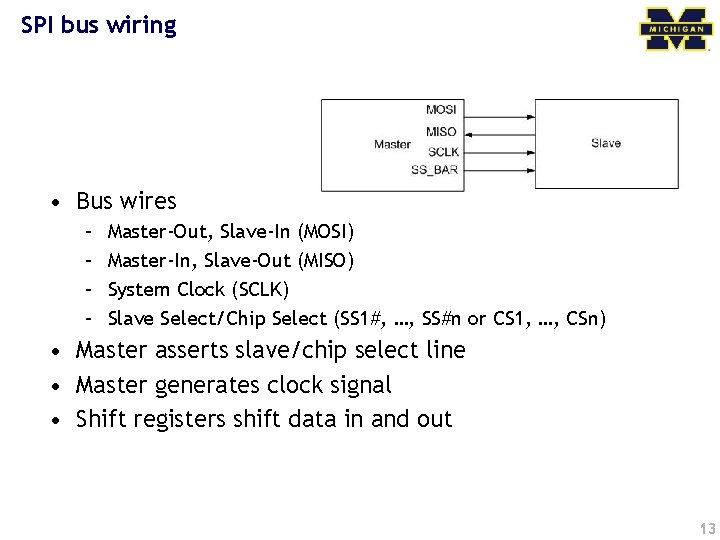
SPI bus wiring • Bus wires – – Master-Out, Slave-In (MOSI) Master-In, Slave-Out (MISO) System Clock (SCLK) Slave Select/Chip Select (SS 1#, …, SS#n or CS 1, …, CSn) • Master asserts slave/chip select line • Master generates clock signal • Shift registers shift data in and out 13
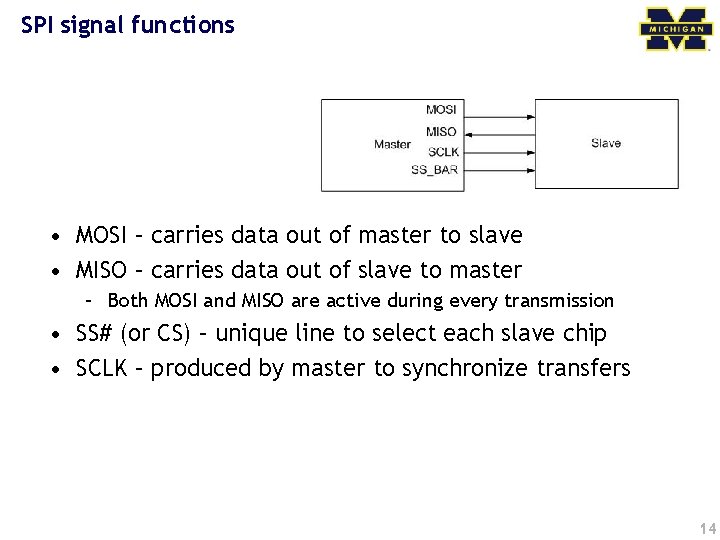
SPI signal functions • MOSI – carries data out of master to slave • MISO – carries data out of slave to master – Both MOSI and MISO are active during every transmission • SS# (or CS) – unique line to select each slave chip • SCLK – produced by master to synchronize transfers 14
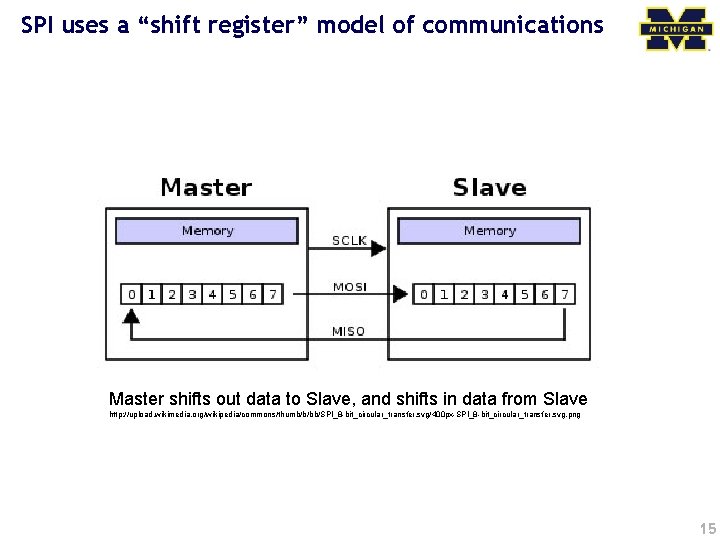
SPI uses a “shift register” model of communications Master shifts out data to Slave, and shifts in data from Slave http: //upload. wikimedia. org/wikipedia/commons/thumb/b/bb/SPI_8 -bit_circular_transfer. svg/400 px-SPI_8 -bit_circular_transfer. svg. png 15
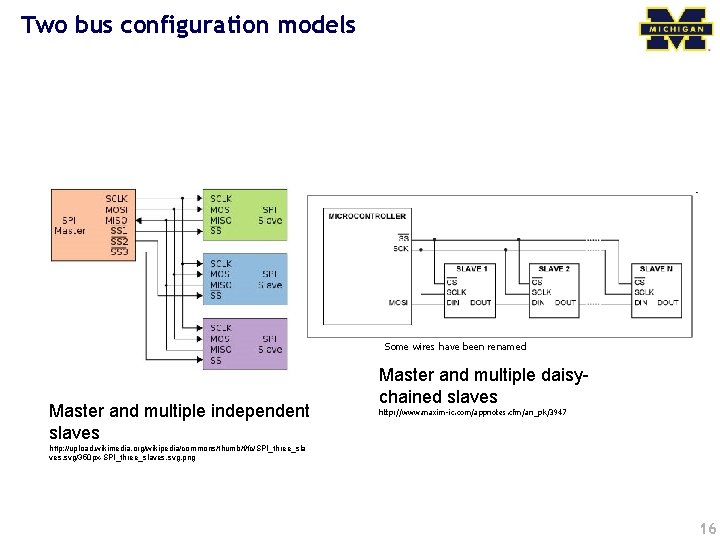
Two bus configuration models Some wires have been renamed Master and multiple independent slaves Master and multiple daisychained slaves http: //www. maxim-ic. com/appnotes. cfm/an_pk/3947 http: //upload. wikimedia. org/wikipedia/commons/thumb/f/fc/SPI_three_sla ves. svg/350 px-SPI_three_slaves. svg. png 16
SPI clocking: there is no “standard way” • Four clocking “modes” – Two phases – Two polarities • Master and selected slave must be in the same mode • During transfers with slaves A and B, Master must – – – – Configure clock to Slave A’s clock mode Select Slave A Do transfer Deselect Slave A Configure clock to Slave B’s clock mode Select Slave B Do transfer Deselect Slave B • Master reconfigures clock mode on-the-fly! 17
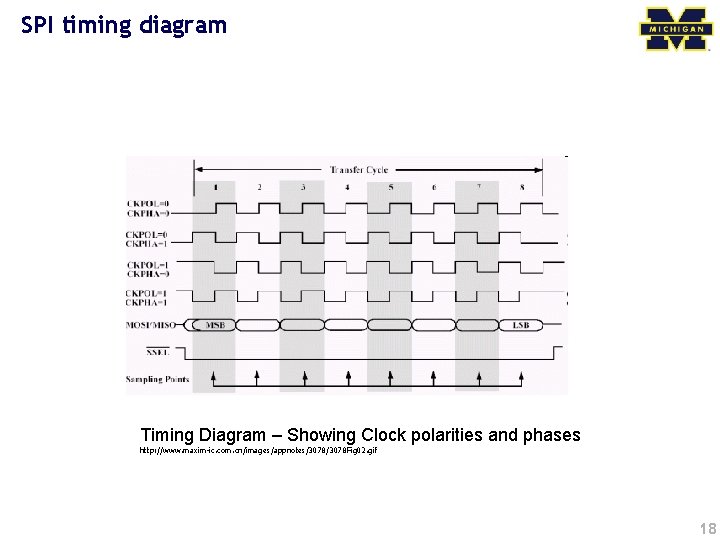
SPI timing diagram Timing Diagram – Showing Clock polarities and phases http: //www. maxim-ic. com. cn/images/appnotes/3078 Fig 02. gif 18
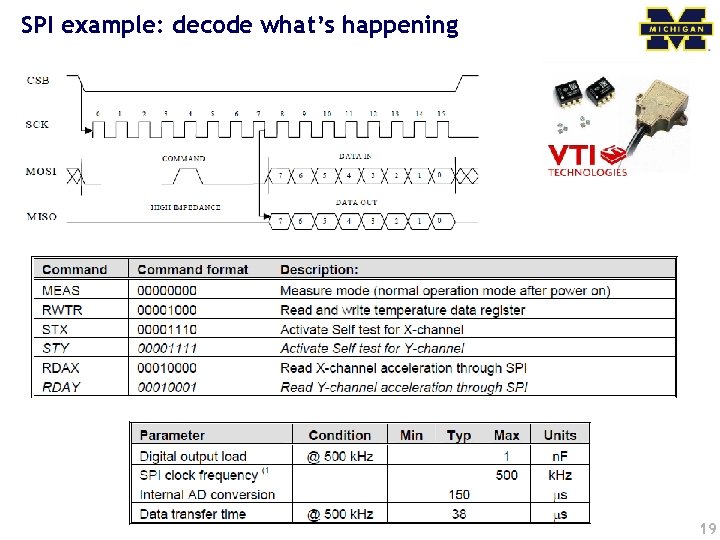
SPI example: decode what’s happening 19
SPI tradeoffs: the pros and cons • Pros – – Fast for point-to-point connections Easily allows streaming/constant data inflow No addressing in protocol, so it’s simple to implement Broadly supported • Cons – – Slave select/chip select makes multiple slaves more complex No acknowledgement (can’t tell if clocking in garbage) No inherent arbitration No flow control (must know slave speed) 20
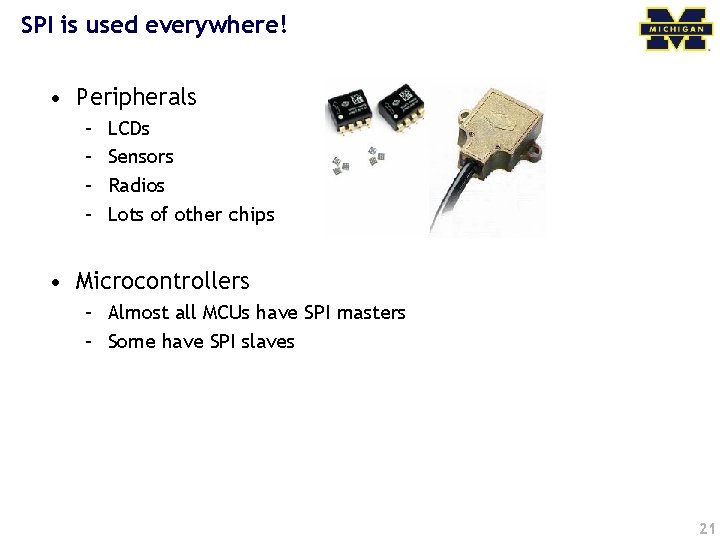
SPI is used everywhere! • Peripherals – – LCDs Sensors Radios Lots of other chips • Microcontrollers – Almost all MCUs have SPI masters – Some have SPI slaves 21
Outline • Minute quiz • Announcements • UART • SPI • I 2 C 22
I 2 C bus • • • Inter-Integrated Circuit Pronounced “eye-squared-see” Sometimes called “eye-two-see” Two wire serial bus specification Invented by Philips in the early 1980 s • The division is now NXP • Was a patented protocol, but patent has now expired 23
I 2 C uses • Originally used by Philips inside television sets • Now a very common peripheral bus standard • Intended for use in embedded systems • Philips, National, Xicor, Siemens, … all use • Also used in PCs • RTC • Temperature sensors • Variant is the SMBus (system management bus) 24
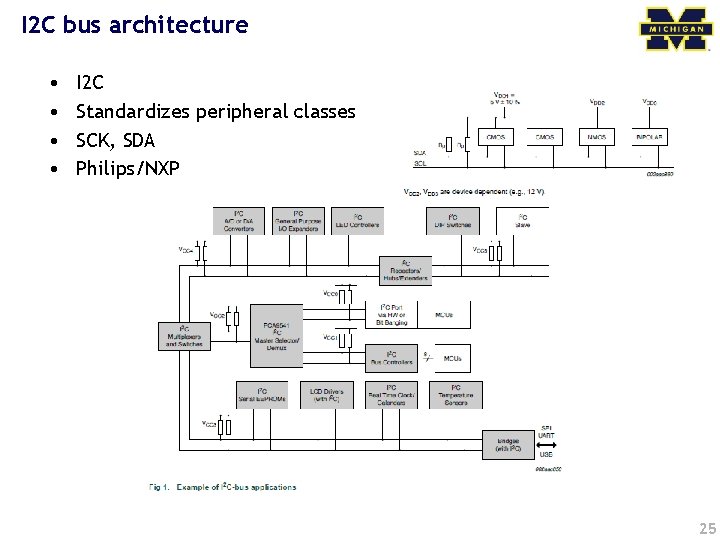
I 2 C bus architecture • • I 2 C Standardizes peripheral classes SCK, SDA Philips/NXP 25
I 2 C details • Two-wire serial protocol with addressing capability • Speeds up to 3. 4 Mbps • Discussion: what limits I 2 C to such small speeds? • Multi-master architecture • Open collector bus driver • Pull-up resistors • Multi-master, Multi-slave • Uses bus arbitration 26
I 2 C wiring • Two lines • SDA (serial data) • SCL (serial clock) • Open collector design • Simple interfacing in for multi-voltage • Supports bus arbitration 27
I 2 C clock • Not a “traditional” clock • Normally is kept “high” using a pull-up • Pulsed by the master during data transmission • Master could be either the transmitter or receiver • Slave device can hold clock low if needs more time • Allows for flow control 28
I 2 C transaction • Transmitter/receiver differs from master/slave • Master initiates transactions • Slave responds • Transmitter sets data on SDA line, slave acks • For a read, slave is transmitter • For a write, master is transmitter 29
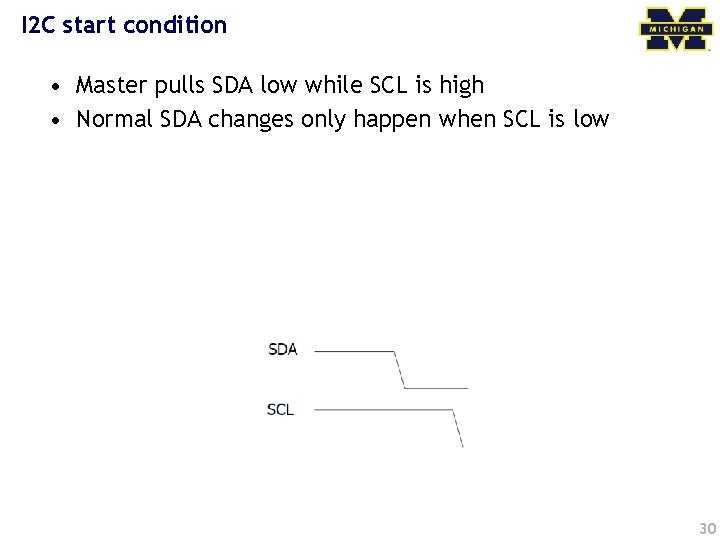
I 2 C start condition • Master pulls SDA low while SCL is high • Normal SDA changes only happen when SCL is low 30
I 2 C address transmission • Data is always sampled on the rising clock edge • Address is 7 bits • An 8 -th bit indicated read or write • High for read • Low for write • Addresses assigned by Philips/NXP • For a fee • Was covered by patent 31
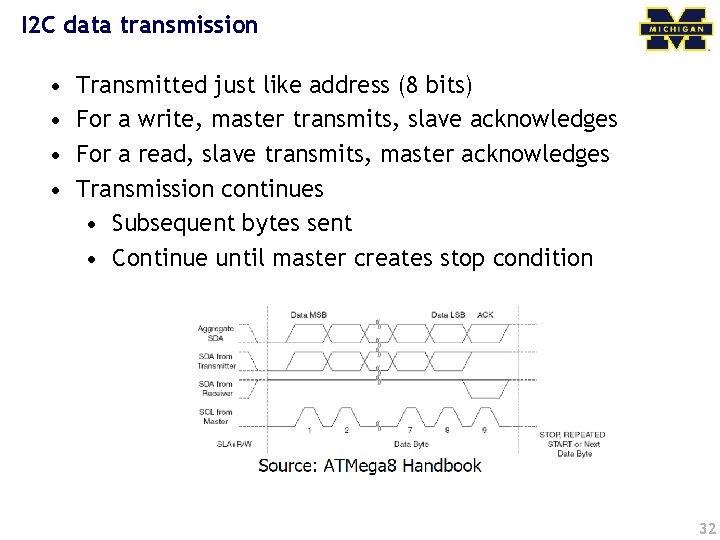
I 2 C data transmission • • Transmitted just like address (8 bits) For a write, master transmits, slave acknowledges For a read, slave transmits, master acknowledges Transmission continues • Subsequent bytes sent • Continue until master creates stop condition 32
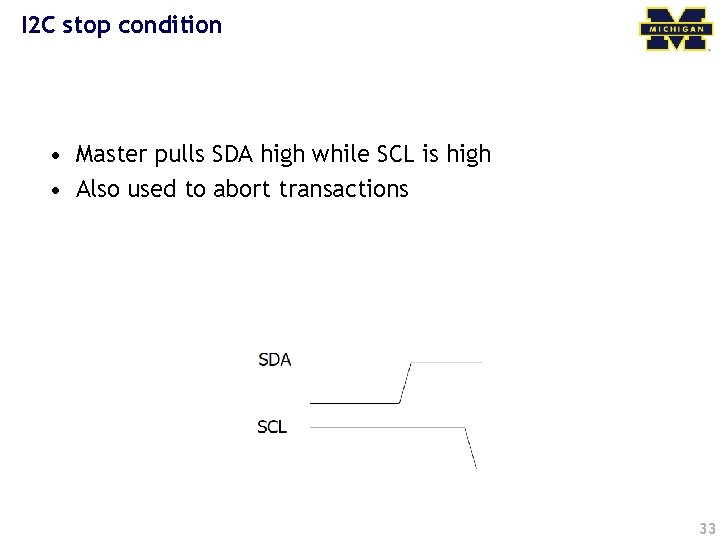
I 2 C stop condition • Master pulls SDA high while SCL is high • Also used to abort transactions 33
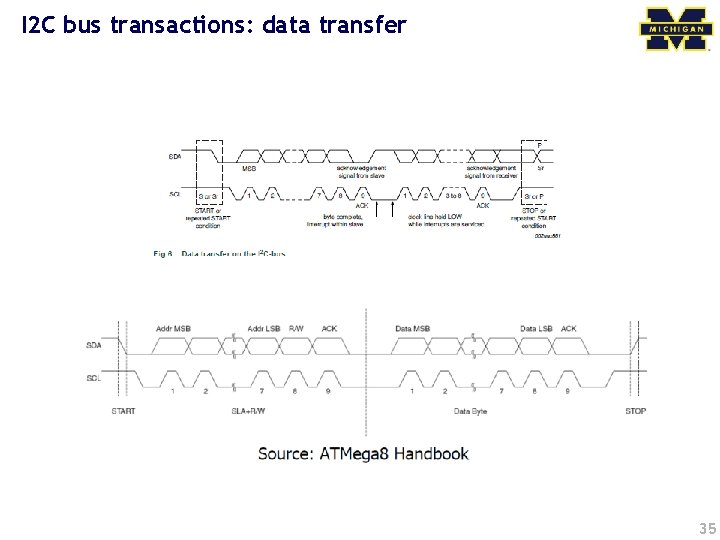
I 2 C bus transactions: data transfer 35
Questions? Comments? Discussion? 37
- Slides: 35