
EE 201 Fundamentals of Electric Circuits Course Introduction






- Slides: 21
EE 201 Fundamentals of Electric Circuits
Course Introduction • Anmar Arif • Lecturer/Assistant Professor • Ph. D from Iowa State University on August 10, 2019 • Office: ? ? • Office Hours: • Sunday: 9: 00 am – 12: 00 pm, 1: 00 pm – 3: 00 pm • Monday: 10: 00 am – 12: 00 pm, 1: 00 pm – 2: 00 pm • If my office is open, come in • Textbook • “Introductory Circuit Analysis” By Robert L. Boylestad, 12 th (or 11 th or 10 th) Edition, Published by Prentice Hall, 2001. • Website • https: //fac. ksu. edu. sa/anarif
Grades • Quizzes and Homework (20%) • Exams (80%) • Exam 1 (20%): Sunday, 20 October 2019 • Exam 2 (20%): Monday, 25 November 2019 • Final (40%): Monday, 23 December 2019
What are we learning? • Circuit concepts (voltage, current, power, resistors) • Series/Parallel (DC) circuits analysis • Circuit analysis techniques • Network Theorems (DC) circuits • Sinusoidal alternating and phasors • Series/Parallel (AC) circuits analysis • Network Theorems (AC) circuits • Power (AC)
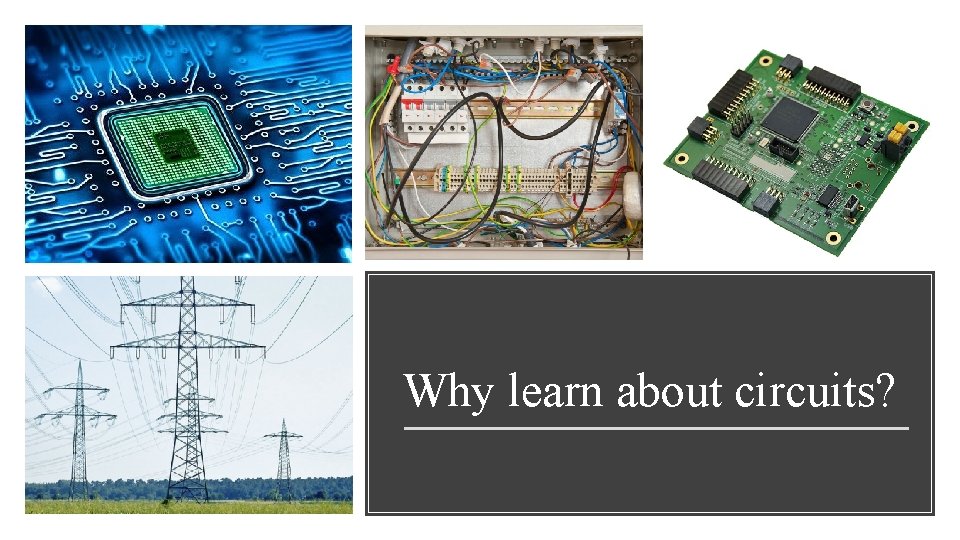
Why learn about circuits?
Objectives of the course • Introduction to DC and AC circuits • Learn circuit analysis techniques • What’s the voltage and current on R 2? DC voltage source Resistance
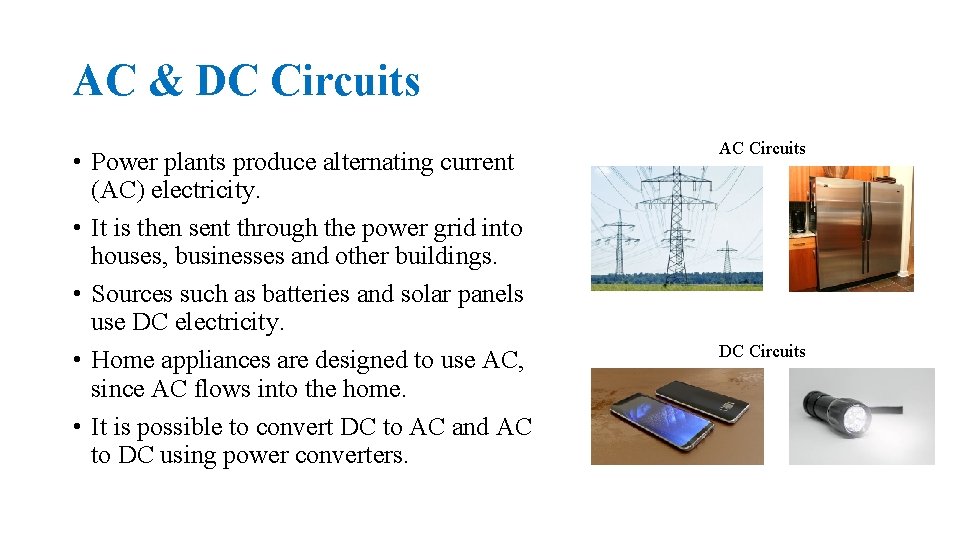
AC & DC Circuits • Power plants produce alternating current (AC) electricity. • It is then sent through the power grid into houses, businesses and other buildings. • Sources such as batteries and solar panels use DC electricity. • Home appliances are designed to use AC, since AC flows into the home. • It is possible to convert DC to AC and AC to DC using power converters. AC Circuits DC Circuits
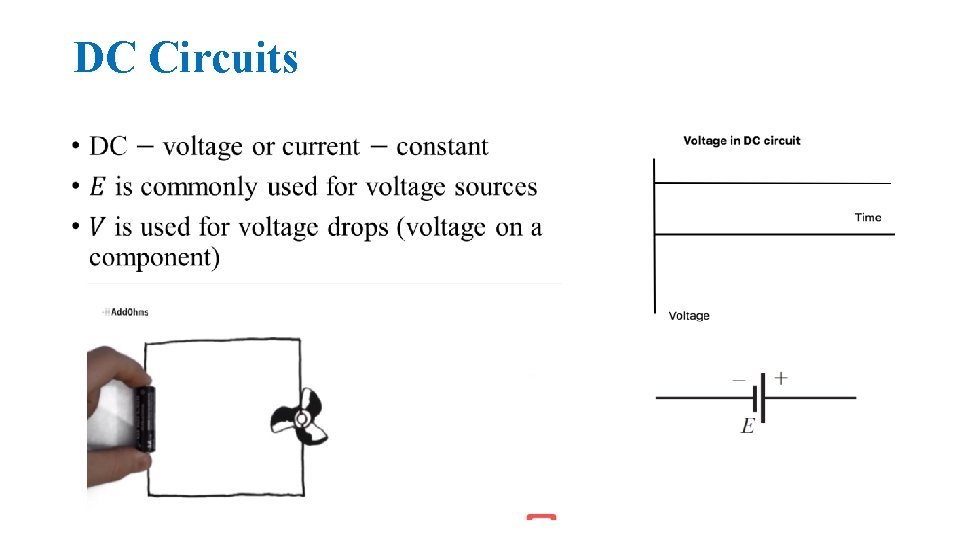
DC Circuits •
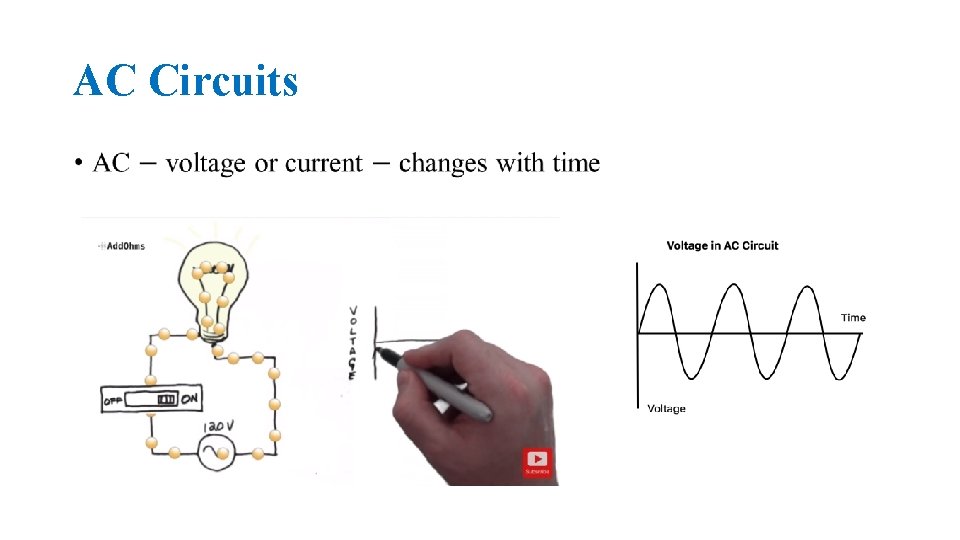
AC Circuits •
AC & DC Circuits Advantages of AC • Generation of AC is cheaper and easier • The values of the voltages and currents can be easily controlled • Very high AC power can be generated and transmitted efficiently • Easy conversion from AC to DC Advantages of DC • DC can be stored • DC power can be converted into different signals (digital and analog) • DC has some advantages over AC in transmission networks
Lecture 1 Current and Voltage
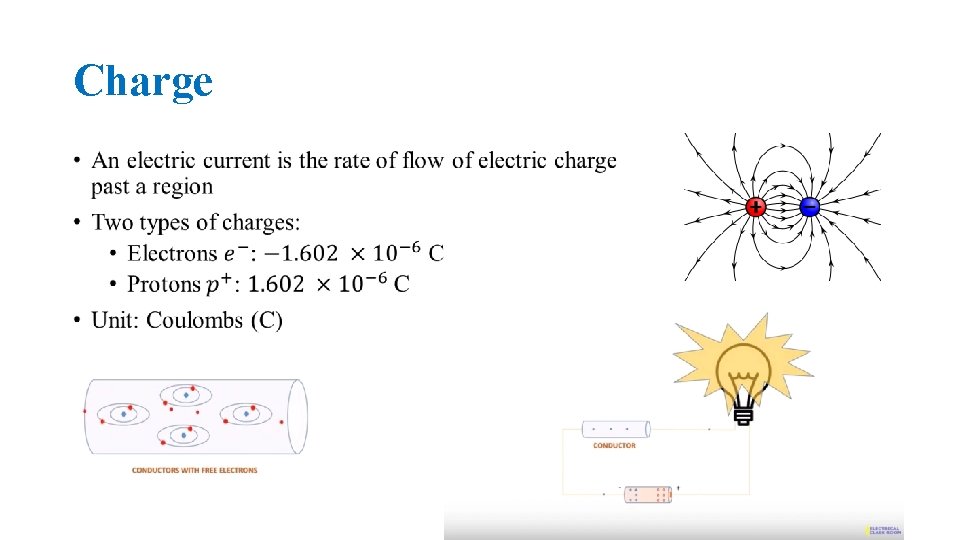
Charge •
Conductors & Insulators • Conductors • are those materials that permit a large flow of electrons with very little external force (voltage) applied. • Examples: silver, copper, brass, steel, gold, aluminum, mercury • Insulators • are those materials that have very few free electrons and require a large applied potential (voltage) to establish a measurable current level. • Examples: glass, rubber, and plastic
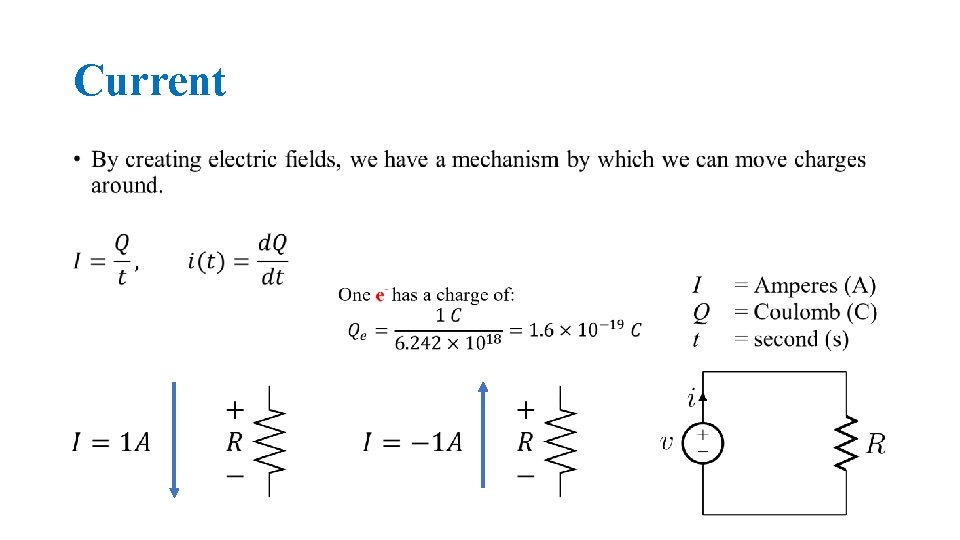
Current •
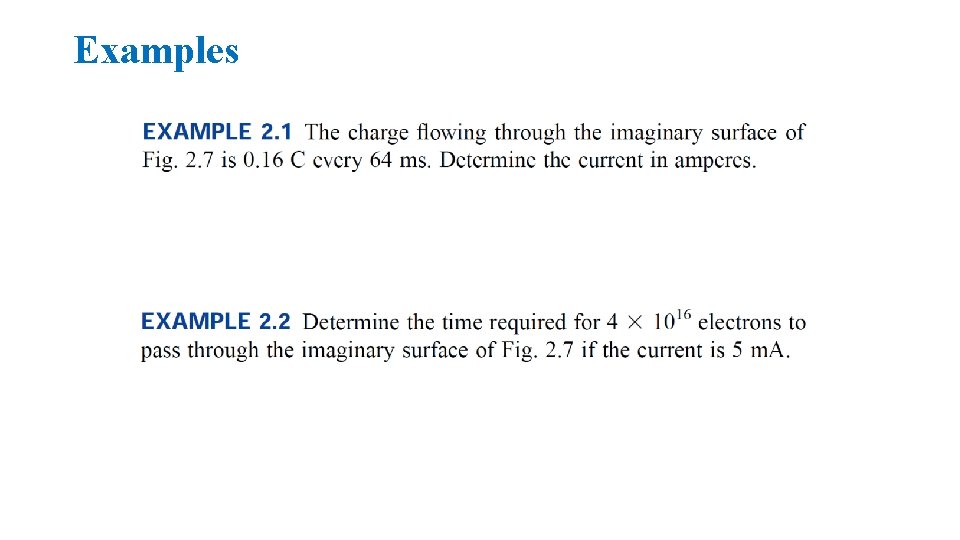
Examples
Examples
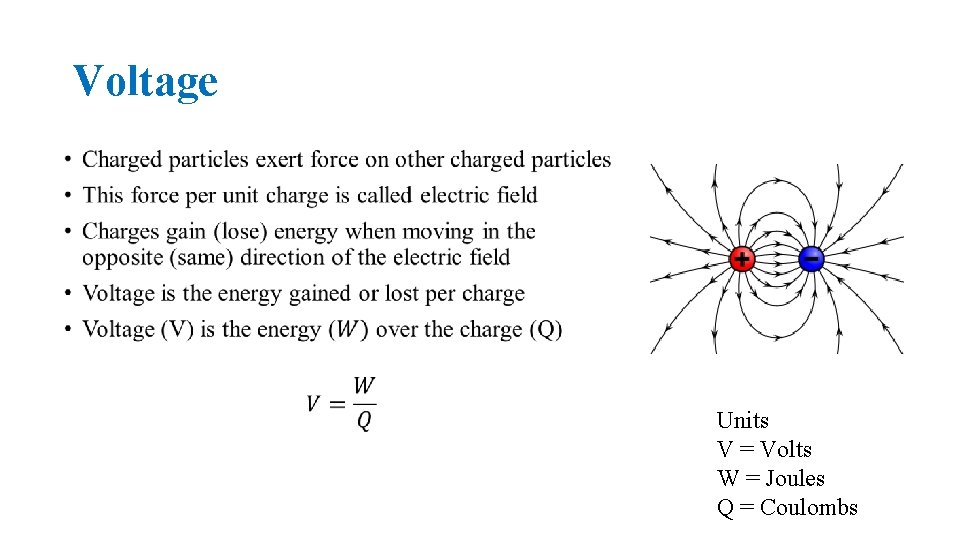
Voltage • Units V = Volts W = Joules Q = Coulombs
Examples
Examples
Definitions
References • https: //www. youtube. com/watch? v=v. N 9 a. R 2 w. Kv 0 U • https: //www. youtube. com/watch? v=g. FOf 7 Dk. KRto • http: //tuttle. merc. iastate. edu/ee 201/topics. htm • https: //www. coursera. org/learn/linear-circuits-dcanalysis