
EE 105 Spring 2007 Microelectronic Devices and Circuits
- Slides: 27
EE 105 - Spring 2007 Microelectronic Devices and Circuits Lecture 2 Semiconductor Basics
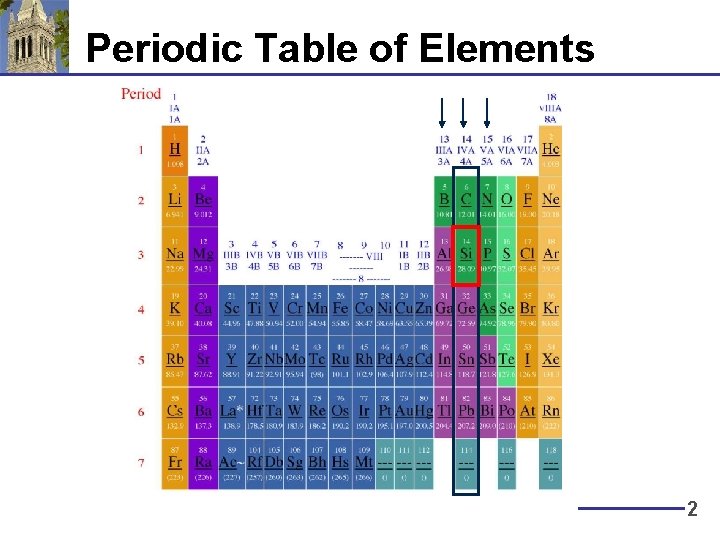
Periodic Table of Elements 2
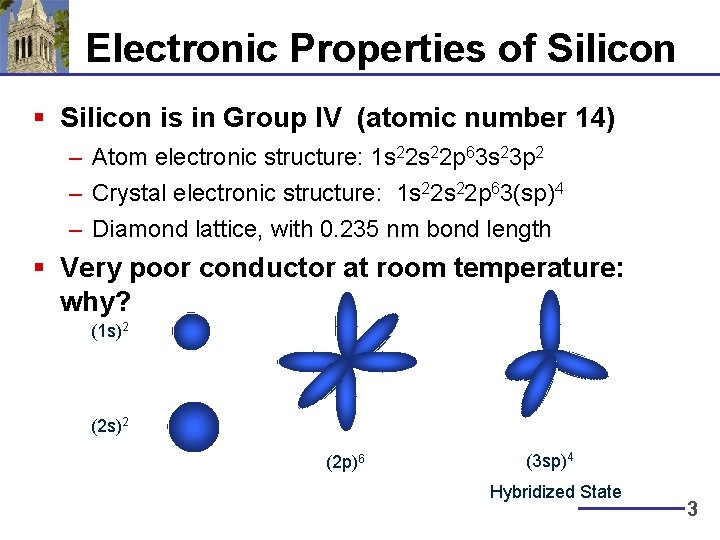
Electronic Properties of Silicon § Silicon is in Group IV (atomic number 14) – Atom electronic structure: 1 s 22 p 63 s 23 p 2 – Crystal electronic structure: 1 s 22 p 63(sp)4 – Diamond lattice, with 0. 235 nm bond length § Very poor conductor at room temperature: why? (1 s)2 (2 p)6 (3 sp)4 Hybridized State 3
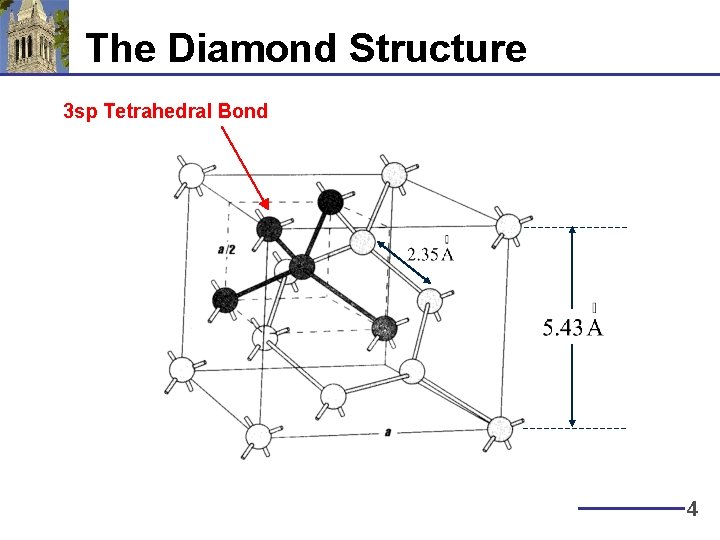
The Diamond Structure 3 sp Tetrahedral Bond 4
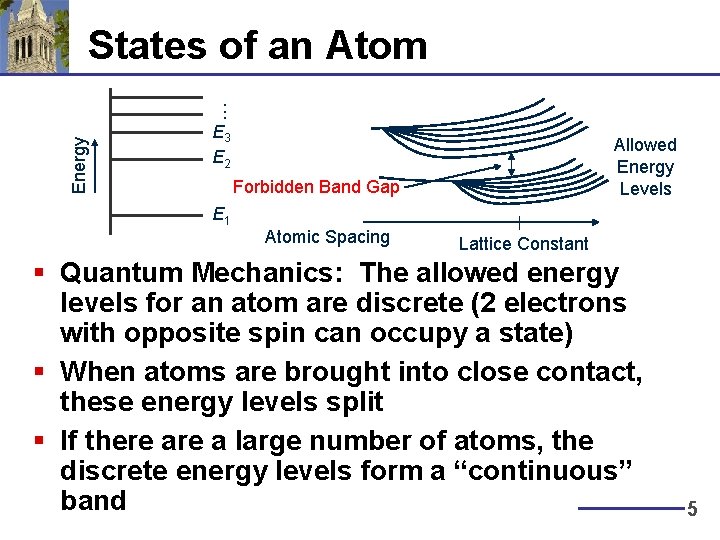
Energy States of an Atom. . . E 3 E 2 Allowed Energy Levels Forbidden Band Gap E 1 Atomic Spacing Lattice Constant § Quantum Mechanics: The allowed energy levels for an atom are discrete (2 electrons with opposite spin can occupy a state) § When atoms are brought into close contact, these energy levels split § If there a large number of atoms, the discrete energy levels form a “continuous” band 5
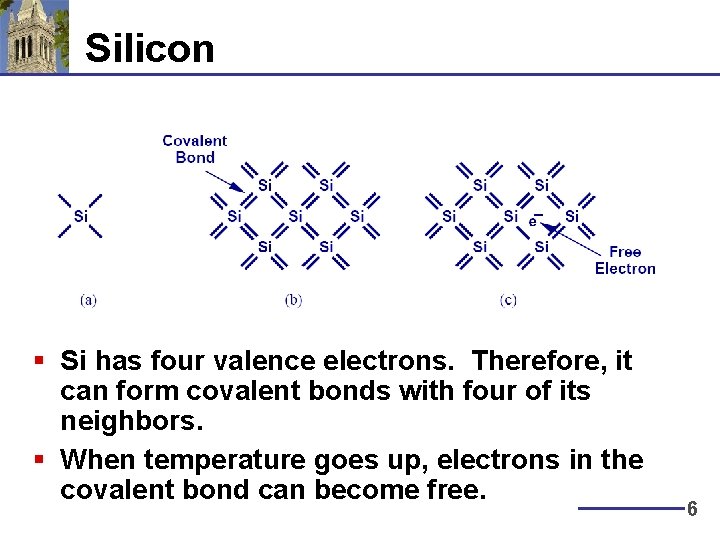
Silicon § Si has four valence electrons. Therefore, it can form covalent bonds with four of its neighbors. § When temperature goes up, electrons in the covalent bond can become free. 6
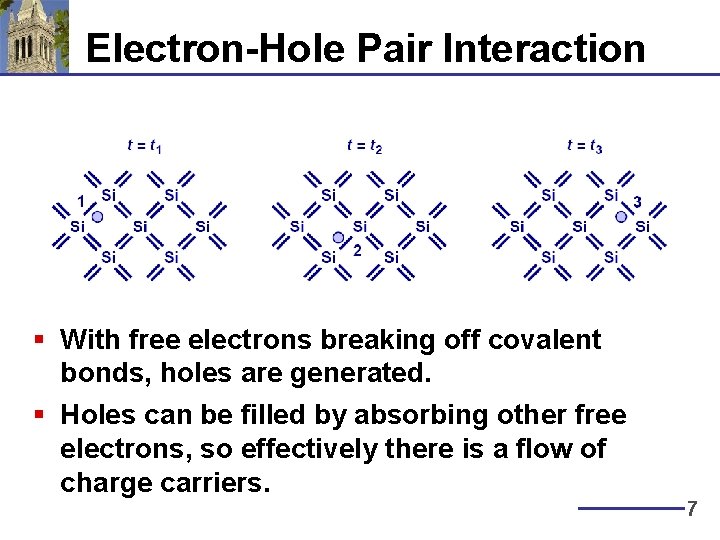
Electron-Hole Pair Interaction § With free electrons breaking off covalent bonds, holes are generated. § Holes can be filled by absorbing other free electrons, so effectively there is a flow of charge carriers. 7
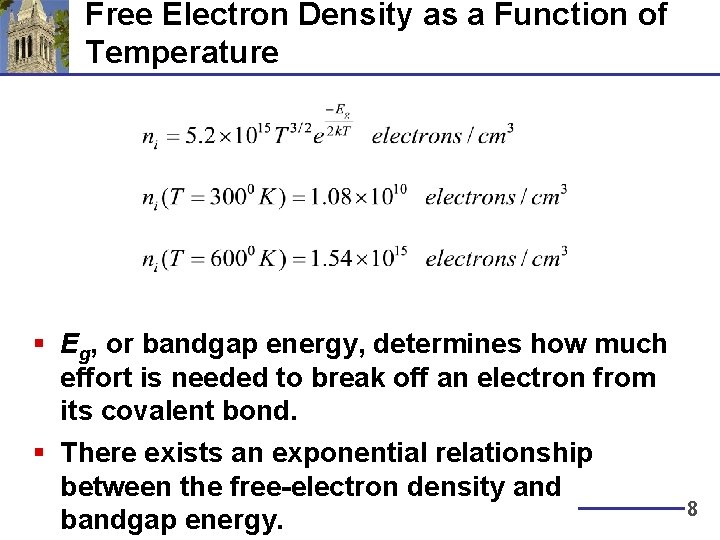
Free Electron Density as a Function of Temperature § Eg, or bandgap energy, determines how much effort is needed to break off an electron from its covalent bond. § There exists an exponential relationship between the free-electron density and bandgap energy. 8
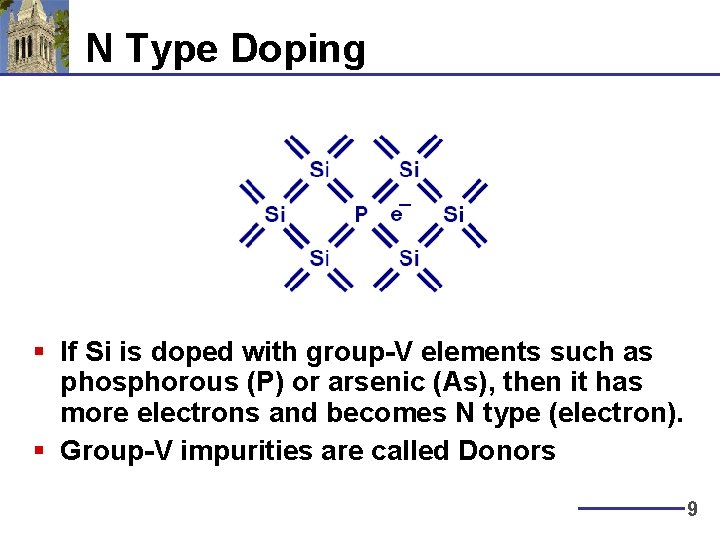
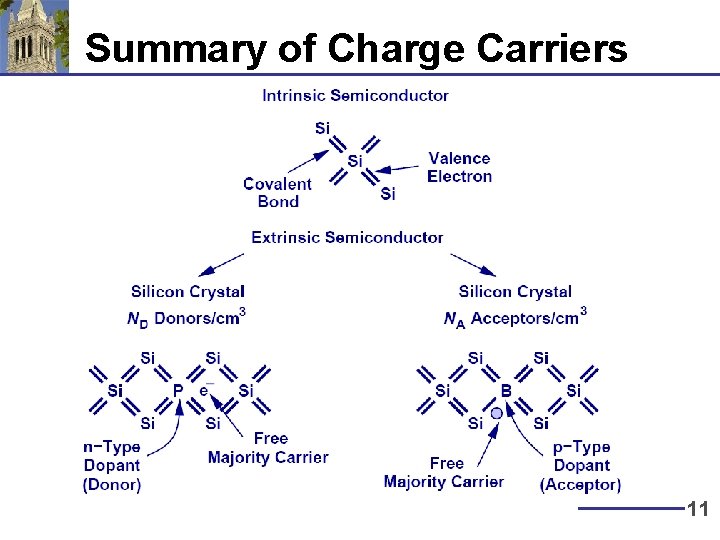
N Type Doping § If Si is doped with group-V elements such as phosphorous (P) or arsenic (As), then it has more electrons and becomes N type (electron). § Group-V impurities are called Donors 9
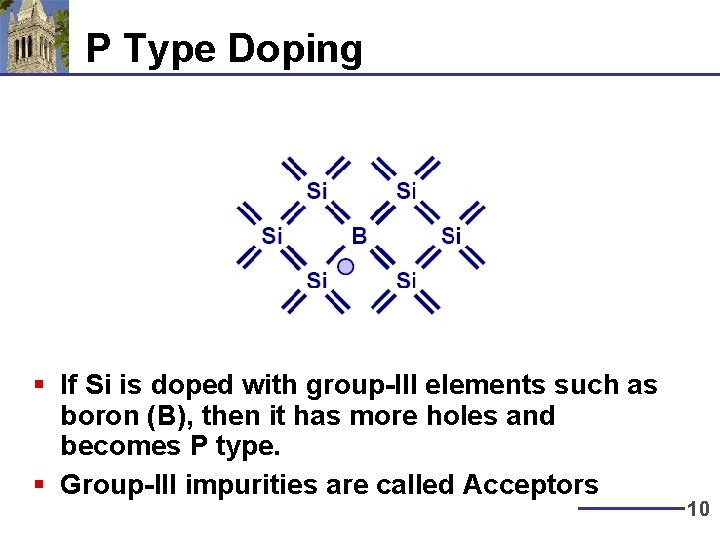
P Type Doping § If Si is doped with group-III elements such as boron (B), then it has more holes and becomes P type. § Group-III impurities are called Acceptors 10
Summary of Charge Carriers 11
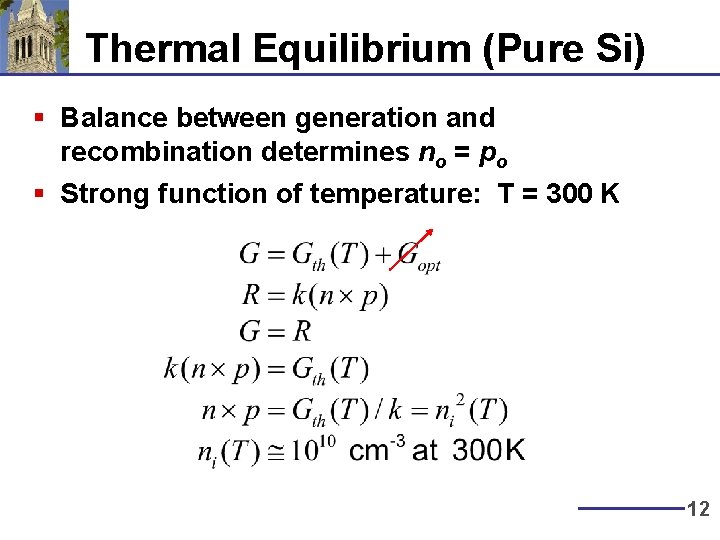
Thermal Equilibrium (Pure Si) § Balance between generation and recombination determines no = po § Strong function of temperature: T = 300 K 12
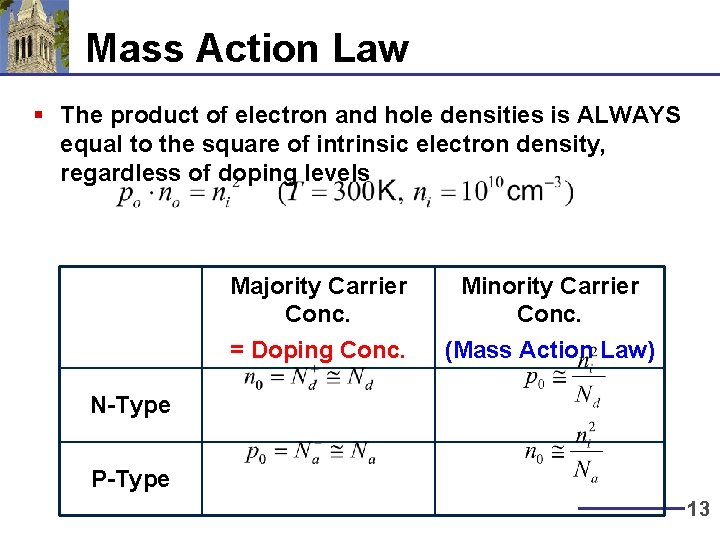
Mass Action Law § The product of electron and hole densities is ALWAYS equal to the square of intrinsic electron density, regardless of doping levels Majority Carrier Conc. = Doping Conc. Minority Carrier Conc. (Mass Action Law) N-Type P-Type 13
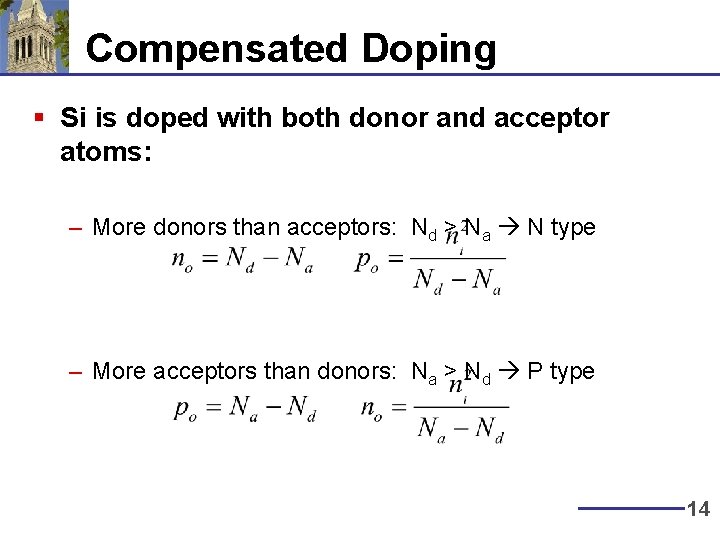
Compensated Doping § Si is doped with both donor and acceptor atoms: – More donors than acceptors: Nd > Na N type – More acceptors than donors: Na > Nd P type 14
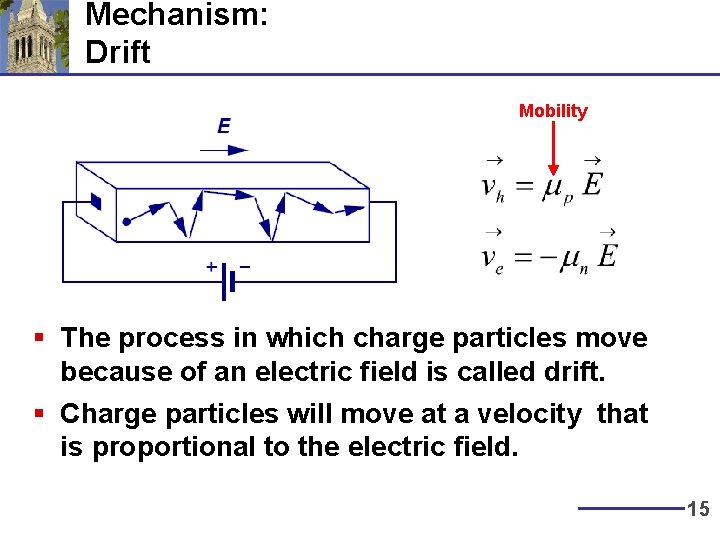
Mechanism: Drift Mobility § The process in which charge particles move because of an electric field is called drift. § Charge particles will move at a velocity that is proportional to the electric field. 15
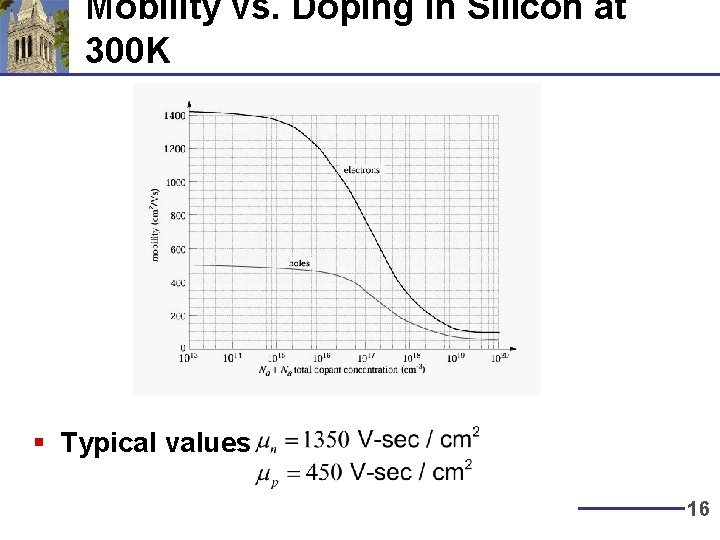
Mobility vs. Doping in Silicon at 300 K § Typical values 16
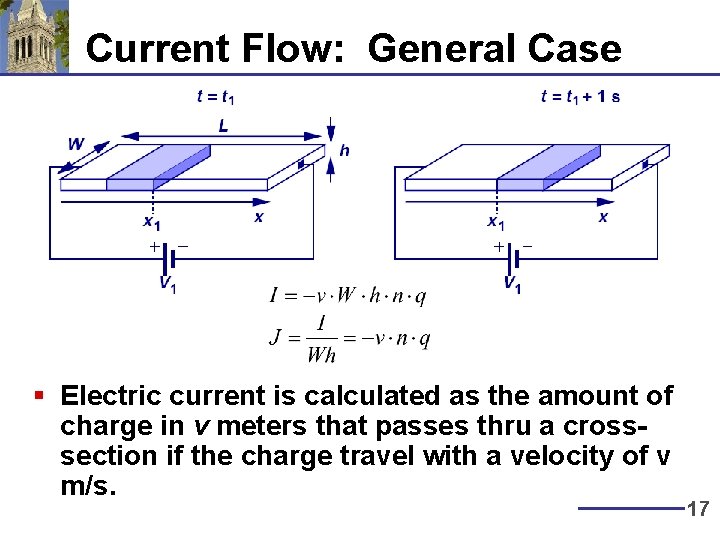
Current Flow: General Case § Electric current is calculated as the amount of charge in v meters that passes thru a crosssection if the charge travel with a velocity of v m/s. 17
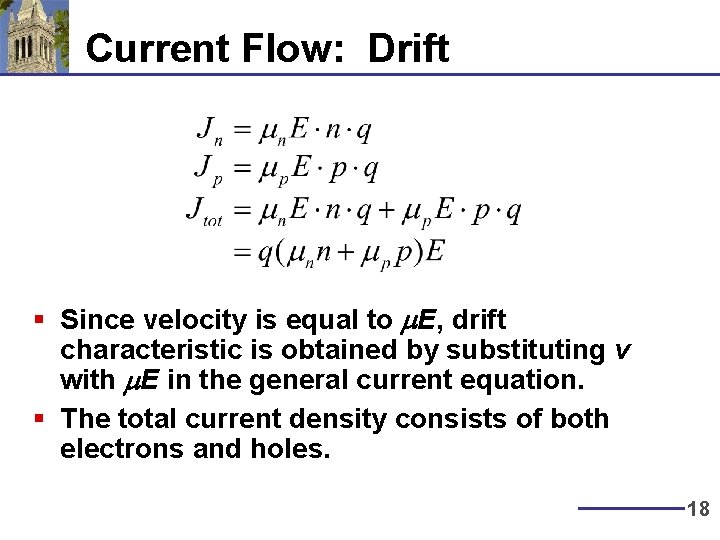
Current Flow: Drift § Since velocity is equal to E, drift characteristic is obtained by substituting v with E in the general current equation. § The total current density consists of both electrons and holes. 18
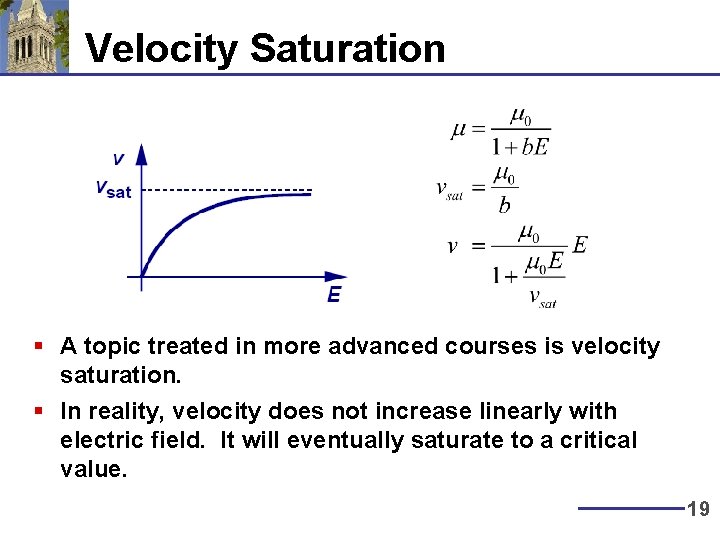
Velocity Saturation § A topic treated in more advanced courses is velocity saturation. § In reality, velocity does not increase linearly with electric field. It will eventually saturate to a critical value. 19
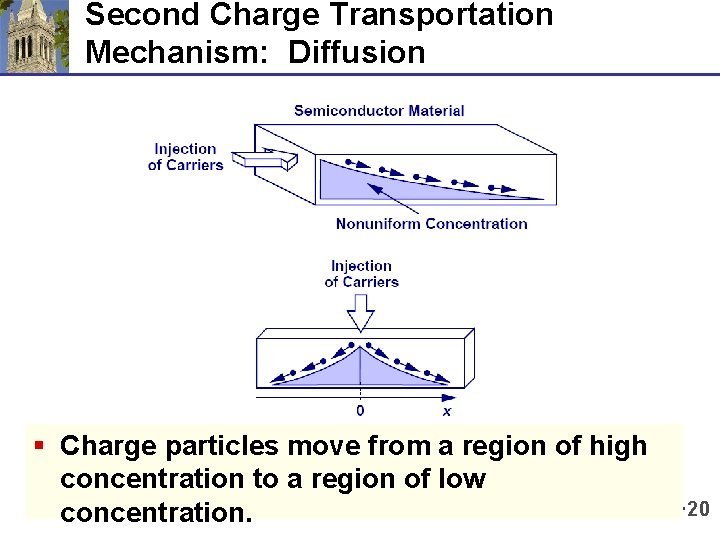
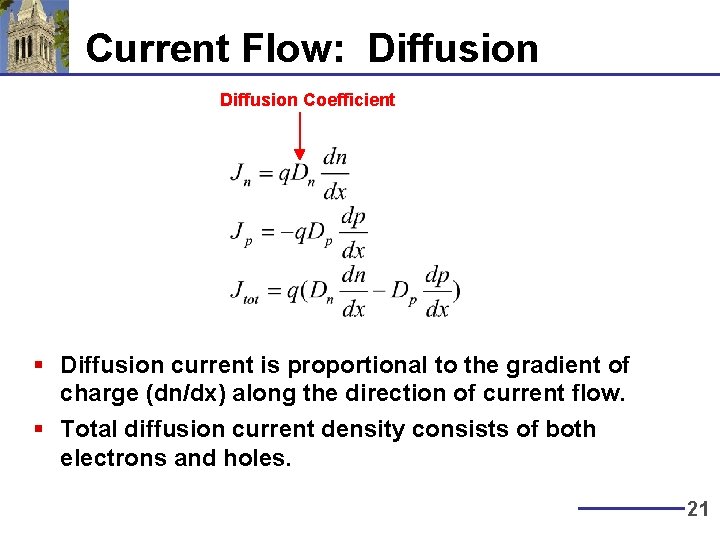
Second Charge Transportation Mechanism: Diffusion § Charge particles move from a region of high concentration to a region of low concentration. 20
Current Flow: Diffusion Coefficient § Diffusion current is proportional to the gradient of charge (dn/dx) along the direction of current flow. § Total diffusion current density consists of both electrons and holes. 21
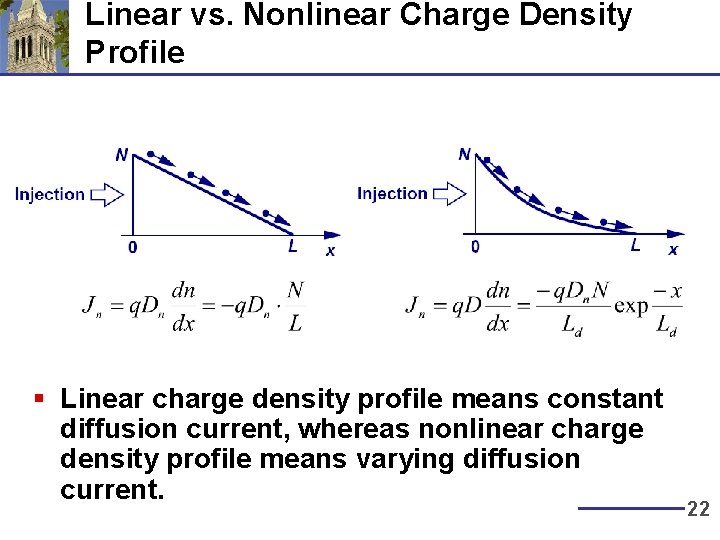
Linear vs. Nonlinear Charge Density Profile § Linear charge density profile means constant diffusion current, whereas nonlinear charge density profile means varying diffusion current. 22
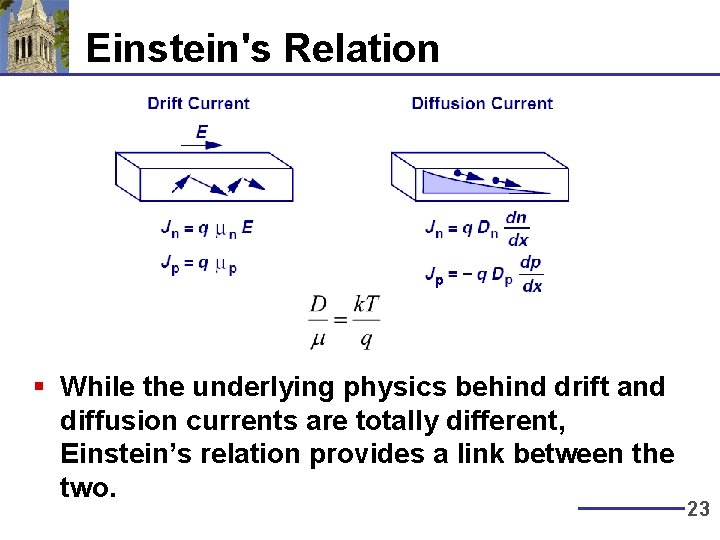
Einstein's Relation p § While the underlying physics behind drift and diffusion currents are totally different, Einstein’s relation provides a link between the two. 23
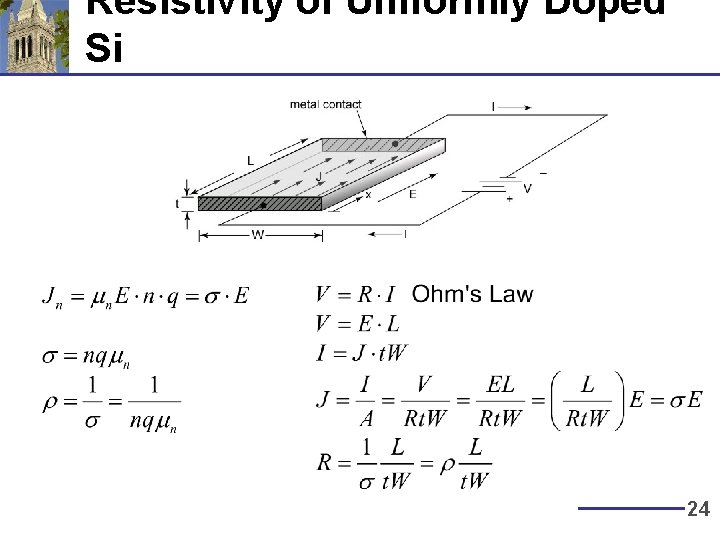
Resistivity of Uniformly Doped Si 24
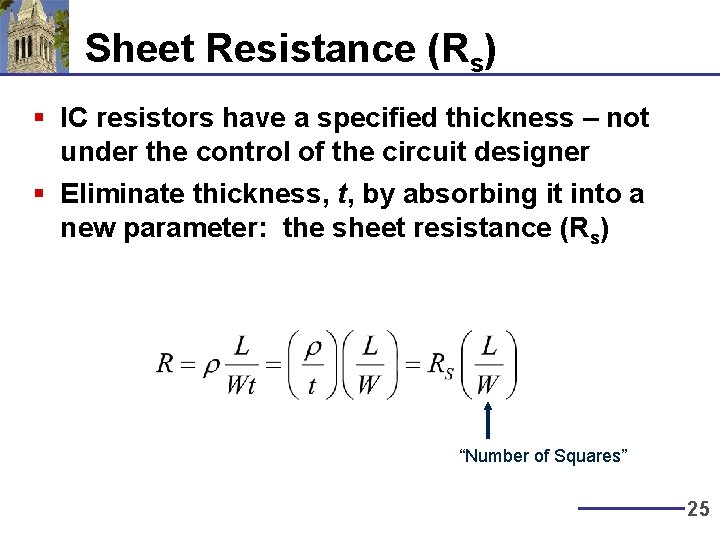
Sheet Resistance (Rs) § IC resistors have a specified thickness – not under the control of the circuit designer § Eliminate thickness, t, by absorbing it into a new parameter: the sheet resistance (Rs) “Number of Squares” 25
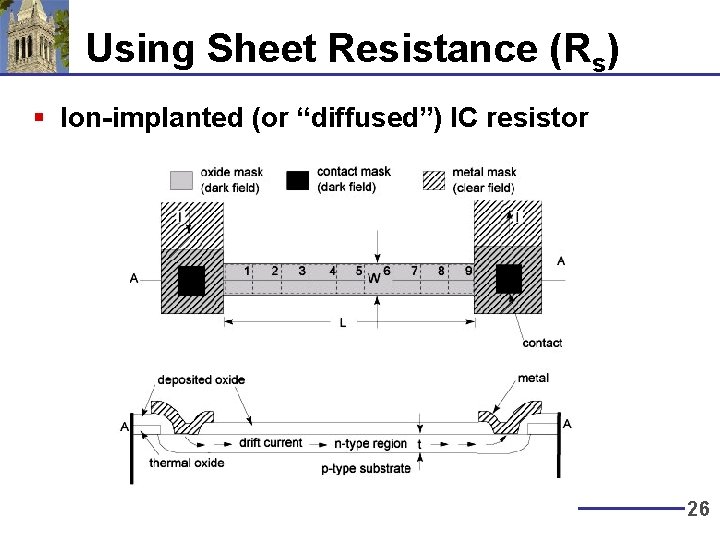
Using Sheet Resistance (Rs) § Ion-implanted (or “diffused”) IC resistor 26
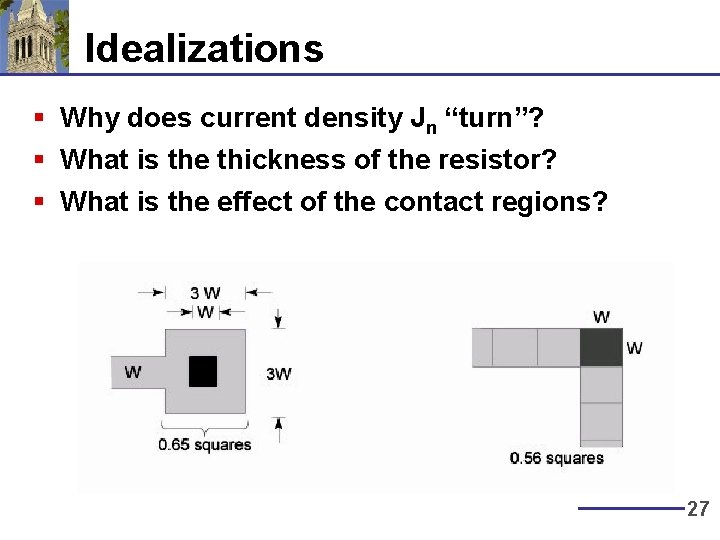
Idealizations § Why does current density Jn “turn”? § What is the thickness of the resistor? § What is the effect of the contact regions? 27