
EE 103 Int to EE Engineering Signal Processing


![Filtering Equations n Let x[n] denote current input value (ECG+noise) n n Let y[n]](https://slidetodoc.com/presentation_image/3c032401fb58ee20d2682f92a4f2c244/image-28.jpg "Filtering Equations n Let x[n] denote current input value (ECG+noise) n n Let y[n]")
- Slides: 46
EE 103 Int. to EE Engineering Signal Processing Dr. Hakan Tora
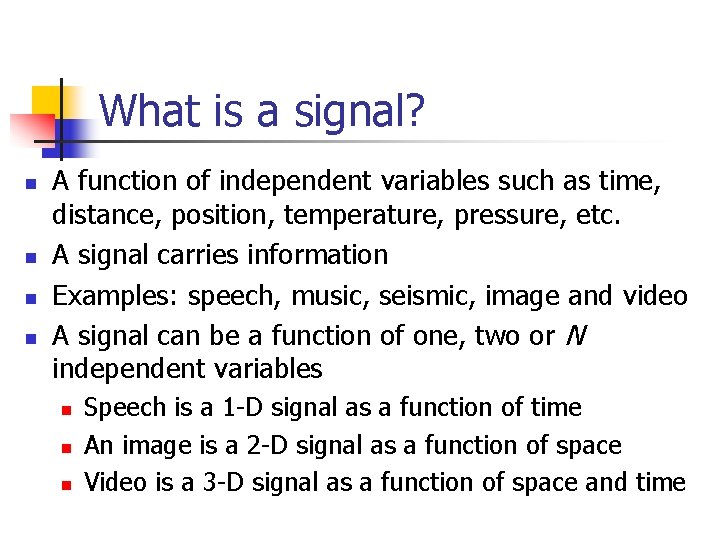
What is a signal? n n A function of independent variables such as time, distance, position, temperature, pressure, etc. A signal carries information Examples: speech, music, seismic, image and video A signal can be a function of one, two or N independent variables n n n Speech is a 1 -D signal as a function of time An image is a 2 -D signal as a function of space Video is a 3 -D signal as a function of space and time
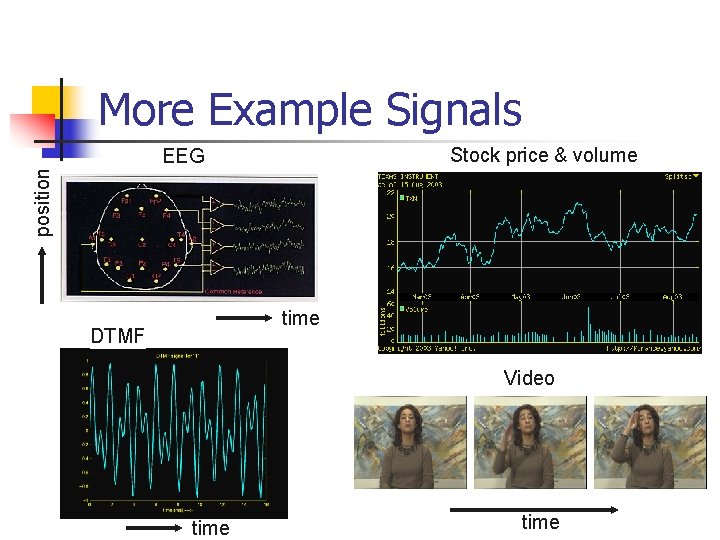
More Example Signals Stock price & volume position EEG time DTMF Video time
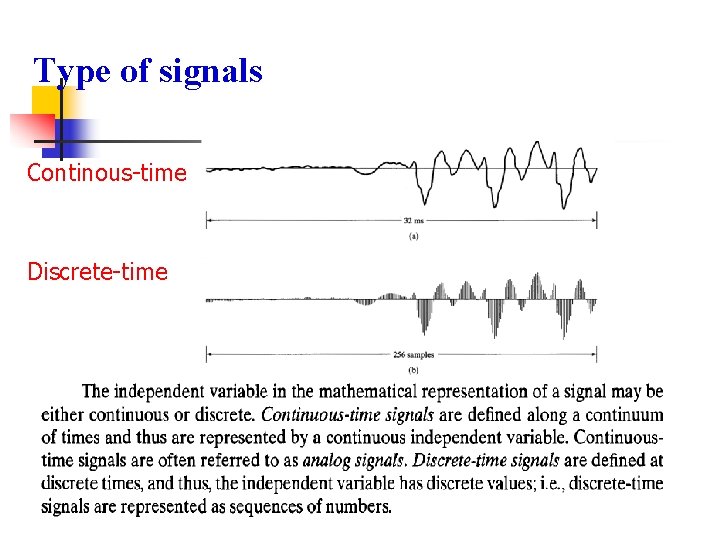
Type of signals Continous-time Discrete-time
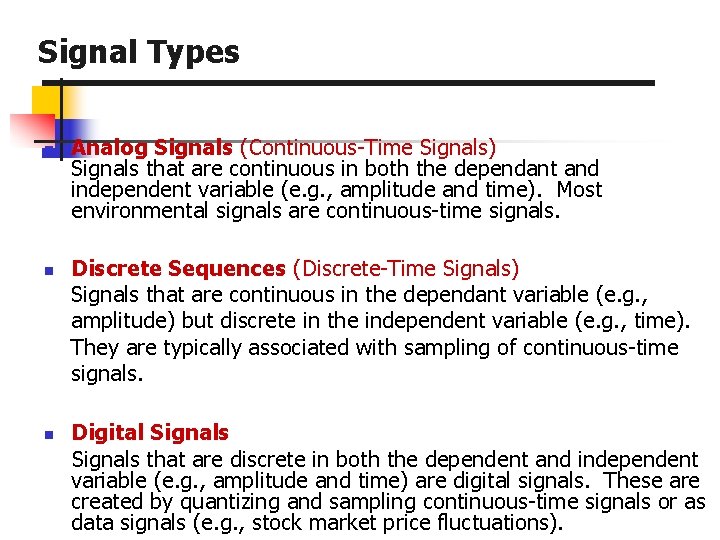
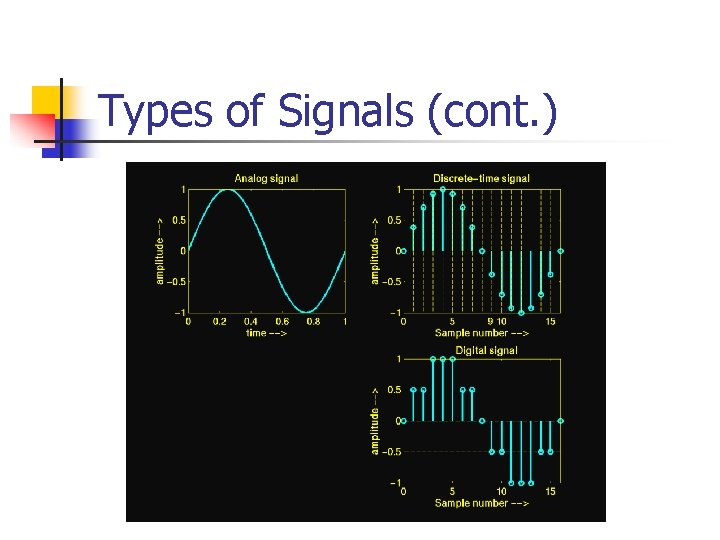
Signal Types n n n Analog Signals (Continuous-Time Signals) Signals that are continuous in both the dependant and independent variable (e. g. , amplitude and time). Most environmental signals are continuous-time signals. Discrete Sequences (Discrete-Time Signals) Signals that are continuous in the dependant variable (e. g. , amplitude) but discrete in the independent variable (e. g. , time). They are typically associated with sampling of continuous-time signals. Digital Signals that are discrete in both the dependent and independent variable (e. g. , amplitude and time) are digital signals. These are created by quantizing and sampling continuous-time signals or as data signals (e. g. , stock market price fluctuations).
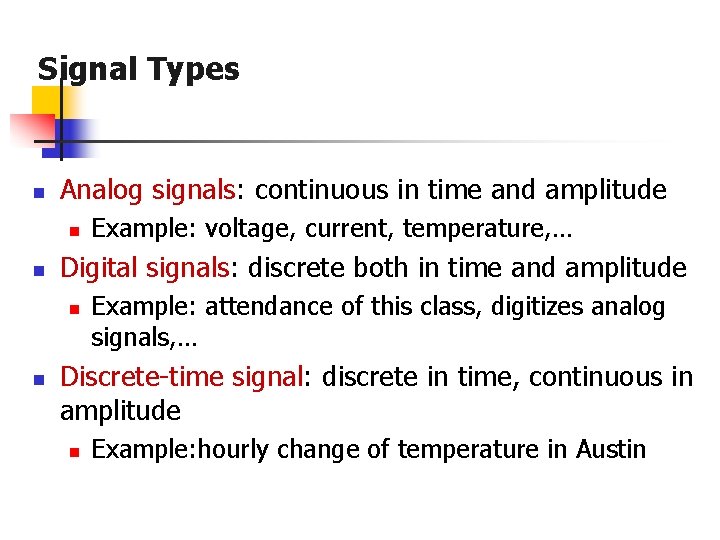
Signal Types n Analog signals: continuous in time and amplitude n n Digital signals: discrete both in time and amplitude n n Example: voltage, current, temperature, … Example: attendance of this class, digitizes analog signals, … Discrete-time signal: discrete in time, continuous in amplitude n Example: hourly change of temperature in Austin
Types of Signals (cont. )
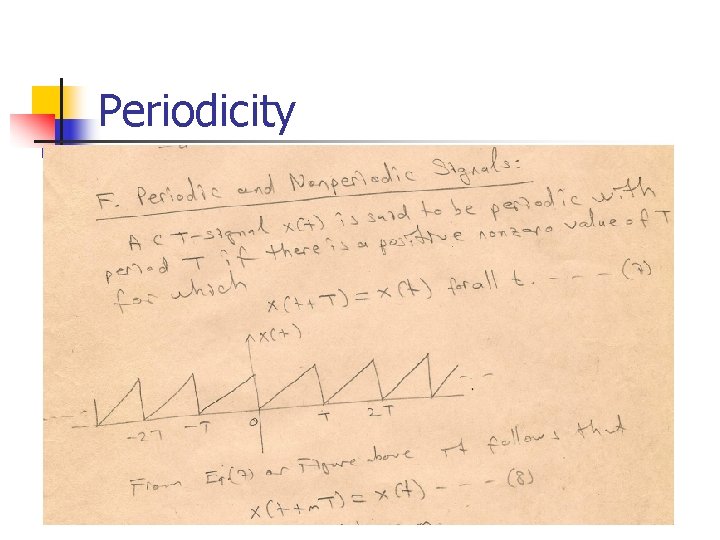
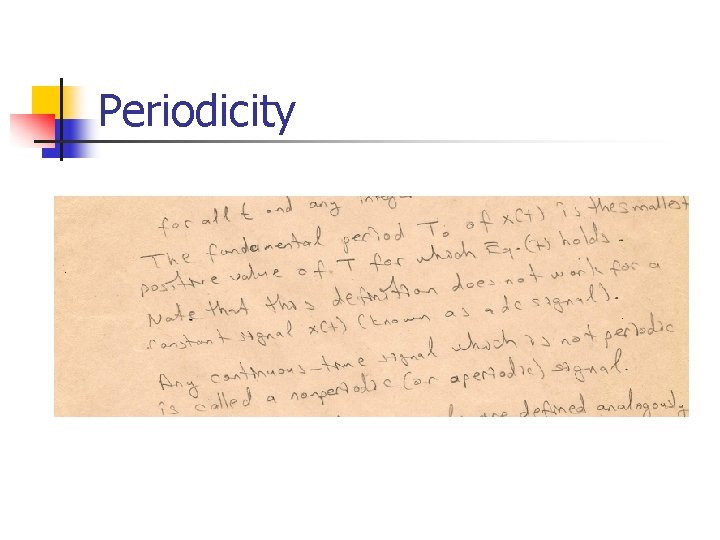
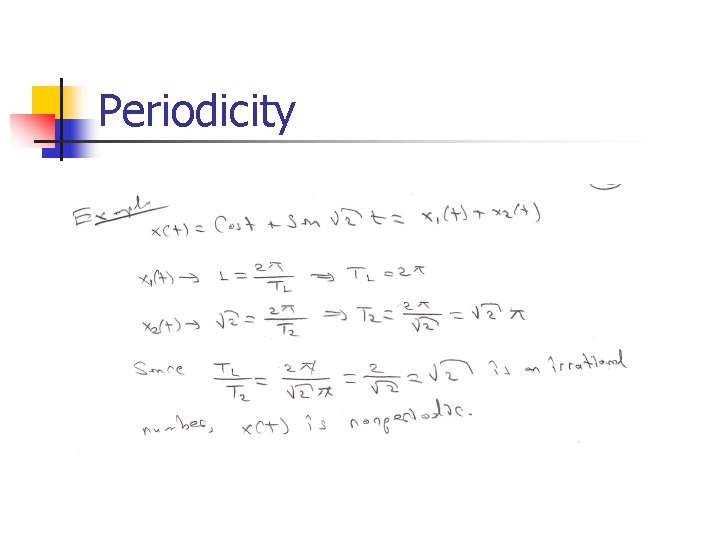
Periodicity
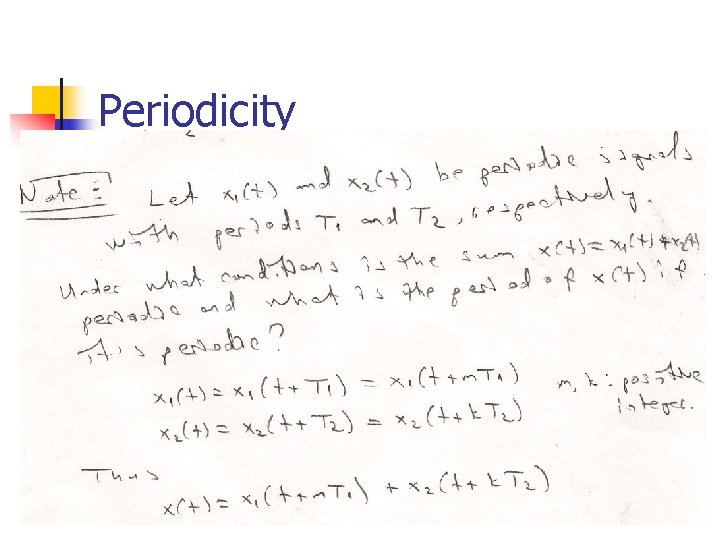
Periodicity
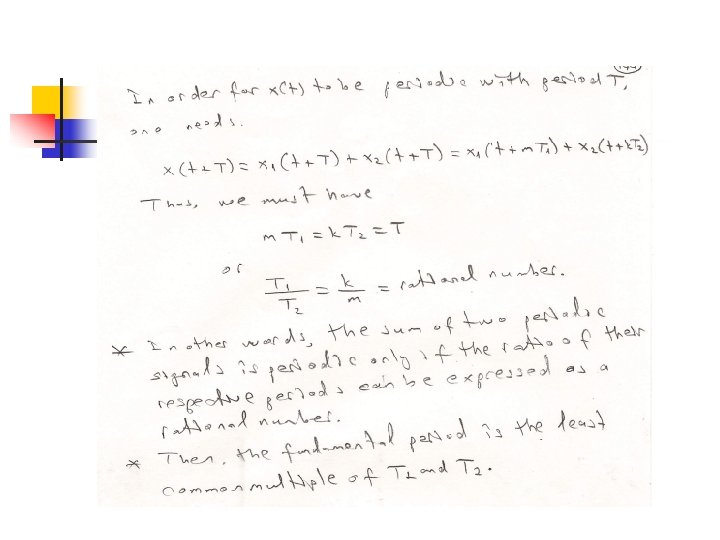
Periodicity
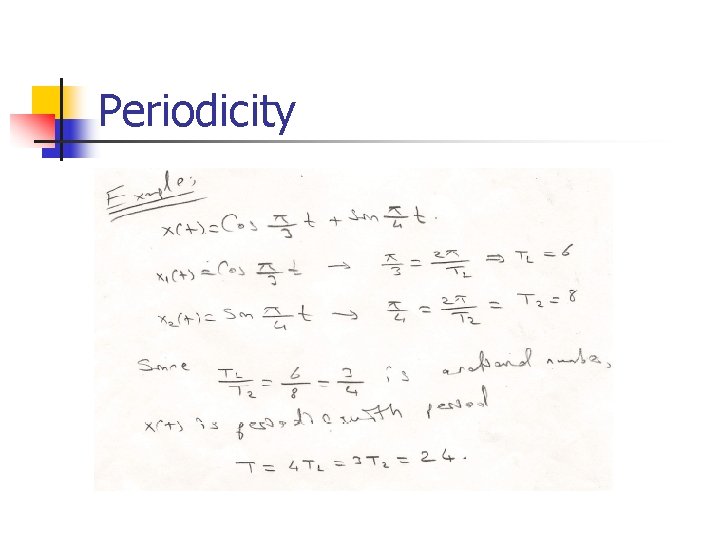
Periodicity
Periodicity
Periodicity
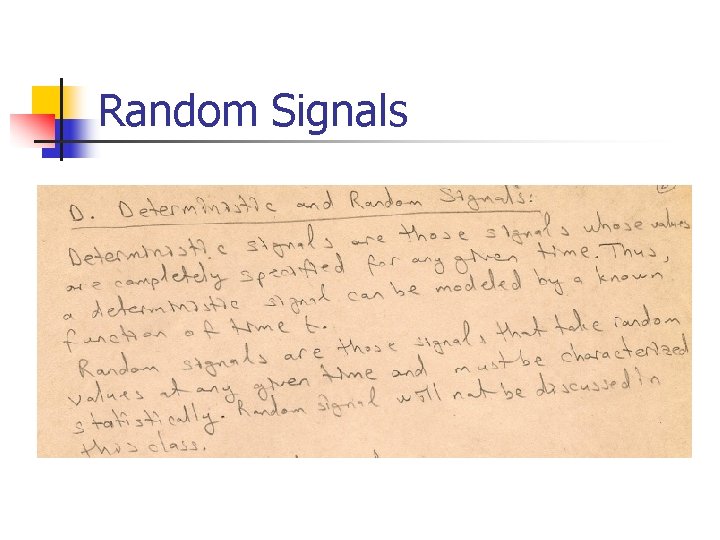
Random Signals
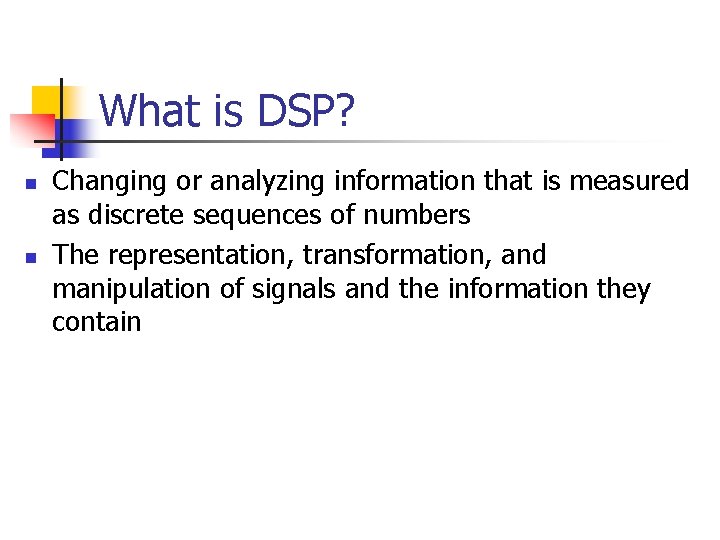
What is DSP? n n Changing or analyzing information that is measured as discrete sequences of numbers The representation, transformation, and manipulation of signals and the information they contain
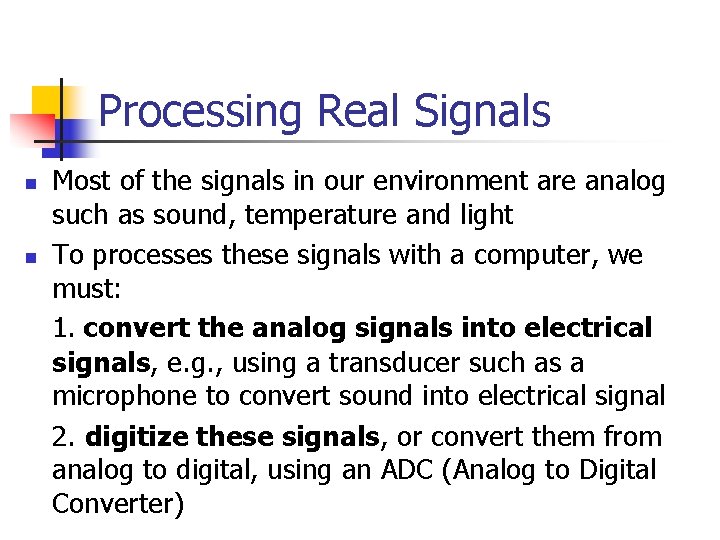
Processing Real Signals n n Most of the signals in our environment are analog such as sound, temperature and light To processes these signals with a computer, we must: 1. convert the analog signals into electrical signals, e. g. , using a transducer such as a microphone to convert sound into electrical signal 2. digitize these signals, or convert them from analog to digital, using an ADC (Analog to Digital Converter)
Processing Real Signals (cont. ) n n In digital form, signal can be manipulated Processed signal may need to be converted back to an analog signal before being passed to an actuator (e. g. , a loudspeaker) n Digital to analog conversion and can be done by a DAC (Digital to Analog Converter)
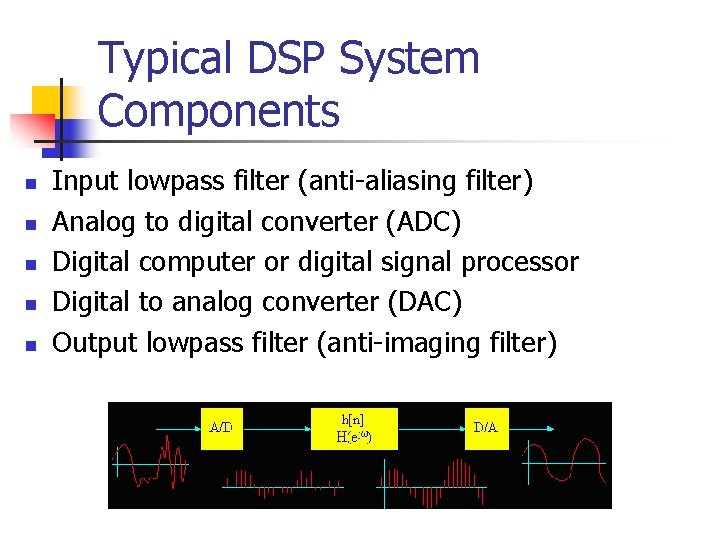
Typical DSP System Components n n n Input lowpass filter (anti-aliasing filter) Analog to digital converter (ADC) Digital computer or digital signal processor Digital to analog converter (DAC) Output lowpass filter (anti-imaging filter)
DSP System Components n n n Analog input signal is filtered to be a band-limited signal by an input lowpass filter Signal is then sampled and quantized by an ADC Digital signal is processed by a digital circuit, often a computer or a digital signal processor Processed digital signal is then converted back to an analog signal by a DAC The resulting step waveform is converted to a smooth signal by a reconstruction filter called an anti-imaging filter
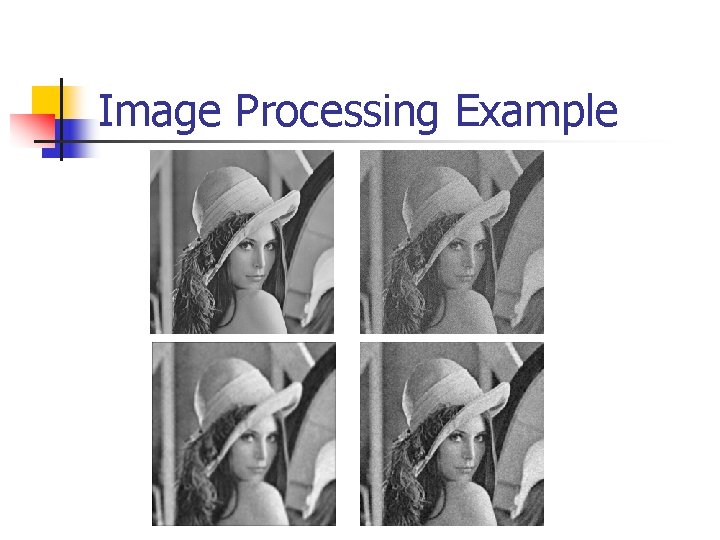
Image Processing Example
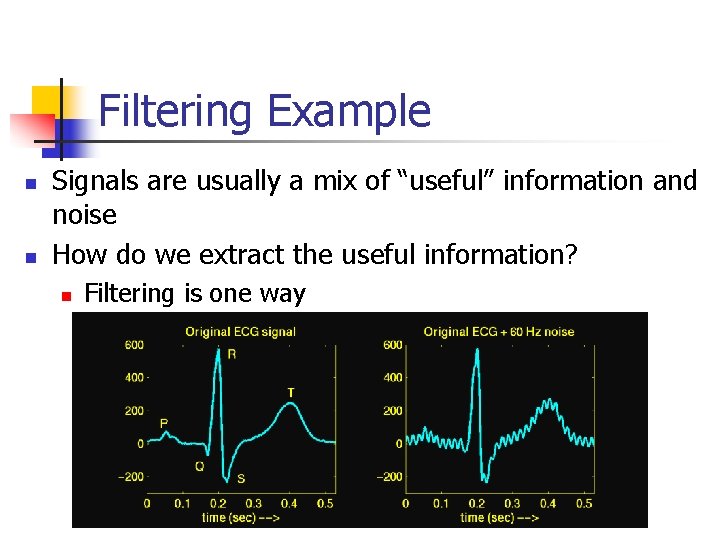
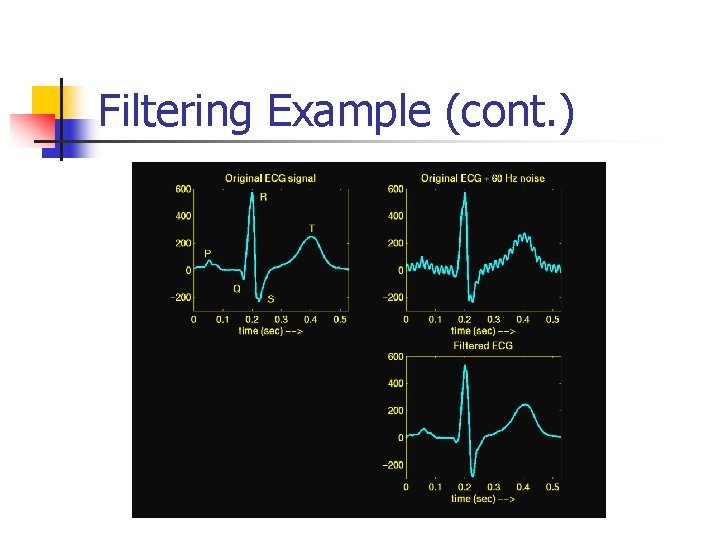
Filtering Example n n Signals are usually a mix of “useful” information and noise How do we extract the useful information? n Filtering is one way
Filtering Example (cont. )
Filtering Equations n Let x[n] denote current input value (ECG+noise) n n Let y[n] be the current filtered output value n n x[n-1] is previous input value, x[n-k] – k-th previous input y[n-1] is previous output value , y[n-k] – k-th previous output Filtering operations carried out for this example: y[n] = 2. 4*y[n-1] - 2. 6*y[n-2] + 1. 5 y[n-3] – 0. 4*y[n-4] + 0. 6*x[n] – 1. 9*x[n-1] + 2. 8*x[n-2] - 1. 9*x[n-3] + 0. 6*x[n-4] x[n] Filtering y[n]
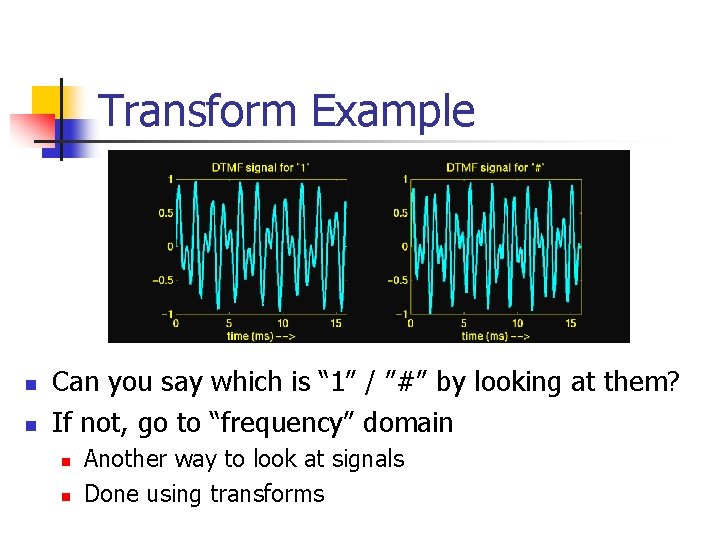
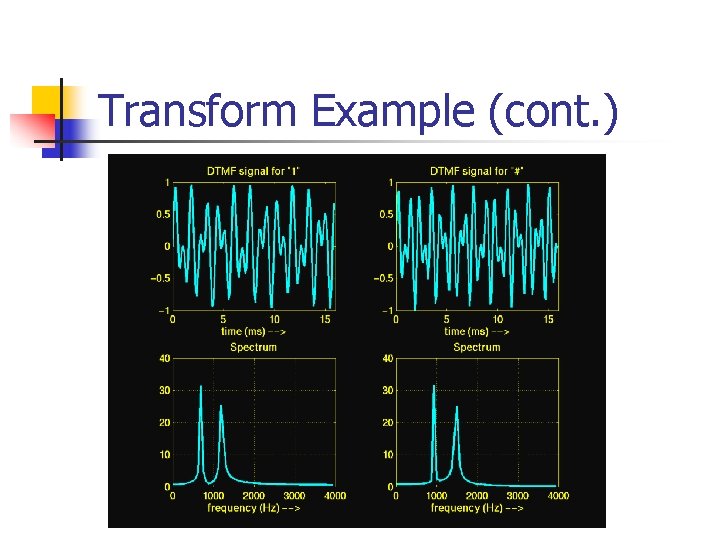
Transform Example n n Can you say which is “ 1” / ”#” by looking at them? If not, go to “frequency” domain n n Another way to look at signals Done using transforms
Transform Example (cont. )
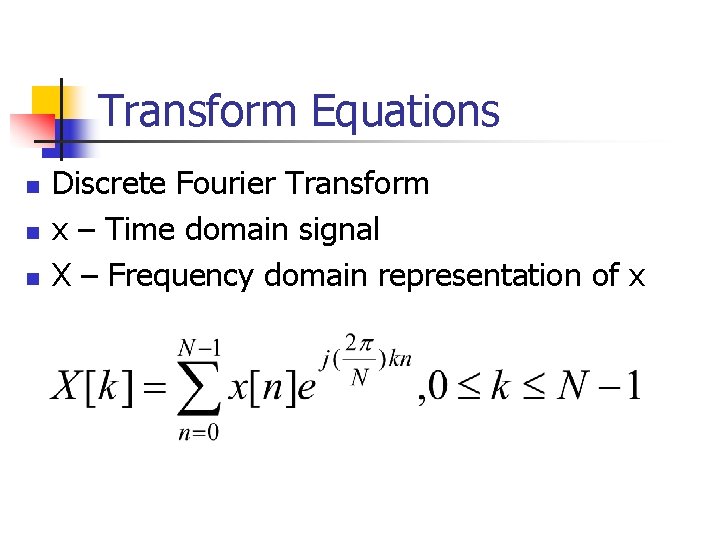
Transform Equations n n n Discrete Fourier Transform x – Time domain signal X – Frequency domain representation of x
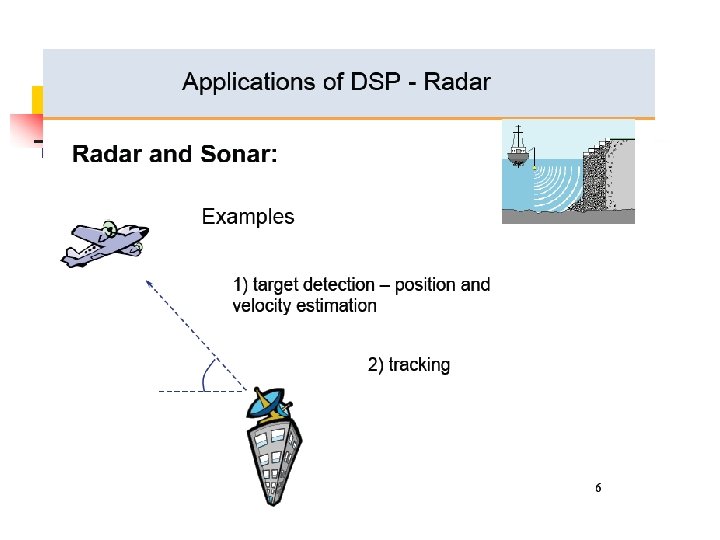
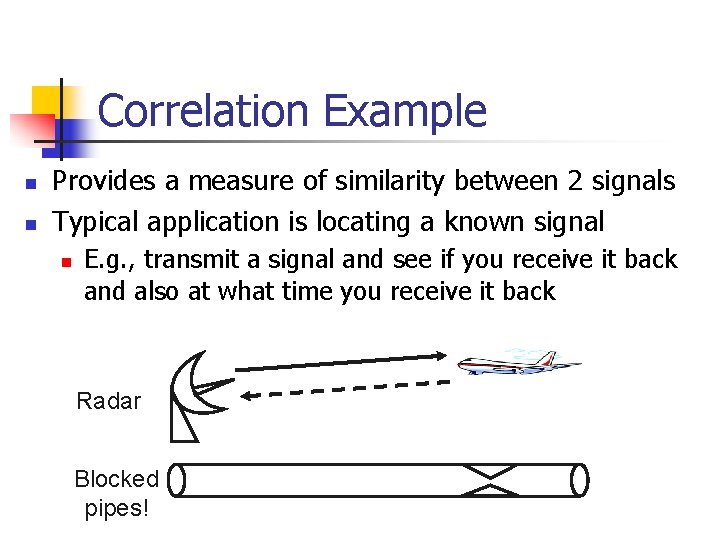
Correlation Example n n Provides a measure of similarity between 2 signals Typical application is locating a known signal n E. g. , transmit a signal and see if you receive it back and also at what time you receive it back Radar Blocked pipes!
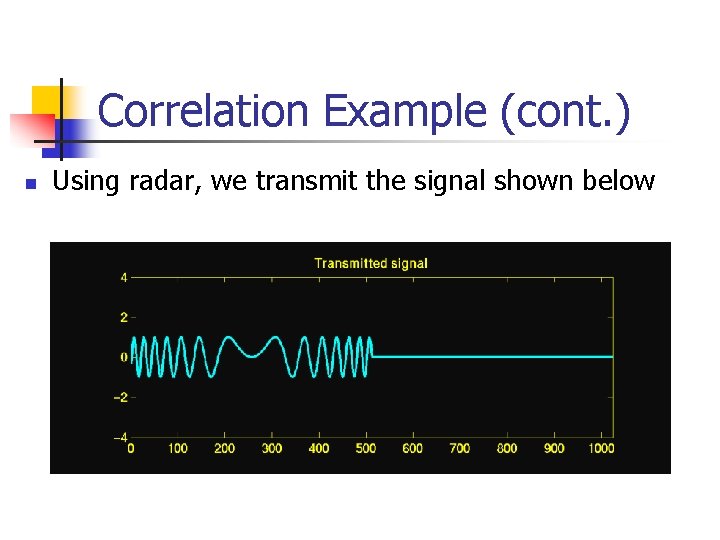
Correlation Example (cont. ) n Using radar, we transmit the signal shown below
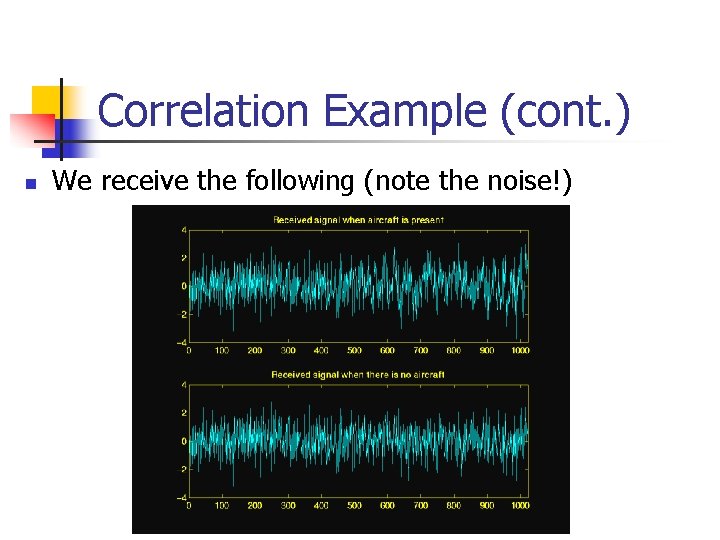
Correlation Example (cont. ) n We receive the following (note the noise!)
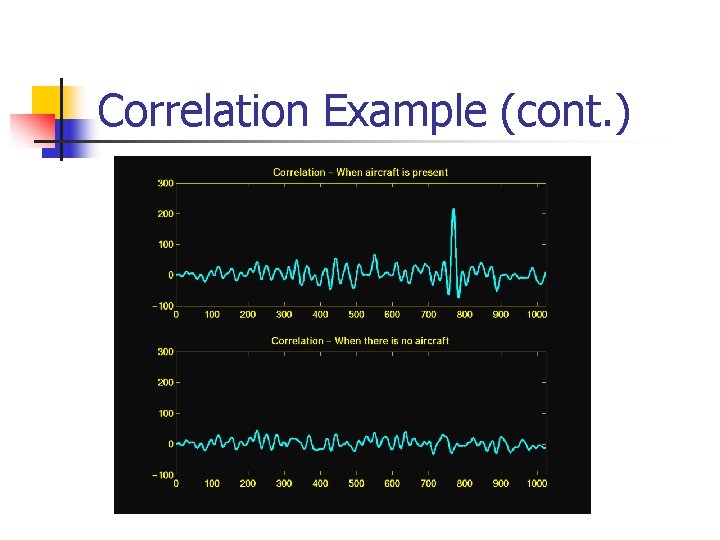
Correlation Example (cont. )
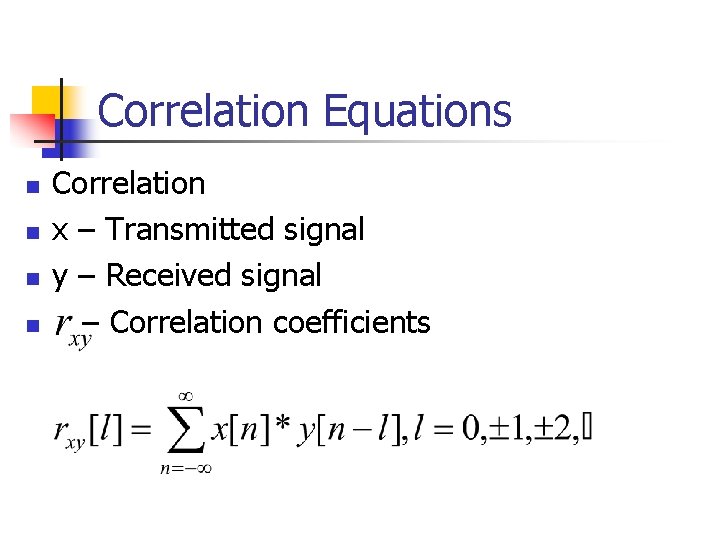
Correlation Equations n n Correlation x – Transmitted signal y – Received signal – Correlation coefficients
MATLAB n MATLAB is an interactive, matrix-based system for scientific and engineering numeric computation and visualization n n Strength: complex numerical problems can be solved easily with a programming language similar to C Can be easily extended to create new commands and functions Ideal software tool for studying digital signal processing Graphing capability makes it possible to view results of processing and provide insight into complicated operations
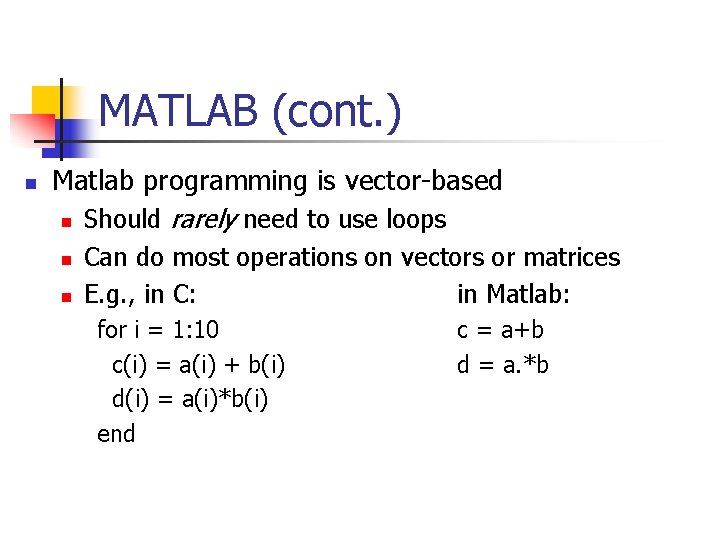
MATLAB (cont. ) n Matlab programming is vector-based n Should rarely need to use loops n n Can do most operations on vectors or matrices E. g. , in C: in Matlab: for i = 1: 10 c(i) = a(i) + b(i) d(i) = a(i)*b(i) end c = a+b d = a. *b
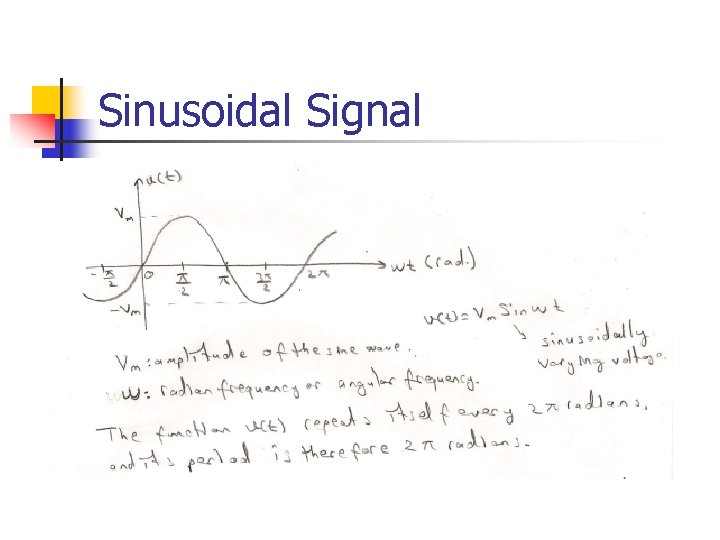
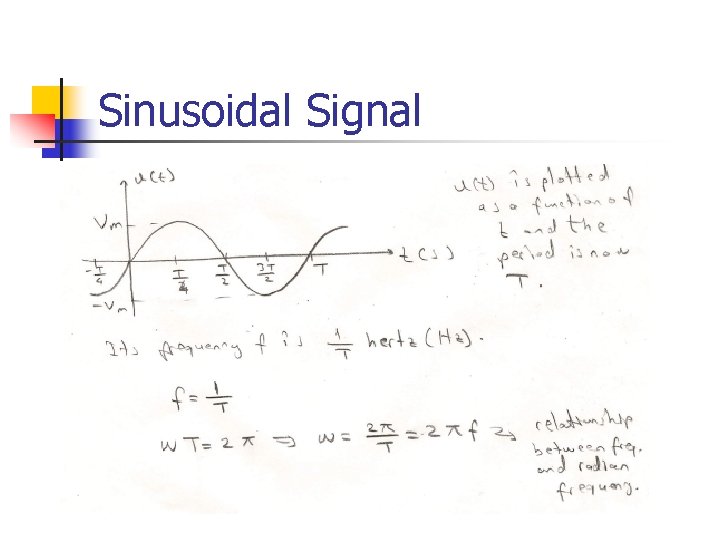
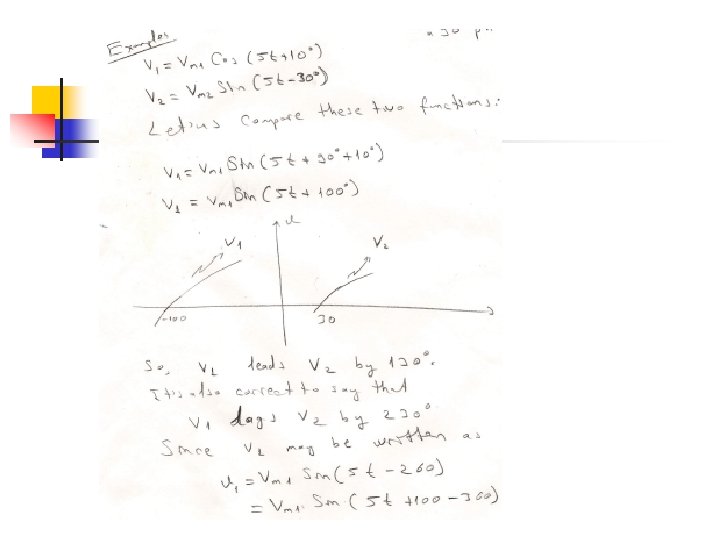
Sinusoidal Signal
Sinusoidal Signal
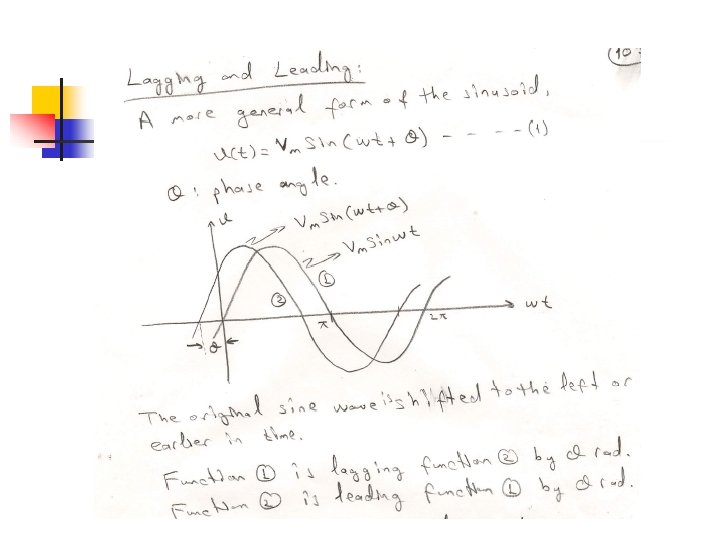
Sinusoidal Signal
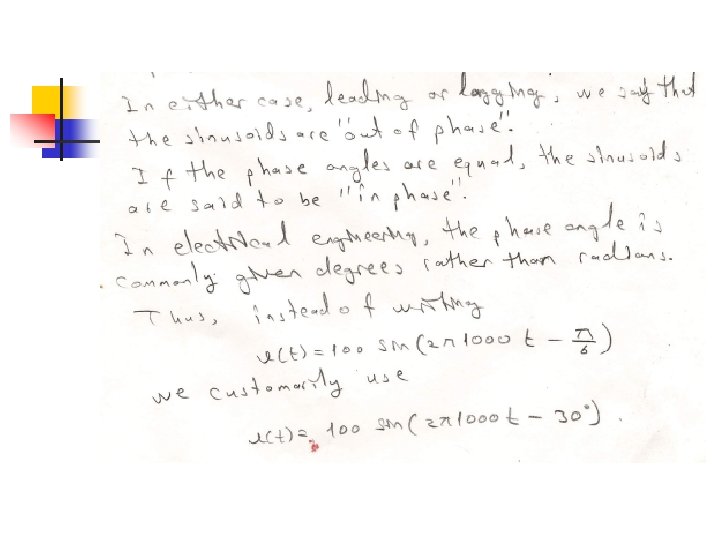
Sinusoidal Signal
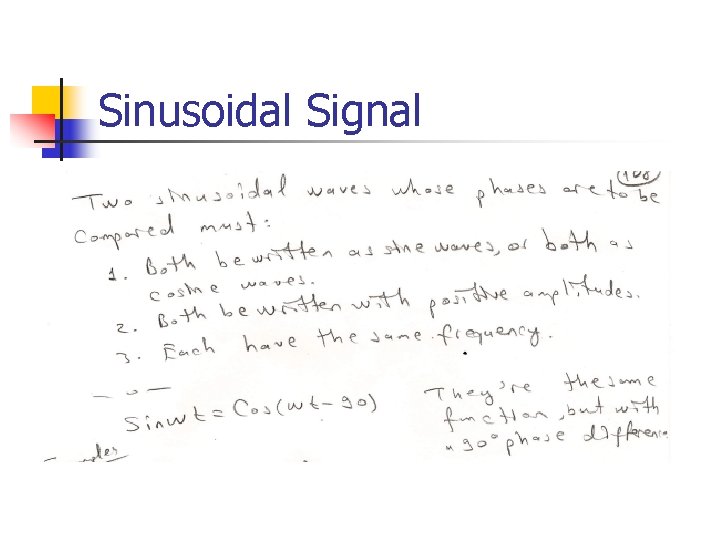
Sinusoidal Signal
Sinusoidal Signal
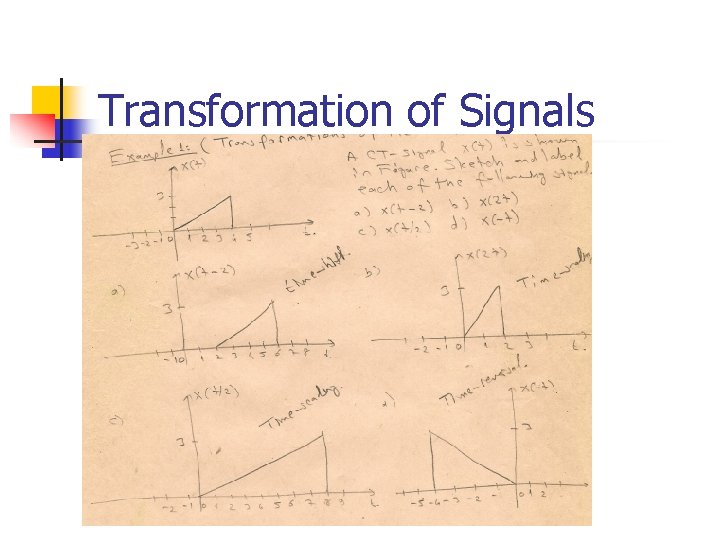
Transformation of Signals
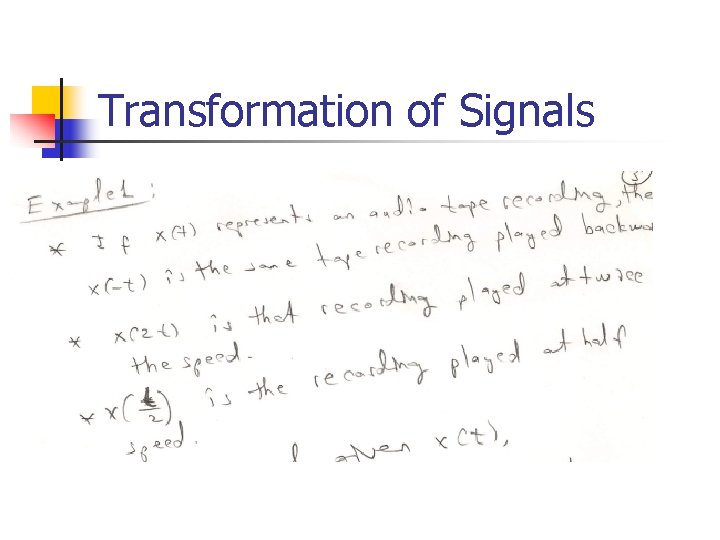
Transformation of Signals