
Eduqas Design and Technology First teaching 2017 First


- Slides: 40
Eduqas Design and Technology First teaching: 2017 First assessment: 2019
Agenda for the Briefing Session 1 – The specification Session 2 – The paper Session 3 – Resources Session 4 – NEA Session 5 – Questions
Specification Overview Component 1: • • • Ø Ø • Ø Externally examined A mix of short answer, structured and extended writing questions Based on: technical principles designing and making principles. along with their ability to: analyse and evaluate design decisions and wider issues in design and technology. Component 2: • Internally marked externally moderated • A sustained design and make task, based on a contextual challenge set by WJEC, assessing candidates' ability to: identify, investigate and outline design possibilities • design and make prototypes • analyse and evaluate design decisions and wider issues in design and technology.
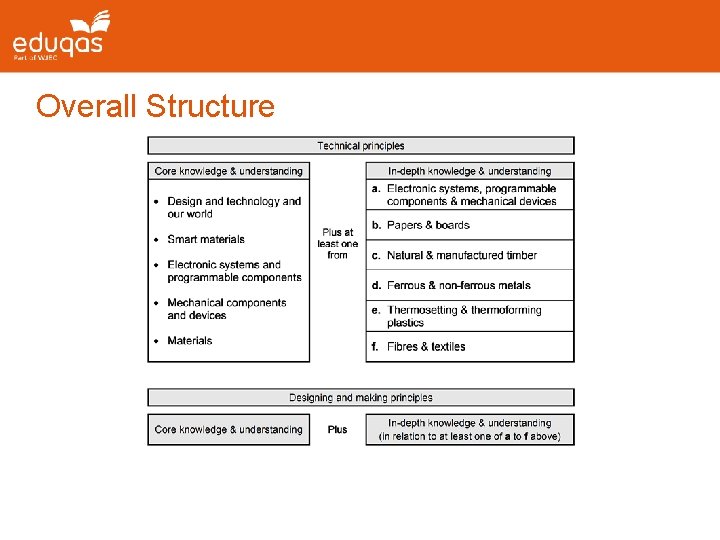
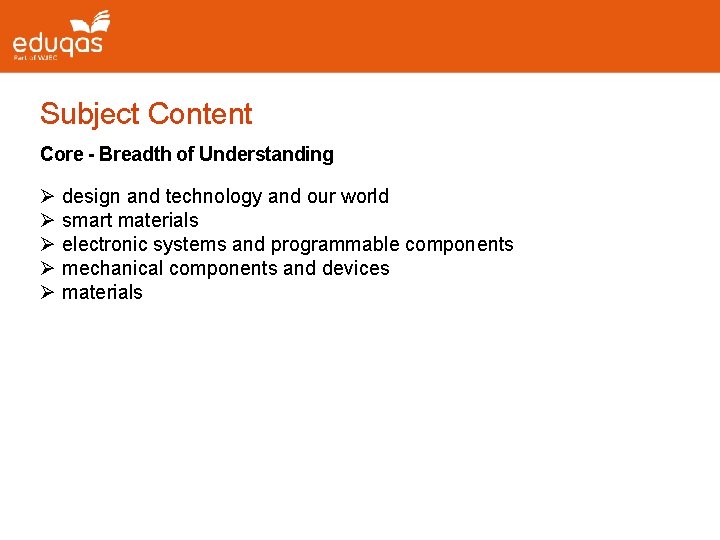
Specification Overview Component 1: Core knowledge and understanding - five clear and distinct topic areas: Ø design and technology and our world Ø smart materials Ø electronic systems and programmable components Ø mechanical components and devices Ø materials Learners need to: Ø study all of the content in these five areas and broad knowledge and understanding of design and technology Ø be able to apply this knowledge in design and make activities.
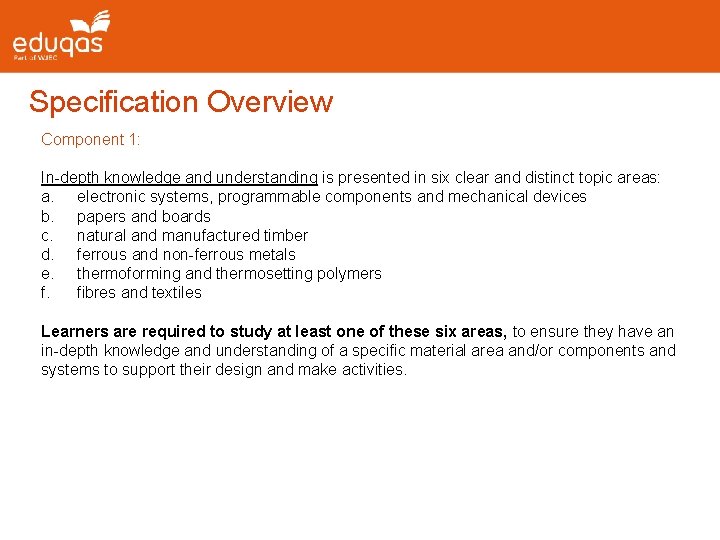
Specification Overview Component 1: In-depth knowledge and understanding is presented in six clear and distinct topic areas: a. electronic systems, programmable components and mechanical devices b. papers and boards c. natural and manufactured timber d. ferrous and non-ferrous metals e. thermoforming and thermosetting polymers f. fibres and textiles Learners are required to study at least one of these six areas, to ensure they have an in-depth knowledge and understanding of a specific material area and/or components and systems to support their design and make activities.
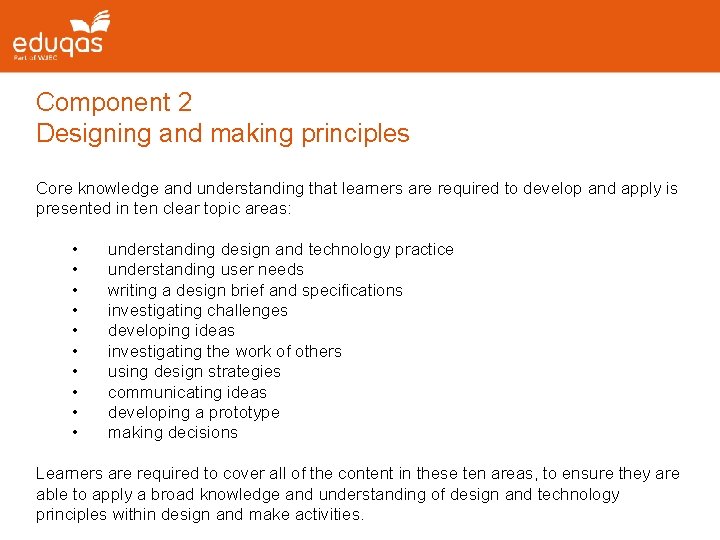
Component 2 Designing and making principles Core knowledge and understanding that learners are required to develop and apply is presented in ten clear topic areas: • • • understanding design and technology practice understanding user needs writing a design brief and specifications investigating challenges developing ideas investigating the work of others using design strategies communicating ideas developing a prototype making decisions Learners are required to cover all of the content in these ten areas, to ensure they are able to apply a broad knowledge and understanding of design and technology principles within design and make activities.
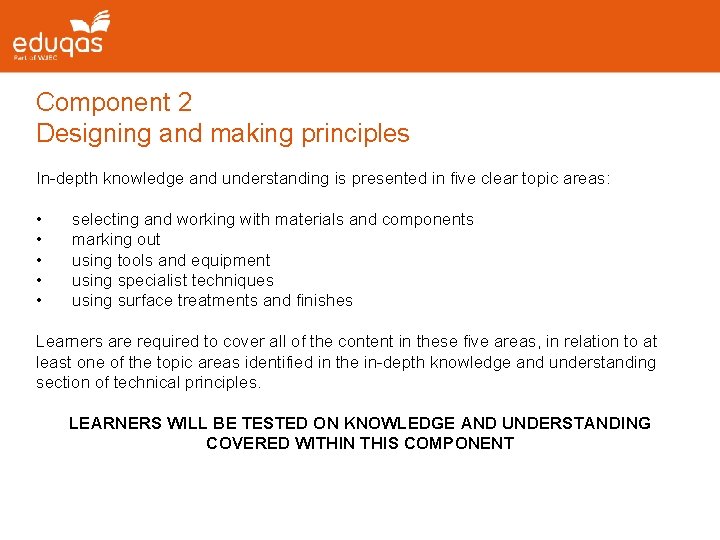
Component 2 Designing and making principles In-depth knowledge and understanding is presented in five clear topic areas: • • • selecting and working with materials and components marking out using tools and equipment using specialist techniques using surface treatments and finishes Learners are required to cover all of the content in these five areas, in relation to at least one of the topic areas identified in the in-depth knowledge and understanding section of technical principles. LEARNERS WILL BE TESTED ON KNOWLEDGE AND UNDERSTANDING COVERED WITHIN THIS COMPONENT
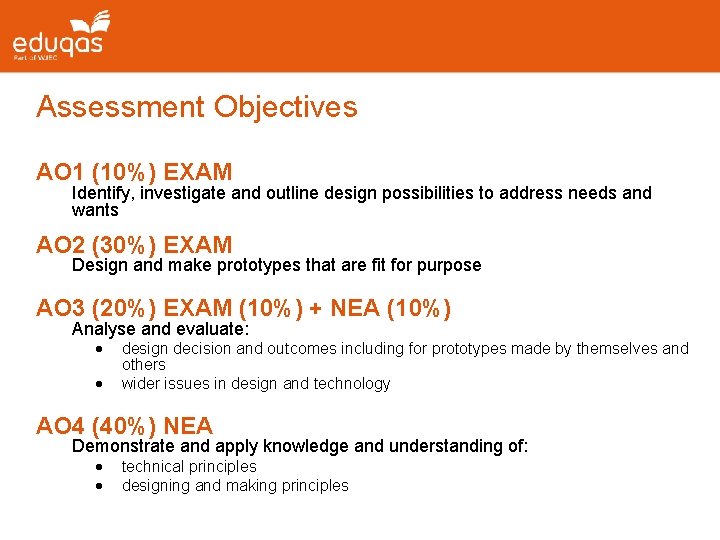
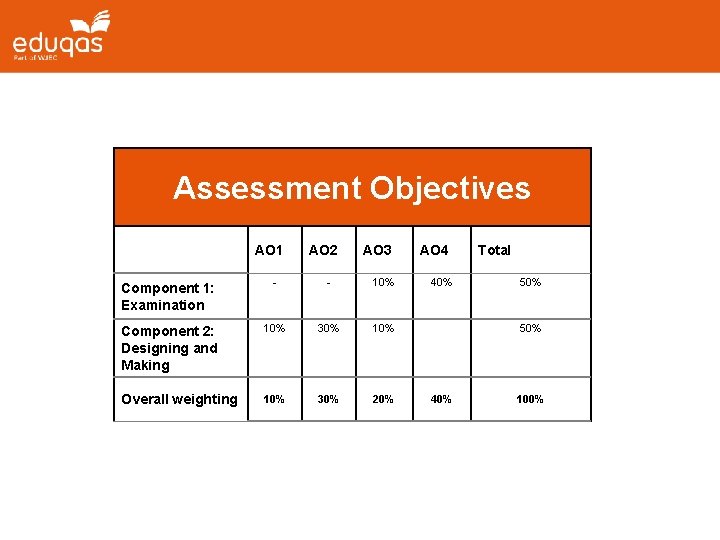
Assessment Objectives AO 1 (10%) EXAM Identify, investigate and outline design possibilities to address needs and wants AO 2 (30%) EXAM Design and make prototypes that are fit for purpose AO 3 (20%) EXAM (10%) + NEA (10%) Analyse and evaluate: design decision and outcomes including for prototypes made by themselves and others wider issues in design and technology AO 4 (40%) NEA Demonstrate and apply knowledge and understanding of: technical principles designing and making principles
Overall Structure
Assessment Objectives AO 1 AO 2 AO 3 AO 4 Total Component 1: Examination - - 10% 40% 50% Component 2: Designing and Making 10% 30% 10% 50% Overall weighting 10% 30% 20% 40% 100%
Subject Content Core - Breadth of Understanding Ø Ø Ø design and technology and our world smart materials electronic systems and programmable components mechanical components and devices materials
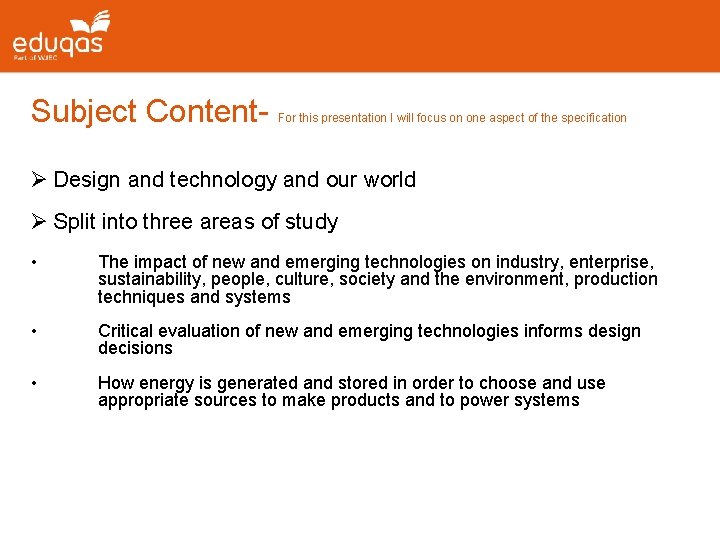
Subject Content- For this presentation I will focus on one aspect of the specification Ø Design and technology and our world Ø Split into three areas of study • The impact of new and emerging technologies on industry, enterprise, sustainability, people, culture, society and the environment, production techniques and systems • Critical evaluation of new and emerging technologies informs design decisions • How energy is generated and stored in order to choose and use appropriate sources to make products and to power systems
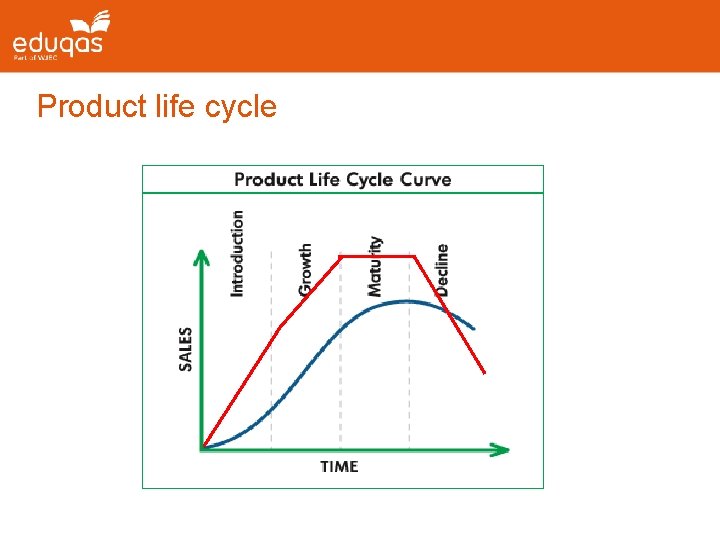
Subject Content The impact of new and emerging technologies on industry, enterprise, sustainability, people, culture, society and the environment, production techniques and systems: Market pull Technology push Consumer choice The Product Life Cycle Global production and its effects on culture and people Legislation to which products are subject Consumer rights and protection Moral and ethical factors related to manufacturing and sale Sustainability; meeting today’s needs without compromising the needs of future generations Advantages and disadvantages of using computer aided design/manufacture (CAD/CAM).
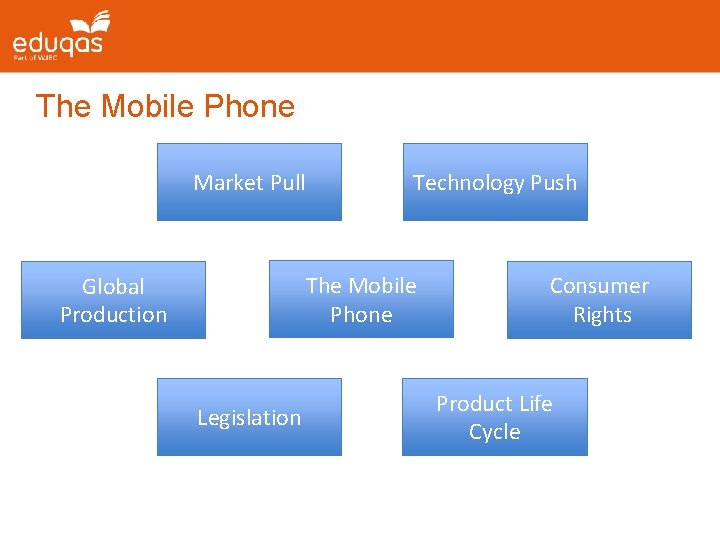
The Mobile Phone Market Pull Technology Push The Mobile Phone Global Production Legislation Consumer Rights Product Life Cycle
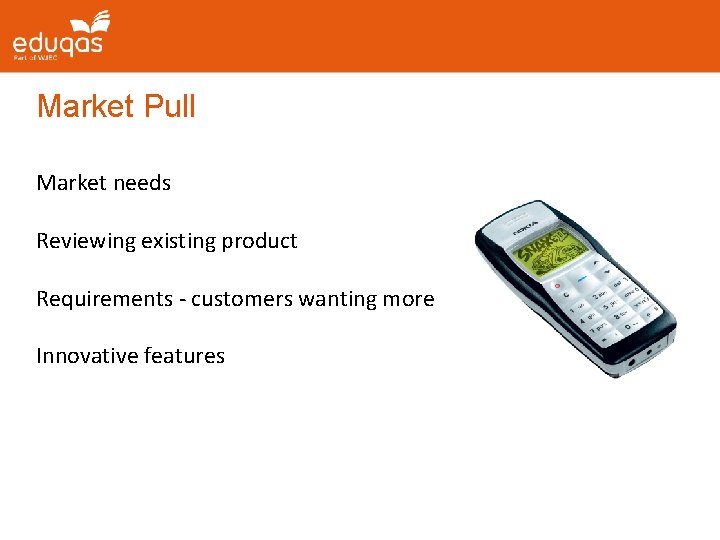
Market Pull Market needs Reviewing existing product Requirements - customers wanting more Innovative features
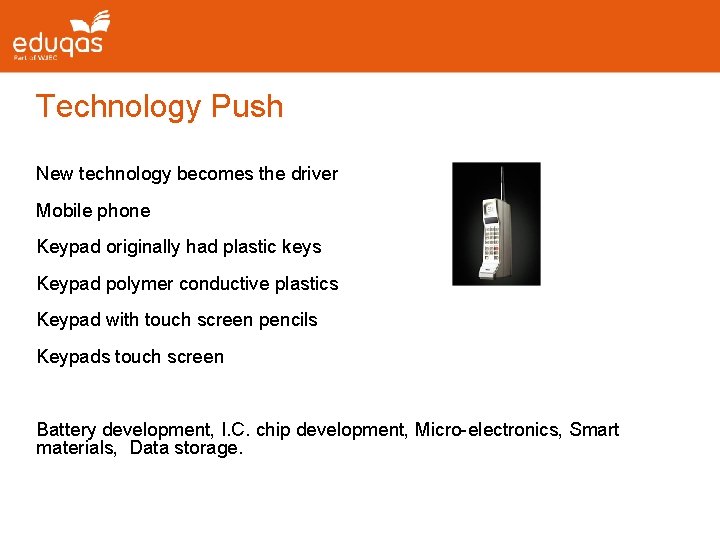
Technology Push New technology becomes the driver Mobile phone Keypad originally had plastic keys Keypad polymer conductive plastics Keypad with touch screen pencils Keypads touch screen Battery development, I. C. chip development, Micro-electronics, Smart materials, Data storage.
Product life cycle
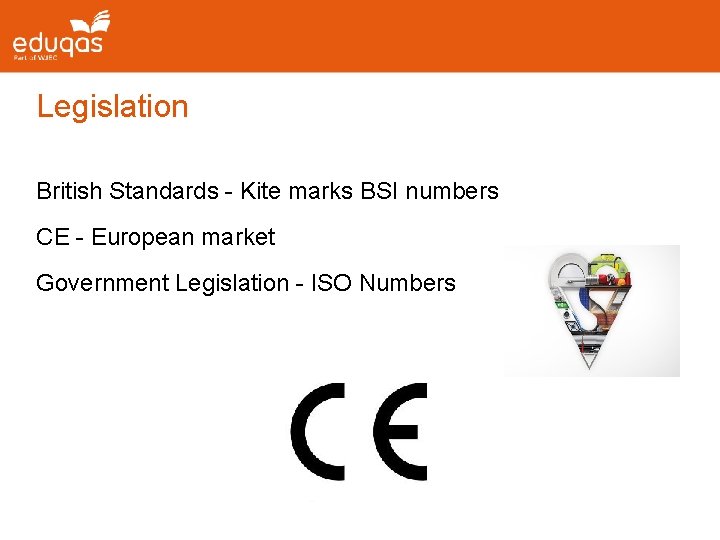
Legislation British Standards - Kite marks BSI numbers CE - European market Government Legislation - ISO Numbers
Global production Is it really made in the UK/USA/Japan? De-construct a mobile phone- Designed – USA - South Korea - USA Case – China – South Korea – UK Screens - China - South Korea – Rumania Batteries – China – South Korea - America Circuit boards – China- South Korea - Australia Wires – China - South Korea- Holland Components – China- South Korea- Germany Chip Design – Wales!!! Apple City!!!!! Product manufacture is now world wide - Transportation, JIT, Import exporting Designs via CAD Systems
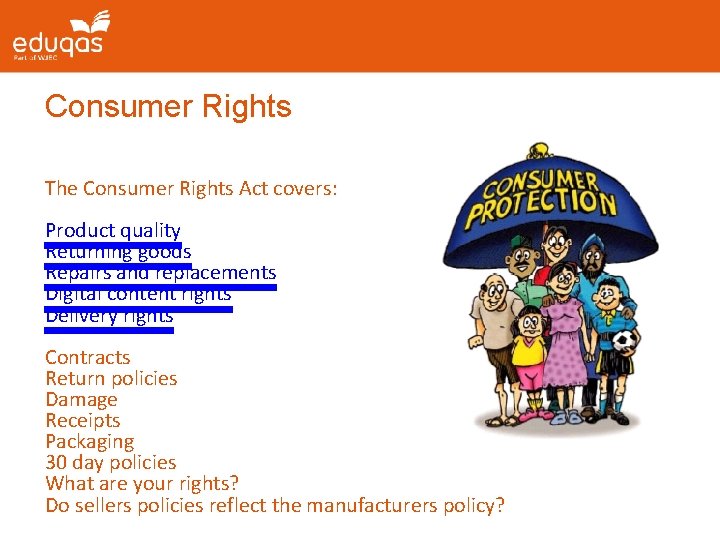
Consumer Rights The Consumer Rights Act covers: Product quality Returning goods Repairs and replacements Digital content rights Delivery rights Contracts Return policies Damage Receipts Packaging 30 day policies What are your rights? Do sellers policies reflect the manufacturers policy?
Subject Content Critical evaluation of new and emerging technologies informs design decisions Sustainability issues and environmental issues when designing and making Social, cultural, economic and environmental responsibilities in designing and making products The Six Rs of sustainability; rethink, reuse, recycle, repair, reduce and refuse Life Cycle Analysis Fair-trade policies and carbon footprint Ecological footprint
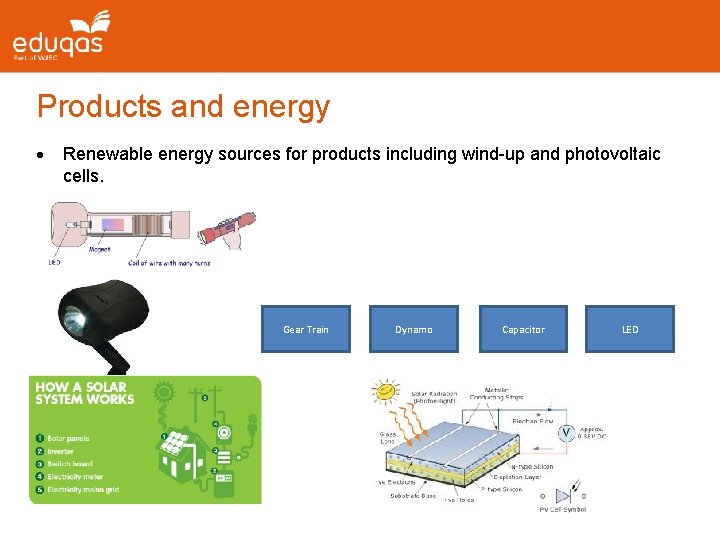
Subject Content How energy is generated and stored in order to choose and use appropriate sources to make products and to power systems. Types of renewable and non-renewable energy sources including: wind, solar, geothermal, hydroelectric, wood/biomass, wave, coal, gas, nuclear and oil. Issues surrounding the use of fossil fuels including coal, oil and gas. The advantages and disadvantages of renewable energy sources. The use of renewable energy sources in modern manufacturing production systems including the use of solar panels and wind turbines in manufacturing sites. Renewable energy sources for products including wind-up and photovoltaic cells. Energy generation and storage in a range of contexts including motor vehicles (e. g. petrol/diesel, electricity) and household products (e. g. battery, solar, mains electricity).
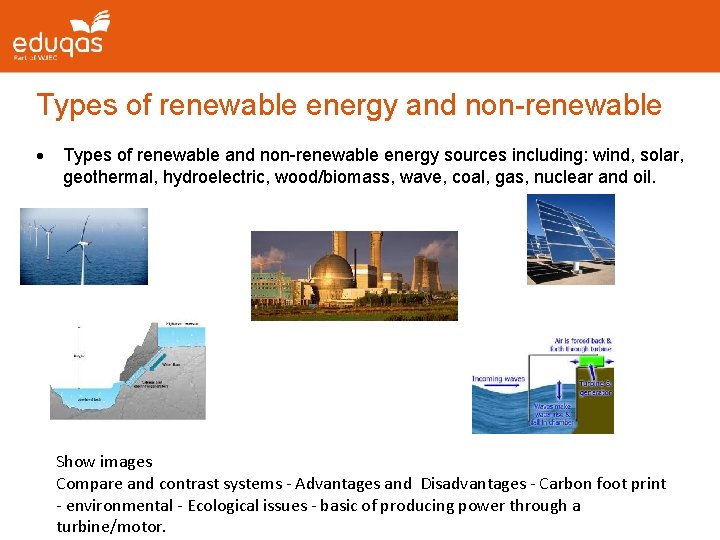
Types of renewable energy and non-renewable Types of renewable and non-renewable energy sources including: wind, solar, geothermal, hydroelectric, wood/biomass, wave, coal, gas, nuclear and oil. Show images Compare and contrast systems - Advantages and Disadvantages - Carbon foot print - environmental - Ecological issues - basic of producing power through a turbine/motor.
Issues surrounding the use of fossil fuels including coal, oil and gas. Climate change Oil spills Air pollution Acid Rain Global temperature rises
Products and energy Renewable energy sources for products including wind-up and photovoltaic cells. Gear Train Dynamo Capacitor LED
The overall structure of the paper 2 Hours duration 100 marks Two sections Section A 1 - 5 questions Question 5 does allow the candidate to give answers from their area of study Section B 1 question from 6 related to area of study
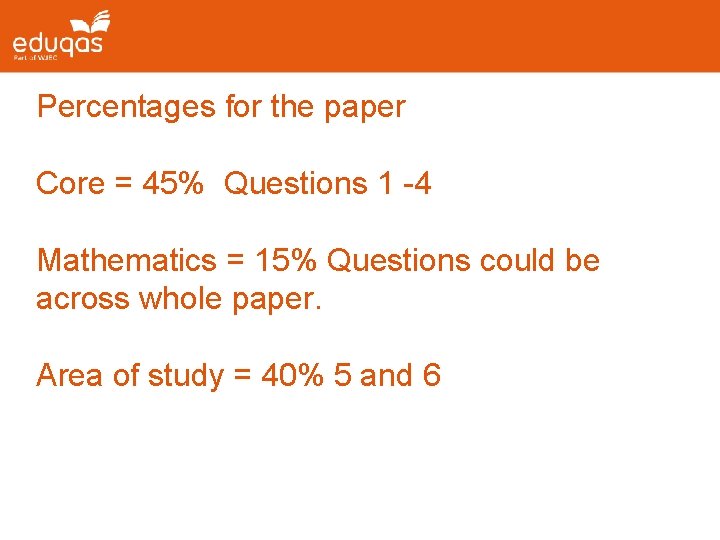
Percentages for the paper Core = 45% Questions 1 -4 Mathematics = 15% Questions could be across whole paper. Area of study = 40% 5 and 6
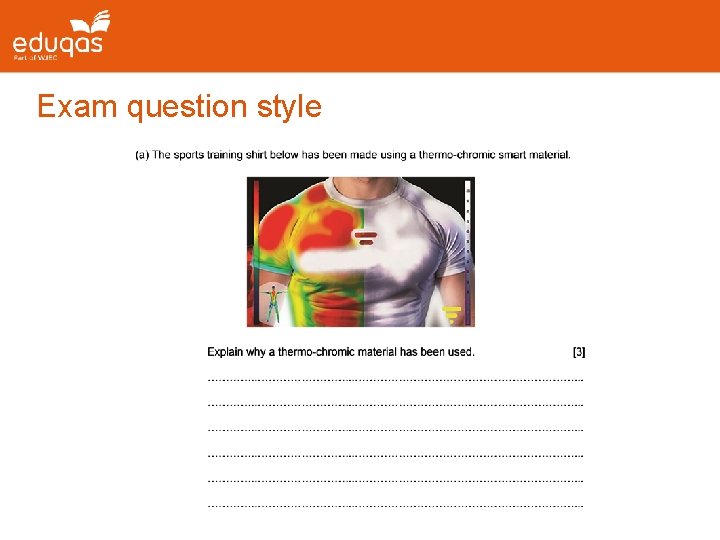
Exam question style
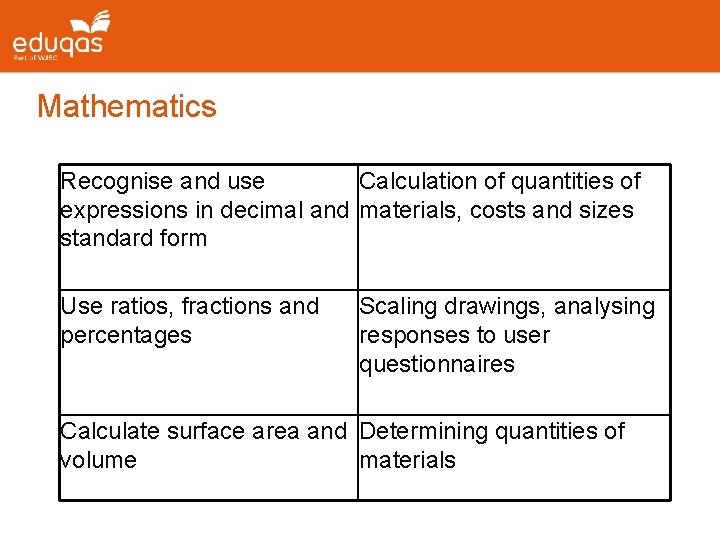
Mathematics Recognise and use Calculation of quantities of expressions in decimal and materials, costs and sizes standard form Use ratios, fractions and percentages Scaling drawings, analysing responses to user questionnaires Calculate surface area and Determining quantities of volume materials
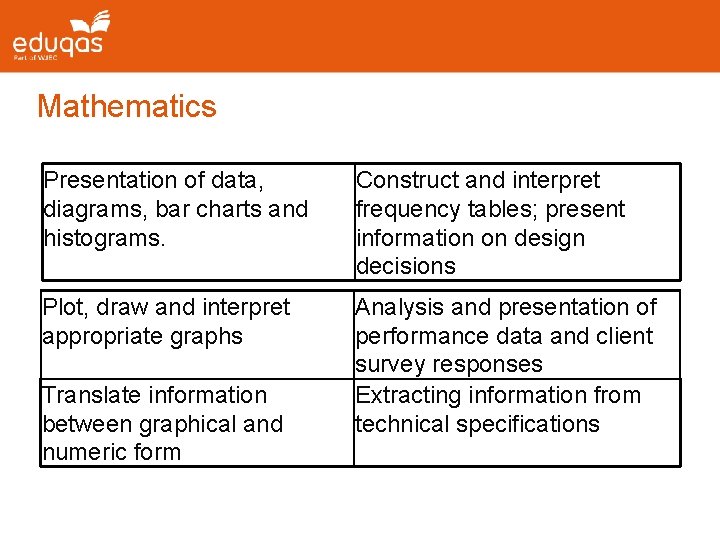
Mathematics Presentation of data, diagrams, bar charts and histograms. Construct and interpret frequency tables; present information on design decisions Plot, draw and interpret appropriate graphs Analysis and presentation of performance data and client survey responses Extracting information from technical specifications Translate information between graphical and numeric form
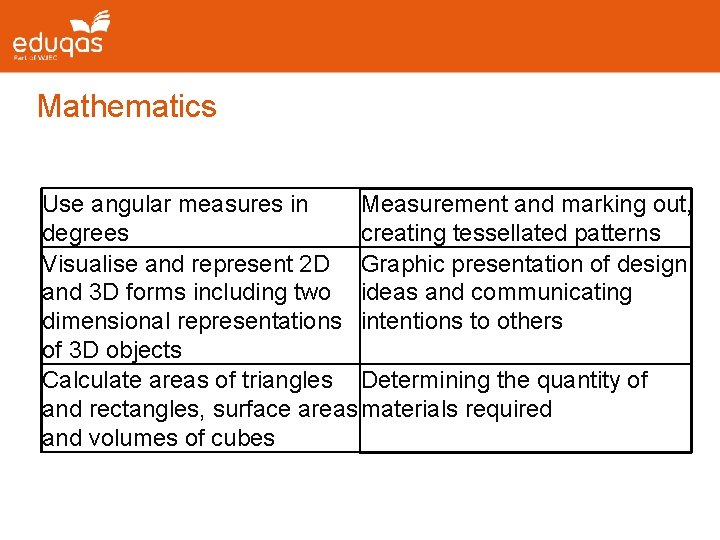
Mathematics Use angular measures in Measurement and marking out, degrees creating tessellated patterns Visualise and represent 2 D Graphic presentation of design and 3 D forms including two ideas and communicating dimensional representations intentions to others of 3 D objects Calculate areas of triangles Determining the quantity of and rectangles, surface areas materials required and volumes of cubes
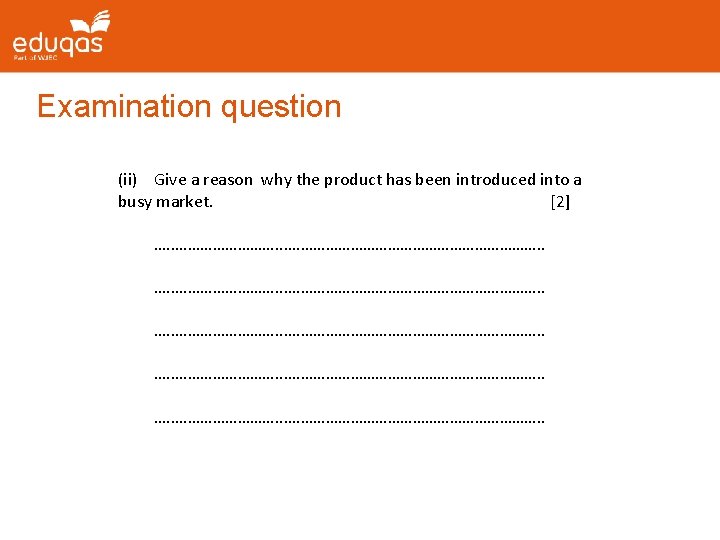
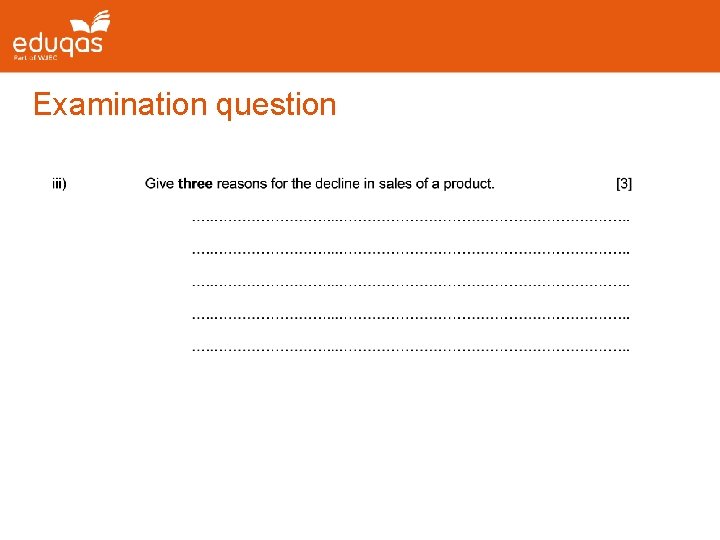
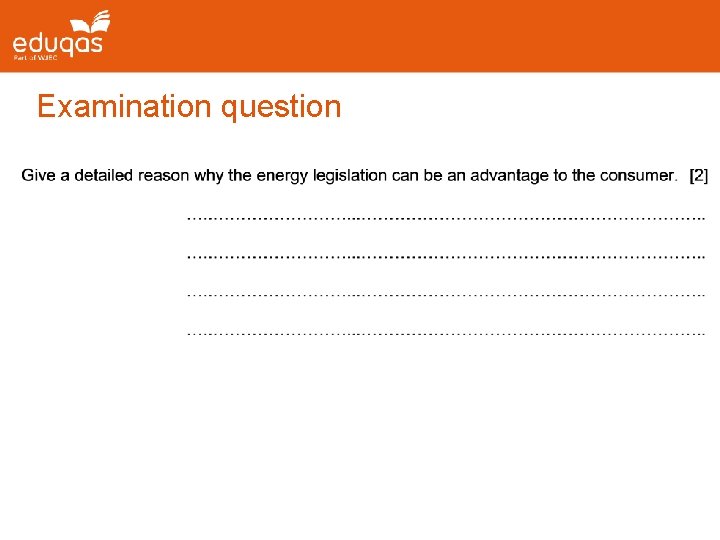
Examination question (ii) Give a reason why the product has been introduced into a busy market. [2] …. . ……………………. . . ……………………………………………………. . …………………………. .
Examination question
Examination question
Examination question
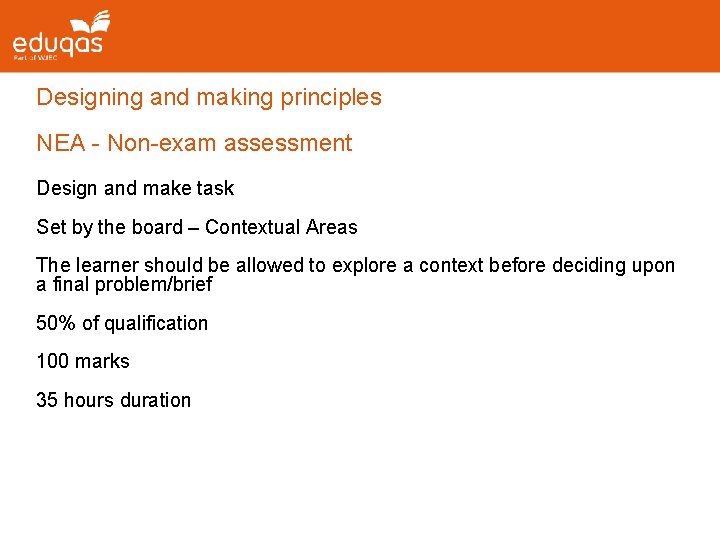
Designing and making principles NEA - Non-exam assessment Design and make task Set by the board – Contextual Areas The learner should be allowed to explore a context before deciding upon a final problem/brief 50% of qualification 100 marks 35 hours duration
EXAMINING FOR WJEC-EDUQAS • We value the contribution you as experienced teachers and lecturers make in assessing students’ work, ensuring that candidates are given a fair result which accurately reflects their ability • We appoint examiners to mark externally assessed work and moderators to review the original marking of teachers for internally assessed components or units • We provide face-to-face training for examiners and moderators (appointees) prior to assessment work commencing • Our senior examiners and subject officers provide support and advice during the assessment period
APPLICATION PROCESS • Complete an application using the on-line application system available on the Appointees page of the WJEC website • Once you have completed the initial registration, please make sure that you validate your email account so that you can complete the application process • When you have completed your application, remember to click ‘submit’ on the homepage, to complete the process • Remember to inform your referee of your application, as sometimes delays occur due to referees not completing the reference section • On rare occasions, applicants may not be accepted due to a lack of relevant teaching experience • Applicants may re-apply once they have gained sufficient experience • Some applicants will be approved, but may have to wait on the reserve list until a suitable vacancy arises
Any Questions? Contact our specialist Subject Officers and administrative team for your subject with any queries. steve, howells@eduqas. co. uk (Subject Officer) rhodri. jenkins@eduqas. co. uk (Subject Support Officer) @eduqas. co. uk