
Educator Perceptions of Gifted Talented English Language Learners



- Slides: 32
Educator Perceptions of Gifted & Talented English Language Learners World Conference 2019 Nashville, TN
○ Not born in the United States and whose heritage language is not English ○ Of American Indian or Alaskan heritage and who comes from an environment where the dominant language is not English ○ A migratory person whose heritage language is not English ○ A person who has difficulty speaking, reading, writing, or understanding English, which denies him/her the opportunity to learn effectively in classes where instruction is in English 2
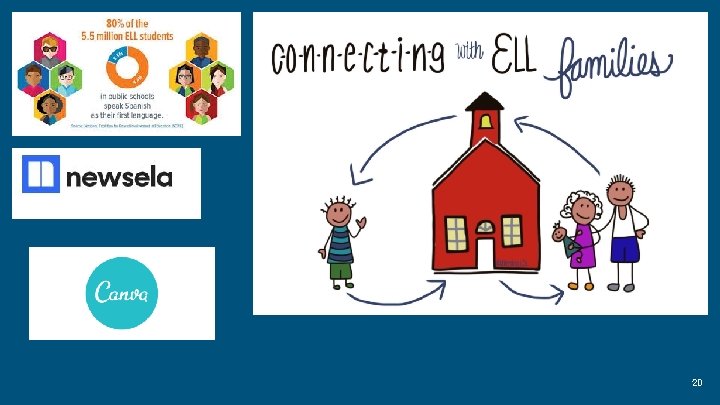
● English Language Learner (ELL) students enrolled in public schools have grown at an exponential rate, due to this, student population is becoming more diverse every year. ● The Gifted English Language Learner (GT/ELL) student is often overlooked. ● Lack of awareness coupled with little to no professional development being offered on this topic is an issue. ● GT/ELL students go unnoticed, educators have expressed they have possibly missed someone due to language barrier. 3
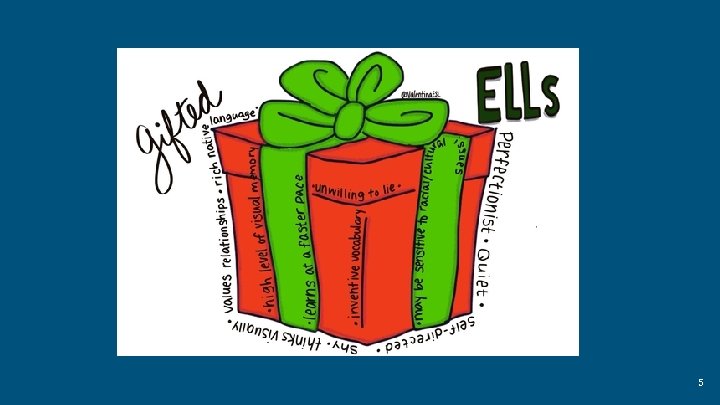
● Gifted and talented English Language Learners are unique and challenging students. Like all gifted and talented students, they are curious, creative, observant, and sensitive. ● Research has described gifted English Language Learners as having varying degrees of the following characteristics: -acquires a second language rapidly -shows high ability in mathematics -displays a mature sense of diverse cultures and languages -code switches easily (thinks in both languages) -demonstrations an advanced awareness of American expressions -translators at an advanced level (oral) 4
5
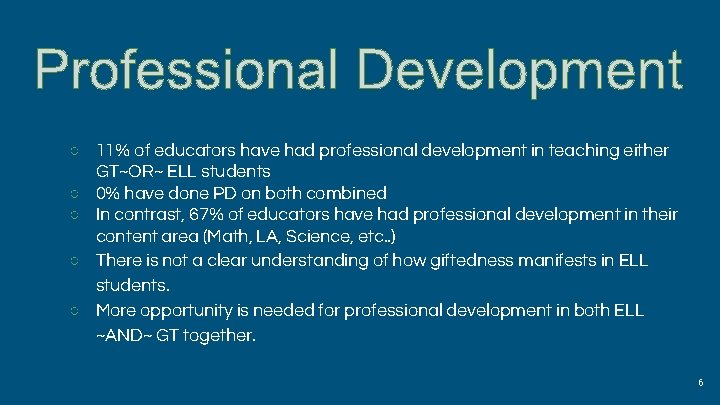
○ 11% of educators have had professional development in teaching either GT~OR~ ELL students ○ 0% have done PD on both combined ○ In contrast, 67% of educators have had professional development in their content area (Math, LA, Science, etc. . ) ○ There is not a clear understanding of how giftedness manifests in ELL students. ○ More opportunity is needed for professional development in both ELL ~AND~ GT together. 6
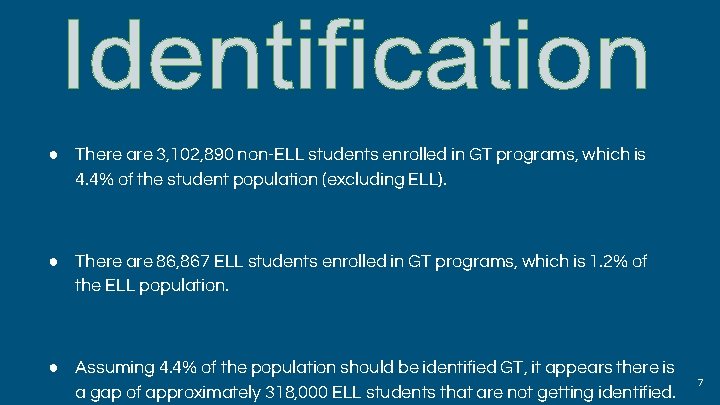
● There are 3, 102, 890 non-ELL students enrolled in GT programs, which is 4. 4% of the student population (excluding ELL). ● There are 86, 867 ELL students enrolled in GT programs, which is 1. 2% of the ELL population. ● Assuming 4. 4% of the population should be identified GT, it appears there is a gap of approximately 318, 000 ELL students that are not getting identified. 7
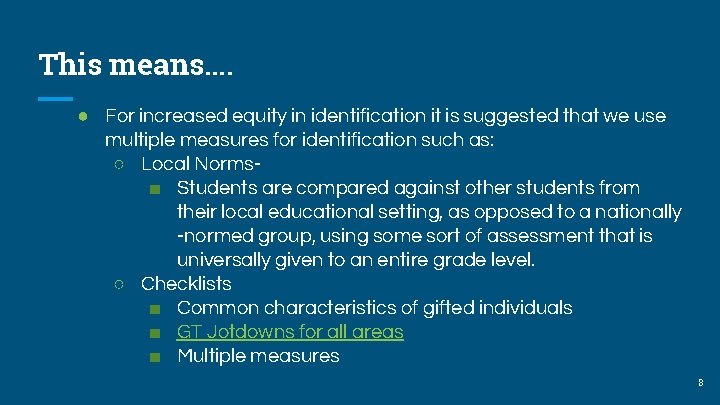
This means…. ● For increased equity in identification it is suggested that we use multiple measures for identification such as: ○ Local Norms■ Students are compared against other students from their local educational setting, as opposed to a nationally -normed group, using some sort of assessment that is universally given to an entire grade level. ○ Checklists ■ Common characteristics of gifted individuals ■ GT Jotdowns for all areas ■ Multiple measures 8
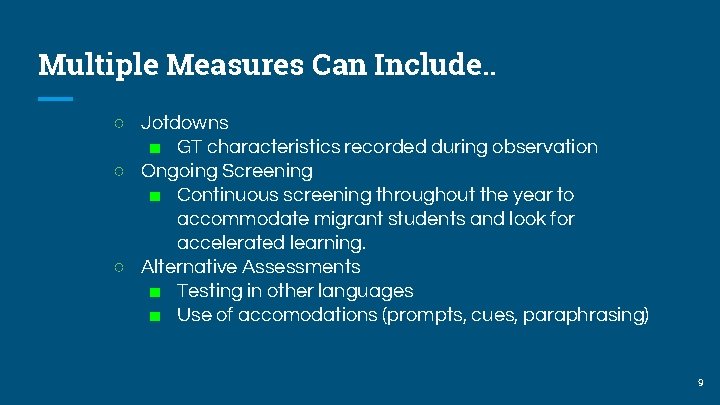
Multiple Measures Can Include. . ○ Jotdowns ■ GT characteristics recorded during observation ○ Ongoing Screening ■ Continuous screening throughout the year to accommodate migrant students and look for accelerated learning. ○ Alternative Assessments ■ Testing in other languages ■ Use of accomodations (prompts, cues, paraphrasing) Classroom teachers are the first step in identification. 9
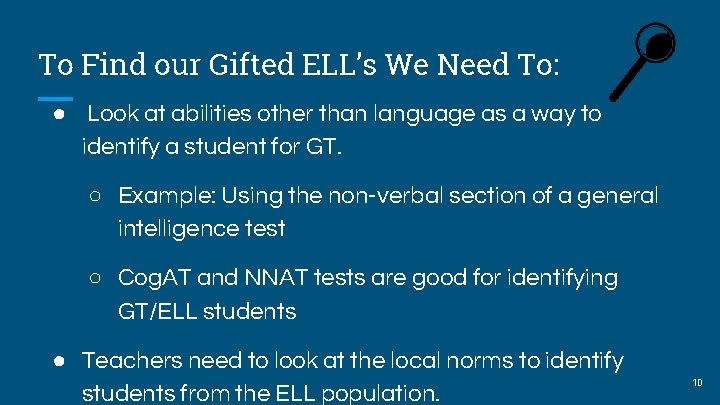
To Find our Gifted ELL’s We Need To: ● Look at abilities other than language as a way to identify a student for GT. ○ Example: Using the non-verbal section of a general intelligence test ○ Cog. AT and NNAT tests are good for identifying GT/ELL students ● Teachers need to look at the local norms to identify students from the ELL population. 10
Tools to use with our English Language Learners 11
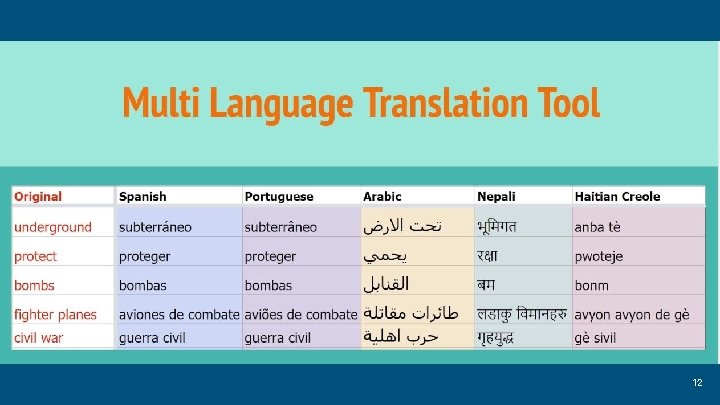
12
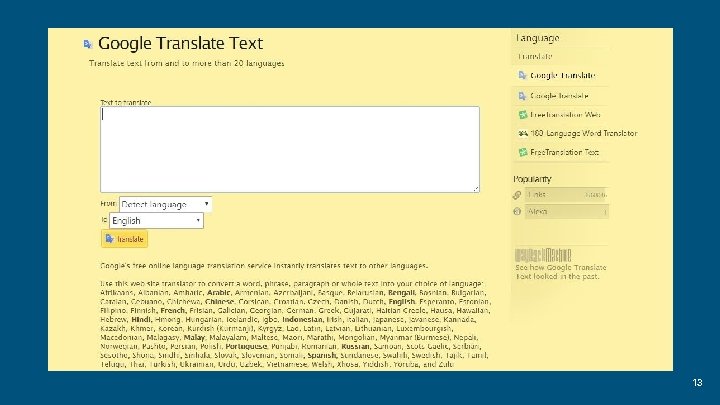
13
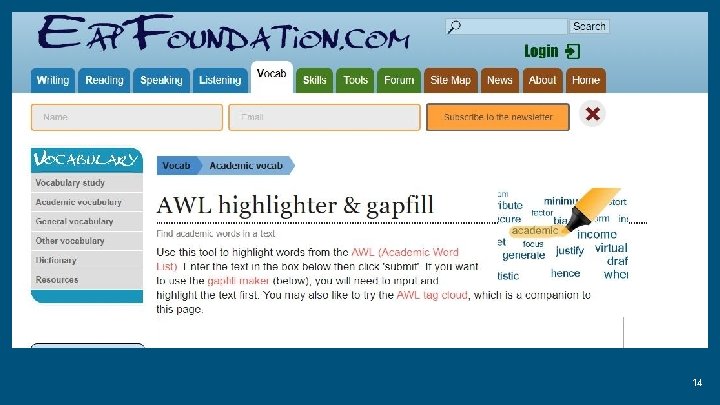
14
https: //www. teacherspayteachers. com/Store/Bilingual-Planet-And-The-Learning-Patio http: //www. giftedguru. com/epic-teacherresource-list/ 15
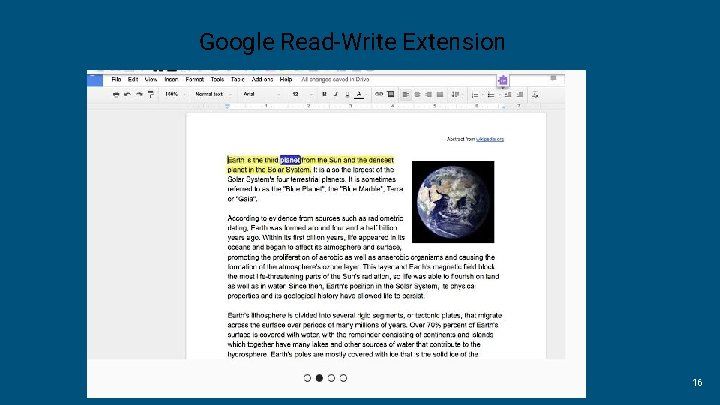
Google Read-Write Extension 16
17
18
19
20
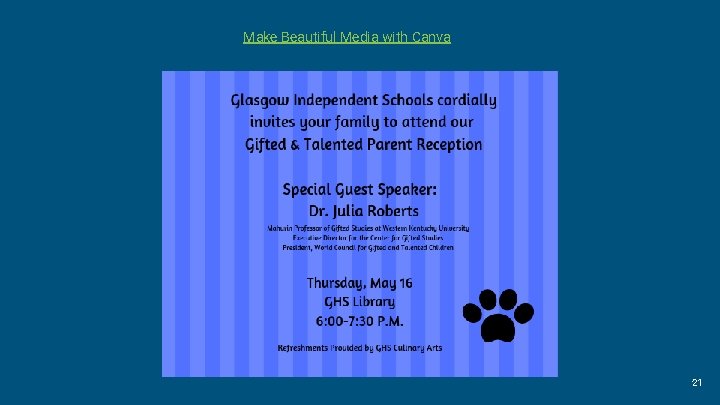
Make Beautiful Media with Canva 21
Classroom Ideas ● Response Lessons-Link: https: //www. wku. edu/gifted/rap/responselessons. php ○ Lessons that help teachers identify gifted behaviors in students for grades K-3 ● Removing barriers that may be caused by the language difference ○ Pictures, body language, other non-verbal communication ● NAGC culturally responsive curriculum-Link: ○ https: //www. nagc. org/blog/culturally-responsive-equity-basedbill-rights-gifted-students-color 22
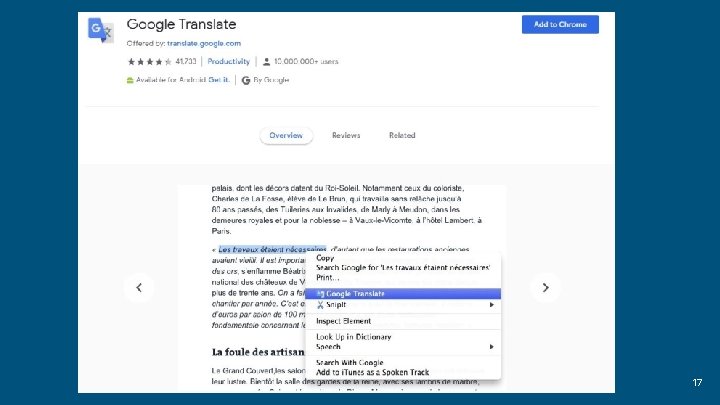
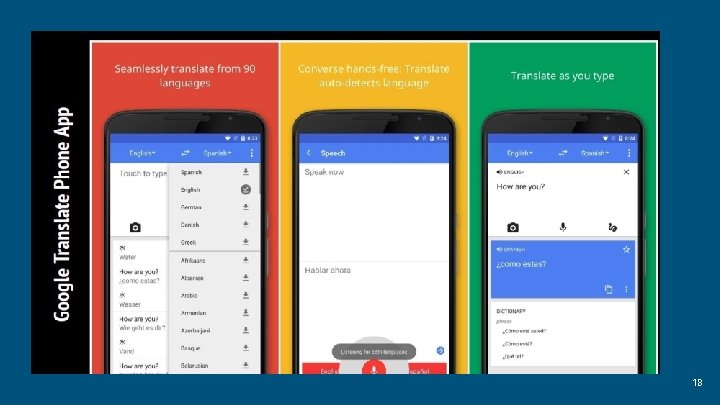
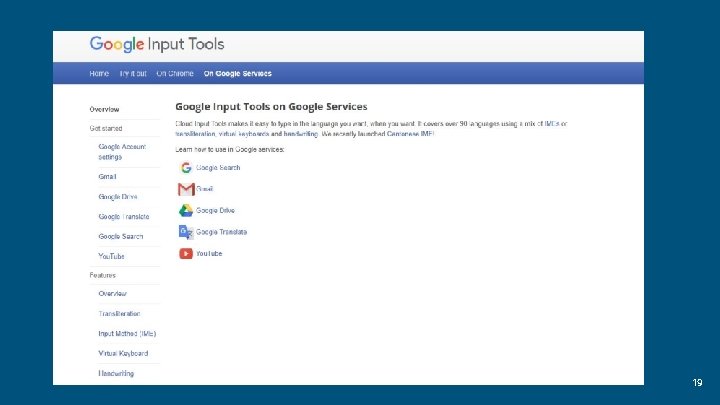
Google Tools for ELL Students Google Translate Toolkit Google Input Tools Google Translate Text 23
More Links to English Learner Resources Multi Language Translation Tool Digital Graphic Organizers More Tools to Support ELL Students 24
● With student population becoming more diverse, an increased awareness and understanding is needed to maximize the school experience for gifted and talented, English language learners. ● It is my hope that the topics and tools described in this presentation can assist you in maximizing the educational experiences of GT/ELL students! 25
Thank you! michelle. lynch@glasgow. kyschools. us
References Allen, Jennifer K. (2017). Exploring the Role Teacher Perceptions Play in the Underrepresentation of Culturally and Linguistically Diverse Students in Gifted Programming. Gifted Child Today, 40(2), 77 -86. Baldwin, A. Y. (2005). Identification Concerns and Promises for Gifted Students of Diverse Populations. Theory Into Practice, 44(2), 105114. Briggs, Christine J. , Reis, Sally M. , & Sullivan, Erin E. (2008). A National View of Promising Programs and Practices for Culturally, Linguistically, and Ethnically Diverse Gifted and Talented Students. Gifted Child Quarterly, 52(2), 131 -145. Castellano, J. (2005). English Language Learners and Gifted Education. TEMPO, XXV (1), 4 -18. De Wet, Catharina F. , & Gubbins, E. Jean. (2011). Teachers' Beliefs about Culturally, Linguistically, and Economically Diverse Gifted Students: A Quantitative Study. Roeper Review, 33(2), 97 -108. Esquierdo, J. J. , & Arreguin-Anderson, M. (2012). The "Invisible" Gifted and Talented Bilingual Students: A Current Report on Enrollment in GT Programs. Journal for the Education of the Gifted, 35 (1), 35 -47. Ford, Donna Y. , Grantham, Tarek C. , & Whiting, Gilman W. (2008). Culturally and Linguistically Diverse Students in Gifted Education: Recruitment and Retention Issues. Exceptional Children, 74(3), 289 -306. 27
References Harris, B. , Rapp, K. E. , Martínez, R. S. , & Plucker, J. A. (2007). Identifying English Language Learners for Gifted and Talented Programs: Current Practices and Recommendations for Improvement. Roeper Review, 29(5), 26 -29. Harris, B. , Plucker, J. A. , Rapp, K. E. , & Martínez, R. S. (2009). Identifying Gifted and Talented English Language Learners: A Case Study. Journal for the Education of the Gifted, 32(3), 368 -393. Latz, A. O. , & Adams, C. M. (2011). Critical Differentiation and the Twice Oppressed: Social Class and Giftedness. Journal for the Education of the Gifted, 34(5), 773 -789. Lohman, D. F. (2005). An Aptitude Perspective on Talent: Implications for Identification of Academically Gifted Minority Students. Journal for the Education of the Gifted, 28(3 -4), 333 -360. Lyster, M. E. , & Niieksela, C. (2017). Enhancing Gifted Education for underrepresented Students: Promising Recruitment and Programming Strategies. Journal for the Education of the Gifted, 40(1), 79 -95. 28
References Mc. Bee, M. T. (winter 2006). A Descriptive Analysis of Referral Sources for Gifted Identification Screening by Race and Socioeconomic Status. The Journal of Secondary Gifted Education, XVII (2), 103 -111. Neumeister, K. L. , Adams, C. M. , Pierce, R. L. , Cassady, J. C. , & Dixon, F. A. (2007). Fourth-Grade Teachers Perceptions of Giftedness: Implications for Identifying and Serving Diverse Gifted Students. Journal for the Education of the Gifted, 30(4), 479 -499. Pendarvis, E. (2009). Eligibility of Historically Underrepresented Students Referred for Gifted Education in a Rural School District: A Case Study. Journal for the Education of the Gifted, 32 (4), 495 -514. Pereira, N. , & Gentry, M. (2013). A Qualitative Inquiry into the Experiences of High-Potential Hispanic English Language Learners in Midwestern Schools. Journal of Advanced Academics, 24(3), 164 -194. Pereira, N. , & De Oliveira, L. (2015). Meeting the Linguistic Needs of High-Potential English Language Learners. TEACHING Exceptional Children, 47(4), 208 -215. 29
References Peters, S. J. , & Engerrand, K. G. (2016). Equity and Excellence. Gifted Child Quarterly, 60(3), 159 -171. Reeves, J. R. (2006). Secondary Teacher Attitudes toward Including English-Language Learners in Mainstream Classrooms. The Journal of Educational Research, 99(3), 131 -142. Siegle, D. , Gubbins, E. , O’Rourke, P. , Langley, S. , Mun, R. , Luria, S. , . . . Plucker, J. (2016). Barriers to Underserved Students’ Participation in Gifted Programs and Possible Solutions. Journal for the Education of the Gifted, 39(2), 103 -131. Sisk, D. A. (2005). Identifying and Developing Giftedness in Culturally and Linguistically Diverse Students: Promising Practices for Teachers and Administrators. TEMPO, XXV(1), 9 -13. Sparks, S. D. , & Harwin, A. (2017). Too Few ELL Students Land in Gifted Classes. Education Week, 36(36), 1. Stormont, M. , Stebbins, M. S. , & Holliday, G. (2001). Characteristics and educational support needs of underrepresented gifted adolescents. Psychology in the Schools, 38(5), 413 -423. TELL Kentucky (Teaching, Empowering, Leading and Learning) Survey Results 2017. (n. d. ). Retrieved July 16, 2017, from https: //tellkentucky. org/results 30
References Tomlinson, C. , Brighton, C. , Hertberg, H. , Callahan, C. , Moon, T. , Brimijoin, K. , . . . Reynolds, T. (2003). Differentiating Instruction in Response to Student Readiness, Interest, and Learning Profile in Academically Diverse Classrooms: A Review of Literature. Journal for the Education of the Gifted, 27(2 -3), 119 -145. Uresti, R. , Goertz, J. , & Bernal, E. M. (2002). Maximizing Achievement for Potentially Gifted and Talented and Regular Minority Students in a Primary Classroom. Roeper Review, 25(1), 27. U. S. Department of Education Civil Rights (n. d. ) Retrieved July 28, 2017, from https: //www 2. ed. gov/about/offices/list/ocr/index. html U. S. Department of Education Report Student Demographics (n. d. ) Retrieved July 28, 2017, from https: //www 2. ed. gov/rschstat/catalog/student-demographics. html 31
32