
Educational Presentation How to Reduce Lead Poisoning in


- Slides: 29
Educational Presentation How to Reduce Lead Poisoning in Children Who Reside in Shelby County Tennessee Marilyn Renae Burress Walden University PUBH-8165 -3 Instructor: Dr. Jeff Wu July 31, 2009
Lead Poisoning in Shelby County Educational Presentation by Marilyn R. Burress Walden University Ph. D. Student July 31, 2009
Today’s Learning Objectives • What is lead? • Sources of lead poisoning. • How to detect lead poisoning? • How lead affects children? • How lead is detected? • What is the lead poisoning status in Shelby County? • What can we do in Shelby County to reduce childhood lead poisoning?
What is lead? It’s a natural element that is: • Common/Everywhere – Pewter, crystal, vinyl, jewelry, pottery – Hobby exposure, commercial exposure – Industrial exposure, occupational
Lead May Be In Your Water. Lead can come from: ●Lead plumbing, or fixtures in your home ●Low Lead in Shelby County water supply system
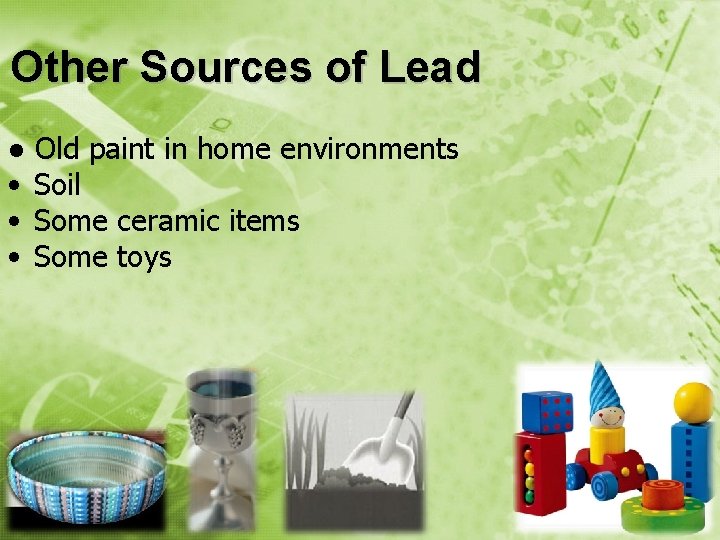
Other Sources of Lead ● Old paint in home environments • Soil • Some ceramic items • Some toys
Lead May Be in Food and Beverages It can come from • Production • Packaging • Storage
Why Lead Is Especially Dangerous For Young Children? Because they are: • are still developing • absorb it more easily • are more likely to put things in their mouths
Lead poisoning is Hard to Spot. • Upset Stomach • Loss of Appetite • Constipation/Diarrhea • Hyperactivity/Listlessness • Mimic the Flu Sometimes There Are No Symptoms.
How Can You Tell If A Child Has Lead Poisoning? Screening is the only way to know for sure.
Lead Affects the Brain and Nerves Eve At Low Exposure Levels. This may cause: • Learning Problems • Growth Delays • Violence/Crime • Aggressive Behavior
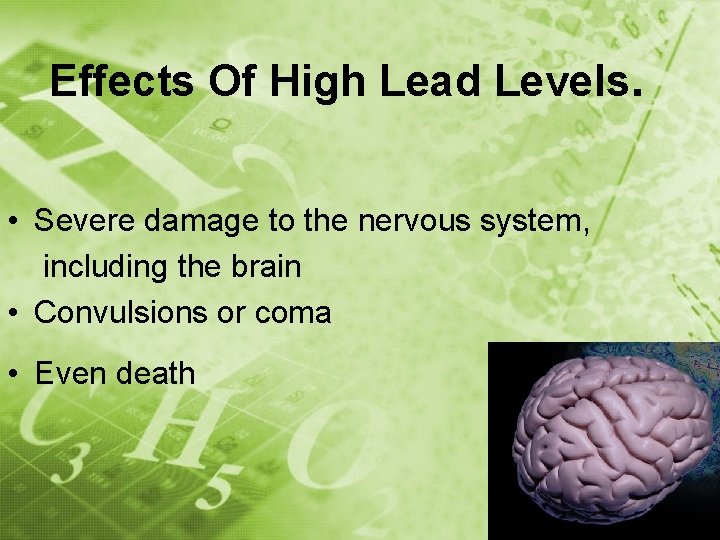
Effects Of High Lead Levels. • Severe damage to the nervous system, including the brain • Convulsions or coma • Even death
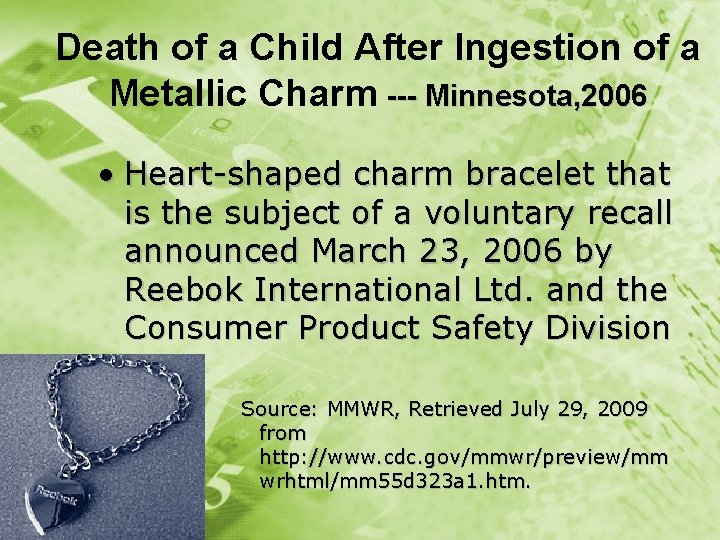
Death of a Child After Ingestion of a Metallic Charm --- Minnesota, 2006 • Heart-shaped charm bracelet that is the subject of a voluntary recall announced March 23, 2006 by Reebok International Ltd. and the Consumer Product Safety Division Source: MMWR, Retrieved July 29, 2009 from http: //www. cdc. gov/mmwr/preview/mm wrhtml/mm 55 d 323 a 1. htm.
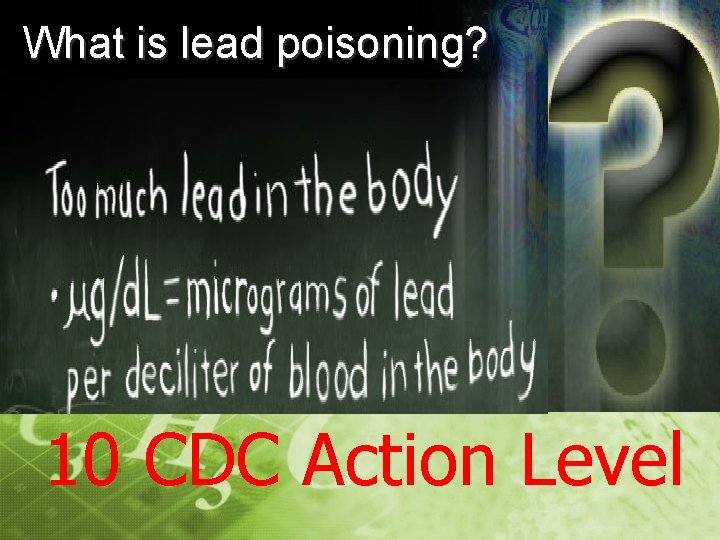
What is lead poisoning? 10 CDC Action Level
Shelby County Today • 170, 744 homes in Shelby contain Lead Based Paint. • 23, 455 children in Shelby County are below the poverty level. • Hundreds of new children are diagnosed with Lead Poisoning every year. • Source: Shelby County Government Website
Shelby County Today Cont. ◦ Children living below the poverty level are 13 times likely to become lead poisoned. ◦There are over 68, 000 children under age 5 residing in Shelby County, on 32% are being tested for lead poisoning by their medical provider. ◦ In Shelby County, we are screening a small percentage of the high risk population ◦ Every child under the age of six living in high risk areas should be screened.
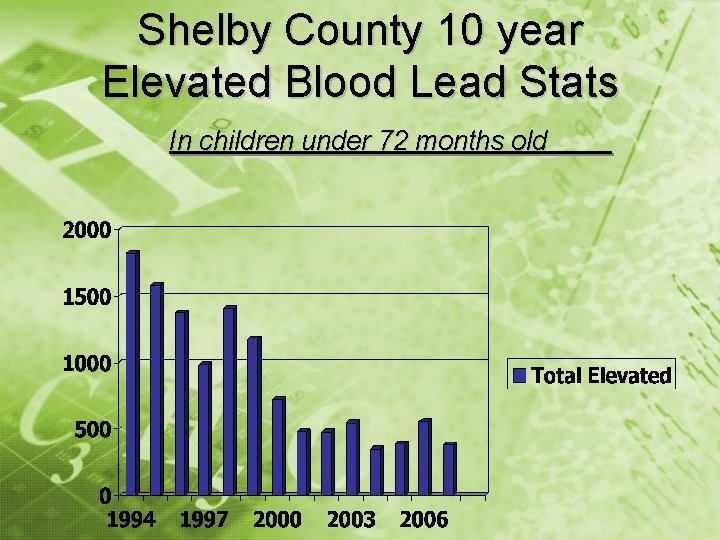
Shelby County 10 year Elevated Blood Lead Stats In children under 72 months old
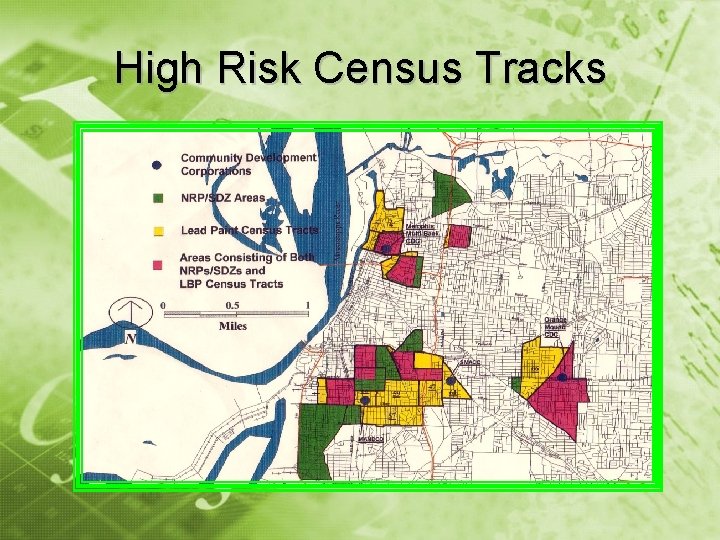
High Risk Census Tracks
The Problem • Childhood lead poisoning is a major, preventable environmental health problem.
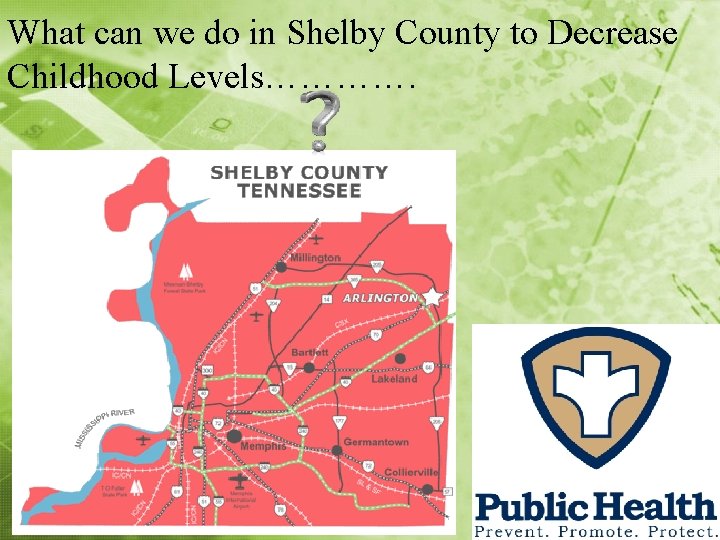
What can we do in Shelby County to Decrease Childhood Levels………….
Clean With Care. • • • Always wet mop & wet dust Use high phosphorus cleaning products. Use the right cleaning methods. Vacuum carefully. Keep children away from painted items. • Wash toys and other items frequently.
REVIEW • Lead-based paint and lead dust are the leading sources of lead poisoning. • Lead poisoning has no signs. • Testing is the only way to know if your child has lead poisoning. • Lead poisoning is related to a number of serious health problems. • Lead poisoning is the presence of too much lead in the body. • Shelby County has experienced many children with elevated blood levels. • Every child under the age of six living in a high area needs to be tested. • There are ways to reduce lead poisoning in our children in Shelby County. • There are ways to keep your children safe.
How Else Can You Keep Your Child Safe From Lead Poisoning? • Wash hands often. • Run water before using it. • Never use hot tap water when cooking. • Avoid dirt play areas. • Wash up after playing outside.
Serve A Variety Of Healthy Foods Every Day. • Choose Nutrient-Rich Foods. – Vitamin C – Calcium – Iron
The Memphis/Shelby County Health Childhood Lead Poisoning Prevention Program PROGRAM FOCUS: • Medical Case Management/Tracking of Lead Poisoned Children • Environmental Case Management/Tracking of properties with Lead Hazards • Preventative Exposure Program
Partnering gets the job done! • Creation of Lead Safe Housing! • Screening of children in high risk areas. Education/Outreach opportunities. • Faith based Organizations • Day Care Centers • Higher Learning Institutes • Public Educational System
Grant Partnering Housing and Health what a Good Combination!
Questions
References Shelby County Government. Facts on Childhood Lead Poisoning. Retrieved July 15, 2009 from: http: //www. shelbycountytn. gov/First. Portal/dot. Show. Doc/Government/County. Services/Health. Servi ces/Environmental. Health/facts. htm#eff. Agency for Toxic Substance Abuse and Disease Registry. Lead Toxicity. Retrieved July 15, 2009 from: http: //www. atsdr. cdc. gov/csem/lead/pbwhere_found 2. html. Illinois Department of Public Health. Lead Poisoning. Retrieved July 15, 2009 from http: //www. idph. state. il. us/public/hb/hblead. htm. Shelby County Government. Lead Poisoning Statistics from the Memphis and Shelby County Childhood Lead Poisoning Prevention Program. Retrieved July 16, 2009 from: http: //www. shelbycountytn. gov/First. Portal/dot. Show. Doc/Government/County. Services/Heal th. Services/Environmental. Health/stats. htm. Berg, K. K. , Hull, H. F. , Zabel, E. W. , Staley, P. K. , and Brown, M. J. , March 23, 2006. Death of Child After Ingestion of a Metallic Charm, Minnesota. Mortality and Morbidity Weekly Report, 55(Dispatch); 1 -2. Retrieved July 28, 2009 from http: //www. cdc. gov/mmwr/preview/mmwrhtml/mm 55 d 323 a 1. htm. Centers for Disease Control and Prevention. Lead Prevention Tips. Retrieved July 27, 2009 from http: //www. cdc. gov/nceh/Lead/tips. htm.