
Educational Evaluation A Conceptual Framework 1 What Is
- Slides: 15
Educational Evaluation : A Conceptual Framework
1. What Is Conceptual Frame Work? 2. Why Is Conceptual Framework? 3. How Is Conceptual Framework Designed? Educational Evaluation : A Conceptual Framework Syed Mohsin 11/MPhil/MCA/02 2
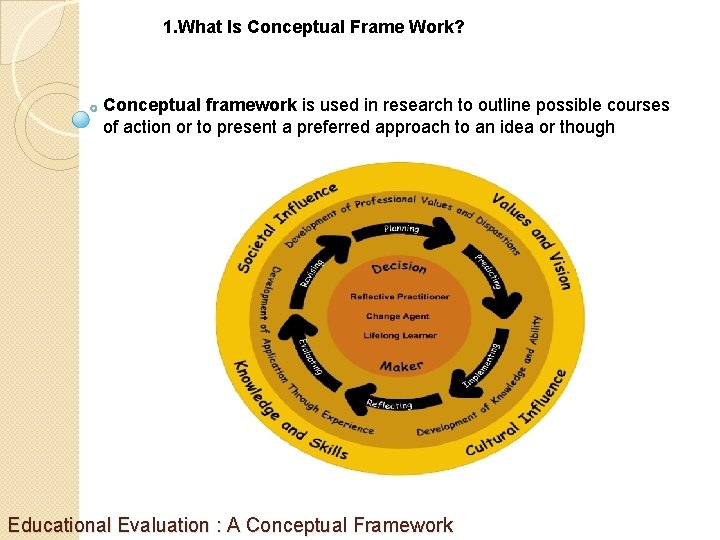
1. What Is Conceptual Frame Work? Conceptual framework is used in research to outline possible courses of action or to present a preferred approach to an idea or though Educational Evaluation : A Conceptual Framework
Why Is Conceptual Framework Ø Working hypothesis Ø Descriptive Categories Ø Practical ideal types Ø Models of operations research Ø Formal hypotheses Educational Evaluation : A Conceptual Framework Syed Mohsin 11/MPhil/MCA/02 4
How is Conceptual Framework Designed. �Identifying Objects. �Identifying Entities. �Identifying Attributes. �Identify work Flows. �Identify efficiency Measures. �Reliability. �Robustness. �Monitoring etc. Educational Evaluation : A Conceptual Framework Syed Mohsin 11/MPhil/MCA/02 5
Educational Evaluation : A Conceptual Framework Syed Mohsin 11/MPhil/MCA/02 6
Educational Evaluation �Evaluating What. . Ø All Objects and their Workflow, behavior, functionality, efficiency, Quality, Quantity, Policies, Strategies, Feasibility reports, Standards, Management. Ethics Ø Student ü Attitude. ü Behavior ü Mentality ü Quality ü Intelligence. ü Problem Solving Approach ü Academic Records. ü Communication Potential. ü Curricular participation ü Research Skills ü Analytical power etc. Educational Evaluation : A Conceptual Framework Syed Mohsin 11/MPhil/MCA/02 7
Educational Evaluation : A Conceptual Framework Syed Mohsin 11/MPhil/MCA/02 8
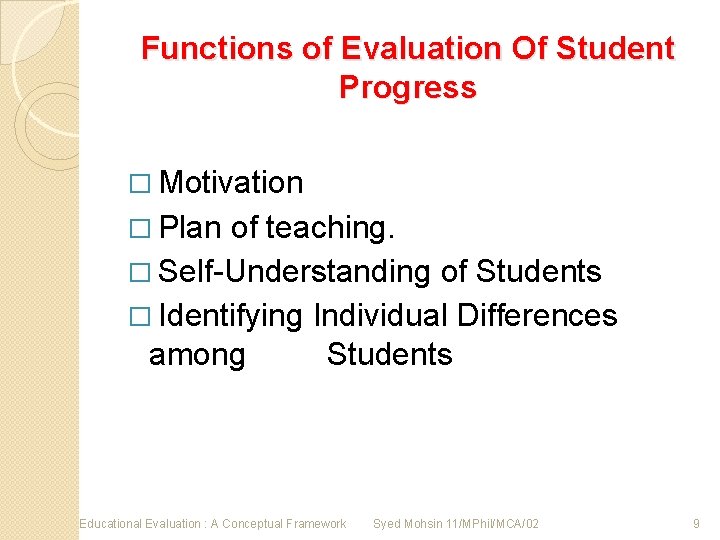
Functions of Evaluation Of Student Progress � Motivation � Plan of teaching. � Self-Understanding of Students � Identifying Individual Differences among Students Educational Evaluation : A Conceptual Framework Syed Mohsin 11/MPhil/MCA/02 9
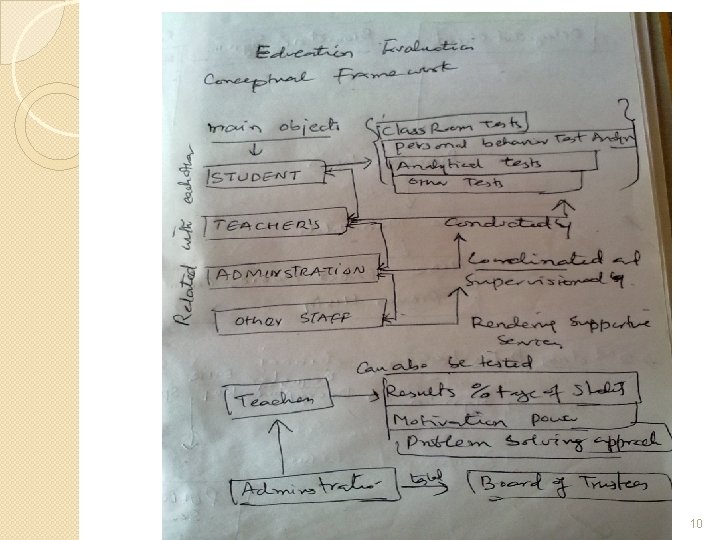
Educational Evaluation : A Conceptual Framework Syed Mohsin 11/MPhil/MCA/02 10
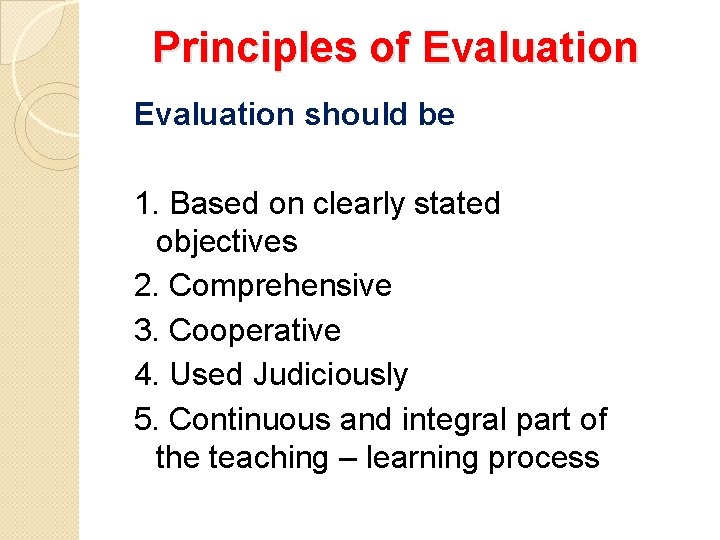
Principles of Evaluation should be 1. Based on clearly stated objectives 2. Comprehensive 3. Cooperative 4. Used Judiciously 5. Continuous and integral part of the teaching – learning process
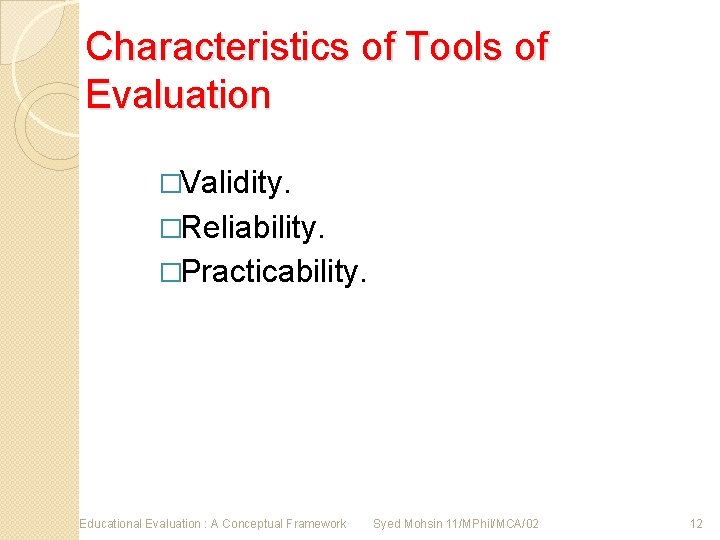
Characteristics of Tools of Evaluation �Validity. �Reliability. �Practicability. Educational Evaluation : A Conceptual Framework Syed Mohsin 11/MPhil/MCA/02 12
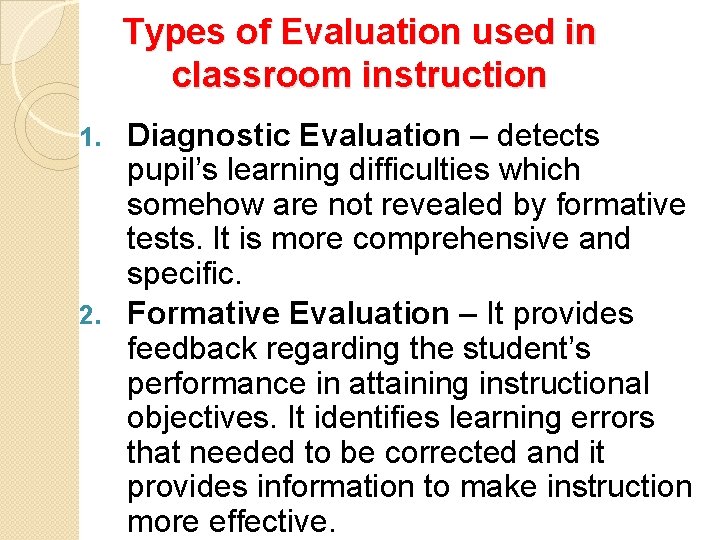
Types of Evaluation used in classroom instruction Diagnostic Evaluation – detects pupil’s learning difficulties which somehow are not revealed by formative tests. It is more comprehensive and specific. 2. Formative Evaluation – It provides feedback regarding the student’s performance in attaining instructional objectives. It identifies learning errors that needed to be corrected and it provides information to make instruction more effective. 1.
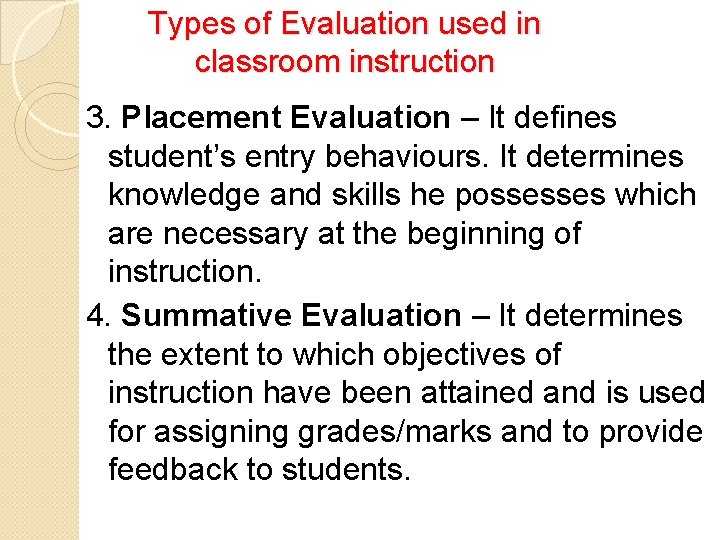
Types of Evaluation used in classroom instruction 3. Placement Evaluation – It defines student’s entry behaviours. It determines knowledge and skills he possesses which are necessary at the beginning of instruction. 4. Summative Evaluation – It determines the extent to which objectives of instruction have been attained and is used for assigning grades/marks and to provide feedback to students.
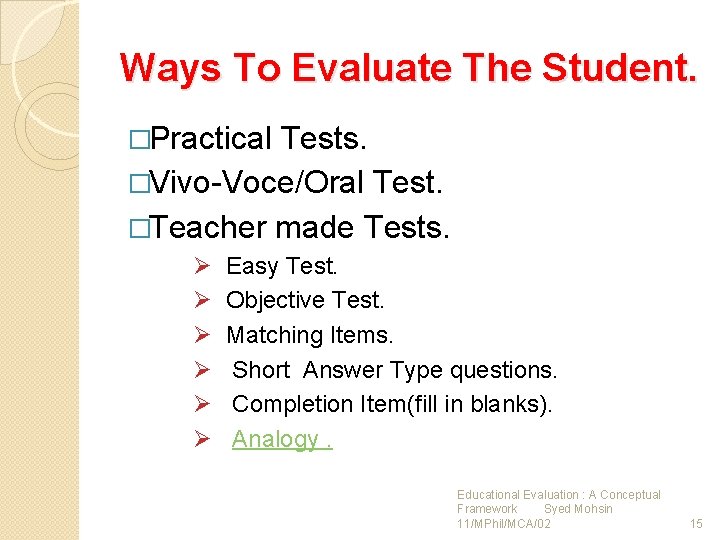
Ways To Evaluate The Student. �Practical Tests. �Vivo-Voce/Oral Test. �Teacher made Tests. Ø Ø Ø Easy Test. Objective Test. Matching Items. Short Answer Type questions. Completion Item(fill in blanks). Analogy. Educational Evaluation : A Conceptual Framework Syed Mohsin 11/MPhil/MCA/02 15