
Education Evaluation and Research Prof Martyn Kingsbury Dr
Education Evaluation and Research Prof Martyn Kingsbury Dr Camille Kandiko Howson Mr Eliel Cohen Dr Julianne Viola Mr Robert Cashman Dr Monika Pazio
2 Overview 1. Evaluation Questions 2. Tools and Resources 3. From Evaluation to Research
3 9 / 2 0 2 0 Curriculum Evaluation • Learning and Teaching Strategy • Intended Learning Outcomes (Aims) • From final Curriculum Review Forms, most stated an intention to develop an evaluation plan and all Departments planned to collect new data
4 9 / 2 0 2 0 Levels of evaluation • Level 1: to inform your own teaching (e. g. at module-level) • Level 2: to inform those in a shared context (e. g. at year/course/departmental level) • Level 3: to inform the wider public (e. g. cutting-edge, innovative practices; large-scale impact on student outcomes)—may become educational research
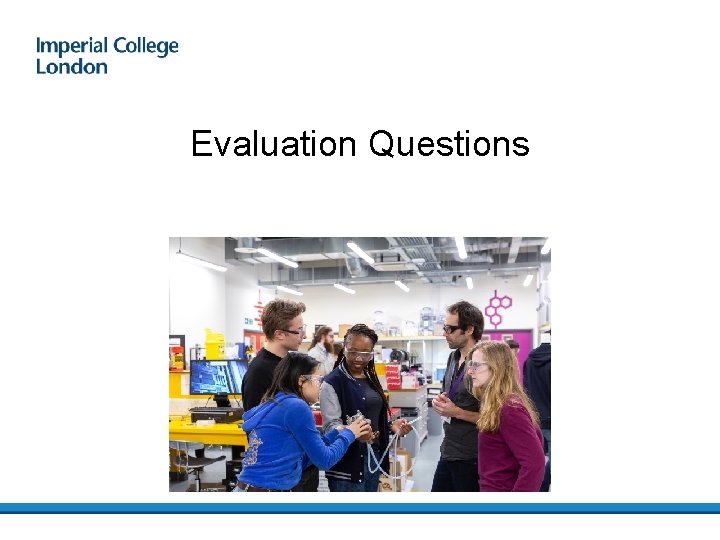
Evaluation Questions
Evaluation Questions • Framed by: – Intended learning outcomes (aims) – Method of delivery (process change) – What changed (outcome change) • These drive: – Who you ask – What you ask – How you ask – When you ask
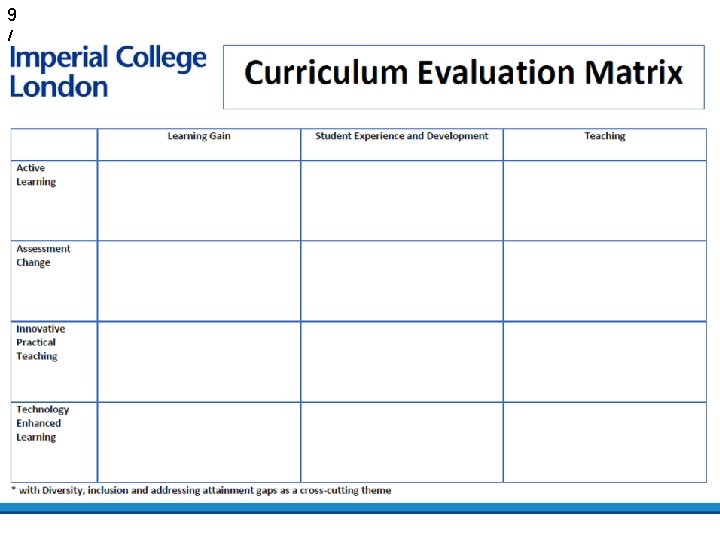
7 9 / 2 0 2 0 Evaluation Questions • Outcome Measures • Method of Delivery – Learning Gain – Active Learning – Student Experience – Assessment and Development – Innovative Practical – Teaching Experience Teaching – Technology Enhanced Learning
Evaluation Questions Review evaluation questions and plot onto Curriculum Evaluation Matrix
9 / 2 0 2 0
Evaluation Tools and Resources
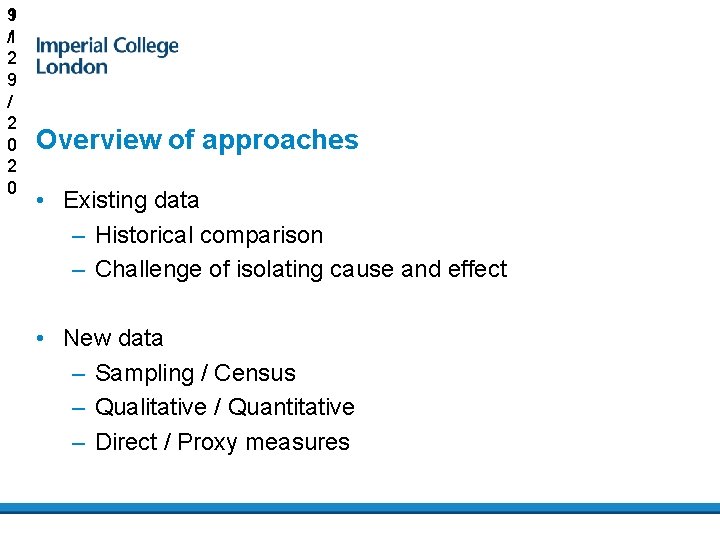
1 9 / 1 2 9 / 2 0 Overview of approaches • Existing data – Historical comparison – Challenge of isolating cause and effect • New data – Sampling / Census – Qualitative / Quantitative – Direct / Proxy measures
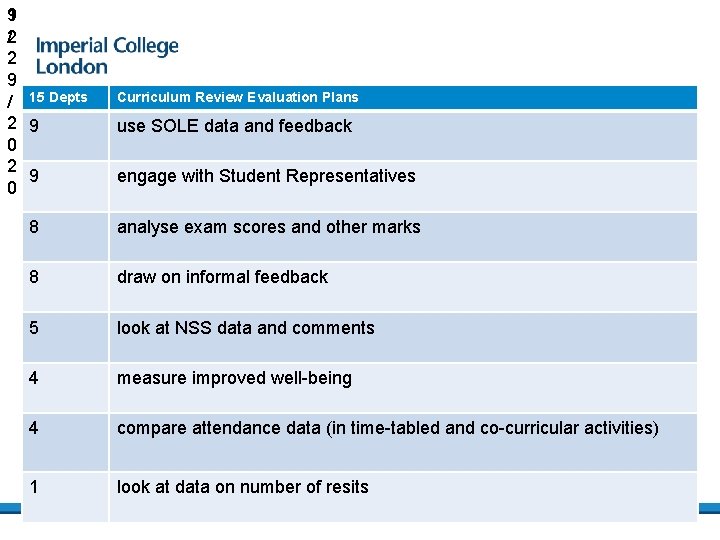
1 9 / 2 2 9 / 15 Depts 2 9 0 Curriculum Review Evaluation Plans use SOLE data and feedback engage with Student Representatives 8 analyse exam scores and other marks 8 draw on informal feedback 5 look at NSS data and comments 4 measure improved well-being 4 compare attendance data (in time-tabled and co-curricular activities) 1 look at data on number of resits
1 9 / 3 2 9 / 2 0 What is learning gain? change in knowledge, skills, work-readiness and personal development, as well as enhancement of specific practices and outcomes in defined disciplinary and institutional contexts https: //www. officeforstudents. org. uk/media/20 ffe 802 -9482 -4 f 55 -b 5 a 06 c 18 ee 4 e 01 b 1/learning-gain-project-final-evaluation. pdf
Dimensions of learning gain • measures of general cognitive gain –what students think and know; • measures of behavioural gain–measures of what students do and their engagement, including activities students have undertaken in preparation for the world of work; • affective gain–measures of how students feel and their development of soft and transferrable skills.
1 9 / 5 2 9 / 2 0 Imperial Vision Group Pilot: Student Information Dashboard • View information from new College-wide Banner system • Principles: – To provide data to enhance the student experience for staff and students – Sector-leading approach focusing on value-added and evidenceled enhancement – Empower students with their own data – Need baseline data for all students to deliver parity of experience – Focus on individual student data • Complemented by aggregate analysis through learning analytics
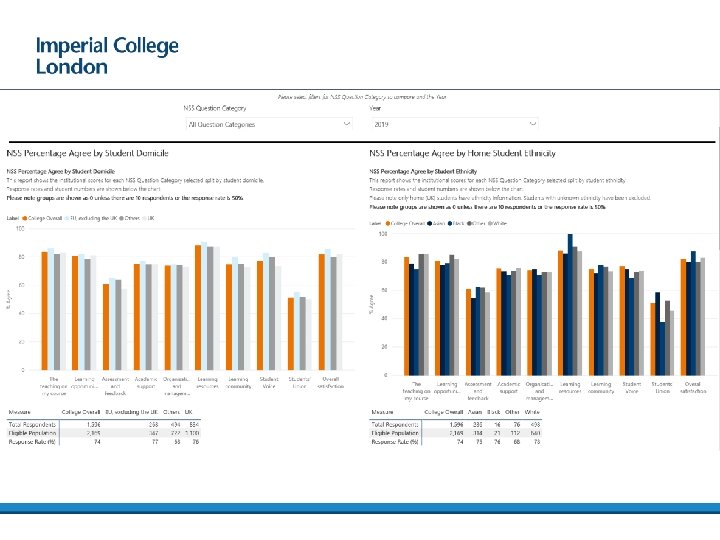
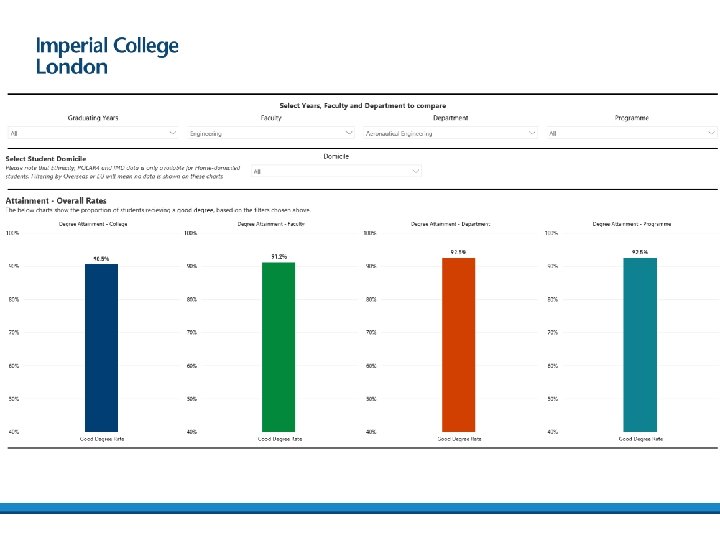
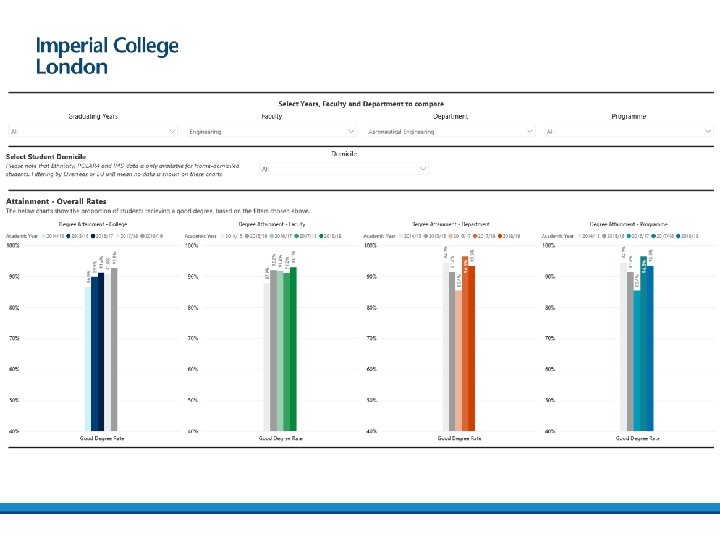
1 9 / 6 2 9 / 2 0 Strategy and Planning • National Student Survey (NSS) analysis and dashboards – The dashboards show each year’s results and trends over time – They have recently been expanded to include – where available – the survey results split by different student characteristics • UG Differential Outcomes analysis and dashboards – These new dashboards look at student continuation into second year, final degree results obtained and destinations, split by various student characteristics – They are aligned as far as possible with external measures and metrics (e. g. TEF metrics and UK Performance Indicators) • For questions or access please contact r. cashman@imperial. ac. uk.
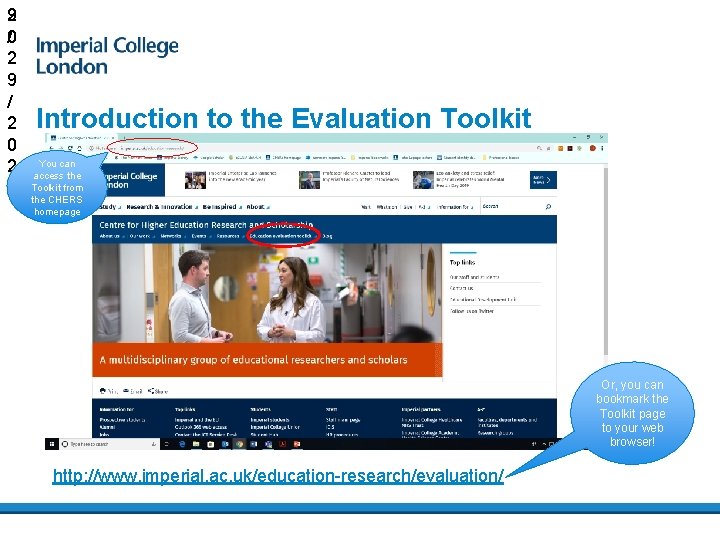
2 9 / 0 2 9 / 2 0 Introduction to the Evaluation Toolkit You can access the Toolkit from the CHERS homepage Or, you can bookmark the Toolkit page to your web browser! http: //www. imperial. ac. uk/education-research/evaluation/
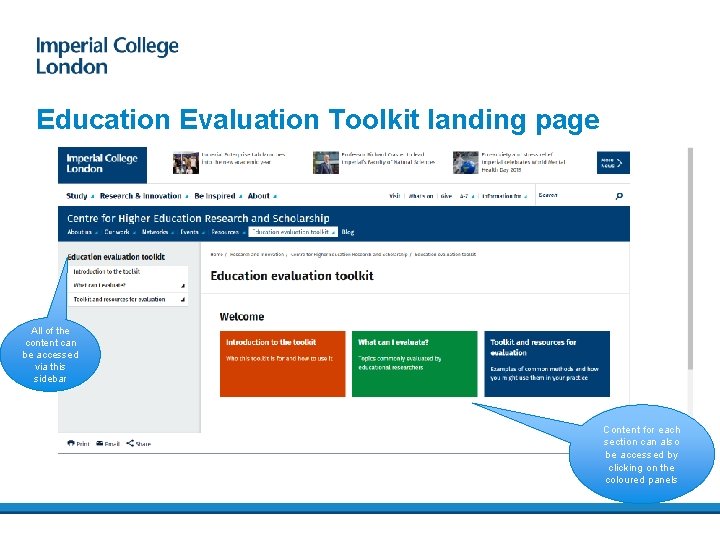
Education Evaluation Toolkit landing page All of the content can be accessed via this sidebar Content for each section can also be accessed by clicking on the coloured panels
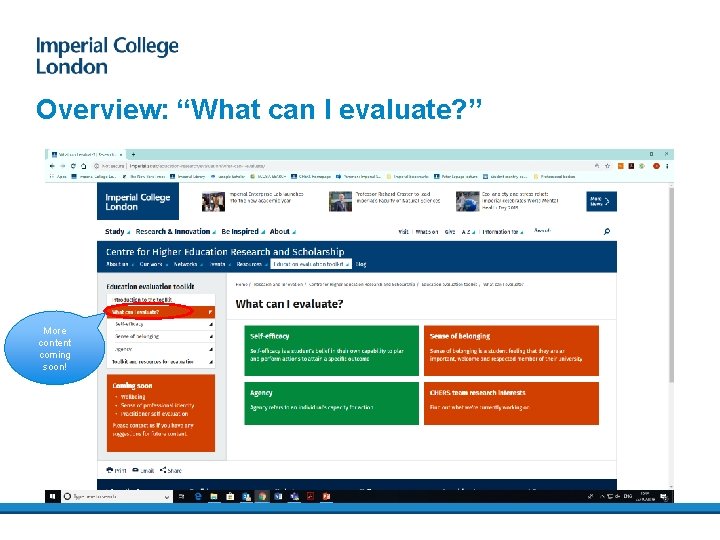
Overview: “What can I evaluate? ” More content coming soon!
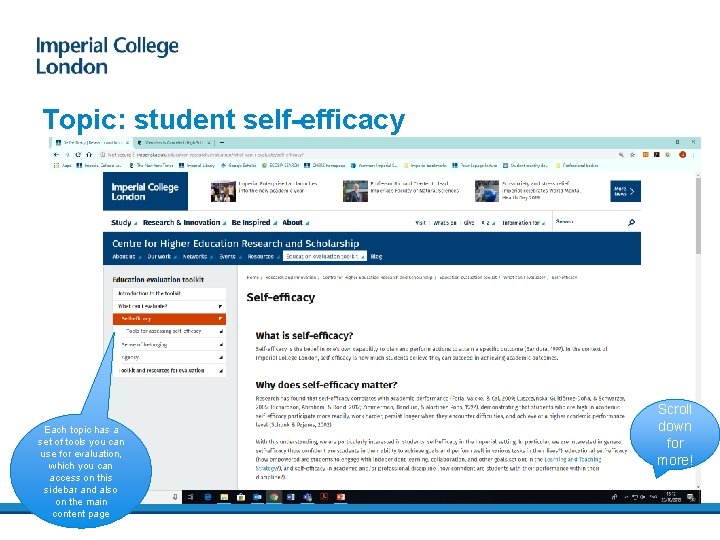
Topic: student self-efficacy Each topic has a set of tools you can use for evaluation, which you can access on this sidebar and also on the main content page Scroll down for more!
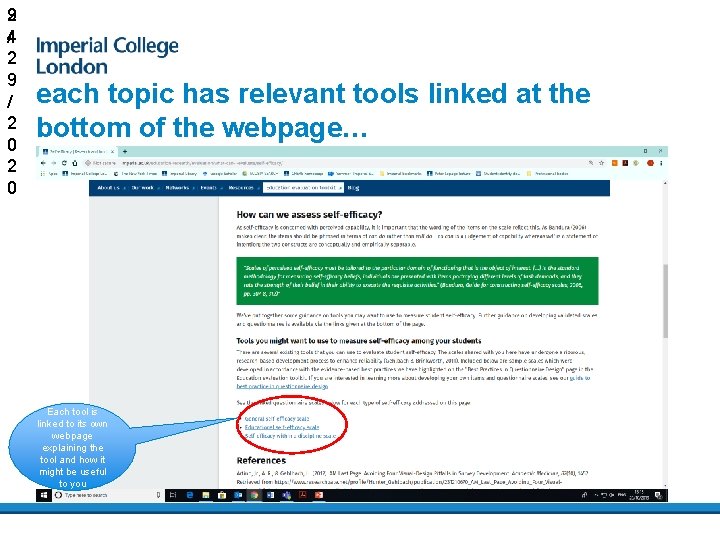
2 9 / 4 2 9 / 2 0 each topic has relevant tools linked at the bottom of the webpage… Each tool is linked to its own webpage explaining the tool and how it might be useful to you
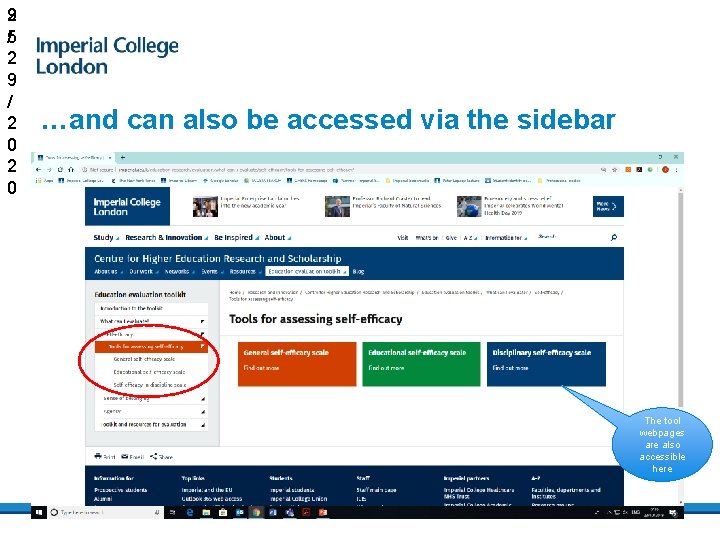
2 9 / 5 2 9 / 2 0 …and can also be accessed via the sidebar The tool webpages are also accessible here
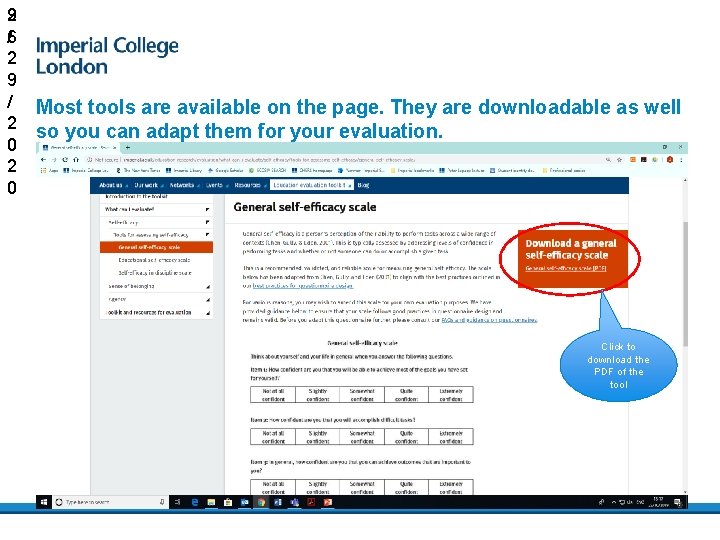
2 9 / 6 2 9 / 2 0 Most tools are available on the page. They are downloadable as well so you can adapt them for your evaluation. Click to download the PDF of the tool
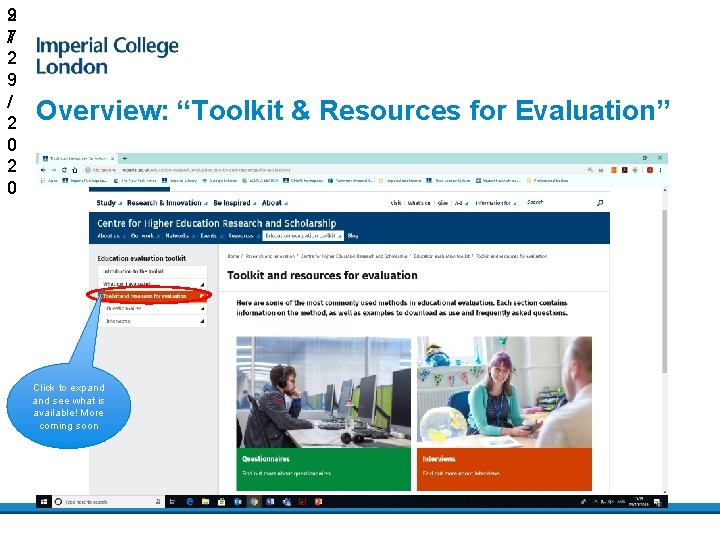
2 9 / 7 2 9 / 2 0 Overview: “Toolkit & Resources for Evaluation” Click to expand see what is available! More coming soon
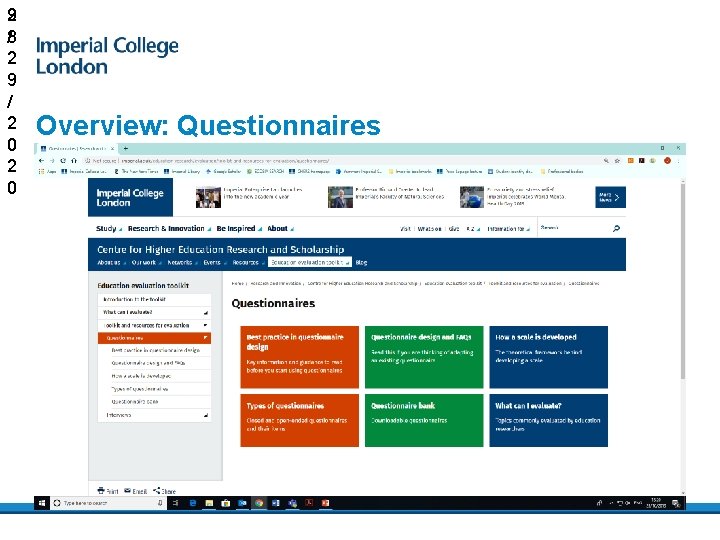
2 9 / 8 2 9 / 2 0 Overview: Questionnaires
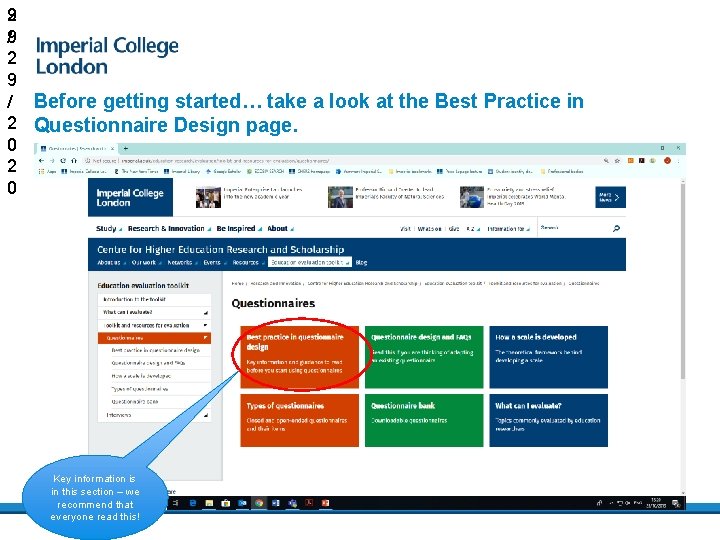
2 9 / 9 2 9 / Before getting started… take a look at the Best Practice in 2 Questionnaire Design page. 0 2 0 Key information is in this section – we recommend that everyone read this!
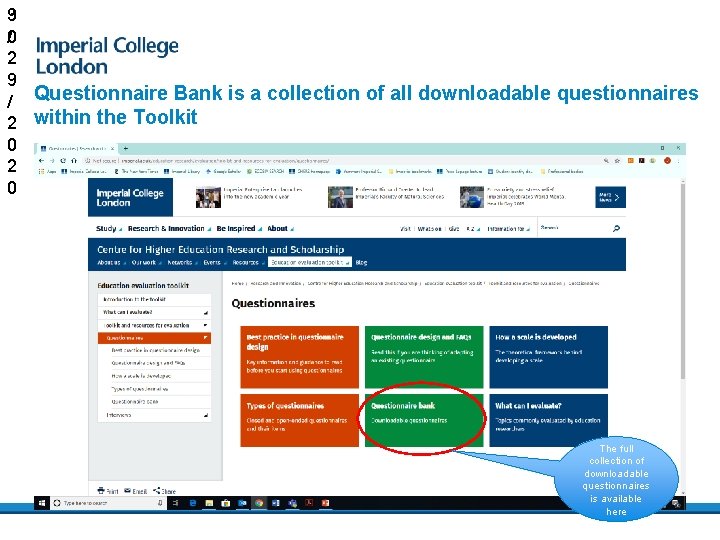
3 9 / 0 2 9 / Questionnaire Bank is a collection of all downloadable questionnaires 2 within the Toolkit 0 2 0 The full collection of downloadable questionnaires is available here
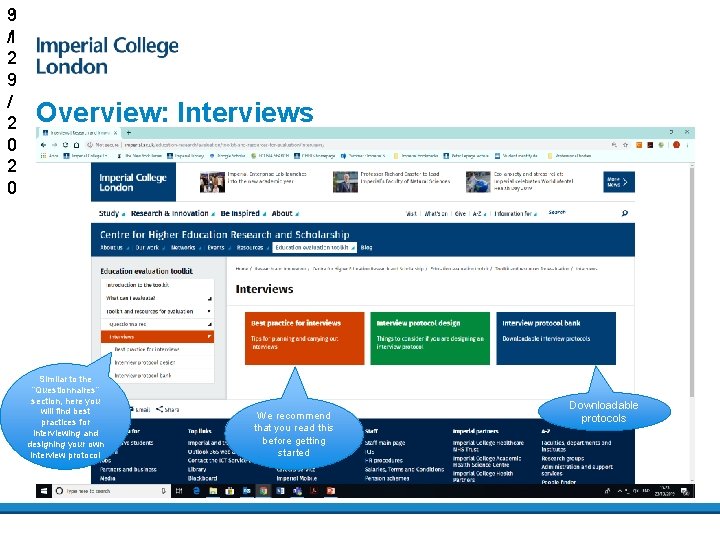
3 9 / 1 2 9 / 2 0 Overview: Interviews Similar to the “Questionnaires” section, here you will find best practices for interviewing and designing your own interview protocol We recommend that you read this before getting started Downloadable protocols
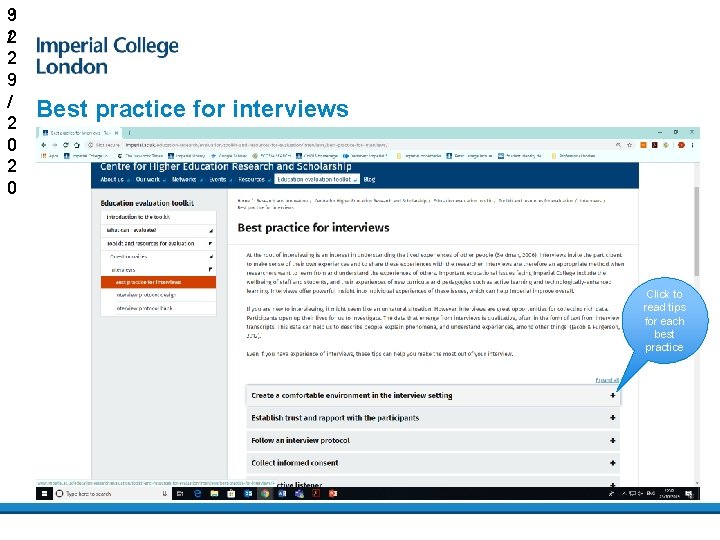
3 9 / 2 2 9 / 2 0 Best practice for interviews Click to read tips for each best practice
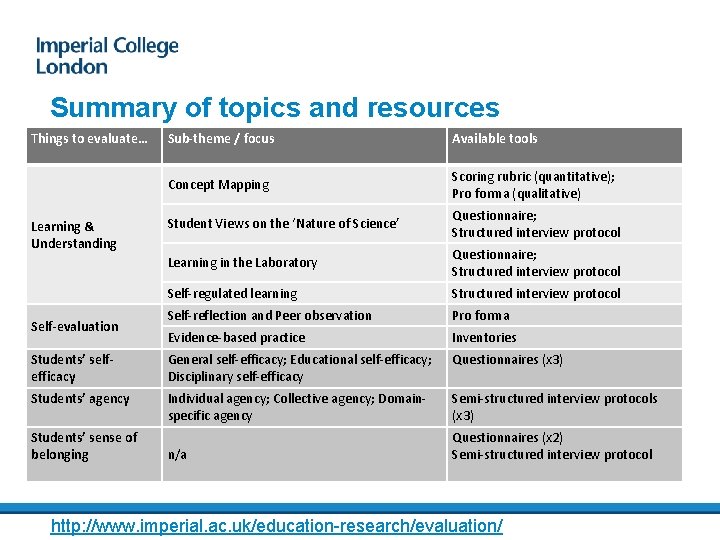
Summary of topics and resources Things to evaluate… Sub-theme / focus Available tools Concept Mapping Scoring rubric (quantitative); Pro forma (qualitative) Student Views on the ‘Nature of Science’ Questionnaire; Structured interview protocol Learning in the Laboratory Questionnaire; Structured interview protocol Self-regulated learning Structured interview protocol Self-reflection and Peer observation Pro forma Evidence-based practice Inventories Students’ selfefficacy General self-efficacy; Educational self-efficacy; Disciplinary self-efficacy Questionnaires (x 3) Students’ agency Individual agency; Collective agency; Domainspecific agency Semi-structured interview protocols (x 3) n/a Questionnaires (x 2) Semi-structured interview protocol Learning & Understanding Self-evaluation Students’ sense of belonging http: //www. imperial. ac. uk/education-research/evaluation/
Evaluation Approaches Review topics, tools and resources from the Curriculum Evaluation Matrix Page 2

3 9 / 5 2 9 / 2 0
From Evaluation to Research
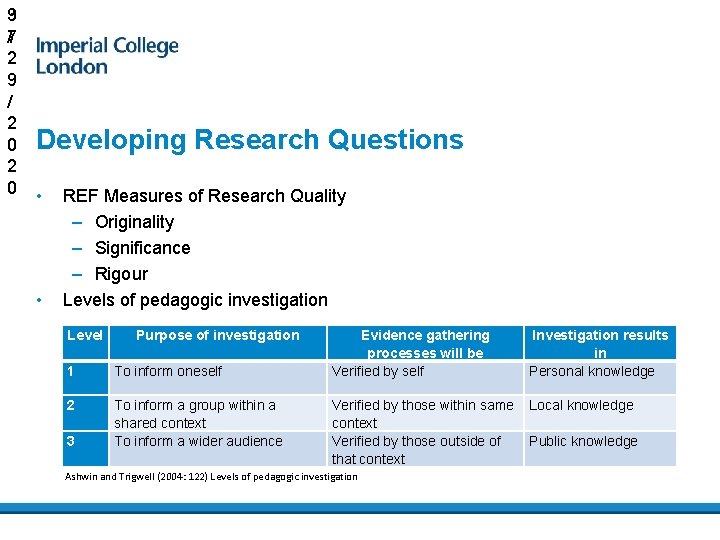
3 9 / 7 2 9 / 2 0 Developing Research Questions • • REF Measures of Research Quality – Originality – Significance – Rigour Levels of pedagogic investigation Level Purpose of investigation 1 To inform oneself 2 To inform a group within a shared context To inform a wider audience 3 Evidence gathering processes will be Verified by self Investigation results in Personal knowledge Verified by those within same context Verified by those outside of that context Local knowledge Ashwin and Trigwell (2004: 122) Levels of pedagogic investigation Public knowledge
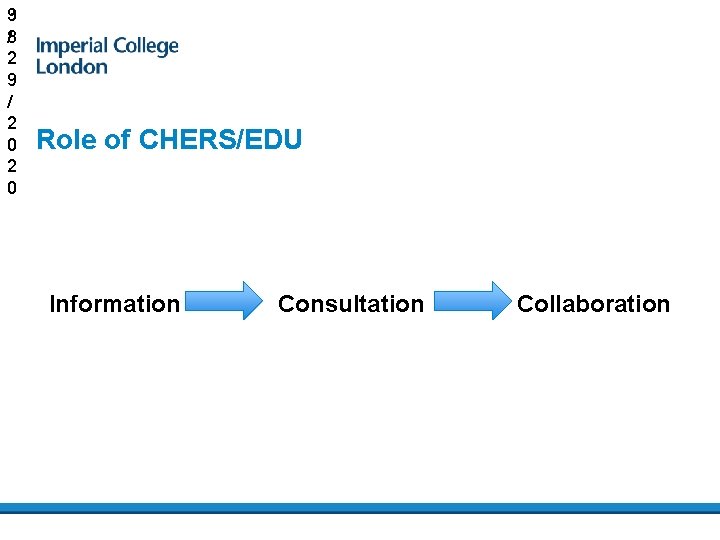
3 9 / 8 2 9 / 2 0 Role of CHERS/EDU Information Consultation Collaboration
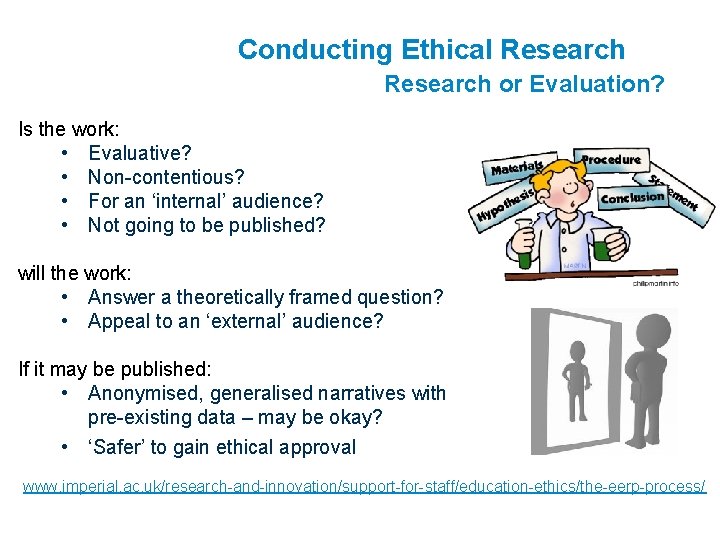
Conducting Ethical Research or Evaluation? Is the work: • Evaluative? • Non-contentious? • For an ‘internal’ audience? • Not going to be published? will the work: • Answer a theoretically framed question? • Appeal to an ‘external’ audience? If it may be published: • Anonymised, generalised narratives with pre-existing data – may be okay? • ‘Safer’ to gain ethical approval www. imperial. ac. uk/research-and-innovation/support-for-staff/education-ethics/the-eerp-process/
4 9 / 0 2 9 / 2 0 Summary of Resources • Evaluation Toolkit: https: //www. imperial. ac. uk/educationresearch/evaluation/toolkit-and-resources-for-evaluation/ • Strategic Planning Division • CHERS/EDU Staff • Ethics Template and Guidance • Drop-in sessions • Learning gain evaluation report https: //www. officeforstudents. org. uk/media/20 ffe 802 -9482 -4 f 55 -b 5 a 0 -6 c 18 ee 4 e 01 b 1/learning-gain-project-finalevaluation. pdf
4 1 Engage Students! • • Challenge students Support students Inform students Seek, ask and report on feedback Provide opportunities for students Hold students responsible Work WITH not FOR students
Thank you! Further enquiries contact: edu@imperial. ac. uk
- Slides: 42