
Education a strategic programme for change Anne Trotter

- Slides: 15
Education: a strategic programme for change Anne Trotter, Assistant Director: Education and Standards 27 January 2017
Objectives for today • To provide a brief overview of the education strategic programme • To indicate the next steps and proposed timeline for the review and development of future nurse standards for proficiency • To respond to initial questions on the education strategic programme • To identify related areas of work
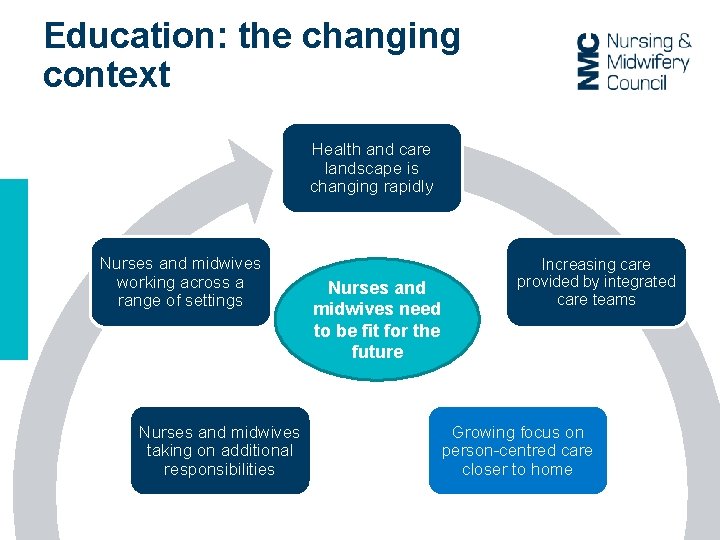
Education: the changing context Health and care landscape is changing rapidly Nurses and midwives working across a range of settings Nurses and midwives taking on additional responsibilities Nurses and midwives need to be fit for the future Increasing care provided by integrated care teams Growing focus on person-centred care closer to home
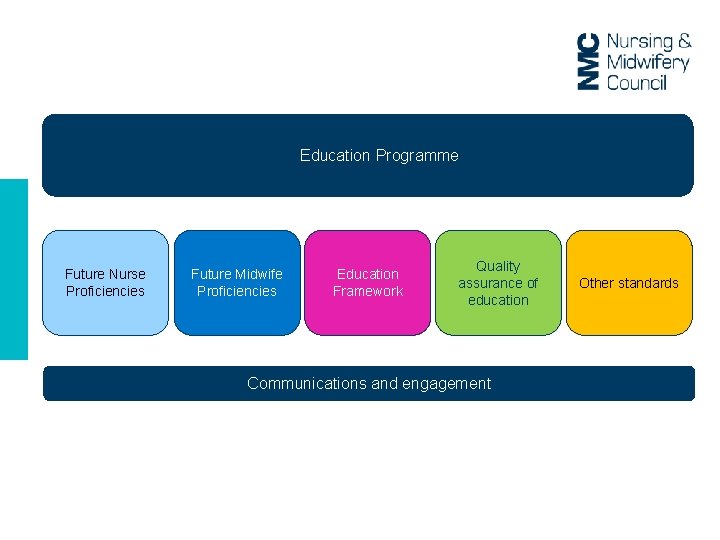
Education Programme Future Nurse Proficiencies Future Midwife Proficiencies Education Framework Quality assurance of education Communications and engagement Other standards
Future nurse proficiencies
Standards of proficiency for the future nurse We will separate standards for graduate registered nurses from the standards for institutions. The new standards will: • embrace the values set out in the Code • be outcomes focused and open to objective assessment • be sufficiently future proofed (2030 graduates) • be accessible to the public • be unambiguous, transparent and succinct
Reflections so far What do stakeholders want? • • Emphasis on production of nurses and midwives who are intelligent critical thinkers, leaders, able to work safely in a variety of settings (hospital, community, acute physical illness and mental health) in the future • Confident and competent in terms of “technical ability”, now What is the view of the current position? (IFF research) • • • Actual standards – content not controversial • Vulnerability around learning in practice • Insufficient clarity around technical skills at the point of registration Implications for: Standards for learning and assessment in practice, four fields issues, hours in practice, nature of preceptorship, interplay of this work with degree apprenticeships. Four countries issues.
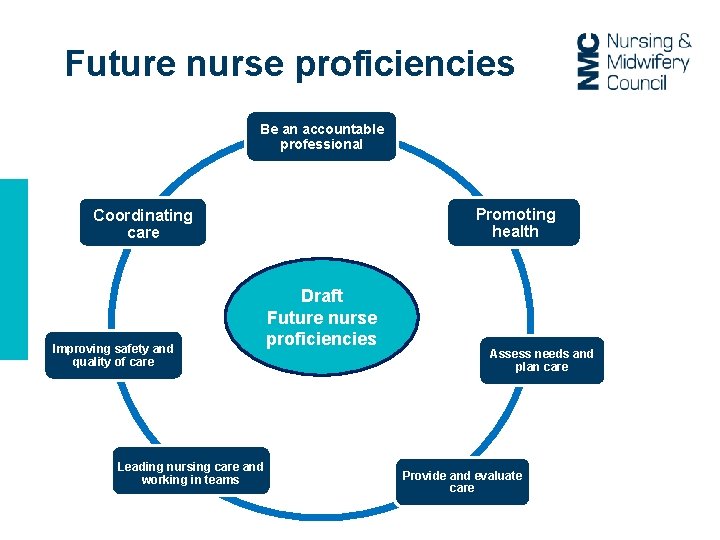
Future nurse proficiencies Be an accountable professional Promoting health Coordinating care Improving safety and quality of care Leading nursing care and working in teams Draft Future nurse proficiencies Assess needs and plan care Provide and evaluate care
Next steps • Currently undertaking independent user testing of draft future nurse proficiencies • Finalising the draft technical, procedural skills for the future nurse • Council will discuss and agree for standards to go out to consultation at their May 2017 meeting • Developing the programme requirements for Future Nurse
Education framework
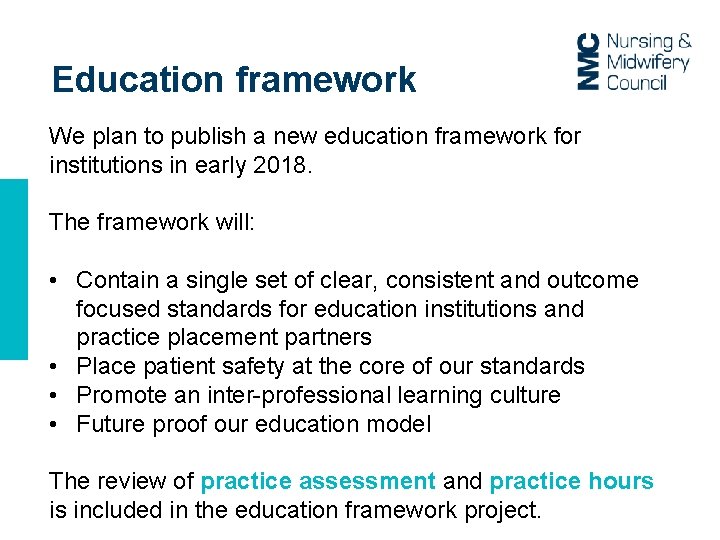
Education framework We plan to publish a new education framework for institutions in early 2018. The framework will: • Contain a single set of clear, consistent and outcome focused standards for education institutions and practice placement partners • Place patient safety at the core of our standards • Promote an inter-professional learning culture • Future proof our education model The review of practice assessment and practice hours is included in the education framework project.
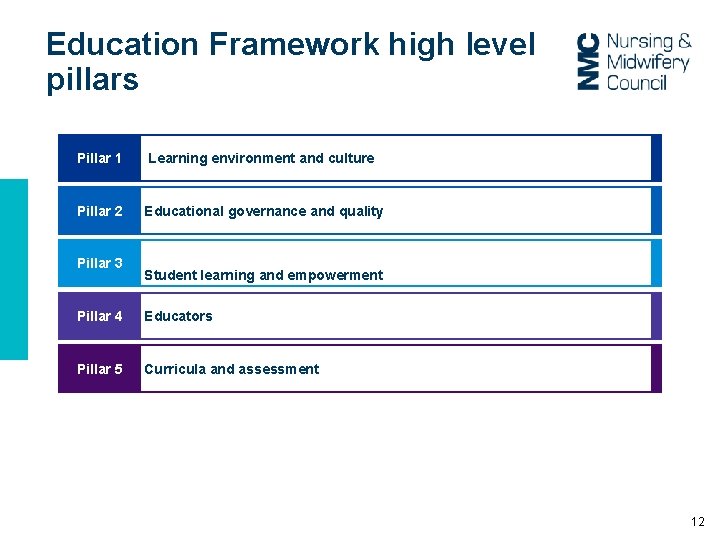
Education Framework high level pillars Pillar 1 Learning environment and culture Pillar 2 Educational governance and quality Pillar 3 Student learning and empowerment Pillar 4 Educators Pillar 5 Curricula and assessment 12
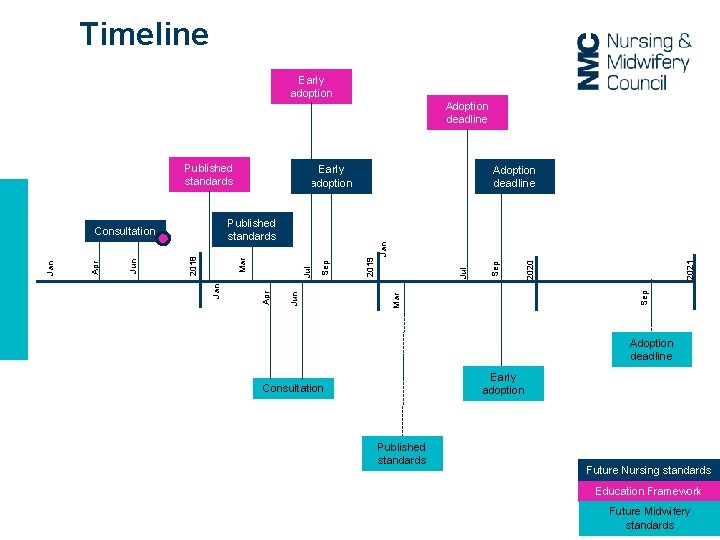
Timeline Early adoption Adoption deadline 2021 Sep Mar Jul 2020 Adoption deadline 2019 Jan Jul Jun Apr Jan Mar 2018 Jun Apr Sep Published standards Consultation Jan Early adoption Sep Published standards Adoption deadline Early adoption Consultation Published standards Future Nursing standards Education Framework Future Midwifery standards
Related items • Variety of routes within pre registration nursing programmes • Nurse degree apprenticeship • Nursing associates
Thank you and any questions? Anne. trotter@nmc-uk. org