
EDUCATING TO INTERCULTURAL DIALOGUE CONVEYING VALUES THROUGH FOLKTALES


- Slides: 21
EDUCATING TO INTERCULTURAL DIALOGUE CONVEYING VALUES THROUGH FOLKTALES
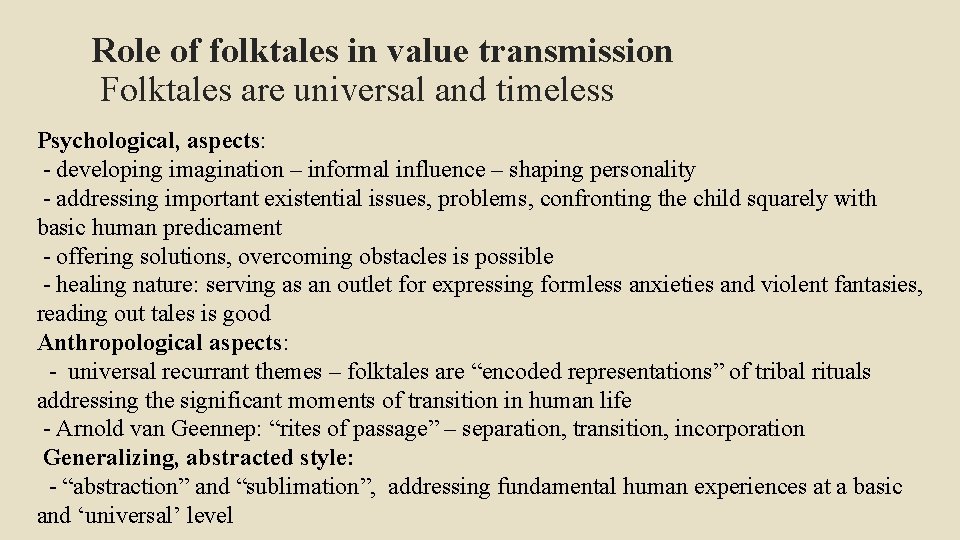
Role of folktales in value transmission Folktales are universal and timeless Psychological, aspects: - developing imagination – informal influence – shaping personality - addressing important existential issues, problems, confronting the child squarely with basic human predicament - offering solutions, overcoming obstacles is possible - healing nature: serving as an outlet for expressing formless anxieties and violent fantasies, reading out tales is good Anthropological aspects: - universal recurrant themes – folktales are “encoded representations” of tribal rituals addressing the significant moments of transition in human life - Arnold van Geennep: “rites of passage” – separation, transition, incorporation Generalizing, abstracted style: - “abstraction” and “sublimation”, addressing fundamental human experiences at a basic and ‘universal’ level
Role of folktales in value transmission Folktales are not universal and timeless • Paradox: • Folktales represent universal issues, which do not relate to time and place. • BUT: they take different forms at different times in different places, they speak powerfully of the times and places in which they have been told. They are historically bound. • They are effective ways of conveying the knowledge, the values, customs, traditions, the cultural heritage of the previous generations.
Intercultural dialogue Responsibility of educational institutions • To help students become aware of their own roots, cultural heritage, to provide points of reference which allow them to define their own personal place in the world. • To provide students with the necessary theoretical and practical tools so as they can acquire knowledge of the values of other cultures, traditions, and encourage them to open towards people possessing different cultural heritage.
Tale Project Winchester University – Apor Vilmos Catholic College
Objectives of the Project • To do research on tales which are popular both in the UK and in Hungary but exist in different versions. • To analyze these tales comparing tale motifs, meanings, plots, characters, settings, finding similarities and differences • To emphasize intercultural aspects of folk tale tradition through investigating similarities and difference • To identify the national characteristics emerging in the tales, and enhancing knowledge about the British and Hungarian culture • To examine universal values common truths while simultaneously addressing the specifics of the tales as historically aand culturally bound.
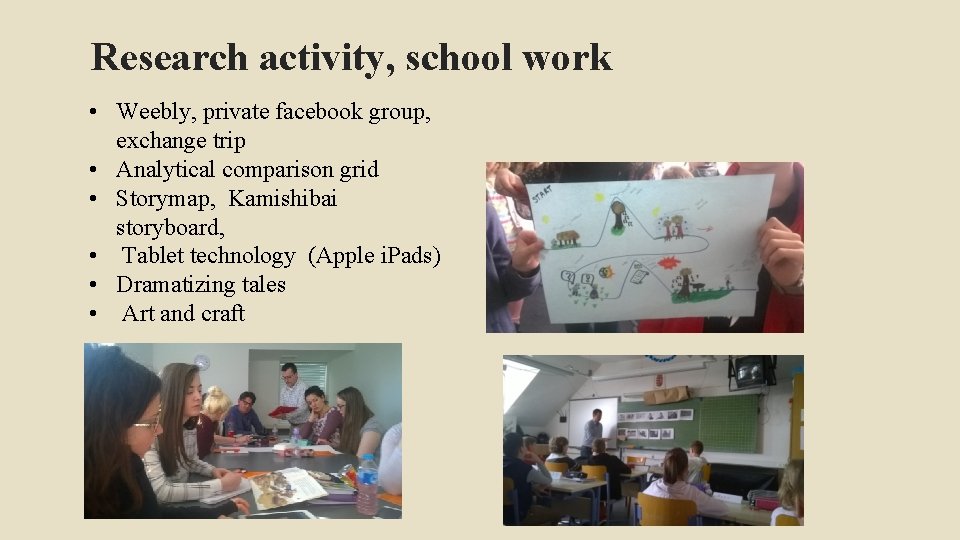
Research activity, school work • Weebly, private facebook group, exchange trip • Analytical comparison grid • Storymap, Kamishibai storyboard, • Tablet technology (Apple i. Pads) • Dramatizing tales • Art and craft
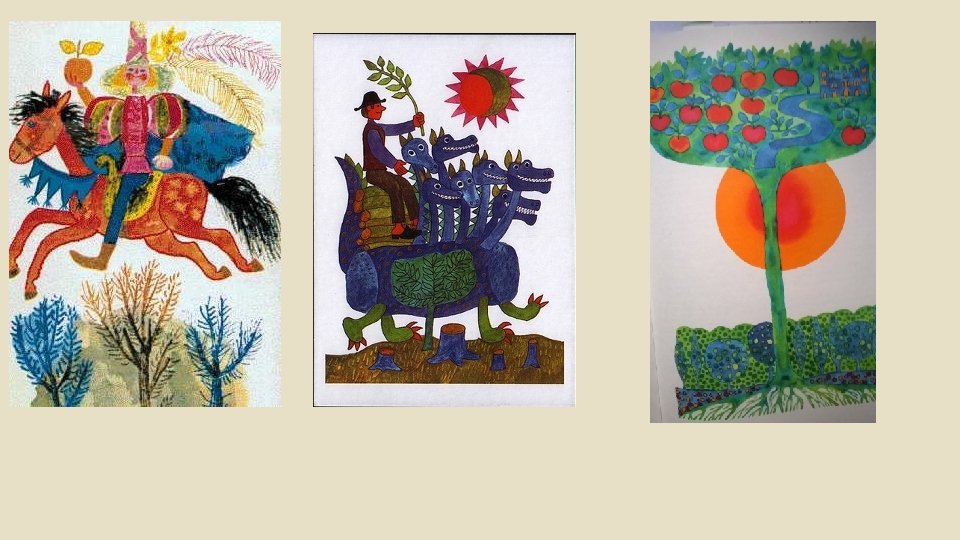
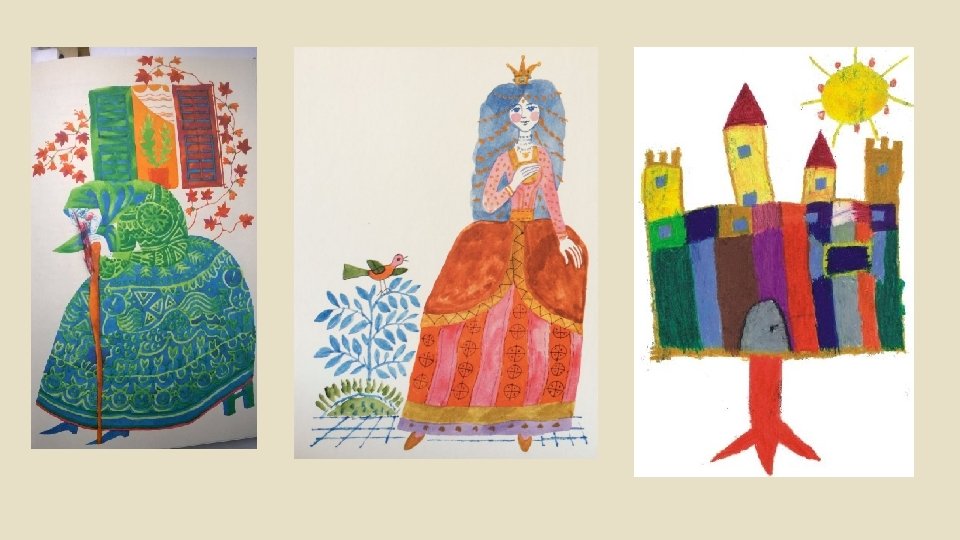
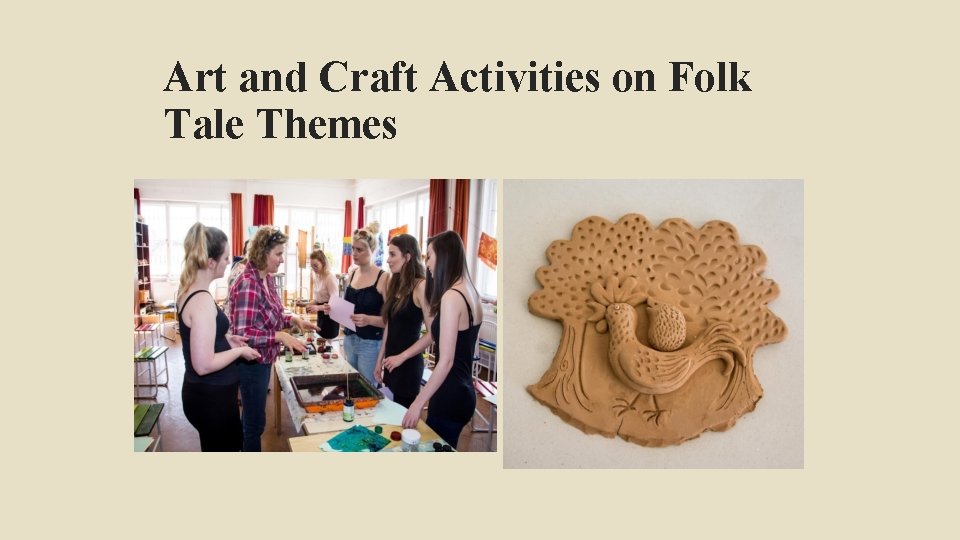
Art and Craft Activities on Folk Tale Themes
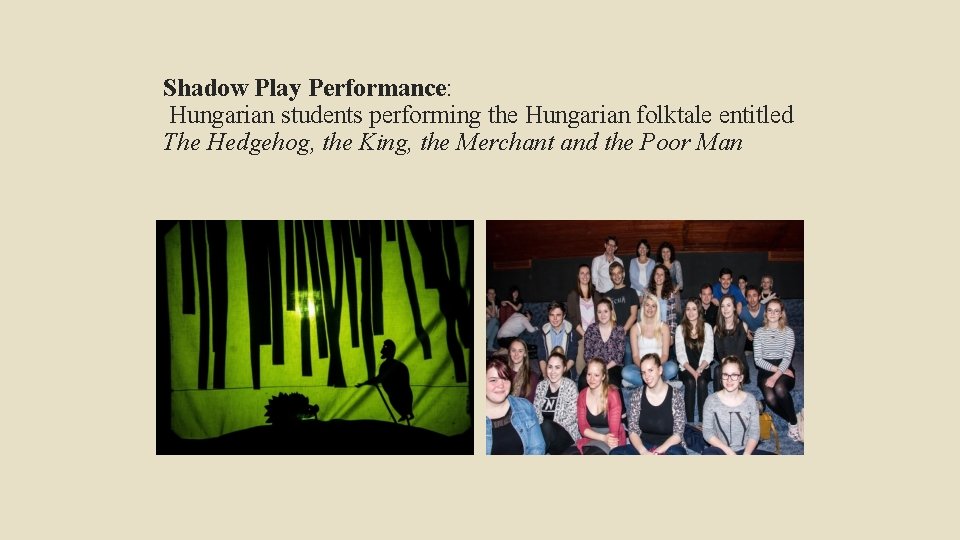
Shadow Play Performance: Hungarian students performing the Hungarian folktale entitled The Hedgehog, the King, the Merchant and the Poor Man
Formula tales Runaway food type folk tales (Tale type 2025) • Definition: the formula and the variation upon it become the basis of the act of storytelling itself. Plot is spare, functions merely as a basis for developing a narrative pattern, which is repeated (variations, additions) • Advantages, values: o Appeal to young children – simple plot, predictable, repetitive, rhythmical quality o A lot of cultural variants – developing intercultural competence o A lot of creative ways of pedagogical application
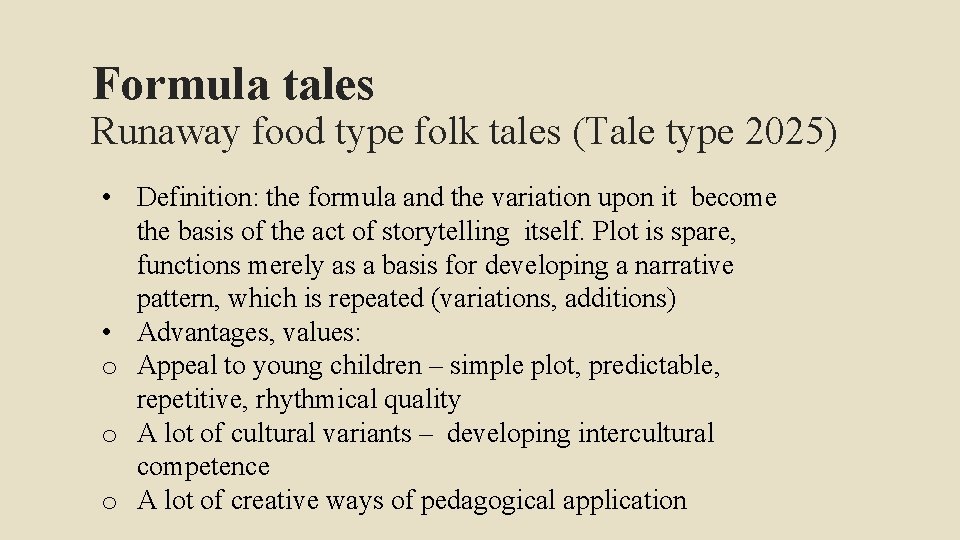
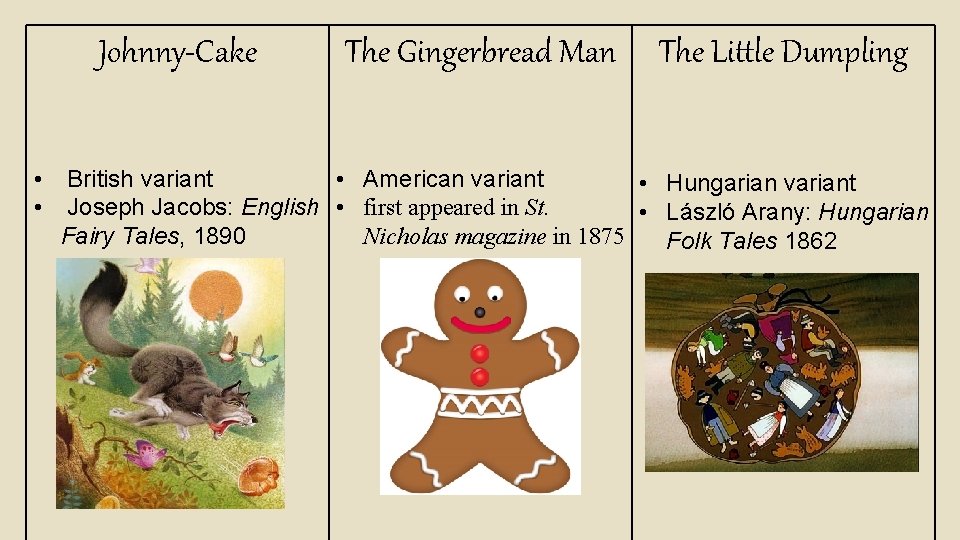
Johnny-Cake The Gingerbread Man The Little Dumpling • British variant • American variant • Hungarian variant • Joseph Jacobs: English • first appeared in St. • László Arany: Hungarian Nicholas magazine in 1875 Fairy Tales, 1890 Folk Tales 1862
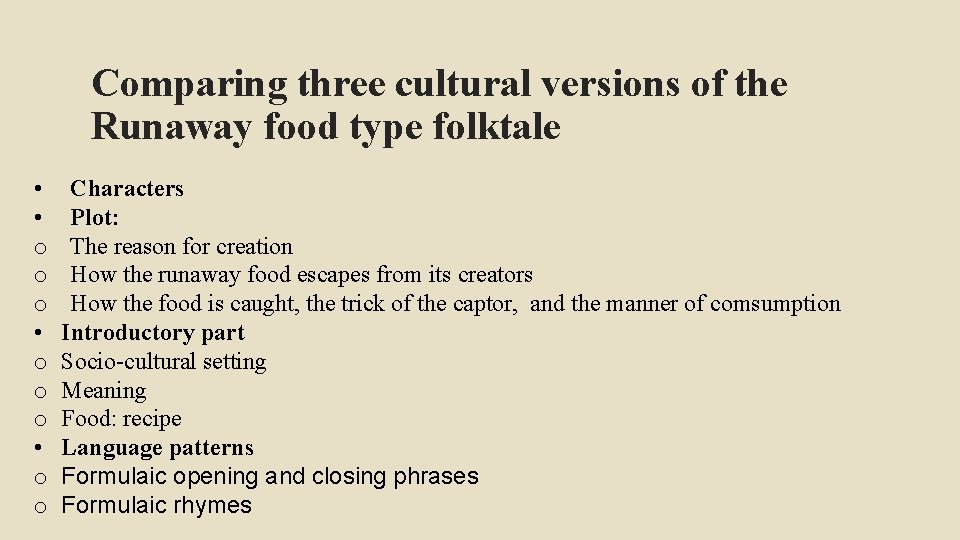
Comparing three cultural versions of the Runaway food type folktale • • o o o • o o Characters Plot: The reason for creation How the runaway food escapes from its creators How the food is caught, the trick of the captor, and the manner of comsumption Introductory part Socio-cultural setting Meaning Food: recipe Language patterns Formulaic opening and closing phrases Formulaic rhymes
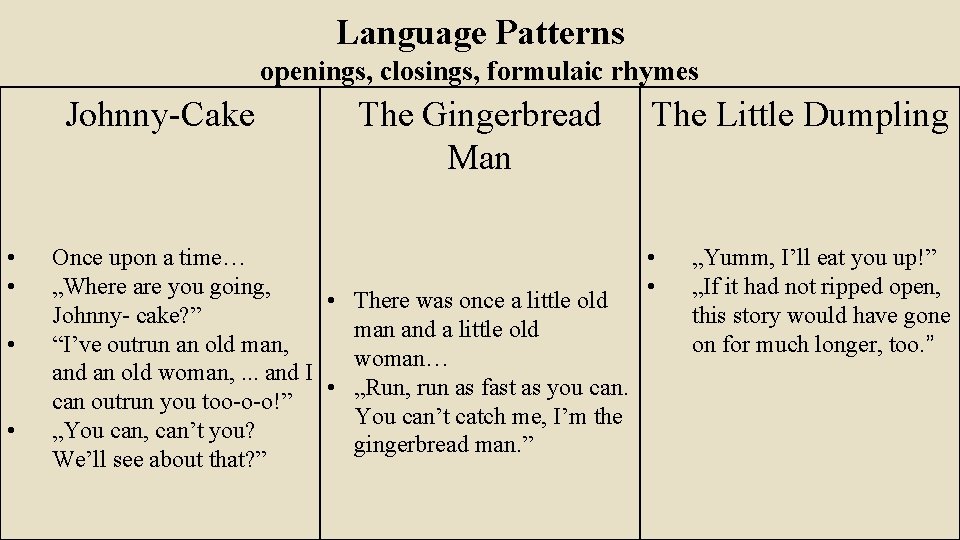
Language Patterns openings, closings, formulaic rhymes Johnny-Cake • • The Gingerbread Man The Little Dumpling Once upon a time… • „Where are you going, • • There was once a little old Johnny- cake? ” man and a little old “I’ve outrun an old man, woman… and an old woman, . . . and I • „Run, run as fast as you can outrun you too-o-o!” You can’t catch me, I’m the „You can, can’t you? gingerbread man. ” We’ll see about that? ” „Yumm, I’ll eat you up!” „If it had not ripped open, this story would have gone on for much longer, too. ”
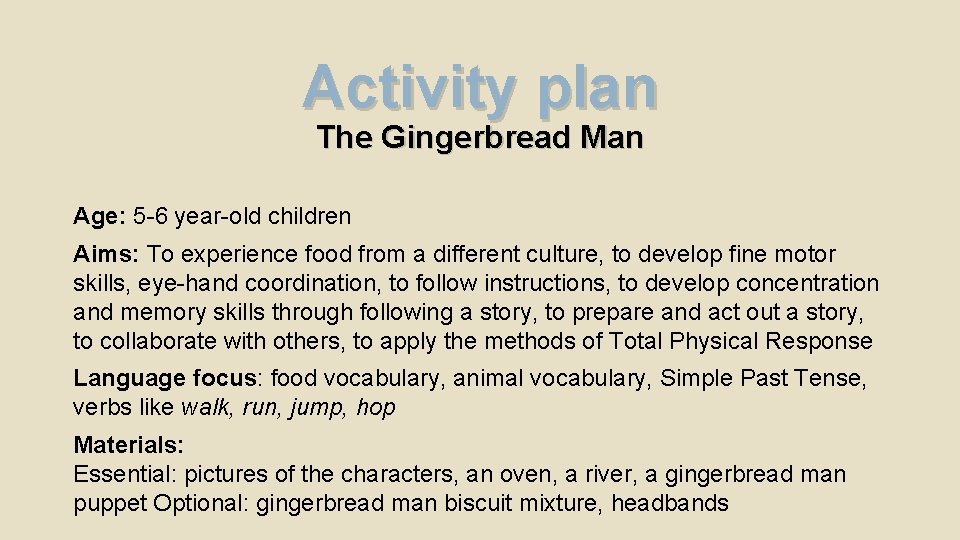
Activity plan The Gingerbread Man Age: 5 -6 year-old children Aims: To experience food from a different culture, to develop fine motor skills, eye-hand coordination, to follow instructions, to develop concentration and memory skills through following a story, to prepare and act out a story, to collaborate with others, to apply the methods of Total Physical Response Language focus: food vocabulary, animal vocabulary, Simple Past Tense, verbs like walk, run, jump, hop Materials: Essential: pictures of the characters, an oven, a river, a gingerbread man puppet Optional: gingerbread man biscuit mixture, headbands
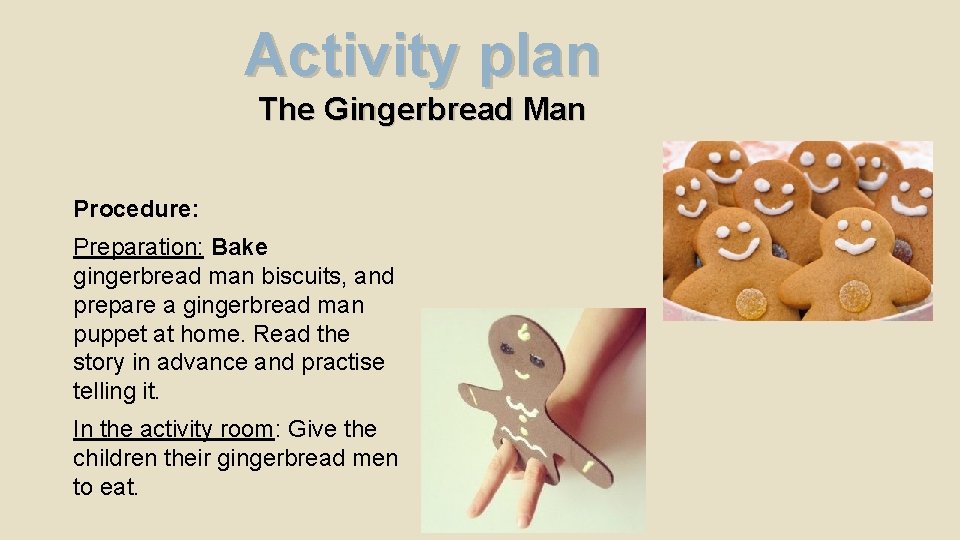
Activity plan The Gingerbread Man Procedure: Preparation: Bake gingerbread man biscuits, and prepare a gingerbread man puppet at home. Read the story in advance and practise telling it. In the activity room: Give the children their gingerbread men to eat.
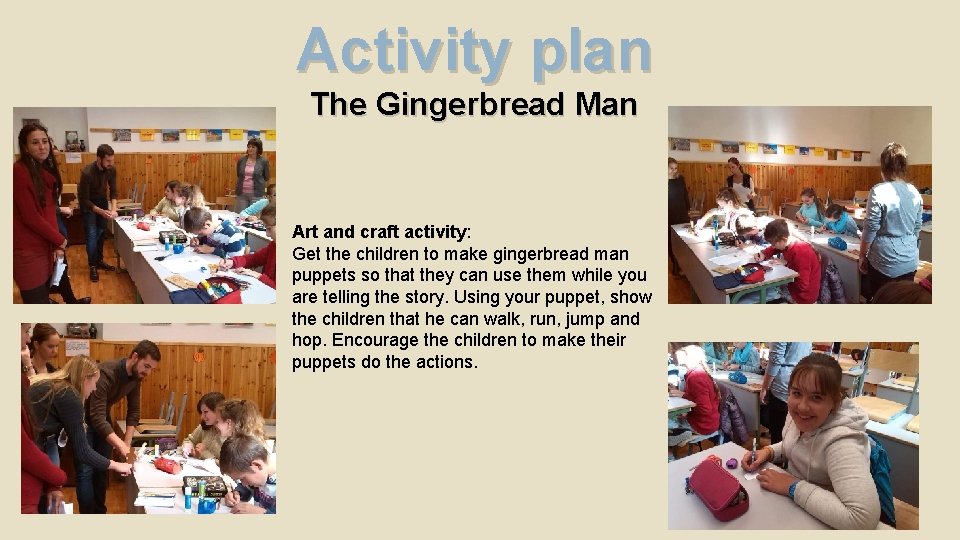
Activity plan The Gingerbread Man Art and craft activity: Get the children to make gingerbread man puppets so that they can use them while you are telling the story. Using your puppet, show the children that he can walk, run, jump and hop. Encourage the children to make their puppets do the actions.
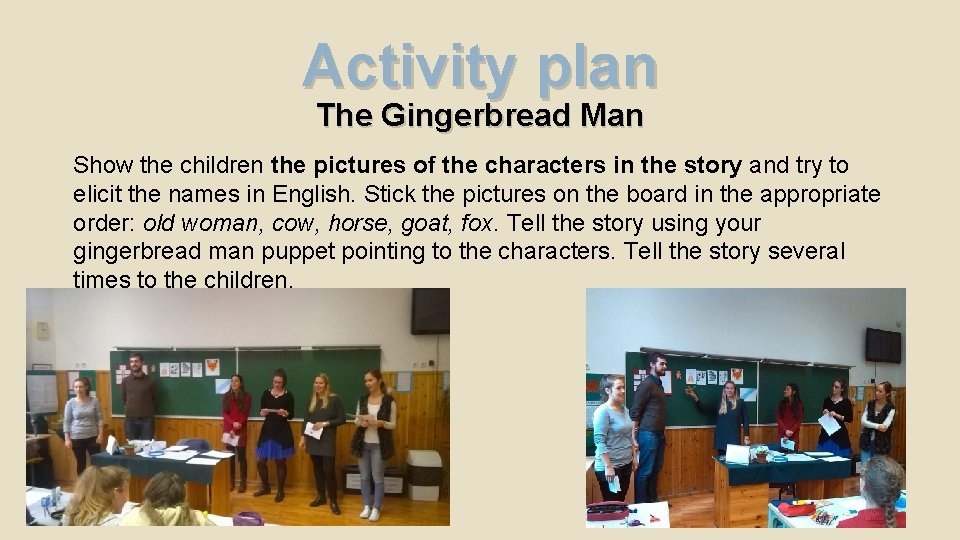
Activity plan The Gingerbread Man Show the children the pictures of the characters in the story and try to elicit the names in English. Stick the pictures on the board in the appropriate order: old woman, cow, horse, goat, fox. Tell the story using your gingerbread man puppet pointing to the characters. Tell the story several times to the children.
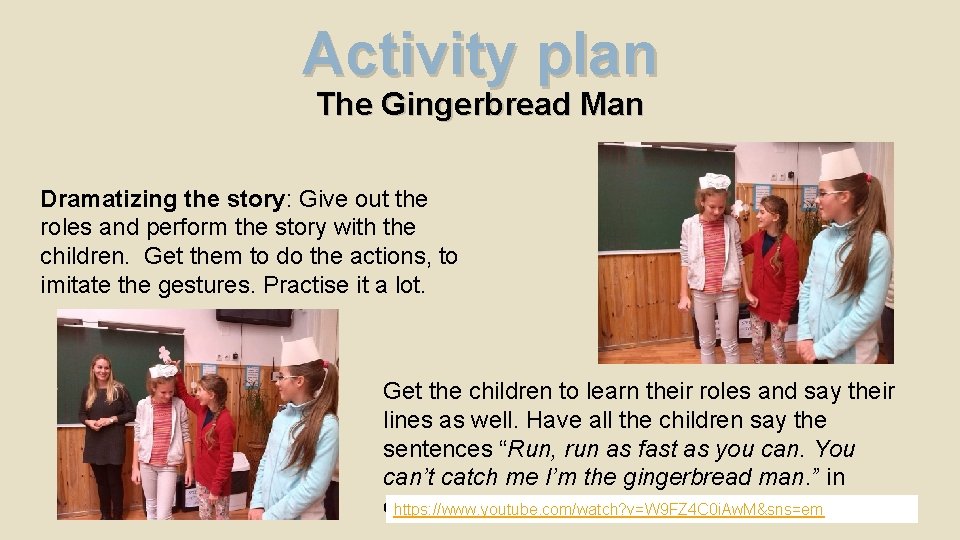
Activity plan The Gingerbread Man Dramatizing the story: Give out the roles and perform the story with the children. Get them to do the actions, to imitate the gestures. Practise it a lot. Get the children to learn their roles and say their lines as well. Have all the children say the sentences “Run, run as fast as you can. You can’t catch me I’m the gingerbread man. ” in chorus. https: //www. youtube. com/watch? v=W 9 FZ 4 C 0 i. Aw. M&sns=em
Thank you for your attention!