
Educating the mind without educating the heart is
- Slides: 19
“Educating the mind without educating the heart is no education at all”
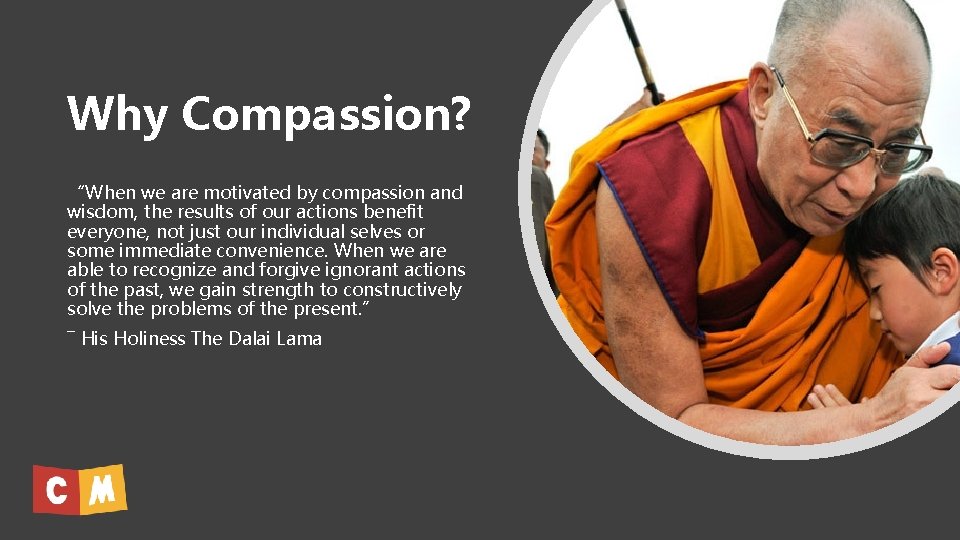
Why Compassion? “When we are motivated by compassion and wisdom, the results of our actions benefit everyone, not just our individual selves or some immediate convenience. When we are able to recognize and forgive ignorant actions of the past, we gain strength to constructively solve the problems of the present. ” ― His Holiness The Dalai Lama
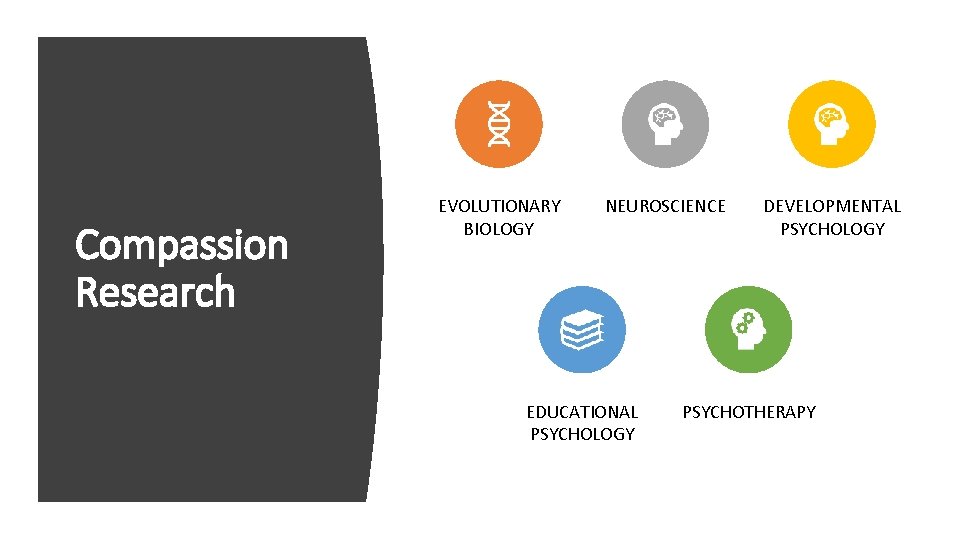
Compassion Research EVOLUTIONARY BIOLOGY NEUROSCIENCE EDUCATIONAL PSYCHOLOGY DEVELOPMENTAL PSYCHOLOGY PSYCHOTHERAPY
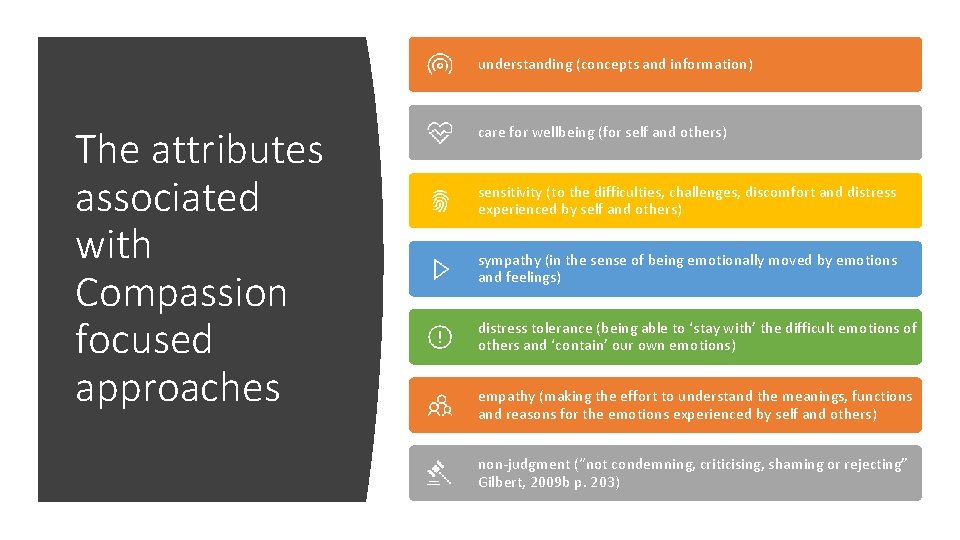
understanding (concepts and information) The attributes associated with Compassion focused approaches care for wellbeing (for self and others) sensitivity (to the difficulties, challenges, discomfort and distress experienced by self and others) sympathy (in the sense of being emotionally moved by emotions and feelings) distress tolerance (being able to ‘stay with’ the difficult emotions of others and ‘contain’ our own emotions) empathy (making the effort to understand the meanings, functions and reasons for the emotions experienced by self and others) non-judgment (“not condemning, criticising, shaming or rejecting” Gilbert, 2009 b p. 203)
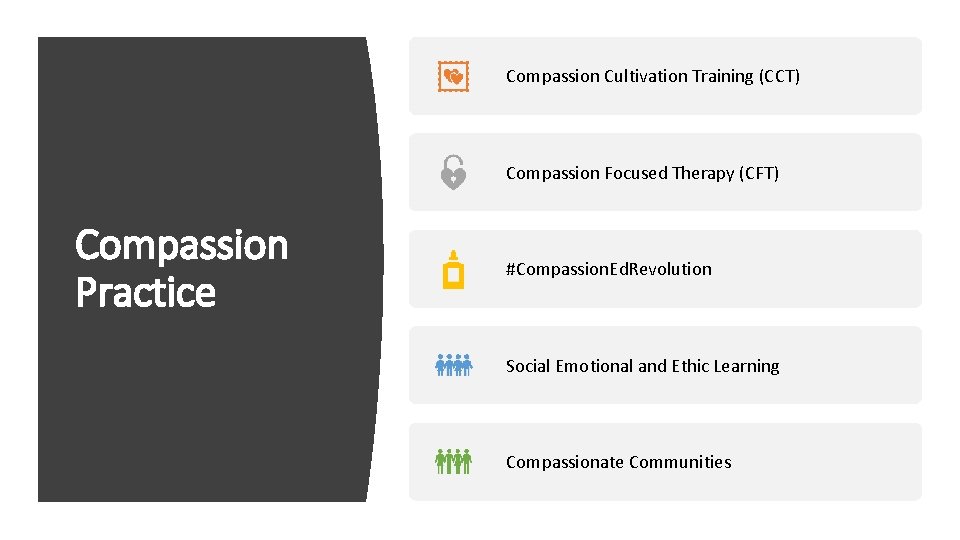
Compassion Cultivation Training (CCT) Compassion Focused Therapy (CFT) Compassion Practice #Compassion. Ed. Revolution Social Emotional and Ethic Learning Compassionate Communities
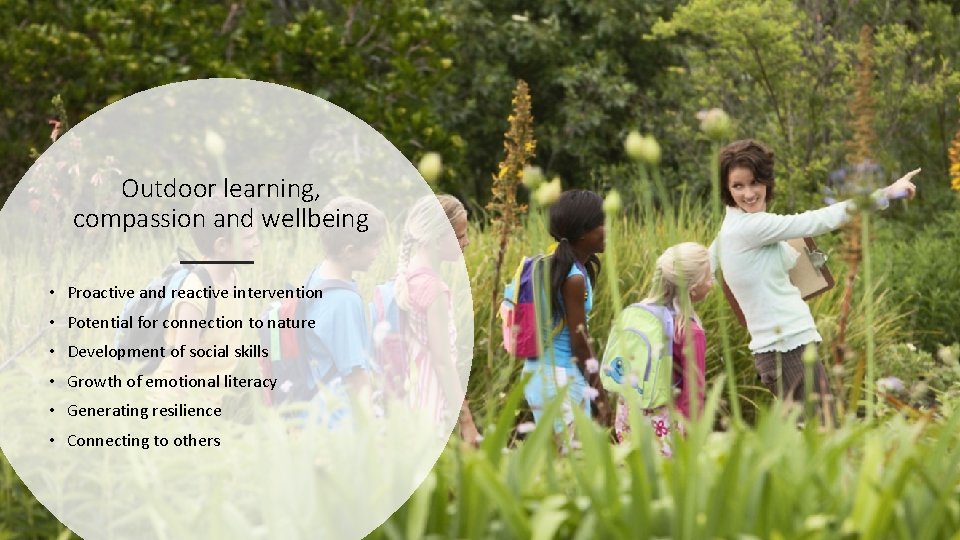
Outdoor learning, compassion and wellbeing • Proactive and reactive intervention • Potential for connection to nature • Development of social skills • Growth of emotional literacy • Generating resilience • Connecting to others
Connection to nature Nature Connectedness Research Group at The University of Derby • 30 days of Wild • Pathways to Nature • Wellbeing (https: //www. derby. ac. uk/research/about-our-research/centres -groups/nature-connectedness-research-group/) Dispositional empathy in nature- Kim Pong-Tam (https: //www. researchgate. net/publication/259646102_Dispos itional_empathy_with_nature) Spending at least 120 minutes a week in nature is associated with good health and wellbeing- Matthew White (https: //www. nature. com/articles/s 41598 -019 -44097 -3) Renewal: How Nature Awakens Our Creativity, Compassion, and Joy- Andrés R Edwards
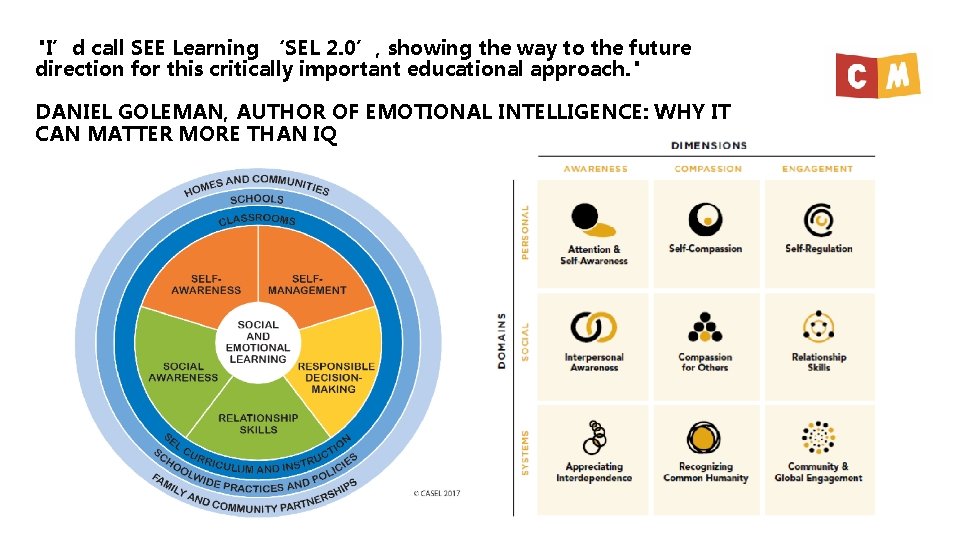
"I’d call SEE Learning ‘SEL 2. 0’, showing the way to the future direction for this critically important educational approach. " DANIEL GOLEMAN, AUTHOR OF EMOTIONAL INTELLIGENCE: WHY IT CAN MATTER MORE THAN IQ • Based on the work of CASEL (Collaborative for Academic, Social and Emotional Learning. • Intellectual, emotional and action focused engagement • Early intervention by design • Support skills development, awareness and positive trait building • Exploratory, discussion based and accessible • Cross curricular or distinct • Flexible in delivery
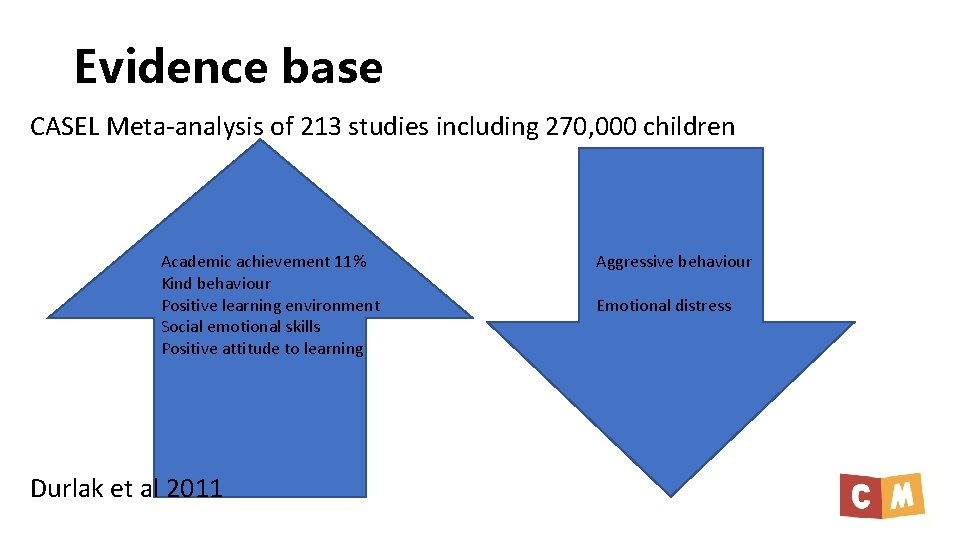
Evidence base CASEL Meta-analysis of 213 studies including 270, 000 children Academic achievement 11% Kind behaviour Positive learning environment Social emotional skills Positive attitude to learning Durlak et al 2011 Aggressive behaviour Emotional distress
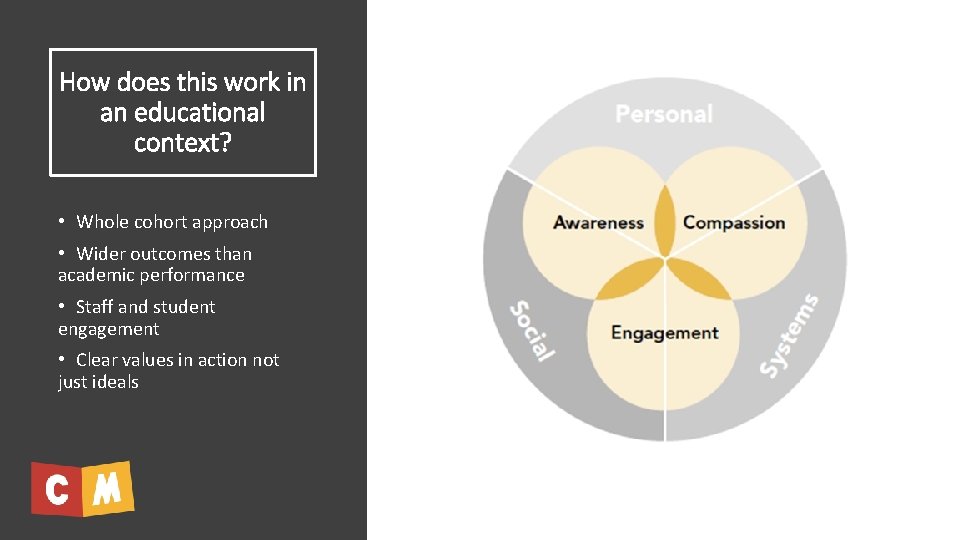
How does this work in an educational context? • Whole cohort approach • Wider outcomes than academic performance • Staff and student engagement • Clear values in action not just ideals
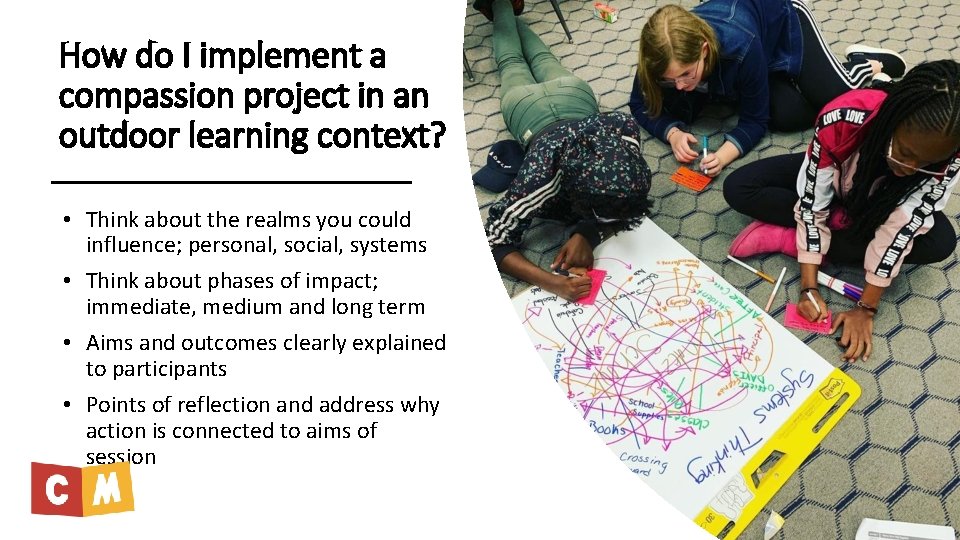
How do I implement a compassion project in an outdoor learning context? • Think about the realms you could influence; personal, social, systems • Think about phases of impact; immediate, medium and long term • Aims and outcomes clearly explained to participants • Points of reflection and address why action is connected to aims of session
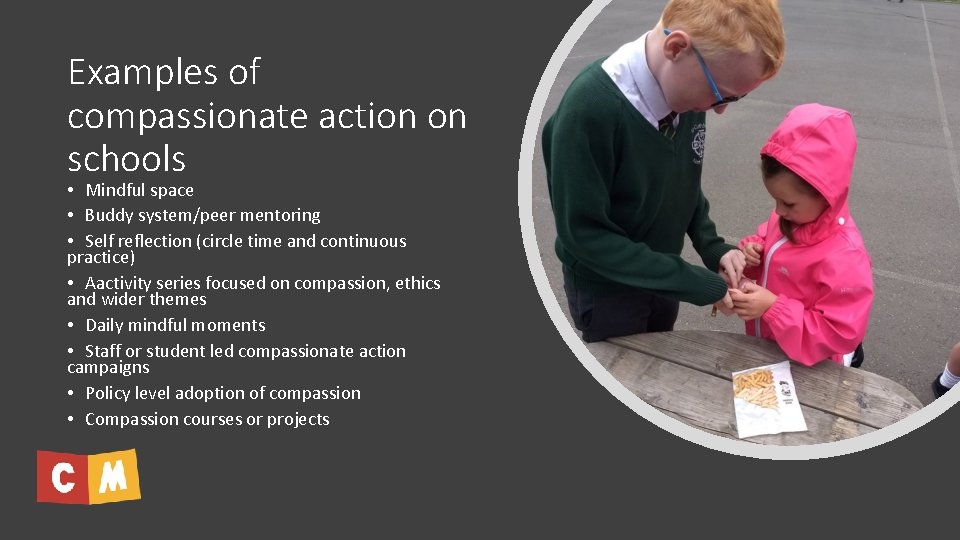
Examples of compassionate action on schools • Mindful space • Buddy system/peer mentoring • Self reflection (circle time and continuous practice) • Aactivity series focused on compassion, ethics and wider themes • Daily mindful moments • Staff or student led compassionate action campaigns • Policy level adoption of compassion • Compassion courses or projects
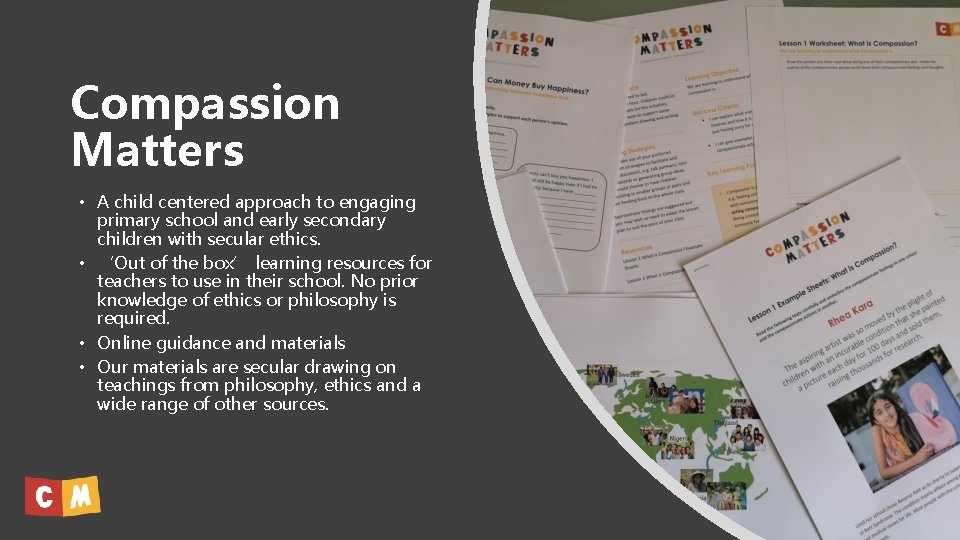
Compassion Matters • A child centered approach to engaging primary school and early secondary children with secular ethics. • ‘Out of the box’ learning resources for teachers to use in their school. No prior knowledge of ethics or philosophy is required. • Online guidance and materials • Our materials are secular drawing on teachings from philosophy, ethics and a wide range of other sources.
The Course Our five modules currently explore: • Compassion • Courage • Wisdom • Happiness • Justice (in development) with more planned in the future… • Can be delivered across an academic year • Materials can be delivered in assembly, informal discussion, lessons (PSHE). • Informal materials (debate starters, ideas for reflection, action prompts between lesson).
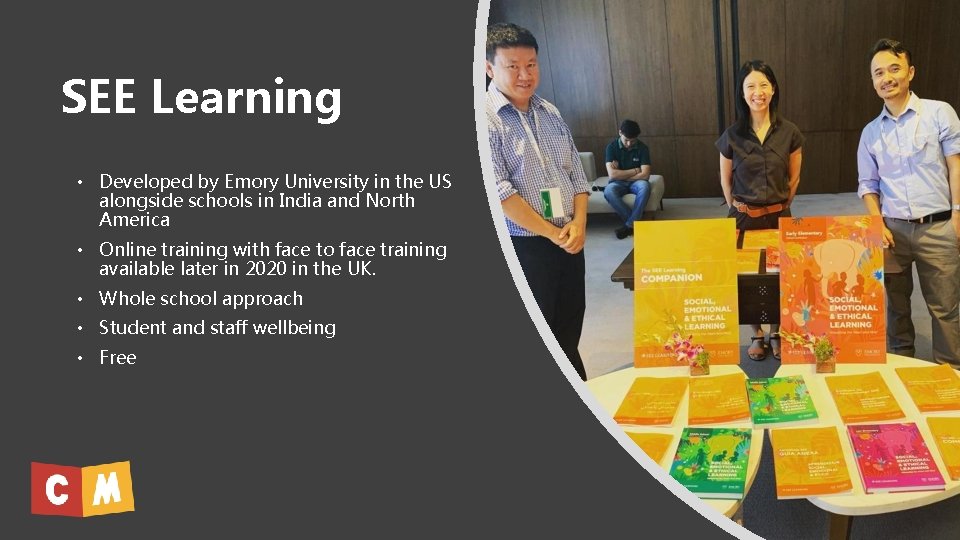
SEE Learning provides educators with the tools they need to foster the development of emotional, social, and ethical intelligence for students and themselves. SEE Learning™ represents the state of the art in education by enhancing SEL programming with key additional components, including: • Attention training • Compassion and ethical discernment • Systems thinking • Resilience and trauma-informed practice Three phases of education: • Early Elementary (5 -8 years old) • Late Elementary (8 -12 years old) • High School (13 years old +) to be released in Sep 19
SEE Learning • Developed by Emory University in the US alongside schools in India and North America • Online training with face to face training available later in 2020 in the UK. • Whole school approach • Student and staff wellbeing • Free
Weare, K (2003)https: //www. researchgate. net/publication/242610650_What_Works_in_Developing_Children's_Emotional_and_Social_Competence_and_Wellbein g Gilbert, P (2009 a) The Compassionate Mind. London: Robinson Gilbert, P (2009 b) Introducing compassion-focused therapy. Advances in psychiatric treatment. 15. pp. 199 -208 https: //www. cambridge. org/core/journals/advances-in-psychiatric-treatment/article/introducing-compassionfocusedtherapy/ECBC 8 B 7 B 87 E 90 ABB 58 C 4530 CDEE 04088 Gilbert, P (2017) Living like crazy. York: Annwyn House Gilbert, P (2018) Compassion is an antidote to cruelty. The Psychologist. Vol: 33. pp. 36 -39 https: //thepsychologist. bps. org. uk/volume-2018/february 2018/compassion-antidote-cruelty References Gilbert, P. , & Choden (2013) Mindful Compassion: Using the Power of Mindfulness and Compassion to Transform our Lives. London: Robinson Irons, C (2014) Compassion: Evolutionary understandings and the development of Compassion Focused Therapy (CFT). Royal College of Psychiatrists. pp. 1 -9 https: //www. rcpsych. ac. uk/docs/default-source/members/sigs/spirituality-spsig/spirituality-special-interest-group-publications-chris-irons-compassionevolutionary-understandings-and-cft. pdf? sfvrsn=d 23087 fb_2 Irons, C. , & Beaumont, E (2017) Then Compassionate Mind Workbook: A step-by-step guide to developing the compassionate self. London: Robinson Welford (2015) Case study: A compassion-based approach to pupil and staff wellbeing http: //www. sec-ed. co. uk/best-practice/case-study-a-compassionbased-approach-to-pupil-and-staff-wellbeing-1/ Welford (2019) Compassion in the classroom http: //www. sec-ed. co. uk/best-practice/compassion-in-the-classroom/ Martos, F. , Montague, J. , Ashra, H. , Welford, M. , Wood, W. , Barnes, C. , Sheffield. , Gilbert, P. (2019) Evaluation of a Compassionate Mind Training Intervention with School Teachers and Support Staff. Mindfulness. pp. 1 -14 https: //link. springer. com/article/10. 1007/s 12671 -019 -01185 -9 Joseph L. Mahoney, Joseph A. Durlak, and Roger P. Weissberg (2018) An update on social and emotional learning outcome research https: //www. kappanonline. org/social-emotional-learning-outcome-research-mahoney-durlak-weissberg/
Thank you for considering Compassion Matters. For more information please do not hesitate to get in touch. www. compassion-matters. org https: //seelearning. emory. edu/ Jimi Slattery Executive Director jimi@compassion-matters. org 07584906379