
Educating the Adult Leaner What do we need
- Slides: 12
Educating the Adult Leaner: • What do we need to know? • How do we serve this population? • What retention techniques are available? Julio Vargas-Essex, M. A. , VP of Student Success at North Hennepin Community College Sylvia Alexander-Sedey, M. A. , Partnership Liaison Concordia University, St. Paul
Agenda: • What is an Adult Learner? • Where do we start? • What is a deficit mind frame? • Exemplary methods to educating the adult learner. • Retention – what does this look like?
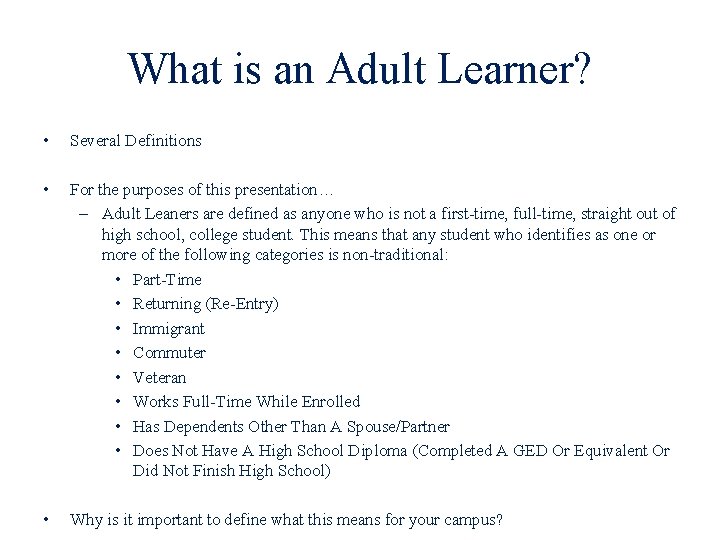
What is an Adult Learner? • Several Definitions • For the purposes of this presentation… – Adult Leaners are defined as anyone who is not a first-time, full-time, straight out of high school, college student. This means that any student who identifies as one or more of the following categories is non-traditional: • Part-Time • Returning (Re-Entry) • Immigrant • Commuter • Veteran • Works Full-Time While Enrolled • Has Dependents Other Than A Spouse/Partner • Does Not Have A High School Diploma (Completed A GED Or Equivalent Or Did Not Finish High School) • Why is it important to define what this means for your campus?
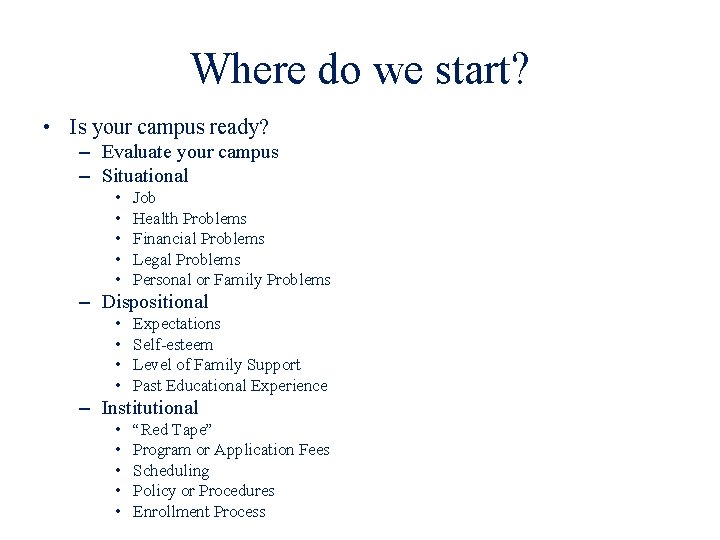
Where do we start? • Is your campus ready? – Evaluate your campus – Situational • • • Job Health Problems Financial Problems Legal Problems Personal or Family Problems – Dispositional • • Expectations Self-esteem Level of Family Support Past Educational Experience – Institutional • • • “Red Tape” Program or Application Fees Scheduling Policy or Procedures Enrollment Process
Where do we start? • Adult participation is shaped by access to program information; recruitment should be viewed as multifunctional process of drawing people into programs. • An institution must market programs effectively providing relevant and detailed information about programs. – Web-based – Printed – “Word-of Mouth”
What is a Deficit Mind Frame? • What do you believe is a deficit mind frame? • Have you unintentionally placed a deficit mind frame on a student?
Exemplary methods to educating the adult learner • Keep the lesson and curriculum applicable • Embrace students’ backgrounds • Incorporate emotions • Promote assessment • Make assignments convenient
Retention • Retention is not separate from recruitment!! • Academic Affairs – Faculty Training – Curriculum and Pedagogy adjustments (Competency and Adult Learner Theory) – Class Offerings • When do you offer classes? • How do you offer classes? – Intrusive Advising – Student Tracking and Communication - CRM – Partnership Programs – Career Exploration (Experiential Learning)
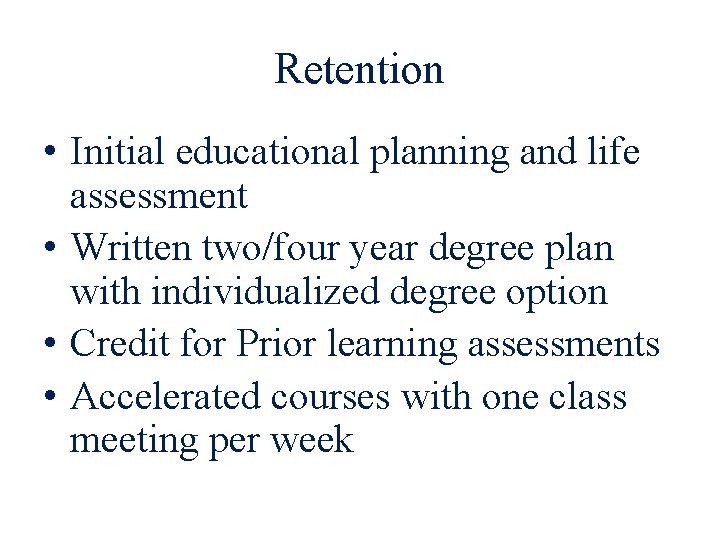
Retention • Initial educational planning and life assessment • Written two/four year degree plan with individualized degree option • Credit for Prior learning assessments • Accelerated courses with one class meeting per week
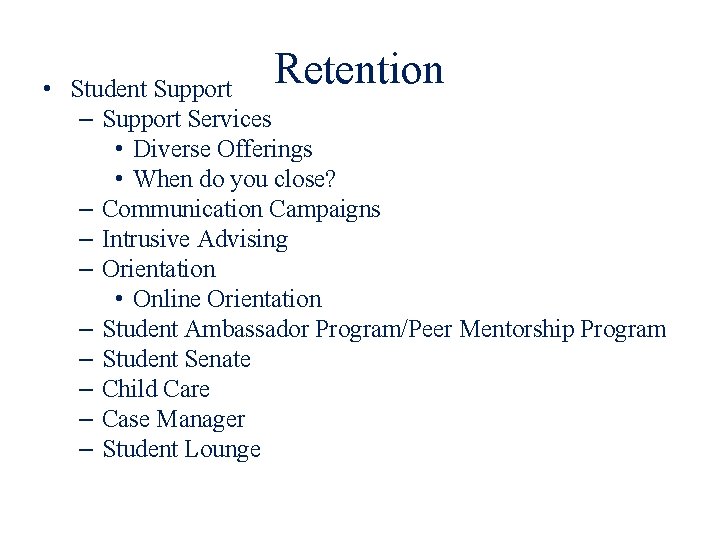
Retention • Student Support – Support Services • Diverse Offerings • When do you close? – Communication Campaigns – Intrusive Advising – Orientation • Online Orientation – Student Ambassador Program/Peer Mentorship Program – Student Senate – Child Care – Case Manager – Student Lounge
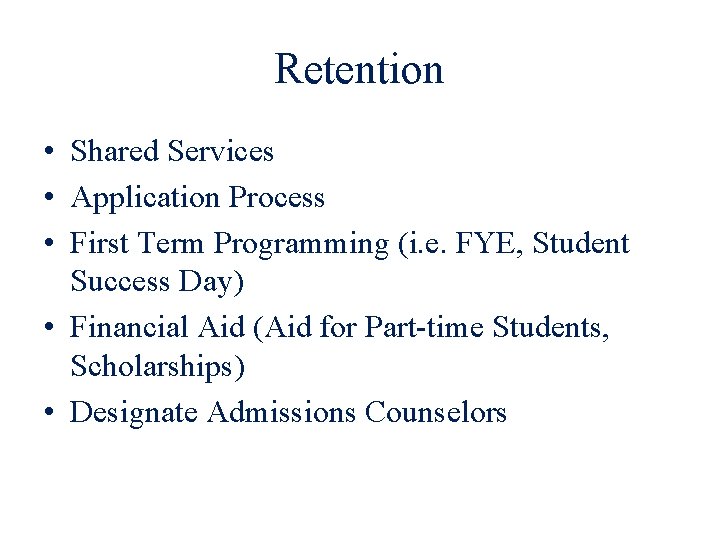
Retention • Shared Services • Application Process • First Term Programming (i. e. FYE, Student Success Day) • Financial Aid (Aid for Part-time Students, Scholarships) • Designate Admissions Counselors
Julio Vargas-Essex: • (763) 424 -0756 • JVargas. Essex@nhcc. edu Sylvia Alexander-Sedey: • (763) 232 -6420 • alexandersedey@csp. ed u