
Educate to Eradicate Benefits Disadvantages of Termites Benefits
Educate to Eradicate
Benefits & Disadvantages of Termites • Benefits • Decomposers Break down cellulose in wood Recycle nutrients into the environment • Food source for amphibians, reptiles, and birds • Disadvantages • Consumption of wooden houses = PESTS
Termites in Hawaii Scientific name Common name Neotermes connexus Snyder Forest tree drywood termite Incisitermes immigrans (Snyder) Lowland tree drywood termite Cryptotermes brevis (Walker) West Indian drywood termite Coptotermes formosanus Shiraki Formosan subterranean termite Cryptotermes cynocephalus Indo Malaysia drywood termite Incisitermes minor Western drywood termite Zootermopsis angusticollis Pacific dampwood termite Coptotermes vastator Philippine milk termite
Termite Types in Hawaii • Subterranean/Ground Termites Colony/Nest is found in the ground • Drywood Termites Colony/Nest is found in the wood that they eat
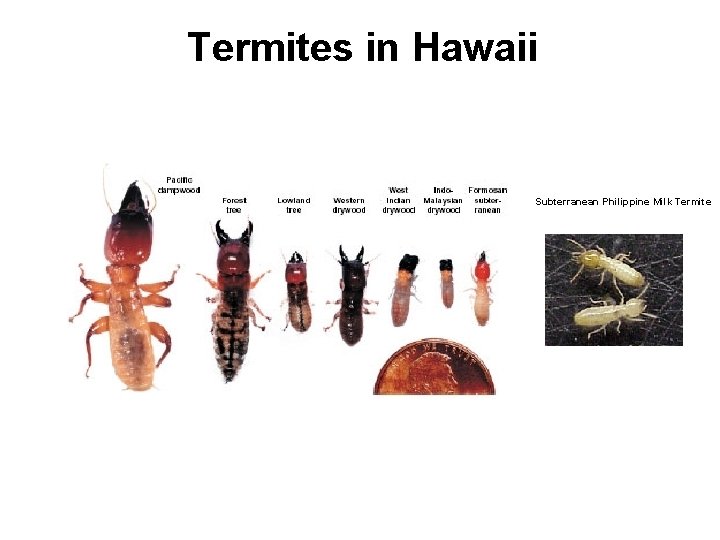
Termites in Hawaii Subterranean Philippine Milk Termite
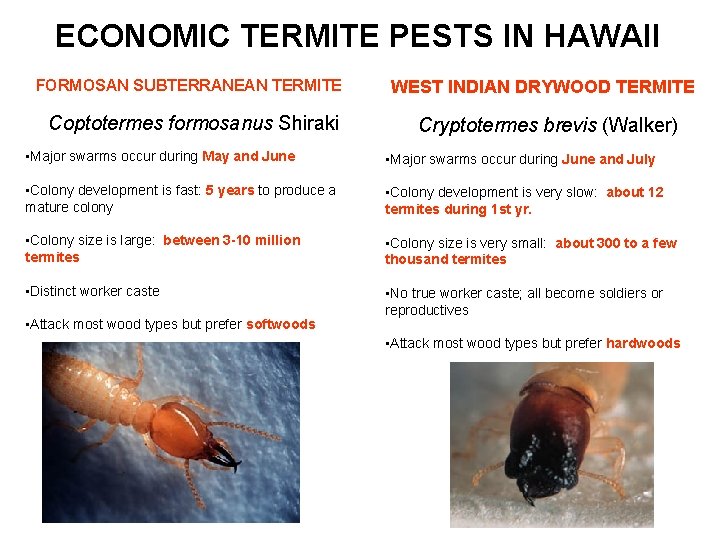
ECONOMIC TERMITE PESTS IN HAWAII FORMOSAN SUBTERRANEAN TERMITE Coptotermes formosanus Shiraki WEST INDIAN DRYWOOD TERMITE Cryptotermes brevis (Walker) • Major swarms occur during May and June • Major swarms occur during June and July • Colony development is fast: 5 years to produce a mature colony • Colony development is very slow: about 12 termites during 1 st yr. • Colony size is large: between 3 -10 million termites • Colony size is very small: about 300 to a few thousand termites • Distinct worker caste • No true worker caste; all become soldiers or reproductives • Attack most wood types but prefer softwoods • Attack most wood types but prefer hardwoods
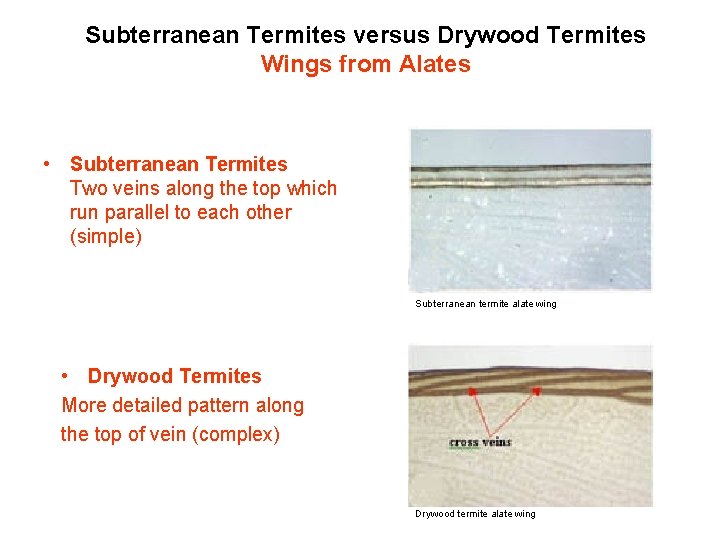
Subterranean Termites versus Drywood Termites Wings from Alates • Subterranean Termites Two veins along the top which run parallel to each other (simple) Subterranean termite alate wing • Drywood Termites More detailed pattern along the top of vein (complex) Drywood termite alate wing

Subterranean Termites versus Drywood Termites Excretions/Waste Material Subterranean Termites Leaves behind CARTON, resembling hard cardboard Drywood Termites Leaves behind FRASS resembling sand
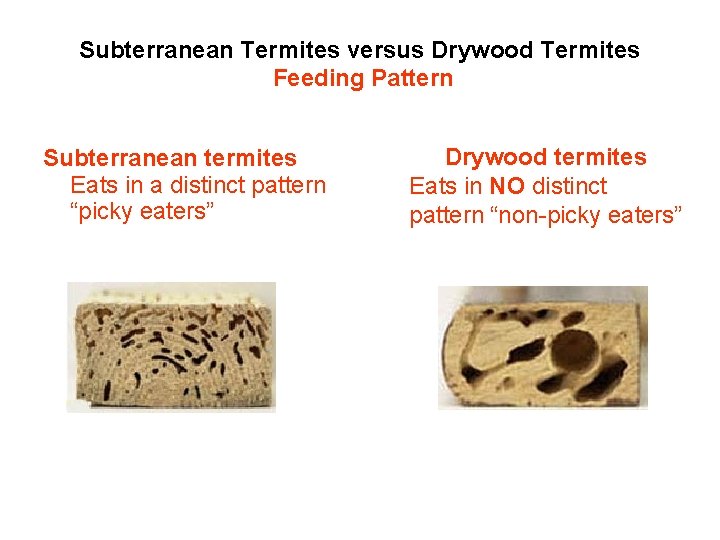
Subterranean Termites versus Drywood Termites Feeding Pattern Subterranean termites Eats in a distinct pattern “picky eaters” Drywood termites Eats in NO distinct pattern “non picky eaters”
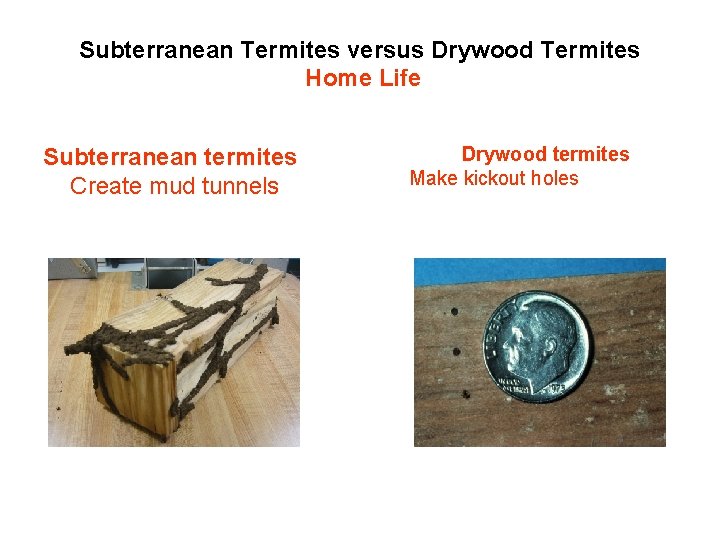
Subterranean Termites versus Drywood Termites Home Life Subterranean termites Create mud tunnels Drywood termites Make kickout holes
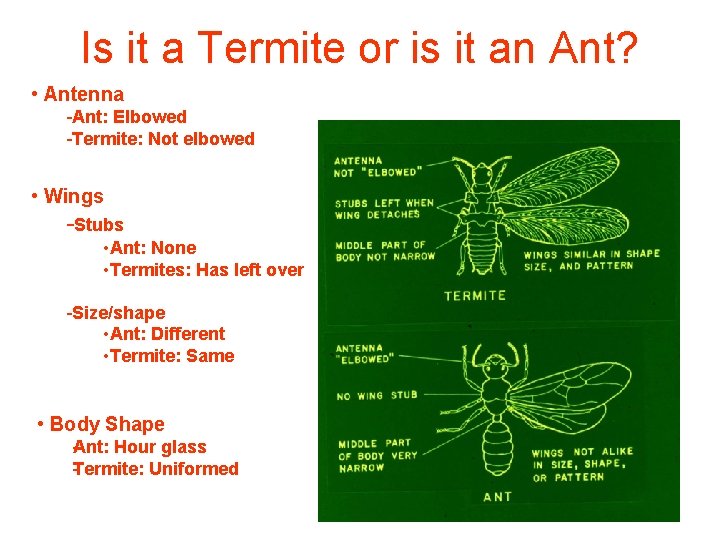
Is it a Termite or is it an Ant? • Antenna Ant: Elbowed Termite: Not elbowed • Wings Stubs • Ant: None • Termites: Has left over Size/shape • Ant: Different • Termite: Same • Body Shape nt: Hour glass A Termite: Uniformed
- Slides: 11