
EDUC 3270 Differentiation and Collaboration for Inclusive Teaching
EDUC 3270 Differentiation and Collaboration for Inclusive Teaching
Session 8 Creating a Classroom Environment That Promotes Positive Behavior Active Student Response
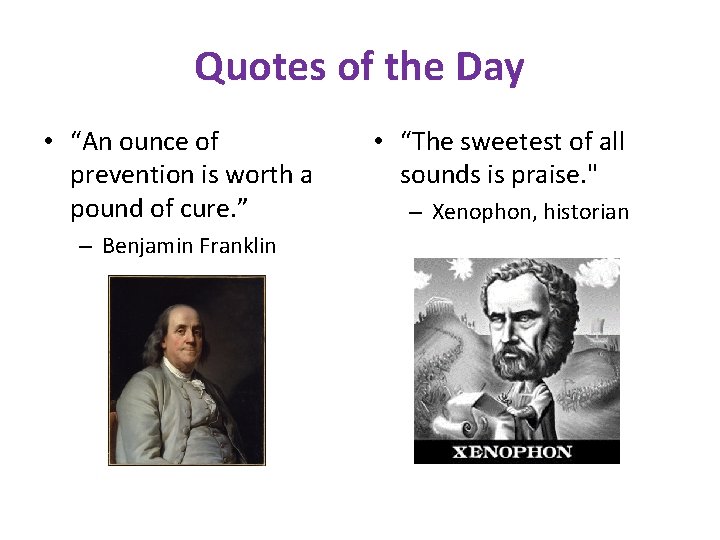
Quotes of the Day • “An ounce of prevention is worth a pound of cure. ” – Benjamin Franklin • “The sweetest of all sounds is praise. " – Xenophon, historian
Objectives: Students will be able to… • Outline ways to promote positive behavior and prevent or decrease misbehavior • Describe ways to respond to student misbehavior • Examine your own beliefs about student behaviors and how they may affect student actions
Think-Pair-Share • What student behaviors concern you most?
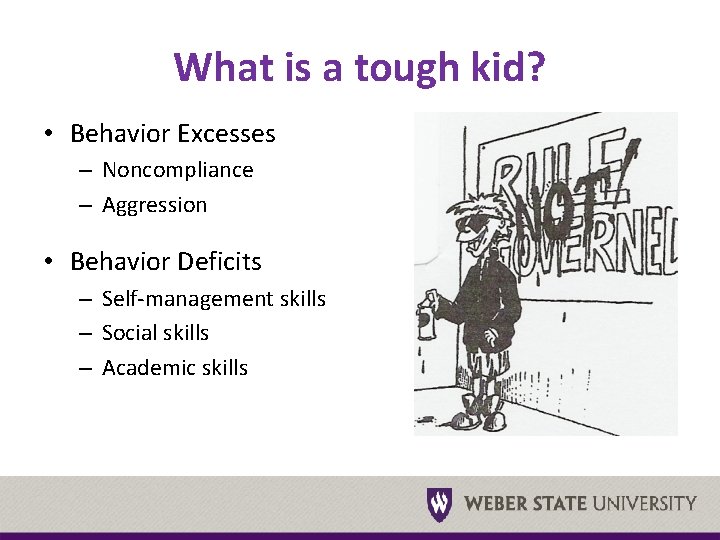
What is a tough kid? • Behavior Excesses – Noncompliance – Aggression • Behavior Deficits – Self-management skills – Social skills – Academic skills
Underlying Reasons for Behavior • Communication – The work is too hard, to easy, “I’m bored” • Environmental factors • Learned responses – Behaviors typically serve one of 3 main functions: To get something To escape or avoid something Stimulation
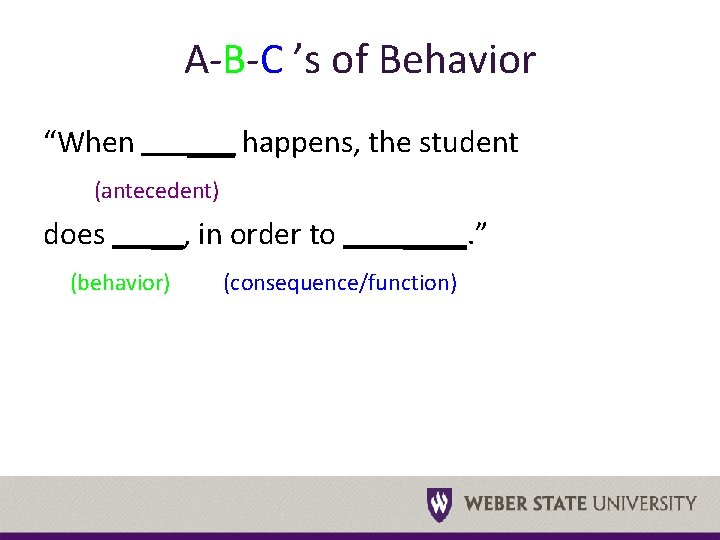
A-B-C ’s of Behavior “When ___ happens, the student (antecedent) does __, in order to (behavior) ____. ” (consequence/function)
Take into consideration a behavior’s antecedents and its consequences • Antecedents – An event that occurs prior to the behavior and increases or decreases its probability – Setting Events occur before the behavior but are removed from the actual environment • Behaviors – Covert or overt responses to antecedents • Consequences – Events or changes in the environment following a target behavior
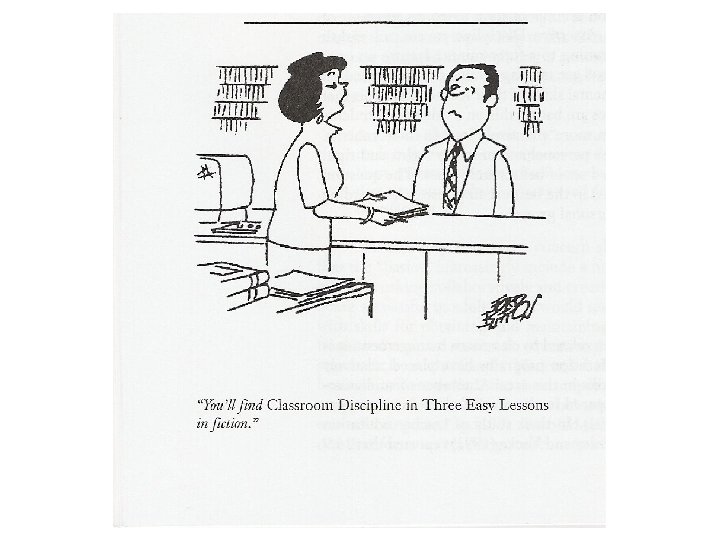
Disciplinary Actions. . . • Are more about learning and following a teacher, less about strict obedience • Are not about control and power, but about enabling students to reach potential • May be culturally biased, even unintentionally • Can be formal or informal
An Effective Learning-Based Environment Should • Establish clear classroom routines – Routines should be established for beginning school day, transitioning, ending the day • • • Establish clear classroom rules Use effective communication Establish rapport between teacher & students Develop student self-esteem Employ classroom design strategies
Establish Clear Classroom Routines Consider scheduling alternatives Help students make transitions • Establish procedures for when students miss work or assignments due to being pulled out for services • Can be difficult for students • Use visual or object schedules • Alert to upcoming transitions • Use cues to signal it is almost time to transition • Be specific about what they need to do to be ready.
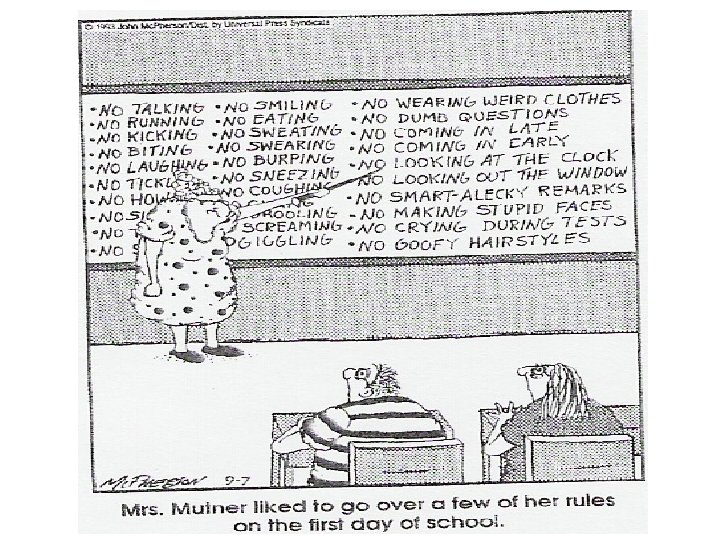
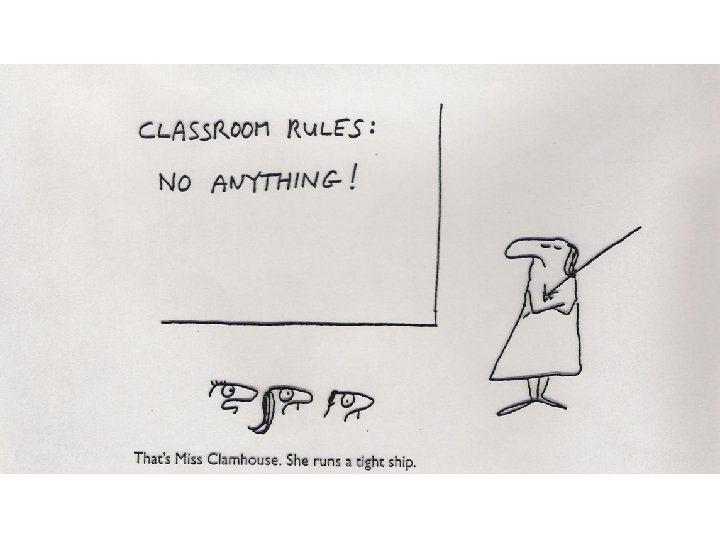
Establish Clear Classroom Rules • Encourage students to collaborate in establishing class rules and consequences • Written in student language • Begin with an action verb • Behavior should be observable and measureable • Stated in positive terms when possible • Help students learn the rules (examples & non-examples) • Make consequences (positive & negative) appropriate and fair • Reinforce students for following rules “Catch ‘em being good” – “Thank you Michael for raising your hand waiting patiently for me to call on you. ” – “You were all in your seats when the bell rang. Good job!”

Effective Classroom Rules • • • Observable Measurable Positive Only 5 Unambiguous, clear
Now You Try It! • Develop a set of classroom rules with the other members of your table. • Be prepared to share your rules with the class. • The class will critique your rules concerning “best practice. ”
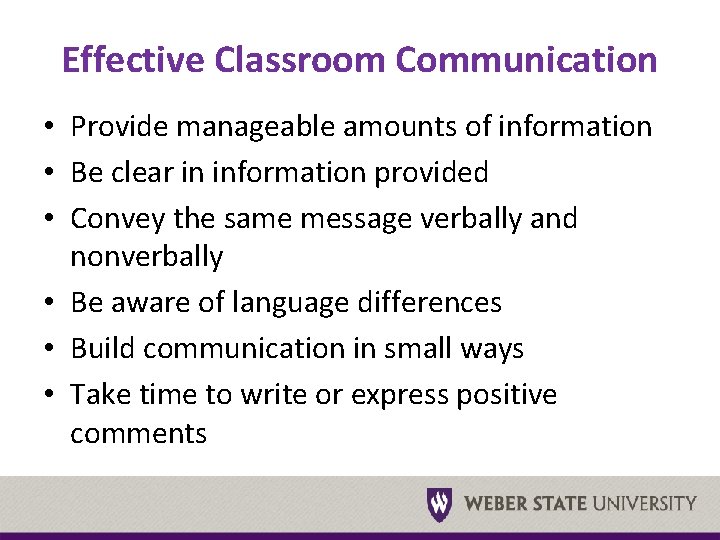
Effective Classroom Communication • Provide manageable amounts of information • Be clear in information provided • Convey the same message verbally and nonverbally • Be aware of language differences • Build communication in small ways • Take time to write or express positive comments
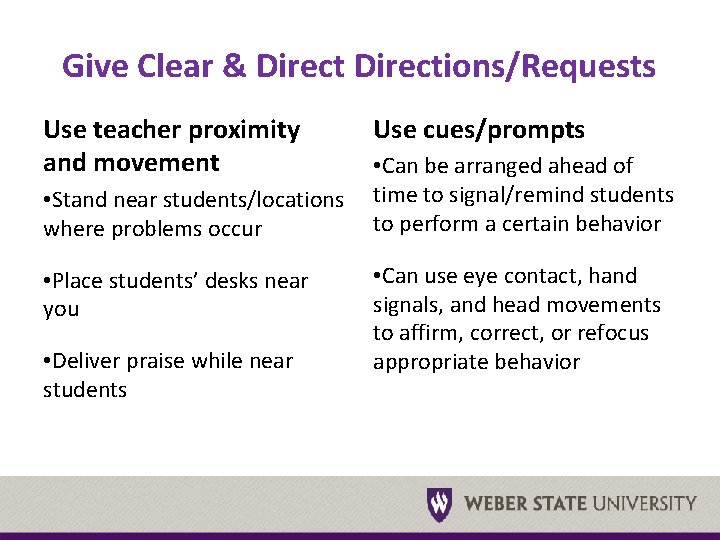
Give Clear & Directions/Requests Use teacher proximity and movement • Stand near students/locations where problems occur • Place students’ desks near you • Deliver praise while near students Use cues/prompts • Can be arranged ahead of time to signal/remind students to perform a certain behavior • Can use eye contact, hand signals, and head movements to affirm, correct, or refocus appropriate behavior
Establish Rapport Listen actively Talk to students about their interests Show an interest in their personal lives Share you own interests and stories Display empathy and give emotional support Participating in after-school activities and other informal activities • Compliment them and celebrate their successes • • • Think: What some ways your teachers built rapport with you?
Develop Students’ Self-Esteem Use humor (but not sarcasm) Acknowledge and praise students Be aware of your nonverbal communication Teach mindfulness-based stress reduction strategies • Use conflict resolution and peer mediation programs • •
Classroom Design Strategies Students with Behavior & Attention Disorders Students from Diverse Language Backgrounds • Put them near you and/or good peer models • Label work areas and objects in multiple languages • Minimize visual and auditory distractions • Allow students to work with peer models • Place tape on floor around them to identify wiggle area • Provide access to accessible materials • Provide opportunities for movement
Classroom Design Strategies Deaf and Hard or Hearing • Provide a visual schedule of routines and rules • Use visual signs for gaining attention • Consider location of desks if they are lip reading • If FM device is used, make sure it works. • http: //www. youtube. com/watch? v=ln 8 NHz. Vf. Jk. Q Visual Impairments • Limit the visual stimuli in the room and around work areas • Reduce glare in room • Work area should have unobstructed view
Use Reinforcement Strategies • Positive reinforcement • Negative reinforcement • Primary reinforcers • Secondary reinforcers • Socially valid reinforcers • Extrinsic versus intrinsic reinforcement
Positive Reinforcement • Provision of a consequence (reward) which follows a target behavior and results in an increase or maintenance of the target behavior – Example: you praise or reward a student after she completes her work, thus increasing the chance that she will repeat the behavior in the future. https: //www. youtube. com/watch? v=r. Sdr. Mbpwy. LU
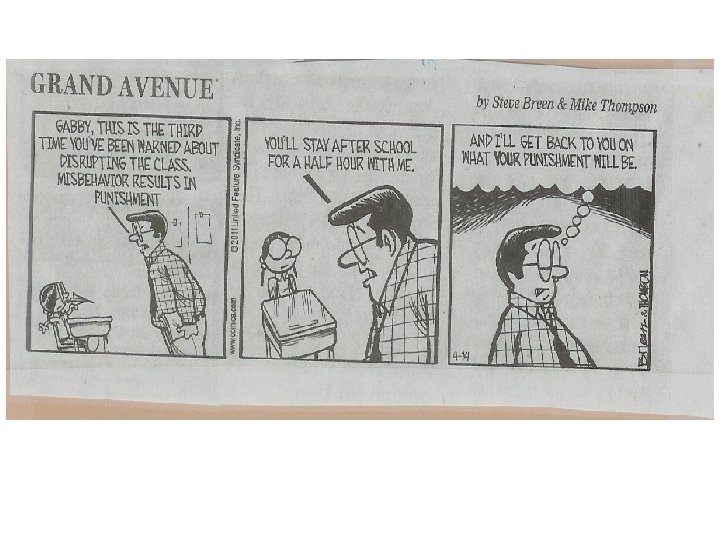
Negative Reinforcement • The removal of a negative consequence following a target behavior that results in an increase or maintenance of the target behavior – Example: Your class rule is that students must complete work before being excused for recess: A student completes her work so she won’t have to stay in at recess – Don’t confuse negative reinforcement with “punishment” a consequence, usually negative, that decreases the behavior that it follows – But doesn’t necessarily teach the correct behavior – http: //www. youtube. com/watch? v=wfra. Bsz 9 g. X 4
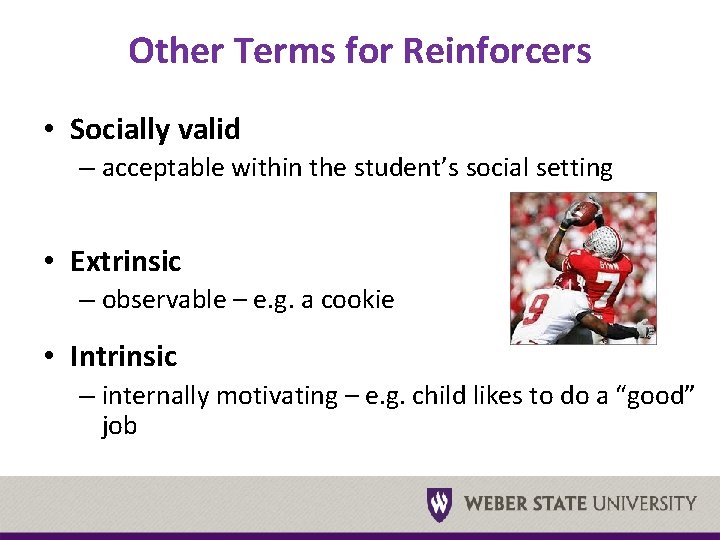
Other Terms for Reinforcers • Socially valid – acceptable within the student’s social setting • Extrinsic – observable – e. g. a cookie • Intrinsic – internally motivating – e. g. child likes to do a “good” job
Administer Reinforcement and Preference Surveys • Open ended: asks students to identify reinforcers by completing statements about their reinforcers • Multiple-choice: allows students to select one or more choices from a list of potential reinforcers • Rank order: asks students to grade their preferences form strong to weak • Think: Given the age level of the students you work with, what are some questions you would ask to identify potential reinforcers?
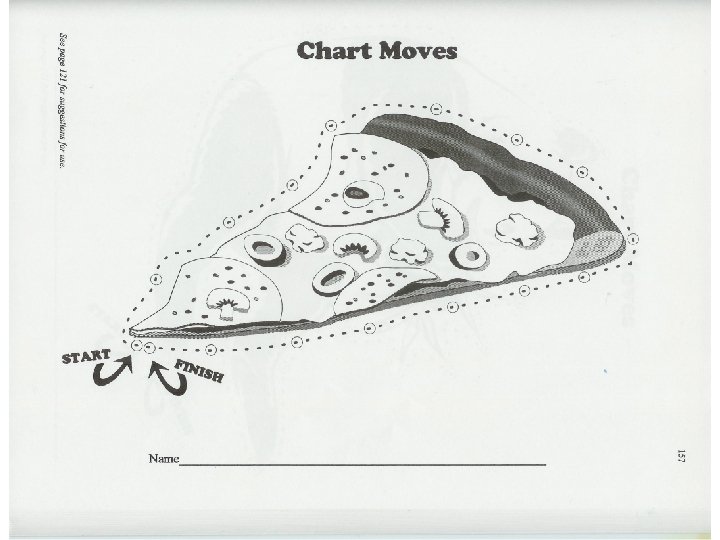
Delivering Reinforcers • Tough Kid Strategies (Jenson, Rhode, & Reavis, 1994) – Chart Moves – Magic Pens – Spinners – Mystery Motivators – Grab Bags – Lottery or Raffle Tickets
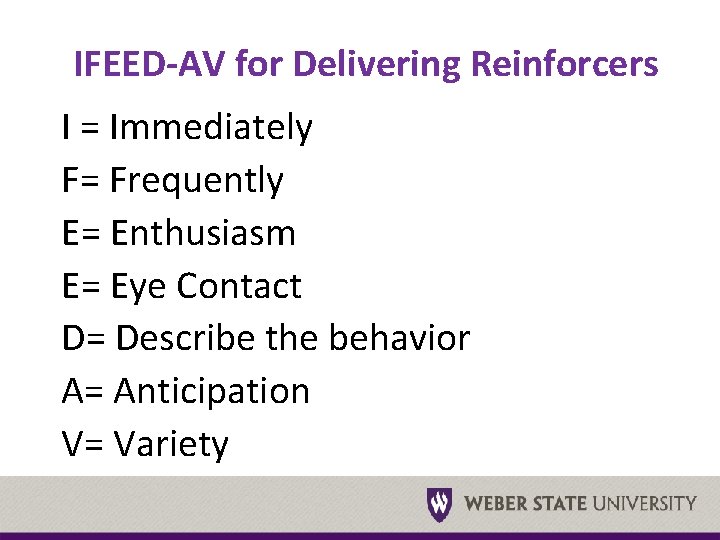
IFEED-AV for Delivering Reinforcers I = Immediately F= Frequently E= Enthusiasm E= Eye Contact D= Describe the behavior A= Anticipation V= Variety
Effective Reinforcement Programs • • Establish clear and consistent expectations Teachers must set the example Determine delivery schedule of reinforcers Use the Premack Principle – (aka “Grandma’s Rule”) – Pairing a low preference activity with a high preference one “Eat your broccoli and you get dessert. ” “Finish your work and you can have time on the computer. ”
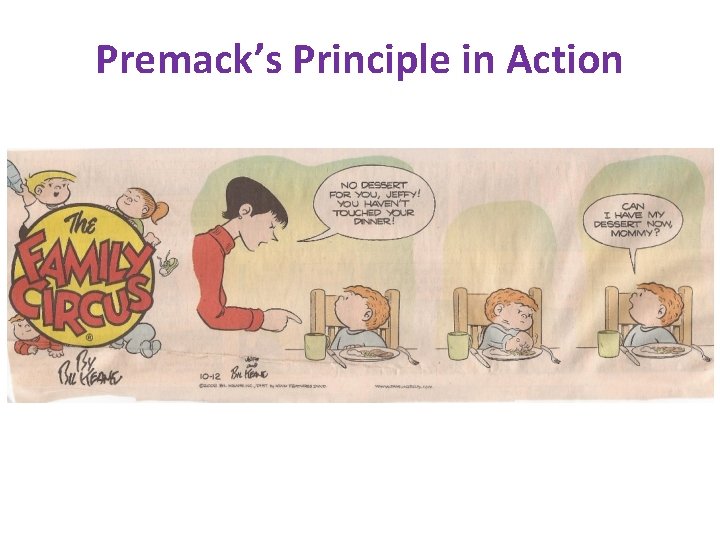
Premack’s Principle in Action
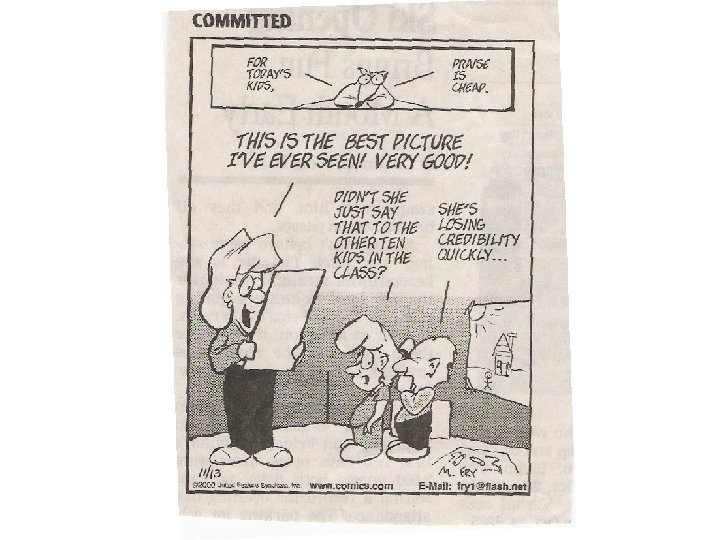
Preventing Satiation • Satiation occurs when the same reinforcer is used too often. • To prevent satiation, – Vary the reinforcers used – Monitor the amount given – Use edible reinforcers sparingly – Move from a constant to an intermittent schedule – Move from primary to secondary reinforcers ASAP
Use Group Contingency Systems Advantages • They foster cooperation • Teach responsibility to the group and enlist the group to solve problems • Adaptable to a variety of behaviors • Easy to implement • https: //www. youtube. com /watch? v=dd. R 6 VK 3 -F 3 Y Disadvantages • A single disruptive student can prevent the class from achieving its goal • If so, put that student on an individual contingency • Can result in peer pressure and scapegoating
Behavior Reduction Interventions • Precision requests, Choice statements • http: //www. youtube. com/watch? v=Xnsz. QLO 1 Rt. E • Antiseptic bouncing • Asking a misbehaving student to leave the room to run an errand. • Planned ignoring (a. k. a. extinction) • Purposely withholding teacher attention to inappropriate behaviors – Discuss: After reviewing these techniques, come up with examples of when you would use each one.
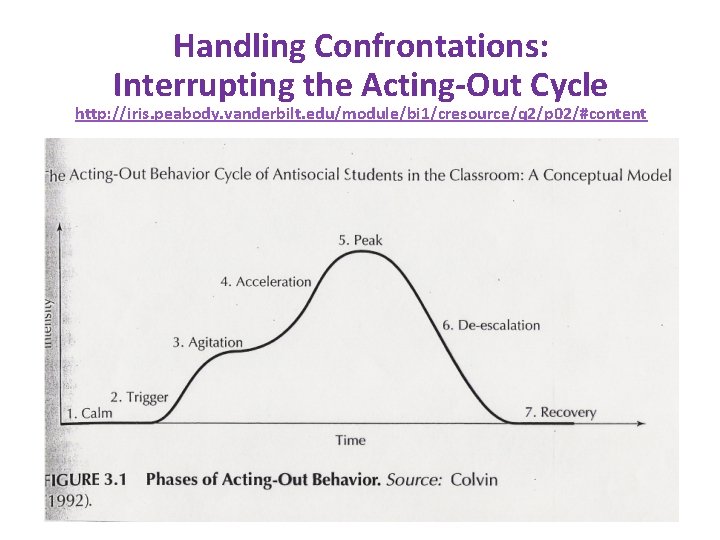
Handling Confrontations: Interrupting the Acting-Out Cycle http: //iris. peabody. vanderbilt. edu/module/bi 1/cresource/q 2/p 02/#content
Strategies to Interrupt the Behavior Chain • • Remain calm Don’t take it personally Use proximity control Use proximity praise Inject humor (when appropriate) Change the topic Initiate problem-solving strategies
Handling Confrontations: Interrupting the Acting-Out Cycle • Compare and contrast the way the teacher handled this acting-out cycle: – http: //iris. peabody. vanderbilt. edu/module/bi 1/cr esource/q 2/p 10/#content
Bullying • Verbal and written • Physical • Social • Sexual • Ostracizing someone from a group • Cyberbullying: harmful, inappropriate, threatening, embarrassing, or hurtful e-mails, text messages, etc. posted on the internet
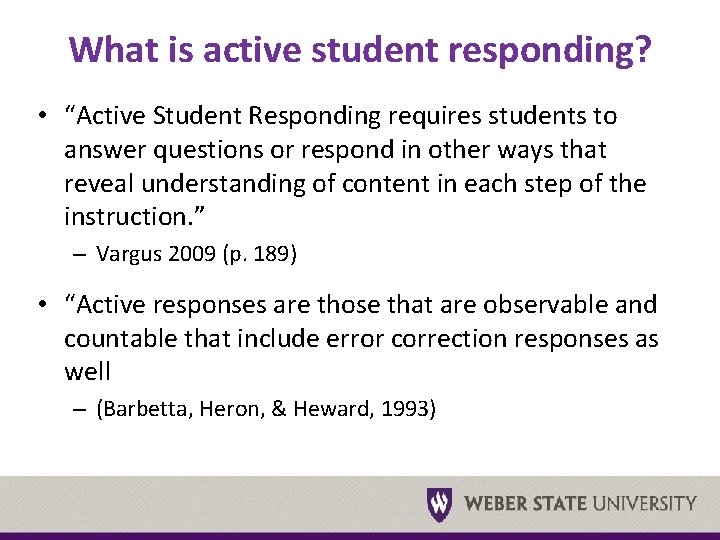
What is active student responding? • “Active Student Responding requires students to answer questions or respond in other ways that reveal understanding of content in each step of the instruction. ” – Vargus 2009 (p. 189) • “Active responses are those that are observable and countable that include error correction responses as well – (Barbetta, Heron, & Heward, 1993)
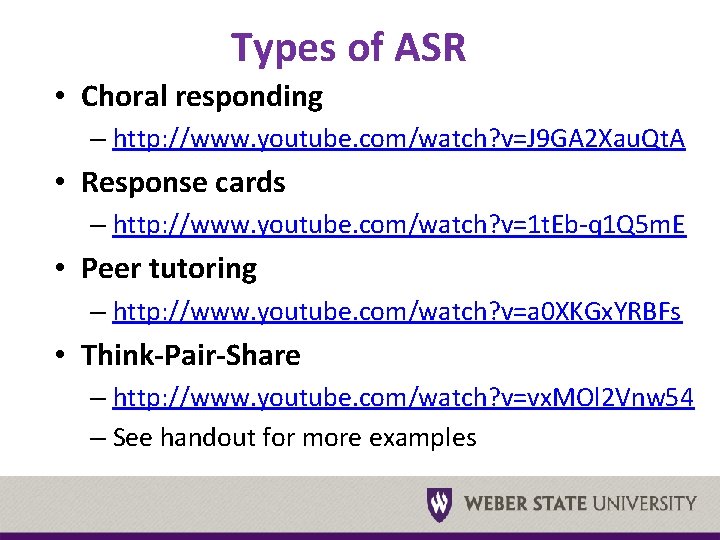
Types of ASR • Choral responding – http: //www. youtube. com/watch? v=J 9 GA 2 Xau. Qt. A • Response cards – http: //www. youtube. com/watch? v=1 t. Eb-q 1 Q 5 m. E • Peer tutoring – http: //www. youtube. com/watch? v=a 0 XKGx. YRBFs • Think-Pair-Share – http: //www. youtube. com/watch? v=vx. MOl 2 Vnw 54 – See handout for more examples
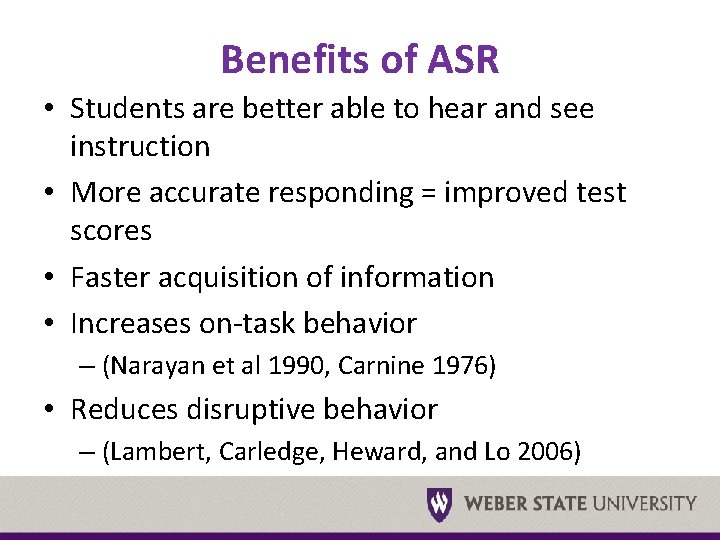
Benefits of ASR • Students are better able to hear and see instruction • More accurate responding = improved test scores • Faster acquisition of information • Increases on-task behavior – (Narayan et al 1990, Carnine 1976) • Reduces disruptive behavior – (Lambert, Carledge, Heward, and Lo 2006)
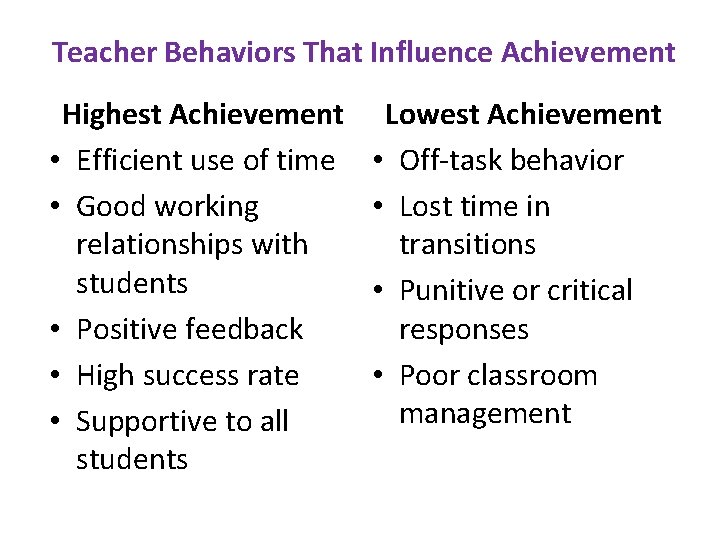
Teacher Behaviors That Influence Achievement Highest Achievement • Efficient use of time • Good working relationships with students • Positive feedback • High success rate • Supportive to all students Lowest Achievement • Off-task behavior • Lost time in transitions • Punitive or critical responses • Poor classroom management
- Slides: 50