
EDUC 250 EDUCATIONAL PSYCHOLOGY GROUP PROJECT Theme Classroom
- Slides: 10
EDUC 250 – EDUCATIONAL PSYCHOLOGY GROUP PROJECT Theme: Classroom Community Grade Level: 2 nd Grade December 11 th, 2014 Presented By: Molly, Jessica, Bill, Abby, and Lainey
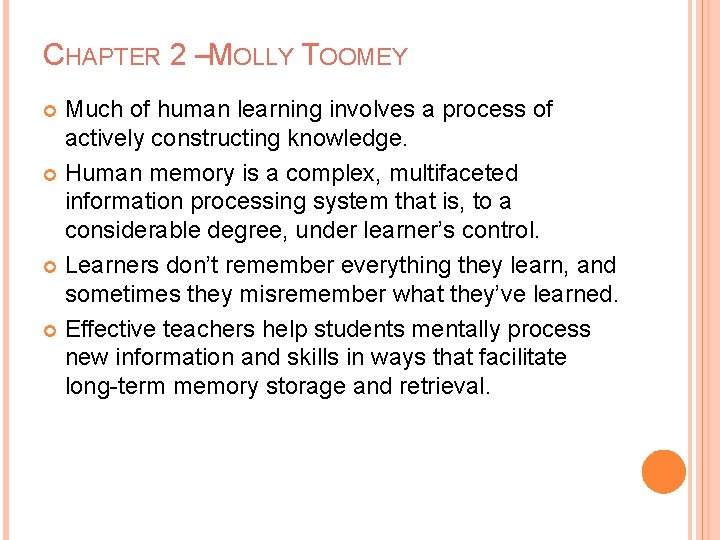
CHAPTER 2 –MOLLY TOOMEY Much of human learning involves a process of actively constructing knowledge. Human memory is a complex, multifaceted information processing system that is, to a considerable degree, under learner’s control. Learners don’t remember everything they learn, and sometimes they misremember what they’ve learned. Effective teachers help students mentally process new information and skills in ways that facilitate long-term memory storage and retrieval.
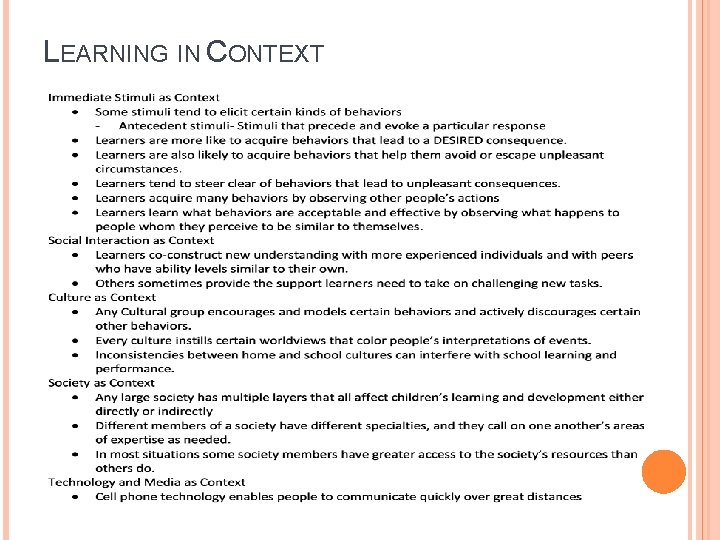
LEARNING IN CONTEXT
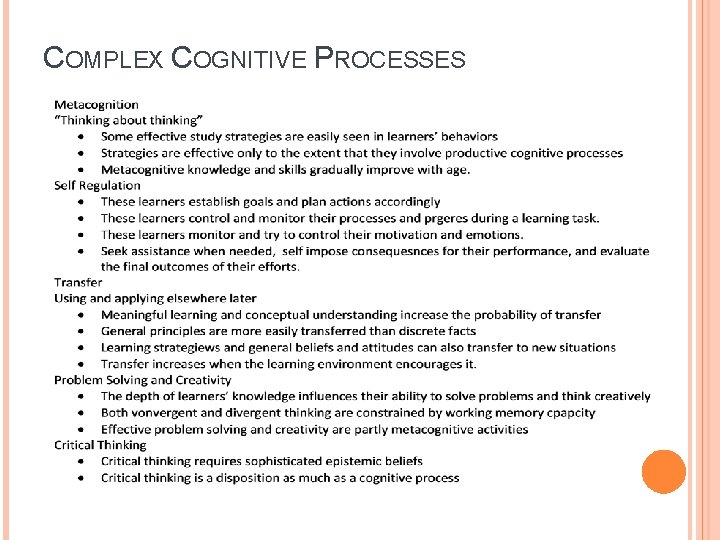
COMPLEX COGNITIVE PROCESSES
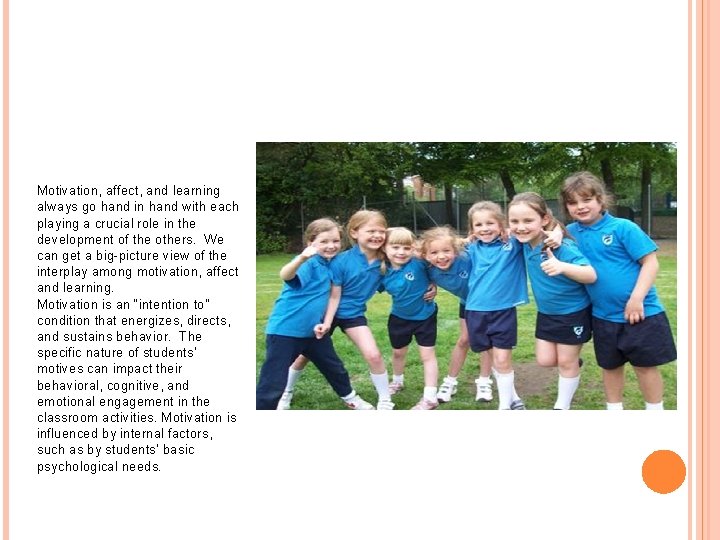
Motivation, affect, and learning always go hand in hand with each playing a crucial role in the development of the others. We can get a big-picture view of the interplay among motivation, affect and learning. Motivation is an “intention to” condition that energizes, directs, and sustains behavior. The specific nature of students’ motives can impact their behavioral, cognitive, and emotional engagement in the classroom activities. Motivation is influenced by internal factors, such as by students’ basic psychological needs.
CHAPTER 7 BY: ABBY THOME • • Children’s behaviors are the result of heredity and environmental factors. As they grow older they begin to gain a sense of self and an understanding of who they are as people based off of their prior failures and successes, as well as the behaviors of others around them. Children form friendships that grow throughout their school years. Some children however, are constantly rejected by their peers and require teacher support and guidance. Some children have difficulty interpreting social cues and may lack effective social skills. This can lead to aggression and negative behavior, and even lead to bullying. Teachers need to accommodate individual differences in students’ personalities and temperaments. This helps them gain a strong sense of self and promotes moral and social development.
CHAPTER 8 BY: ABBY THOME • • • Teachers need to plan their instruction in advance and make sure to clearly identify what they want their students to learn. The learning goals and objectives must be properly aligned with the academic standards. Instruction can be effective when it is teacher-directed or learner-directed. The teacher-directed instruction is most effective when it promotes cognitive processes and captures the students’ attention. Learner-directed instruction is most useful when topics and tasks lead to multiple perspectives, creating an environment that will promote self-regulating behavior. Teachers must keep in mind that different instructional strategies and goals will be vary for each individual student.
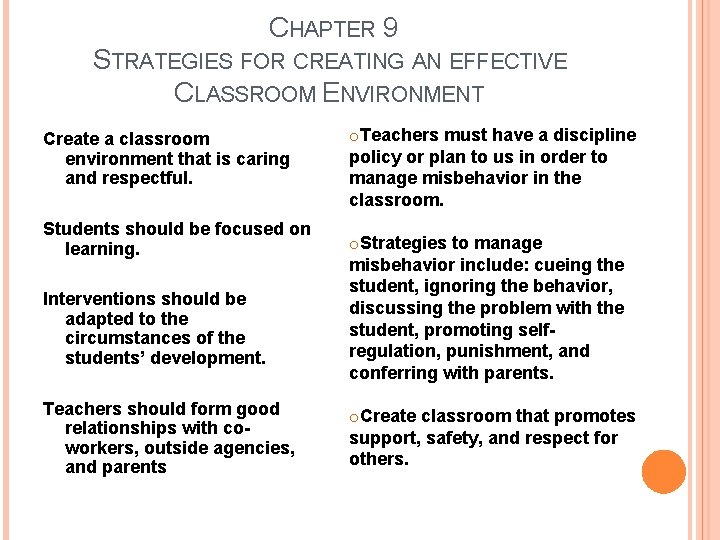
CHAPTER 9 STRATEGIES FOR CREATING AN EFFECTIVE CLASSROOM ENVIRONMENT Create a classroom environment that is caring and respectful. Students should be focused on learning. Interventions should be adapted to the circumstances of the students’ development. Teachers should form good relationships with coworkers, outside agencies, and parents o. Teachers must have a discipline policy or plan to us in order to manage misbehavior in the classroom. o. Strategies to manage misbehavior include: cueing the student, ignoring the behavior, discussing the problem with the student, promoting selfregulation, punishment, and conferring with parents. o. Create classroom that promotes support, safety, and respect for others.
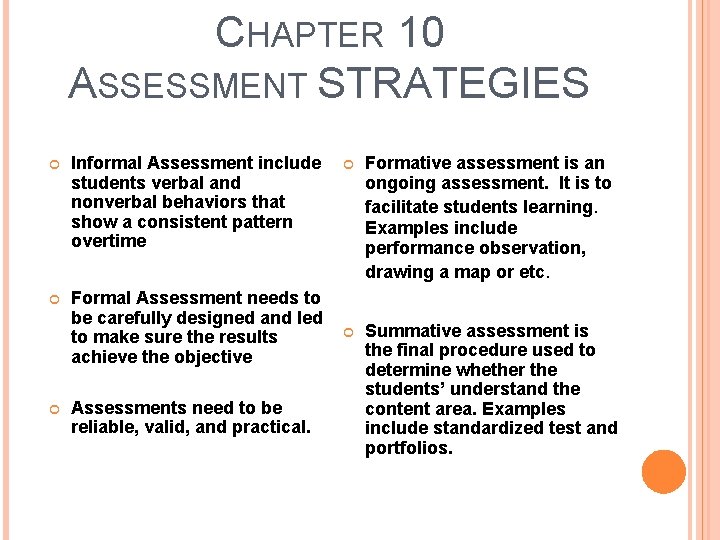
CHAPTER 10 ASSESSMENT STRATEGIES Informal Assessment include students verbal and nonverbal behaviors that show a consistent pattern overtime Formal Assessment needs to be carefully designed and led to make sure the results achieve the objective Assessments need to be reliable, valid, and practical. Formative assessment is an ongoing assessment. It is to facilitate students learning. Examples include performance observation, drawing a map or etc. Summative assessment is the final procedure used to determine whether the students’ understand the content area. Examples include standardized test and portfolios.