
Editing File Mnemonic File Endocrine Block Pharmacology team
Editing File Mnemonic File Endocrine Block Pharmacology team 438 Hyper and Hypothyroidism Objectives: By the end of the lecture , you should know: ● Describe different classes of drugs used in hyperthyroidism and hypothyroidism and their mechanism of action ● Understand their pharmacological effects, clinical uses and adverse effects ● Recognize treatment of special cases such as hyperthyroidism during pregnancy, Graves’ disease and Thyroid Storm and special cases of hypothyroidism such as myxedema coma Color index: Black : Main content Red : Important Blue: Males’ slides only Purple: Females’ slides only Grey: Extra info or explanation Green : Dr. notes

Hyperthyroidism Thyroid Function ● ● Normal amount of thyroid hormones are essential for normal growth and development by maintaining the level of energy metabolism in the tissue. Either too little or too much thyroid hormones will bring disorders to the body. Important Functions Growth & development, especially in the embryo & brain Thermoregulation increase basal metabolic rate (BMR) Helps maintain metabolic energy balance CVS: increase heart rate & cardiac output which increase oxygen demand Iodine Importance ● ● Thyroid hormones are unique biological molecules in that they incorporate iodine 1 in their structure Adequate iodine intake (diet, water) is required for normal thyroid hormone production Major sources of iodine are: iodized salt, iodated bread, dairy products, shellfish Minimum requirement: 75 micrograms/day Iodine Metabolism 1 Dietary iodine is absorbed in the GI tract, then taken up by the thyroid gland (or removed from the body by the kidneys) 2 3 Iodide taken up by the thyroid gland is oxidized by peroxidase in the lumen of the follicle: I- Peroxidase I 2 Oxidized iodine can then be used in production of thyroid hormones Iodide Iodine Thyroid Hormones 2 Tetraiodothyronine (T 4 thyroxine) Triiodothyronine (T 3) Synthesis Iodine trapping: uptake of iodine by the thyroid gland Oxidation of iodine: (to its active form) thyroid peroxidase (key enzyme of the synthesis) Iodine organification: The iodination of tyrosyl groups of thyroglobulin into MIT and DIT 1: Cannot be synthesized by the body, has to be supplied by diet. 2: once produced, they can control their own levels by feedback mechanisms Formation of T 4 and T 3 from MIT and DIT: Thyroid peroxidase
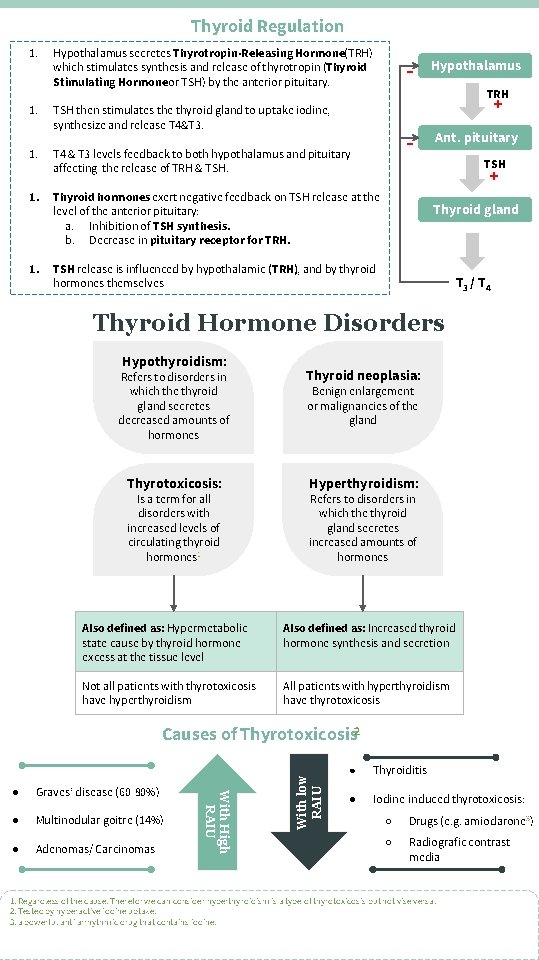
Thyroid Regulation 1. 1. Hypothalamus secretes Thyrotropin-Releasing Hormone(TRH) which stimulates synthesis and release of thyrotropin (Thyroid Stimulating Hormone or TSH) by the anterior pituitary. - Hypothalamus TRH + TSH then stimulates the thyroid gland to uptake iodine, synthesize and release T 4&T 3. - T 4 & T 3 levels feedback to both hypothalamus and pituitary affecting the release of TRH & TSH. Ant. pituitary TSH + 1. Thyroid hormones exert negative feedback on TSH release at the level of the anterior pituitary: a. Inhibition of TSH synthesis. b. Decrease in pituitary receptor for TRH. 1. TSH release is influenced by hypothalamic (TRH), and by thyroid hormones themselves Thyroid gland T 3 / T 4 Thyroid Hormone Disorders Hypothyroidism: Refers to disorders in which the thyroid gland secretes decreased amounts of hormones Thyroid neoplasia: Thyrotoxicosis: Hyperthyroidism: Is a term for all disorders with increased levels of circulating thyroid hormones 1 Refers to disorders in which the thyroid gland secretes increased amounts of hormones Benign enlargement or malignancies of the gland Also defined as: Hypermetabolic state cause by thyroid hormone excess at the tissue level Also defined as: Increased thyroid hormone synthesis and secretion Not all patients with thyrotoxicosis have hyperthyroidism All patients with hyperthyroidism have thyrotoxicosis Graves’ disease (60 -80%) ● Multinodular goitre (14%) ● Adenomas/ Carcinomas With High RAIU ● With low RAIU Causes of Thyrotoxicosis 2 ● Thyroiditis ● Iodine-induced thyrotoxicosis: ○ Drugs (e. g. amiodarone 3) ○ Radiografic contrast media 1: Regardless of the cause. Therefor we can consider hyperthyroidism is a type of thyrotoxicosis but not vise versa. 2: Tested by hyperactive iodine uptake. 3: a powerful anti arrhythmic drug that contains iodine.
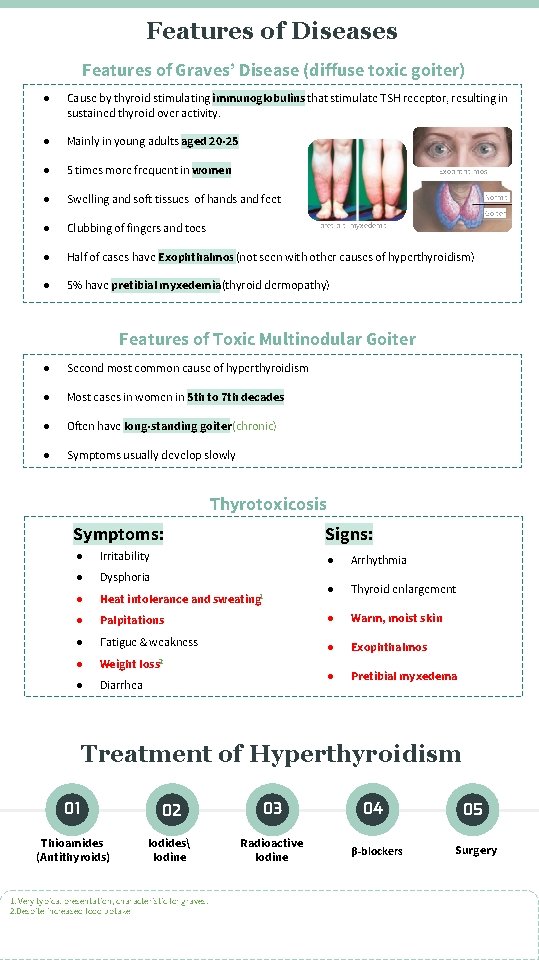
Features of Diseases Features of Graves’ Disease (diffuse toxic goiter) ● Cause by thyroid stimulating immunoglobulins that stimulate TSH receptor, resulting in sustained thyroid over activity. ● Mainly in young adults aged 20 -25 ● 5 times more frequent in women ● Swelling and soft tissues of hands and feet Exophthalmos Normal Goiter ● Clubbing of fingers and toes ● Half of cases have Exophthalmos (not seen with other causes of hyperthyroidism) ● 5% have pretibial myxedemia(thyroid dermopathy) pretibial myxedema Features of Toxic Multinodular Goiter ● Second most common cause of hyperthyroidism ● Most cases in women in 5 th to 7 th decades ● Often have long-standing goiter(chronic) ● Symptoms usually develop slowly Thyrotoxicosis Symptoms: Signs: ● Irritability ● Arrhythmia ● Dysphoria ● Heat intolerance and sweating 1 ● Thyroid enlargement ● Palpitations ● Warm, moist skin ● Fatigue & weakness ● Exophthalmos ● Weight loss 2 ● Diarrhea ● Pretibial myxedema Treatment of Hyperthyroidism 01 02 03 Thioamides (Antithyroids) Iodides Iodine Radioactive Iodine 1: Very typical presentation, characteristic for graves. 2: Despite increased food uptake 04 β-blockers 05 Surgery
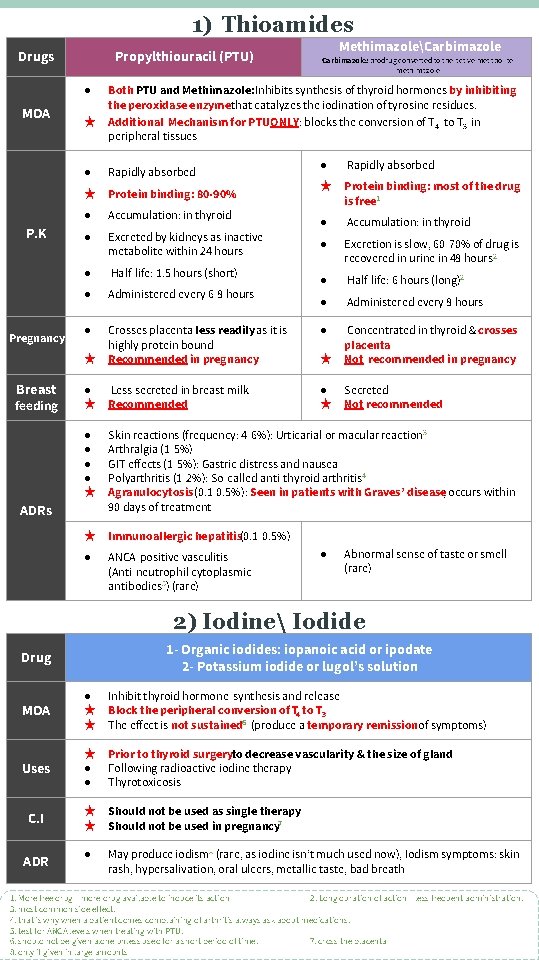
1) Thioamides Drugs Propylthiouracil (PTU) ● MOA P. K Pregnancy Breast feeding ★ MethimazoleCarbimazole: prodrug converted to the active metabolite methimazole Both PTU and Methimazole: Inhibits synthesis of thyroid hormones by inhibiting the peroxidase enzymethat catalyzes the iodination of tyrosine residues. Additional Mechanism for PTUONLY: blocks the conversion of T 4 to T 3 in peripheral tissues ● Rapidly absorbed ★ Protein binding: most of the drug is free 1 Accumulation: in thyroid ● ● Accumulation: in thyroid Excreted by kidneys as inactive metabolite within 24 hours ● ● Excretion is slow, 60 -70% of drug is recovered in urine in 48 hours 2 Half-life: 1. 5 hours (short) ● ● Half-life: 6 hours (long)2 Administered every 6 -8 hours ● Administered every 8 hours ● ● ★ Crosses placenta less readily as it is highly protein bound Recommended in pregnancy ★ Concentrated in thyroid & crosses placenta Not recommended in pregnancy ● ★ Less secreted in breast milk Recommended ● ★ Secreted Not recommended ● ● ★ Skin reactions (frequency: 4 -6%): Urticarial or macular reaction 3 Arthralgia (1 -5%) GIT effects (1 -5%): Gastric distress and nausea Polyarthritis (1 -2%): So-called anti-thyroid arthritis 4 Agranulocytosis (0. 1 -0. 5%): Seen in patients with Graves’ disease; occurs within 90 days of treatment ★ Immunoallergic hepatitis(0. 1 -0. 5%) ● ANCA-positive vasculitis (Anti-neutrophil cytoplasmic antibodies 5) (rare) ● Rapidly absorbed ★ Protein binding: 80 -90% ● ADRs ● Abnormal sense of taste or smell (rare) 2) Iodine Iodide 1 - Organic iodides: iopanoic acid or ipodate 2 - Potassium iodide or lugol’s solution Drug MOA ● ★ ★ Inhibit thyroid hormone synthesis and release Block the peripheral conversion of T 4 to T 3 The effect is not sustained 6 (produce a temporary remissionof symptoms) Uses ★ ● ● Prior to thyroid surgeryto decrease vascularity & the size of gland Following radioactive iodine therapy Thyrotoxicosis C. I ★ ★ Should not be used as single therapy Should not be used in pregnancy 7 ● May produce iodism 8 (rare, as iodine isn’t much used now), Iodism symptoms: skin rash, hypersalivation, oral ulcers, metallic taste, bad breath ADR 1: More free drug = more drug available to induce its action 2: Long duration of action = less frequent administration. 3: most common side effect. 4: that is why when a patient comes complaining of arthritis always ask about medications. 5: test for ANCA levels when treating with PTU. 6: should not be given alone unless used for a short period of time. 7: cross the placenta 8: only if given in large amounts
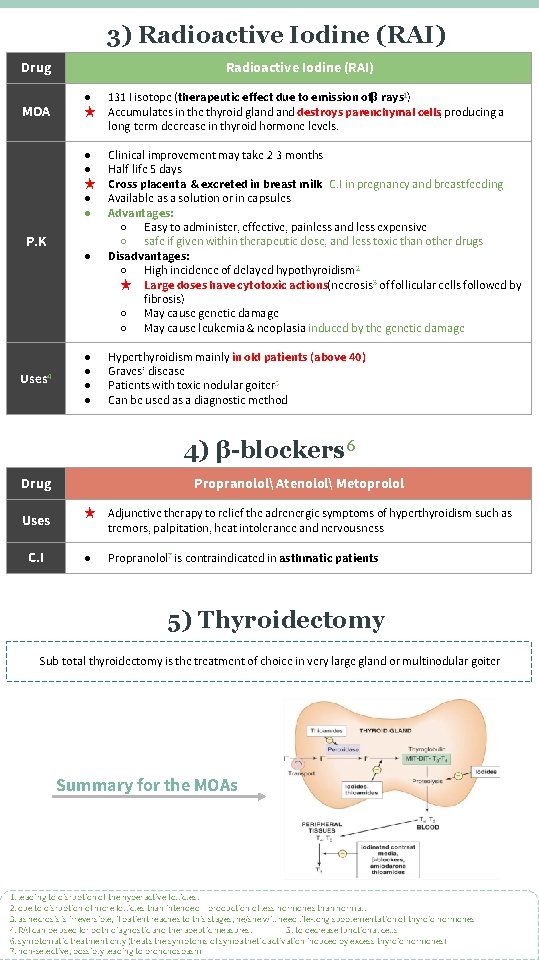
3) Radioactive Iodine (RAI) Drug MOA P. K Uses 4 Radioactive Iodine (RAI) ● ★ 131 I isotope (therapeutic effect due to emission ofβ rays 1) Accumulates in the thyroid gland destroys parenchymal cells, producing a long-term decrease in thyroid hormone levels. ● ● ★ ● ● Clinical improvement may take 2 -3 months Half-life 5 days Cross placenta & excreted in breast milk= C. I in pregnancy and breastfeeding Available as a solution or in capsules Advantages: ○ Easy to administer, effective, painless and less expensive ○ safe if given within therapeutic dose, and less toxic than other drugs Disadvantages: ○ High incidence of delayed hypothyroidism 2 ★ Large doses have cytotoxic actions(necrosis 3 of follicular cells followed by fibrosis) ○ May cause genetic damage ○ May cause leukemia & neoplasia induced by the genetic damage ● ● ● Hyperthyroidism mainly in old patients (above 40) Graves’ disease Patients with toxic nodular goiter 5 Can be used as a diagnostic method 4) β-blockers 6 Drug Uses C. I Propranolol Atenolol Metoprolol ★ Adjunctive therapy to relief the adrenergic symptoms of hyperthyroidism such as tremors, palpitation, heat intolerance and nervousness ● Propranolol 7 is contraindicated in asthmatic patients 5) Thyroidectomy Sub-total thyroidectomy is the treatment of choice in very large gland or multinodular goiter Summary for the MOAs 1: leading to disruption of the hyperactive follicles. 2: due to disruption of more follicles than intended = production of less hormones than normal. 3: as necrosis is irreversible, if patient reaches to this stages, he/she will need life-long supplementation of thyroid hormones 4: RAI can be used for both diagnostic and therapeutic measures. 5: to decrease functional cells 6: symptomatic treatment only (treats the symptoms of sympathetic activation induced by excess thyroid hormones) 7: non-selective, possibly leading to bronchospasm
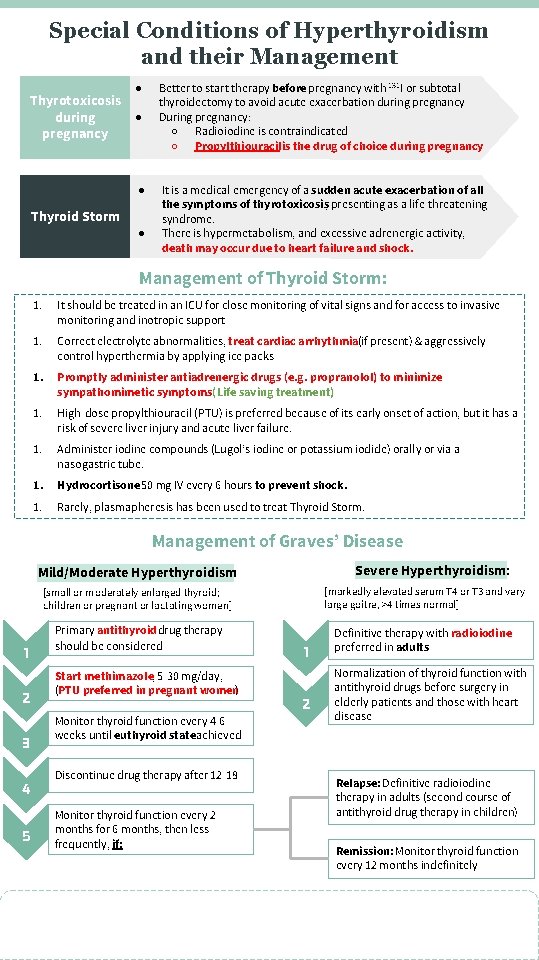
Special Conditions of Hyperthyroidism and their Management ● Better to start therapy before pregnancy with 131 I or subtotal ● It is a medical emergency of a sudden acute exacerbation of all the symptoms of thyrotoxicosis, presenting as a life-threatening syndrome. There is hypermetabolism, and excessive adrenergic activity, death may occur due to heart failure and shock. Thyrotoxicosis thyroidectomy to avoid acute exacerbation during pregnancy during ● During pregnancy: ○ Radioiodine is contraindicated pregnancy ○ Propylthiouracilis the drug of choice during pregnancy Thyroid Storm ● Management of Thyroid Storm: 1. It should be treated in an ICU for close monitoring of vital signs and for access to invasive monitoring and inotropic support 1. Correct electrolyte abnormalities, treat cardiac arrhythmia(if present) & aggressively control hyperthermia by applying ice packs 1. Promptly administer antiadrenergic drugs (e. g. propranolol) to minimize sympathomimetic symptoms(Life saving treatment) 1. High-dose propylthiouracil (PTU) is preferred because of its early onset of action, but it has a risk of severe liver injury and acute liver failure. 1. Administer iodine compounds (Lugol’s iodine or potassium iodide) orally or via a nasogastric tube. 1. Hydrocortisone 50 mg IV every 6 hours to prevent shock. 1. Rarely, plasmapheresis has been used to treat Thyroid Storm. Management of Graves’ Disease Severe Hyperthyroidism: Mild/Moderate Hyperthyroidism 1 2 3 4 5 [small or moderately enlarged thyroid; children or pregnant or lactating women] [markedly elevated serum T 4 or T 3 and very large goitre, >4 times normal] Primary antithyroid drug therapy should be considered Definitive therapy with radioiodine preferred in adults Start methimazole, 5 -30 mg/day, (PTU preferred in pregnant women) Monitor thyroid function every 4 -6 weeks until euthyroid stateachieved Discontinue drug therapy after 12 -18 Monitor thyroid function every 2 months for 6 months, then less frequently, if: 1 2 Normalization of thyroid function with antithyroid drugs before surgery in elderly patients and those with heart disease Relapse: Definitive radioiodine therapy in adults (second course of antithyroid drug therapy in children) Remission: Monitor thyroid function every 12 months indefinitely

Hypothyroidism ● ● ● Thyroid gland does not produce enough hormones May be congenital, primary or secondary Congenital: in children, hypothyroidism leads to delay in growth (dwarfism) and intellectual development (cretinism) People who are most at risk include those over age 50 & mainly in females Prevalence is 14/1000 females and 1/1000 males. Diagnosed by low plasma levels of T 3 & T 4 and TSH ● ● ● Types of Hypothyroidism Primary: Inadequate function of the gland itself. ● ○ Iodine deficiency: most common cause of primary hypothyroidism & endemic goiter worldwide ○ Autoimmune: Hashimoto’s thyroiditis ○ Radioactive iodine treatment of hyperthyroidism ○ Post-thyroidectomy ○ Antithyroid drugs (CMZ , PTU) ○ Other drugs (lithium, amiodarone 1) ○ Subacute thyroiditis ○ Thyroid carcinoma Secondary: ● ○ Hypothalamic disease ○ Pituitary disease Manifestations of Hypothyroidism Early ● ● ● ● Fatigue and lack of energy Cold intolerance Constipation Weakness Muscle or joint pain Paleness Thin, brittle hair and fingernails Late VS ● ● ● Decreased sense of taste and smell Dry flaky skin Hoarseness Menstrual disorders, infertility Puffy face, hands and feet Thinning of eyebrows Treatment of Hypothyroidism Replacement therapy with synthetic thyroid hormone preparations 2: 01 Levothyroxine (T 4) 03 02 Liothyronine (T 3) Liotrix 3 1: Amiodarone is a powerful antiarrhythmic that’s rich in iodine and can lead to both hypothyroidism and hyperthyroidism. The most likely mechanisms of AIH are an enhanced susceptibility to the inhibitory effect of iodine on thyroid hormone synthesis and the inability of the thyroid gland to escape from the Wolff. Chaikoff effect after an iodine load in patients with preexisting Hashimoto thyroiditis. In addition, iodine-induced damage to the thyroid follicles may accelerate the natural trend of Hashimoto thyroiditis toward hypothyroidism. Patients without underlying thyroid abnormalities are postulated to have subtle defects in iodine organification that lead to decreased thyroid hormone synthesis, peripheral down regulation of thyroid hormone receptors, and subsequent hypothyroidism. 2: Treat the underlying cause first and then give replacement therapy . 3: A mixture of both T 4 and T 3.

Drug P. K Levothyroxine (T 4) ● A synthetic form of thyroxine (T 4) is the drug of choice for replacement therapy 1 ○ Stable, long half life (7 days) ○ Administered once daily ○ Restore normal thyroid levels within 2 -3 weeks ● Absorption is increased when hormone is given on empty stomach ● Metabolism: ○ Major pathway of thyroid hormone metabolism is through sequential deiodination ○ 80% of circulating T 3 is derived from peripheral T 4 by monodeiodination ○ The liver is the major site of degradation for both T 4 & T 3 ○ 80% daily dose of T 4 is deiodinated to yield equal amount of T 3 and r. T 3 (reverse T 3, which is inactive) ● Hypothyroidism regardless of etiology: ○ Congenital ○ Pregnancy ○ Hashimoto thyroiditis ● ● ● Oral preparations are available form 0. 0025 -0. 3 mg tablets Parenteral preparations 2 200 -500μg Given in a dose of 12. 5 -25μg/d for 2 weeks then increased every 2 weeks Uses Dose ADR Caution ADRs of overdose (shows the symptoms of hyperthyroidism) ● In children: ○ restlessness , insomnia ○ accelerated bone maturation ● In adult: ○ cardiac arrhythmia (tachycardia , atrial fibrillation) ○ tremor, restlessness, headache, ○ change in appetite, weight loss, ○ heat intolerance ○ muscle pain ★ Drug In old patients and in patients with cardiac problemstreatment is started with reduced dosage. Liothyronine (T 3) ★ P. K ★ Advantages: ○ More potent (3 -4 times) ○ rapid onset of action than levothyroxine Disadvantages: ○ It has short half life, so not recommended for routine replacement therapy (requires multiple daily doses) ○ should be avoided in cardiac patients 3 Dose ● ● Oral preparation available are 5 -50μg tablets Parenteral use 10μg/ml 1. 2. 3. Levothyroxine is the drug of choice and used for routine replacement therapy because its half life is long and less administrations are required. For emergencies Liothyronine has more cardiac side effects than Levothyroxine.
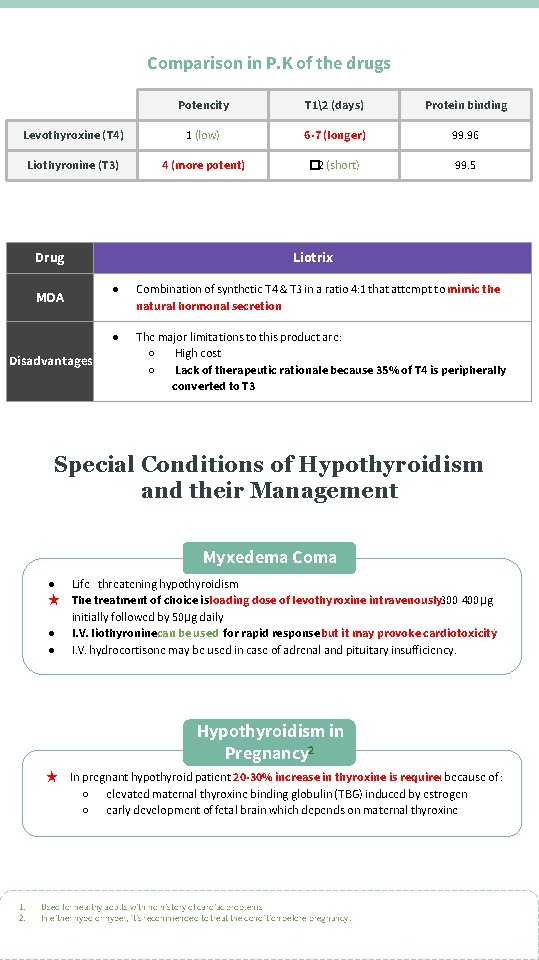
Comparison in P. K of the drugs Potencity T 12 (days) Protein binding Levothyroxine (T 4) 1 (low) 6 -7 (longer) 99. 96 Liothyronine (T 3) 4 (more potent) � 2 (short) 99. 5 Drug Liotrix MOA Disadvantages ● Combination of synthetic T 4 & T 3 in a ratio 4: 1 that attempt to mimic the natural hormonal secretion ● The major limitations to this product are: ○ High cost ○ Lack of therapeutic rationale because 35% of T 4 is peripherally converted to T 3 Special Conditions of Hypothyroidism and their Management Myxedema Coma ● ★ ● ● Life –threatening hypothyroidism The treatment of choice is loading dose of levothyroxine intravenously 300 -400μg initially followed by 50μg daily I. V. liothyroninecan be used for rapid response but it may provoke cardiotoxicity 1 I. V. hydrocortisone may be used in case of adrenal and pituitary insufficiency. Hypothyroidism in Pregnancy 2 ★ 1. 2. In pregnant hypothyroid patient 20 -30% increase in thyroxine is requiredbecause of : ○ elevated maternal thyroxine binding globulin (TBG) induced by estrogen ○ early development of fetal brain which depends on maternal thyroxine Used for healthy adults with no history of cardiac problems In either hypo or hyper, it’s recommended to treat the condition before pregnancy.
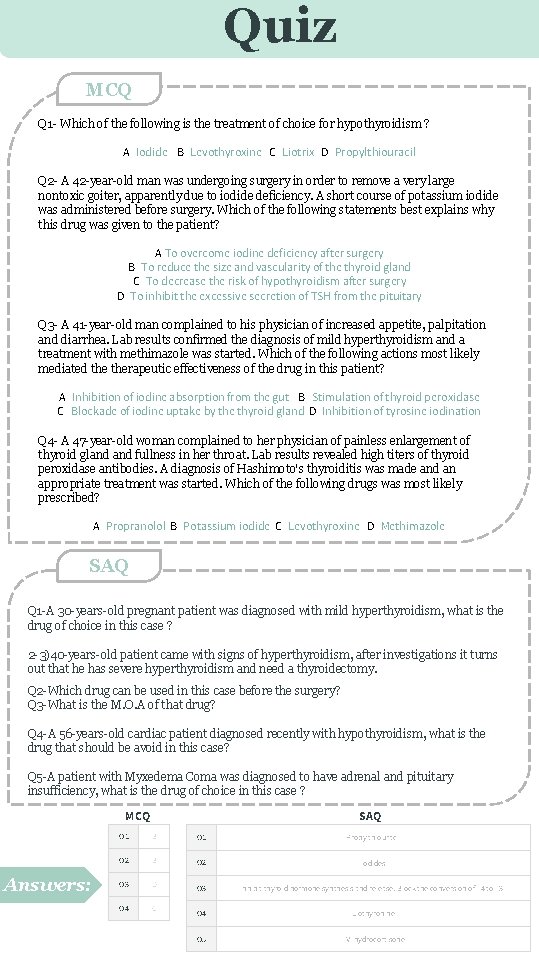
Quiz MCQ Q 1 - Which of the following is the treatment of choice for hypothyroidism ? A- Iodide B- Levothyroxine C- Liotrix D- Propylthiouracil Q 2 - A 42 -year-old man was undergoing surgery in order to remove a very large nontoxic goiter, apparently due to iodide deficiency. A short course of potassium iodide was administered before surgery. Which of the following statements best explains why this drug was given to the patient? A-To overcome iodine deficiency after surgery B- To reduce the size and vascularity of the thyroid gland C- To decrease the risk of hypothyroidism after surgery D- To inhibit the excessive secretion of TSH from the pituitary Q 3 - A 41 -year-old man complained to his physician of increased appetite, palpitation and diarrhea. Lab results confirmed the diagnosis of mild hyperthyroidism and a treatment with methimazole was started. Which of the following actions most likely mediated therapeutic effectiveness of the drug in this patient? A- Inhibition of iodine absorption from the gut B- Stimulation of thyroid peroxidase C- Blockade of iodine uptake by the thyroid gland D- Inhibition of tyrosine iodination Q 4 - A 47 -year-old woman complained to her physician of painless enlargement of thyroid gland fullness in her throat. Lab results revealed high titers of thyroid peroxidase antibodies. A diagnosis of Hashimoto's thyroiditis was made and an appropriate treatment was started. Which of the following drugs was most likely prescribed? A- Propranolol B- Potassium iodide C- Levothyroxine D- Methimazole SAQ Q 1 -A 30 -years-old pregnant patient was diagnosed with mild hyperthyroidism, what is the drug of choice in this case ? 2 -3)40 -years-old patient came with signs of hyperthyroidism, after investigations it turns out that he has severe hyperthyroidism and need a thyroidectomy. Q 2 -Which drug can be used in this case before the surgery? Q 3 -What is the M. O. A of that drug? Q 4 -A 56 -years-old cardiac patient diagnosed recently with hypothyroidism, what is the drug that should be avoid in this case? Q 5 -A patient with Myxedema Coma was diagnosed to have adrenal and pituitary insufficiency, what is the drug of choice in this case ? MCQ Answers: SAQ Q 1 B Q 1 Propylthiouracil Q 2 B Q 2 Iodides Q 3 D Q 3 Inhibit thyroid hormone synthesis and release, Block the conversion of T 4 to T 3. Q 4 C Q 4 Liothyronine Q 5 I. V. hydrocortisone
Thank you for all your love and support. Good luck future doctors! Team Leaders: May Babaeer Zyad Aldosari This Magnificent Work was Done By: Deana Awartani Shahad Al. Thaqib Note writers Raghad Al. Khashan Nouf Al. Shammari Quiz writers Noura Al. Mazrou Shahad Al. Sahil
- Slides: 12