
Edite by Dr Hashem Fakhre Yaseri 15 Jul
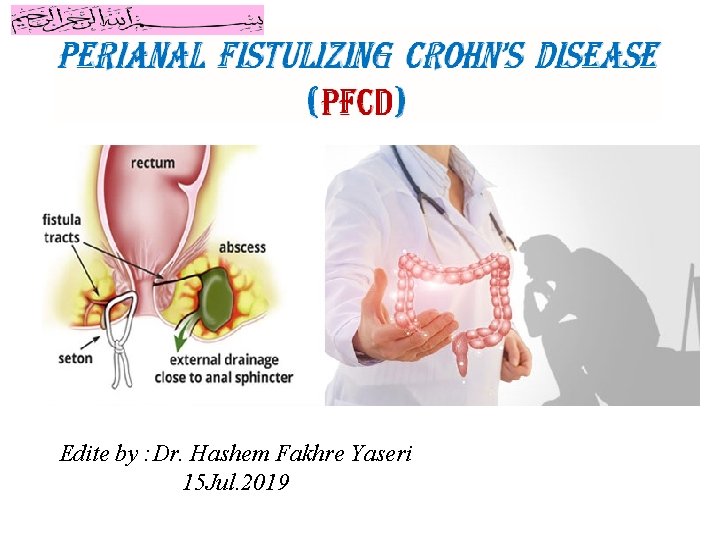
Edite by : Dr. Hashem Fakhre Yaseri 15 Jul. 2019
Perianal Fistulas in Patients With Crohn’s Disease, Part 1: Current Medical Management. Stephanie L. Gold, Shirley Cohen-Mekelburg, Yecheskel Schneider and Adam Steinlauf. Gastroenterology & Hepatology August 2018 - Volume 14, Issue 8 Perianal Fistulas in Patients With Crohn’s Disease, Part 2: Surgical, Endoscopic, and Future Therapies. Stephanie L. Gold, Shirley Cohen-Mekelburg, Yecheskel Schneider and Adam Steinlauf. Gastroenterology & Hepatology Volume 14, Issue 9 September 2018
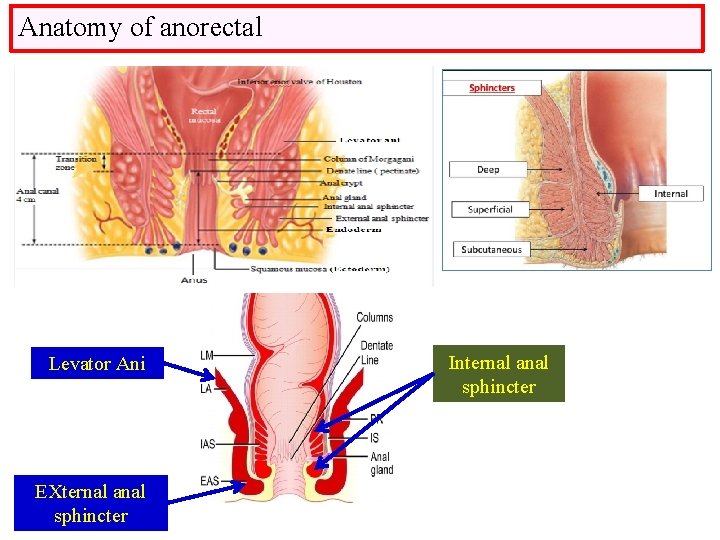
Anatomy of anorectal Levator Ani EXternal anal sphincter Internal anal sphincter
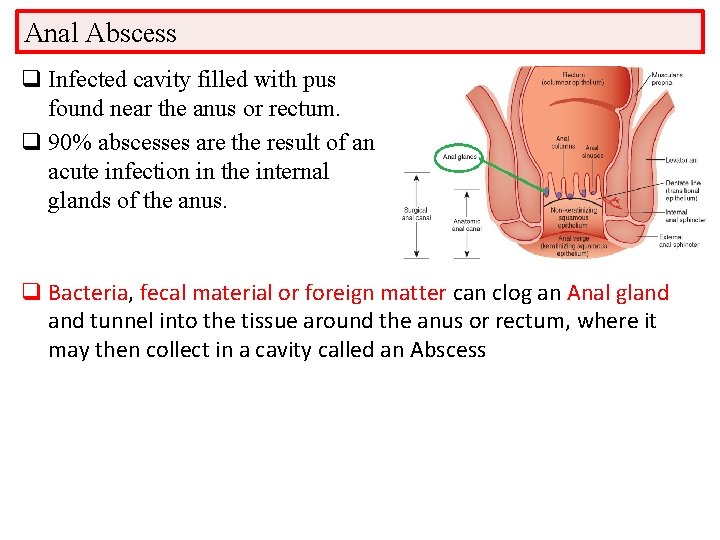
Anal Abscess q Infected cavity filled with pus found near the anus or rectum. q 90% abscesses are the result of an acute infection in the internal glands of the anus. q Bacteria, fecal material or foreign matter can clog an Anal gland tunnel into the tissue around the anus or rectum, where it may then collect in a cavity called an Abscess
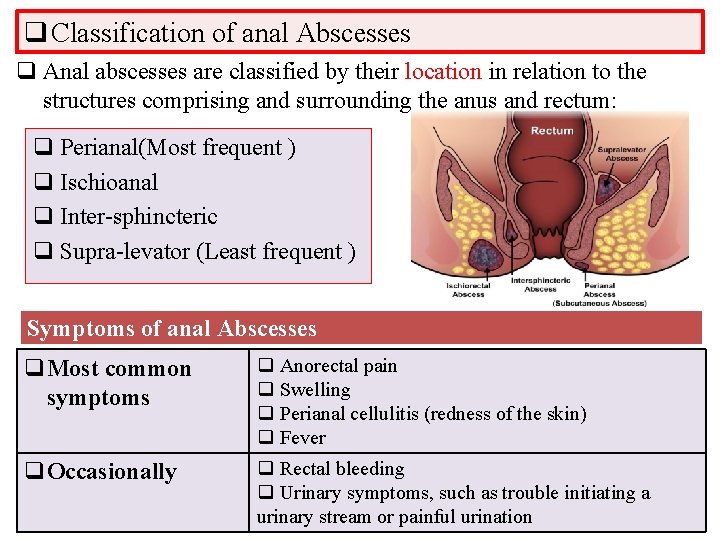
q Classification of anal Abscesses q Anal abscesses are classified by their location in relation to the structures comprising and surrounding the anus and rectum: q Perianal(Most frequent ) q Ischioanal q Inter-sphincteric q Supra-levator (Least frequent ) Symptoms of anal Abscesses q. Most common symptoms q Anorectal pain q Swelling q Perianal cellulitis (redness of the skin) q Fever q. Occasionally q Rectal bleeding q Urinary symptoms, such as trouble initiating a urinary stream or painful urination
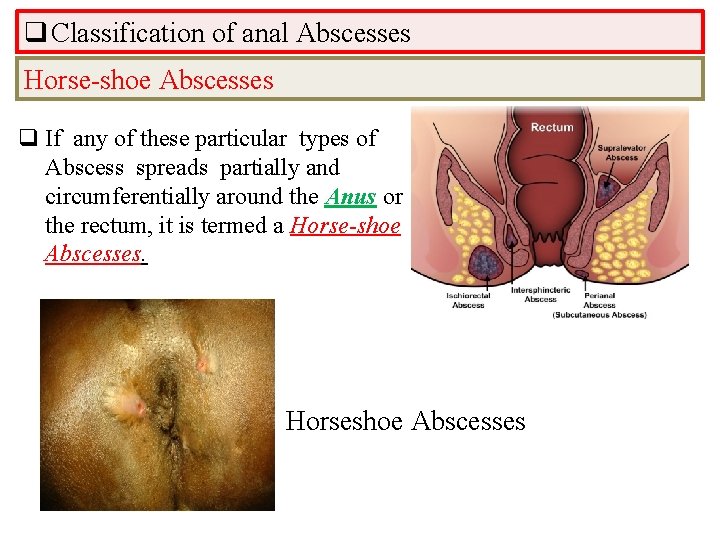
q Classification of anal Abscesses Horse-shoe Abscesses q If any of these particular types of Abscess spreads partially and circumferentially around the Anus or the rectum, it is termed a Horse-shoe Abscesses. Horseshoe Abscesses
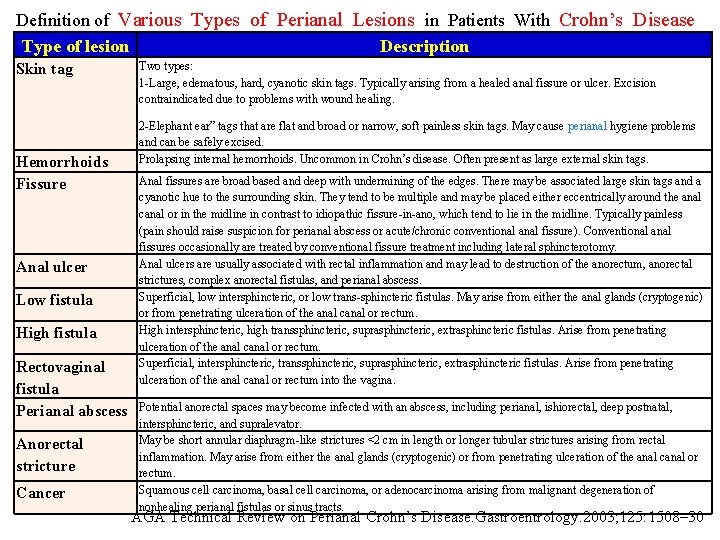
Definition of Various Types of Perianal Lesions in Patients With Crohn’s Disease Type of lesion Description Skin tag Hemorrhoids Fissure Anal ulcer Low fistula High fistula Rectovaginal fistula Perianal abscess Anorectal stricture Cancer Two types: 1 -Large, edematous, hard, cyanotic skin tags. Typically arising from a healed anal fissure or ulcer. Excision contraindicated due to problems with wound healing. 2 -Elephant ear” tags that are flat and broad or narrow, soft painless skin tags. May cause perianal hygiene problems and can be safely excised. Prolapsing internal hemorrhoids. Uncommon in Crohn’s disease. Often present as large external skin tags. Anal fissures are broad based and deep with undermining of the edges. There may be associated large skin tags and a cyanotic hue to the surrounding skin. They tend to be multiple and may be placed either eccentrically around the anal canal or in the midline in contrast to idiopathic fissure-in-ano, which tend to lie in the midline. Typically painless (pain should raise suspicion for perianal abscess or acute/chronic conventional anal fissure). Conventional anal fissures occasionally are treated by conventional fissure treatment including lateral sphincterotomy. Anal ulcers are usually associated with rectal inflammation and may lead to destruction of the anorectum, anorectal strictures, complex anorectal fistulas, and perianal abscess. Superficial, low intersphincteric, or low trans-sphincteric fistulas. May arise from either the anal glands (cryptogenic) or from penetrating ulceration of the anal canal or rectum. High intersphincteric, high transsphincteric, suprasphincteric, extrasphincteric fistulas. Arise from penetrating ulceration of the anal canal or rectum. Superficial, intersphincteric, transsphincteric, suprasphincteric, extrasphincteric fistulas. Arise from penetrating ulceration of the anal canal or rectum into the vagina. Potential anorectal spaces may become infected with an abscess, including perianal, ishiorectal, deep postnatal, intersphincteric, and supralevator. May be short annular diaphragm-like strictures <2 cm in length or longer tubular strictures arising from rectal inflammation. May arise from either the anal glands (cryptogenic) or from penetrating ulceration of the anal canal or rectum. Squamous cell carcinoma, basal cell carcinoma, or adenocarcinoma arising from malignant degeneration of nonhealing perianal fistulas or sinus tracts. AGA Technical Review on Perianal Crohn’s Disease. Gastroentrology. 2003; 125: 1508– 30
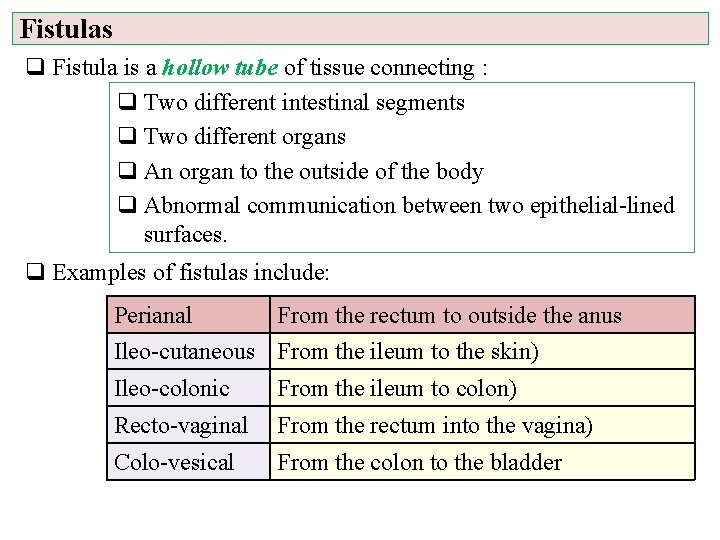
Fistulas q Fistula is a hollow tube of tissue connecting : q Two different intestinal segments q Two different organs q An organ to the outside of the body q Abnormal communication between two epithelial-lined surfaces. q Examples of fistulas include: Perianal From the rectum to outside the anus Ileo-cutaneous From the ileum to the skin) Ileo-colonic From the ileum to colon) Recto-vaginal From the rectum into the vagina) Colo-vesical From the colon to the bladder
Anal fistula ( Fistula-in-ano ) Definition Cryptoglandular hypothesis q An epithelialized track that can form and connects the Abscess in the anus or rectum(Anorectum) with the peri-rectal skin q Anal fistulas are sometimes also referred to as “Fistula-in-ano “
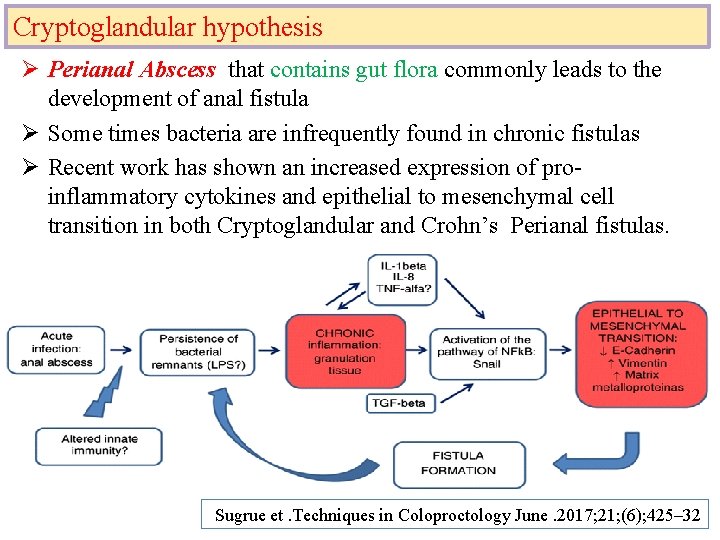
Cryptoglandular hypothesis Ø Perianal Abscess that contains gut flora commonly leads to the development of anal fistula Ø Some times bacteria are infrequently found in chronic fistulas Ø Recent work has shown an increased expression of proinflammatory cytokines and epithelial to mesenchymal cell transition in both Cryptoglandular and Crohn’s Perianal fistulas. Sugrue et. Techniques in Coloproctology June. 2017; 21; (6); 425– 32
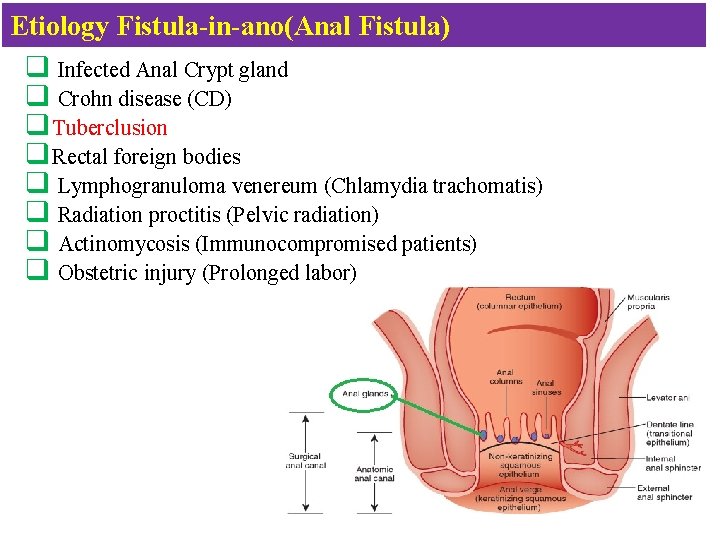
Etiology Fistula-in-ano(Anal Fistula) q Infected Anal Crypt gland q Crohn disease (CD) q Tuberclusion q Rectal foreign bodies q Lymphogranuloma venereum (Chlamydia trachomatis) q Radiation proctitis (Pelvic radiation) q Actinomycosis (Immunocompromised patients) q Obstetric injury (Prolonged labor)
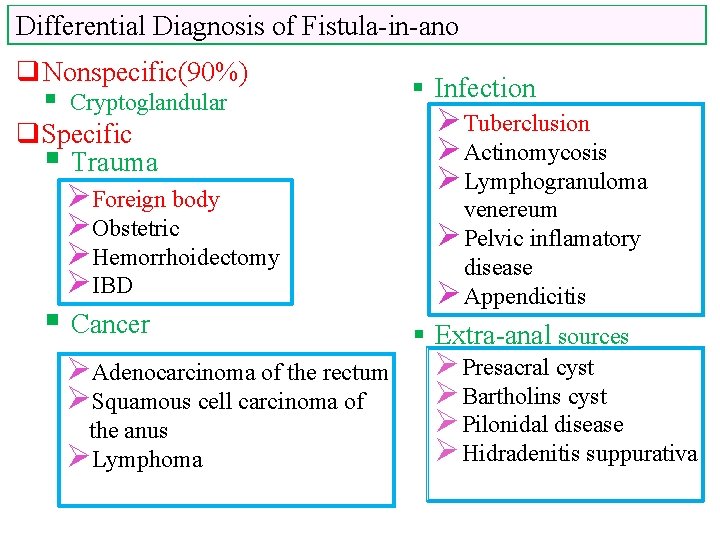
Differential Diagnosis of Fistula-in-ano q Nonspecific(90%) § Cryptoglandular q. Specific § Trauma ØForeign body ØObstetric ØHemorrhoidectomy ØIBD § Cancer ØAdenocarcinoma of the rectum ØSquamous cell carcinoma of the anus ØLymphoma § Infection Ø Tuberclusion Ø Actinomycosis Ø Lymphogranuloma venereum Ø Pelvic inflamatory disease Ø Appendicitis § Extra-anal sources Ø Presacral cyst Ø Bartholins cyst Ø Pilonidal disease Ø Hidradenitis suppurativa
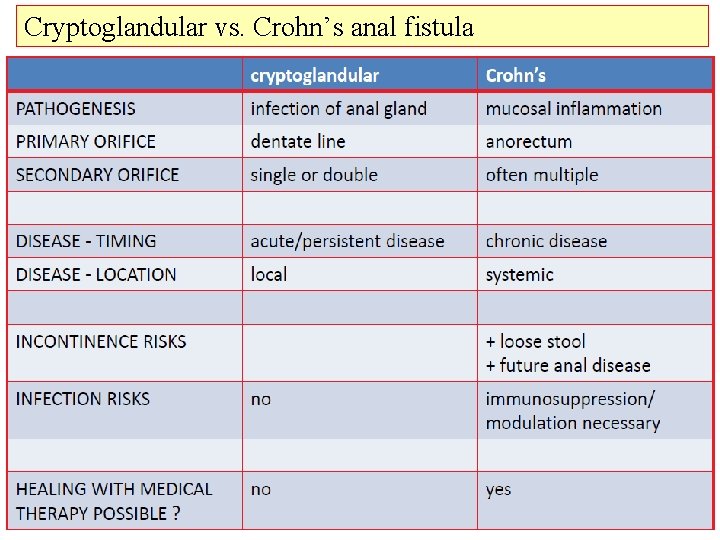
Cryptoglandular vs. Crohn’s anal fistula
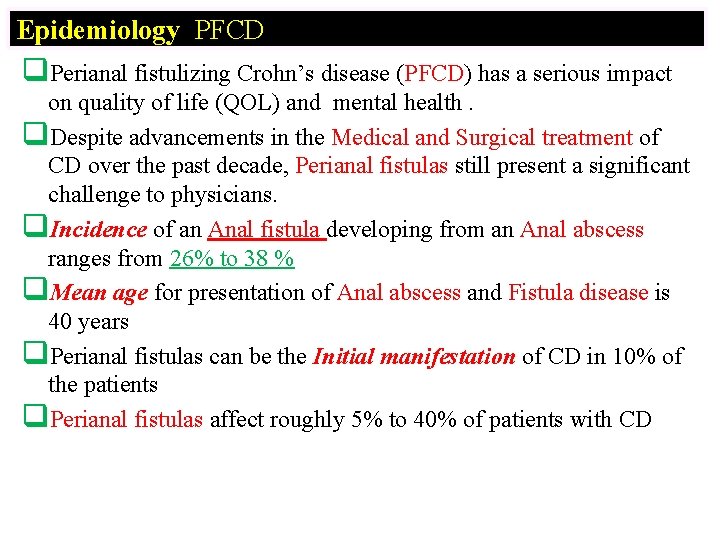
Epidemiology PFCD q. Perianal fistulizing Crohn’s disease (PFCD) has a serious impact on quality of life (QOL) and mental health. q. Despite advancements in the Medical and Surgical treatment of CD over the past decade, Perianal fistulas still present a significant challenge to physicians. q. Incidence of an Anal fistula developing from an Anal abscess ranges from 26% to 38 % q. Mean age for presentation of Anal abscess and Fistula disease is 40 years q. Perianal fistulas can be the Initial manifestation of CD in 10% of the patients q. Perianal fistulas affect roughly 5% to 40% of patients with CD
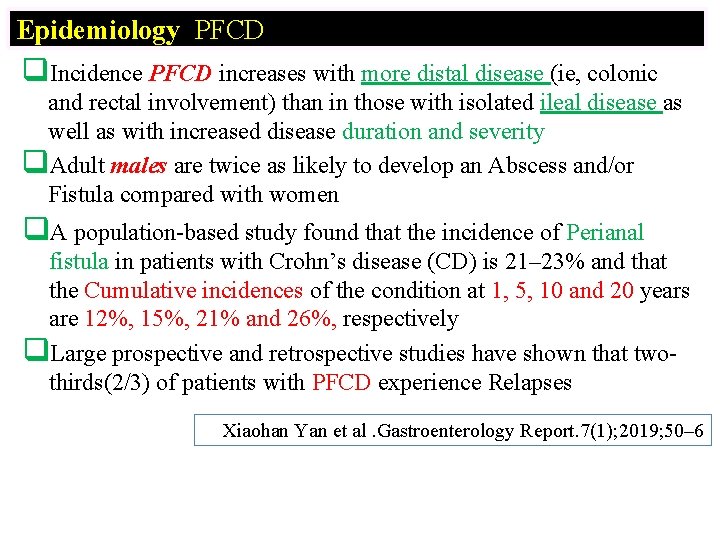
Epidemiology PFCD q. Incidence PFCD increases with more distal disease (ie, colonic and rectal involvement) than in those with isolated ileal disease as well as with increased disease duration and severity q. Adult males are twice as likely to develop an Abscess and/or Fistula compared with women q. A population-based study found that the incidence of Perianal fistula in patients with Crohn’s disease (CD) is 21– 23% and that the Cumulative incidences of the condition at 1, 5, 10 and 20 years are 12%, 15%, 21% and 26%, respectively q. Large prospective and retrospective studies have shown that twothirds(2/3) of patients with PFCD experience Relapses Xiaohan Yan et al. Gastroenterology Report. 7(1); 2019; 50– 6
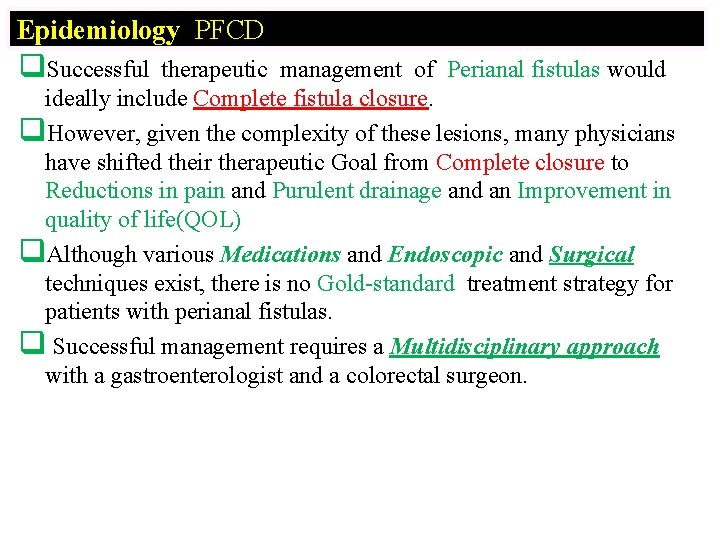
Epidemiology PFCD q. Successful therapeutic management of Perianal fistulas would ideally include Complete fistula closure. q. However, given the complexity of these lesions, many physicians have shifted their therapeutic Goal from Complete closure to Reductions in pain and Purulent drainage and an Improvement in quality of life(QOL) q. Although various Medications and Endoscopic and Surgical techniques exist, there is no Gold-standard treatment strategy for patients with perianal fistulas. q Successful management requires a Multidisciplinary approach with a gastroenterologist and a colorectal surgeon.
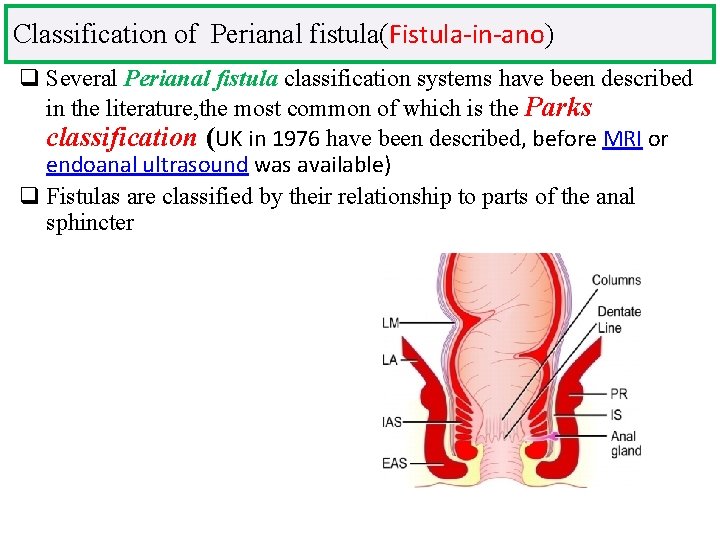
Classification of Perianal fistula(Fistula-in-ano) q Several Perianal fistula classification systems have been described in the literature, the most common of which is the Parks classification (UK in 1976 have been described, before MRI or endoanal ultrasound was available) q Fistulas are classified by their relationship to parts of the anal sphincter
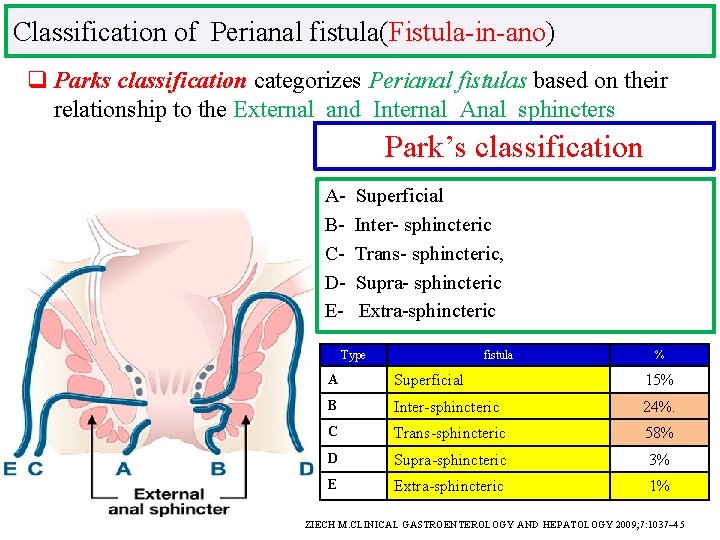
Classification of Perianal fistula(Fistula-in-ano) q Parks classification categorizes Perianal fistulas based on their relationship to the External and Internal Anal sphincters Park’s classification A- Superficial B- Inter- sphincteric C- Trans- sphincteric, D- Supra- sphincteric E- Extra-sphincteric Type fistula % A Superficial 15% B Inter-sphincteric 24%. C Trans-sphincteric 58% D Supra-sphincteric 3% E Extra-sphincteric 1% ZIECH M. CLINICAL GASTROENTEROLOGY AND HEPATOLOGY 2009; 7: 1037– 45
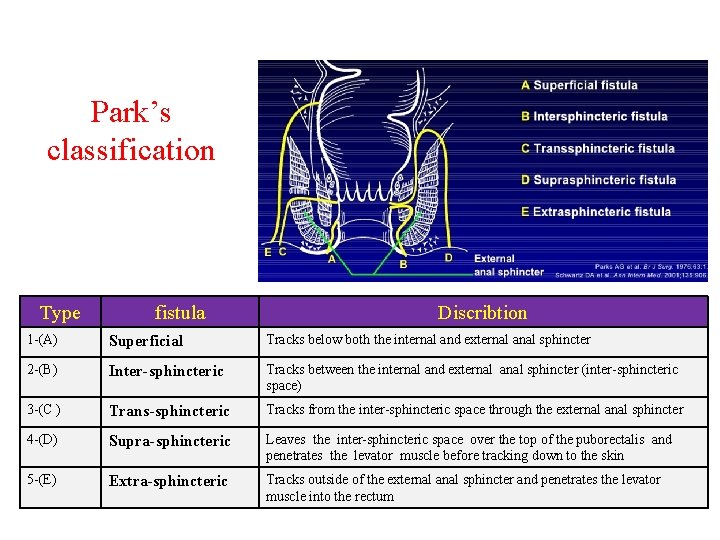
Park’s classification Type fistula Discribtion 1 -(A) Superficial Tracks below both the internal and external anal sphincter 2 -(B) Inter-sphincteric Tracks between the internal and external anal sphincter (inter-sphincteric space) 3 -(C ) Trans-sphincteric Tracks from the inter-sphincteric space through the external anal sphincter 4 -(D) Supra-sphincteric Leaves the inter-sphincteric space over the top of the puborectalis and penetrates the levator muscle before tracking down to the skin 5 -(E) Extra-sphincteric Tracks outside of the external anal sphincter and penetrates the levator muscle into the rectum
Classification of Perianal fistula(Fistula-in-ano) q. Given the complexity of this classification, the American Gastroenterological Association (AGA) Technical Review Panel proposed a revised classification that defines perianal fistulas as either (Bell classification): q simple q complex q. In comparison to the traditional Parks classification system, the AGA’s breakdown of fistulas into either simple or complex has proven to be much easier and more meaningful in the clinical setting, as a simple fistula is significantly easier to manage and poses little threat to fecal continence
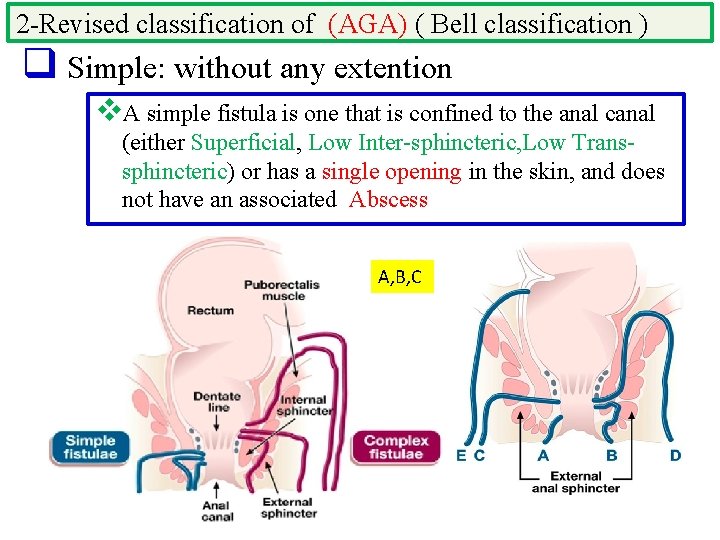
2 -Revised classification of (AGA) ( Bell classification ) q Simple: without any extention v. A simple fistula is one that is confined to the anal canal (either Superficial, Low Inter-sphincteric, Low Transsphincteric) or has a single opening in the skin, and does not have an associated Abscess A, B, C
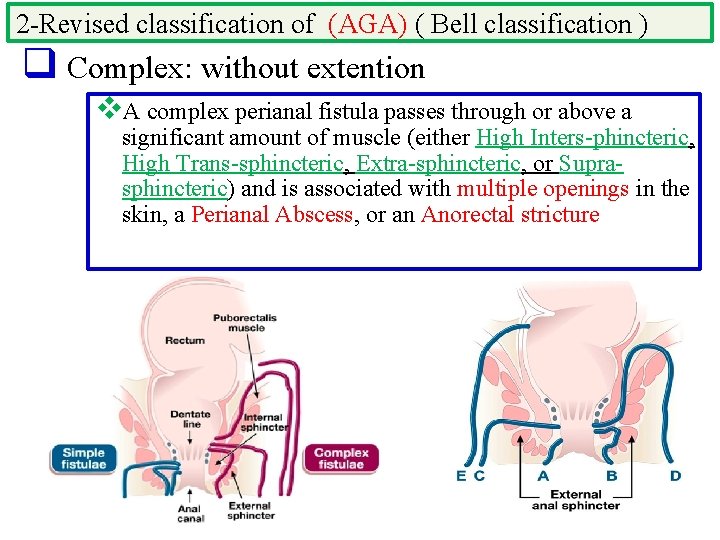
2 -Revised classification of (AGA) ( Bell classification ) q Complex: without extention v. A complex perianal fistula passes through or above a significant amount of muscle (either High Inters-phincteric, High Trans-sphincteric, Extra-sphincteric, or Suprasphincteric) and is associated with multiple openings in the skin, a Perianal Abscess, or an Anorectal stricture
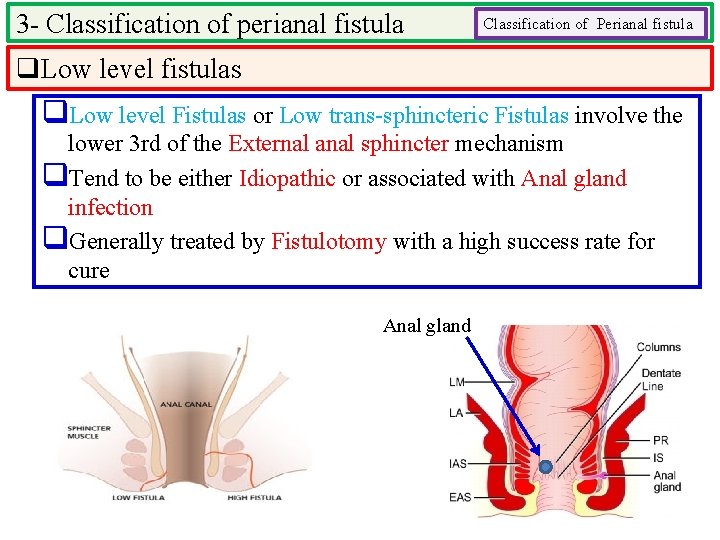
3 - Classification of perianal fistula Classification of Perianal fistula q. Low level fistulas q. Low level Fistulas or Low trans-sphincteric Fistulas involve the lower 3 rd of the External anal sphincter mechanism q. Tend to be either Idiopathic or associated with Anal gland infection q. Generally treated by Fistulotomy with a high success rate for cure Anal gland
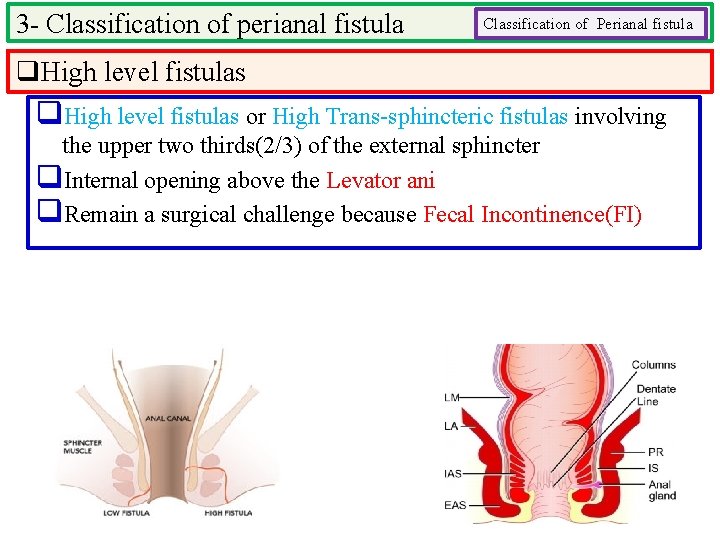
3 - Classification of perianal fistula Classification of Perianal fistula q. High level fistulas or High Trans-sphincteric fistulas involving the upper two thirds(2/3) of the external sphincter q. Internal opening above the Levator ani q. Remain a surgical challenge because Fecal Incontinence(FI)
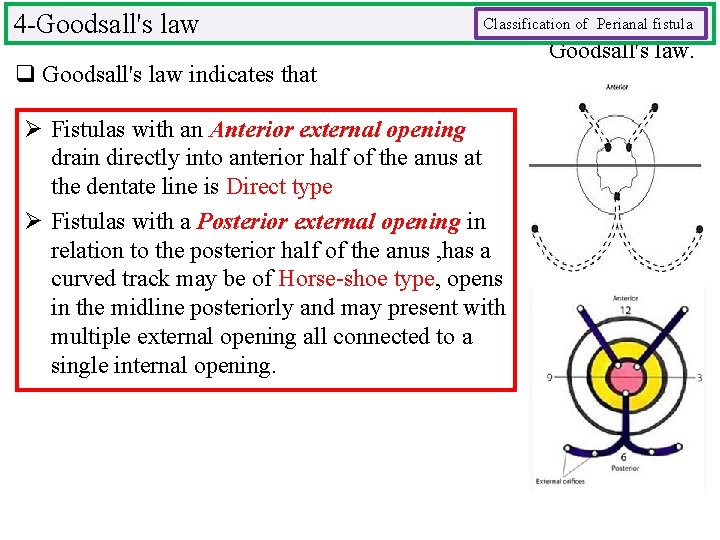
4 -Goodsall's law Classification of Perianal fistula q Goodsall's law indicates that Ø Fistulas with an Anterior external opening drain directly into anterior half of the anus at the dentate line is Direct type Ø Fistulas with a Posterior external opening in relation to the posterior half of the anus , has a curved track may be of Horse-shoe type, opens in the midline posteriorly and may present with multiple external opening all connected to a single internal opening. Goodsall's law.
5 -Classification Perianal fistula Classification of Perianal fistula q. Single External opening q. Multiple External opening Which are often seen in q. Tuberculosis q. Ulcerative colitis q. Crohns disease q. Hidradenitis suppurative q. Actinomycosis
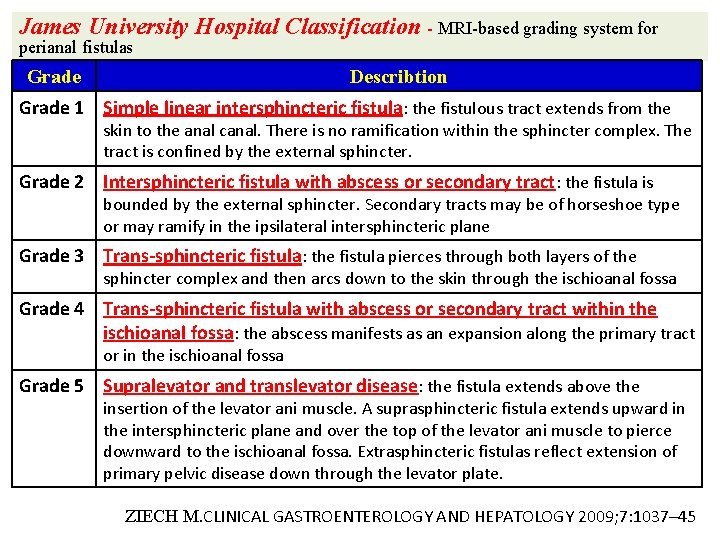
James University Hospital Classification - MRI-based grading system for perianal fistulas Grade Describtion Grade 1 Simple linear intersphincteric fistula: the fistulous tract extends from the skin to the anal canal. There is no ramification within the sphincter complex. The tract is confined by the external sphincter. Grade 2 Intersphincteric fistula with abscess or secondary tract : the fistula is bounded by the external sphincter. Secondary tracts may be of horseshoe type or may ramify in the ipsilateral intersphincteric plane Grade 3 Trans-sphincteric fistula: the fistula pierces through both layers of the sphincter complex and then arcs down to the skin through the ischioanal fossa Grade 4 Trans-sphincteric fistula with abscess or secondary tract within the ischioanal fossa: the abscess manifests as an expansion along the primary tract or in the ischioanal fossa Grade 5 Supralevator and translevator disease: the fistula extends above the insertion of the levator ani muscle. A suprasphincteric fistula extends upward in the intersphincteric plane and over the top of the levator ani muscle to pierce downward to the ischioanal fossa. Extrasphincteric fistulas reflect extension of primary pelvic disease down through the levator plate. ZIECH M. CLINICAL GASTROENTEROLOGY AND HEPATOLOGY 2009; 7: 1037– 45
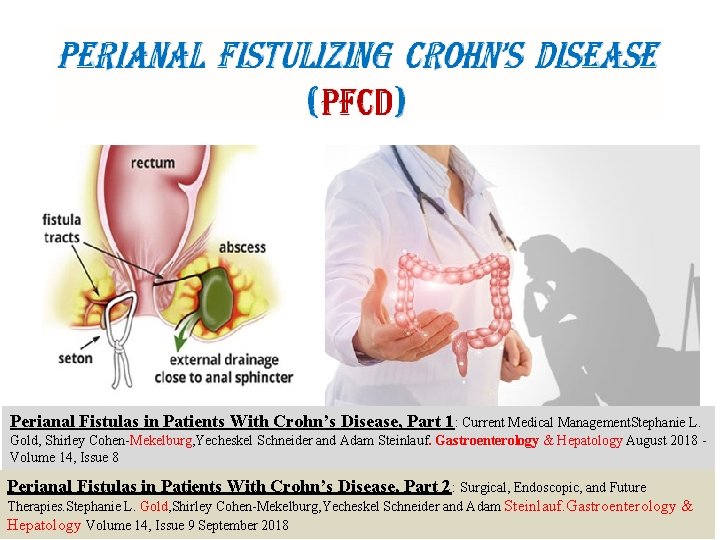
Perianal Fistulas in Patients With Crohn’s Disease, Part 1: Current Medical Management. Stephanie L. Gold, Shirley Cohen-Mekelburg, Yecheskel Schneider and Adam Steinlauf. Gastroenterology & Hepatology August 2018 - Volume 14, Issue 8 Perianal Fistulas in Patients With Crohn’s Disease, Part 2: Surgical, Endoscopic, and Future Therapies. Stephanie L. Gold, Shirley Cohen-Mekelburg, Yecheskel Schneider and Adam Steinlauf. Gastroenterology & Hepatology Volume 14, Issue 9 September 2018
Perianal Fistulas in Patients With Crohn’s Disease, Part 1: Current Medical Management Stephanie L. Gold, Shirley Cohen-Mekelburg, Yecheskel Schneider and Adam Steinlauf Gastroenterology & Hepatology August 2018 - Volume 14, Issue 8; 470 -80
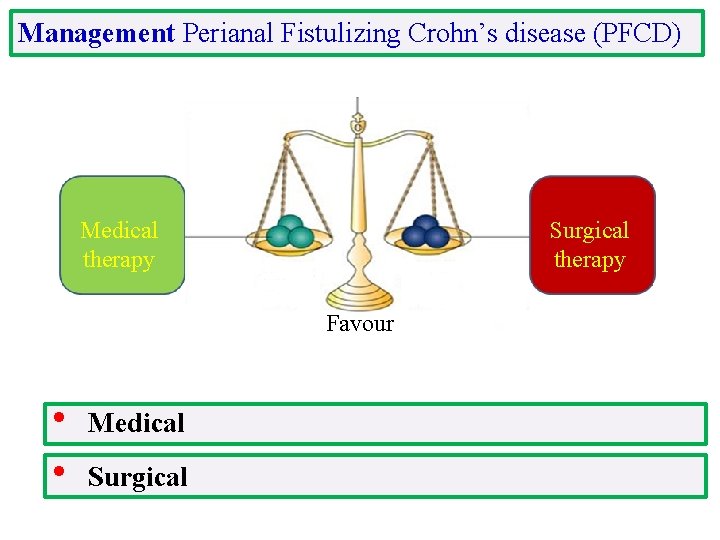
Management Perianal Fistulizing Crohn’s disease (PFCD) Surgical therapy Medical therapy Favour • • Medical Surgical
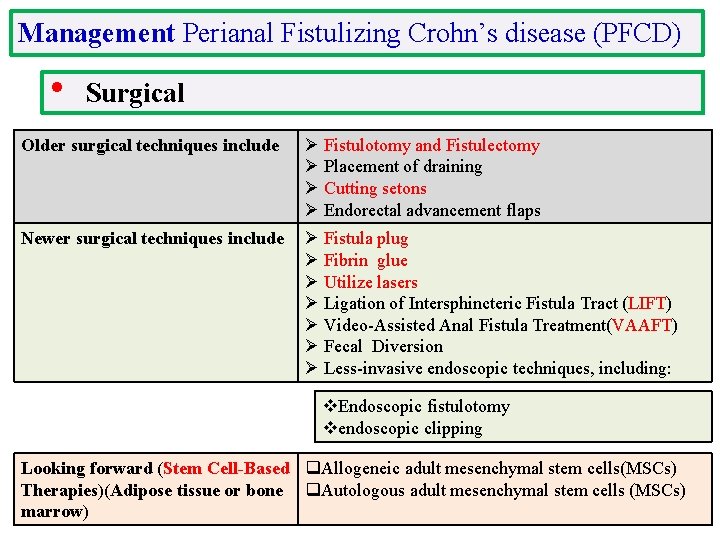
Management Perianal Fistulizing Crohn’s disease (PFCD) • Surgical Older surgical techniques include Ø Fistulotomy and Fistulectomy Ø Placement of draining Ø Cutting setons Ø Endorectal advancement flaps Newer surgical techniques include Ø Fistula plug Ø Fibrin glue Ø Utilize lasers Ø Ligation of Intersphincteric Fistula Tract (LIFT) Ø Video-Assisted Anal Fistula Treatment(VAAFT) Ø Fecal Diversion Ø Less-invasive endoscopic techniques, including: v. Endoscopic fistulotomy vendoscopic clipping Looking forward (Stem Cell-Based q. Allogeneic adult mesenchymal stem cells(MSCs) Therapies)(Adipose tissue or bone q. Autologous adult mesenchymal stem cells (MSCs) marrow)
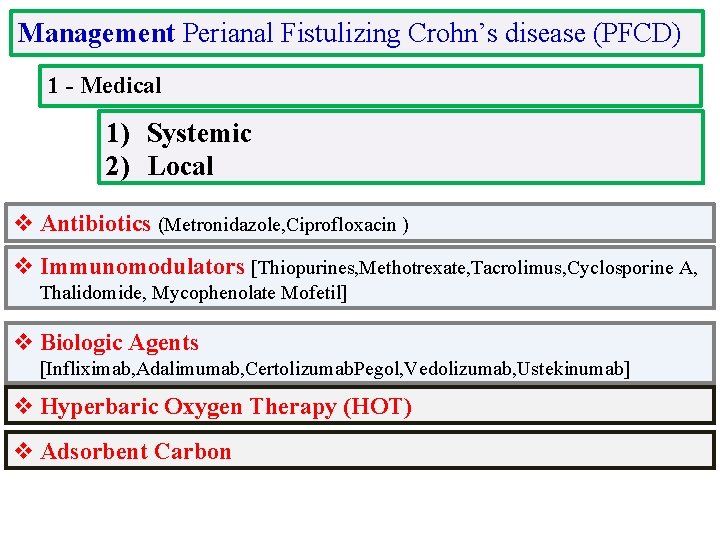
Management Perianal Fistulizing Crohn’s disease (PFCD) 1 - Medical 1) Systemic 2) Local v Antibiotics (Metronidazole, Ciprofloxacin ) v Immunomodulators [Thiopurines, Methotrexate, Tacrolimus, Cyclosporine A, Thalidomide, Mycophenolate Mofetil] v Biologic Agents [Infliximab, Adalimumab, Certolizumab. Pegol, Vedolizumab, Ustekinumab] v Hyperbaric Oxygen Therapy (HOT) v Adsorbent Carbon
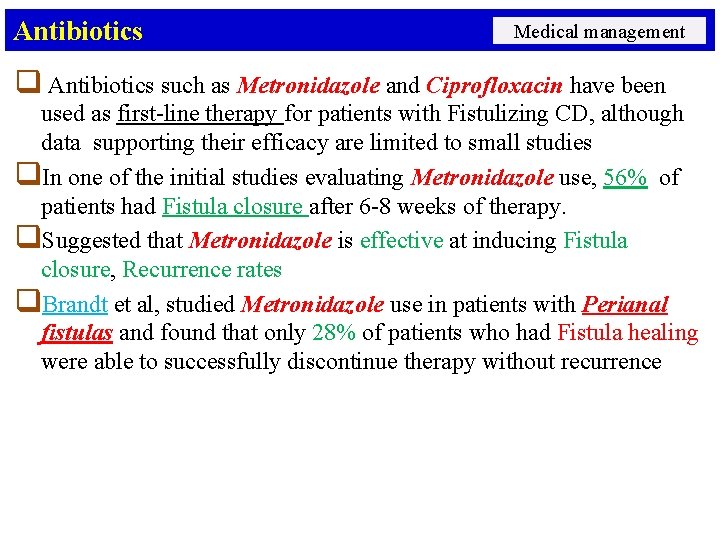
Antibiotics Medical management q Antibiotics such as Metronidazole and Ciprofloxacin have been used as first-line therapy for patients with Fistulizing CD, although data supporting their efficacy are limited to small studies q. In one of the initial studies evaluating Metronidazole use, 56% of patients had Fistula closure after 6 -8 weeks of therapy. q. Suggested that Metronidazole is effective at inducing Fistula closure, Recurrence rates q. Brandt et al, studied Metronidazole use in patients with Perianal fistulas and found that only 28% of patients who had Fistula healing were able to successfully discontinue therapy without recurrence
Antibiotics Cont. 1 -Medical management q. Long-term use of Antibiotics is associated with significant morbidity q. No clinical Guidelines on Antibiotic selection exist, but Ciprofloxacin has been shown to have higher rates of clinical improvement and Complete fistula closure when compared to Metronidazole, although the difference did not reach significance q Use of Topical Antibiotic ointments or creams for patients with Perianal CD has been investigated q. A randomized trial assessing the use of Metronidazole topical ointment reported an improvement in pain and drainage from the Fistula tract
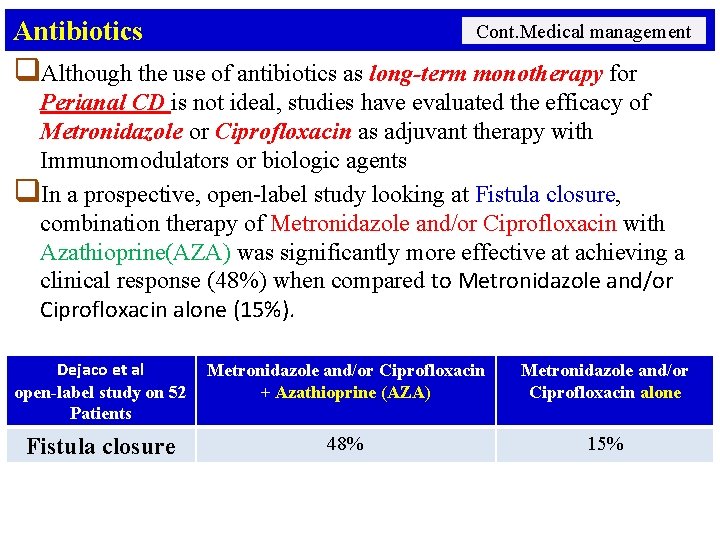
Antibiotics Cont. Medical management q. Although the use of antibiotics as long-term monotherapy for Perianal CD is not ideal, studies have evaluated the efficacy of Metronidazole or Ciprofloxacin as adjuvant therapy with Immunomodulators or biologic agents q. In a prospective, open-label study looking at Fistula closure, combination therapy of Metronidazole and/or Ciprofloxacin with Azathioprine(AZA) was significantly more effective at achieving a clinical response (48%) when compared to Metronidazole and/or Ciprofloxacin alone (15%). Dejaco et al open-label study on 52 Patients Metronidazole and/or Ciprofloxacin + Azathioprine (AZA) Metronidazole and/or Ciprofloxacin alone Fistula closure 48% 15%
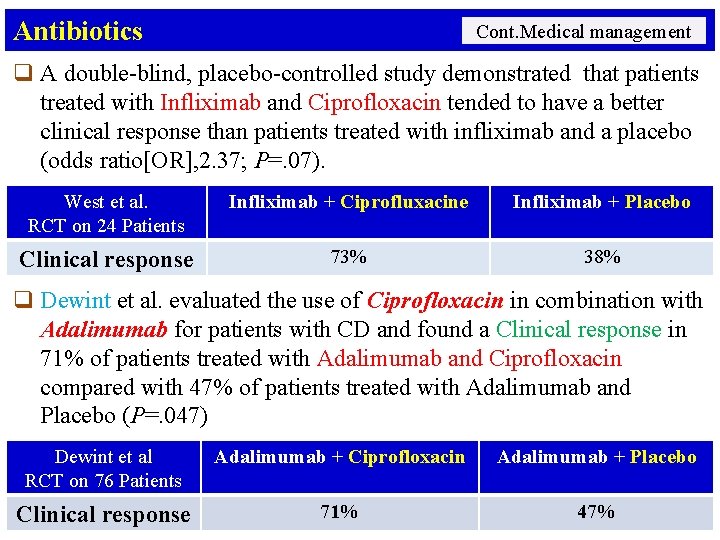
Antibiotics Cont. Medical management q A double-blind, placebo-controlled study demonstrated that patients treated with Infliximab and Ciprofloxacin tended to have a better clinical response than patients treated with infliximab and a placebo (odds ratio[OR], 2. 37; P=. 07). West et al. RCT on 24 Patients Infliximab + Ciprofluxacine Infliximab + Placebo Clinical response 73% 38% q Dewint et al. evaluated the use of Ciprofloxacin in combination with Adalimumab for patients with CD and found a Clinical response in 71% of patients treated with Adalimumab and Ciprofloxacin compared with 47% of patients treated with Adalimumab and Placebo (P=. 047) Dewint et al RCT on 76 Patients Adalimumab + Ciprofloxacin Adalimumab + Placebo Clinical response 71% 47%
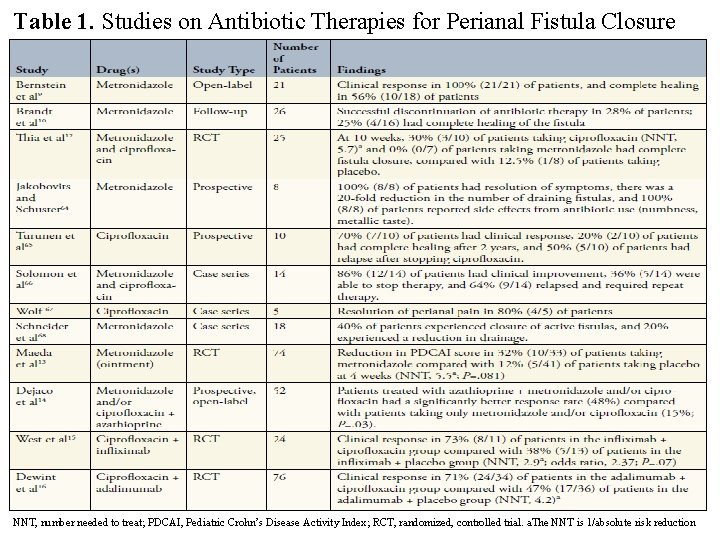
Table 1. Studies on Antibiotic Therapies for Perianal Fistula Closure NNT, number needed to treat; PDCAI, Pediatric Crohn’s Disease Activity Index; RCT, randomized, controlled trial. a. The NNT is 1/absolute risk reduction
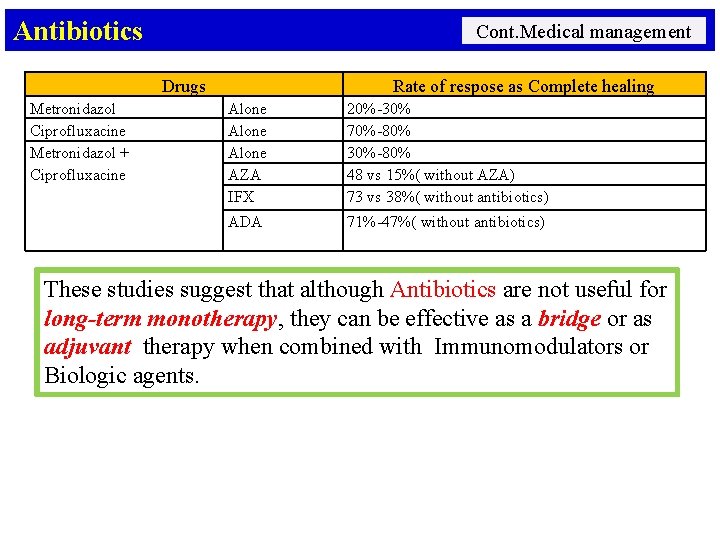
Antibiotics Cont. Medical management Drugs Metronidazol Ciprofluxacine Metronidazol + Ciprofluxacine Rate of respose as Complete healing Alone AZA IFX 20%-30% 70%-80% 30%-80% 48 vs 15%( without AZA) 73 vs 38%( without antibiotics) ADA 71%-47%( without antibiotics) These studies suggest that although Antibiotics are not useful for long-term monotherapy, they can be effective as a bridge or as adjuvant therapy when combined with Immunomodulators or Biologic agents.
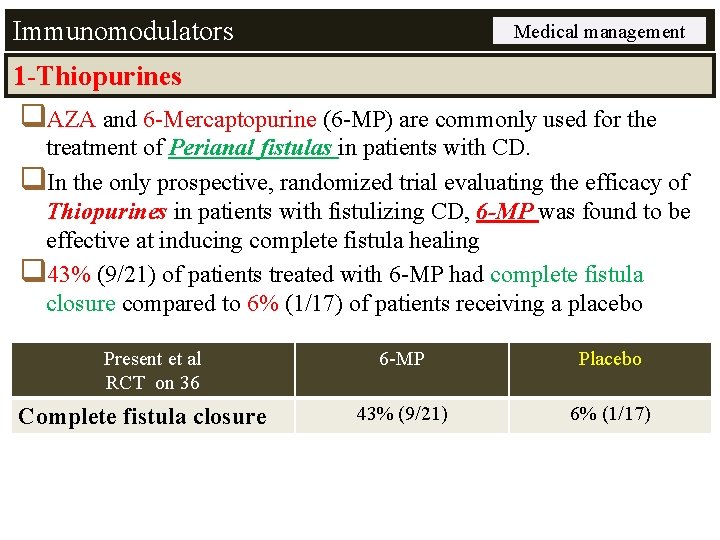
Immunomodulators Medical management 1 -Thiopurines q. AZA and 6 -Mercaptopurine (6 -MP) are commonly used for the treatment of Perianal fistulas in patients with CD. q. In the only prospective, randomized trial evaluating the efficacy of Thiopurines in patients with fistulizing CD, 6 -MP was found to be effective at inducing complete fistula healing q 43% (9/21) of patients treated with 6 -MP had complete fistula closure compared to 6% (1/17) of patients receiving a placebo Present et al RCT on 36 Complete fistula closure 6 -MP Placebo 43% (9/21) 6% (1/17)
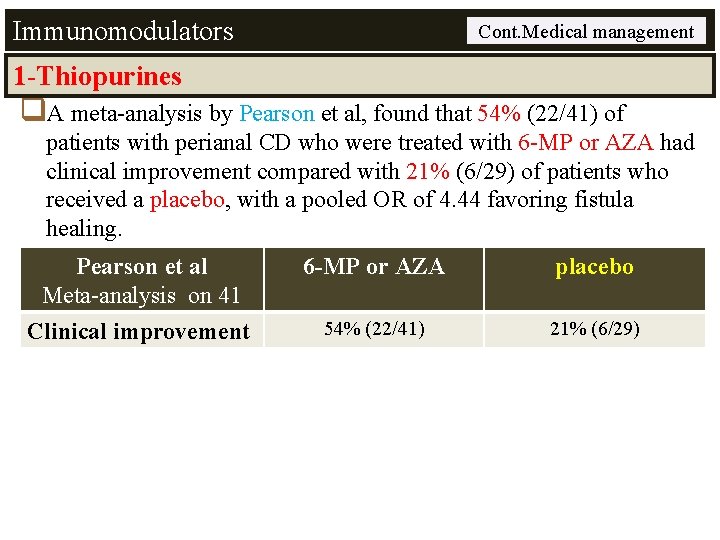
Immunomodulators Cont. Medical management 1 -Thiopurines q. A meta-analysis by Pearson et al, found that 54% (22/41) of patients with perianal CD who were treated with 6 -MP or AZA had clinical improvement compared with 21% (6/29) of patients who received a placebo, with a pooled OR of 4. 44 favoring fistula healing. Pearson et al Meta-analysis on 41 6 -MP or AZA placebo Clinical improvement 54% (22/41) 21% (6/29)
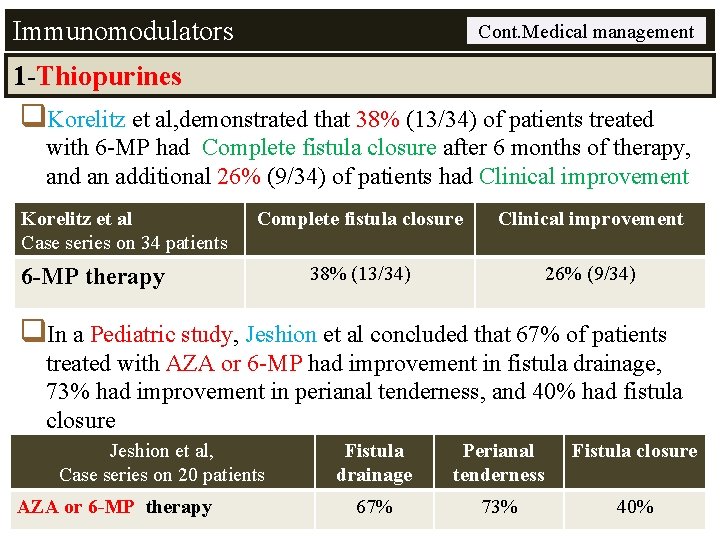
Immunomodulators Cont. Medical management 1 -Thiopurines q. Korelitz et al, demonstrated that 38% (13/34) of patients treated with 6 -MP had Complete fistula closure after 6 months of therapy, and an additional 26% (9/34) of patients had Clinical improvement Korelitz et al Case series on 34 patients Complete fistula closure Clinical improvement 38% (13/34) 26% (9/34) 6 -MP therapy q. In a Pediatric study, Jeshion et al concluded that 67% of patients treated with AZA or 6 -MP had improvement in fistula drainage, 73% had improvement in perianal tenderness, and 40% had fistula closure Jeshion et al, Case series on 20 patients AZA or 6 -MP therapy Fistula drainage Perianal tenderness Fistula closure 67% 73% 40%
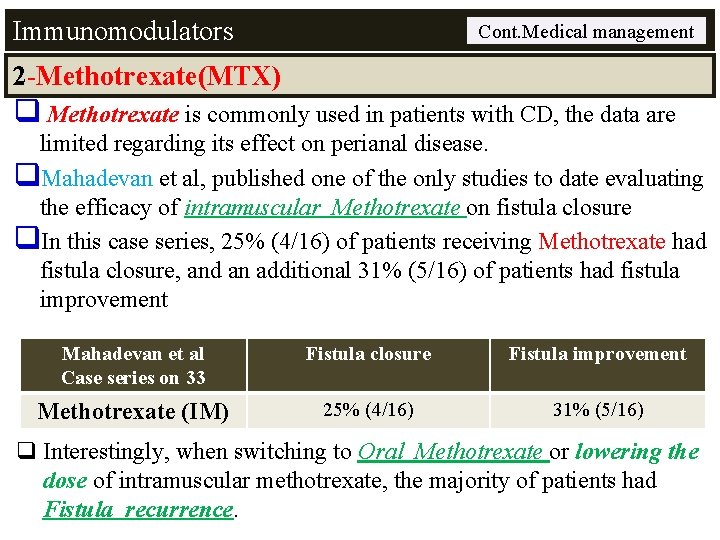
Immunomodulators Cont. Medical management 2 -Methotrexate(MTX) q Methotrexate is commonly used in patients with CD, the data are limited regarding its effect on perianal disease. q. Mahadevan et al, published one of the only studies to date evaluating the efficacy of intramuscular Methotrexate on fistula closure q. In this case series, 25% (4/16) of patients receiving Methotrexate had fistula closure, and an additional 31% (5/16) of patients had fistula improvement Mahadevan et al Case series on 33 Fistula closure Fistula improvement Methotrexate (IM) 25% (4/16) 31% (5/16) q Interestingly, when switching to Oral Methotrexate or lowering the dose of intramuscular methotrexate, the majority of patients had Fistula recurrence.
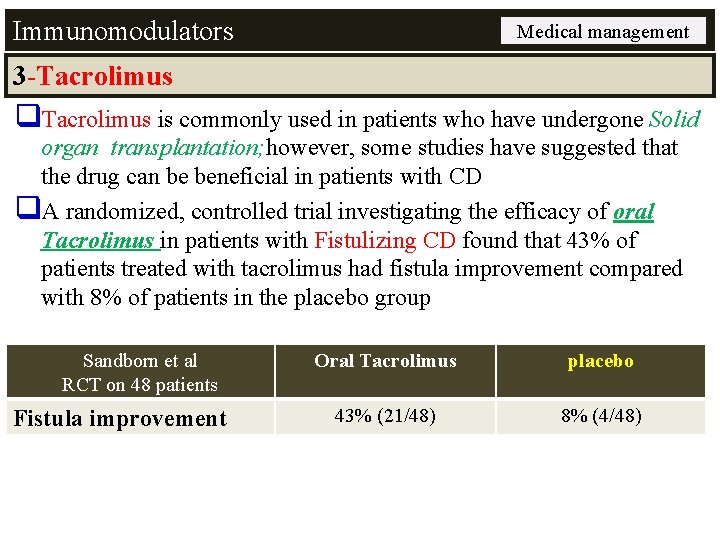
Immunomodulators Medical management 3 -Tacrolimus q. Tacrolimus is commonly used in patients who have undergone Solid organ transplantation; however, some studies have suggested that the drug can be beneficial in patients with CD q. A randomized, controlled trial investigating the efficacy of oral Tacrolimus in patients with Fistulizing CD found that 43% of patients treated with tacrolimus had fistula improvement compared with 8% of patients in the placebo group Sandborn et al RCT on 48 patients Fistula improvement Oral Tacrolimus placebo 43% (21/48) 8% (4/48)
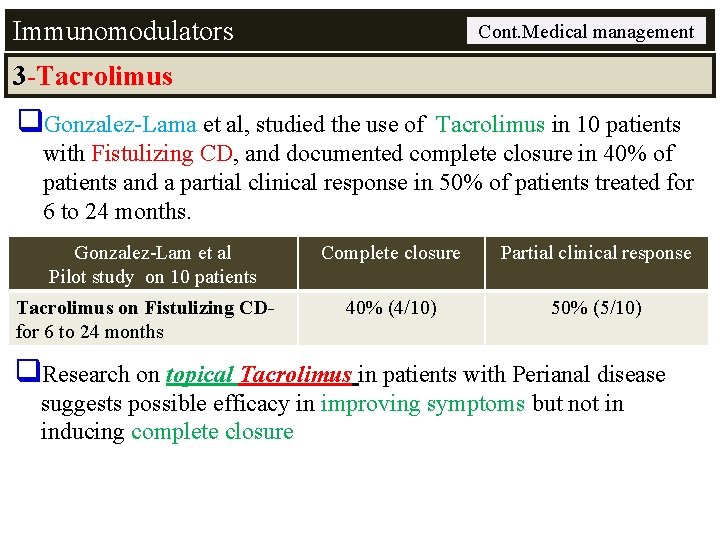
Immunomodulators Cont. Medical management 3 -Tacrolimus q. Gonzalez-Lama et al, studied the use of Tacrolimus in 10 patients with Fistulizing CD, and documented complete closure in 40% of patients and a partial clinical response in 50% of patients treated for 6 to 24 months. Gonzalez-Lam et al Pilot study on 10 patients Tacrolimus on Fistulizing CDfor 6 to 24 months Complete closure Partial clinical response 40% (4/10) 50% (5/10) q. Research on topical Tacrolimus in patients with Perianal disease suggests possible efficacy in improving symptoms but not in inducing complete closure
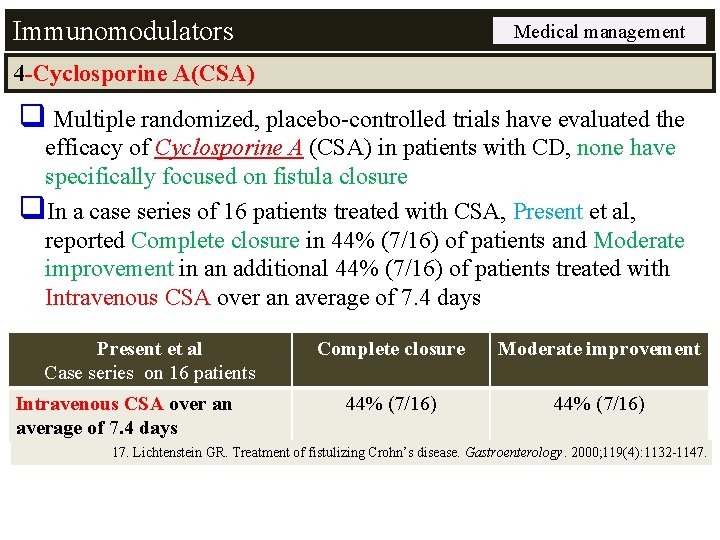
Immunomodulators Medical management 4 -Cyclosporine A(CSA) q Multiple randomized, placebo-controlled trials have evaluated the efficacy of Cyclosporine A (CSA) in patients with CD, none have specifically focused on fistula closure q. In a case series of 16 patients treated with CSA, Present et al, reported Complete closure in 44% (7/16) of patients and Moderate improvement in an additional 44% (7/16) of patients treated with Intravenous CSA over an average of 7. 4 days Present et al Case series on 16 patients Intravenous CSA over an average of 7. 4 days Complete closure Moderate improvement 44% (7/16) 17. Lichtenstein GR. Treatment of fistulizing Crohn’s disease. Gastroenterology. 2000; 119(4): 1132 -1147.
Immunomodulators Cont. Medical management 4 - Cyclosporine A(CSA) q Interestingly, of the 10 patients who had previously failed 6 -MP and/or AZA in this study, 9 patients (90%) had improvement in the Fistula when treated with CSA. q In another study evaluating in patients treated with intravenous CSA, 78% of patients showed a Partial clinical response; however, 71% of those patients who were ultimately converted to Oral CSA , had relapse of their disease q Therefore, CSA is likely best used as an intravenous rescue bridge to a more long-term Immunomodulator or Biologic therapy.
Immunomodulators Medical management 5 - Thalidomide q. In patients with severely Refractory disease, the use of Thalidomide has been proposed. q. To date, 2 small studies in patients with Fistulizing CD treated with Thalidomide are available. q. Plamondon et al, evaluated the use of Thalidomide for patients with Refractory CD and included 4 patients with Perianal fistulas, all of whom had documented Complete closure. q. However, nearly 50% of the entire cohort terminated the use of Thalidomide due to severe side effects, including neuropathy and leukopenia.
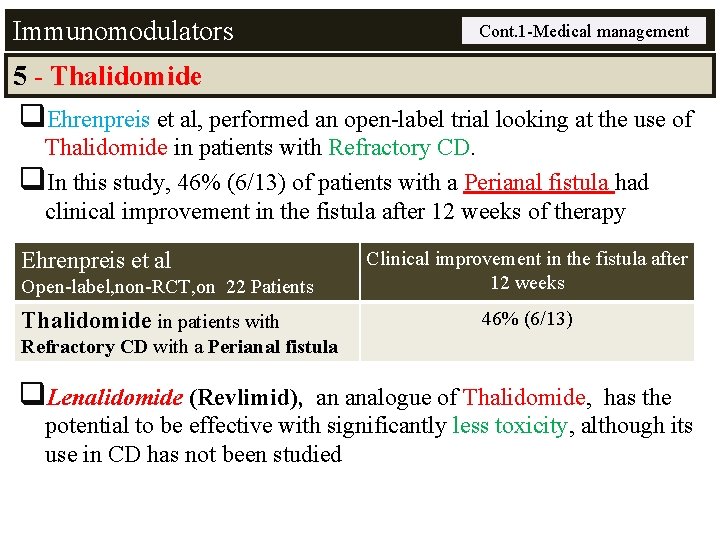
Immunomodulators Cont. 1 -Medical management 5 - Thalidomide q. Ehrenpreis et al, performed an open-label trial looking at the use of Thalidomide in patients with Refractory CD. q. In this study, 46% (6/13) of patients with a Perianal fistula had clinical improvement in the fistula after 12 weeks of therapy Ehrenpreis et al Open-label, non-RCT, on 22 Patients Thalidomide in patients with Clinical improvement in the fistula after 12 weeks 46% (6/13) Refractory CD with a Perianal fistula q. Lenalidomide (Revlimid), an analogue of Thalidomide, has the potential to be effective with significantly less toxicity, although its use in CD has not been studied
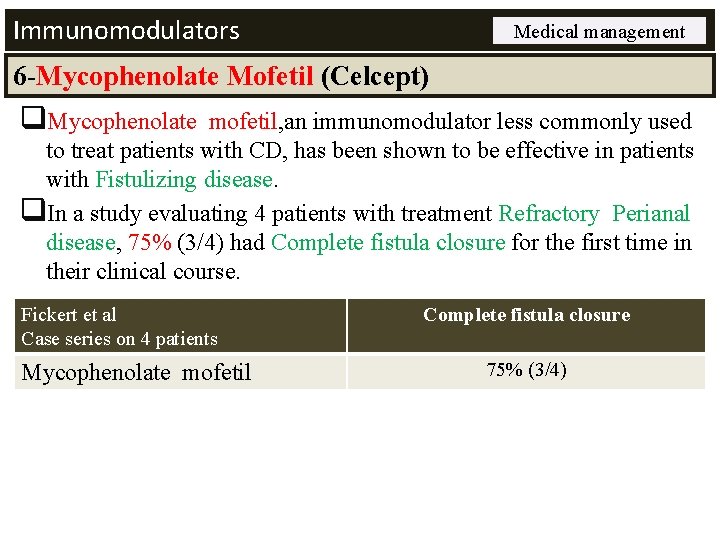
Immunomodulators Medical management 6 -Mycophenolate Mofetil (Celcept) q. Mycophenolate mofetil, an immunomodulator less commonly used to treat patients with CD, has been shown to be effective in patients with Fistulizing disease. q. In a study evaluating 4 patients with treatment Refractory Perianal disease, 75% (3/4) had Complete fistula closure for the first time in their clinical course. Fickert et al Case series on 4 patients Mycophenolate mofetil Complete fistula closure 75% (3/4)
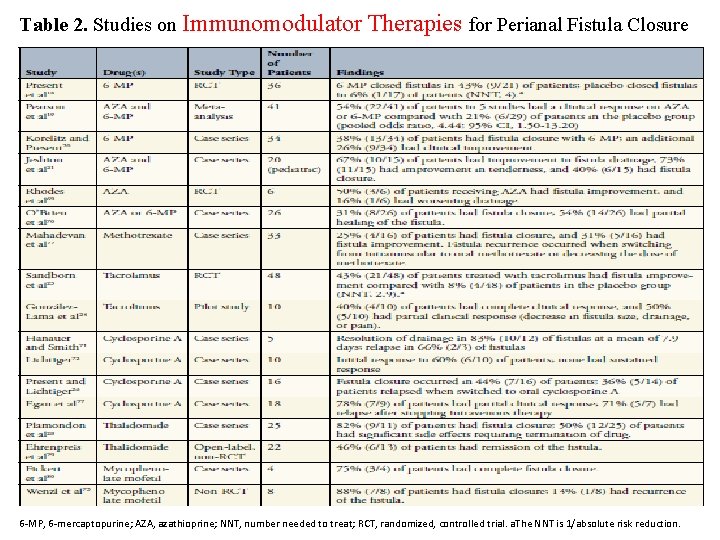
Table 2. Studies on Immunomodulator Therapies for Perianal Fistula Closure 6 -MP, 6 -mercaptopurine; AZA, azathioprine; NNT, number needed to treat; RCT, randomized, controlled trial. a. The NNT is 1/absolute risk reduction.
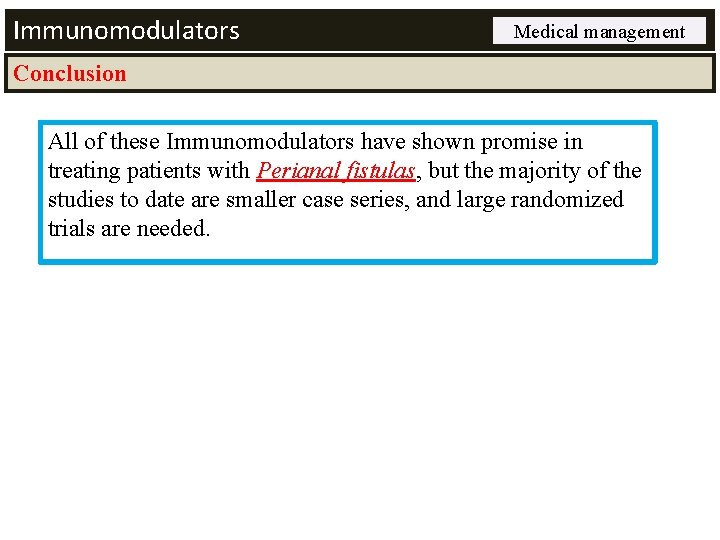
Immunomodulators Medical management Conclusion All of these Immunomodulators have shown promise in treating patients with Perianal fistulas, but the majority of the studies to date are smaller case series, and large randomized trials are needed.
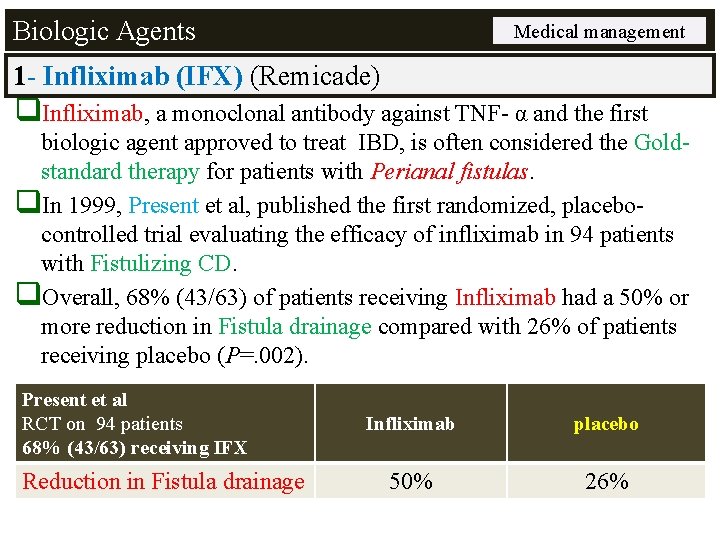
Biologic Agents Medical management 1 - Infliximab (IFX) (Remicade) q. Infliximab, a monoclonal antibody against TNF- α and the first biologic agent approved to treat IBD, is often considered the Goldstandard therapy for patients with Perianal fistulas. q. In 1999, Present et al, published the first randomized, placebocontrolled trial evaluating the efficacy of infliximab in 94 patients with Fistulizing CD. q. Overall, 68% (43/63) of patients receiving Infliximab had a 50% or more reduction in Fistula drainage compared with 26% of patients receiving placebo (P=. 002). Present et al RCT on 94 patients 68% (43/63) receiving IFX Reduction in Fistula drainage Infliximab placebo 50% 26%
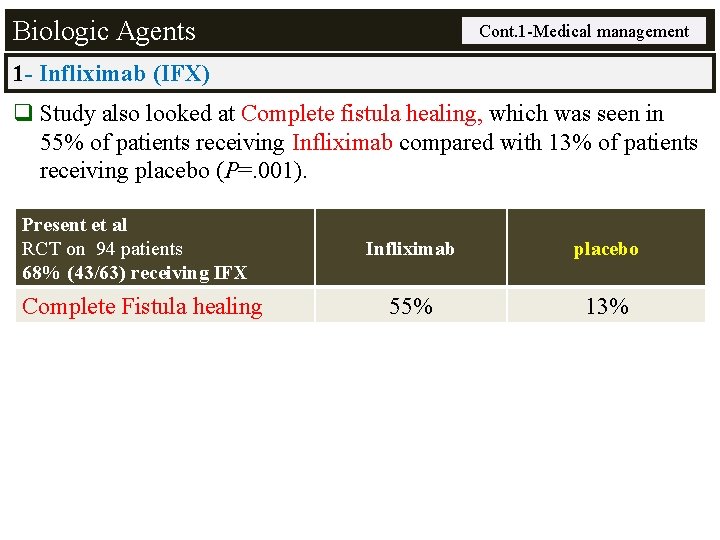
Biologic Agents Cont. 1 -Medical management 1 - Infliximab (IFX) q Study also looked at Complete fistula healing, which was seen in 55% of patients receiving Infliximab compared with 13% of patients receiving placebo (P=. 001). Present et al RCT on 94 patients 68% (43/63) receiving IFX Complete Fistula healing Infliximab placebo 55% 13%
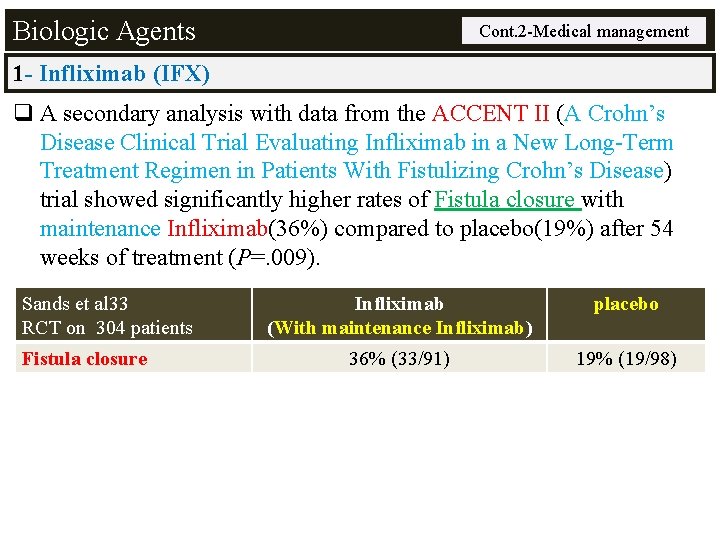
Biologic Agents Cont. 2 -Medical management 1 - Infliximab (IFX) q A secondary analysis with data from the ACCENT II (A Crohn’s Disease Clinical Trial Evaluating Infliximab in a New Long-Term Treatment Regimen in Patients With Fistulizing Crohn’s Disease) trial showed significantly higher rates of Fistula closure with maintenance Infliximab(36%) compared to placebo(19%) after 54 weeks of treatment (P=. 009). Sands et al 33 RCT on 304 patients Fistula closure Infliximab (With maintenance Infliximab) placebo 36% (33/91) 19% (19/98)
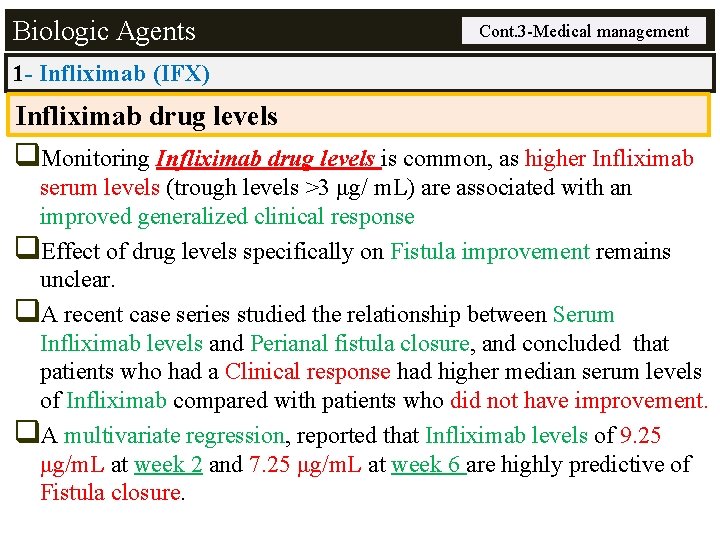
Biologic Agents Cont. 3 -Medical management 1 - Infliximab (IFX) Infliximab drug levels q. Monitoring Infliximab drug levels is common, as higher Infliximab serum levels (trough levels >3 μg/ m. L) are associated with an improved generalized clinical response q. Effect of drug levels specifically on Fistula improvement remains unclear. q. A recent case series studied the relationship between Serum Infliximab levels and Perianal fistula closure, and concluded that patients who had a Clinical response had higher median serum levels of Infliximab compared with patients who did not have improvement. q. A multivariate regression, reported that Infliximab levels of 9. 25 μg/m. L at week 2 and 7. 25 μg/m. L at week 6 are highly predictive of Fistula closure.
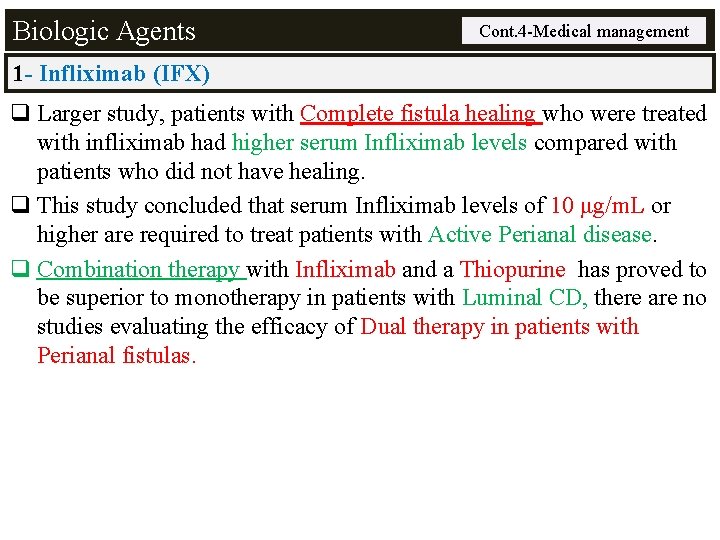
Biologic Agents Cont. 4 -Medical management 1 - Infliximab (IFX) q Larger study, patients with Complete fistula healing who were treated with infliximab had higher serum Infliximab levels compared with patients who did not have healing. q This study concluded that serum Infliximab levels of 10 μg/m. L or higher are required to treat patients with Active Perianal disease. q Combination therapy with Infliximab and a Thiopurine has proved to be superior to monotherapy in patients with Luminal CD, there are no studies evaluating the efficacy of Dual therapy in patients with Perianal fistulas.
Biologic Agents Cont. 5 -Medical management 1 - Infliximab (IFX) Given that Fistulizing disease is often thought to represent a more severe form of Luminal CD, it is plausible that combination therapy would also improve Fistula closure rates. Further studies are needed to better determine the best combination of therapies and the ideal serum infliximab target levels for fistula closure.
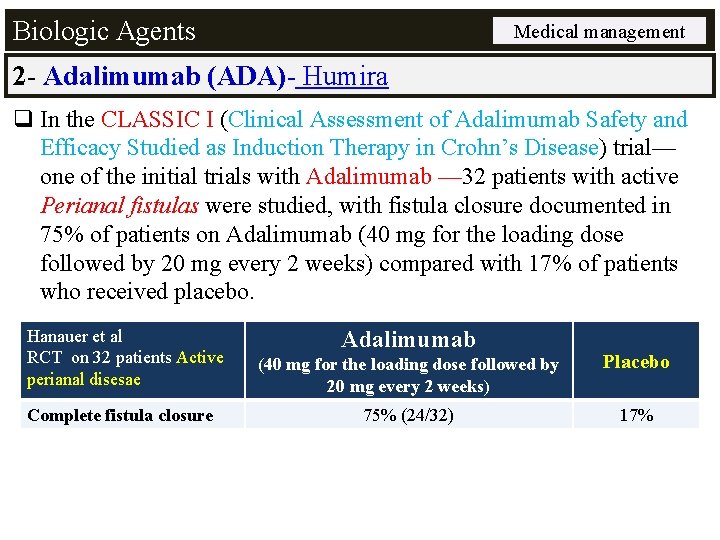
Biologic Agents Medical management 2 - Adalimumab (ADA)- Humira q In the CLASSIC I (Clinical Assessment of Adalimumab Safety and Efficacy Studied as Induction Therapy in Crohn’s Disease) trial— one of the initial trials with Adalimumab — 32 patients with active Perianal fistulas were studied, with fistula closure documented in 75% of patients on Adalimumab (40 mg for the loading dose followed by 20 mg every 2 weeks) compared with 17% of patients who received placebo. Hanauer et al RCT on 32 patients Active perianal disesae Complete fistula closure Adalimumab (40 mg for the loading dose followed by 20 mg every 2 weeks) Placebo 75% (24/32) 17%
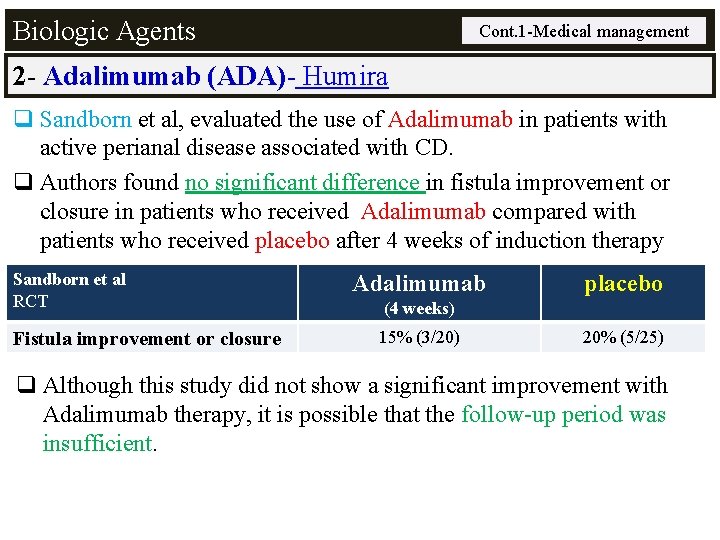
Biologic Agents Cont. 1 -Medical management 2 - Adalimumab (ADA)- Humira q Sandborn et al, evaluated the use of Adalimumab in patients with active perianal disease associated with CD. q Authors found no significant difference in fistula improvement or closure in patients who received Adalimumab compared with patients who received placebo after 4 weeks of induction therapy Sandborn et al RCT Fistula improvement or closure Adalimumab placebo (4 weeks) 15% (3/20) 20% (5/25) q Although this study did not show a significant improvement with Adalimumab therapy, it is possible that the follow-up period was insufficient.
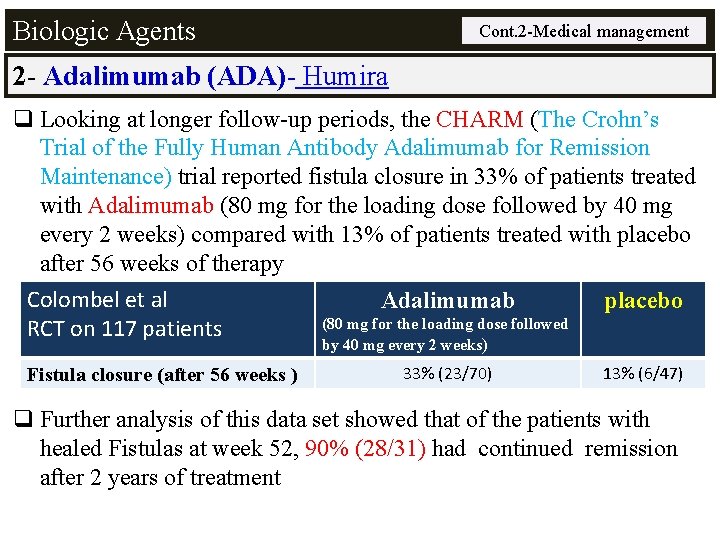
Biologic Agents Cont. 2 -Medical management 2 - Adalimumab (ADA)- Humira q Looking at longer follow-up periods, the CHARM (The Crohn’s Trial of the Fully Human Antibody Adalimumab for Remission Maintenance) trial reported fistula closure in 33% of patients treated with Adalimumab (80 mg for the loading dose followed by 40 mg every 2 weeks) compared with 13% of patients treated with placebo after 56 weeks of therapy Colombel et al Adalimumab placebo (80 mg for the loading dose followed RCT on 117 patients by 40 mg every 2 weeks) Fistula closure (after 56 weeks ) 33% (23/70) 13% (6/47) q Further analysis of this data set showed that of the patients with healed Fistulas at week 52, 90% (28/31) had continued remission after 2 years of treatment
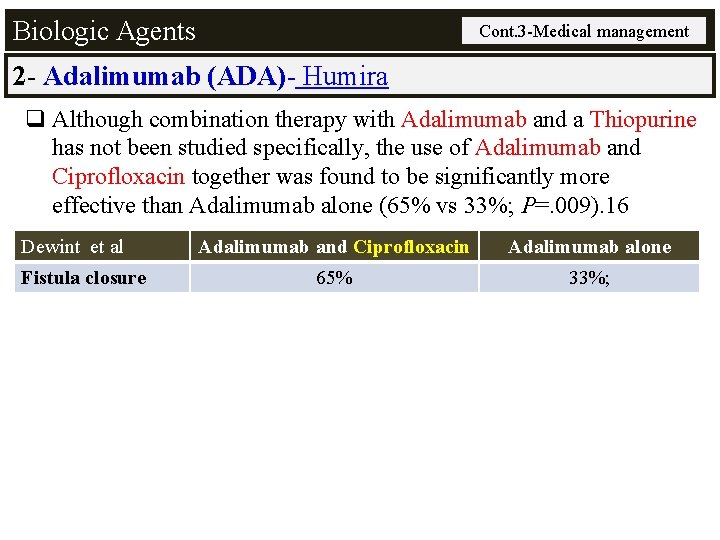
Biologic Agents Cont. 3 -Medical management 2 - Adalimumab (ADA)- Humira q Although combination therapy with Adalimumab and a Thiopurine has not been studied specifically, the use of Adalimumab and Ciprofloxacin together was found to be significantly more effective than Adalimumab alone (65% vs 33%; P=. 009). 16 Dewint et al Fistula closure Adalimumab and Ciprofloxacin Adalimumab alone 65% 33%;
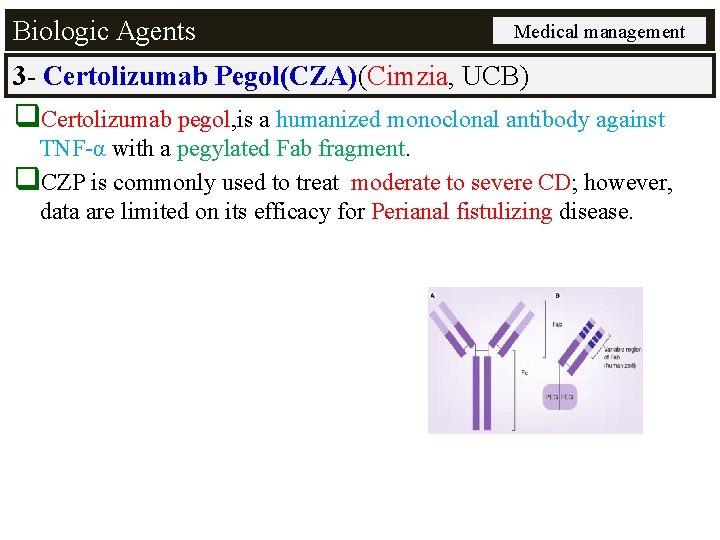
Biologic Agents Medical management 3 - Certolizumab Pegol(CZA)(Cimzia, UCB) q. Certolizumab pegol, is a humanized monoclonal antibody against TNF-α with a pegylated Fab fragment. q. CZP is commonly used to treat moderate to severe CD; however, data are limited on its efficacy for Perianal fistulizing disease.
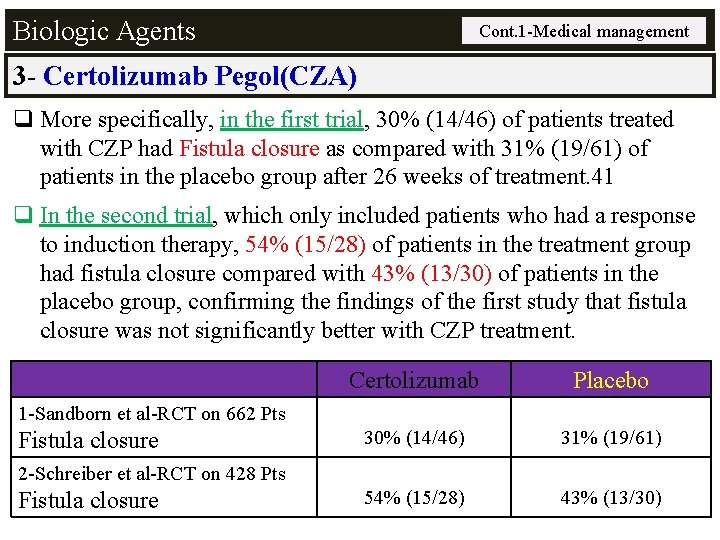
Biologic Agents Cont. 1 -Medical management 3 - Certolizumab Pegol(CZA) q More specifically, in the first trial, 30% (14/46) of patients treated with CZP had Fistula closure as compared with 31% (19/61) of patients in the placebo group after 26 weeks of treatment. 41 q In the second trial, which only included patients who had a response to induction therapy, 54% (15/28) of patients in the treatment group had fistula closure compared with 43% (13/30) of patients in the placebo group, confirming the findings of the first study that fistula closure was not significantly better with CZP treatment. Certolizumab Placebo 30% (14/46) 31% (19/61) 54% (15/28) 43% (13/30) 1 -Sandborn et al-RCT on 662 Pts Fistula closure 2 -Schreiber et al-RCT on 428 Pts Fistula closure
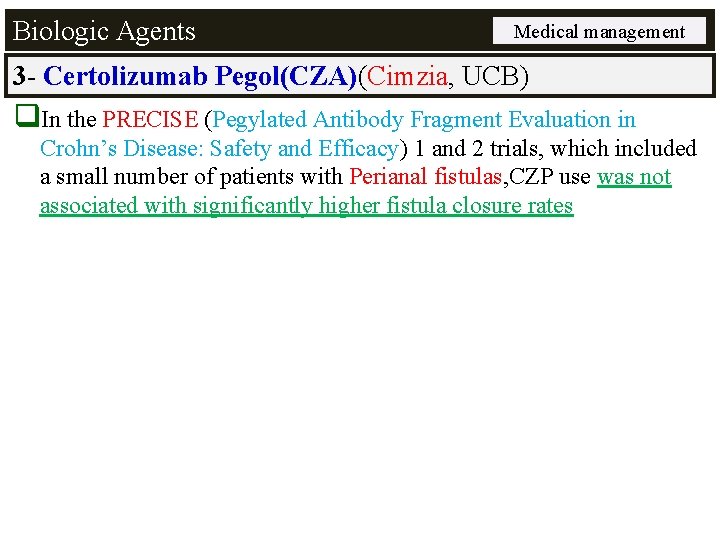
Biologic Agents Medical management 3 - Certolizumab Pegol(CZA)(Cimzia, UCB) q. In the PRECISE (Pegylated Antibody Fragment Evaluation in Crohn’s Disease: Safety and Efficacy) 1 and 2 trials, which included a small number of patients with Perianal fistulas, CZP use was not associated with significantly higher fistula closure rates
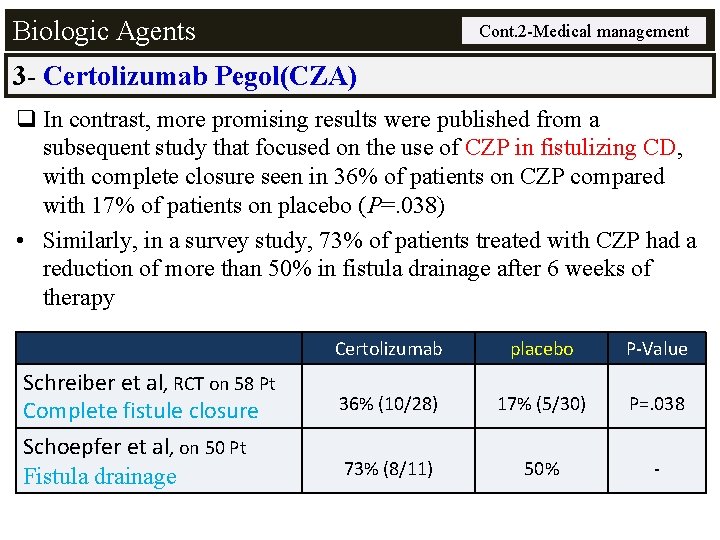
Biologic Agents Cont. 2 -Medical management 3 - Certolizumab Pegol(CZA) q In contrast, more promising results were published from a subsequent study that focused on the use of CZP in fistulizing CD, with complete closure seen in 36% of patients on CZP compared with 17% of patients on placebo (P=. 038) • Similarly, in a survey study, 73% of patients treated with CZP had a reduction of more than 50% in fistula drainage after 6 weeks of therapy Schreiber et al, RCT on 58 Pt Complete fistule closure Schoepfer et al, on 50 Pt Fistula drainage Certolizumab placebo P-Value 36% (10/28) 17% (5/30) P=. 038 73% (8/11) 50% -
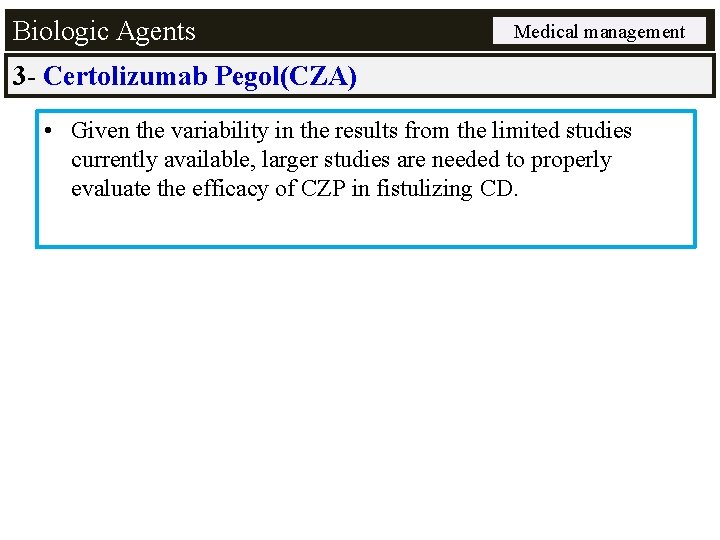
Biologic Agents Medical management 3 - Certolizumab Pegol(CZA) • Given the variability in the results from the limited studies currently available, larger studies are needed to properly evaluate the efficacy of CZP in fistulizing CD.
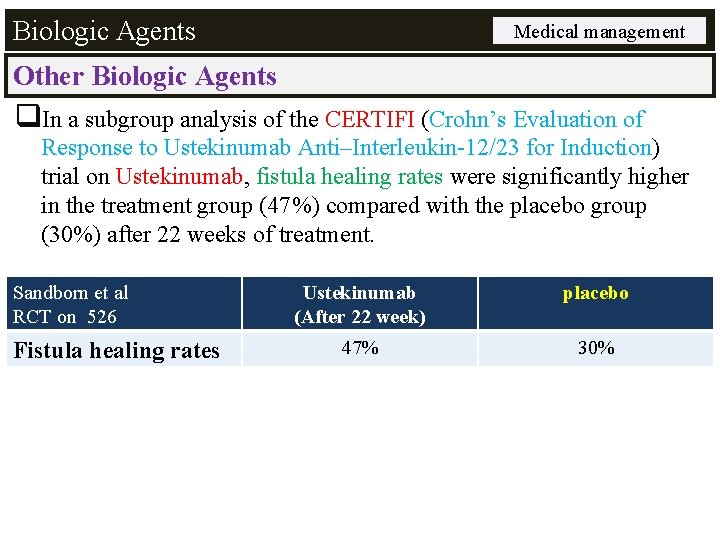
Biologic Agents Medical management Other Biologic Agents q. In a subgroup analysis of the CERTIFI (Crohn’s Evaluation of Response to Ustekinumab Anti–Interleukin-12/23 for Induction) trial on Ustekinumab, fistula healing rates were significantly higher in the treatment group (47%) compared with the placebo group (30%) after 22 weeks of treatment. Sandborn et al RCT on 526 Fistula healing rates Ustekinumab (After 22 week) placebo 47% 30%
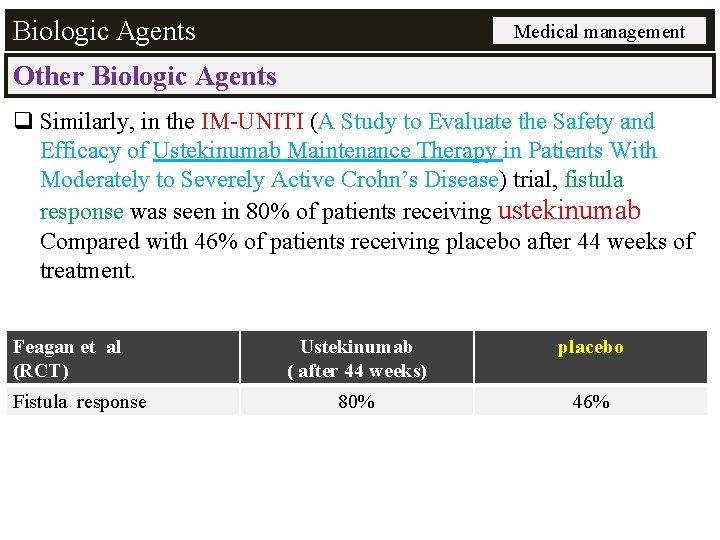
Biologic Agents Medical management Other Biologic Agents q Similarly, in the IM-UNITI (A Study to Evaluate the Safety and Efficacy of Ustekinumab Maintenance Therapy in Patients With Moderately to Severely Active Crohn’s Disease) trial, fistula response was seen in 80% of patients receiving ustekinumab Compared with 46% of patients receiving placebo after 44 weeks of treatment. Feagan et al (RCT) Fistula response Ustekinumab ( after 44 weeks) placebo 80% 46%
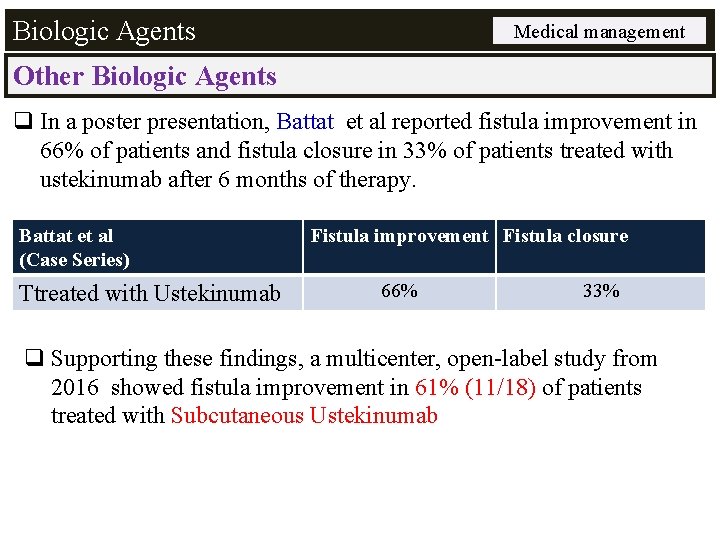
Biologic Agents Medical management Other Biologic Agents q In a poster presentation, Battat et al reported fistula improvement in 66% of patients and fistula closure in 33% of patients treated with ustekinumab after 6 months of therapy. Battat et al (Case Series) Ttreated with Ustekinumab Fistula improvement Fistula closure 66% 33% q Supporting these findings, a multicenter, open-label study from 2016 showed fistula improvement in 61% (11/18) of patients treated with Subcutaneous Ustekinumab
Biologic Agents Medical management Other Biologic Agents q Vedolizumab, a monoclonal antibody against the α 4β 7 integrin, inhibits leukocyte trafficking to the small bowel and is the first gutspecific biologic agent approved for the treatment of moderate to severe CD. q Given its relatively recent approval in 2014, there are limited data on its use in patients with perianal CD. q A subgroup analysis from the initial Vedolizumab trial in patients with CD (GEMINI II; Study of Vedolizumab in Patients With Moderate to Severe Crohn’s Disease) concluded that patients who were treated with Vedolizumab had higher rates of Fistula closure compared to patients who received placebo.
Biologic Agents Medical management Other Biologic Agents q In a post hoc analysis of a 1 -year prospective, multicenter, cohort study, 35 patients with active Perianal disease (30 patients with a perianal fistula and 5 patients with an anal fissure) were studied; Complete remission was seen in 43% of patients treated with Vedolizumab for 14 weeks q After 1 year of therapy, 54. 3% of the patients who had Complete fistula closure maintained remission Over time, more experience using these novel agents as well as larger prospective studies will help to clarify their efficacy in treating Perianal fistulas and better define their role among other, more wellstudied biologic agents.
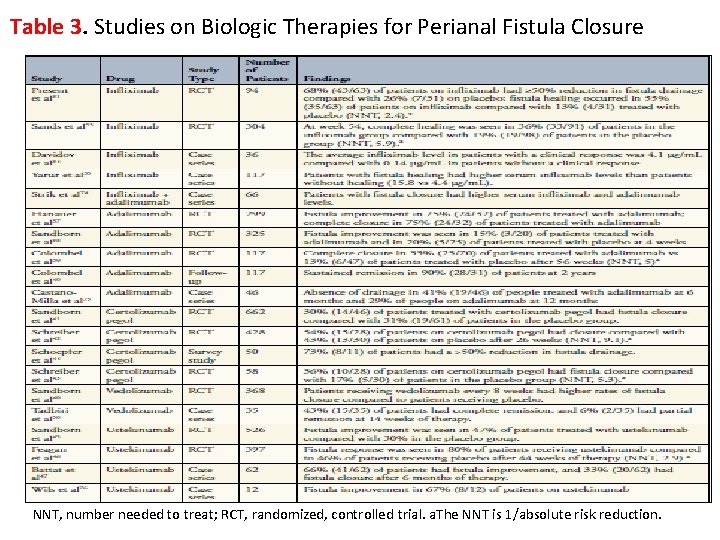
Table 3. Studies on Biologic Therapies for Perianal Fistula Closure NNT, number needed to treat; RCT, randomized, controlled trial. a. The NNT is 1/absolute risk reduction.
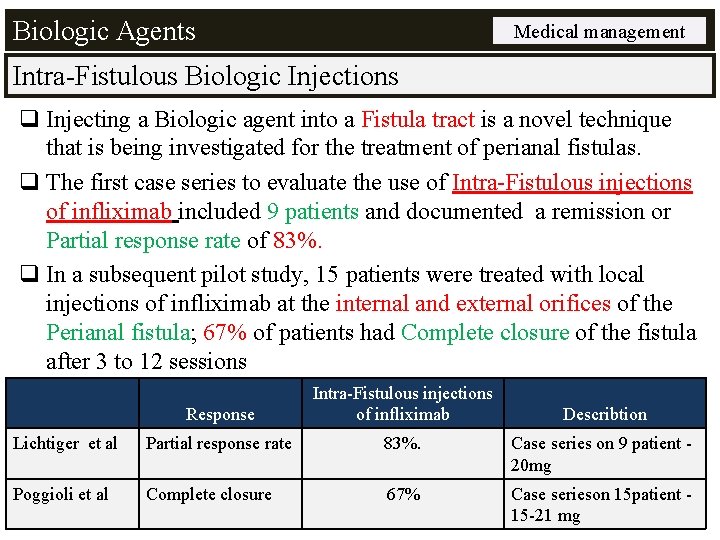
Biologic Agents Medical management Intra-Fistulous Biologic Injections q Injecting a Biologic agent into a Fistula tract is a novel technique that is being investigated for the treatment of perianal fistulas. q The first case series to evaluate the use of Intra-Fistulous injections of infliximab included 9 patients and documented a remission or Partial response rate of 83%. q In a subsequent pilot study, 15 patients were treated with local injections of infliximab at the internal and external orifices of the Perianal fistula; 67% of patients had Complete closure of the fistula after 3 to 12 sessions Response Intra-Fistulous injections of infliximab Lichtiger et al Partial response rate 83%. Case series on 9 patient 20 mg Poggioli et al Complete closure 67% Case serieson 15 patient 15 -21 mg Describtion
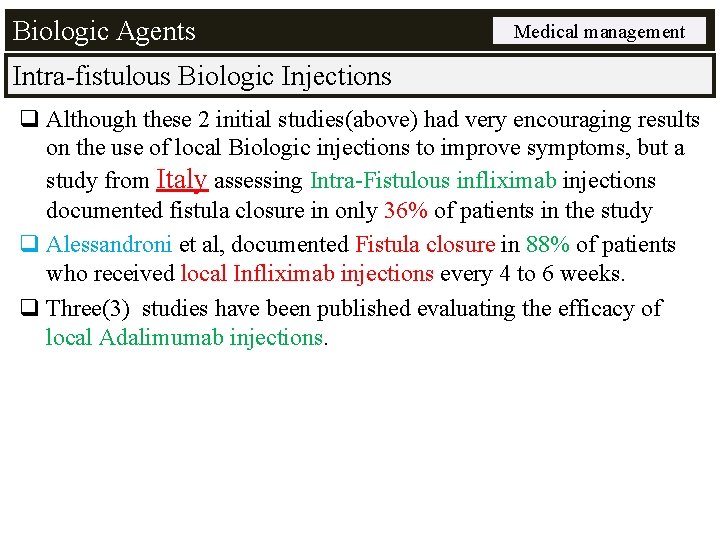
Biologic Agents Medical management Intra-fistulous Biologic Injections q Although these 2 initial studies(above) had very encouraging results on the use of local Biologic injections to improve symptoms, but a study from Italy assessing Intra-Fistulous infliximab injections documented fistula closure in only 36% of patients in the study q Alessandroni et al, documented Fistula closure in 88% of patients who received local Infliximab injections every 4 to 6 weeks. q Three(3) studies have been published evaluating the efficacy of local Adalimumab injections.
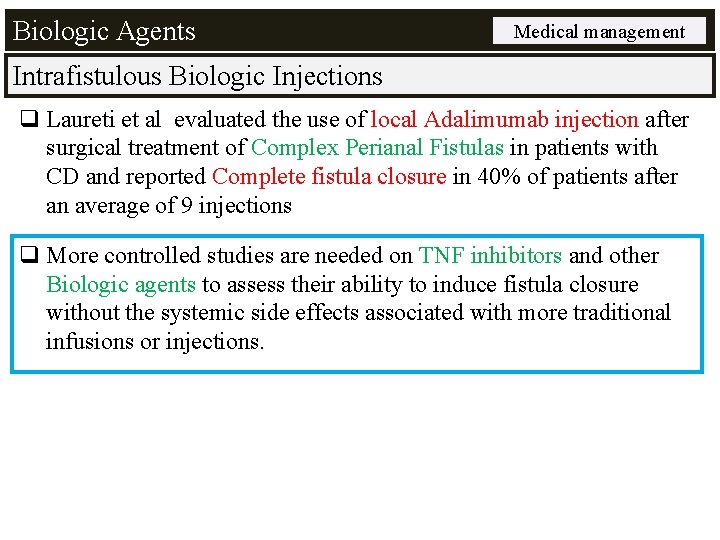
Biologic Agents Medical management Intrafistulous Biologic Injections q Laureti et al evaluated the use of local Adalimumab injection after surgical treatment of Complex Perianal Fistulas in patients with CD and reported Complete fistula closure in 40% of patients after an average of 9 injections q More controlled studies are needed on TNF inhibitors and other Biologic agents to assess their ability to induce fistula closure without the systemic side effects associated with more traditional infusions or injections.
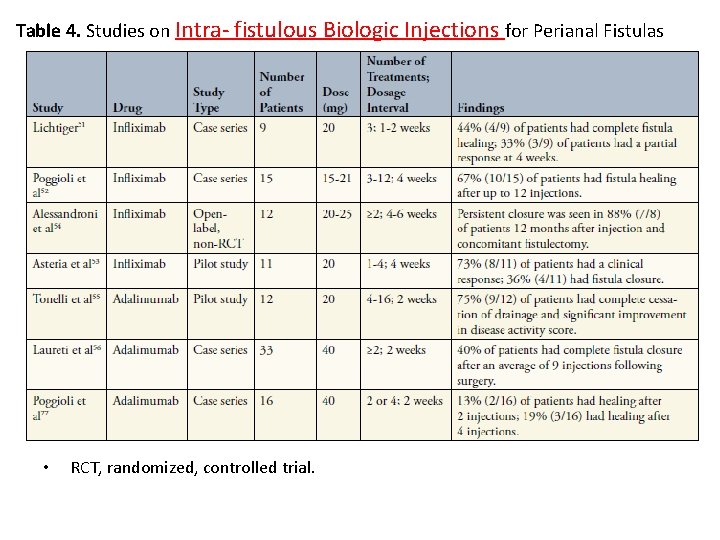
Table 4. Studies on Intra- fistulous Biologic Injections for Perianal Fistulas • RCT, randomized, controlled trial.
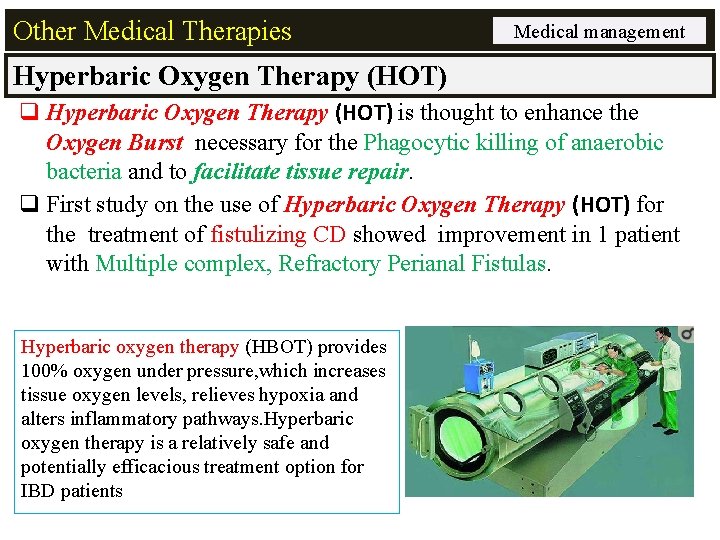
Other Medical Therapies Medical management Hyperbaric Oxygen Therapy (HOT) q Hyperbaric Oxygen Therapy (HOT) is thought to enhance the Oxygen Burst necessary for the Phagocytic killing of anaerobic bacteria and to facilitate tissue repair. q First study on the use of Hyperbaric Oxygen Therapy (HOT) for the treatment of fistulizing CD showed improvement in 1 patient with Multiple complex, Refractory Perianal Fistulas. Hyperbaric oxygen therapy (HBOT) provides 100% oxygen under pressure, which increases tissue oxygen levels, relieves hypoxia and alters inflammatory pathways. Hyperbaric oxygen therapy is a relatively safe and potentially efficacious treatment option for IBD patients
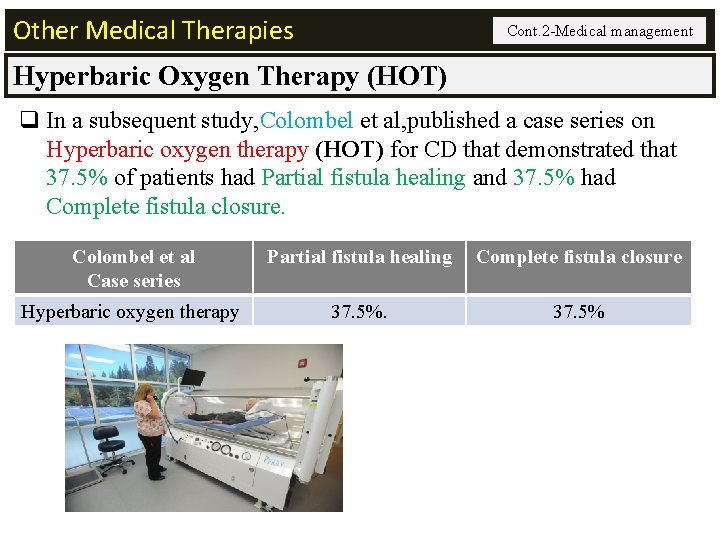
Other Medical Therapies Cont. 2 -Medical management Hyperbaric Oxygen Therapy (HOT) q In a subsequent study, Colombel et al, published a case series on Hyperbaric oxygen therapy (HOT) for CD that demonstrated that 37. 5% of patients had Partial fistula healing and 37. 5% had Complete fistula closure. Colombel et al Case series Partial fistula healing Complete fistula closure Hyperbaric oxygen therapy 37. 5%
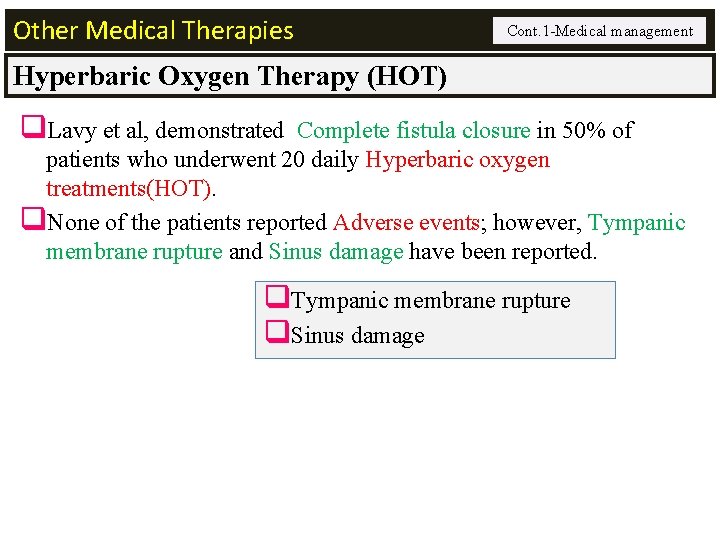
Other Medical Therapies Cont. 1 -Medical management Hyperbaric Oxygen Therapy (HOT) q. Lavy et al, demonstrated Complete fistula closure in 50% of patients who underwent 20 daily Hyperbaric oxygen treatments(HOT). q. None of the patients reported Adverse events; however, Tympanic membrane rupture and Sinus damage have been reported. q. Tympanic membrane rupture q. Sinus damage
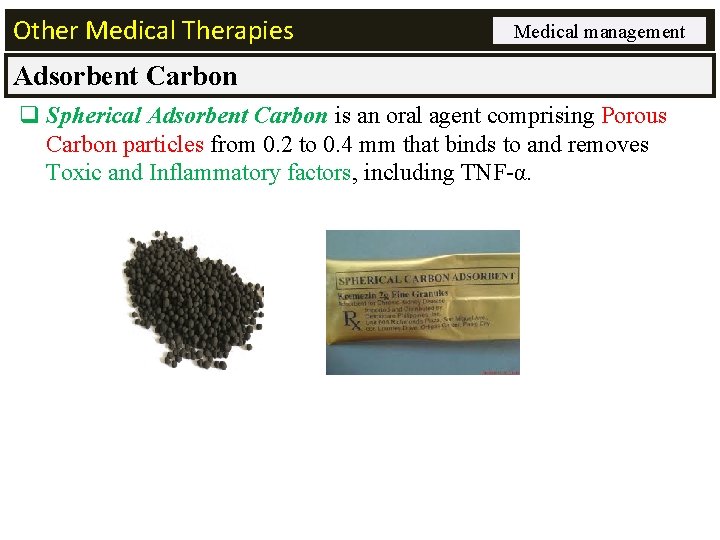
Other Medical Therapies Medical management Adsorbent Carbon q Spherical Adsorbent Carbon is an oral agent comprising Porous Carbon particles from 0. 2 to 0. 4 mm that binds to and removes Toxic and Inflammatory factors, including TNF-α.
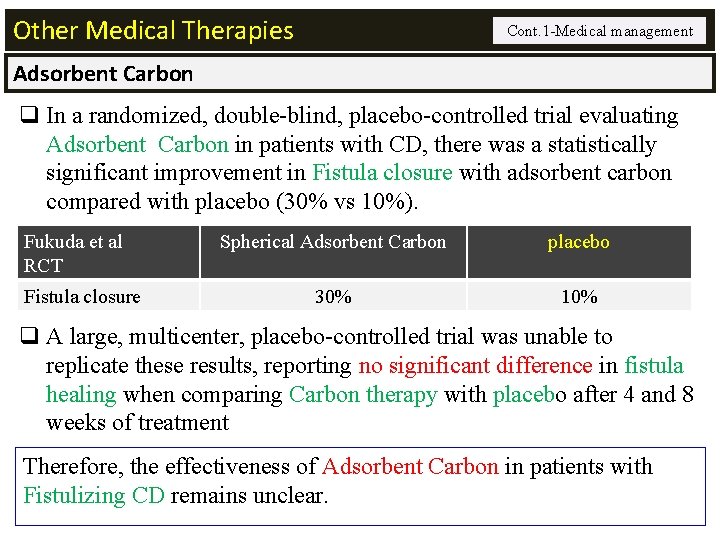
Other Medical Therapies Cont. 1 -Medical management Adsorbent Carbon q In a randomized, double-blind, placebo-controlled trial evaluating Adsorbent Carbon in patients with CD, there was a statistically significant improvement in Fistula closure with adsorbent carbon compared with placebo (30% vs 10%). Fukuda et al RCT Fistula closure Spherical Adsorbent Carbon placebo 30% 10% q A large, multicenter, placebo-controlled trial was unable to replicate these results, reporting no significant difference in fistula healing when comparing Carbon therapy with placebo after 4 and 8 weeks of treatment Therefore, the effectiveness of Adsorbent Carbon in patients with Fistulizing CD remains unclear.

- Slides: 82