
Edgar Allan Poe 1809 1849 The father of



- Slides: 59
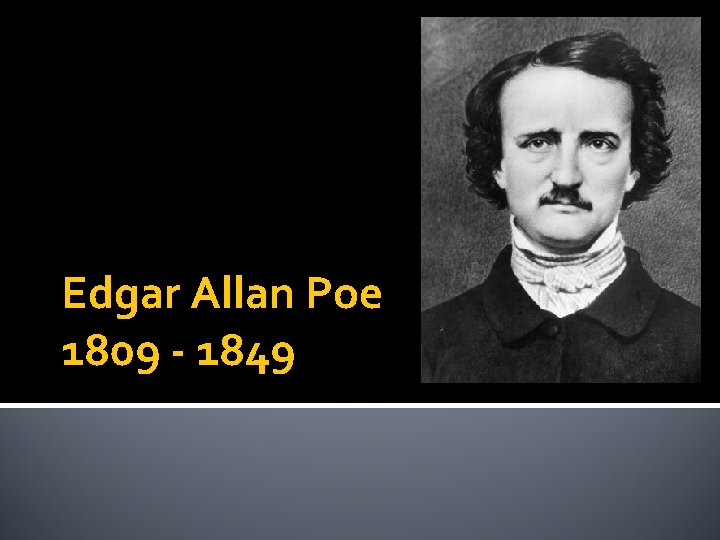
Edgar Allan Poe 1809 - 1849
The father of the modern mystery story Edgar Allan Poe is a pop culture legend. His works have been translated into nearly every language. His legacy as the inventor of detective fiction has kept him in more than just literature textbooks. He's known to have influenced such great horror writers as Stephen King and Alfred Hitchcock. His stories have been made into countless film adaptations.
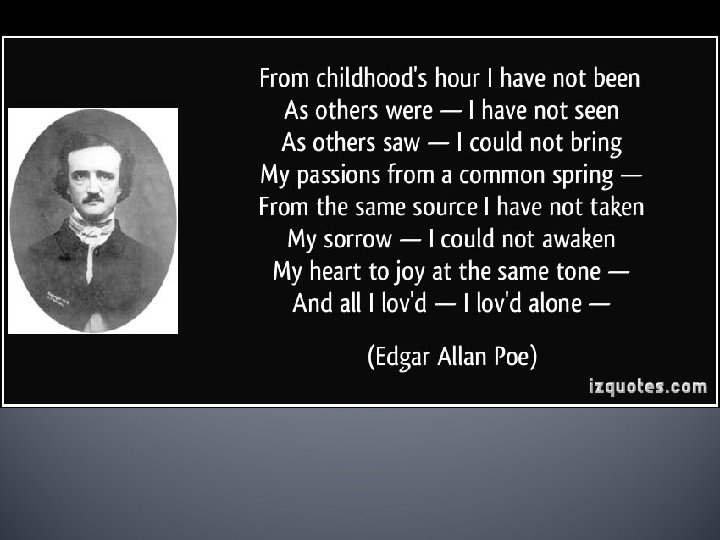
Biography He had a rather sad childhood. Edgar Poe was born on January 19, 1809 in Boston, the second of three children. His parents, who were traveling actors, died when he was young, so he was sent to live with a wealthy merchant, John Allan, and his wife, Frances, in Richmond. Frances served as a good mother to Edgar, but John proved to be a less-than-supportive foster father.
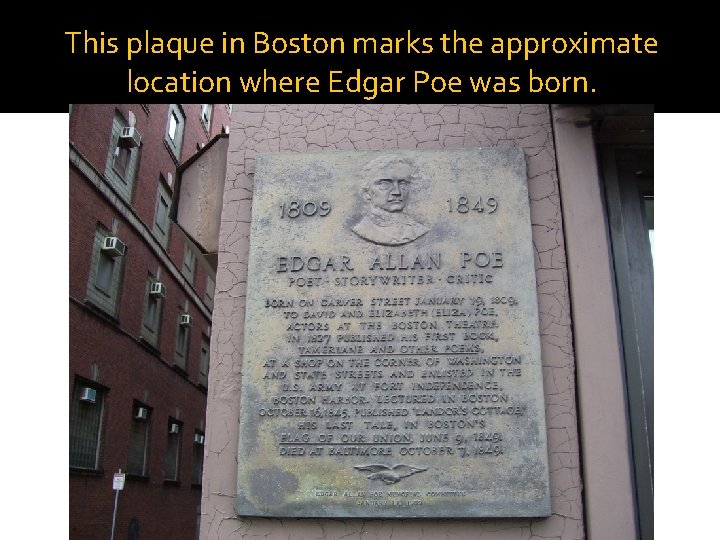
This plaque in Boston marks the approximate location where Edgar Poe was born.
Childhood Despite the fact that they never adopted Edgar, Allan was added to his name, and he spent his younger years traveling with the couple and learning the family business. Poor Edgar wasn't terribly interested and spent a good deal of his time writing poems instead. By the age of 13, he had enough poems to publish an anthology, but he was discouraged by both his teacher and his foster father, who preferred he stay in the family business.
Biography At the age of 17, Poe left for the University of Virginia, but because his foster father would not help him pay his bills, he wound up in debt. To offset this, Poe turned to gambling, which only made matters worse. It is said that Poe became so desperately poor that he had to burn his furniture to keep warm.
Biography That was a turning point in Poe's relationship with Mr. Allan. Poe resented him for not helping him financially, especially since there was plenty of money available. His situation worsened when he returned home from school to find his fiancée engaged to someone else.
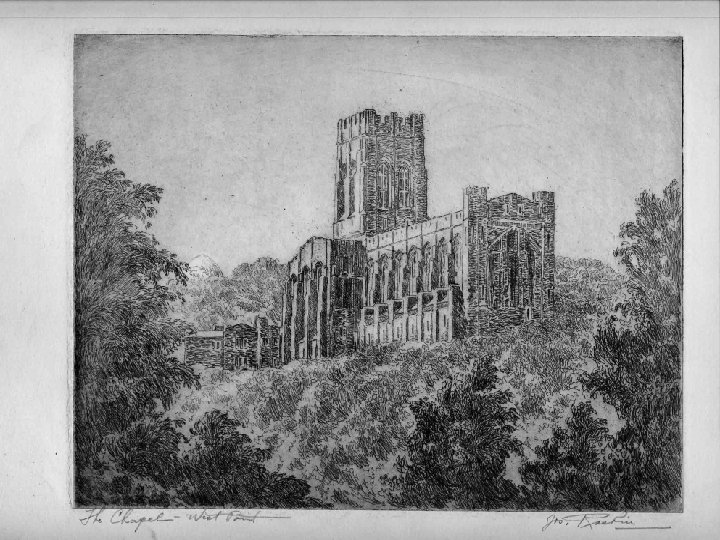
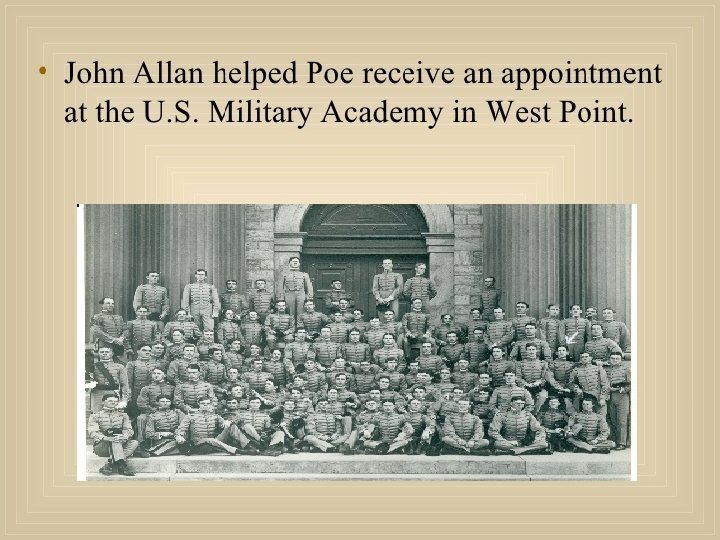
Biography While this was all devastating to Poe, he vowed that he would find success and published his first book, Tamerlane, under the name Edgar A. Perry. He was only 18. He also enlisted in the army, and after two years of service, he returned home in hopes of seeing Frances - the only mother he had known - who had become sick. Sadly, he arrived too late to say his good-byes, a tragedy which haunted him. He remained in Richmond long enough to publish another book of poetry before heading to West Point, to the prestigious military academy.
Biography He wasn't there for long, though. After starting, Poe heard that John Allan had remarried without telling Poe or inviting him to the wedding. Since Poe was there on Allan's recommendation, he did his best to get kicked out. As a result, Poe chose to focus on writing and completely severed ties with Mr. Allan. In 1831, at the age of 22, he moved to Baltimore. After being robbed by one of his relatives, he wound up staying with his aunt, Maria Clemm, who became a mother to him. He also lived with his young cousin, Virginia.
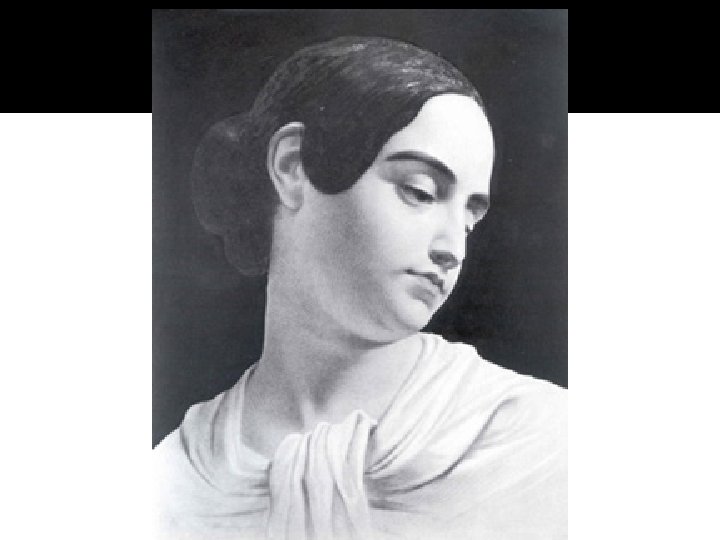
Biography Poe continued to live in poverty in Baltimore. Even when Allan died, he left Poe out of his will, so Poe received no help from the man who had raised him. To make money, Poe wrote and sold short stories. This eventually led to a position at the Southern Literary Messenger as an editor and critic, which moved him back to Richmond. Within a year, the magazine became extremely popular thanks to Poe's stories and nasty reviews. By the age of 27, Poe was able to bring Maria and Virginia to Richmond. In 1836, he married his cousin Virginia; she was only 13 years old.
Biography Mostly, the 1830 s and early 1840 s were good to Poe. He moved to New York, to Philadelphia and back to New York. He wrote some of his best stories and became famous in his own time, quite a feat for any writer (though it did not make him rich). In 1845, Poe's popularity exploded with the publication of 'The Raven. ' He traveled the country presenting lectures and solidifying his reputation. However, in 1847, his treasured wife, Virginia, died, and Poe began to struggle. He was no stranger to loss, but that didn't ease the tragedy of losing his 24 -year old wife. He suffered from writer's block for months.
Biography His short but tormented life came to a tragic end on October 7, 1849. He briefly disappeared only to be found five days later in a bar that was being used as an election polling station. He was struggling to stay alive. No one really knows where he had been or what brought about Poe's death. At the time, it was believed to be congestion of the brain. Other speculation has blamed alcoholism.
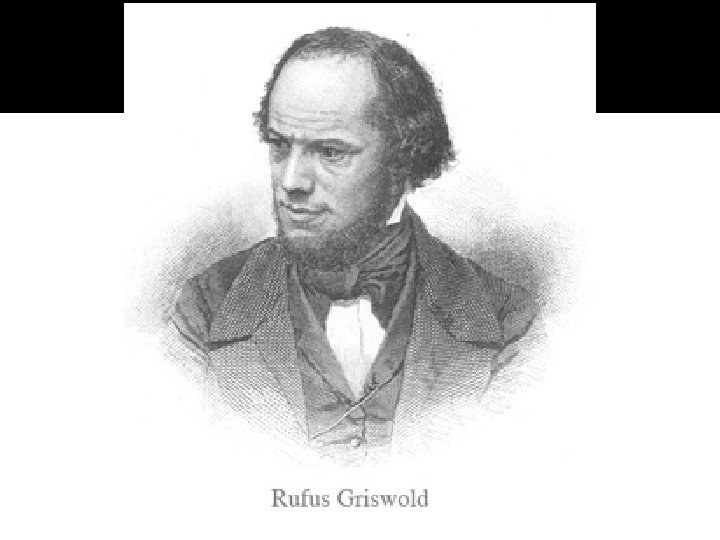
Biography His literary adversary, Rufus Griswold, wrote a nasty, vengeful obituary of Poe in hopes of paying him back for the critiques Poe made of Griswold's work. His account of the author's life, which began with, 'This announcement will startle many but few will be grieved by it, ' claimed that Poe 'had few or no friends' and led people to believe that Poe led a drug- and alcohol-induced life. This is the biography that most people know of Poe, though many sources say those are only myths. Nonetheless, Griswold's attempts to attack Poe only brought more attention to his work, causing sales to skyrocket.
His works Of course, with all of this tragedy in his life, it is no wonder that Poe often wrote about madmen, murder, being buried alive and death. His psychological thrillers, however, gave way to the modern-day mystery, making him the father of the detective story. His 1841 publication of 'The Murders in the Rue Morgue' was the first of these stories and the first to introduce C. August Dupin, Poe's recurring detective.
His works Unlike some writers, though, Poe wrote in a variety of forms. His most popular pieces are short stories, like 'The Tell -Tale Heart, ' 'The Masque of the Red Death' and 'The Fall of the House of Usher, ' and poems, like 'The Raven' and 'Annabel Lee. ' However, he also wrote essays, including one called 'The Philosophy of Composition, ' which shows the method he used to write 'The Raven. ' He wrote one play and one novel as well. As a literary critic and an editor, Poe was known to be quite harsh and made many enemies easily. He was especially critical of Henry Wadsworth Longfellow's poetry, believing it to be poorly written.
Style Poe is said to have been influenced by Lord Byron; however, their styles are very different. Poe's use of diction, or word choice, is the start of what makes him stand apart from other writers. In his short story 'The Fall of the House of Usher' he uses words like 'bleak, ‚ (sivár) 'rank, ' (bűzös, erkölcstelen) 'depression of the soul' and 'hideous dropping off of the veil' to describe the House of Usher. This pretty heavy word choice is both sophisticated and chock-full of terrifying connotations, or emotional meanings.
Style Of course, it only follows that this use of such diction leads to horrific imagery, where he uses words to create a picture in the reader's mind. One of Poe's most famous images comes from the first line of his poem 'The Raven: ' 'Once upon a midnight dreary, while I pondered, weak and weary'
Style While he doesn't use long, lavish descriptions in this line of the poem, we can easily see in our mind's eye the night he describes. It's pitch black at midnight. A dull rain is pattering on what is probably a lifeless backdrop. And because the narrator is so tired, those images are amplified in his mind, too. The other stories are more grotesque in nature, and even others do not create images of the setting but images of what the narrator is thinking.
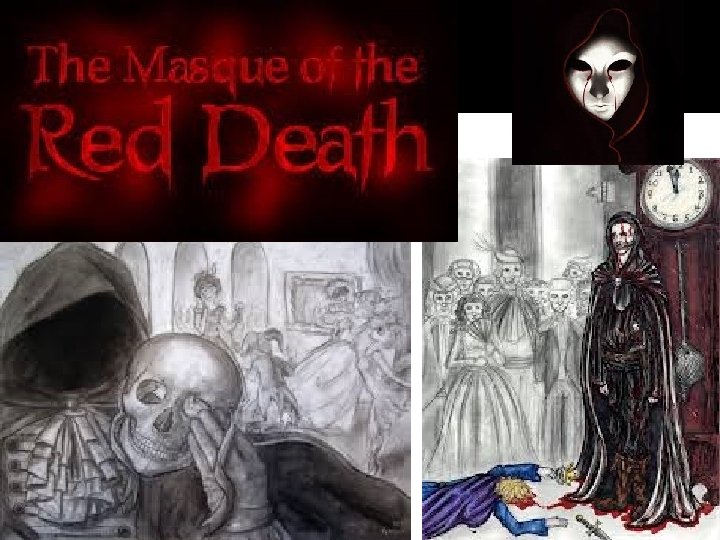
The Masque of the Red Death Although Poe is perhaps best known for his poem, 'The Raven, ' Edgar Allan Poe wrote many poems and short stories before his untimely death in 1849 at the age of 40. Poe published 'The Masque of the Red Death' in 1842 and like much of Poe's work, it is considered an example of the Gothic fiction genre.
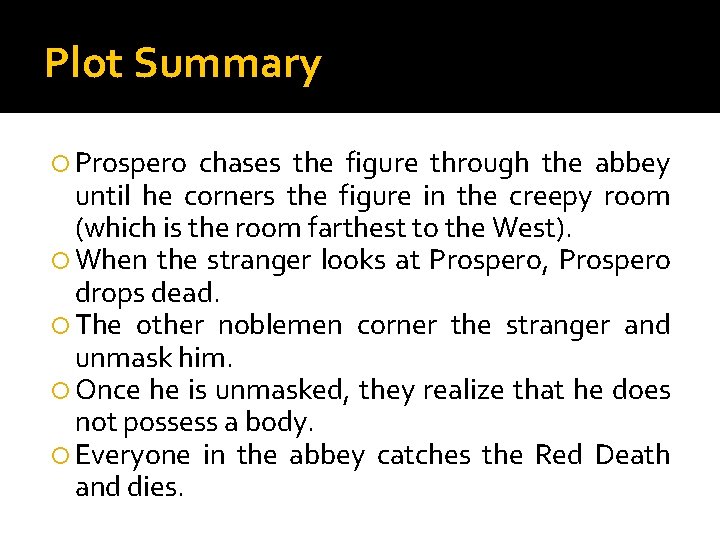
Plot Summary The plot of 'The Masque of the Red Death' is quite simple. The Red Death is a fictional plague sweeping through the land. Prince Prospero, the main character in the short story, is hiding from the plague in an abbey, along with a bunch of other nobles. Despite the plague being quite horrific and consisting of symptoms like sweating blood and dying within 30 minutes, the nobles think they are safe in the abbey. In fact, they are so relaxed about their situation that Prospero hosts a big masquerade ball.
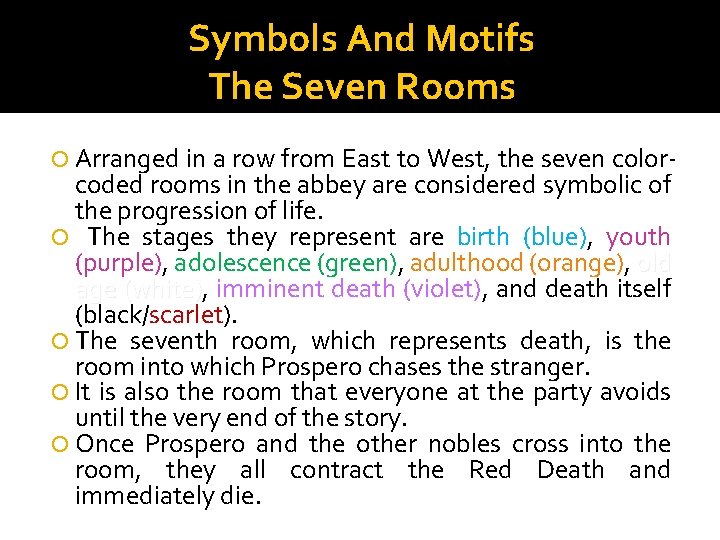
Plot Summary The only downside of the abbey, which is quite luxurious, is the decor. There are seven rooms which are color-coded and arranged East to West. The last of these rooms is a creepy room that is decorated in black and scarlet. This room contains a huge clock that scares the guests whenever it chimes on the hour.
Plot Summary The clock does not disrupt the masquerade for long, however. People keep partying until it strikes midnight. Then a mysterious figure shows up, which is disturbing because the doors to the abbey were welded shut to keep all the plagueinfested people out. The figure is dressed in a bloody robe and the figure's mask is designed to look like someone who has died from the Red Death.
Plot Summary Prospero chases the figure through the abbey until he corners the figure in the creepy room (which is the room farthest to the West). When the stranger looks at Prospero, Prospero drops dead. The other noblemen corner the stranger and unmask him. Once he is unmasked, they realize that he does not possess a body. Everyone in the abbey catches the Red Death and dies.
Symbols And Motifs The Seven Rooms Arranged in a row from East to West, the seven color- coded rooms in the abbey are considered symbolic of the progression of life. The stages they represent are birth (blue), youth (purple), adolescence (green), adulthood (orange), old age (white), (white) imminent death (violet), and death itself (black/scarlet). The seventh room, which represents death, is the room into which Prospero chases the stranger. It is also the room that everyone at the party avoids until the very end of the story. Once Prospero and the other nobles cross into the room, they all contract the Red Death and immediately die.
Symbols And Motifs The Clock Have you ever heard the phrase 'Time is running out'? Well, if the black room represents death, and there is a huge black clock in the room that marks each and every passing hour so loudly that all of the guests at the party take note of it, it seems fairly obvious that the clock is a symbolism of the fleetingness of life and the inevitability of death. You can hide in an abbey to escape a plague, but you can't hide from death itself, since even if you manage to avoid the plague, you will still die of old age eventually.
Symbols And Motifs The Color Red The color red features heavily in 'The Masque of the Red Death. ' While sometimes red can symbolize passion or life-sustaining blood, red is exclusively associated with death in this story. The fictional plague is named the Red Death because it makes people bleed out of the pores on their face. Red is also used along with black to decorate the room that is supposed to represent death.
Theme The Inevitability Of Death The last line of 'The Masque of the Red Death' sums up the story's main theme of the inevitability of death: 'And Darkness and Decay and the Red Death held illimitable dominion over all. ' Illimitable means limitless. 'The Masque of the Red Death' ends with Prospero and all of the other nobles dying, despite their best efforts to avoid the plague. This final line suggests that even if they had done things differently their fate would have been the same. Death is inevitable.
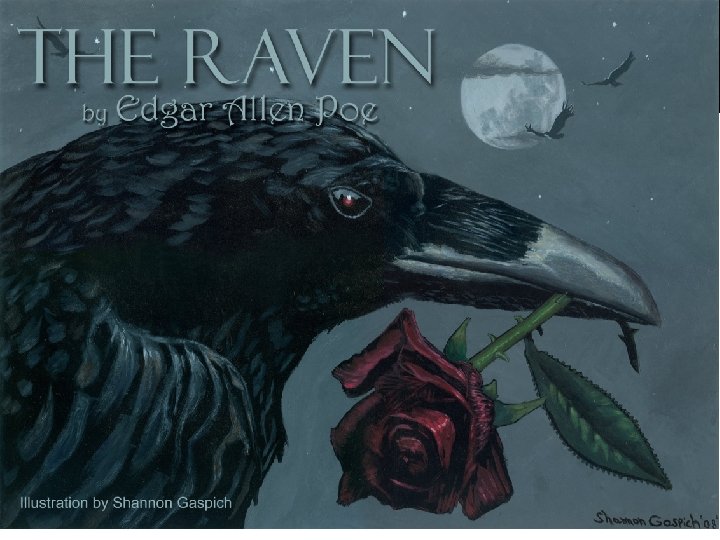
Edgar Allan Poe's The Raven This famous poem, which was written in 1845, making him extremely popular even in his own time, has been referenced and parodied countless times over the 150 years since it was written. Even during Poe's time people were reciting the poem.
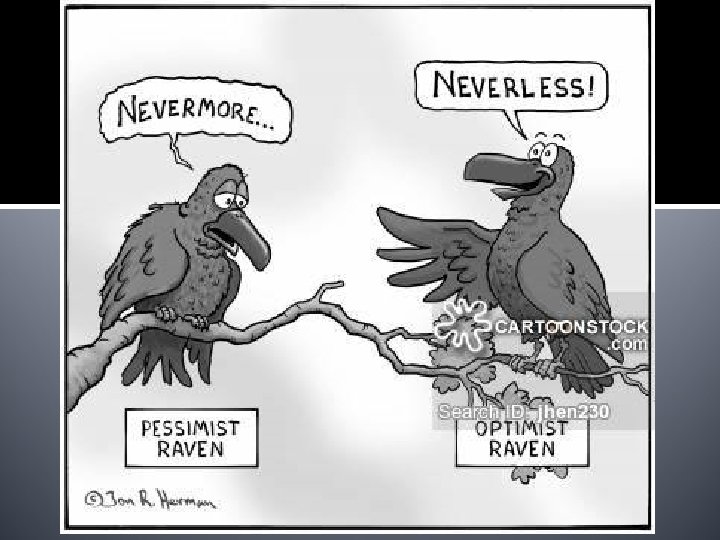
So how popular is Poe? Countless allusions to and parodies of Poe's 'The Raven' exist today. His raven and lyrics have made it into books, movies, television shows, magazines, cartoons, and even professional wrestling. Have you heard of Scott Levy, also known as The Raven? Or did you know that Poe was from Baltimore? Guess where they got the name for the NFL's Baltimore Ravens. Poe's raven shows up in multiple Stephen King novels. The Joker in 1989's Batman quotes the narrator of the poem.
The Raven - Source of Inspiration §The raven in Charles Dickens' 1841 novel, Barnaby Rudge, a historical novel about anti. Catholic riots in London in 1780 in which a mentally retarded person (Barnaby) is falsely accused of participating. §Barnaby owns a pet raven, Grip, which can speak. §In the fifth chapter of the novel, Grip taps at a shutter (as in Poe's poem).
The model for Grip was Dickens' own talking raven, which was the delight of his children. It was the first of three ravens owned by Dickens, all named Grip. After the first Grip died, it was stuffed and mounted. An admirer of Poe's works acquired and mounted the bird and donated it to the Free Library of Philadelphia, where it is on display today.
The Poem The poem begins after midnight on a cold December evening. A man, the narrator, sits alone by the fire dozing off as he reads a book, hoping to forget about Lenore, his lost love. While he sits, he hears a knocking at the door. He gets up to answer, apologizing in the process, only to open the door and find absolutely nothing there. With it being after midnight, he's a little creeped out, so he tries to tell himself that it's just the wind hitting the window. When he goes to the window to remedy the problem, however, what should swoop in, but the Raven.
The Poem Unlike a normal bird that would probably fly around the room scared, the Raven just perches itself on a statue of Athena, the goddess of wisdom, above the door. Rather unnaturally, the narrator begins to talk to it, asking for its name. And while you wouldn't expect a raven to be able to answer, he does respond with, 'Nevermore. '
The Poem Of course, this is alarming for a couple of reasons. One, the Raven is actually talking. Two, the only thing he ever says has such a foreboding connotation that the narrator can't help but be unnerved. In fact, he is so rattled that he just keeps asking questions to which the Raven continues to respond with the same answer. And sadly, that is the last answer the narrator wants to hear. By the end of the poem, the narrator has lost his mind, giving in to the sorrow of losing his lost love Lenore and knowing that she will return 'nevermore. '
The Poem The chamber of a house at midnight. Poe uses the word chamber rather than bedroom apparently because chamber has a dark and mysterious connotation.
Style: Poe's Recipe For Success In 1846, Edgar Allan Poe wrote an essay called 'The Philosophy of Composition' where he explains his writing method and how intentional each part of the writing process must be, something he called the unity of effect. Additionally, Poe believed, that 'the most poetical topic in the world' was 'the death. . . of a beautiful woman, ' which is no doubt why he chose to develop our narrator's madness as he is faced with the reality that his long lost love Lenore is gone forever. According to an essay, Poe wrote 'The Raven' in hopes of appealing to both critics and commoners, and the result is a spooky poem chock-full of symbolism and literary effects.
Symbolism: The Raven A symbol is something that represents something else. In literature a symbol can be subtle or obvious. In 'The Raven' the symbol is obvious. Poe himself meant the Raven to symbolize 'mournful, never -ending remembrance. ' Our narrator's sorrow for his lost, perfect maiden Lenore is the driving force behind his conversation with the Raven. In turn, the Raven, even through his limited vocabulary, forces the narrator to face the reality that Lenore will return 'nevermore, ' a fact that the narrator does not want to acknowledge. As a result, by the poem's conclusion the Raven has the eyes 'of a demon's' and its shadow hangs over the narrator's soul. For the poem's speaker, the Raven has moved beyond mournful, never-ending remembrance to an embodiment of evil.
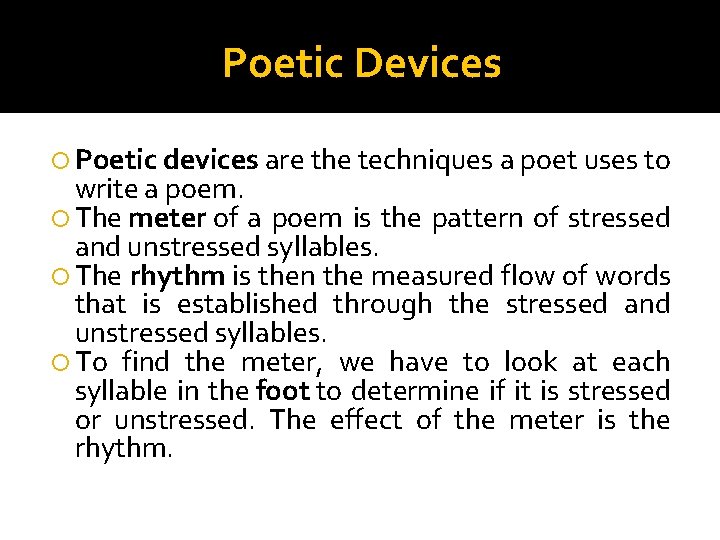
Poetic Devices Poetic devices are the techniques a poet uses to write a poem. The meter of a poem is the pattern of stressed and unstressed syllables. The rhythm is then the measured flow of words that is established through the stressed and unstressed syllables. To find the meter, we have to look at each syllable in the foot to determine if it is stressed or unstressed. The effect of the meter is the rhythm.
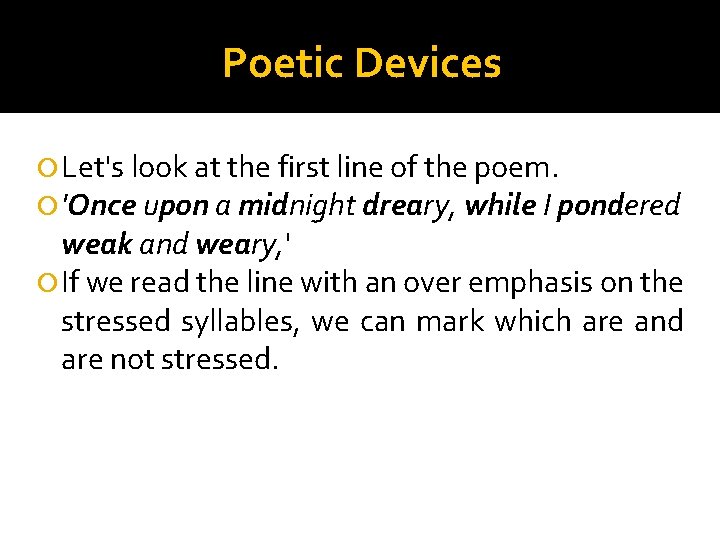
Poetic Devices Let's look at the first line of the poem. 'Once upon a midnight dreary, while I pondered weak and weary, ' If we read the line with an over emphasis on the stressed syllables, we can mark which are and are not stressed.
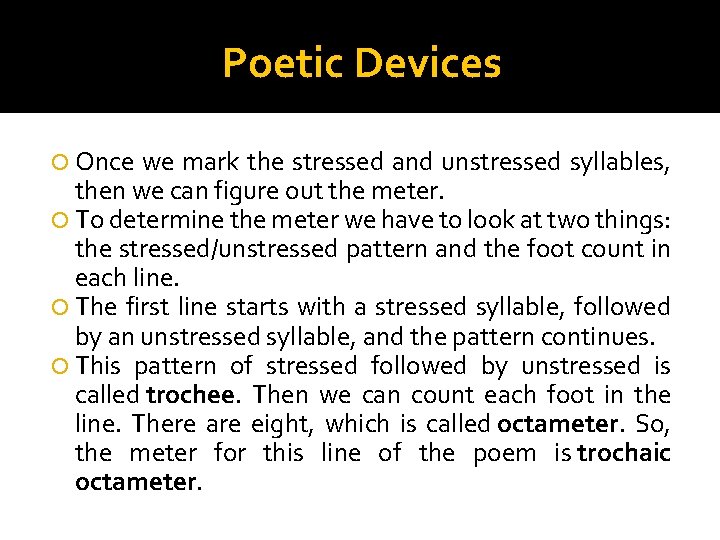
Poetic Devices Once we mark the stressed and unstressed syllables, then we can figure out the meter. To determine the meter we have to look at two things: the stressed/unstressed pattern and the foot count in each line. The first line starts with a stressed syllable, followed by an unstressed syllable, and the pattern continues. This pattern of stressed followed by unstressed is called trochee. Then we can count each foot in the line. There are eight, which is called octameter. So, the meter for this line of the poem is trochaic octameter.
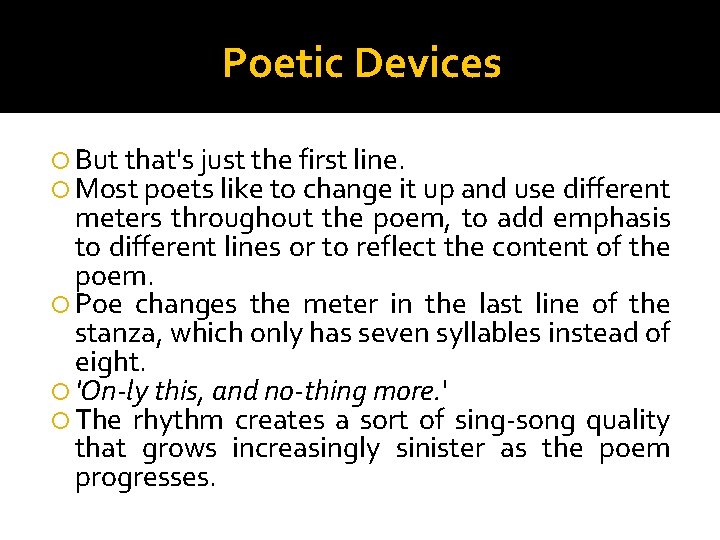
Poetic Devices But that's just the first line. Most poets like to change it up and use different meters throughout the poem, to add emphasis to different lines or to reflect the content of the poem. Poe changes the meter in the last line of the stanza, which only has seven syllables instead of eight. 'On-ly this, and no-thing more. ' The rhythm creates a sort of sing-song quality that grows increasingly sinister as the poem progresses.
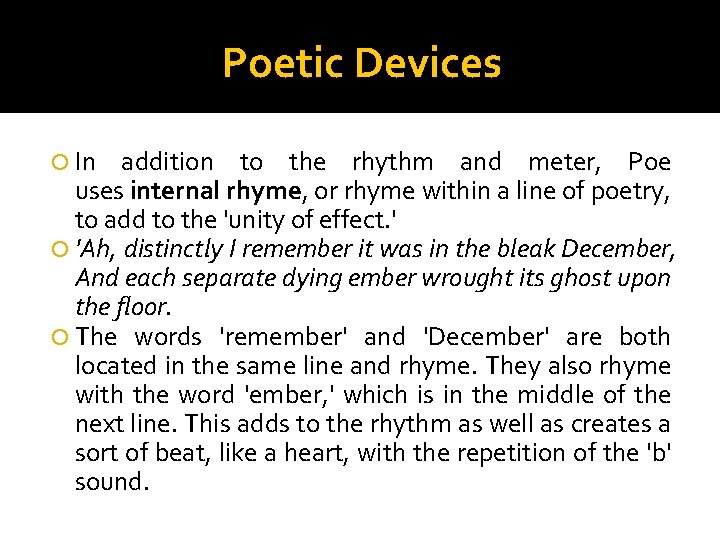
Poetic Devices In addition to the rhythm and meter, Poe uses internal rhyme, or rhyme within a line of poetry, to add to the 'unity of effect. ' 'Ah, distinctly I remember it was in the bleak December, And each separate dying ember wrought its ghost upon the floor. The words 'remember' and 'December' are both located in the same line and rhyme. They also rhyme with the word 'ember, ' which is in the middle of the next line. This adds to the rhythm as well as creates a sort of beat, like a heart, with the repetition of the 'b' sound.
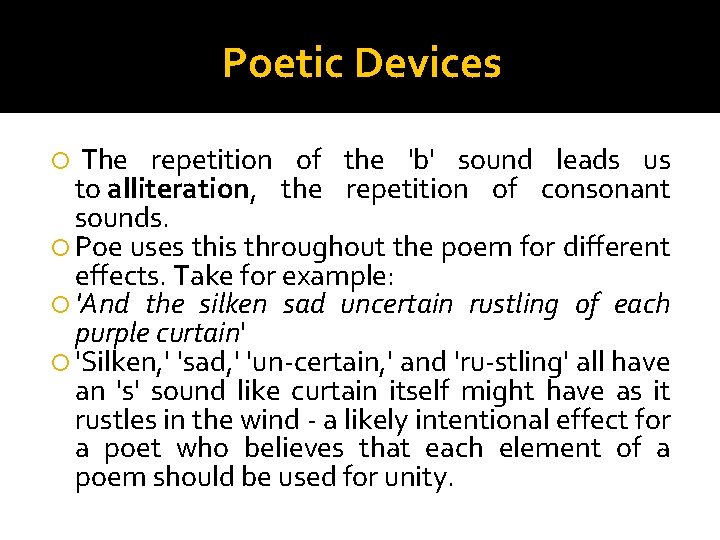
Poetic Devices The repetition of the 'b' sound leads us to alliteration, the repetition of consonant sounds. Poe uses this throughout the poem for different effects. Take for example: 'And the silken sad uncertain rustling of each purple curtain' 'Silken, ' 'sad, ' 'un-certain, ' and 'ru-stling' all have an 's' sound like curtain itself might have as it rustles in the wind - a likely intentional effect for a poet who believes that each element of a poem should be used for unity.
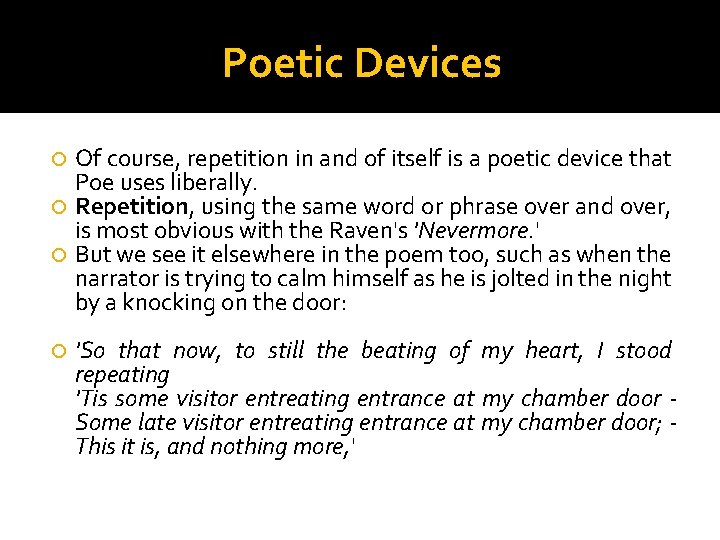
Poetic Devices Of course, repetition in and of itself is a poetic device that Poe uses liberally. Repetition, using the same word or phrase over and over, is most obvious with the Raven's 'Nevermore. ' But we see it elsewhere in the poem too, such as when the narrator is trying to calm himself as he is jolted in the night by a knocking on the door: 'So that now, to still the beating of my heart, I stood repeating 'Tis some visitor entreating entrance at my chamber door Some late visitor entreating entrance at my chamber door; This it is, and nothing more, '
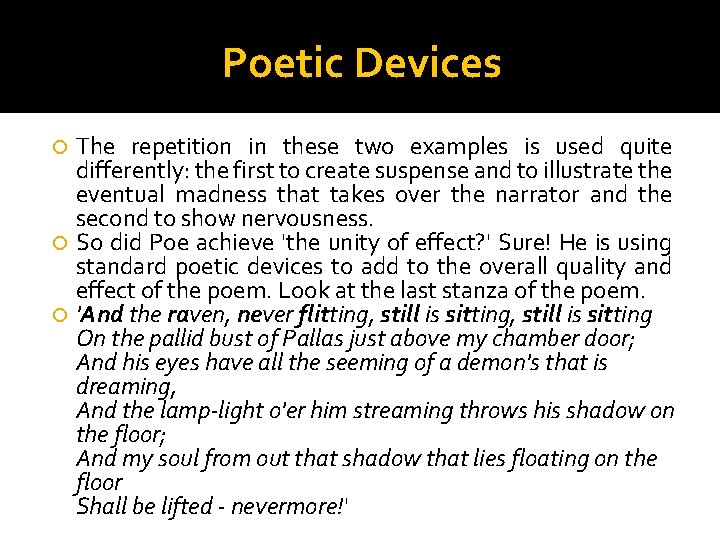
Poetic Devices The repetition in these two examples is used quite differently: the first to create suspense and to illustrate the eventual madness that takes over the narrator and the second to show nervousness. So did Poe achieve 'the unity of effect? ' Sure! He is using standard poetic devices to add to the overall quality and effect of the poem. Look at the last stanza of the poem. 'And the raven, never flitting, still is sitting On the pallid bust of Pallas just above my chamber door; And his eyes have all the seeming of a demon's that is dreaming, And the lamp-light o'er him streaming throws his shadow on the floor; And my soul from out that shadow that lies floating on the floor Shall be lifted - nevermore!'
Poetic Devices As in his short stories, Poe is careful to use primarily words that contribute to the overall atmosphere and tone of the poem. These words include weary, dreary, bleak, dying, sorrow, sad, darkness, stillness, mystery, ebony, grave, stern, lonely, grim, ghastly, and gaunt.
The Raven - Who is Lenore? §It is possible that Lenore, the idealized deceased woman in the poem, represents Poe’s beloved wife, Virginia, who was in poor health when Poe wrote "The Raven. " §She died two years after the publication of the poem, when she was only in her mid-twenties.
Dark Romantic Characteristic Dark Romantic writers often use elements of the supernatural to reinforce the dark side of the human mind. In this case, Poe uses a supernatural messenger, the Raven. Of course, a raven, in general, is not supernatural; however, a talking raven is. And not only does the Raven talk, it reminds the narrator of the one thing his mind does not want to know: that Lenore will never return. We watch as the narrator slowly begins to accept this reality, quite unwillingly, and in the process he goes mad with grief as the dark side of his psyche takes over.
The Raven - Criticism Some reviewers in Poe’s day, including poet Walt Whitman, criticized “The Raven” for its sing-song, highly emotional quality. The poem is still criticized today–and often parodied–for the same reason. However, the consensus of critics and ordinary readers appears to that the poem is a meticulously crafted work of genius and fully deserves its standing as one of the most popular poems in American literature. It is indeed a great work.
http: //teachersfirst. com/lessons/raven/st 1. cf m