
Edema Increased water in brain parenchyma Types of
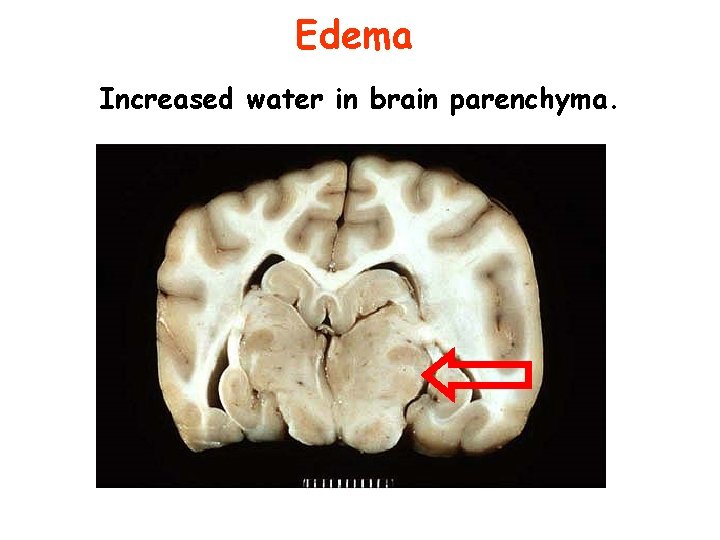
Edema Increased water in brain parenchyma.

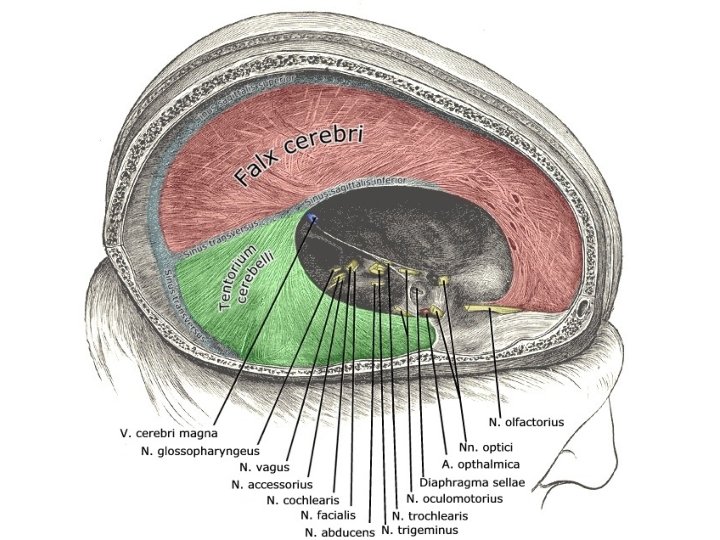
Types of Herniations 1. Subfalcine herniation (cingulate gyrus) 2. Transtentorial Herniation (uncal gyral) 3. Tonsillar Herniation
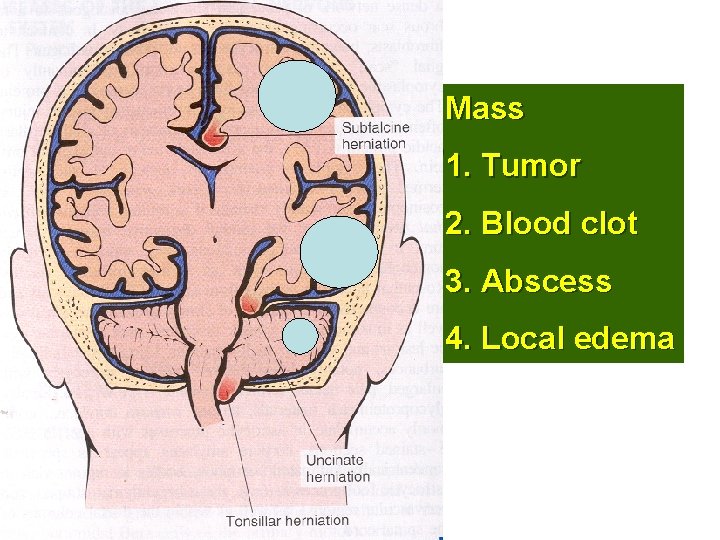
Mass S 1. Tumor 2. Blood clot 3. Abscess 4. Local edema T
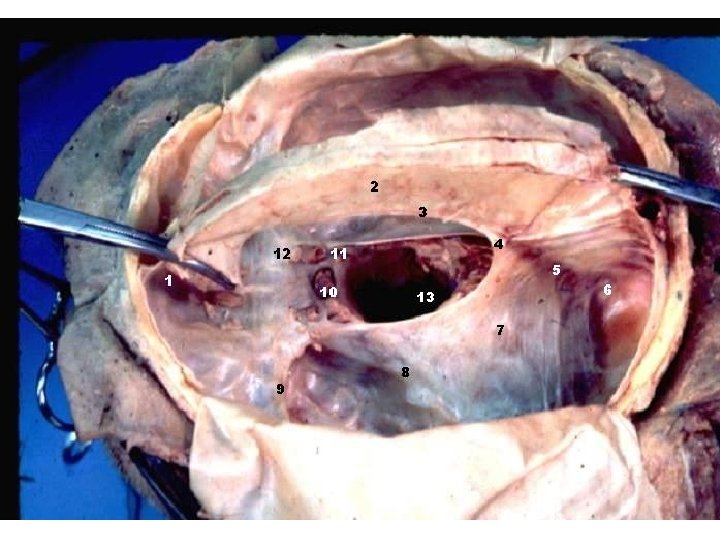
![Transtentorial Herniation [involve Uncal gyral]](http://slidetodoc.com/presentation_image_h/18a82ce5b8883aee94639ef7ca2785c1/image-4.jpg "Transtentorial Herniation [involve Uncal gyral]")
Transtentorial Herniation [involve Uncal gyral]
![Transtentorial Herniation [Uncus]](http://slidetodoc.com/presentation_image_h/18a82ce5b8883aee94639ef7ca2785c1/image-5.jpg "Transtentorial Herniation [Uncus]")
Transtentorial Herniation [Uncus]
Cerebral Herniation Complication of Intracranial Hypertension Tonsillar herniation Cerebellar tonsils herniate into the foramen magnum. Causes "coning" of the cerebellar tonsils Produces cardiorespiratory arrest Coma and Death 6
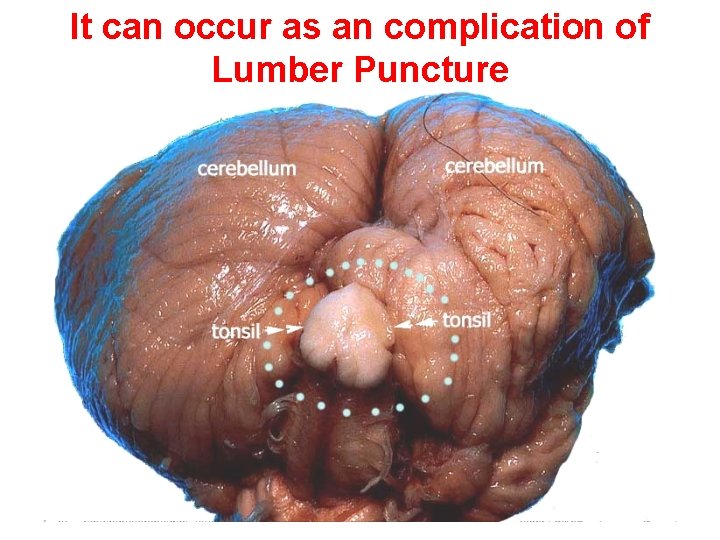
It can occur as an complication of Lumber Puncture
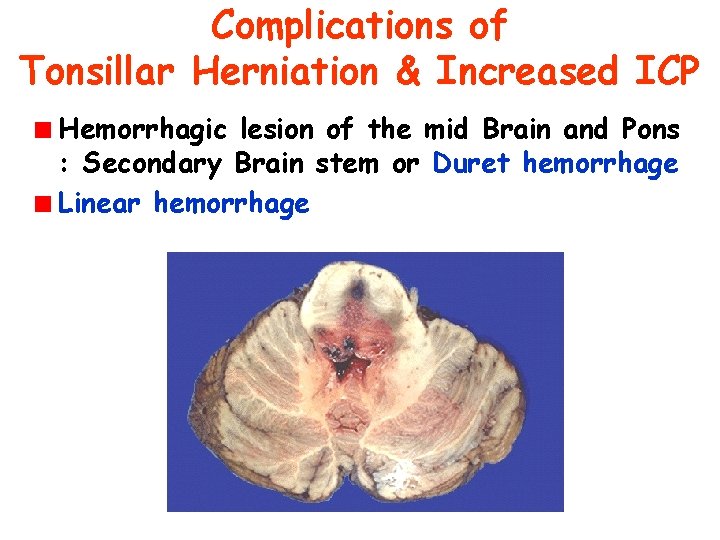
Complications of Tonsillar Herniation & Increased ICP Hemorrhagic lesion of the mid Brain and Pons : Secondary Brain stem or Duret hemorrhage Linear hemorrhage
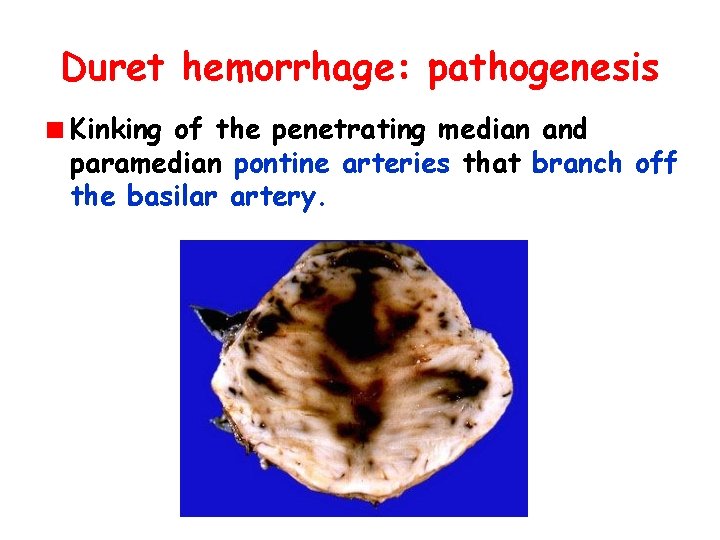
Duret hemorrhage: pathogenesis Kinking of the penetrating median and paramedian pontine arteries that branch off the basilar artery.
Duret hemorrhage : causes 1. Tonsillar Herniation 2. Intracranial Neoplasm 3. Intracranial hemorrhage (basal ganglia )
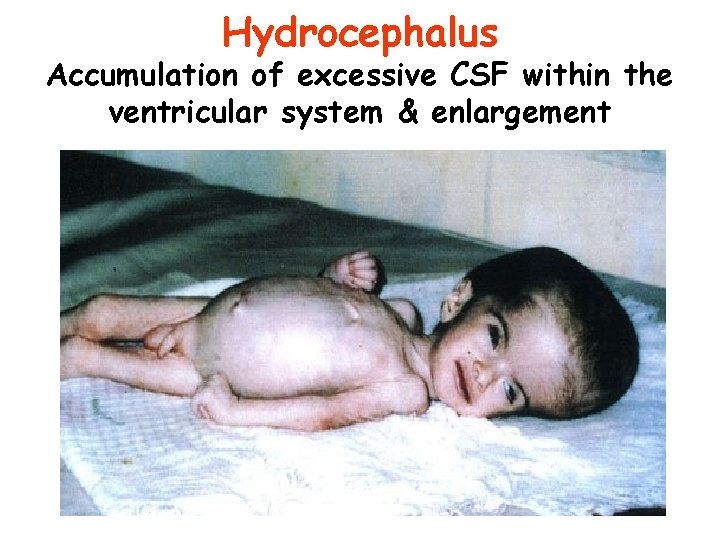
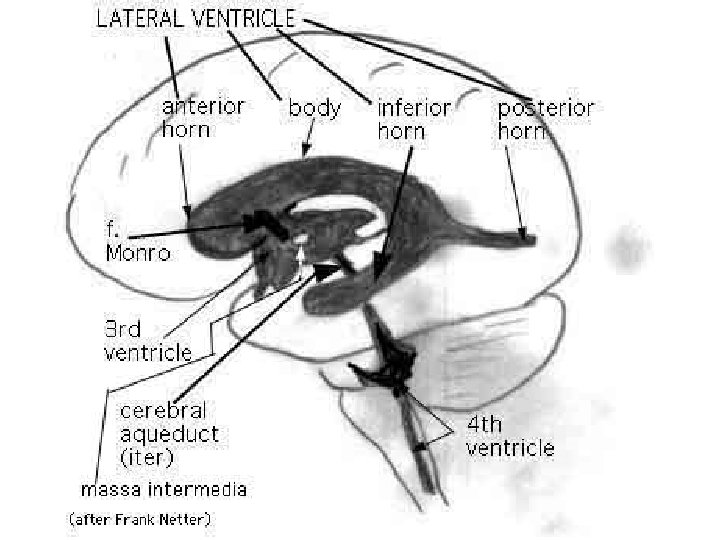
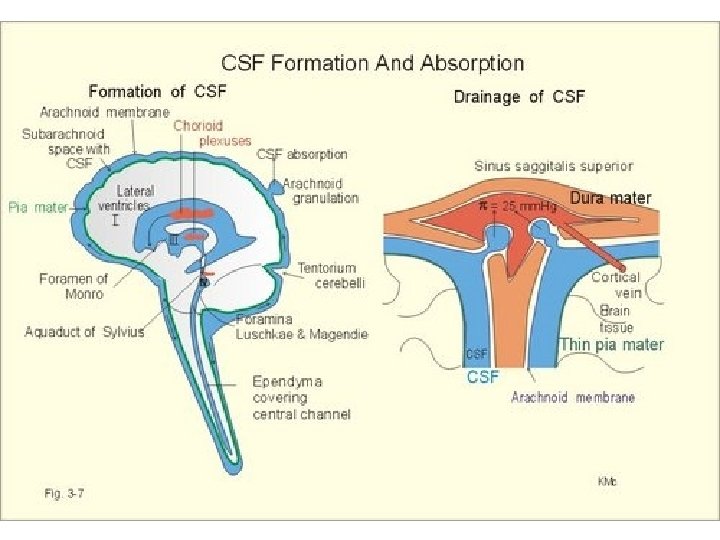
Hydrocephalus Accumulation of excessive CSF within the ventricular system & enlargement
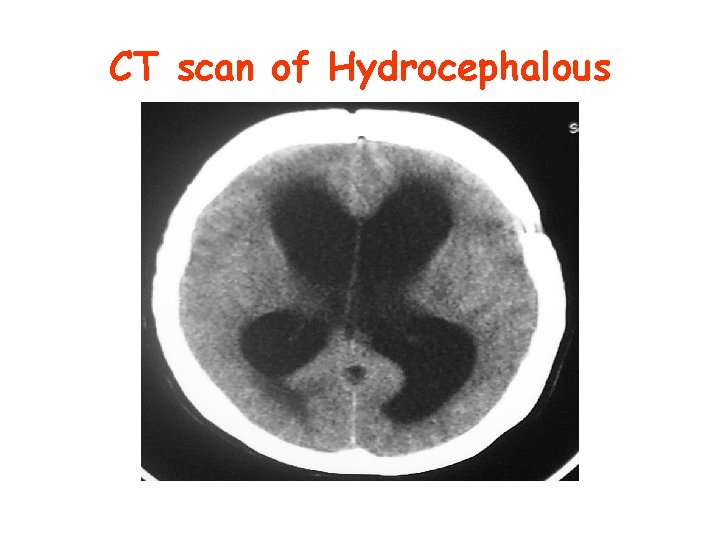
CT scan of Hydrocephalous
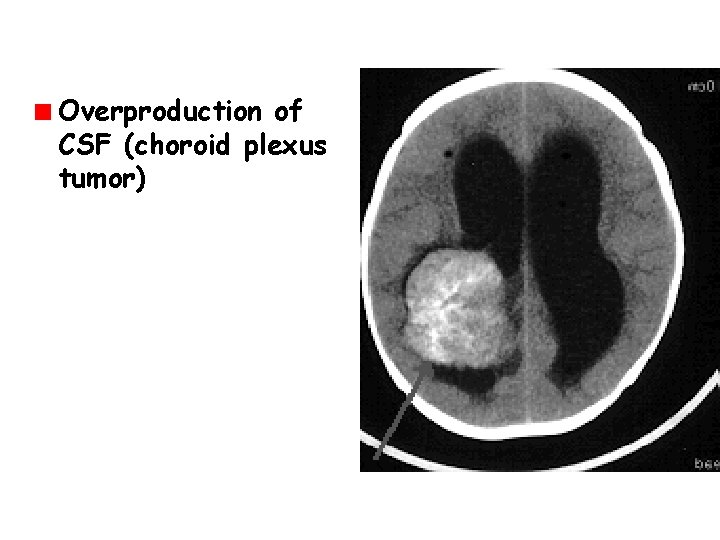
Overproduction of CSF (choroid plexus tumor)
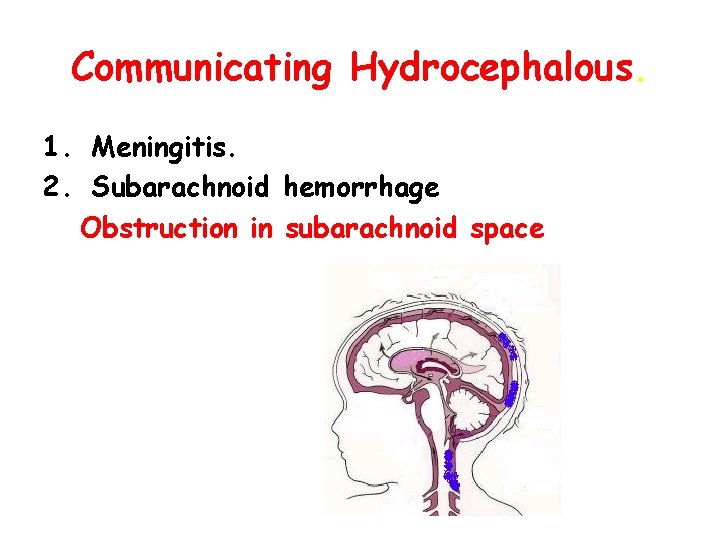
Communicating Hydrocephalous. 1. Meningitis. 2. Subarachnoid hemorrhage Obstruction in subarachnoid space
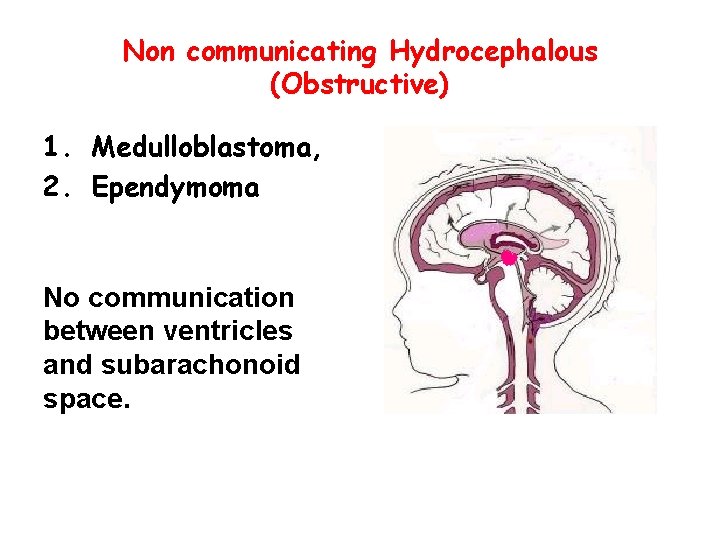
Non communicating Hydrocephalous (Obstructive) 1. Medulloblastoma, 2. Ependymoma No communication between ventricles and subarachonoid space.
Congenital hydrocephalous (present at birth) Aqueductal stenosis (narrowing) is the most frequent cause. Blockage of fourth ventricle outlet (Dandy Walker Syndrome) – due to congenital malformation
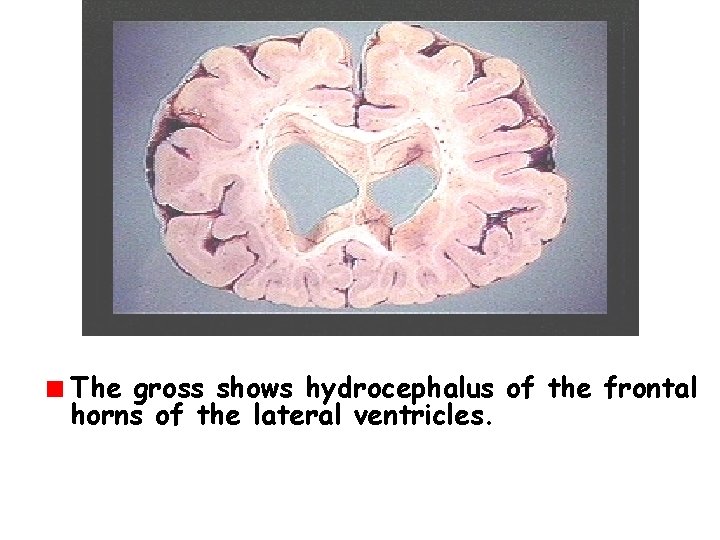
The gross shows hydrocephalus of the frontal horns of the lateral ventricles.
![Hydrocephalous before the fusion of the cranial Sutures [Head circumference increase]](http://slidetodoc.com/presentation_image_h/18a82ce5b8883aee94639ef7ca2785c1/image-18.jpg "Hydrocephalous before the fusion of the cranial Sutures [Head circumference increase]")
Hydrocephalous before the fusion of the cranial Sutures [Head circumference increase]

Hydrocephalous after the fusion of the Sutures, produce Ventricular expansion and Increased Intracranial Pressure
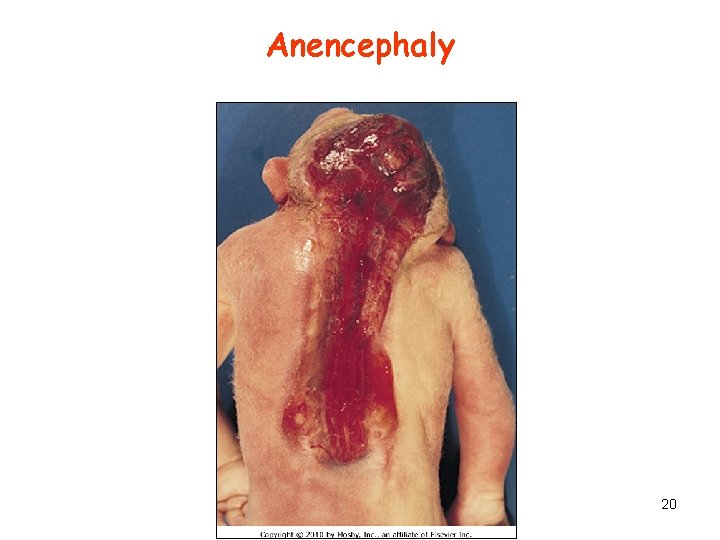
Anencephaly 20
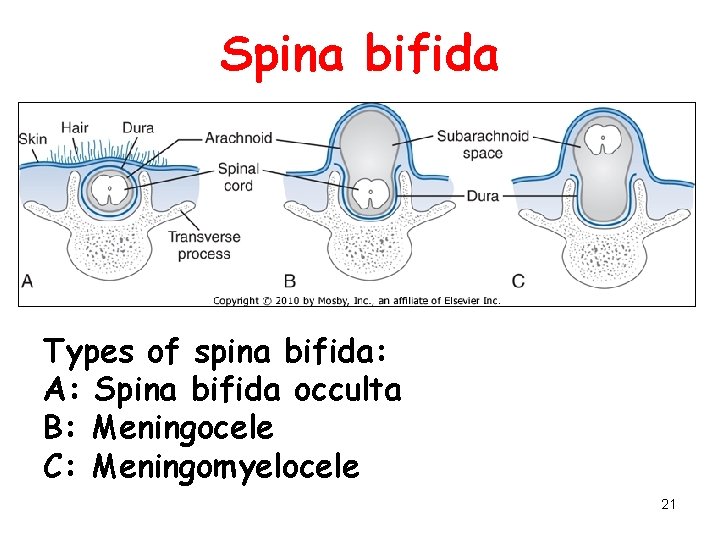
Spina bifida Types of spina bifida: A: Spina bifida occulta B: Meningocele C: Meningomyelocele 21
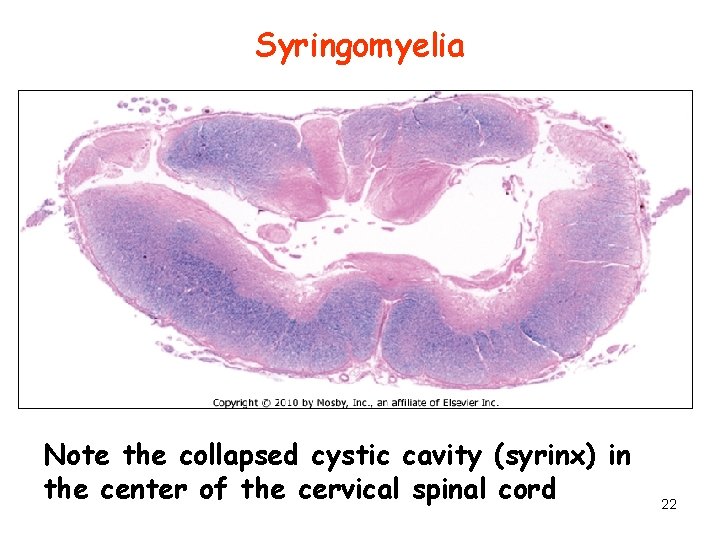
Syringomyelia Note the collapsed cystic cavity (syrinx) in the center of the cervical spinal cord 22
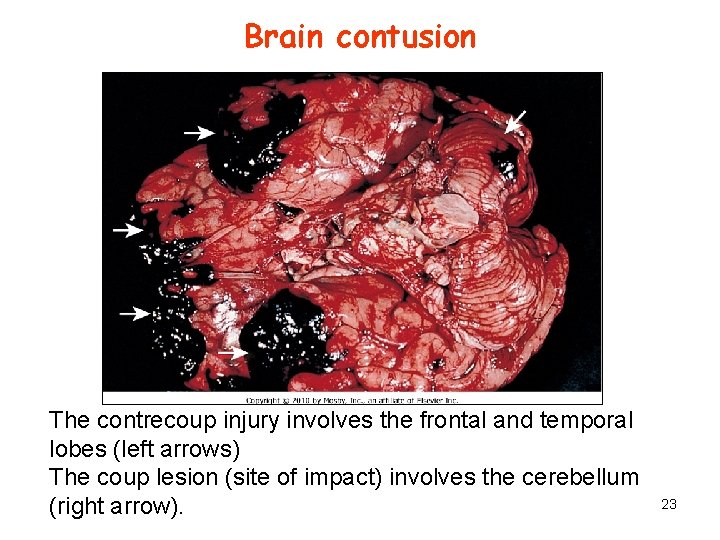
Brain contusion The contrecoup injury involves the frontal and temporal lobes (left arrows) The coup lesion (site of impact) involves the cerebellum (right arrow). 23
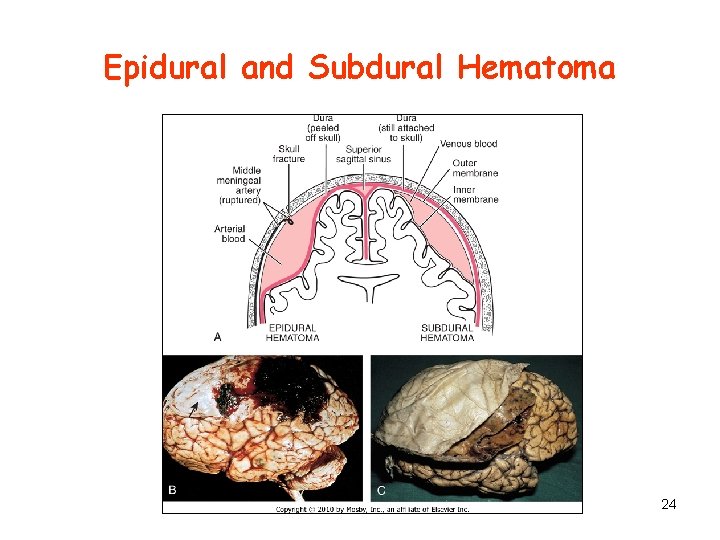
Epidural and Subdural Hematoma 24

Red Neuron 25
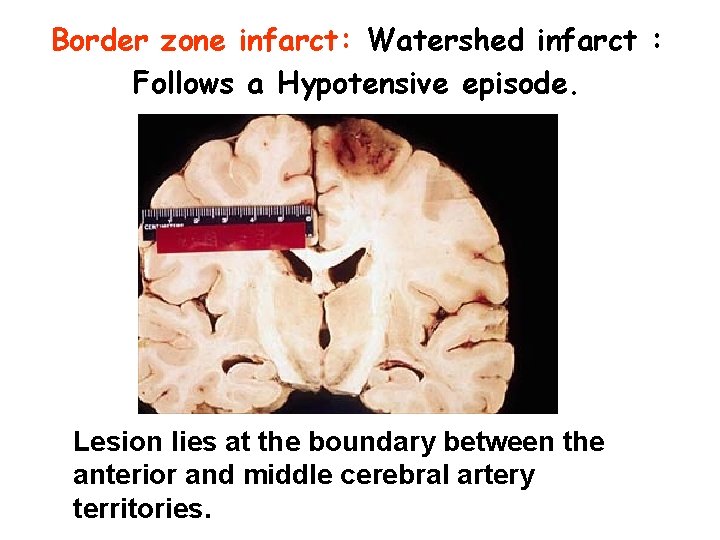
Border zone infarct: Watershed infarct : Follows a Hypotensive episode. Lesion lies at the boundary between the anterior and middle cerebral artery territories.
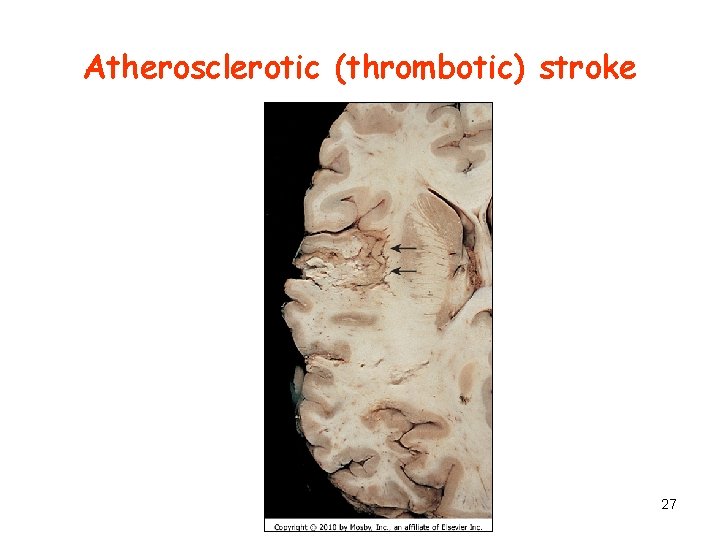
Atherosclerotic (thrombotic) stroke 27
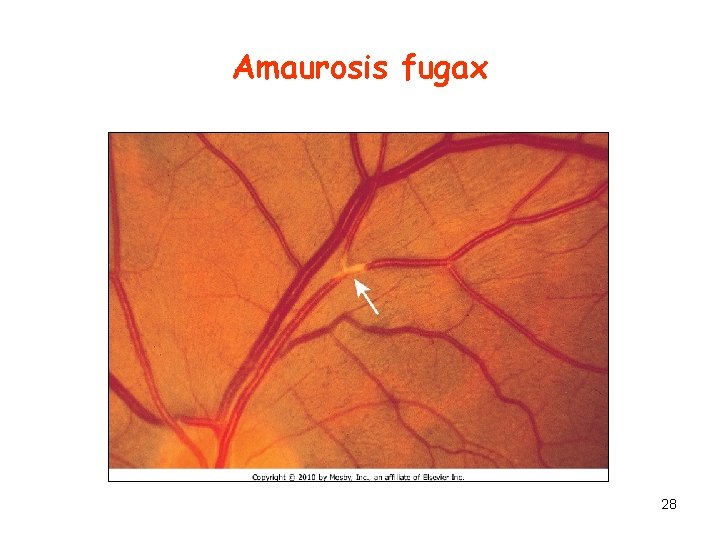
Amaurosis fugax 28
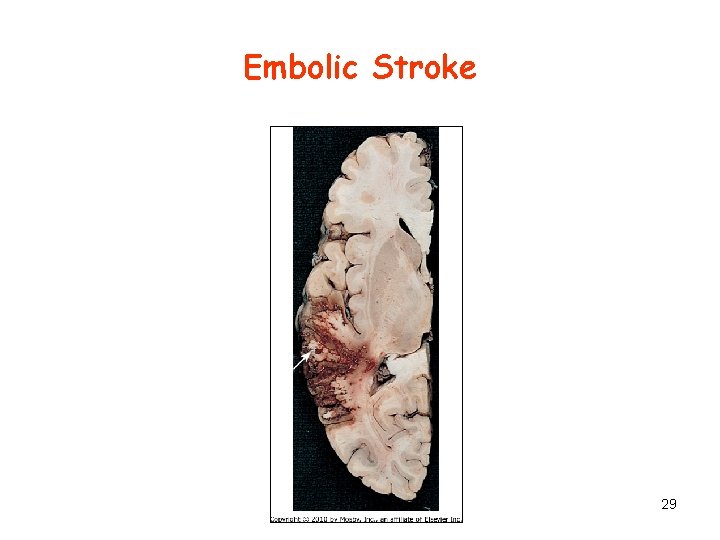
Embolic Stroke 29
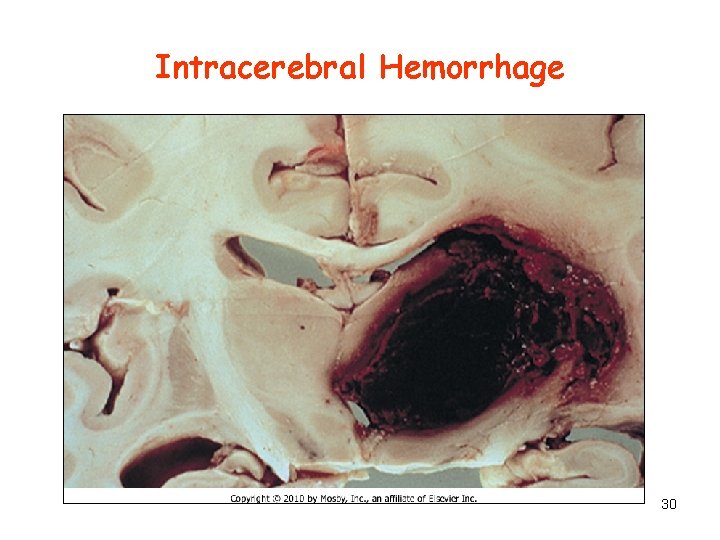
Intracerebral Hemorrhage 30
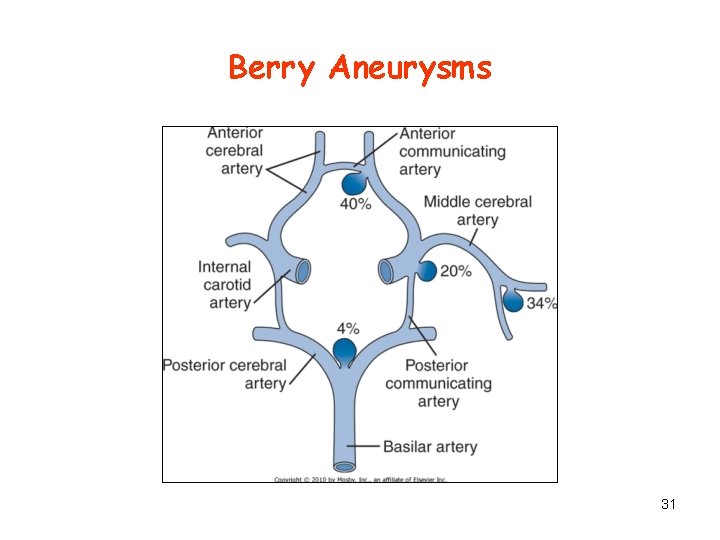
Berry Aneurysms 31
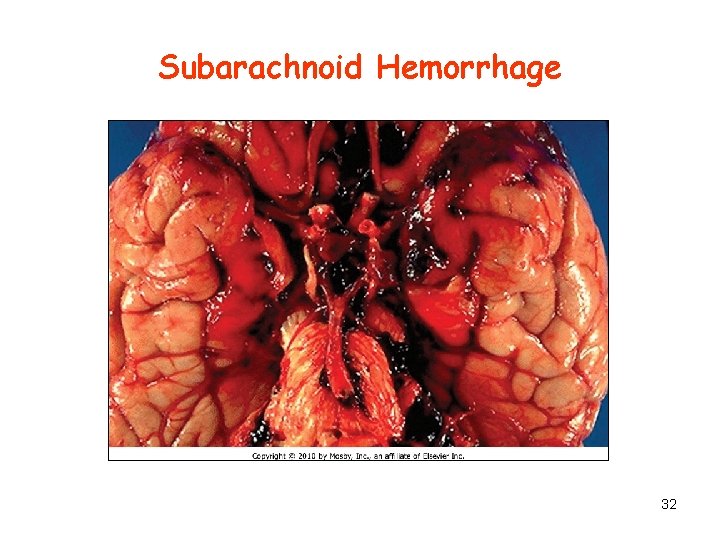
Subarachnoid Hemorrhage 32
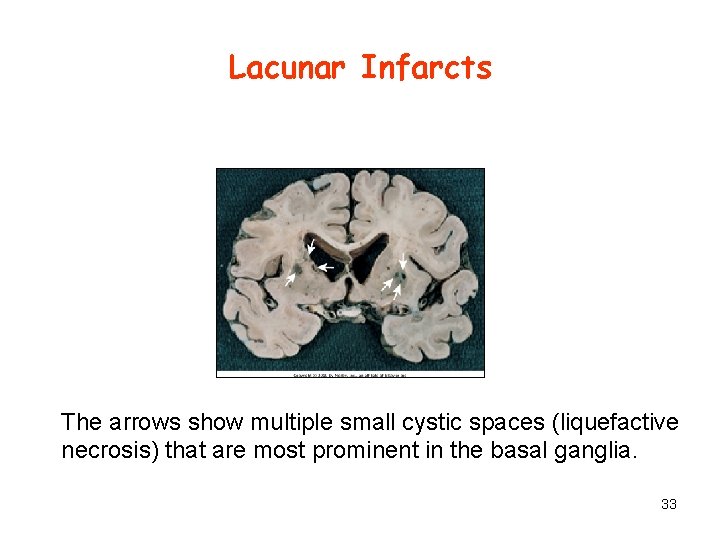
Lacunar Infarcts The arrows show multiple small cystic spaces (liquefactive necrosis) that are most prominent in the basal ganglia. 33
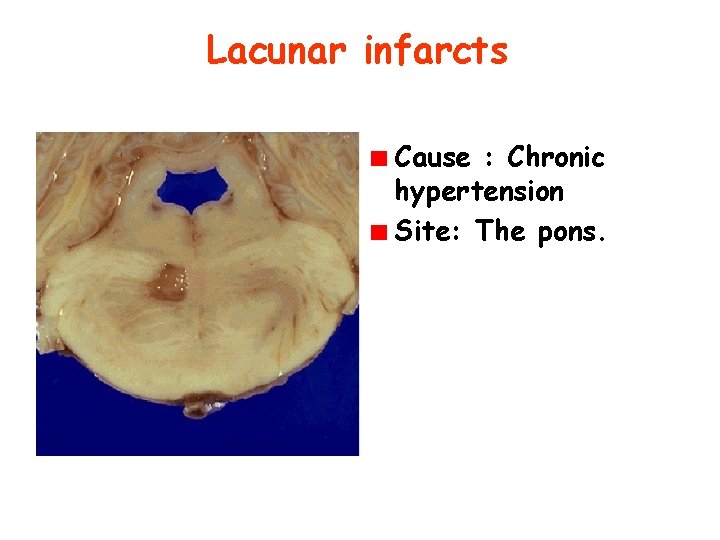
Lacunar infarcts Cause : Chronic hypertension Site: The pons.
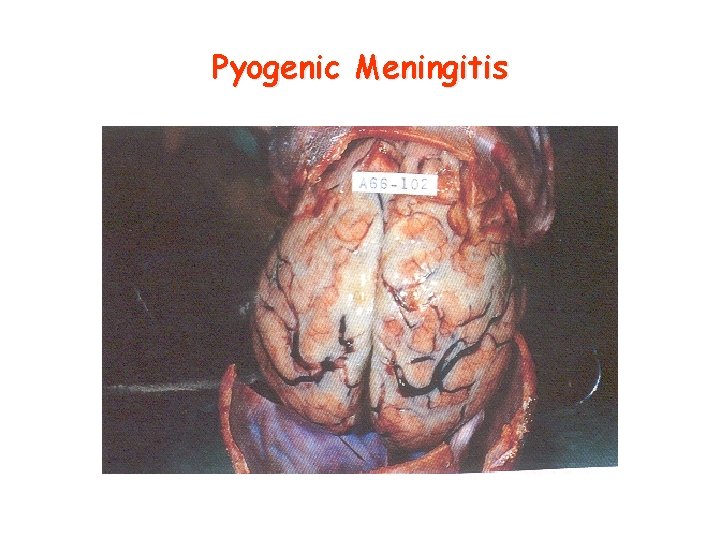
Pyogenic Meningitis
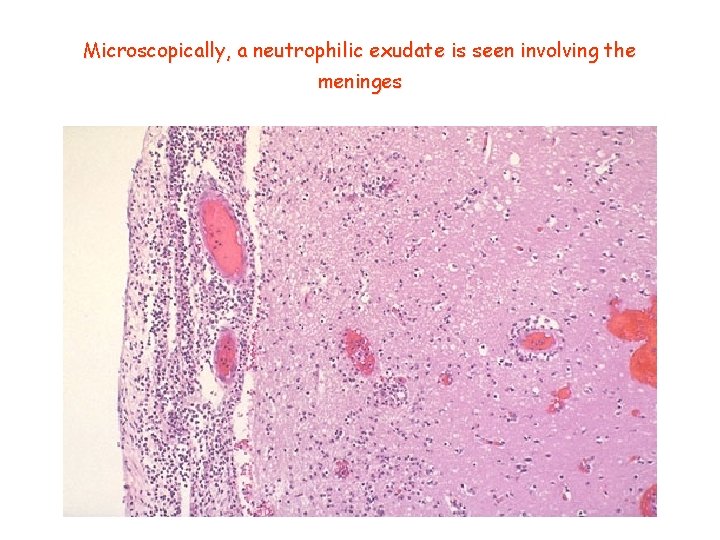
Microscopically, a neutrophilic exudate is seen involving the meninges
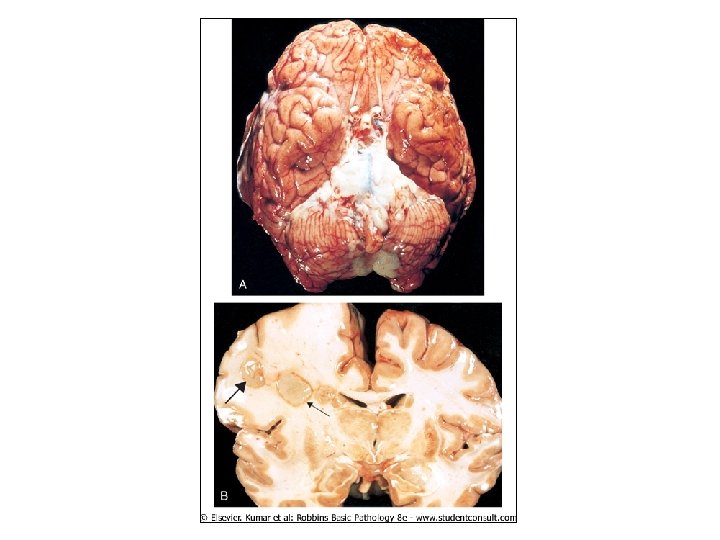
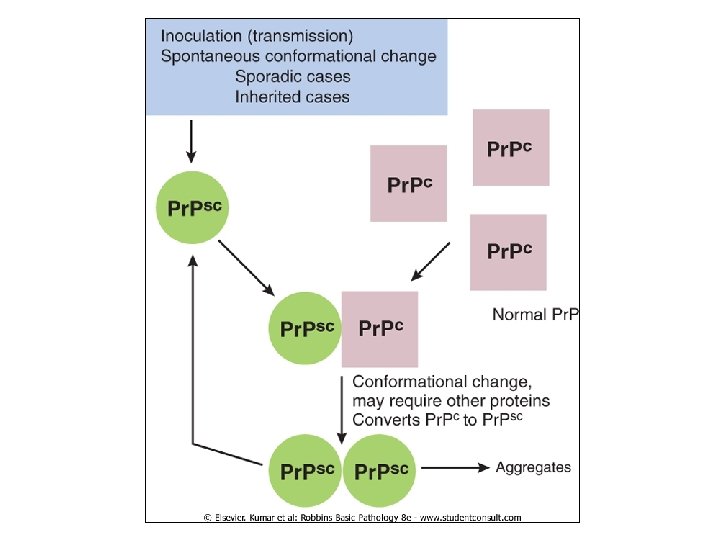
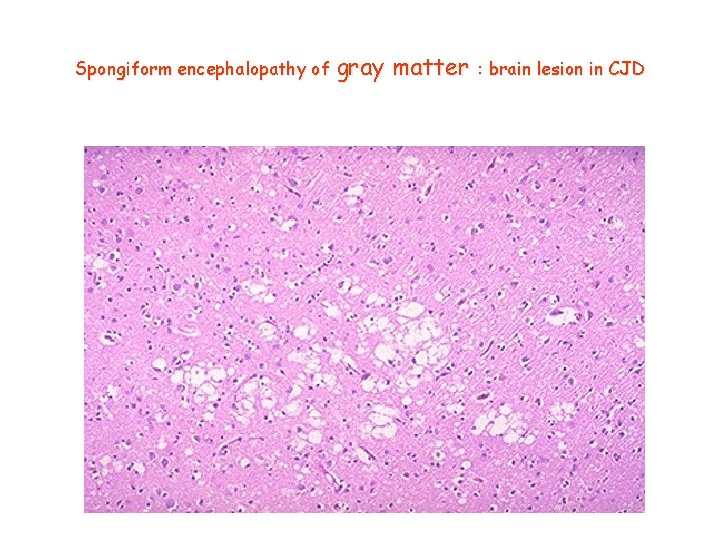
Spongiform encephalopathy of gray matter : brain lesion in CJD
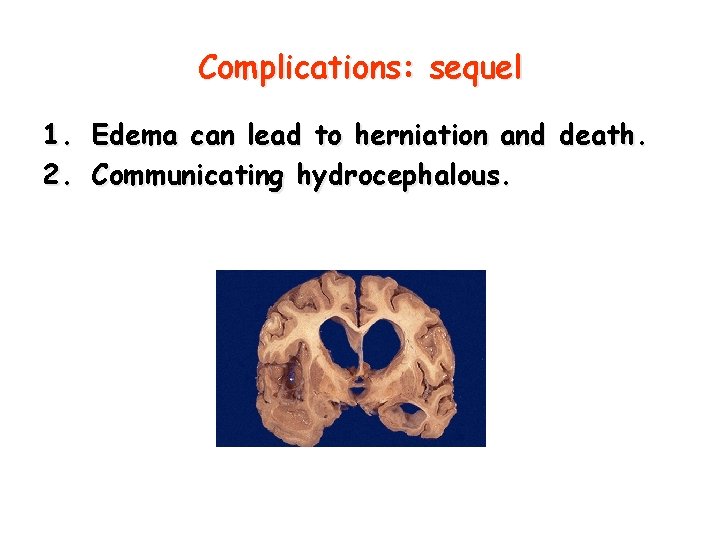
Complications: sequel 1. Edema can lead to herniation and death. 2. Communicating hydrocephalous.

Meningeal Syphilis 1 of 2 Neurosyphilis is a tertiary stage of syphilis – only in 10% with untreated syphilis May involve spinal Meninges: produce thickening. Produce meningeal fibrosis and secondary Hydrocephalous.
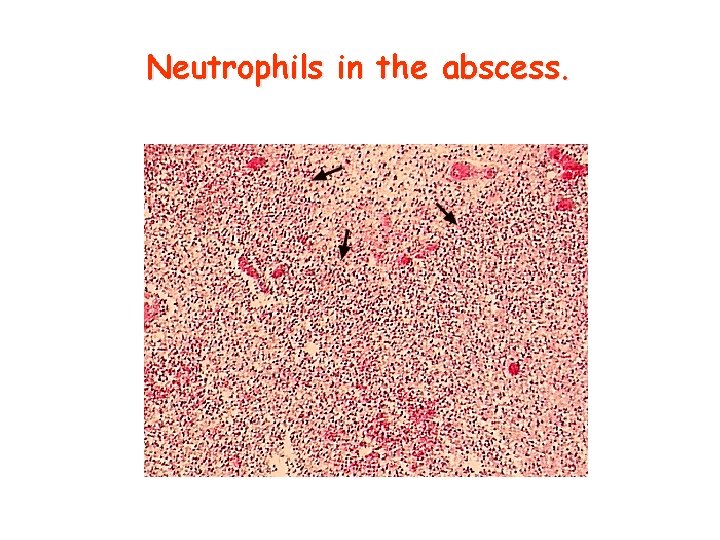
Neutrophils in the abscess.
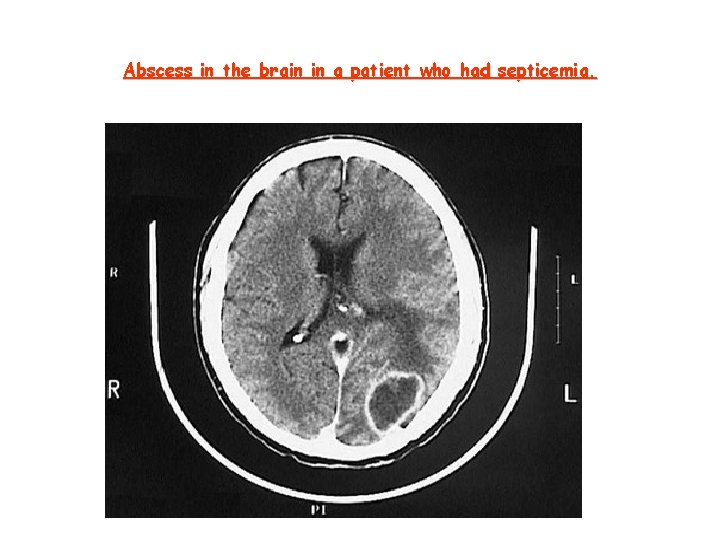
Abscess in the brain in a patient who had septicemia.
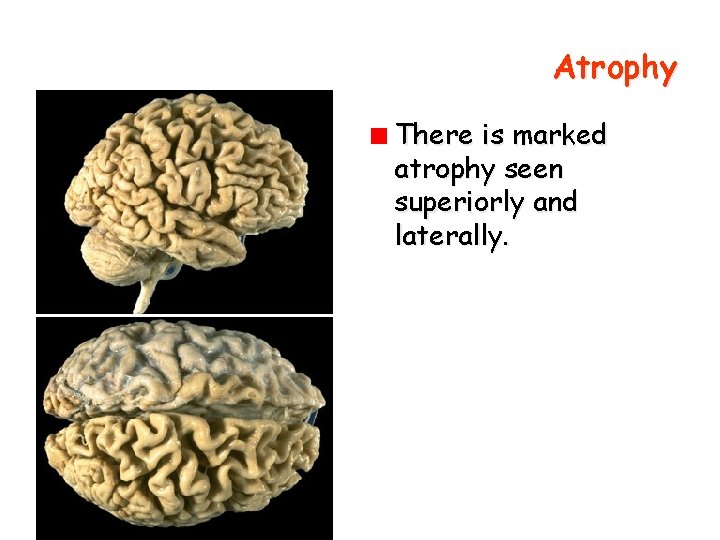
Atrophy There is marked atrophy seen superiorly and laterally.
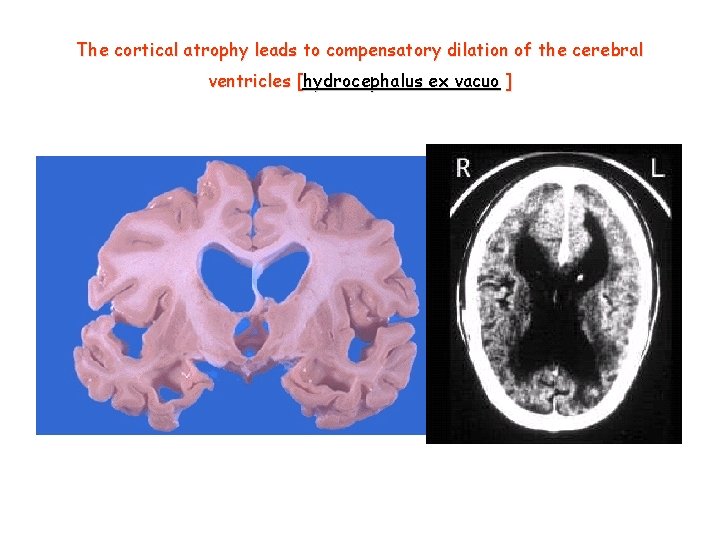
The cortical atrophy leads to compensatory dilation of the cerebral ventricles [hydrocephalus ex vacuo ]

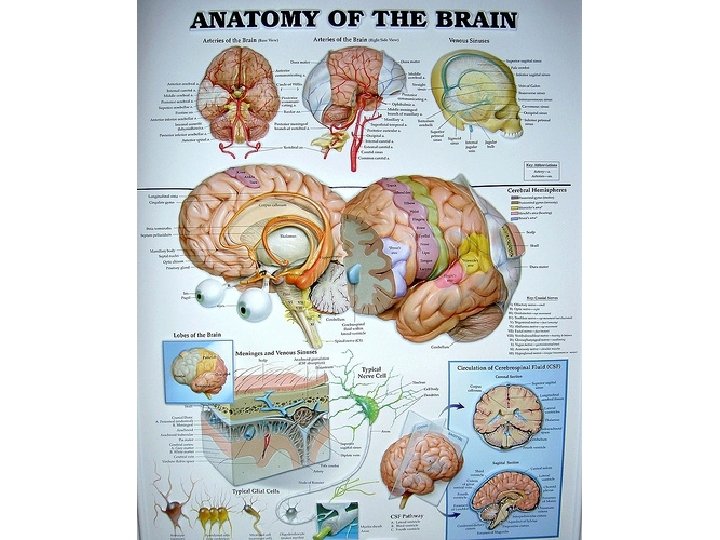
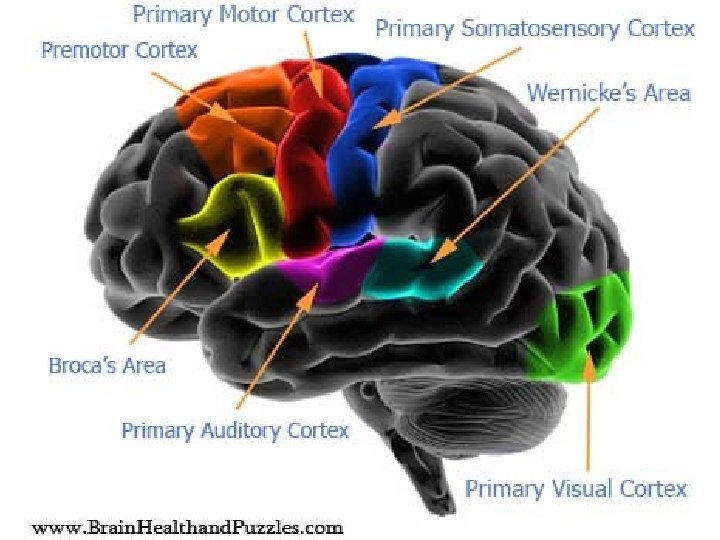
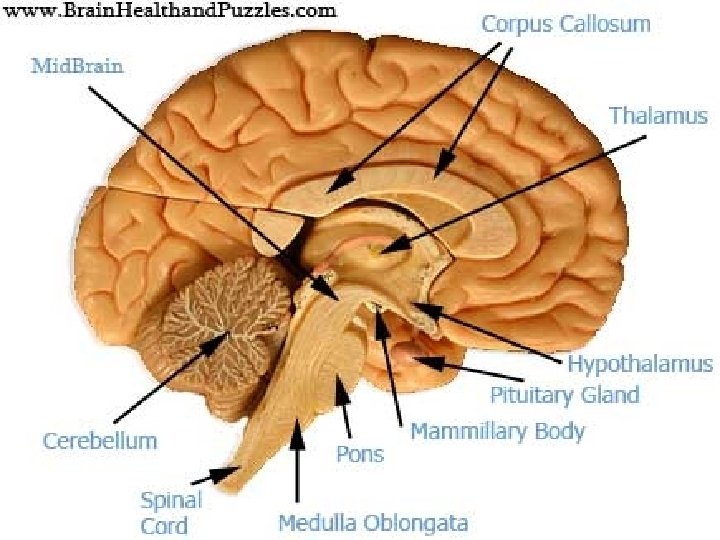
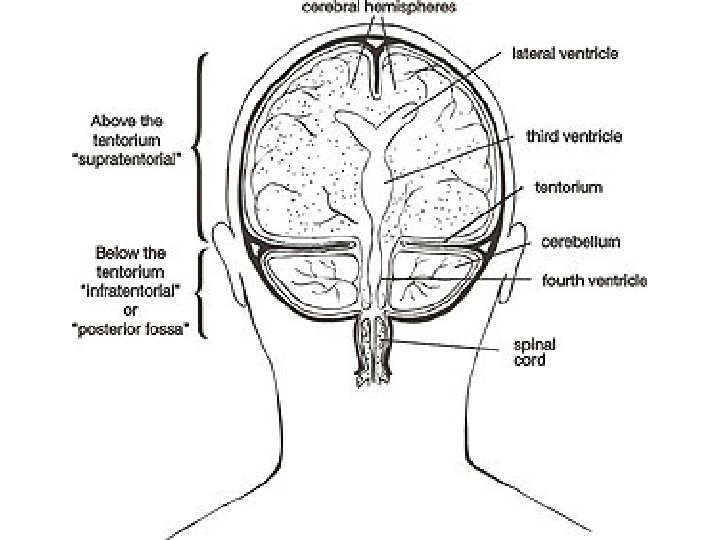
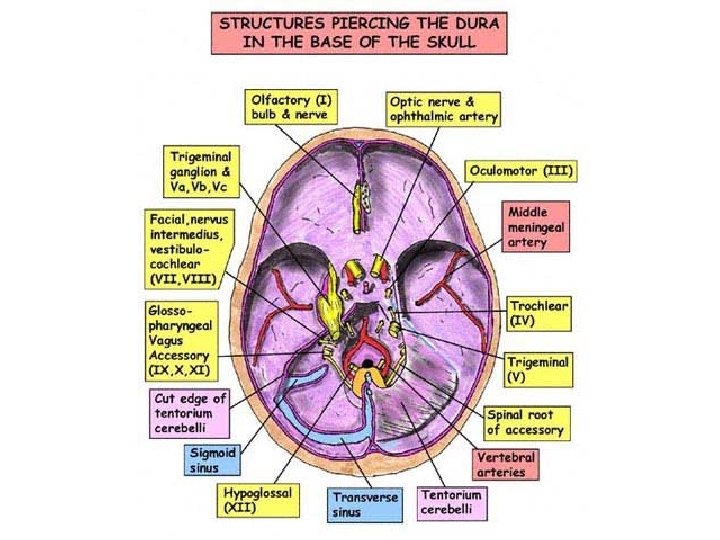
Self Study For anatomy, not for exam


- Slides: 57