
Eddy currents simulation with Quick Field Vladimir Podnos
- Slides: 12
Eddy currents simulation with Quick. Field Vladimir Podnos, Director of Marketing and Support, Tera Analysis Ltd. Introduction Alexander Lyubimtsev Support Engineer Tera Analysis Ltd. Live demonstration https: //quickfield. com/seminar_actuators. htm
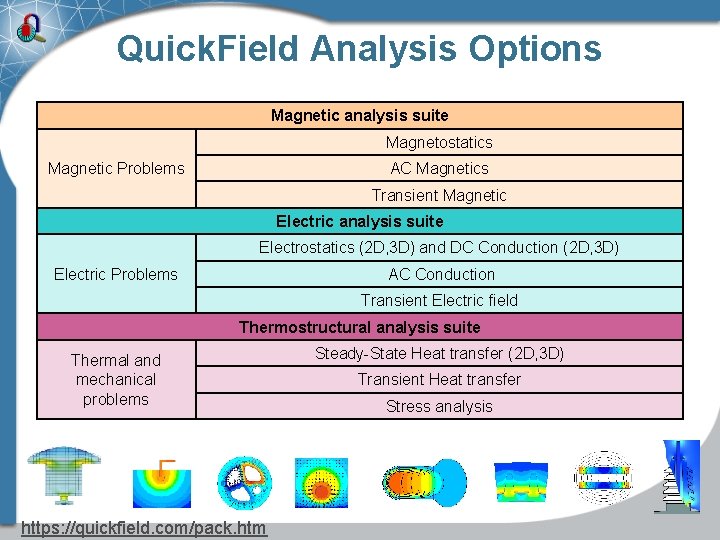
Quick. Field Analysis Options Magnetic analysis suite Magnetostatics AC Magnetics Magnetic Problems Transient Magnetic Electric analysis suite Electrostatics (2 D, 3 D) and DC Conduction (2 D, 3 D) Electric Problems AC Conduction Transient Electric field Thermostructural analysis suite Thermal and mechanical problems https: //quickfield. com/pack. htm Steady-State Heat transfer (2 D, 3 D) Transient Heat transfer Stress analysis
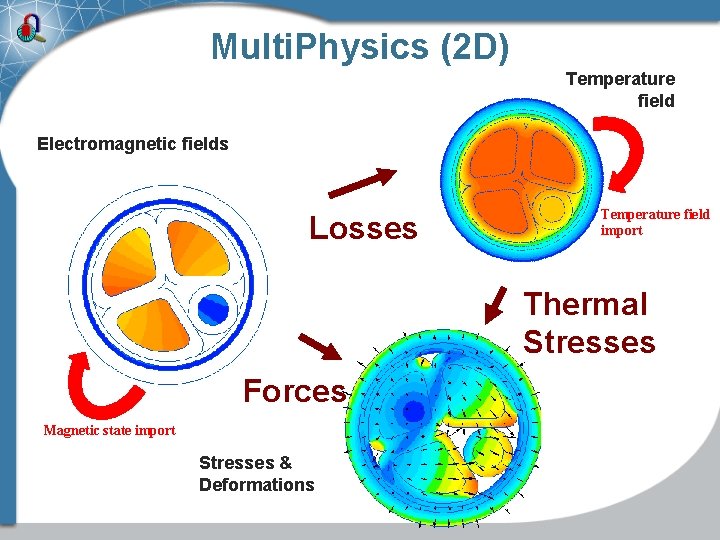
Multi. Physics (2 D) Temperature field Electromagnetic fields Joule Heat Losses Temperature s Forces Magnetic state import Stresses & Deformations Temperature field import Thermal Stresses
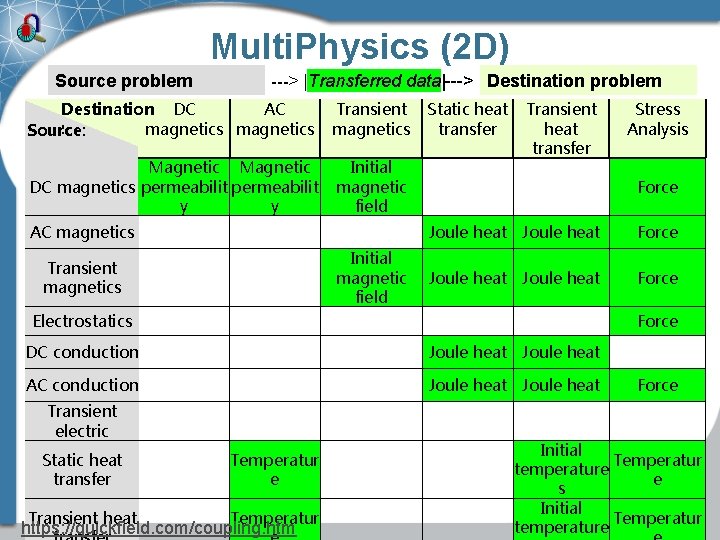
Multi. Physics (2 D) Source problem ---> |Transferred data|---> Destination problem Destination DC AC : magnetics Source: Transient magnetics Magnetic DC magnetics permeabilit y y Initial magnetic field AC magnetics Initial magnetic field Transient magnetics Static heat transfer Transient heat transfer Stress Analysis Force Joule heat Force Electrostatics Force DC conduction Joule heat AC conduction Joule heat Transient electric Static heat transfer Temperatur e Transient heat Temperatur https: //quickfield. com/coupling. htm Force Initial Temperatur temperature e s Initial Temperatur temperature
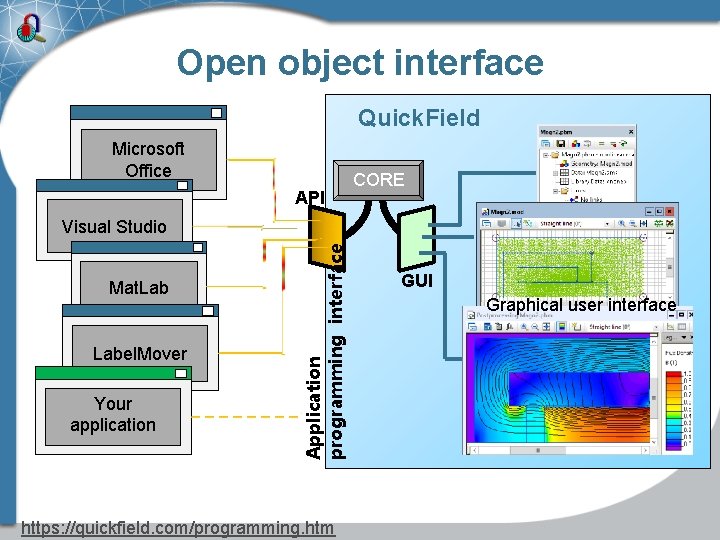
Open object interface Quick. Field Microsoft Office API CORE Mat. Label. Mover Your application Application programming interface Visual Studio https: //quickfield. com/programming. htm GUI Graphical user interface
Quick. Field Difference
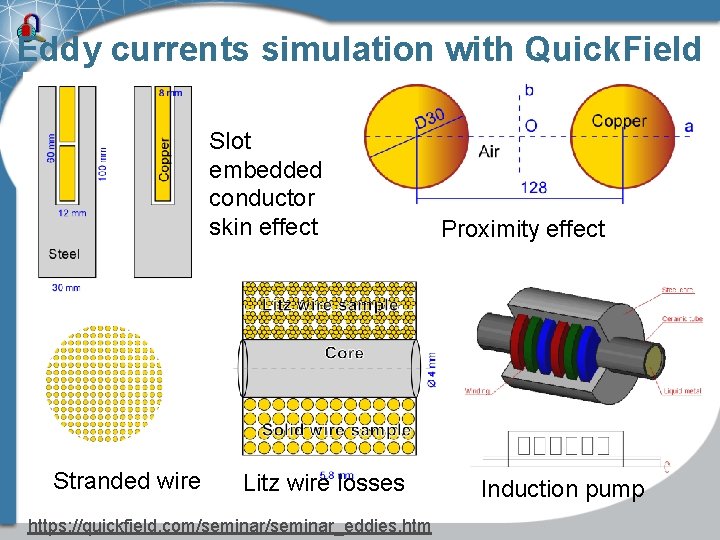
Eddy currents simulation with Quick. Field Slot embedded conductor skin effect Stranded wire Litz wire losses https: //quickfield. com/seminar_eddies. htm Proximity effect Induction pump
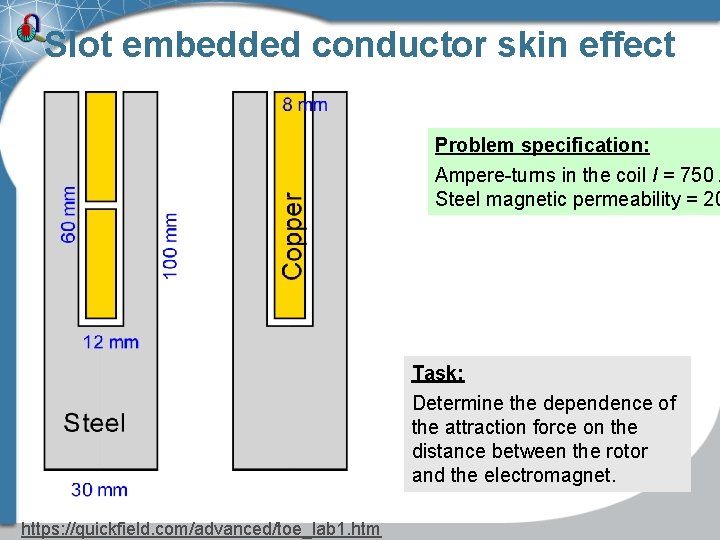
Slot embedded conductor skin effect Problem specification: Ampere-turns in the coil I = 750 A Steel magnetic permeability = 20 Task: Determine the dependence of the attraction force on the distance between the rotor and the electromagnet. https: //quickfield. com/advanced/toe_lab 1. htm
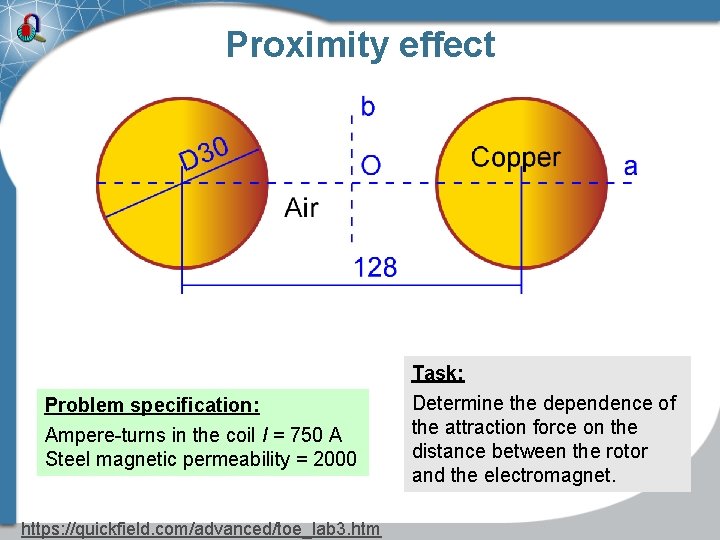
Proximity effect Problem specification: Ampere-turns in the coil I = 750 A Steel magnetic permeability = 2000 https: //quickfield. com/advanced/toe_lab 3. htm Task: Determine the dependence of the attraction force on the distance between the rotor and the electromagnet.
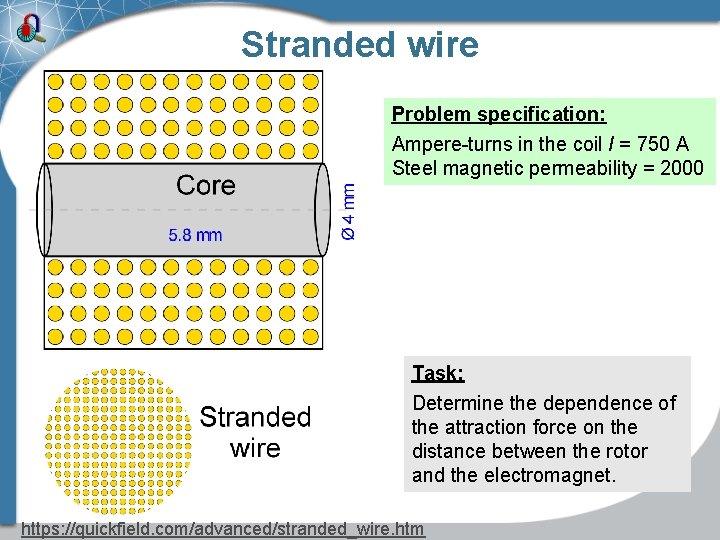
Stranded wire Problem specification: Ampere-turns in the coil I = 750 A Steel magnetic permeability = 2000 Task: Determine the dependence of the attraction force on the distance between the rotor and the electromagnet. https: //quickfield. com/advanced/stranded_wire. htm
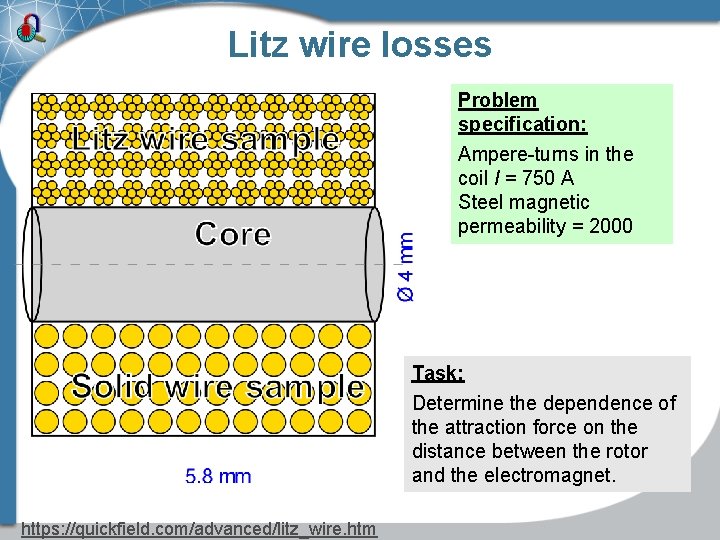
Litz wire losses Problem specification: Ampere-turns in the coil I = 750 A Steel magnetic permeability = 2000 Task: Determine the dependence of the attraction force on the distance between the rotor and the electromagnet. https: //quickfield. com/advanced/litz_wire. htm
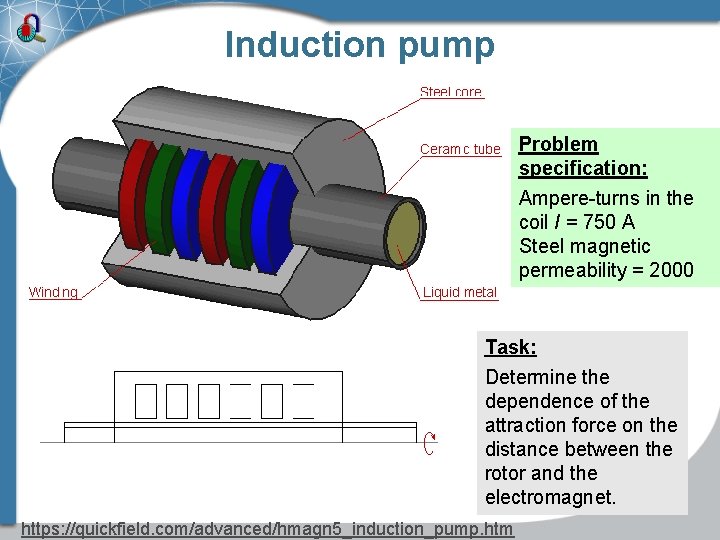
Induction pump Problem specification: Ampere-turns in the coil I = 750 A Steel magnetic permeability = 2000 Task: Determine the dependence of the attraction force on the distance between the rotor and the electromagnet. https: //quickfield. com/advanced/hmagn 5_induction_pump. htm