
ED Transfer Communication USING DATA TO DRIVE IMPROVEMENT

- Slides: 33
ED Transfer Communication USING DATA TO DRIVE IMPROVEMENT! EDTC-1: Administrative Communication January 24 th 2017 Presented By: Shanelle Van Dyke 1
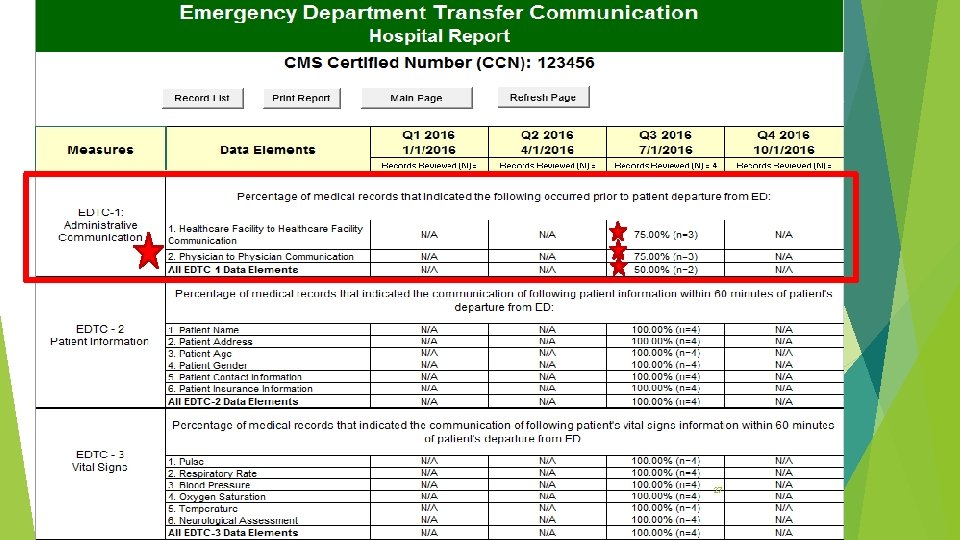
Agenda EDTC– 1 Measure Overview Review of Data Results – Discussion among CAHs Review of EDTC-1 Abstraction Guidelines (If Necessary) Roles and Responsibilities Sample forms, tools, techniques, etc. Interpretation of EDTC-1 Reports (Q 3 2016) Quality Improvement Methods Root Cause Analysis (RCA) & Plan, Do, Study/Check, Act (PDSA/PDCA) Sharing of Best Practices Additional resources 2
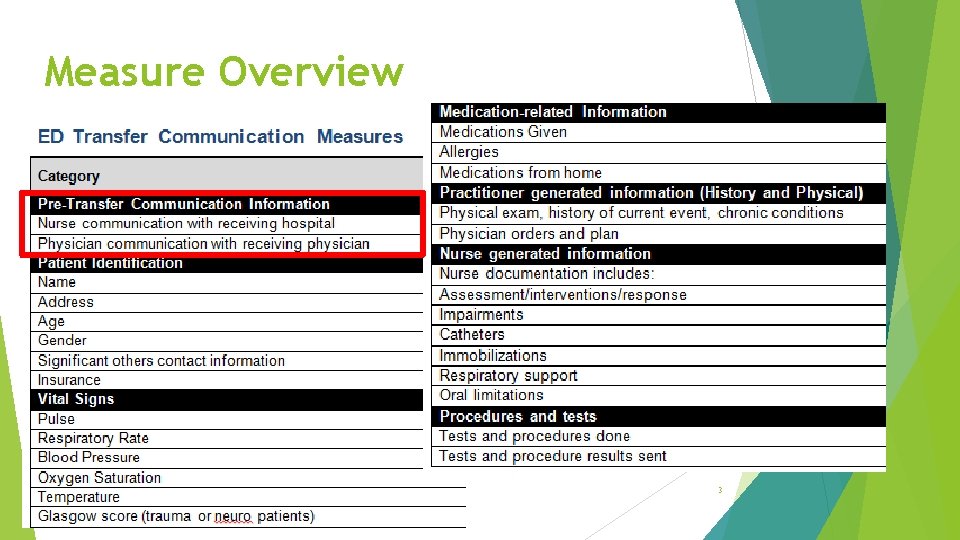
Measure Overview 3
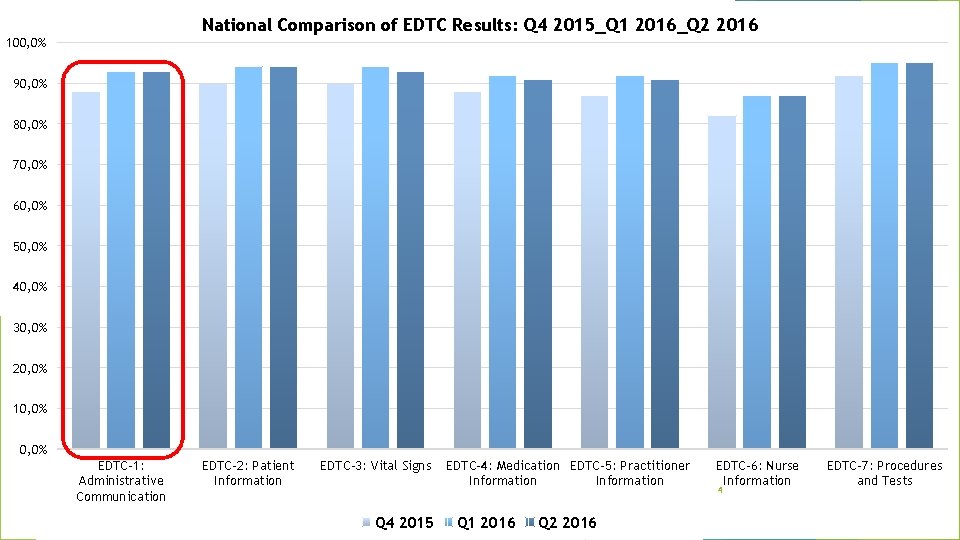
National Comparison of EDTC Results: Q 4 2015_Q 1 2016_Q 2 2016 100, 0% 90, 0% 80, 0% 70, 0% 60, 0% 50, 0% 40, 0% 30, 0% 20, 0% 10, 0% EDTC-1: Administrative Communication EDTC-2: Patient Information EDTC-3: Vital Signs Q 4 2015 EDTC-4: Medication EDTC-5: Practitioner Information Q 1 2016 Q 2 2016 EDTC-6: Nurse Information 4 EDTC-7: Procedures and Tests
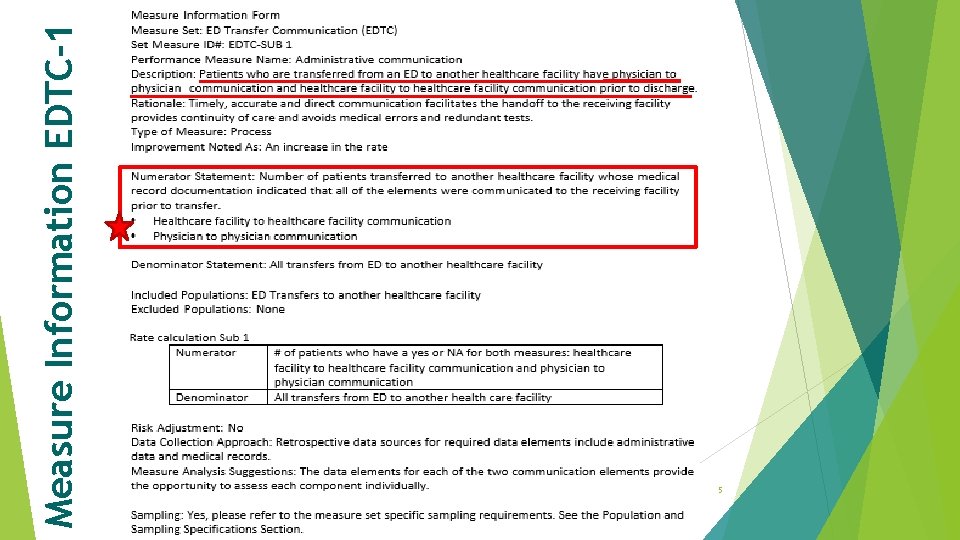
Measure Information EDTC-1 5
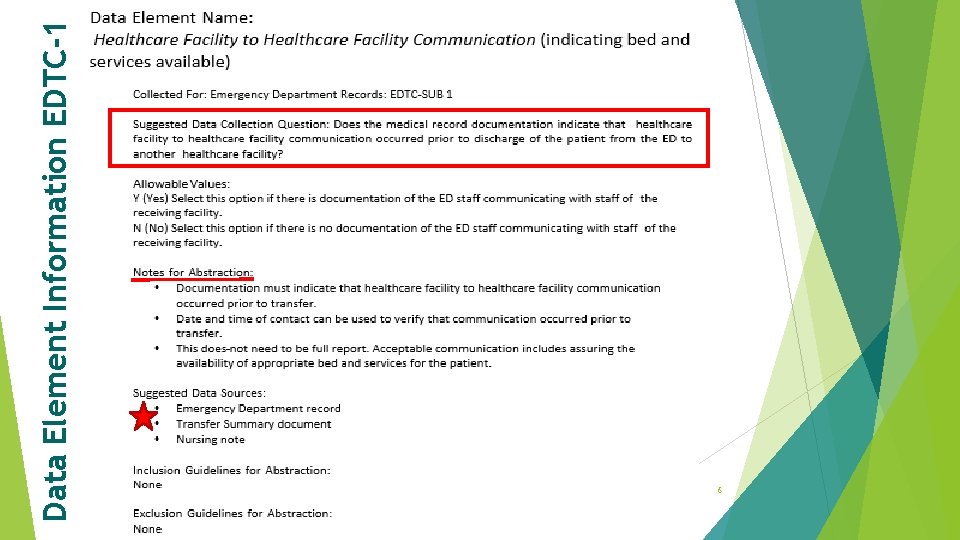
Data Element Information EDTC-1 6
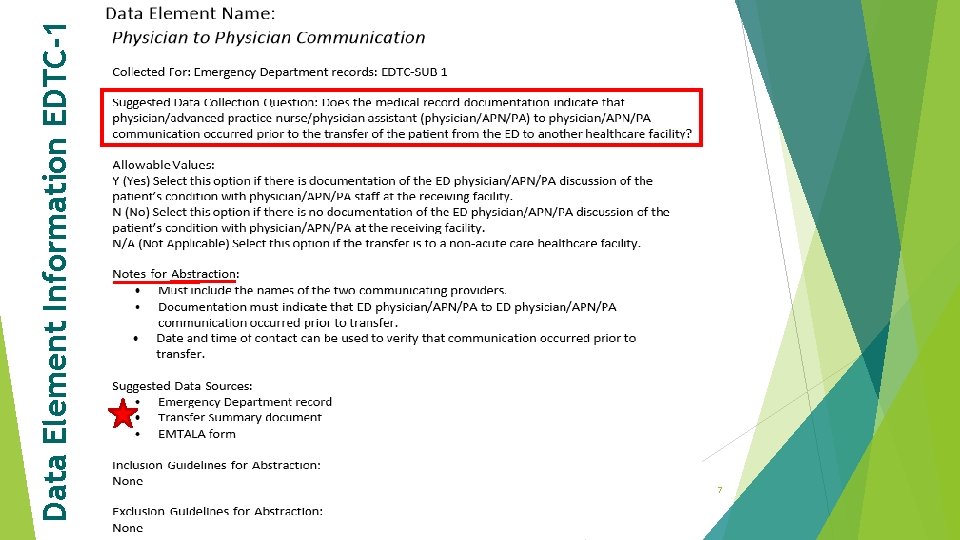
Data Element Information EDTC-1 7
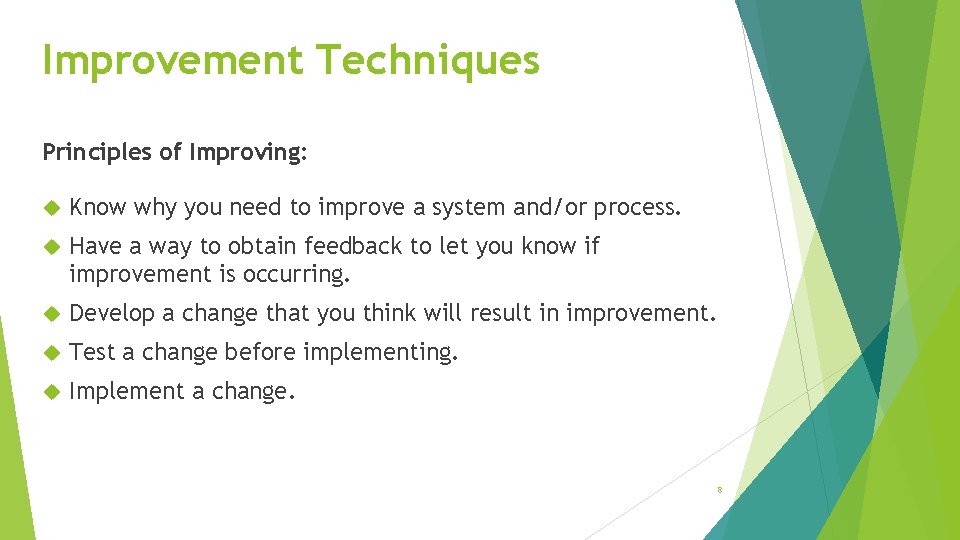
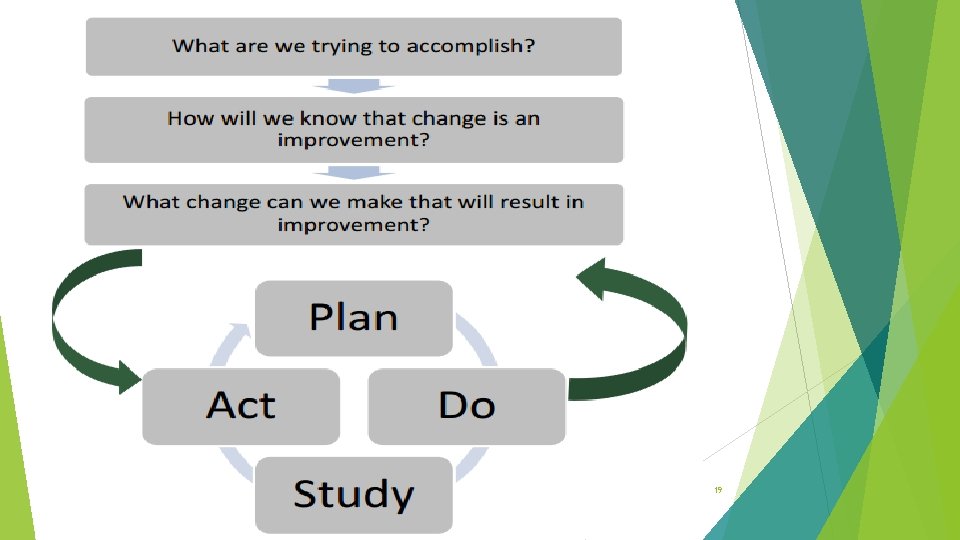
Improvement Techniques Principles of Improving: Know why you need to improve a system and/or process. Have a way to obtain feedback to let you know if improvement is occurring. Develop a change that you think will result in improvement. Test a change before implementing. Implement a change. 8
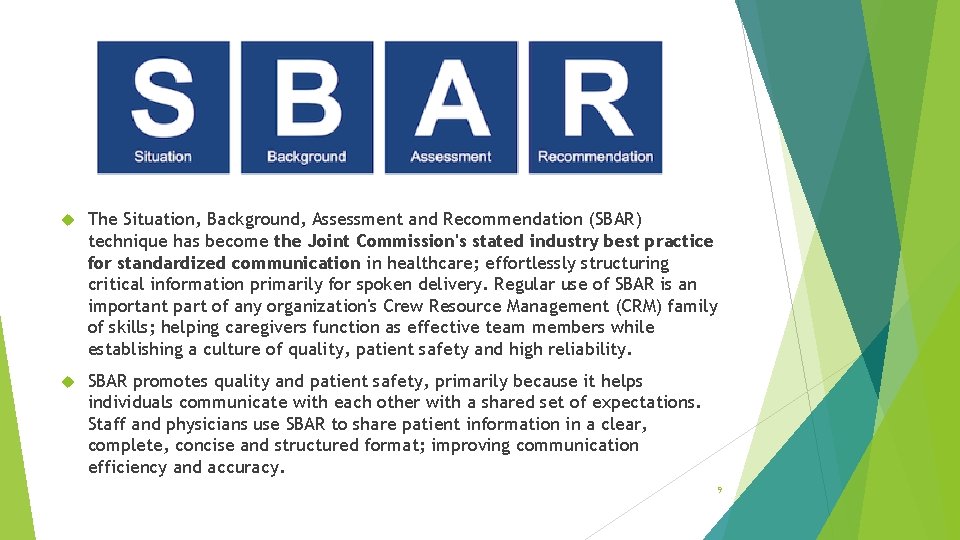
The Situation, Background, Assessment and Recommendation (SBAR) technique has become the Joint Commission's stated industry best practice for standardized communication in healthcare; effortlessly structuring critical information primarily for spoken delivery. Regular use of SBAR is an important part of any organization's Crew Resource Management (CRM) family of skills; helping caregivers function as effective team members while establishing a culture of quality, patient safety and high reliability. SBAR promotes quality and patient safety, primarily because it helps individuals communicate with each other with a shared set of expectations. Staff and physicians use SBAR to share patient information in a clear, complete, concise and structured format; improving communication efficiency and accuracy. 9
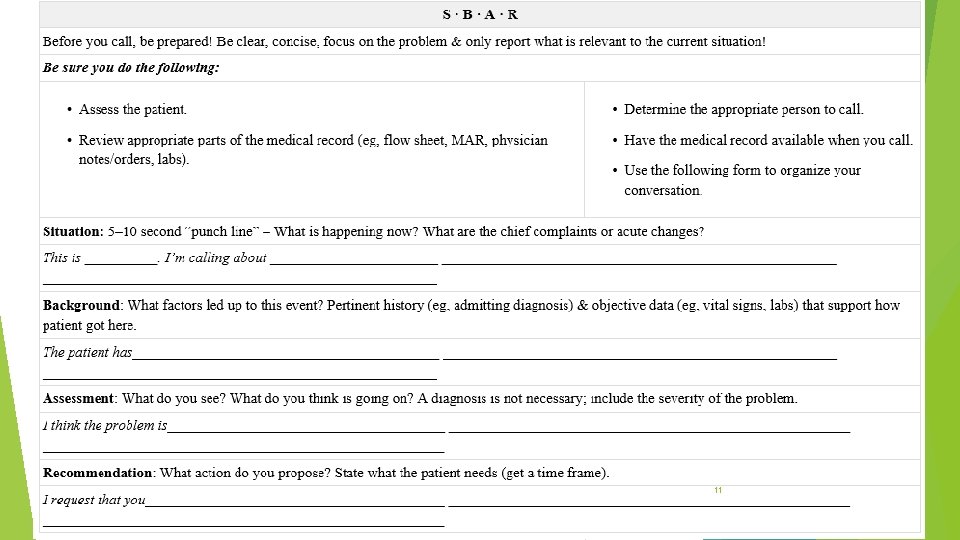
Standardize Communication The SBAR technique offers hospitals and care facilities a solution to bridge the gap in communication, including hand-offs, patient transfers, critical conversations and telephone calls. It creates a shared expectation between the sender and receiver of the information being shared. Here is how SBAR works: First, quickly organize the briefing information in your mind or on paper using the four elements (Situation, Background, Assessment and Recommendation) in sequence. Only the most relevant data is included, and everything irrelevant or of secondary importance is excluded. Second, present your briefing. Since team members can immediately recognize and understand the familiar, predictable SBAR format, you help them more efficiently and effectively address a situation or solve a problem. Third, they may confirm, clarify or enhance what you’ve said, then work with 10 you to take the required action.
11
Recommendations and Principles of Care Transitions from the Emergency Department Care Transitions and the Emergency Department: Overview Clinical environments are dynamic and complex, presenting many challenges for effective communication among health care providers, patients, and families. Transfers from the emergency department often result in a series of handoffs between emergency medical services (ground and/or air transport) other hospital emergency departments and a receiving facility. Many of the health care providers and staff engaged in these transfers are unfamiliar with the settings and the care delivery details where they are sending patients and may not provide adequate communication to support effective care. Ineffective and inefficient transitions can lead to poor outcomes such as: delays in diagnosis, medication errors, adverse events, inappropriate or unnecessary treatments, patient complaints, increased lengths of stay, 12 and/or increased costs.
American College of Emergency Physicians Care Transition Task Force Recommendations: To better support effective transfers from the emergency department the American College of Emergency Physicians outlined several recommendations in a 2012 report on improving care coordination. The following recommendations are relevant to the Emergency Department Transfer Communication Measure Set: Enhance and promote training and education for all emergency department personnel regarding the importance of transitions of care and how to implement effective policies and procedures. Assess provider performance, with appropriate feedback, and provide training in communication skills as necessary. Work with emergency department information system vendors to produce transition support tools and identify the components of a minimum data set for all transitions. 13 Full Report: ACEP Transitions of Care Task Force Report, 2012
Safe Transfers and Hand-offs: Emergency Department Principles for Interhospital Transfers: The optimal health and well-being of the patient should be the principal goal of patient transfer. Emergency physicians and hospital personnel should abide by applicable laws regarding patient transfer. All patients should be provided a medical screening examination (MSE) and stabilizing treatment within the capacity of the facility before transfer. If a competent patient requests transfer before the completion of the MSE and stabilizing treatment, these should be offered to the patient and documented. Hospital policies and procedures should articulate these obligations and ensure safe and efficient transfer. The transferring physician should inform the patient or responsible party of the risks and the benefits of transfer and document these. Before transfer, patient consent should be obtained and documented whenever possible. The hospital policies and procedures and/or medical staff bylaws should identify the individuals responsible for and qualified to perform MSEs. The policies and procedures or bylaws must define who is responsible for accepting and transferring patients on behalf of the hospital. The examining physician at the transferring hospital will use his or her best judgment regarding the condition of the patient when determining the timing of transfer, mode of transportation, level of care provided during transfer, and the destination of the 14 patient.
Safe Transfers and Hand-offs: Emergency Department Principles for Interhospital Transfers (continued): Transfers are effected through qualified personnel and transportation equipment, as required, including the use of necessary and medically appropriate life support measures during the transfer. Agreement to accept the patient in transfer should be obtained from a physician or responsible individual at the receiving hospital in advance of transfer. When a patient requires a higher level of care other than that provided or available at the transferring facility, a hospital with the capability and capacity to provide a higher level of care may not refuse any request for transfer. An appropriate medical summary and other pertinent records should accompany the patient to the receiving facility or be electronically transferred as soon as is practical. When transfer of patients is part of a regional plan to provide optimal care at a specialized medical facility, written transfer protocols and interfacility 15 agreements should be in place.
Safe Transfers and Hand-offs: Emergency Department Principles for Hand-offs Between EMS and Receiving Facilities: In addition to a verbal report from EMS providers, minimum key information required for patient care must be provided in written or electronic form at the time of transfer of patient care. This ensures that physicians and other health care providers who deliver subsequent care for the patient receive more accurate information and avoid potential errors inherent with second-hand information. The minimum key information reported at the time of hand-off must include information that is required for optimal care of the patient – examples include vital signs, treatment interventions, and the time of symptom onset for time-sensitive illnesses. All members of the health care team, including EMS providers, nurses, and physicians, must communicate with mutual respect for each other and respect the verbal and written communication from EMS as an important part of the patient’s history. During the transfer of patient care, the receiving health care providers should have an opportunity to ask questions to clarify information that 16 is exchanged.
Safe Transfers and Hand-offs: Emergency Department Principles for Hand-offs Between EMS and Receiving Facilities (continued): Health care facilities should attempt to receive patient care transfer reports in a timely manner, facilitating the return of EMS units to service. EMS transfer of care documentation should be treated as part of the health care record and must be professional, accurate, and consistent with information included in the final complete electronic or written EMS patient care report. Hospital systems should preserve written transfer of care documentation in the patient’s permanent medical record. Copies of all results of medical tests performed by EMS providers (eg 12 -lead ECGs, results of blood chemistry testing, any medical imaging, etc) must be available to the receiving facility with the EMS transfer-of-care documentation. Developers of electronic EMS patient care reports and health information exchanges should develop products that efficiently provide real-time digital transfer and preservation of the transfer-of-care documentation into the patient medical record. In addition to the information exchanged contemporaneously at the time of 17 transfer of patient care, the complete EMS patient care report must be available to the receiving facility within a clinically relevant period of time.
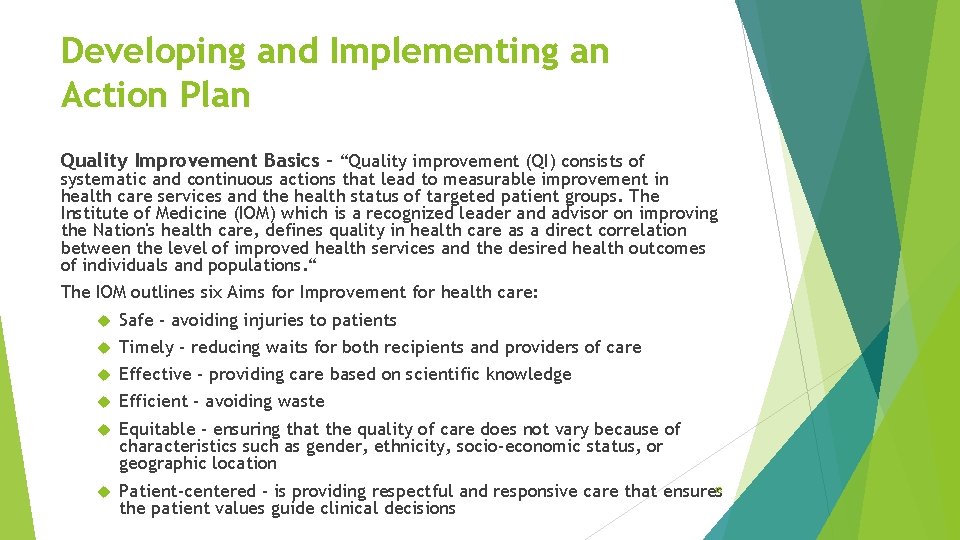
Developing and Implementing an Action Plan Quality Improvement Basics – “Quality improvement (QI) consists of systematic and continuous actions that lead to measurable improvement in health care services and the health status of targeted patient groups. The Institute of Medicine (IOM) which is a recognized leader and advisor on improving the Nation's health care, defines quality in health care as a direct correlation between the level of improved health services and the desired health outcomes of individuals and populations. “ The IOM outlines six Aims for Improvement for health care: Safe - avoiding injuries to patients Timely - reducing waits for both recipients and providers of care Effective - providing care based on scientific knowledge Efficient - avoiding waste Equitable - ensuring that the quality of care does not vary because of characteristics such as gender, ethnicity, socio-economic status, or geographic location 18 Patient-centered - is providing respectful and responsive care that ensures the patient values guide clinical decisions
19
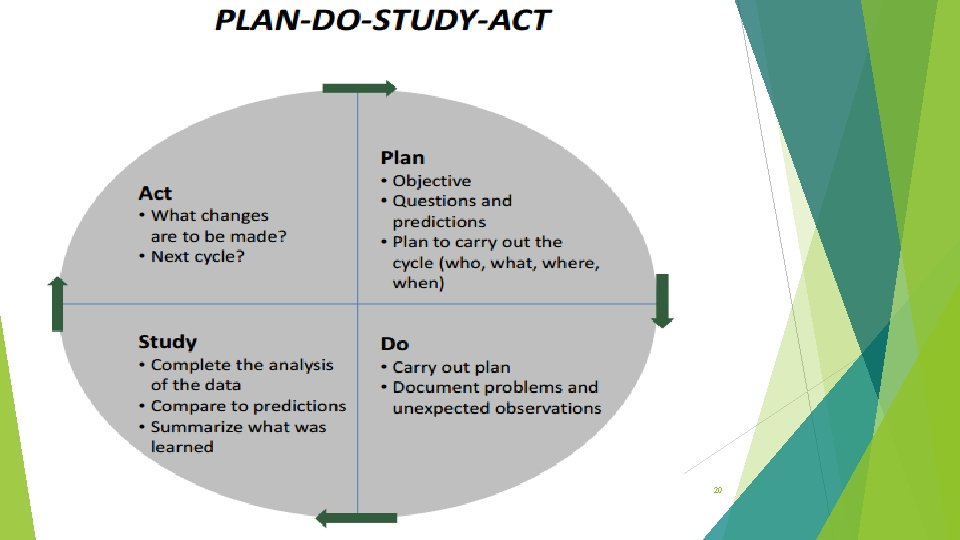
20
Establishing an ED Transfer Improvement Team Step One: Gaining commitment of hospital leadership. This commitment includes supporting the project team towards accomplishing its goals, in particular, removing barriers identified through the improvement process. Tips for gaining leadership commitment: Show them the data! The purpose of data collection on the Emergency Department Transfer Communication measures is to identify opportunities for improvement. Identify a realistic timeframe. Leaders and team members are more likely to offer support and input if they have an expectation of how long a particular improvement effort will take. Share how improvements in ED Transfer Communication align with other priority health care efforts. For example: Effective transfer of patient information from the Emergency Department to the next site of care can foster continuity of patient care and help to reduce errors, improve outcomes, and increase patient and family satisfaction. Stabilization and transfer of patients in emergency situations is a fundamental role of Critical Access Hospitals in the health care safety net for rural communities. This effort allows our CAH to evaluate and demonstrate the effectiveness of that important role. 21
Establishing an ED Transfer Improvement Team Step Two: Establish an improvement team. The team will work to evaluate and improve the emergency department transfer communication process. It is important to involve those that work directly with transferring patients from the hospital emergency department to another hospital or care setting. As appropriate for your hospital the team should include: Team leader (often a QI coordinator/manager) Physician champion(s), Nurse leader(s), Case manager(s), Those responsible for maintaining patient information such as a unit coordinator and a medical records representative. IT representative that can help the team understand capabilities, and make adaptations to the electronic medical record if needed. Local EMS and transport organizations. 22
Developing an Action Plan Each action step or change should include: what actions or changes will occur, who will carry out the changes, start and end dates for making the changes, resources needed to carry out the changes, and communication plans for the changes (who will know, receive, and participate in what). Action plans should be complete, clear, and current. This includes anticipating any new barriers or opportunities. Below is a list of items to consider when developing your action plan: Build in accountability. Engage key stakeholders. Design and standardize communications between sending and receiving health care organizations. Consider revising standardized forms already in use (e. g. , discharge summary document). Consolidate information when possible. Obtain buy-in from all users. Provide staff training. Prioritize items that are actionable and address high priorities first. Create opportunities for care organizations to visit each other’s care settings to observe patient care processes and the flow of information. 23
Developing an Action Plan Process mapping is one common method used to clarify roles, create a view of the process, and identify opportunities for improvement. When process mapping and developing plans to address emergency department transfer communication, consider some of the common barriers that can impact care transitions: Lack of an integrated care system Lack of longitudinal responsibility across care settings Lack of standardized forms and processes Incompatible information systems Ineffective communication Failure to recognize cultural, educational, or language differences Compensation and performance incentives not aligned with goal of maximizing care coordination and transitions Payment is for service rather than incentivized for outcomes 24 Care providers do not learn care coordination and team-based approaches in school Lack of valid measures of the quality transition
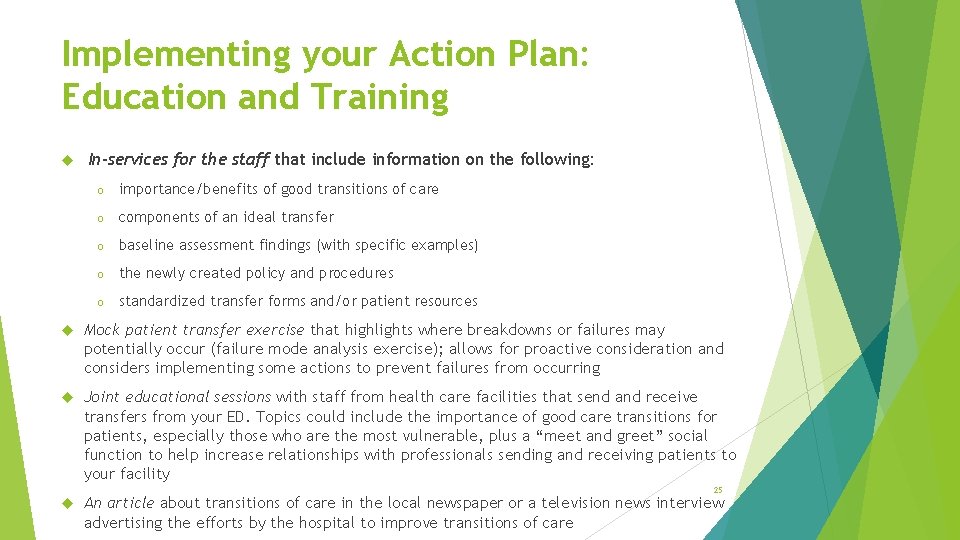
Implementing your Action Plan: Education and Training In-services for the staff that include information on the following: o importance/benefits of good transitions of care o components of an ideal transfer o baseline assessment findings (with specific examples) o the newly created policy and procedures o standardized transfer forms and/or patient resources Mock patient transfer exercise that highlights where breakdowns or failures may potentially occur (failure mode analysis exercise); allows for proactive consideration and considers implementing some actions to prevent failures from occurring Joint educational sessions with staff from health care facilities that send and receive transfers from your ED. Topics could include the importance of good care transitions for patients, especially those who are the most vulnerable, plus a “meet and greet” social function to help increase relationships with professionals sending and receiving patients to your facility 25 An article about transitions of care in the local newspaper or a television news interview advertising the efforts by the hospital to improve transitions of care
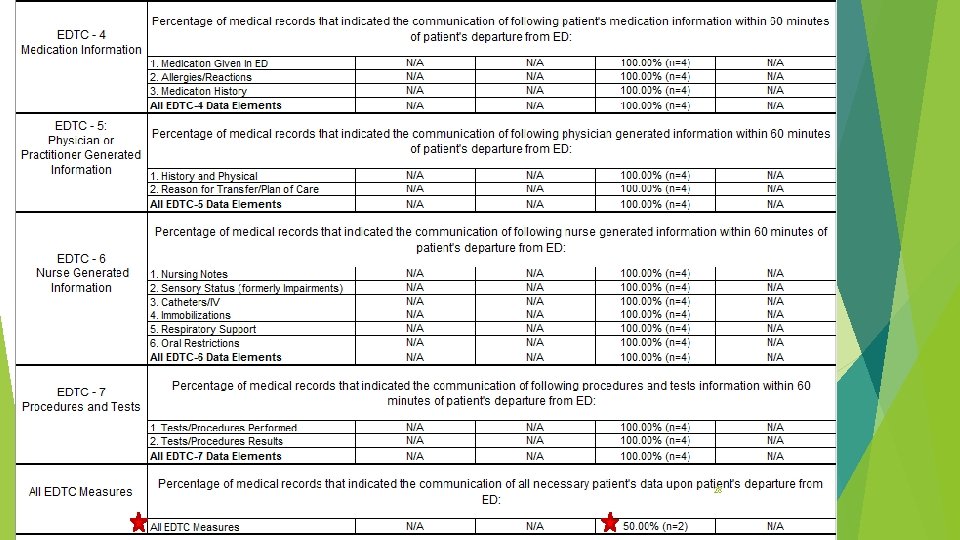
ED Transfer Comm. Data Collection Tool EDTC Report Interpretation 26
27
28
Sharing of Best Practices 29
Miscellaneous Reminders Next Q 4 2016 EDTC Data Submission Deadline is January 31 st 2017. NEW! Quality Improvement Matters (QIM) website www. wyqim. com. MBQIP Deadline Reminders: Q 3 2016 Outpatient Core Measures (AMI, CP, PM) due February 1 st 2017. Q 3 2016 Inpatient Core Measures (IMM-2) due February 15 th 2017. Q 3 2016 Inpatient & Outpatient Population & Sampling due February 1 st 2017. 30
THANK YOU! Questions ? ? ? Shanelle Van Dyke 1. 406. 459. 8420 Shanelle. Van. Dyke@Quality. Reporting. Services. com Michelle Hoffman—Wyoming Flex-Office of Rural Health 1. 307. 777. 8902 Michelle. Hoffman@wyo. gov Rochelle Spinarski—Rural Health Solutions 1. 651. 731. 5211 Rspinarski@rhsnow. com 31
Additional Resources (i. e. Communication & Patient Handoff tools, Care Transitions, etc. ) 32
10 patient handoff communications tools 1. Sign-out software. Kolkin Corp, a healthcare information technology company in Newport Beach, Calif. , offers free sign out software for download. The software addresses HIPAA and The Joint Commission's National Patient Safety Goal 2 E, and it includes a secure physician case list, real-time patient handoff capabilities, team instant messaging and a clinical article editor. The software can be downloaded on to any computer or wireless device. 2. Safer sign-out form for patient handoffs. The Emergency Medicine Patient Safety Foundation offers a free Safer Sign Out form to improve the safety of patient handoffs at the end of a shift. The protocol involves five key components: record, review, round together, relay to the team and receive feedback. 3. Pocket card for safe clinic handoffs. A free pocket card with patient handoff tips was developed by University of Chicago Medical Center researchers and is available from the Picker Institute. 4. Medical transitions and clinical handoffs toolkit. The Agency for Healthcare Research and Quality has released a toolkit designed to help hospitals improve medication safety. It provides step-by-step instructions on how to improve medication reconciliation, from planning — including how to get leadership support — to pilot testing, implementation and evaluation. The toolkit also includes a workbook to help users implement the toolkit. 5. Patient handover toolkit from the Royal College of Physicians. The Royal College of Physicians, based in London, has published a free, downloadable toolkit focusing on patient handovers. The toolkit provides "a framework for standardization of clinical handover practice, audit and monitoring of the process and defining accountability and responsibilities in the process. ” 6. Patient handoff policy and form from Morehouse School of Medicine. The Morehouse School of Medicine in Atlanta, as part of its graduate medical education policies and procedures, provides a downloadable patient handoff policy and sample form. The three-page policy includes a purpose statement, background information, characteristics of a high-quality handoff and handoff procedures. 7. SBAR (Situation, Background, Assessment, Recommendation) handoff tool. The American Association of Critical-Care Nurses offers a free, downloadable communication tool designed to aid in safe patient hand-offs. This document also outlines AACN standards for health work environments, including skilled communications, collaboration, appropriate staffing, effective decision making, meaningful recognition and leadership. 8. AORN perioperative patient hand-off tool kit. AORN, in the "Perioperative Patient 'Hand-Off' Tool Kit" developed by AORN and the U. S. Department of Defence Patient Safety Program, provides 10 sample patient handoff tools gathered from organizations around the country. The tools include forms, posters, worksheets and a button design. 9. Improving transitions of care: Hand-off communications. From AHRQ, this tool describes factors that contribute to incomplete 33 handoffs and recommends tactics improve handoff communication. 10. Handoff communications video: Improving transitions of care. The Joint Commission’s Center for Transforming Healthcare offers the Hand-off Communications Targeted Solutions Tool™, or TST, to organizations improving their handoff process.