
ED Physio teaching BACK PAIN and serious spinal
ED Physio teaching BACK PAIN -and serious spinal pathology- 26 th August 2020 Anna Jenkins - Musculoskeletal Specialist Physiotherapist Royal Cornwall Hospital Emergency Department Anna. jenkins 6@nhs. net
Topics covered: � Red ◦ ◦ ◦ flags and serious spinal pathology Cauda Equina Syndrome Spinal Fracture and osteoporosis Malignancy Spinal infection Spinal stroke � Normality pain of mechanical / ‘non-specific’ back ◦ Relationship between MRI and symptoms in LBP ◦ Yellow flags and biopsychosocial model � Clinical assessment � Case histories
RED FLAGS: Definition �Red flags are signs and symptoms that might raise suspicion of serious spinal pathology. � 4 key serious spinal pathologies: ◦ Cauda Equina Syndrome ◦ Spinal fracture ◦ Malignancy ◦ Spinal infection
Consequences � Whilst rare, serious spinal pathology can have devastating and life-changing or life-limiting consequences, and must be identified early and managed appropriately. � Litigation relating to Cauda Equina Syndrome cost £ 25, 000 in claims against the NHS in the UK between 2010 – 2015 (Finucane et al 2020). � Rapid access to appropriate assessment and treatment can help reduce nerve damage and long-term disability. � Neurological function and quality of life in people with metastatic spinal cord compression can be preserved with early diagnosis.
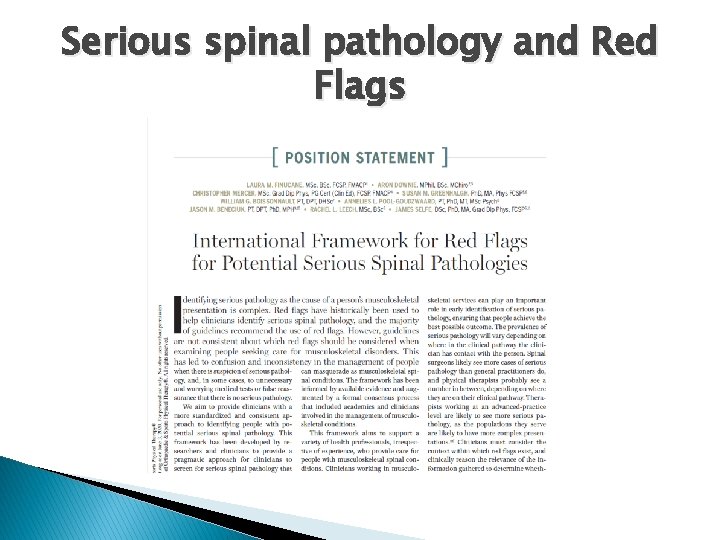
Serious spinal pathology and Red Flags
International Framework � Developed by the International Federation of Orthopaedic Manipulative Physical Therapists (IFOMPT) and published in May 2020. � Currently, there is an absence of high-quality evidence for the diagnostic accuracy of most red flags. � This framework has been internationally agreed to provide a clinical-reasoning pathway to clarify the role of red flags, based on expert clinicians’ interpretation of the best available evidence.
Communication � Effective explanation and communication to the patient about red flags is vital. � Some of these questions may seem irrelevant to the patient presenting with back pain and therefore it is important to provide context and explain the reason for the questions. � It is vital to provide reassurance when assessing for red flags, especially if the person is at low risk of having severe pathology. � Consider the wording of your questions, body language, tone of voice etc.
Cauda Equina Syndrome (CES) � Prevelance as a cause of low back pain in primary care: 0. 04% (Davis et al 2004) � Incidence in the UK: 0. 002% (Greenhalgh et al (2018) � Caused by: ◦ ◦ Herniated disc Space occupying lesion Lumbar spine stenosis Complication of spinal surgery
CES � Compression of the cauda equina is challenging to diagnose and may result in life -changing outcomes such as bladder, bowel and sexual dysfunction. � Cauda Equina Syndrome requires urgent surgical decompression within 48 hours. � Decompression after 48 hours is associated with poor outcomes.
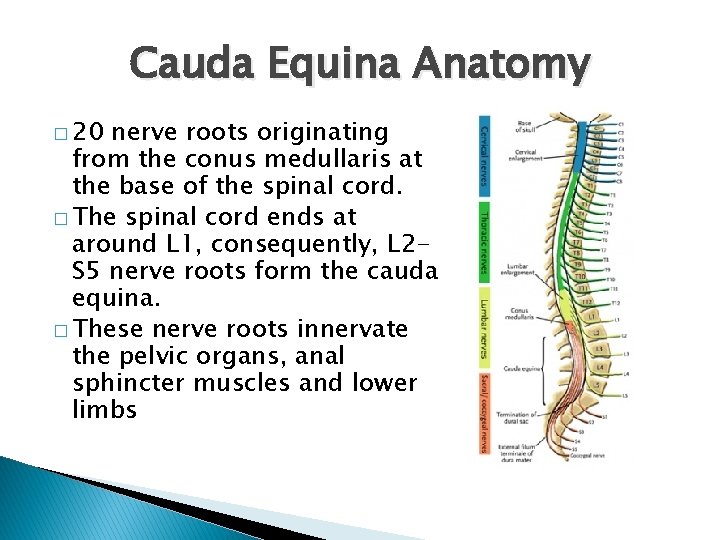
Cauda Equina Anatomy � 20 nerve roots originating from the conus medullaris at the base of the spinal cord. � The spinal cord ends at around L 1, consequently, L 2 S 5 nerve roots form the cauda equina. � These nerve roots innervate the pelvic organs, anal sphincter muscles and lower limbs
Herniated Intervertebral Disc: � Most commonly occurs at L 4 -5 and L 5 -S 1 � Usually acute onset � Pain generally aggravated in positions of forward flexion / bending � Age usually <50 � Obesity = increased risk � Increased cause for concern if: ◦ Unilateral progressing to bilateral leg pain ◦ Alternating leg pain ◦ Presence of new motor weakness � CES is a complication of approximately 2% of all disc prolapses
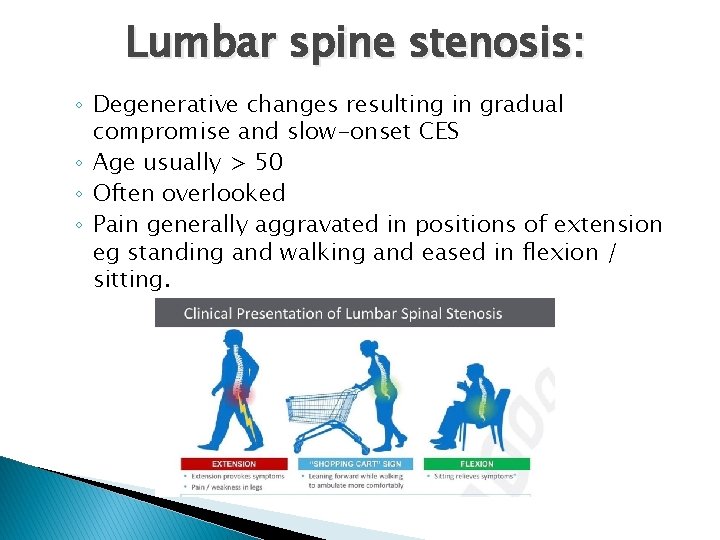
Lumbar spine stenosis: ◦ Degenerative changes resulting in gradual compromise and slow-onset CES ◦ Age usually > 50 ◦ Often overlooked ◦ Pain generally aggravated in positions of extension eg standing and walking and eased in flexion / sitting.

Signs and symptoms of CES � Relevant precursor symptoms: ◦ Unilateral or progressing to bilateral radicular pain ◦ dermatomal reduced sensation ◦ myotomal weakness � Bladder or bowel dysfunction ◦ Sensation of incomplete bladder emptying, incontinence � Saddle sensory disturbance � Sexual dysfunction ◦ Recent change in ability to achieve erection or ejaculate ◦ Loss of sensation in genital area during intercourse � Gait disturbance and coordination problems
Questions we should be asking � When did these changes begin? � Did these symptoms start before or after your back pain? � Have you started any new medication? � Were these symptoms present before you began this medication or after? � Do you have osteoporosis? Or family history of? � Have you had any previous fractures? � Have you used steroid tablets or inhaled steroids? If so for how long? � Do you have a history of cancer? � Is your pain worse during the day or at night? � Are your symptoms improving or getting worse?
Other considerations � Side effects from medication (eg neuropathic meds, codeine) – could account for changes in bladder / bowel function � Diabetes � Smoking � Cardiovascular disease � Lesion higher in the spine � Peripheral neuropathy � Upper motor neuron conditions � Traumatic injury or surgery to perineum, pudondal nerve injury (eg child birth, cycling) � Functional symptoms: psychosocial factors, health care utilization
Assessment for CES � Neurological assessment (Germon et al 2015): ◦ Dermatomes https: //www. youtube. com/watch? v=Sz. Ay. Us. A 25 MQ ◦ Myotomes https: //www. youtube. com/watch? v=pt. O 9 Zvs. UPDg ◦ Reflexes �Knee and ankle jerk https: //www. youtube. com/watch? v=k. Fk. Ra 17 hl. Vc �Hoffman’s sign https: //www. youtube. com/watch? v=u. VI 55 amn. Vuk �Babinsky sign (fan sign) � To https: //www. youtube. com/watch? v=i. V_a 2 WSbd. M 8 be performed when indicated by appropriately trained clinician, with a chaperone: ◦ Anal sphincter tone ◦ Sensation to light touch and pinprick throughout the saddle region including the buttocks, inner thighs and perianal region.
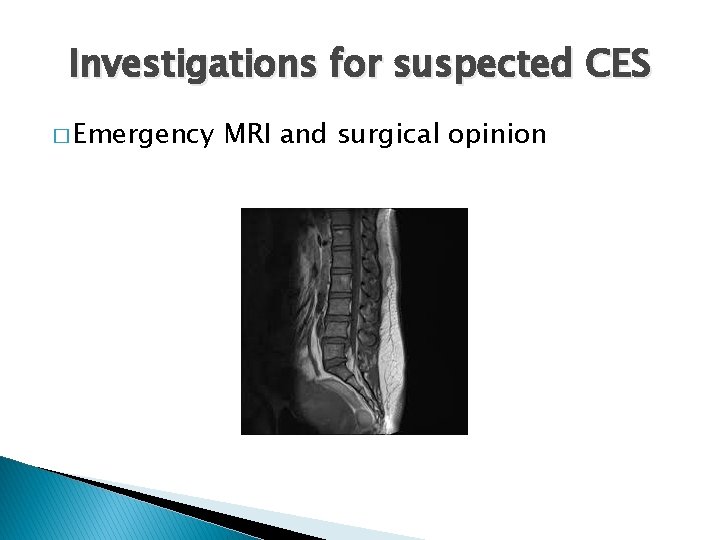
Investigations for suspected CES � Emergency MRI and surgical opinion
Safety Net � Discuss and document a clear strategy to follow should symptoms deteriorate and ensure the patient knows that they need to take immediate action.
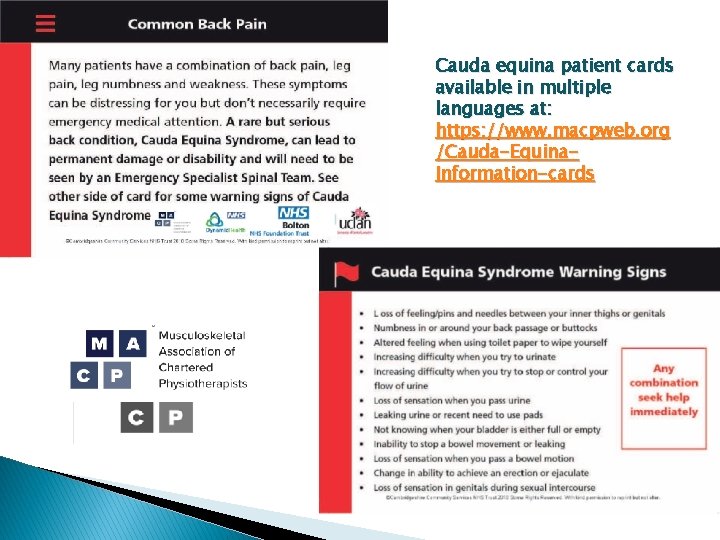
Cauda equina patient cards available in multiple languages at: https: //www. macpweb. org /Cauda-Equina. Information-cards
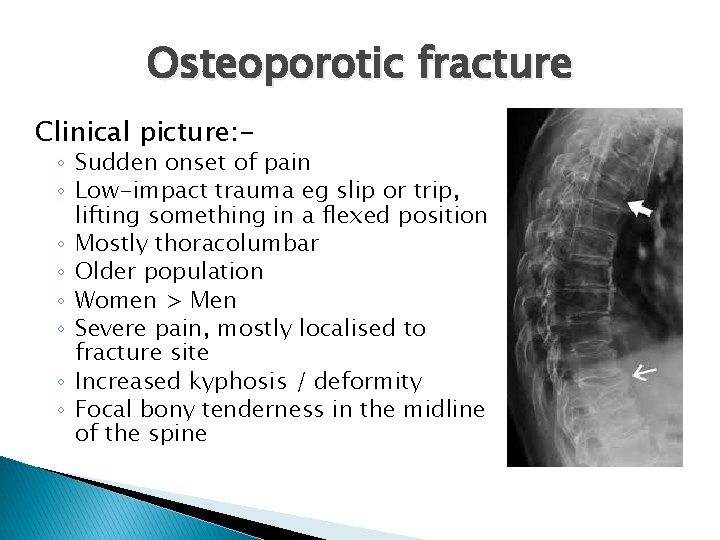
Osteoporotic fracture Clinical picture: - ◦ Sudden onset of pain ◦ Low-impact trauma eg slip or trip, lifting something in a flexed position ◦ Mostly thoracolumbar ◦ Older population ◦ Women > Men ◦ Severe pain, mostly localised to fracture site ◦ Increased kyphosis / deformity ◦ Focal bony tenderness in the midline of the spine
Osteoporotic Fracture � Most common serious pathology of the spine ◦ 12% of women age 50 -70 ◦ 20% of women age >70 ◦ Up to 70% go undiagnosed and found during investigation for other health conditions (Mc. Carthy 2016) ◦ 70% are in the thoracic spine, 20% lumbar. � Medication for osteoporosis can reduce the risk of fracture in the following year by 5080% � All imaging that includes the spine should be evaluated for vertebral fracture. (Royal Osteoporosis Society 2020)
Differential Diagnosis � Fractures from myeloma may look very similar to osteoporotic fractures on X-ray (Finucane et al 2020).
Malignancy � Second most common serious spinal pathology (after fracture) � Most commonly in the thoracic spine (70%) � 5 most common cancers leading to metastatic bone disease: ◦ ◦ ◦ Breast Prostate Lung Kidney Thyroid � 25% of people with metastatic spinal cord compression have no known primary cancer diagnosis Finucane et al (2020)
Malignancy - symptoms � Band-like pain � Sleep disturbance, pain worse at night or lying down � Unremitting, non-mechanical pain � Worsening symptoms (but may vary and can appear to respond to conservative treatment) � Requiring high levels of pain medication / not responding to their usual pain medication � Unfamiliar pain – different to previous episodes of back pain � Unexplained weight-loss
Spinal Infection � TB � Discitis � Spinal abscess � Estimated prevalence of 0. 01% of LBP in primary care in developed countries. � More common in developing countries due to incidence of HIV/Aids and TB infections
Risk factors for spinal infection � Immunosuppression � Surgery � IV drug use � History of TB or born in TB-endemic country � Recent infection � Social and environmental factors
Symptoms of spinal infection � Back pain � Neurological symptoms � Fever (however only reported in 50% of patients with spinal infection) � Fatigue � Unexplained weight loss � Worsening symptoms
Initial investigations for spinal infection � Inflammatory markers –ESR, CRP (normal white blood cell count does not exclude spinal infection). � X-ray – chest X-ray if suspicion of TB � MRI (Finucane et al 2020)
Spinal Stroke �A disruption of the blood supply to the spinal cord, most commonly of the anterior spinal artery. � Very rare – less than 1. 25% of all strokes � Ischaemic (thrombus) � Haemorrhagic (less common) – tearing of artery wall or aneurysm � Arteriovenous malformation (AVM) Brain and Spine (2020)
Back pain is NORMAL! � 80% of people will experience an episode of low back pain at least once during their lifetime � 15 -20% of adults will have back pain in a single year (Ruben 2007) � There are many pain producing structures in the spine… muscles, ligaments, facet joints, intervertebral discs, nerve roots… � It is not always possible to identify the pain producing structure. � Umbrella term: ‘non-specific low back pain’ � Mostly a self-limiting condition – the vast majority of patients will get better with no treatment.
The relationship between the magnetic resonance imaging appearance of the lumbar spine and low back pain Savage et al (1997) � 149 working men (78 aged 20 -30 years and 71 aged 31 -58 years) � Thirty-four percent of the subjects had never experienced LBP � No relationship between LBP and disc degeneration � Thirty-two percent of asymptomatic subjects had 'abnormal' lumbar spines � 47% of all the subjects who had experienced LBP had 'normal' lumbar spines
Spondylolysis and spondylolisthesis: prevalence and association with low back pain (Kalichman et al 2009) Definition: spondyloslisis is a defect or stress fracture of the pars interarticularis � More common in the young, athletic population particularly sports involving extension / rotation of the spine (fast bowlers, tennis, gymnastics, diving) � Prevalence of lumbar spondylolysis was 11. 5% � “No significant association between the observation of spondylolysis on CT and the occurrence of LBP, suggesting that the condition does not appear to represent a major cause of LBP in the general population. ”
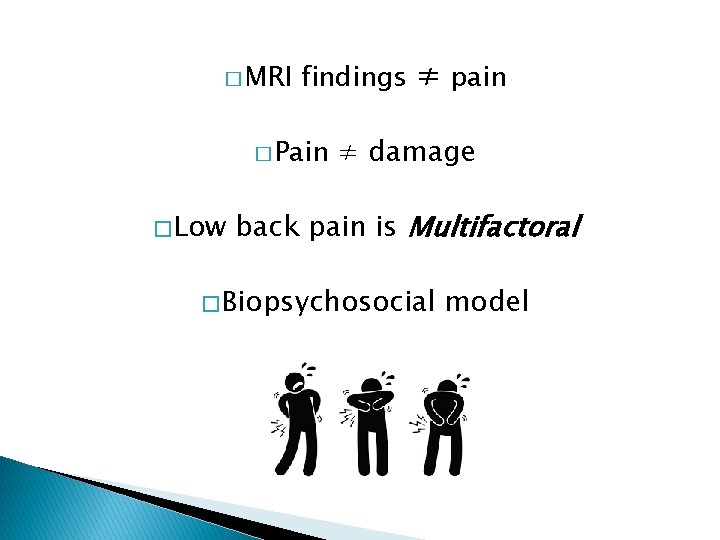
� MRI findings ≠ pain � Pain � Low ≠ damage back pain is Multifactoral � Biopsychosocial model
YELLOW FLAGS � Definition: Yellow flags are psychosocial factors which increase the risk for development of chronic pain and long-term disability. � Fear of movement is a huge predictor for poor outcome. A belief that an injury is not going to get better can become a self-fulfilling prophesy. Screening for ‘Yellow Flags’ can help us identify and help these patients at an early stage, helping prevent chronicity.
Examples of yellow flags (1) � Attitudes and beliefs - belief that something serious is wrong and that pain is harmful. Catastrophizing about the problem � Behaviour - fear avoidance behaviour, reduced activity levels, social withdrawal � Compensation accident � Diagnosis – on-going medico-legal claim for an – medical language and poor communication / lack of explanation of the normality of of MRI and X-ray findings can lead to patients misunderstanding what they have been told. For example 'your disc has popped out' or 'your spine is crumbling‘
Examples of yellow flags (2) � � � Emotions – A tendency to depression, anxiety, low morale, low resilience Expectations – belief that passive rather than active treatment will be beneficial. This may lead to “Healthcare shopping” – seeking help from multiple health professionals about a problem Family or social problems -lack of support from friends or family, or conversely over-bearing relatives � Financial problems � Work – stressful job, signed off work
What can we do / how is our role in ED relevant to this? � BE CAREFUL WITH LANGUAGE! Patients may only remember one � BE AWARE of psychosocial factors during your assessment. � � thing that you have told them, but it will often be the most negative words that they cling on to. Try to be as reassuring as possible that most injuries will heal in time, and encourage normal movement as early as possible. These patients are at higher risk of developing chronic pain or disability and therefore consider early referral to physiotherapy or psychological therapies. As first point of contact in an acute injury situation, we may have a bigger influence than we realise on patients’ pain behaviour and long term outcome. By providing reassurance and dispelling negative pain beliefs, encouraging normal movement in an acute injury, we can have a huge impact on outcome.
LANGUAGE � � � The words we use as health professionals can be detrimental to a patient’s outcome. The language we use is powerful. Certain language can feed into patients’ anxiety and beliefs about pain, contributing to the development of fear avoidant behaviour and development of chronic pain or long term disability. MRI reports can be detrimental and these results need to be explained and delivered carefully with reassurance.
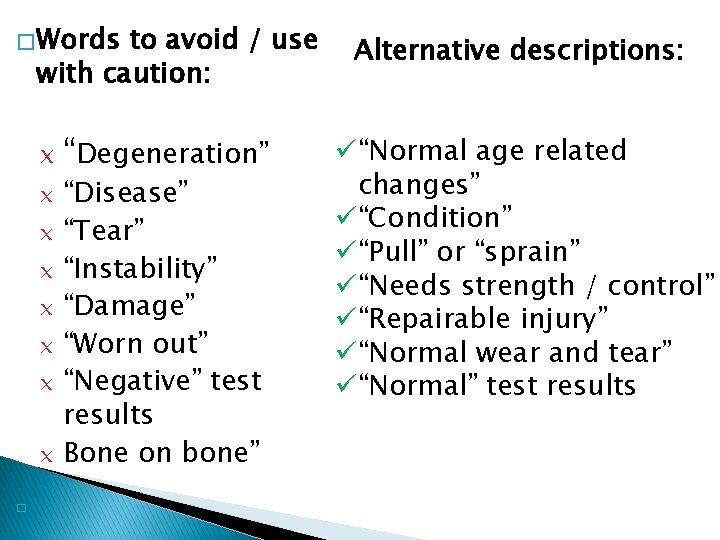
� Words to avoid / use with caution: x “Degeneration” x x x x � “Disease” “Tear” “Instability” “Damage” “Worn out” “Negative” test results Bone on bone” Alternative descriptions: “Normal age related changes” “Condition” “Pull” or “sprain” “Needs strength / control” “Repairable injury” “Normal wear and tear” “Normal” test results
Reassurance and Encouragement � � Remember that anything is possible and despite serious injury or disability, people are capable of overcoming enormous obstacles to achieve incredible things. Be very cautious of telling an injured patient what they won’t be able to do in the future as this belief may become their biggest barrier to achieving their goals. � Listen to the patient – let them tell their story. � A thorough examination and explanation can go a long way to � alleviating a patient’s fears. Consider using the STar. T back tool (Hill et al 2011), Pain catastrophizing scale (Sullivan et al 1995) or Fear Avoidance Beliefs score (Fritz et al 2002)
Clinical Assessment � Thorough history taking is KEY Onset Severity, irritability, nature of pain Aggravating and easing factors 24 hour pattern / night pain Past history of back pain Pain medication and response Family history of back problems Social factors, lifestyle, exercise, work, stress, mental health ◦ Unexplained weight loss ◦ Past history of cancer ◦ ◦ ◦ ◦
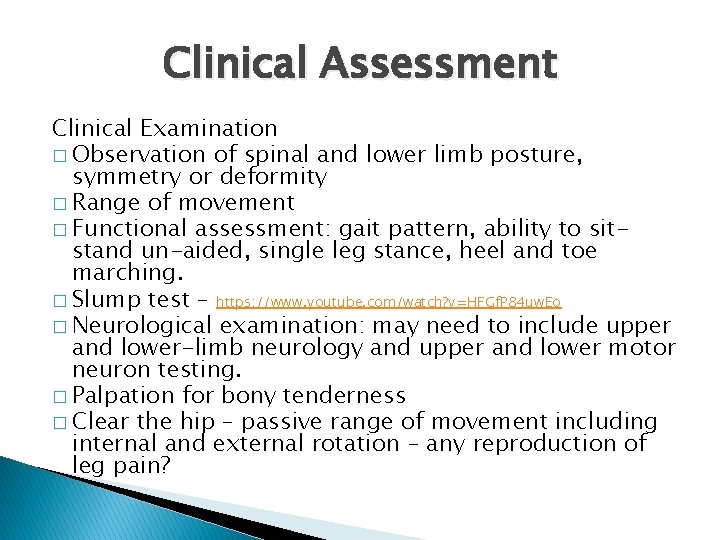
Clinical Assessment Clinical Examination � Observation of spinal and lower limb posture, symmetry or deformity � Range of movement � Functional assessment: gait pattern, ability to sitstand un-aided, single leg stance, heel and toe marching. � Slump test – https: //www. youtube. com/watch? v=HFGf. P 84 uw. Eo � Neurological examination: may need to include upper and lower-limb neurology and upper and lower motor neuron testing. � Palpation for bony tenderness � Clear the hip – passive range of movement including internal and external rotation – any reproduction of leg pain?
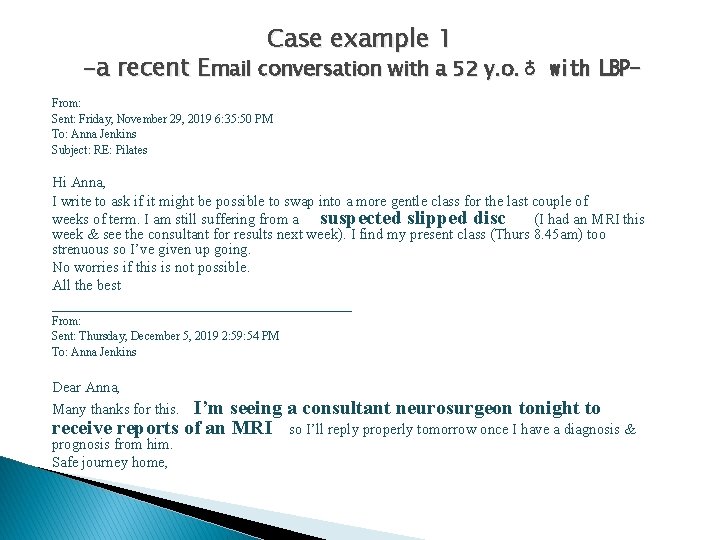
Case example 1 -a recent Email conversation with a 52 y. o. ♁ with LBPFrom: Sent: Friday, November 29, 2019 6: 35: 50 PM To: Anna Jenkins Subject: RE: Pilates Hi Anna, I write to ask if it might be possible to swap into a more gentle class for the last couple of weeks of term. I am still suffering from a suspected slipped disc (I had an MRI this week & see the consultant for results next week). I find my present class (Thurs 8. 45 am) too strenuous so I’ve given up going. No worries if this is not possible. All the best ____________________ From: Sent: Thursday, December 5, 2019 2: 59: 54 PM To: Anna Jenkins Dear Anna, Many thanks for this. I’m seeing a consultant neurosurgeon tonight to receive reports of an MRI so I’ll reply properly tomorrow once I have a diagnosis & prognosis from him. Safe journey home,
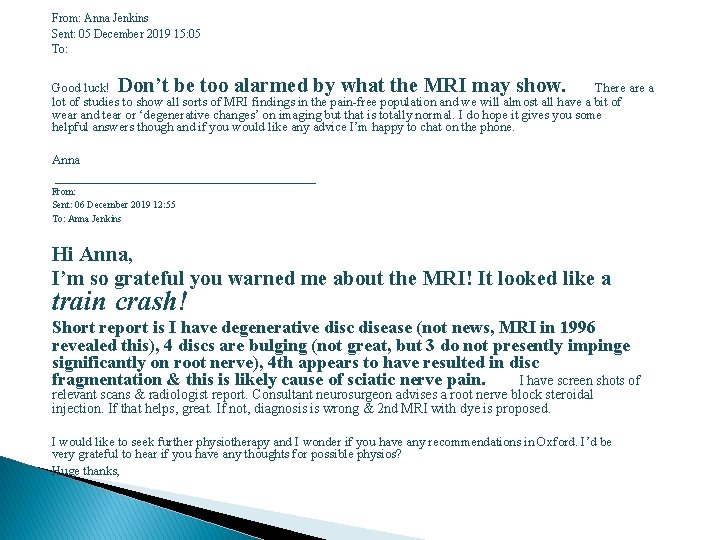
From: Anna Jenkins Sent: 05 December 2019 15: 05 To: Don’t be too alarmed by what the MRI may show. Good luck! There a lot of studies to show all sorts of MRI findings in the pain-free population and we will almost all have a bit of wear and tear or ‘degenerative changes’ on imaging but that is totally normal. I do hope it gives you some helpful answers though and if you would like any advice I’m happy to chat on the phone. Anna ____________________ From: Sent: 06 December 2019 12: 55 To: Anna Jenkins Hi Anna, I’m so grateful you warned me about the MRI! It looked like a train crash! Short report is I have degenerative disc disease (not news, MRI in 1996 revealed this), 4 discs are bulging (not great, but 3 do not presently impinge significantly on root nerve), 4 th appears to have resulted in disc fragmentation & this is likely cause of sciatic nerve pain. I have screen shots of relevant scans & radiologist report. Consultant neurosurgeon advises a root nerve block steroidal injection. If that helps, great. If not, diagnosis is wrong & 2 nd MRI with dye is proposed. I would like to seek further physiotherapy and I wonder if you have any recommendations in Oxford. I’d be very grateful to hear if you have any thoughts for possible physios? Huge thanks,
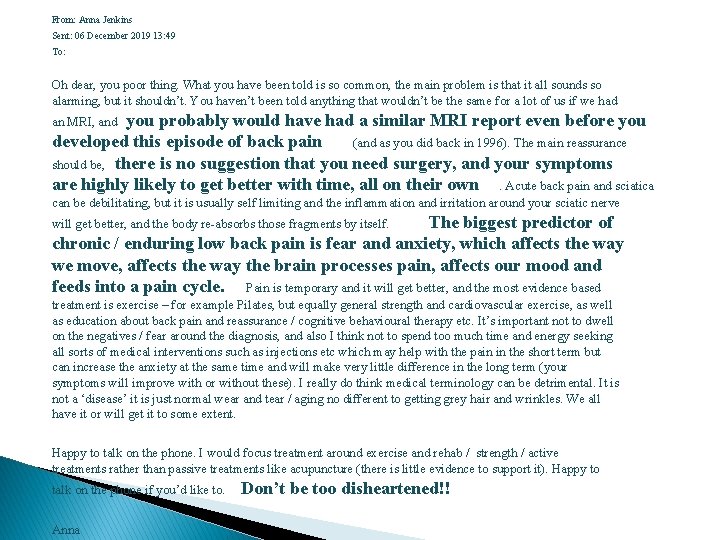
From: Anna Jenkins Sent: 06 December 2019 13: 49 To: Oh dear, you poor thing. What you have been told is so common, the main problem is that it all sounds so alarming, but it shouldn’t. You haven’t been told anything that wouldn’t be the same for a lot of us if we had you probably would have had a similar MRI report even before you developed this episode of back pain (and as you did back in 1996). The main reassurance should be, there is no suggestion that you need surgery, and your symptoms are highly likely to get better with time, all on their own. Acute back pain and sciatica an MRI, and can be debilitating, but it is usually self limiting and the inflammation and irritation around your sciatic nerve The biggest predictor of chronic / enduring low back pain is fear and anxiety, which affects the way we move, affects the way the brain processes pain, affects our mood and feeds into a pain cycle. Pain is temporary and it will get better, and the most evidence based will get better, and the body re-absorbs those fragments by itself. treatment is exercise – for example Pilates, but equally general strength and cardiovascular exercise, as well as education about back pain and reassurance / cognitive behavioural therapy etc. It’s important not to dwell on the negatives / fear around the diagnosis, and also I think not to spend too much time and energy seeking all sorts of medical interventions such as injections etc which may help with the pain in the short term but can increase the anxiety at the same time and will make very little difference in the long term (your symptoms will improve with or without these). I really do think medical terminology can be detrimental. It is not a ‘disease’ it is just normal wear and tear / aging no different to getting grey hair and wrinkles. We all have it or will get it to some extent. Happy to talk on the phone. I would focus treatment around exercise and rehab / strength / active treatments rather than passive treatments like acupuncture (there is little evidence to support it). Happy to talk on the phone if you’d like to. Anna Don’t be too disheartened!!
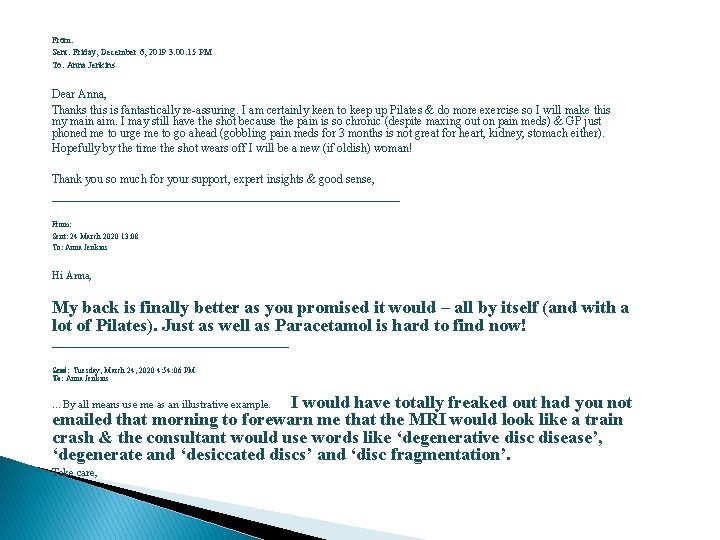
From: Sent: Friday, December 6, 2019 3: 00: 15 PM To: Anna Jenkins Dear Anna, Thanks this is fantastically re-assuring. I am certainly keen to keep up Pilates & do more exercise so I will make this my main aim. I may still have the shot because the pain is so chronic (despite maxing out on pain meds) & GP just phoned me to urge me to go ahead (gobbling pain meds for 3 months is not great for heart, kidney, stomach either). Hopefully by the time the shot wears off I will be a new (if oldish) woman! Thank you so much for your support, expert insights & good sense, _____________________________ From: Sent: 24 March 2020 13: 08 To: Anna Jenkins Hi Anna, My back is finally better as you promised it would – all by itself (and with a lot of Pilates). Just as well as Paracetamol is hard to find now! ______________________ Sent: Tuesday, March 24, 2020 4: 54: 06 PM To: Anna Jenkins I would have totally freaked out had you not emailed that morning to forewarn me that the MRI would look like a train crash & the consultant would use words like ‘degenerative disc disease’, ‘degenerate and ‘desiccated discs’ and ‘disc fragmentation’. …By all means use me as an illustrative example. Take care,
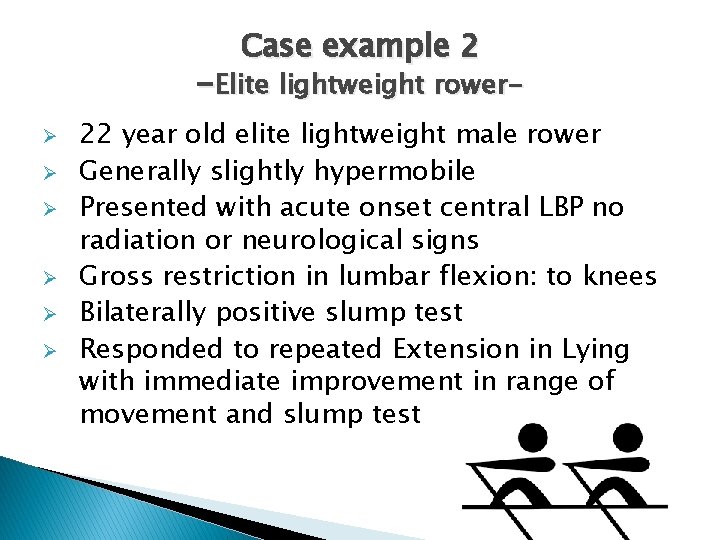
Case example 2 -Elite lightweight rowerØ Ø Ø 22 year old elite lightweight male rower Generally slightly hypermobile Presented with acute onset central LBP no radiation or neurological signs Gross restriction in lumbar flexion: to knees Bilaterally positive slump test Responded to repeated Extension in Lying with immediate improvement in range of movement and slump test
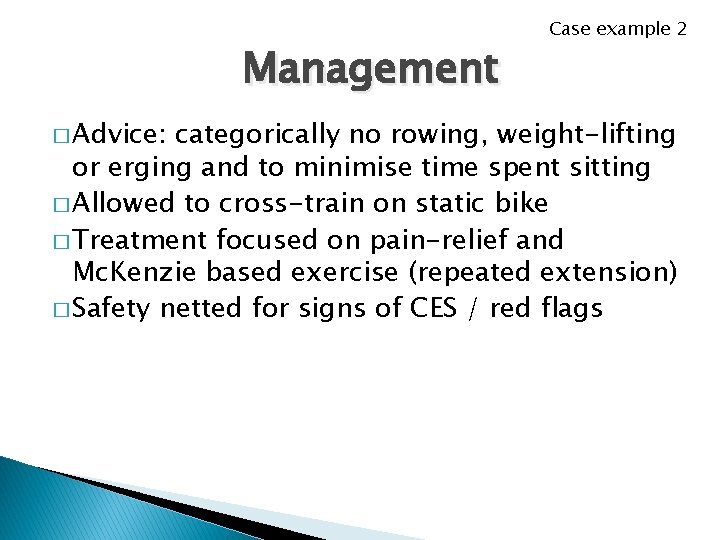
Management � Advice: Case example 2 categorically no rowing, weight-lifting or erging and to minimise time spent sitting � Allowed to cross-train on static bike � Treatment focused on pain-relief and Mc. Kenzie based exercise (repeated extension) � Safety netted for signs of CES / red flags
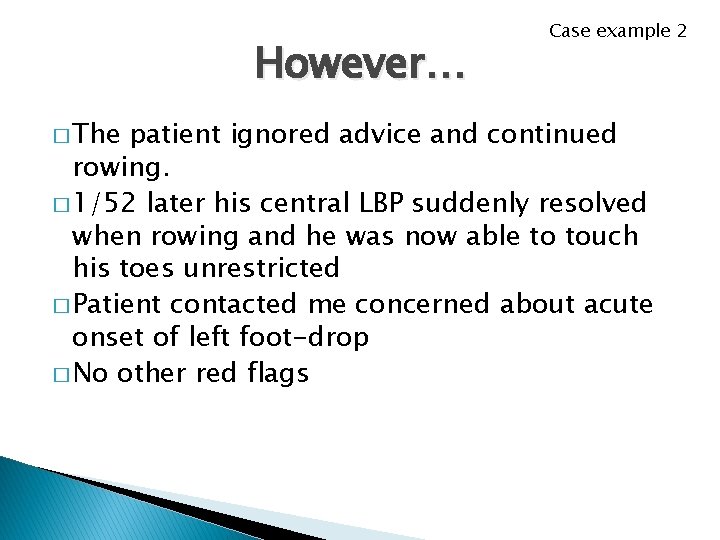
However… � The Case example 2 patient ignored advice and continued rowing. � 1/52 later his central LBP suddenly resolved when rowing and he was now able to touch his toes unrestricted � Patient contacted me concerned about acute onset of left foot-drop � No other red flags
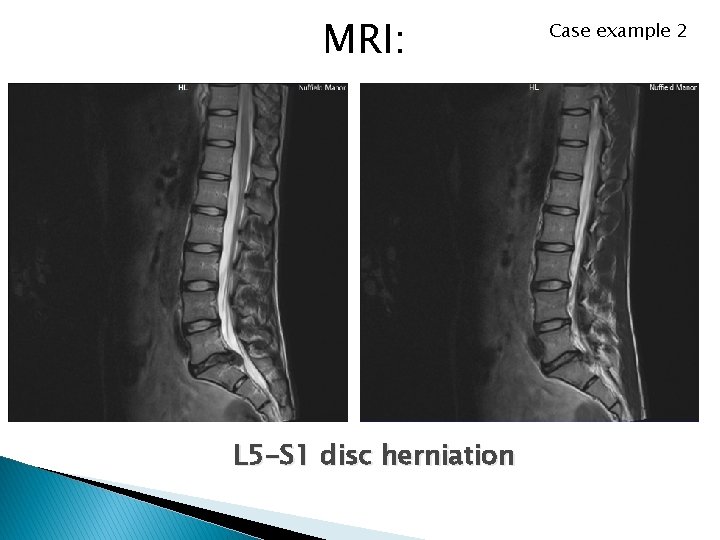
MRI: L 5 -S 1 disc herniation Case example 2
Outcome � Listed Case example 2 for surgery (microdiscectomy / decompression) � At pre-op assessment, zero pain, only symptom was foot-drop � Elected for conservative management � 6 months later foot-drop almost completely resolved and he had continued competitive rowing.
Case example 3 – Spinal Stroke � 38 year old rower: 3 x Olympic Champion and 5 x world champion � Navy officer � Sudden onset of pain in the chest, numbness in both legs and urinary retention � Walked in to ED. Admitted.
Case example 3 � Investigations showed T 6 -T 7 spinal stroke � 3 days later whilst in hospital, sudden worsening of symptoms, severe back pain and paralysis from the chest down.
Take home message � Serious spinal pathology is very rare but rapid assessment and intervention is vital to avoid long -term disability. � Mechanical back pain is very poorly correlated with MRI findings and low back pain is NORMAL � Psychosocial factors play a huge role in LBP. Is your patient an ‘endurer’ or an ‘avoider’ – give your advice accordingly! � Communication when safety netting is important: be careful not to scare your patients but give them the information they need to act quickly in case of symptoms of CES.
References � � � � Brain and Spine fact sheet https: //www. brainandspine. org. uk/our-publications/our-fact-sheets/spinal-strokes (accessed June 2020) Davis DP, Wold RM, Patel RJ et al. The clinical presentation and impact of diagnostic delays on emergency department patients with spinal epidural abscess. J Emerg Med. 2004; 26: 285 -291 Finucane L, Downie A, MERCER C, Greenhalch S, Boissonnault W et al. International Framework for Red Flags for Potential Serious Spinal Pathologies. Journal of Orthopaedic & Sports Physical Therapy Epub 21 May 2020 https: //www. jospt. org/doi/pdf/10. 2519/jospt. 2020. 9971 Fritz JM, George S. Identifying Psychosocial Variables in Patients With Acute Work-Related Low Back Pain: The Importance of Fear-Avoidance Beliefs. Phys Ther. 2002; 82(10): 973 -983 Germon T, Ahuja S, Casey A, Todd N, Rai A, British Association of Spine Surgeons standards of care for cauda equina syndrome. Spine 2015; 15: S 2 -S 4 Greenhalgh S, Finucane L, Mercer C, Selfe J. Assessment and management of cauda equina syndrome. Musculoskelet Sci Pract. 2018; 37: 69 -74 Hill JC, Whitehurst DG, Lewis M, Bryan S, Dunn KM, Foster NE, Konstantinou K, Main CJ, Mason E, Somerville S, Sowden G, Vohora K, Hay EM (2011) ‘Comparison of stratified primary care management for low back pain with current best practice (STar. T Back): a randomised controlled trial’. The Lancet 378 (9802): 1560 -1571 Kalichman L, Kim DH, Li L, Guermazi A, Berkin V, Hunter DJ. Spondylolysis and spondylolisthesis: prevalence and association with low back pain in the adult community-based population. Spine 2009; 15: 34(2) 199 -205 Mc. Carthy J, Davis A. Diagnosis and management of vertebral compression fractures. Am Fam Physician 2016; 94: 44 -50 Royal Osteoporosis Society. Clinical guidance for the effective identificaiton of vertebral fractures. https: //www. guidelines. co. uk/musculoskeletal-and-joints-/ros-guideline-identification-of-vertebralfractures/454148. article Rubin DI. Epidemiology and risk factors for spine pain. Neurol Clin. 2007; 25(2): 353– 371. Savage, R. A. , G. H. Whitehouse, and N. Roberts, The relationship between the magnetic resonance imaging appearance of the lumbar spine and low back pain, age and occupation in males. Eur Spine J, 1997. 6(106 -114) Sullivan, M. J. L. , Bishop, S. R. , & Pivik, J. ‘The Pain Catastrophizing Scale: Development and validation’ Psychological Assessment 1995; 7(4), 524– 532
- Slides: 55