
ED 250 Foundations of Education Ashley Swanson Quote
- Slides: 58
ED 250 -Foundations of Education Ashley Swanson
Quote: “The direction which education starts a man will determine his future in life. ” -Plato
Today’s Topics: �Educational Pioneers �Philosophy vs. Theory �Group Discussions
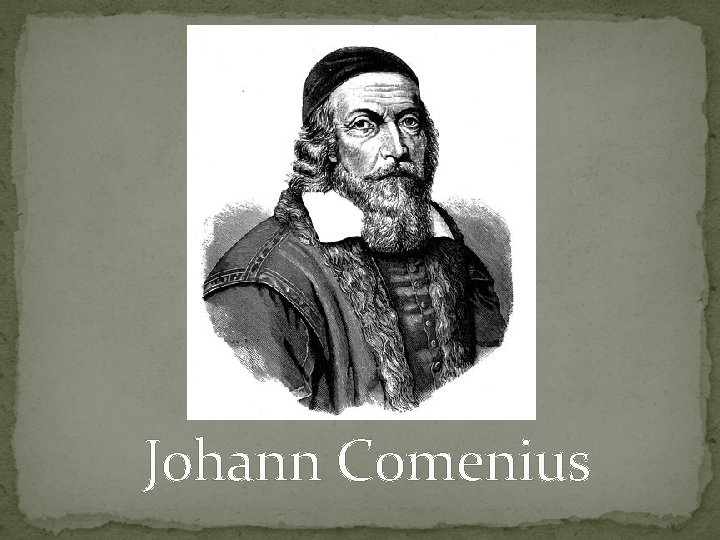
Johann Comenius
Johann Comenius �Peace educator �Sensory method of teaching rather than passive memorization �Rejected the idea of child depravity �Advocate of learning readiness �Teaching a specific skill until it was thoroughly understood by students
Johann Comenius �Influence on today’s educational practices: �Respect universal human rights & children’s dignity �Recognize children’s stages of development and learning readiness �Use objects and pictures to encourage children to use their senses during the learning process
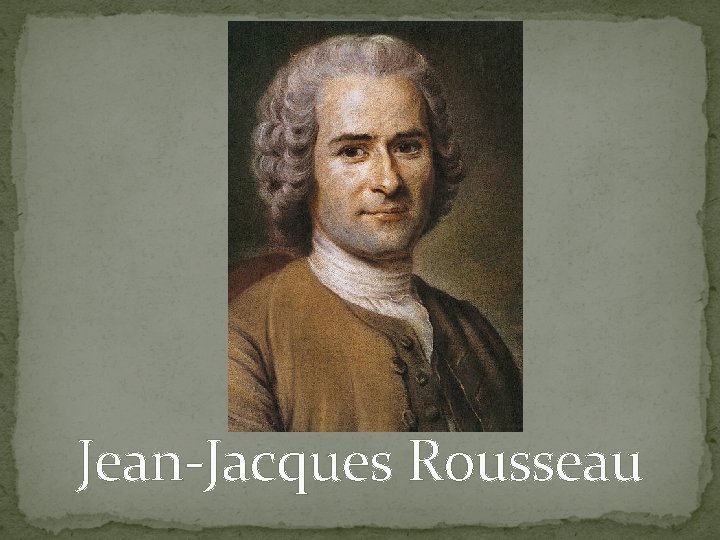
Jean-Jacques Rousseau
Jean-Jacques Rousseau �Educating children according to nature �Wrote Emile-the story of a boys education from infancy to adulthood �Rejected the idea of child depravity �Placed crucial importance on stages of human development
Jean-Jacques Rousseau �Influence on today’s educational practices: �Argument that curriculum should arise from child’s interest had a profound affect on progressive educators �Children should learn from their direct interaction with the environmentinfluenced constructivism
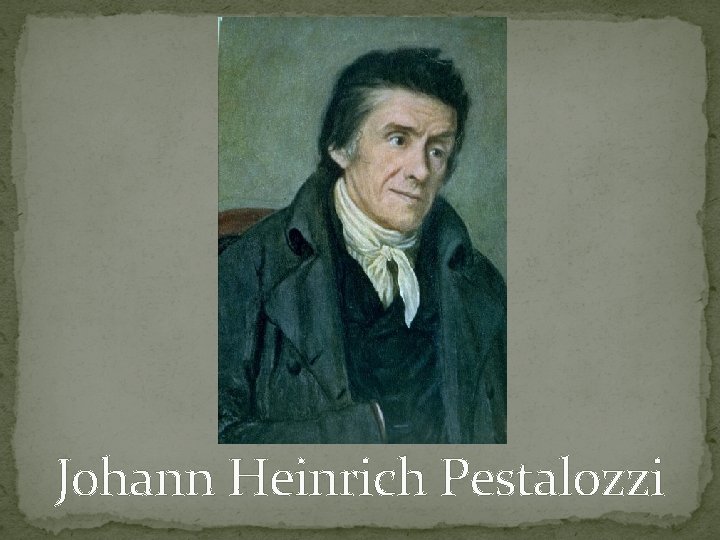
Johann Heinrich Pestalozzi
Johann Heinrich Pestalozzi �Schools should nurture children’s holistic nature �Emphasized the relationship between families and schools �Direct sensory learning �Dedicated to teaching students with special needs
Johann Heinrich Pestalozzi �Influence on today’s educational practices: �Emphasis on having students manipulate objects in their environment: process-based learning �Emotional security is necessary for skill and subject learning
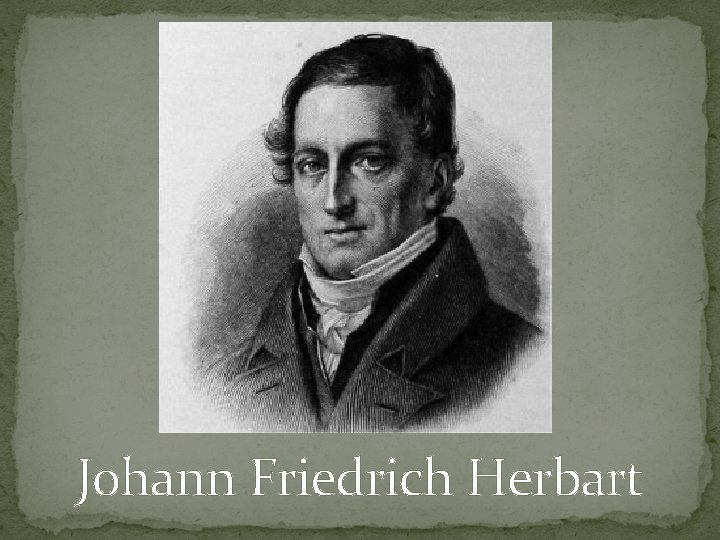
Johann Friedrich Herbart
Johann Friedrich Herbart �Sought to systemize teaching �Instruction was structured into a sequence of 5 steps: �Preparation: prepare students for the information that is going to be taught �Presentation: clearly present the new concept �Association: new concept is compared and contrasted to previous knowledge �Generalization: principles are formed that combine new and previous learning �Application: exams and exercises to assess mastery
Johann Friedrich Herbart �Influence on today’s educational practices: �Relevant to NCLB guidelines: �Instruction should be efficient and effective �Students should be tested to assess mastery of skills
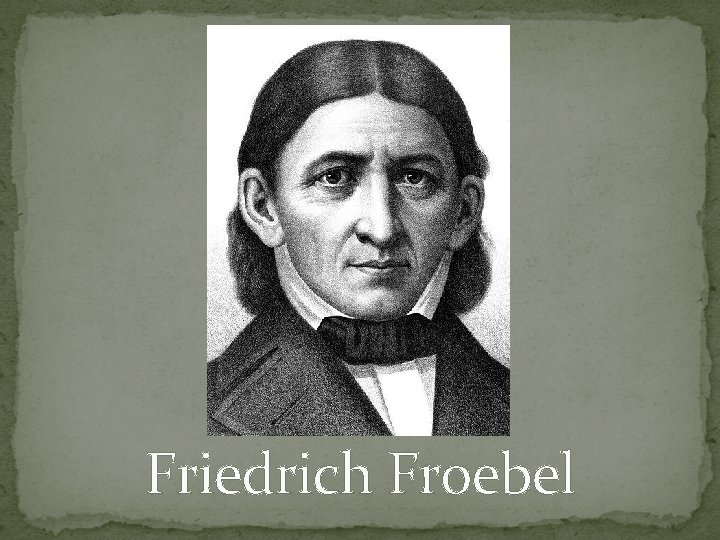
Friedrich Froebel
Friedrich Froebel �Created kindergarten �Games, play, songs, stories, and crafts �Stressed the importance of the teachers personality �Encouraged teachers to avoid introducing academic subjects
Friedrich Froebel �Influence on today’s educational practices: �Kindergarten as part of elementary school
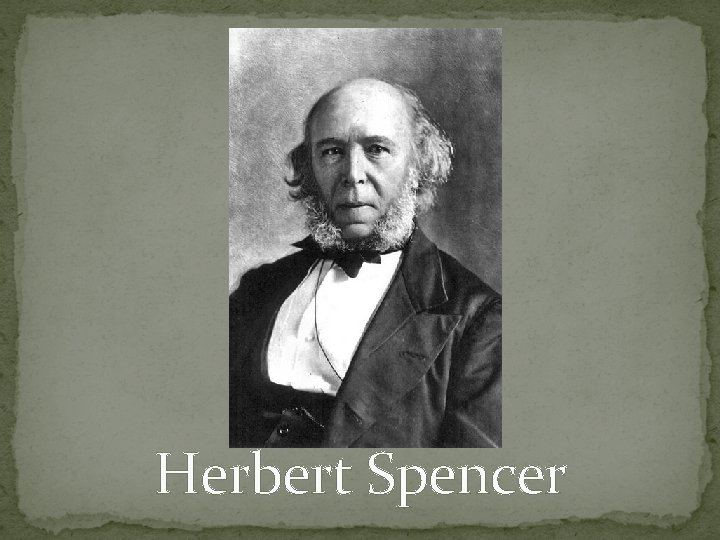
Herbert Spencer
Herbert Spencer �Social Darwinism �Competition within the classroom and between schools �Utilitarian education �Focus on science and technology to prepare students to be efficient producers in a competitive industrial society
Herbert Spencer �Influence on today’s educational practices: �Contemporary curriculum designers use Spencer’s rationale when designing curriculum on human needs and activities �Competition between schools introduced between standardized testing �School vouchers �Raising standards for pre-service teachers
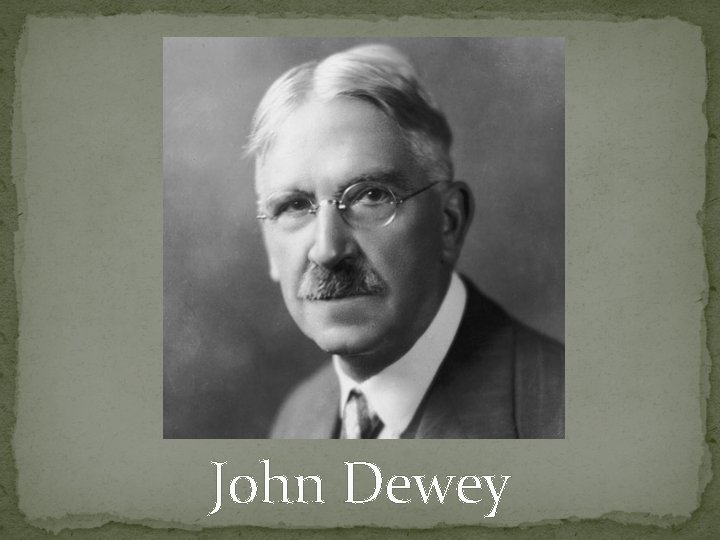
John Dewey
John Dewey �Curriculum organized into constructive, experimental, and creative activities that promoted: �Development of senses and physical coordination �Opportunities for children to make and do things based on their interests �Encouraged students to formulate, examine, and test their ideas by acting on them �Genuine knowledge is not inert information transmitted from teachers to students
John Dewey �Knowledge is continually reconfigured and reconstructed �Educations main purpose is to promote social growth �Three levels of curriculum: 1) Making and doing 2) Space and time 3) Science
John Dewey �Influence on today’s educational practices: �Ideas about socially expanding children’s experiences, emphasized children’s individual interests and needs �Hands on or process oriented learning �Collaborative learning �Opening schools to social reform
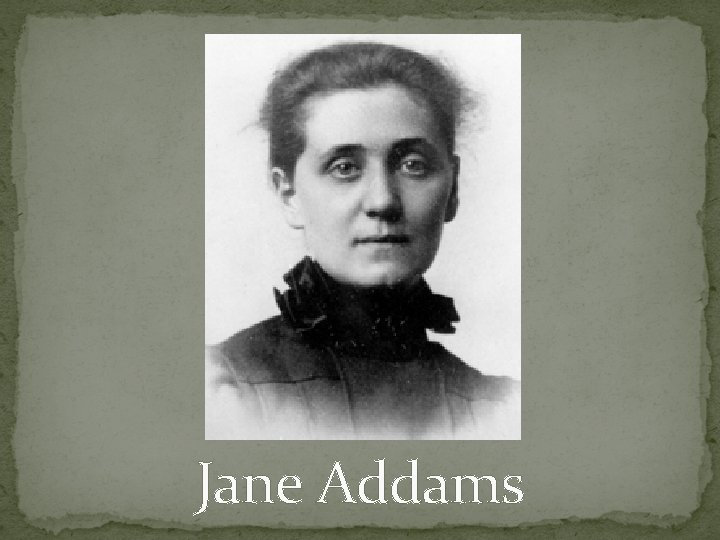
Jane Addams
Jane Addams �Socialized education �Hull-House �Teaching with a social justice mission - teachers need to examine issues of social justice and change in relationship to education and schooling
Jane Addams �Influence on today’s educational practices: �Equal rights for women �Classroom needs to be connected to the community it serves
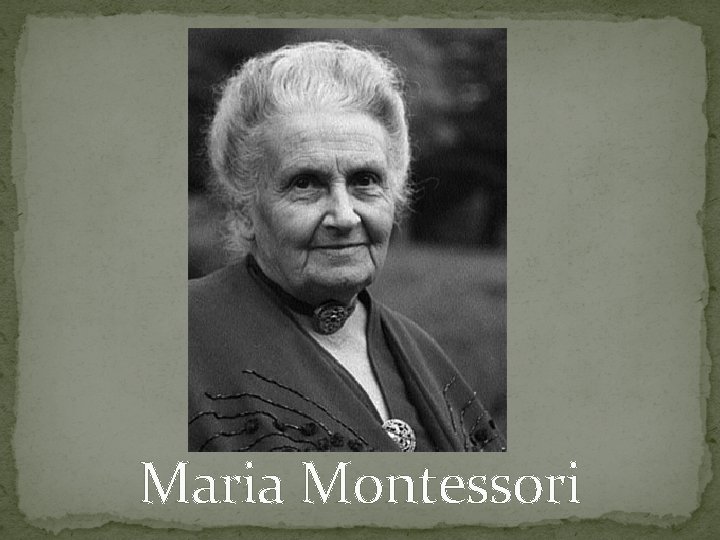
Maria Montessori
Maria Montessori �Children possess an inner need to work at what interests them without needing external rewards and punishments �Children like to repeat actions until they master a skill �Curriculum included three major types of experiences: �Practical �Sensory �Formal skills and studies �Didactic devices and a prepared environment
Maria Montessori �Influence on today’s educational practices: �Emphasis on the formative power of early childhood education over a person’s adult development �Children are capable of self-directed learning of a particular skill �Emphasis on school as part of the community and importance of parent involvement �Concept of sensitive periods
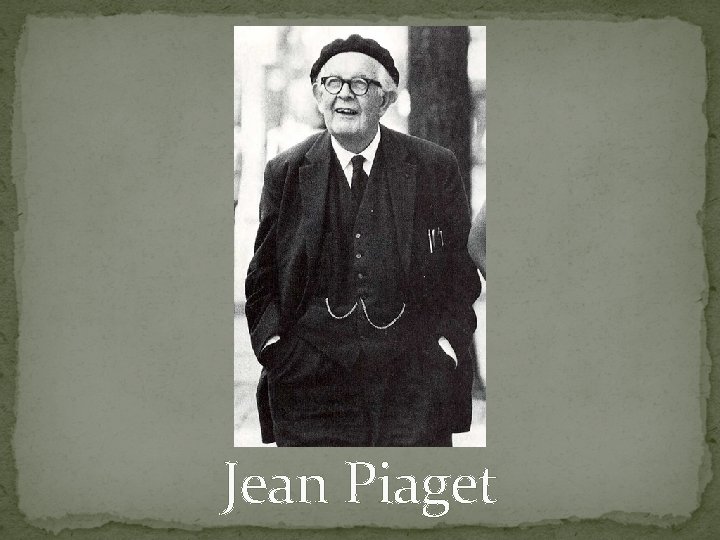
Jean Piaget
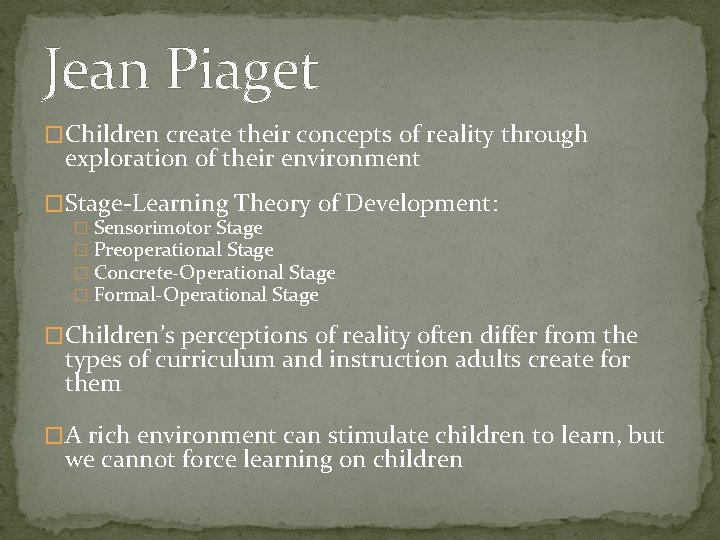
Jean Piaget �Children create their concepts of reality through exploration of their environment �Stage-Learning Theory of Development: � Sensorimotor Stage � Preoperational Stage � Concrete-Operational Stage � Formal-Operational Stage �Children’s perceptions of reality often differ from the types of curriculum and instruction adults create for them �A rich environment can stimulate children to learn, but we cannot force learning on children
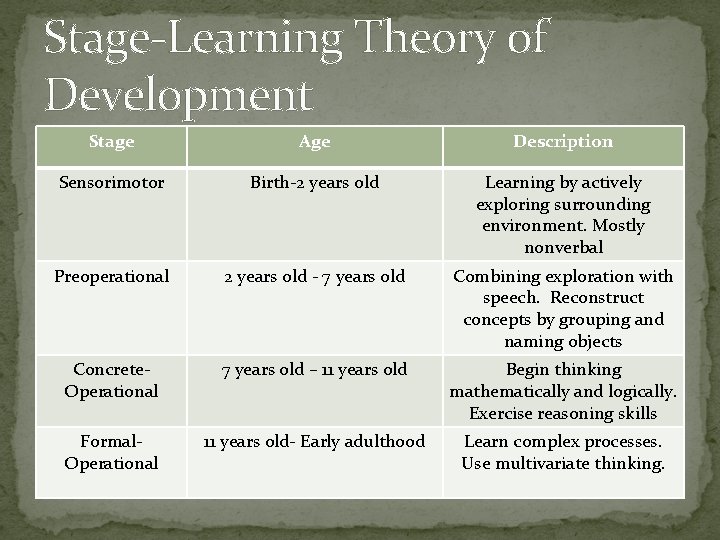
Stage-Learning Theory of Development Stage Age Description Sensorimotor Birth-2 years old Learning by actively exploring surrounding environment. Mostly nonverbal Preoperational 2 years old - 7 years old Combining exploration with speech. Reconstruct concepts by grouping and naming objects Concrete. Operational 7 years old – 11 years old Begin thinking mathematically and logically. Exercise reasoning skills Formal. Operational 11 years old- Early adulthood Learn complex processes. Use multivariate thinking.
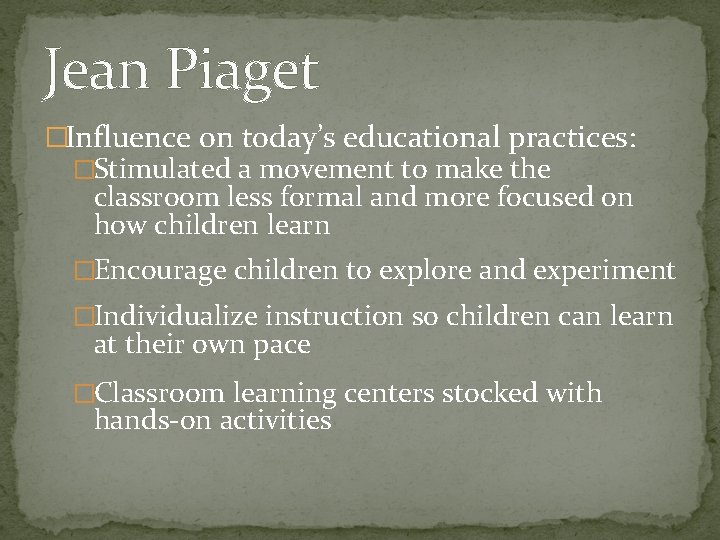
Jean Piaget �Influence on today’s educational practices: �Stimulated a movement to make the classroom less formal and more focused on how children learn �Encourage children to explore and experiment �Individualize instruction so children can learn at their own pace �Classroom learning centers stocked with hands-on activities
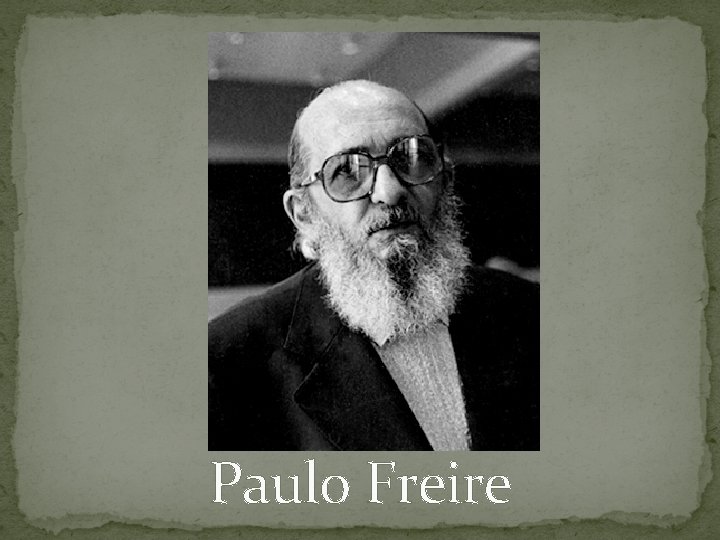
Paulo Freire
Paulo Freire �Liberation pedagogy �Critical consciousness-students should be conscious and critically aware of the social, political, and economic conditions that effect their lives �Opposes “teacher talk” �Banking Model
Paulo Freire �Influence on today’s educational practices: �Transformed teaching and learning from limited concept of transmitting information to discovering one’s identity and meaning in the world �Teachers should help students work towards social justices by exposing them to conditions that marginalize their communities
Choose 3 pioneers that you relate to in terms of your educational philosophy & jot down what you like about their ideals
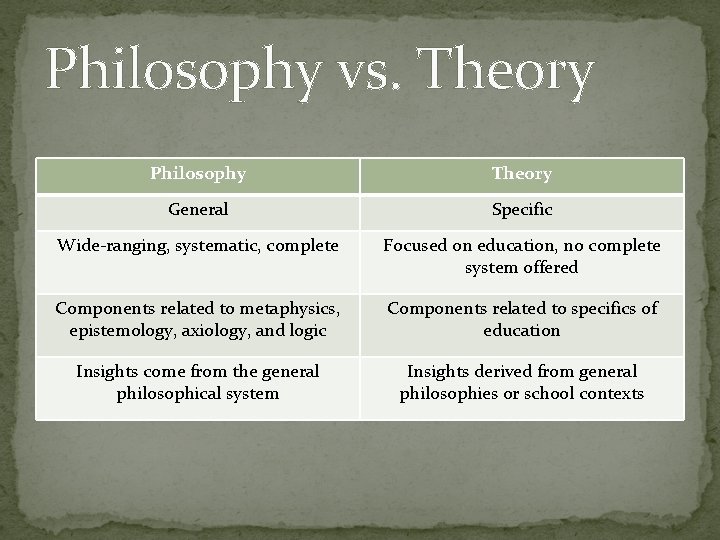
Philosophy vs. Theory
Philosophy vs. Theory Philosophy Theory General Specific Wide-ranging, systematic, complete Focused on education, no complete system offered Components related to metaphysics, epistemology, axiology, and logic Components related to specifics of education Insights come from the general philosophical system Insights derived from general philosophies or school contexts
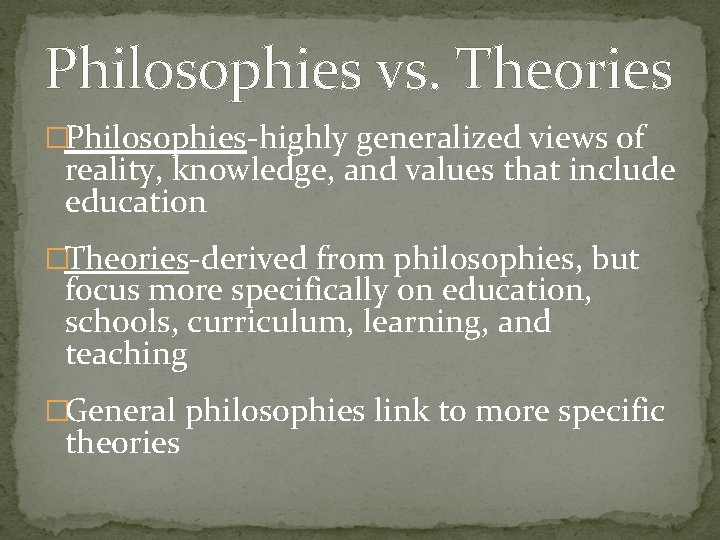
Philosophies vs. Theories �Philosophies-highly generalized views of reality, knowledge, and values that include education �Theories-derived from philosophies, but focus more specifically on education, schools, curriculum, learning, and teaching �General philosophies link to more specific theories
Educational Philosophies
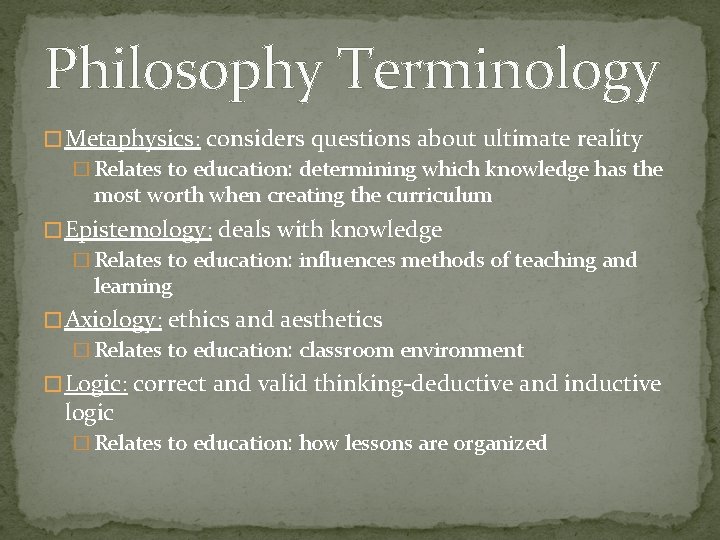
Philosophy Terminology � Metaphysics: considers questions about ultimate reality � Relates to education: determining which knowledge has the most worth when creating the curriculum � Epistemology: deals with knowledge � Relates to education: influences methods of teaching and learning � Axiology: ethics and aesthetics � Relates to education: classroom environment � Logic: correct and valid thinking-deductive and inductive logic � Relates to education: how lessons are organized
Answer the Following Questions: �What is knowledge? �What is the purpose of school? �Who should attend school? �How should we teach?
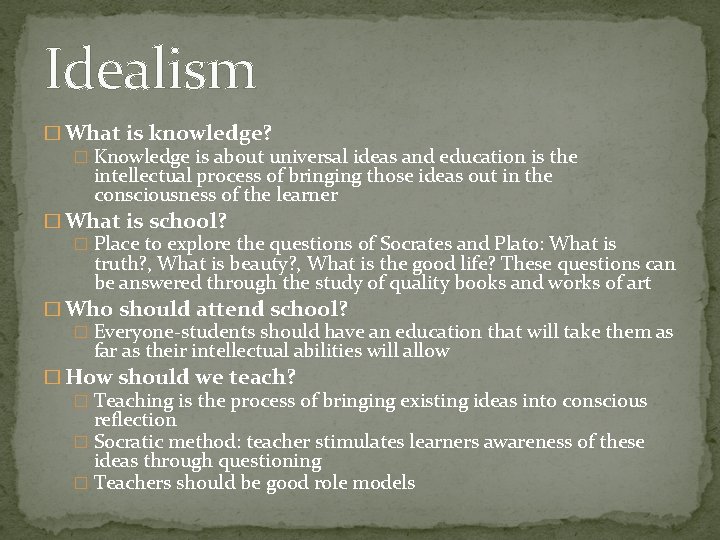
Idealism � What is knowledge? � Knowledge is about universal ideas and education is the intellectual process of bringing those ideas out in the consciousness of the learner � What is school? � Place to explore the questions of Socrates and Plato: What is truth? , What is beauty? , What is the good life? These questions can be answered through the study of quality books and works of art � Who should attend school? � Everyone-students should have an education that will take them as far as their intellectual abilities will allow � How should we teach? � Teaching is the process of bringing existing ideas into conscious reflection � Socratic method: teacher stimulates learners awareness of these ideas through questioning � Teachers should be good role models
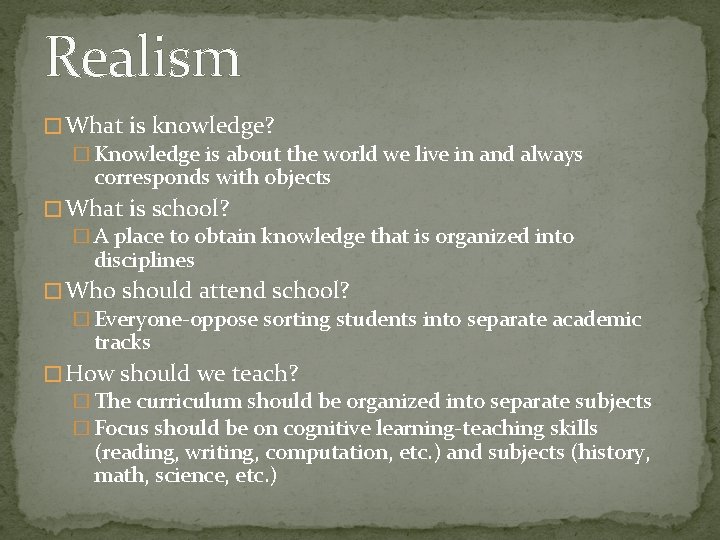
Realism � What is knowledge? � Knowledge is about the world we live in and always corresponds with objects � What is school? � A place to obtain knowledge that is organized into disciplines � Who should attend school? � Everyone-oppose sorting students into separate academic tracks � How should we teach? � The curriculum should be organized into separate subjects � Focus should be on cognitive learning-teaching skills (reading, writing, computation, etc. ) and subjects (history, math, science, etc. )
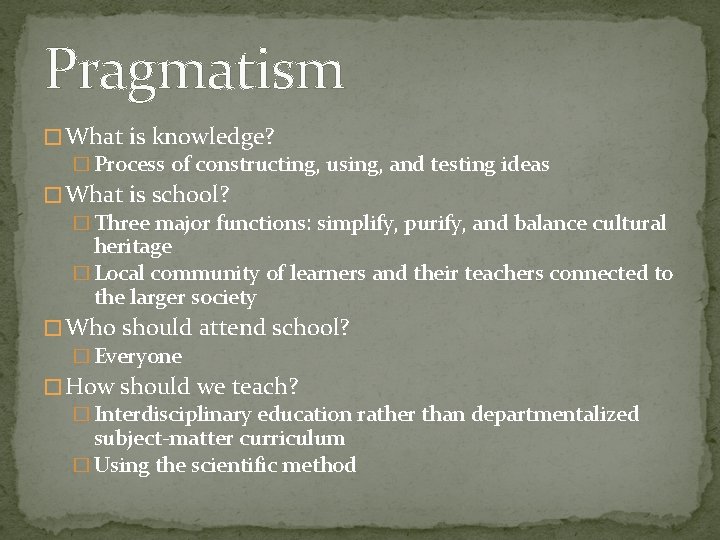
Pragmatism � What is knowledge? � Process of constructing, using, and testing ideas � What is school? � Three major functions: simplify, purify, and balance cultural heritage � Local community of learners and their teachers connected to the larger society � Who should attend school? � Everyone � How should we teach? � Interdisciplinary education rather than departmentalized subject-matter curriculum � Using the scientific method
Existentialism � What is knowledge? � Knowledge is created through our own personal choices � Individuals will choose the knowledge that pertains most to his/her life � What is school? � An opportunity for teachers and students to engage in discussion about their lives and their choices � Who should attend school? � Everyone � How should we teach? � Purpose of education is to awaken consciousness about freedom to create own sense of self � Students encouraged to participate in discussions about hopes, fears, desires, living, loving, and dying � Valuable subjects include literature, biography, drama, and film because they reveal people making choices Example: Summerhill School
Postmodernism � What is knowledge? � Constructed based on our experiences from interacting with our environment � What is school? � View public schools are a contested arena-argue that public schools help reproduce a society that is patriarchal, Eurocentric, and capitalist. � Who should attend school? � Everyone � How should we teach? � Encourage deconstruction of texts and teaching materials � With cultural diversity at the core � Conscious of bias
Educational Theories
Perennialism �Education needs to be universal and authentic during every period of history, throughout every culture �Believes that truth is in the classics �Primary purpose is developing students’ intellect �Truth is unchanging, so curriculum should consist of permanent themes recurrent in human nature �Curriculum includes: history, language, math, logic, literature, humanities, and science �Education should develop the mind, not one’s specific needs �Disagree with tracking
Essentialism �Role of schools is to teach the basics, so students can function in democratic society �Schools should not promote specific ideologies �Skills and subjects in a curriculum should be well defined in a scope and sequence �Teacher directed instruction �Students are promoted on the basis of academic achievement, not social considerations
Progressivism �Prolonging childhood-child should be free to develop naturally �Children’s readiness should determine curriculum �Children learn best when exploring their environment and constructing their own views of reality �Teacher facilitated, activity-based curriculum 1 �Importance of relationship between the school, home, and community �Resist standards set outside of school from government agencies
Critical Theory �Raise consciousness about marginalization and empowerment �Knowledge is about issues of social, political, economic, and educational power and control �Dominant classes control schools and use them to reproduce and maintain their privileged position. �Formal curriculum mandated by the state and “hidden curriculum” (what students learn from the school environment) �Teachers should focus on issues of power and control in school and society
Creating Your Own Philosophy of Education � Questions to consider: � Do you believe that knowledge is based on universal and eternal truths or is it relative to different times and places? � What is the purpose of education? To transmit culture, provide economic and social skills, to develop criticalthinking skills, or to criticize and reform society? � What are schools for? To teach skills and subjects, encourage personal self-definition, develop intelligence, or create patriotic and economically productive citizens?
Creating Your Own Philosophy of Education �Questions to consider: � What should curriculum contain? Basic skills and subjects? Experiences and projects, classic literature, inquiry processes, critical dialogues? � What should the relationship be between teachers and students? Transmitting the heritage, teaching and learning skills and subjects, examining great ideas, encouraging self-expression, constructing knowledge, solving problems?
Main Sources Ornstein, A. C. , Levine, D. U. , Gutek, G. L. , & Vocke, D. E. (2014). Foundations of Education. Belmont, CA: Wadsworth Cengage Learning. Images borrowed from Wikipedia or Google Images