
ECTOPIC PREGNANCY Dr Rupa Bajagain Kathmandu Medical College

ECTOPIC PREGNANCY Dr. Rupa Bajagain Kathmandu Medical College Teaching Hospital Department of Obstetrics & Gynaecology

DEFINITION An ectopic pregnancy is one in which the fertilized ovum is implanted and develops outside the normal uterine cavity.
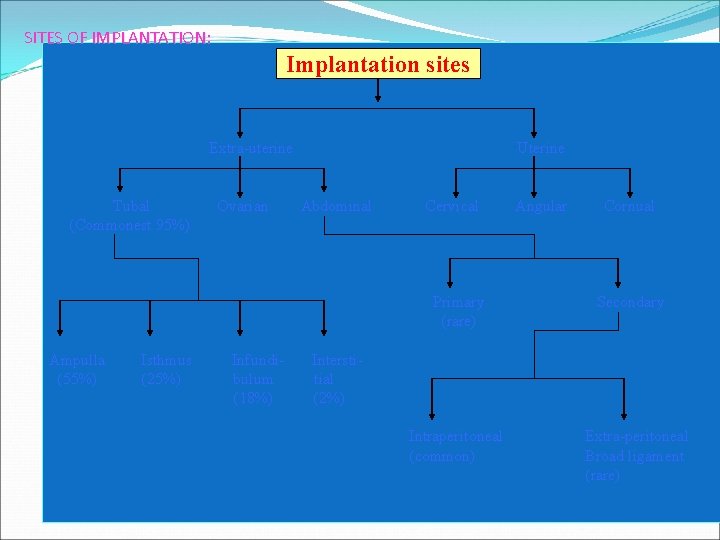
SITES OF IMPLANTATION: Implantation sites Extra-uterine Tubal Ovarian Abdominal (Commonest 95%) Ampulla (55%) Uterine Cervical Angular Cornual Primary (rare) Secondary Intraperitoneal (common) Extra-peritoneal Broad ligament (rare) Isthmus Infundi- Intersti (25%) bulum tial (18%) (2%)
TUBAL PREGNANCY The incidence varies from 1 in 300 to 1 in 150 deliveries.
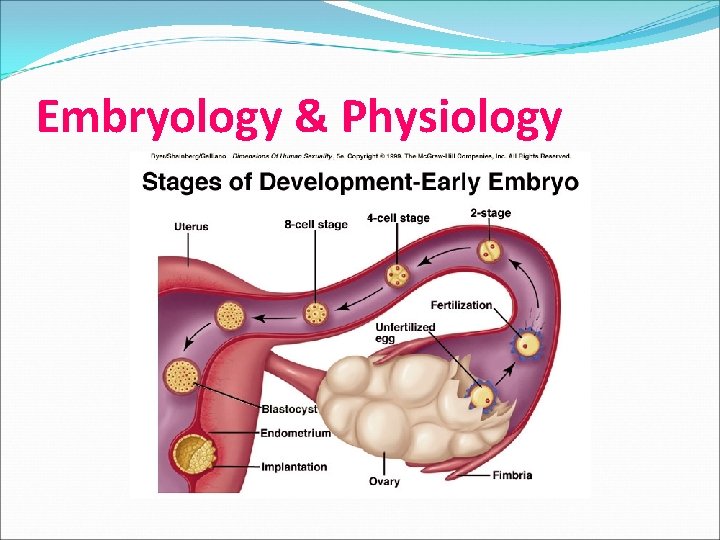
Embryology & Physiology
ETIOLOGY Factors which are responsible for the fertilized ovum to remain in the tube are : Factors preventing or delaying the migration of the fertilized ovum to the uterine cavity. Factors facilitating nidation of the fertilized ovum in the tubal mucosa.
Factors delaying or preventing migration Pelvic inflammatory disease (PID) Iatrogenic Contraception failure IUCD Sterilisation operation Use of progestin Tubal Surgery Intrapelvic adhesions Artificial Reproductive Therapy Previous ectopic pregnancy Prior induced abortion
Factors delaying or preventing migration Developmental defects Elongation Diverticula Accessory ostia Distortion of the tube Transperitoneal migration (10% cases) Tubal spasm Early resumption Increased decidual reaction Tubal endometriosis
Risk factors of ectopic pregnancy History of infertility History of PID Contraception failure Previous ectopic pregnancy Tubal reconstructive surgery ART particularly if the tubes are patent and damaged Previous induced abortion
Morbid Anatomy Implantation in the tube occurs more commonly in intercolumnar fashion Decidual change at the site of implantation is minimal The ovum burrows through the mucous membrane and lies deep in the muscle layers A pseudo-capsularis is formed consisting of fibrin Blood vessels are eroded by the chorionic villi and the blood accumulates The tube on the implantation site is distended Further changes in the tube specially at the site of implantation which invariably occurs within 6 – 8 weeks.
Changes in the uterus Th decidua develops all the characteristics of intrauterine pregnancy except that it contains no evidence of chorionic villi.
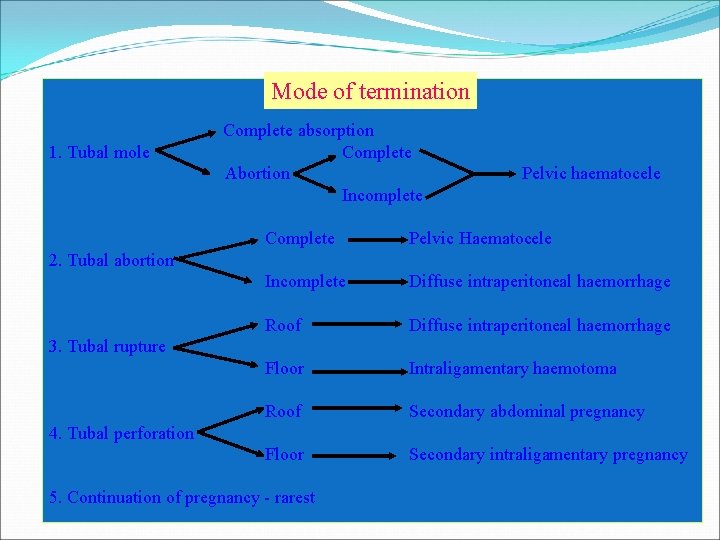
Mode of termination Complete absorption 1. Tubal mole Complete Abortion Pelvic haematocele Incomplete Complete Pelvic Haematocele Incomplete Diffuse intraperitoneal haemorrhage Roof Diffuse intraperitoneal haemorrhage Floor Intraligamentary haemotoma Roof Secondary abdominal pregnancy Floor Secondary intraligamentary pregnancy 2. Tubal abortion 3. Tubal rupture 4. Tubal perforation 5. Continuation of pregnancy - rarest

Mode of termination of tubal abortion
Clinical features Amenorrhea Pain Bleeding Nausea, vomiting, fainting attack
Clinical Examination: G. C. depends-Perspires, painfully distressed Pallor Shock, Tender abd, rebound tenderness ++ V/V normal, Ut N/S, Fx Tender Cervical excitement present
D/D Ac. appendicitis perforation of peptic ulcer Twisted ovarian cyst Rupture endometrial cyst Ruptured. Corpus luteal cyst
D/D Salpingitis appendicitis Twisted Ovarian cyst Ruptured chocolate cyst

Fate of tubal rupture – (a) Intraperitoneal (b) Extraperitoneal with broad ligament haematoma (c) Secondary abdominal (d) Secondary broad ligament.
Management (cont) Expectant management. Medical management. Surgical management (laparotomy).
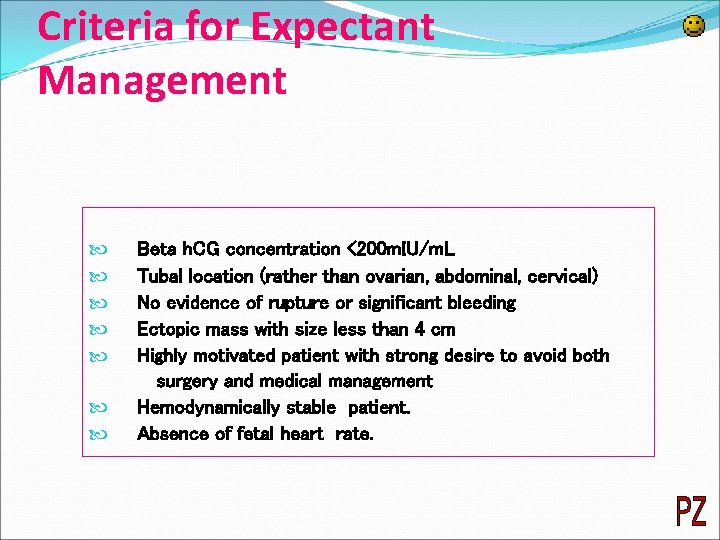
Criteria for Expectant Management Beta h. CG concentration <200 m. IU/m. L Tubal location (rather than ovarian, abdominal, cervical) No evidence of rupture or significant bleeding Ectopic mass with size less than 4 cm Highly motivated patient with strong desire to avoid both surgery and medical management Hemodynamically stable patient. Absence of fetal heart rate.
Medical management Methotrexate MTX folic acid antagonist- inhibit DNA synthesis and cell reproduction. MTX metabolized by kidneys. The initial dose regimen MTX (1 mg/kg IM ) or single IM dose of 50 mg/square meter Leukovorum (0. 1 mg/kg IM ) Methotrexate management takes 4 -6 weeks for complete resolution of the ectopic pregnancy
Candidates Hemodynamically stable patient. Willing to comply post-treatment follow up Initial beta h. CG Conc <5000 m. I/m. L No fetal cardiac activity in USG.

Surgical Treatment Forms Salpingotomy: Making an incision on the tube and removing the pregnancy Salpingectomy: Cutting the tube out Segmental resection: Cutting out the affected portion of the tube Fimbrial expression: "Milking" the pregnancy out the end of the tube Usually, if the tube is not ruptured → laparoscopy Cases of rupture with significant hemorrhage into the abdomen → laparotomy
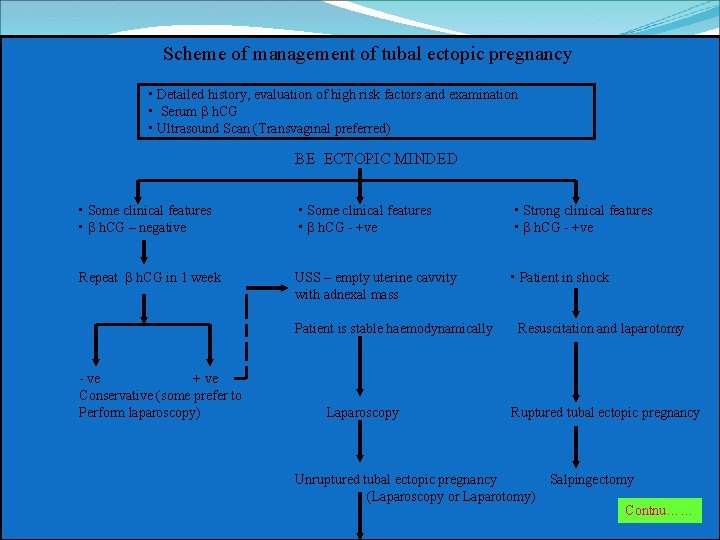
Scheme of management of tubal ectopic pregnancy • Detailed history, evaluation of high risk factors and examination • Serum h. CG • Ultrasound Scan (Transvaginal preferred) BE ECTOPIC MINDED • Some clinical features • h. CG – negative • Some clinical features • h. CG - +ve • Strong clinical features • h. CG - +ve Repeat h. CG in 1 week USS – empty uterine cavvity with adnexal mass • Patient in shock Patient is stable haemodynamically Resuscitation and laparotomy Laparoscopy Ruptured tubal ectopic pregnancy - ve + ve Conservative (some prefer to Perform laparoscopy) Unruptured tubal ectopic pregnancy Salpingectomy (Laparoscopy or Laparotomy) Contnu……
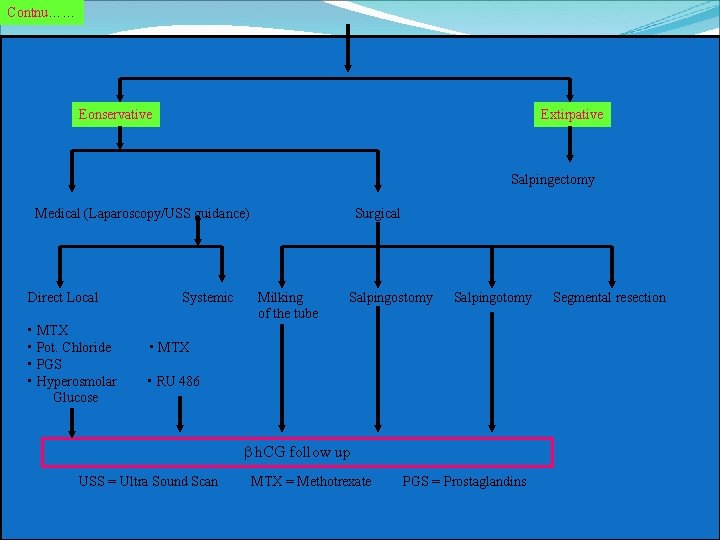
Contnu…… Extirpative Eonservative Salpingectomy Medical (Laparoscopy/USS guidance) Surgical Direct Local Systemic Milking Salpingostomy Salpingotomy Segmental resection of the tube • MTX • Pot. Chloride • MTX • PGS • Hyperosmolar • RU 486 Glucose h. CG follow up USS = Ultra Sound Scan MTX = Methotrexate PGS = Prostaglandins
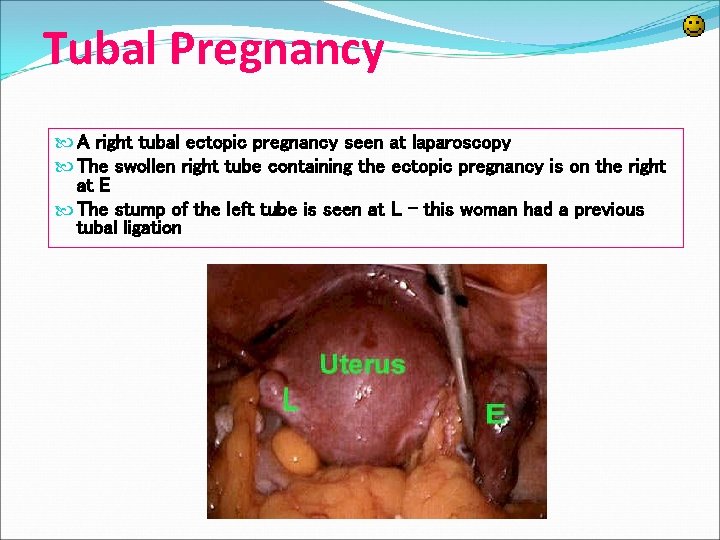
Tubal Pregnancy A right tubal ectopic pregnancy seen at laparoscopy The swollen right tube containing the ectopic pregnancy is on the right at E The stump of the left tube is seen at L - this woman had a previous tubal ligation
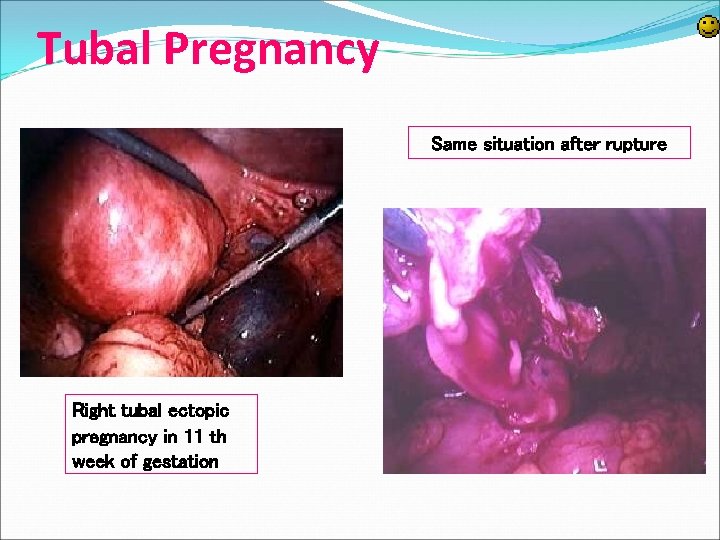
Tubal Pregnancy Same situation after rupture Right tubal ectopic pregnancy in 11 th week of gestation

- Slides: 28