
Ectoparasites The Arthropods Phylum Arthropoda Class Insecta Class

- Slides: 36
Ectoparasites
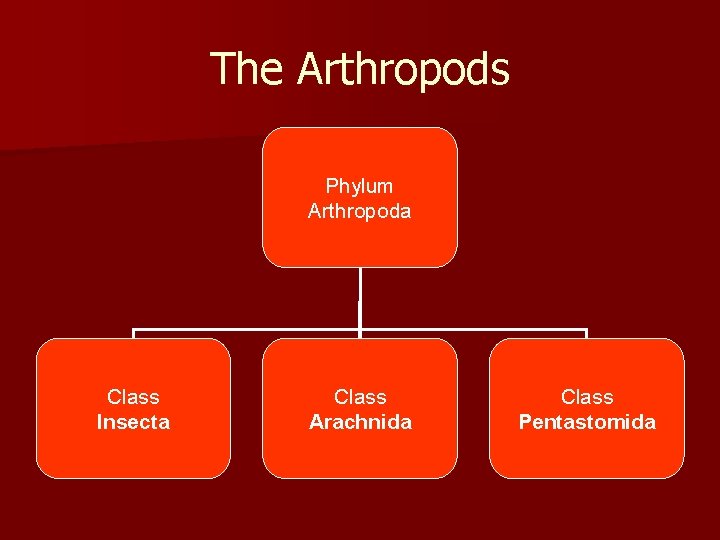
The Arthropods Phylum Arthropoda Class Insecta Class Arachnida Class Pentastomida
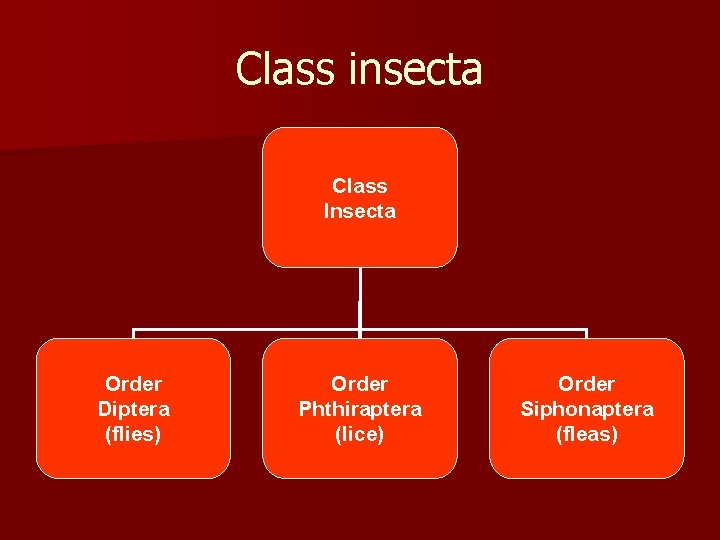
Class insecta Class Insecta Order Diptera (flies) Order Phthiraptera (lice) Order Siphonaptera (fleas)
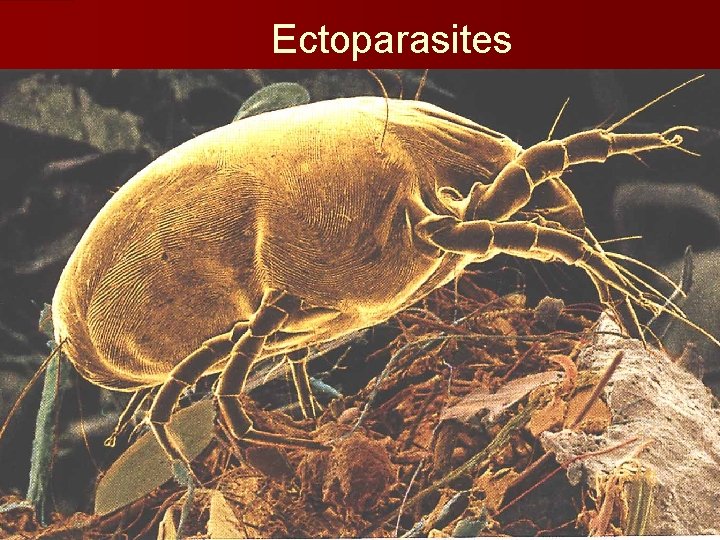
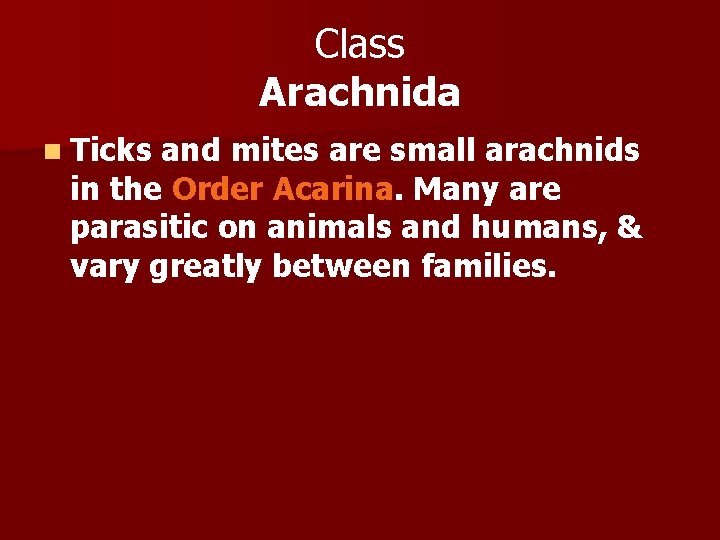
Class Arachnida n Ticks and mites are small arachnids in the Order Acarina. Many are parasitic on animals and humans, & vary greatly between families.
Class Pentastomida (“tongue worms”) n Very unusual insects, may be related to sarcoptiform mites or to annelids (earthworms).
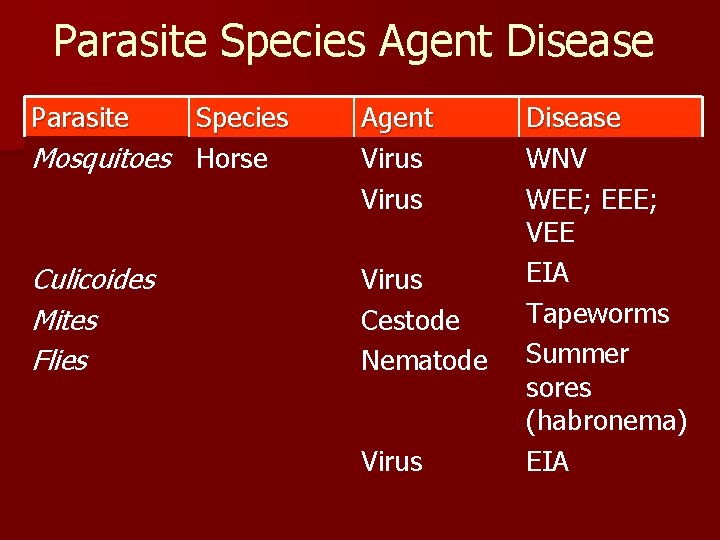
Parasite Species Agent Disease Parasite Species Mosquitoes Horse Agent Virus Culicoides Mites Flies Virus Cestode Nematode Virus Disease WNV WEE; EEE; VEE EIA Tapeworms Summer sores (habronema) EIA
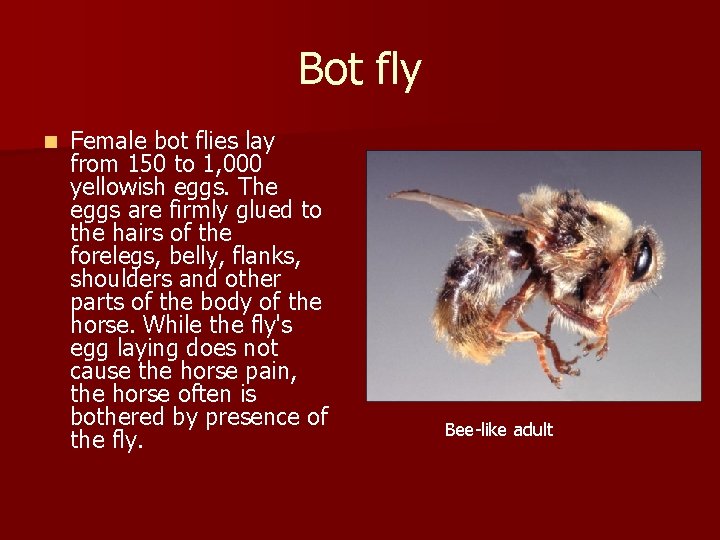
Bot fly n Female bot flies lay from 150 to 1, 000 yellowish eggs. The eggs are firmly glued to the hairs of the forelegs, belly, flanks, shoulders and other parts of the body of the horse. While the fly's egg laying does not cause the horse pain, the horse often is bothered by presence of the fly. Bee-like adult
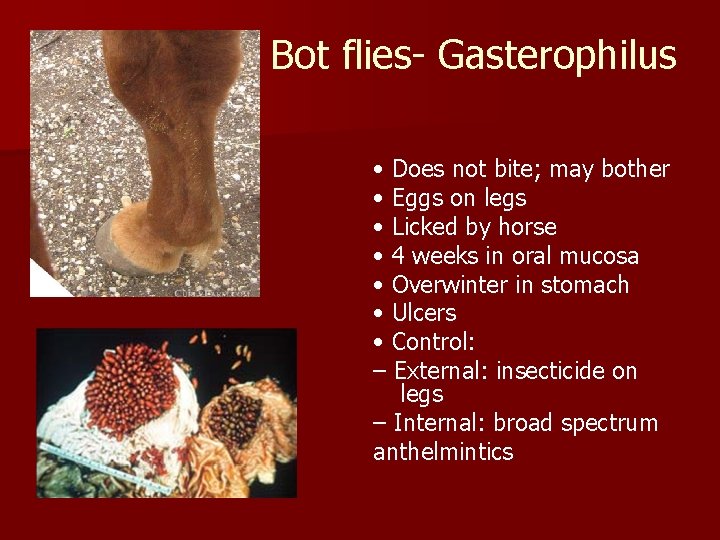
Bot flies- Gasterophilus • Does not bite; may bother • Eggs on legs • Licked by horse • 4 weeks in oral mucosa • Overwinter in stomach • Ulcers • Control: – External: insecticide on legs – Internal: broad spectrum anthelmintics
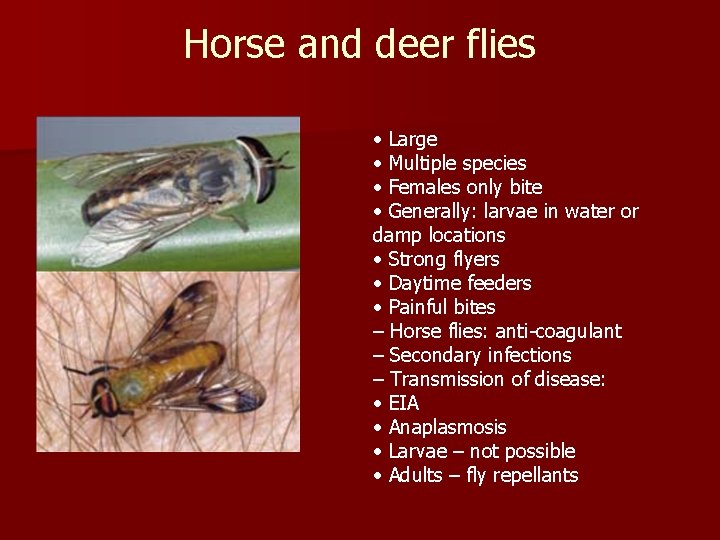
Horse and deer flies • Large • Multiple species • Females only bite • Generally: larvae in water or damp locations • Strong flyers • Daytime feeders • Painful bites – Horse flies: anti-coagulant – Secondary infections – Transmission of disease: • EIA • Anaplasmosis • Larvae – not possible • Adults – fly repellants
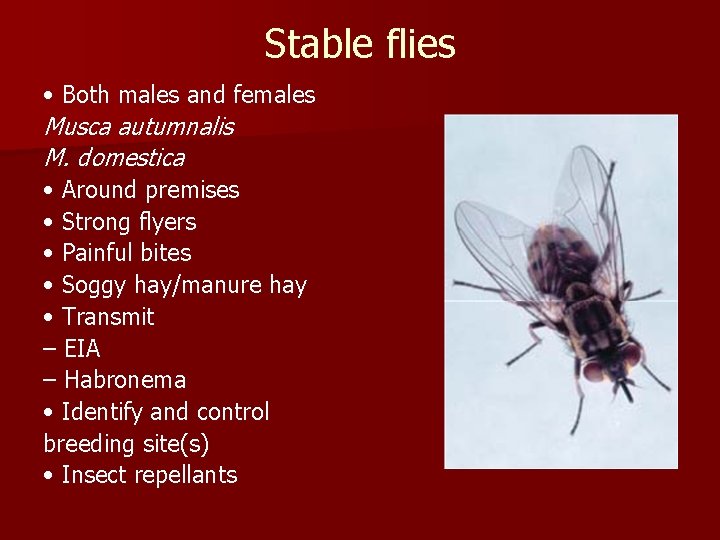
Stable flies • Both males and females Musca autumnalis M. domestica • Around premises • Strong flyers • Painful bites • Soggy hay/manure hay • Transmit – EIA – Habronema • Identify and control breeding site(s) • Insect repellants
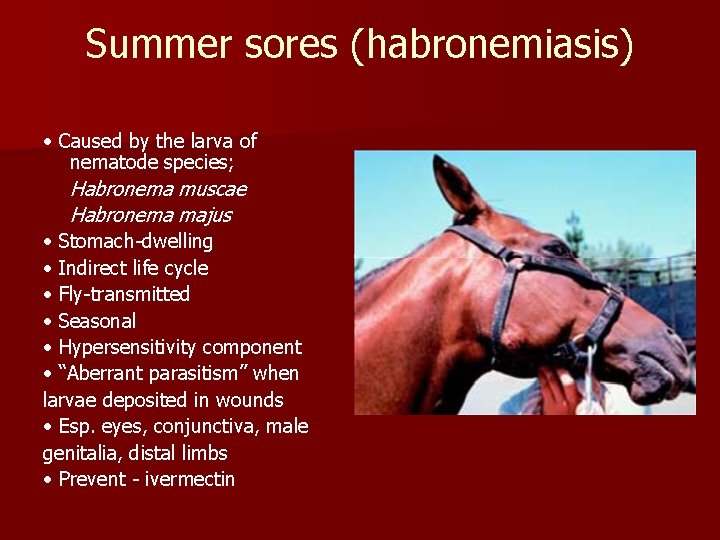
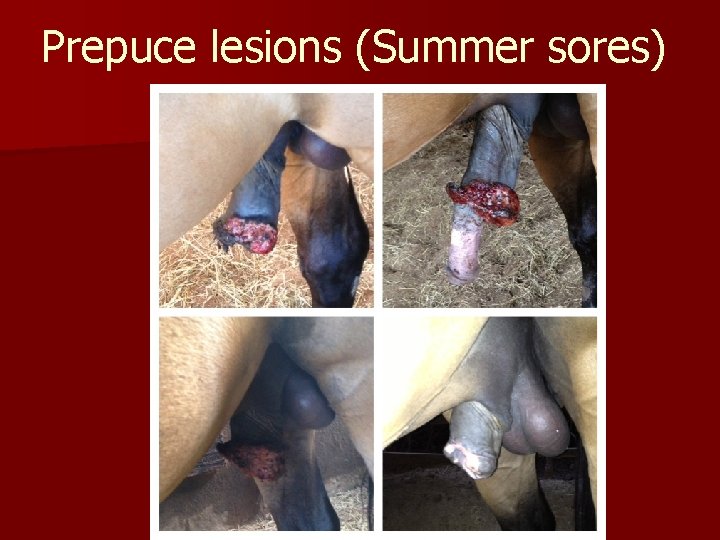
Summer sores (habronemiasis) • Caused by the larva of nematode species; Habronema muscae Habronema majus • Stomach-dwelling • Indirect life cycle • Fly-transmitted • Seasonal • Hypersensitivity component • “Aberrant parasitism” when larvae deposited in wounds • Esp. eyes, conjunctiva, male genitalia, distal limbs • Prevent - ivermectin
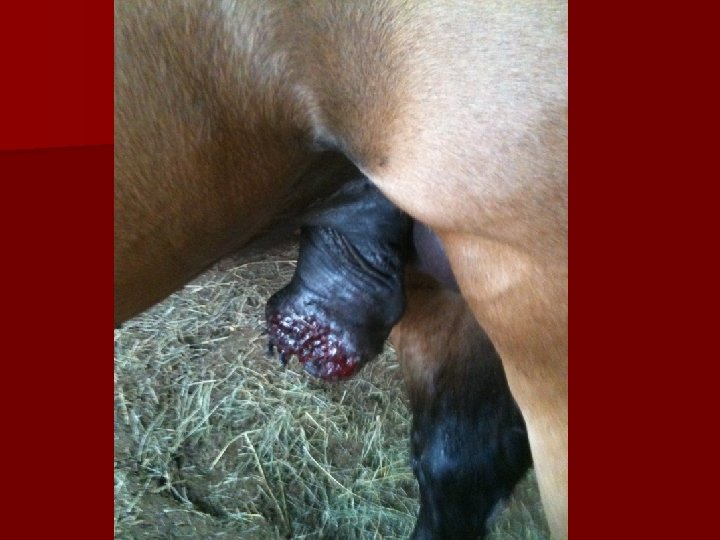
Prepuce lesions (Summer sores)
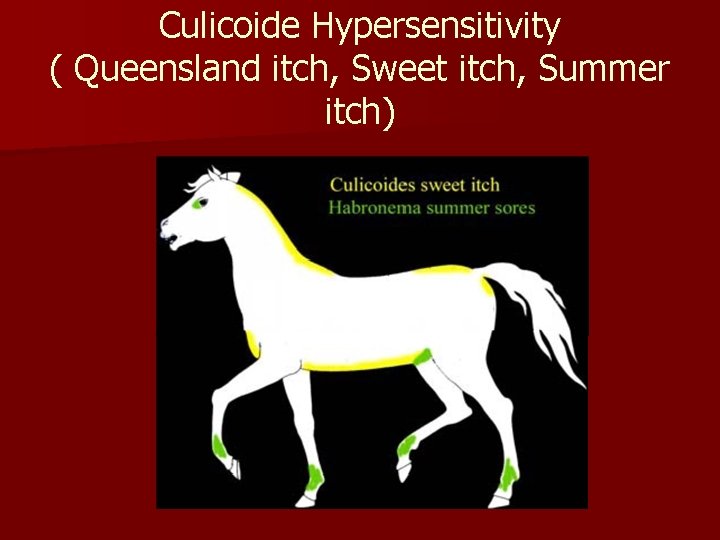
Culicoide Hypersensitivity ( Queensland itch, Sweet itch, Summer itch)
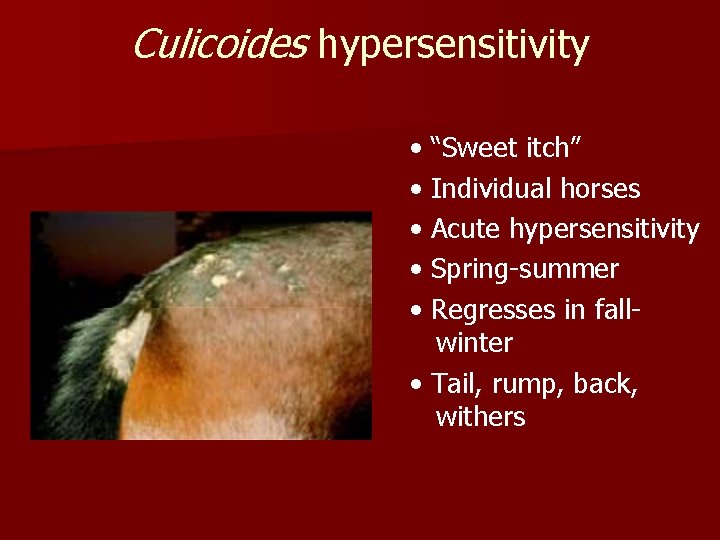
Culicoides hypersensitivity • “Sweet itch” • Individual horses • Acute hypersensitivity • Spring-summer • Regresses in fallwinter • Tail, rump, back, withers
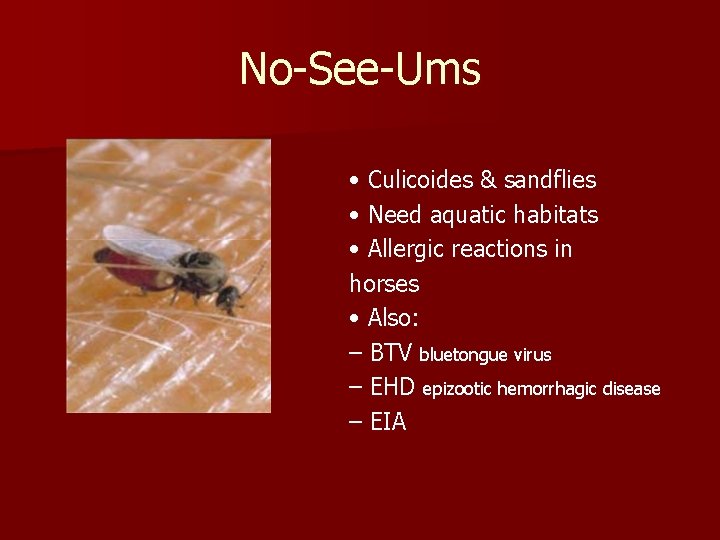
No-See-Ums • Culicoides & sandflies • Need aquatic habitats • Allergic reactions in horses • Also: – BTV bluetongue virus – EHD epizootic hemorrhagic disease – EIA
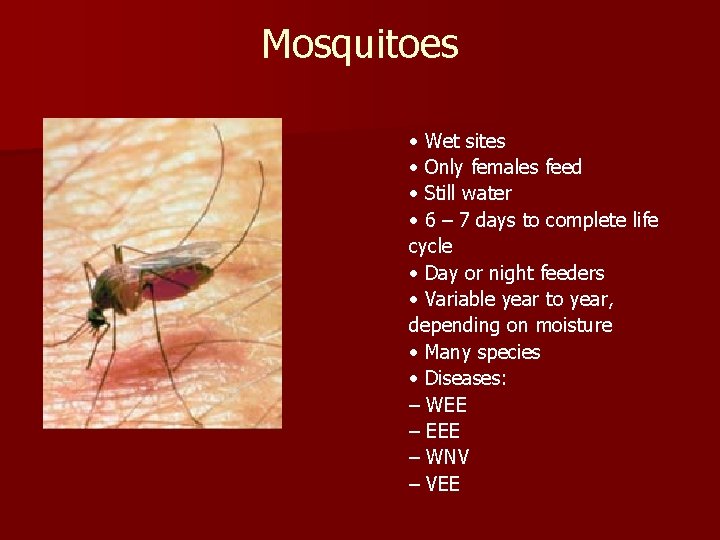
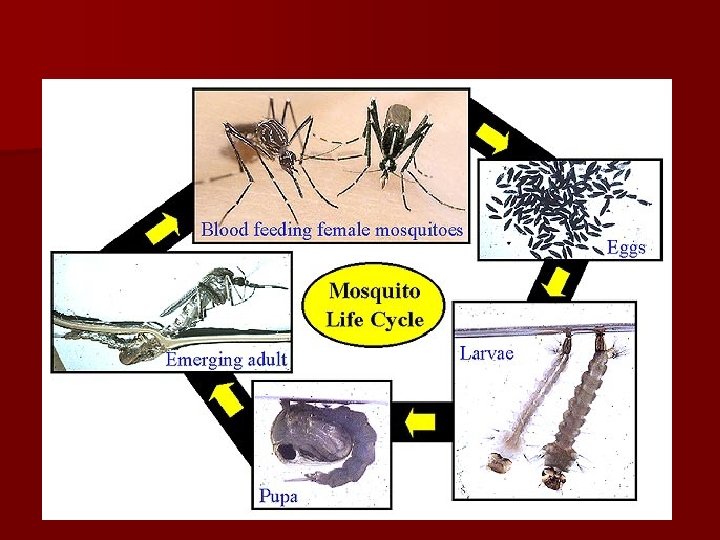
Mosquitoes • Wet sites • Only females feed • Still water • 6 – 7 days to complete life cycle • Day or night feeders • Variable year to year, depending on moisture • Many species • Diseases: – WEE – EEE – WNV – VEE
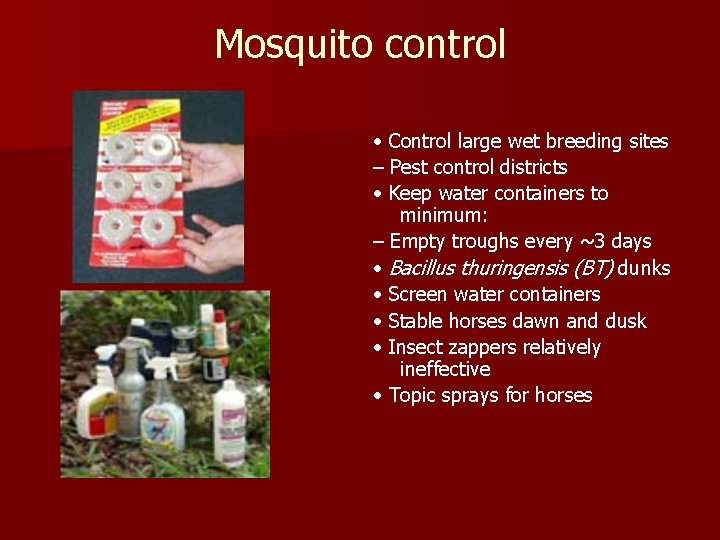
Mosquito control • Control large wet breeding sites – Pest control districts • Keep water containers to minimum: – Empty troughs every ~3 days • Bacillus thuringensis (BT) dunks • Screen water containers • Stable horses dawn and dusk • Insect zappers relatively ineffective • Topic sprays for horses
Topical anti-mosquito products • Pyrethrins - chrysanthemum extract – Effective; short duration • Pyrethroids - synthetic – Low toxicity; longer-lasting than pyrethrins. – Permethrin and cypermethrin • Plant extracts – Citronella, eucalyptus, pennyroyal, cedar, geraniol etc. • DEET (N, N-Diethyl-meta-toluamide, is the most common active ingredient in insect repellents) – Now EPA approved for horses – Licensed veterinarians. – Repellent only - not insecticidal
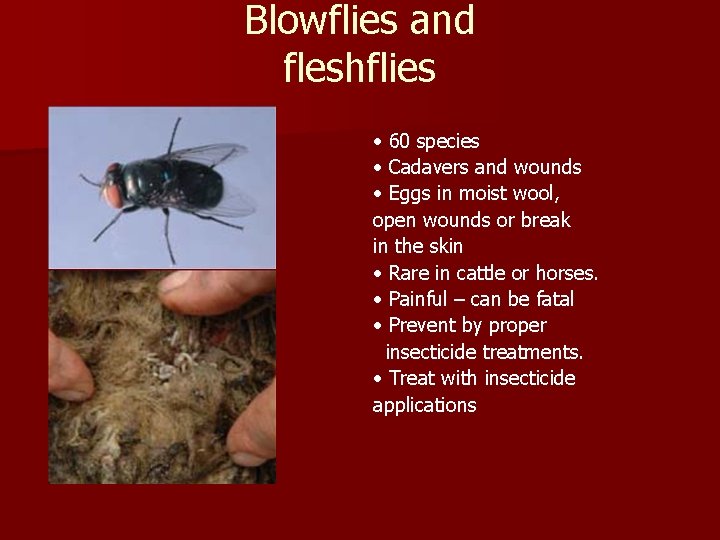
Blowflies and fleshflies • 60 species • Cadavers and wounds • Eggs in moist wool, open wounds or break in the skin • Rare in cattle or horses. • Painful – can be fatal • Prevent by proper insecticide treatments. • Treat with insecticide applications
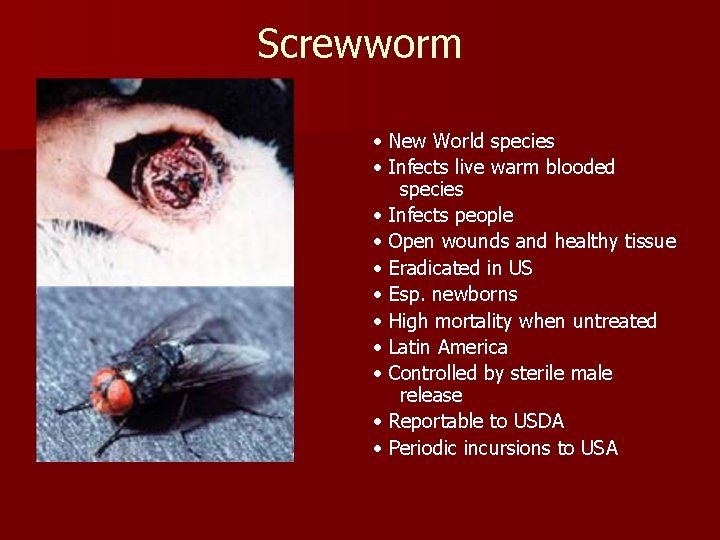
Screwworm • New World species • Infects live warm blooded species • Infects people • Open wounds and healthy tissue • Eradicated in US • Esp. newborns • High mortality when untreated • Latin America • Controlled by sterile male release • Reportable to USDA • Periodic incursions to USA
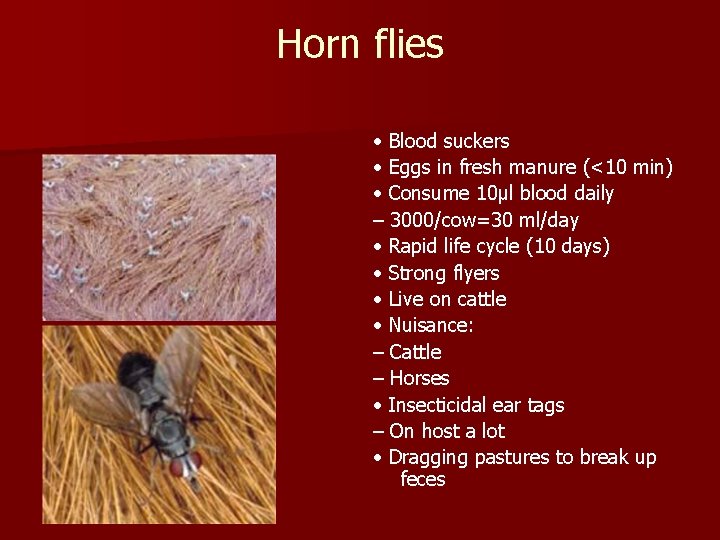
Horn flies • Blood suckers • Eggs in fresh manure (<10 min) • Consume 10μl blood daily – 3000/cow=30 ml/day • Rapid life cycle (10 days) • Strong flyers • Live on cattle • Nuisance: – Cattle – Horses • Insecticidal ear tags – On host a lot • Dragging pastures to break up feces
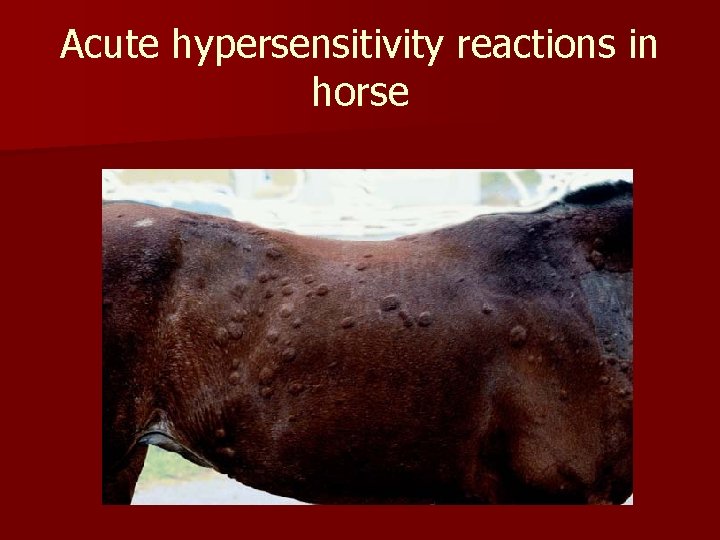
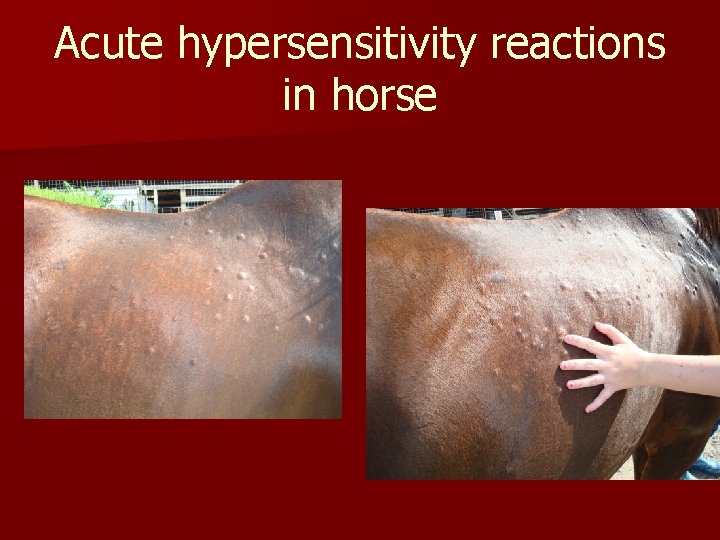
Acute hypersensitivity reactions in horse
Acute hypersensitivity reactions in horse
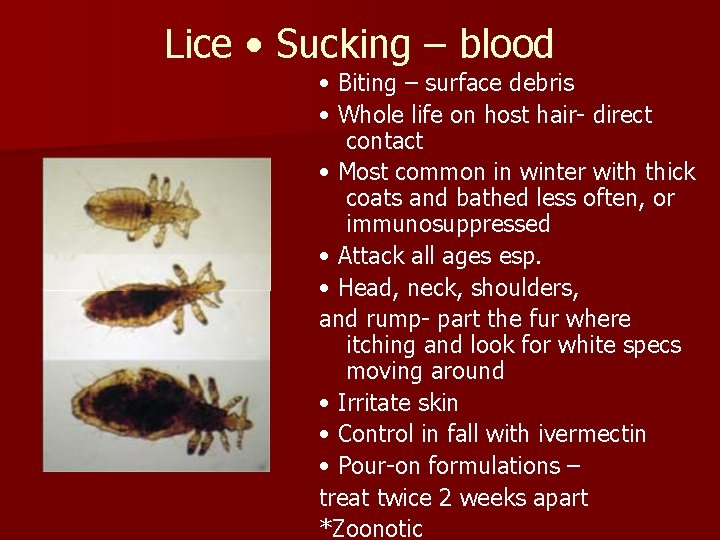
Lice • Sucking – blood • Biting – surface debris • Whole life on host hair- direct contact • Most common in winter with thick coats and bathed less often, or immunosuppressed • Attack all ages esp. • Head, neck, shoulders, and rump- part the fur where itching and look for white specs moving around • Irritate skin • Control in fall with ivermectin • Pour-on formulations – treat twice 2 weeks apart *Zoonotic
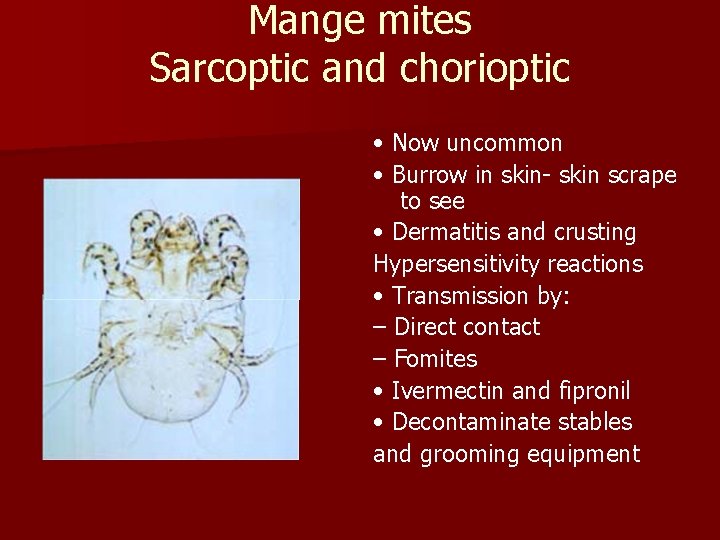
Mange mites Sarcoptic and chorioptic • Now uncommon • Burrow in skin- skin scrape to see • Dermatitis and crusting Hypersensitivity reactions • Transmission by: – Direct contact – Fomites • Ivermectin and fipronil • Decontaminate stables and grooming equipment
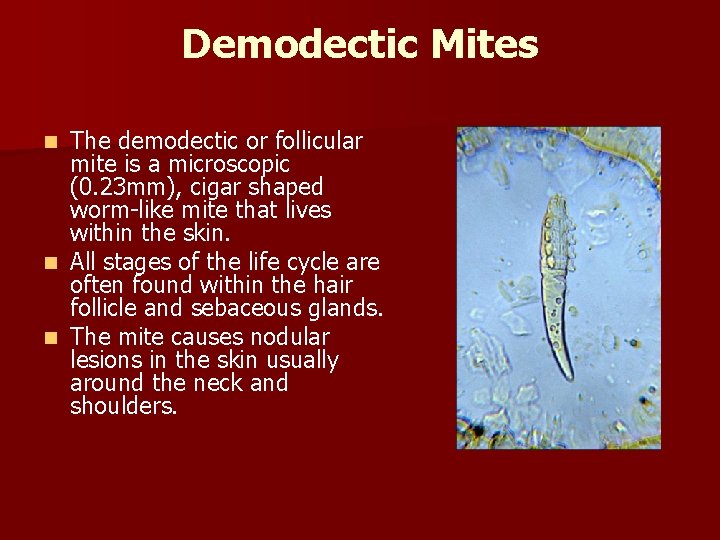
Demodectic Mites The demodectic or follicular mite is a microscopic (0. 23 mm), cigar shaped worm-like mite that lives within the skin. n All stages of the life cycle are often found within the hair follicle and sebaceous glands. n The mite causes nodular lesions in the skin usually around the neck and shoulders. n
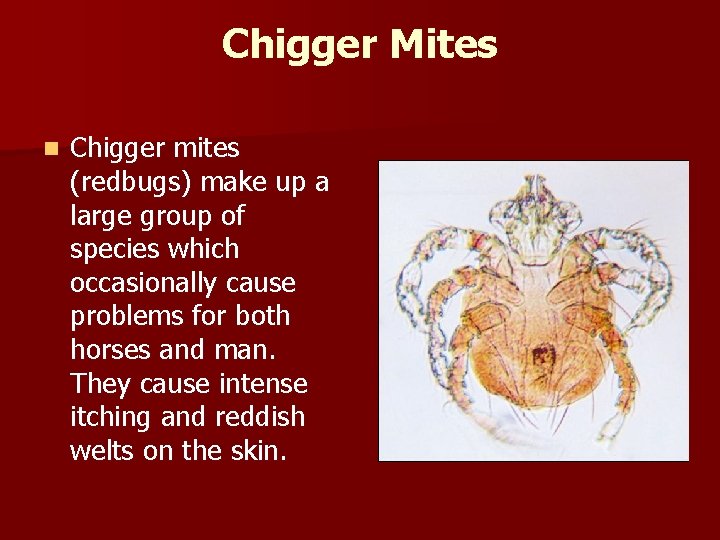
Chigger Mites n Chigger mites (redbugs) make up a large group of species which occasionally cause problems for both horses and man. They cause intense itching and reddish welts on the skin.
Mite Control n Seen mostly in wild horses, domestic horses living in poor conditions, and draft horses with leg feathers n Mange control requires isolation of infested animals and thorough wetting of the whole animal with timed applications of approved pesticides. n Chiggers can be controlled by application of detergent wash containing one of the insecticides registered for other mites. Area control is not feasible.
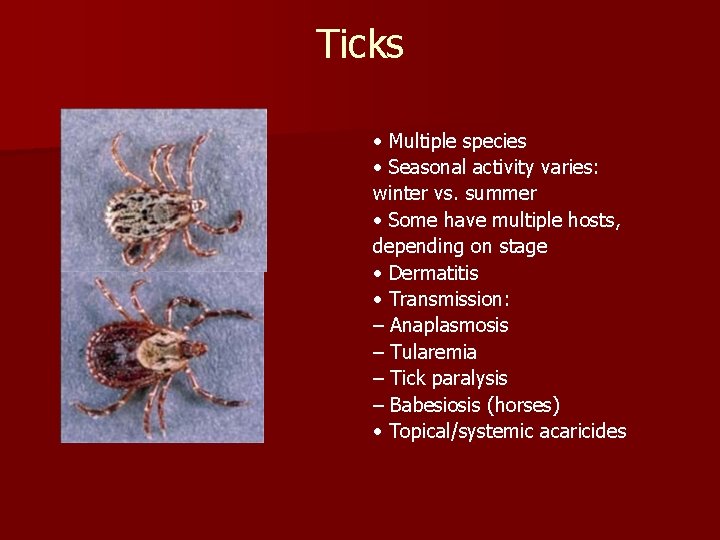
Ticks • Multiple species • Seasonal activity varies: winter vs. summer • Some have multiple hosts, depending on stage • Dermatitis • Transmission: – Anaplasmosis – Tularemia – Tick paralysis – Babesiosis (horses) • Topical/systemic acaricides
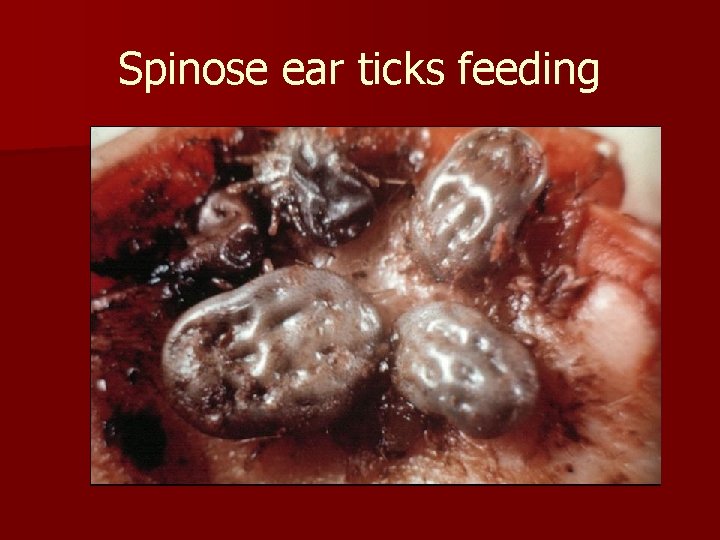
Spinose ear ticks feeding
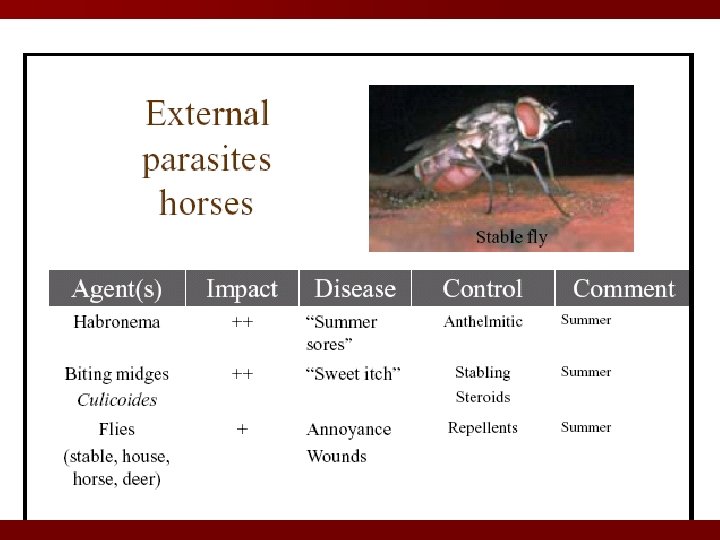
External parasites horses Agent(s) Impact Disease Control Comment Stable fly Habronema ++ “Summer sores” Anthelmitic Summer Biting midges Culicoides ++ “Sweet itch” Stabling Steroids Summer Flies (stable, house, horse, deer) + Annoyance Wounds Repellents Summer Stable fly
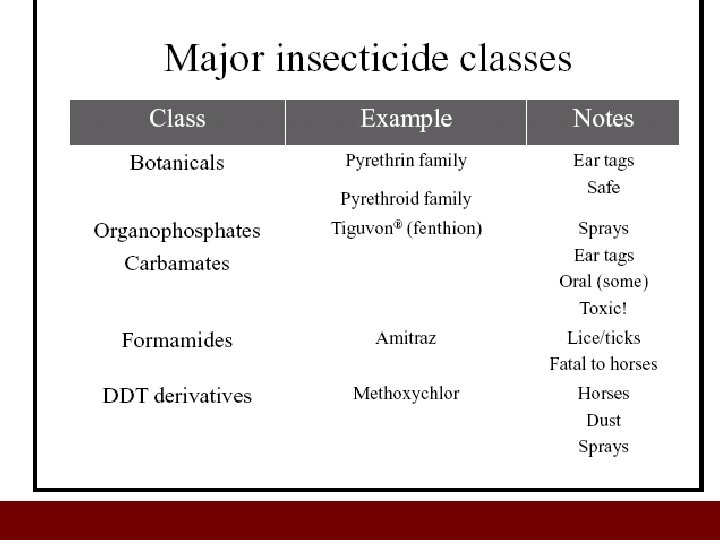
Major insecticide classes Class Example Notes Botanicals Pyrethrin family Ear tags Pyrethroid family Safe Organophosphates Tiguvon® (fenthion) Sprays Carbamates Ear tags Oral (some) Toxic! Formamides Amitraz Lice/ticks Fatal to horses DDT derivatives Methoxychlor Horses Dust Sprays
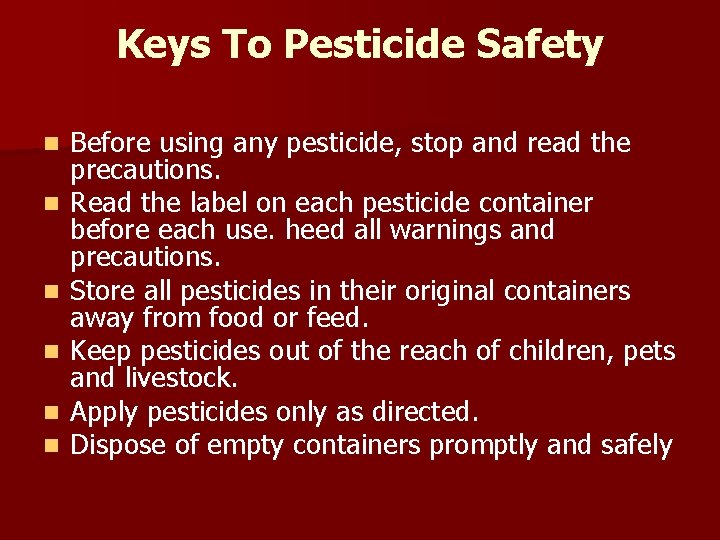
Keys To Pesticide Safety n n n Before using any pesticide, stop and read the precautions. Read the label on each pesticide container before each use. heed all warnings and precautions. Store all pesticides in their original containers away from food or feed. Keep pesticides out of the reach of children, pets and livestock. Apply pesticides only as directed. Dispose of empty containers promptly and safely
References n http: //edis. ifas. ufl. edu/IG 139