
Ecstasy MDMA History Ecstasy was originally developed by
Ecstasy (MDMA)
History Ecstasy was originally developed by Merck pharmaceutical company in 1912. In it’s original form, it is known as “MDMA. ” In was used in 1953 by the US Army on psychological warfare tests, and then resurfaced in the 1960’s as a psychotherapy medication to “lower inhibitions. ” It wasn’t until the late 70’s that MDMA started being used as a party drug. Still legal in 1984, MDMA was being sold under the brand name “Ecstasy, ” but by 1985, the drug had been banned due to safety concerns. What is its origin? Today, MDMA is a synthetic chemical made in labs. Seized MDMA in the U. S. is primarily manufactured in, and smuggled across our borders from, laboratories in Canada and, to a lesser extent, the Netherlands. A small number of MDMA laboratories have also been identified operating in the U. S.

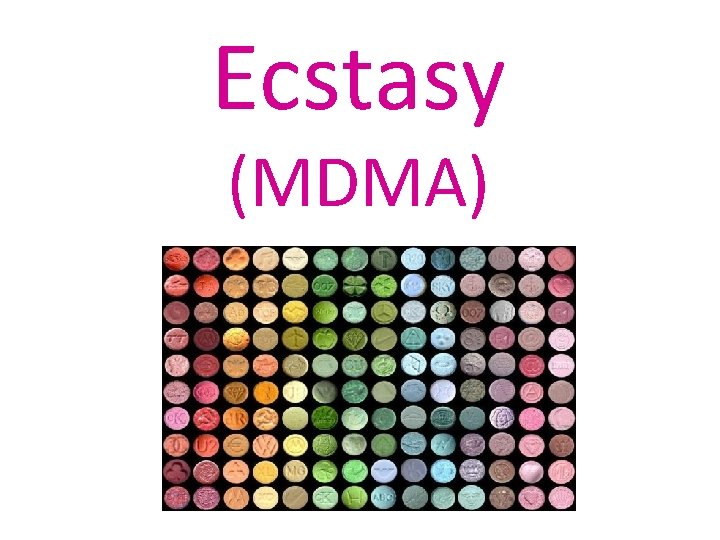
Ecstasy is one of the most popular drugs among youth today. The United Nations Office on Drug and Crime estimates approximately 9 million people use ecstasy world wide. What does it look like? Ecstasy is mainly distributed in tablet form. Ecstasy tablets are sold with logos, creating brand names for users to seek out. The colorful pills are often hidden among colorful candies. Ecstasy is also distributed in capsules, powder, and liquid forms. Liquid ecstasy is actually GHB, a nervous system depressant- a substance that Can be found in drain cleaner, floor stripper, and degreasing solvents.

How is it abused? Ecstasy use mainly involves swallowing tablets (50 -150 mg), which are sometimes crushed and snorted, occasionally smoked but rarely injected. Ecstasy is also available as a powder. Abusers usually take it by “stacking” (taking three or more tablets at once) or by “piggy-backing” (taking a series of tablets over a short period of time). One trend among young adults is “candy flipping, ” which is the co-abuse of ecstasy and LSD. Ecstasy is considered a “party drug. ” As with many other drugs of abuse, it is rarely used alone. It is common for users to mix it with other substances, such as alcohol and marijuana.
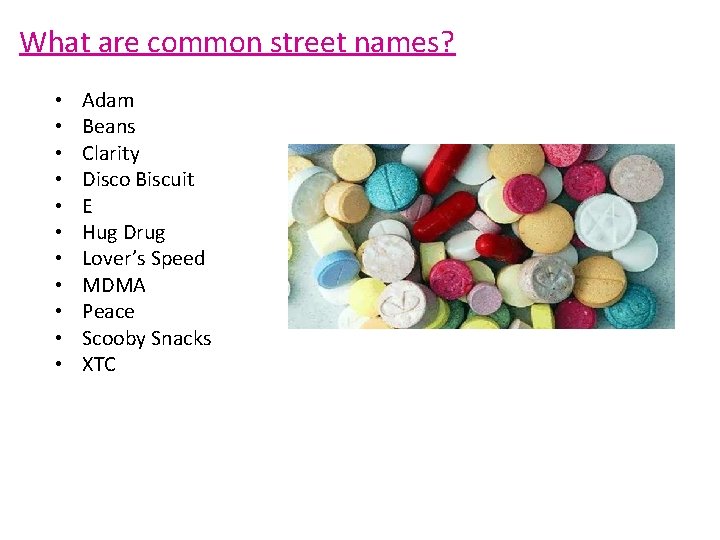
What are common street names? • • • Adam Beans Clarity Disco Biscuit E Hug Drug Lover’s Speed MDMA Peace Scooby Snacks XTC
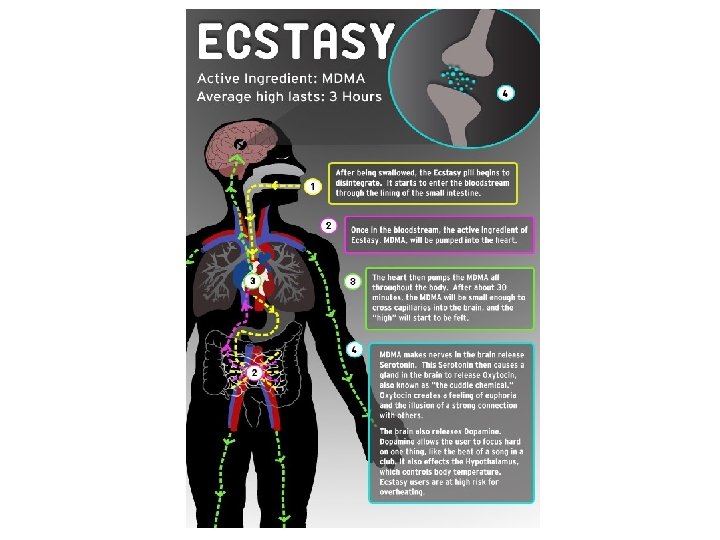
Consequences of Using Ecstasy smothers the natural alarm signals given out by the body. As a result, an individual risks going beyond their physical limitations. Ecstasy acts as both a stimulant and psychedelic, producing an energizing effect, distortions in time and perception, and enhanced enjoyment of tactile experiences. Adolescents and young adults use it to reduce inhibitions and to promote: ➔ Euphoria, feelings of closeness, empathy, and sexuality Although MDMA is known among users as Ecstasy, researchers have determined that many Ecstasy tablets contain not only MDMA but also a number of other drugs or drug combinations that can be harmful, such as: ➔ Methamphetamine, ketamine, cocaine, the over-the counter cough suppressant dextromethorphan (DXM), the diet drug ephedrine, and caffeine
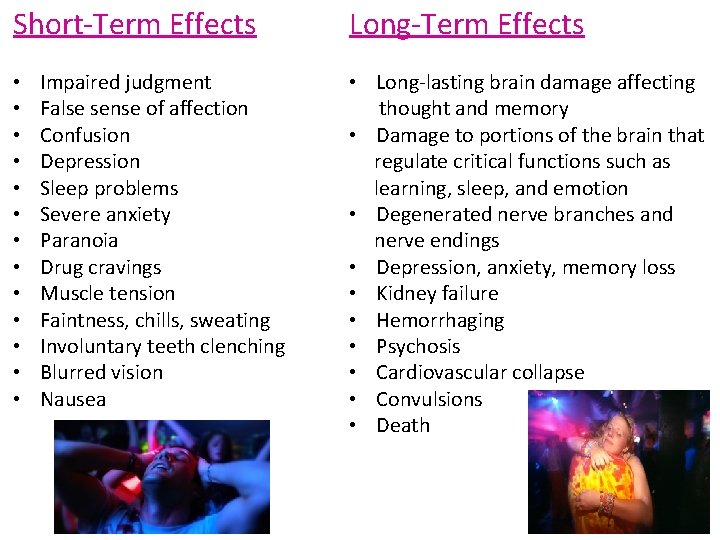
Short-Term Effects • • • • Impaired judgment False sense of affection Confusion Depression Sleep problems Severe anxiety Paranoia Drug cravings Muscle tension Faintness, chills, sweating Involuntary teeth clenching Blurred vision Nausea Long-Term Effects • Long-lasting brain damage affecting thought and memory • Damage to portions of the brain that regulate critical functions such as learning, sleep, and emotion • Degenerated nerve branches and nerve endings • Depression, anxiety, memory loss • Kidney failure • Hemorrhaging • Psychosis • Cardiovascular collapse • Convulsions • Death
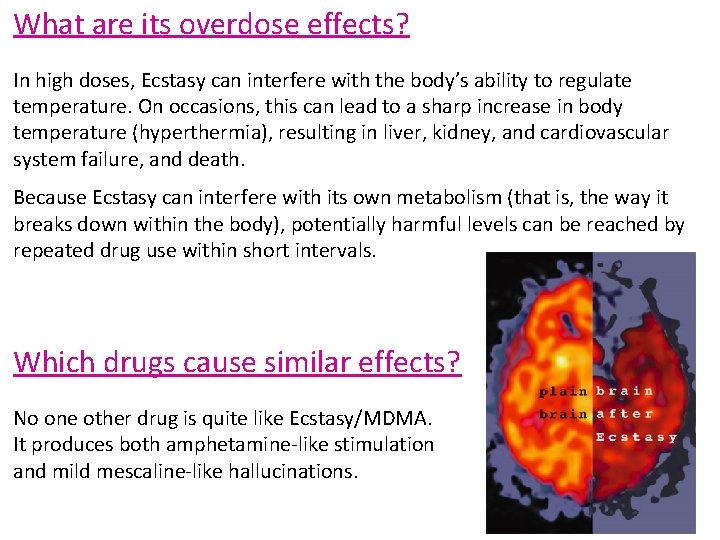
What are its overdose effects? In high doses, Ecstasy can interfere with the body’s ability to regulate temperature. On occasions, this can lead to a sharp increase in body temperature (hyperthermia), resulting in liver, kidney, and cardiovascular system failure, and death. Because Ecstasy can interfere with its own metabolism (that is, the way it breaks down within the body), potentially harmful levels can be reached by repeated drug use within short intervals. Which drugs cause similar effects? No one other drug is quite like Ecstasy/MDMA. It produces both amphetamine-like stimulation and mild mescaline-like hallucinations.
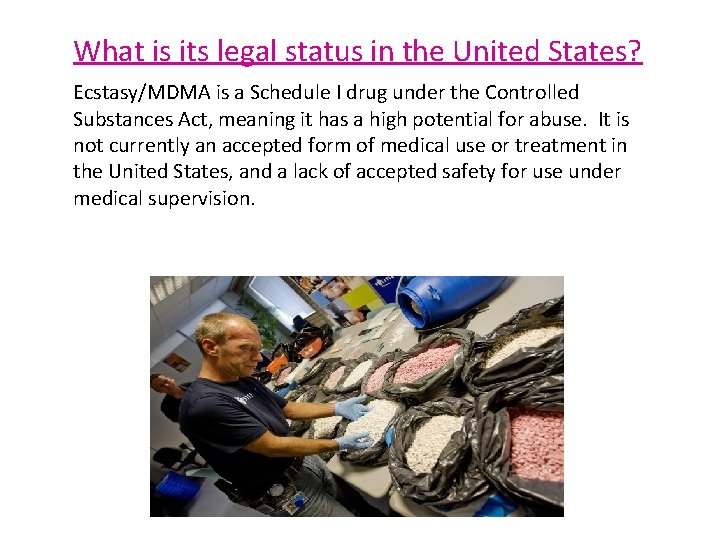
What is its legal status in the United States? Ecstasy/MDMA is a Schedule I drug under the Controlled Substances Act, meaning it has a high potential for abuse. It is not currently an accepted form of medical use or treatment in the United States, and a lack of accepted safety for use under medical supervision.
- Slides: 10