
ECRIF Towards Learning Centered Teaching The real voyage





- Slides: 33
ECRIF: Towards Learning. Centered Teaching
"The real voyage of discovery consists not in seeking new landscapes, but in having new eyes. " - Marcel Proust
The Outline Introduction What is a framework? Types of frameworks in ELT Difference between ECRIF and other frameworks ECRIF: definition ECRIF: Purpose ECRIF: main stages The application in the classroom Conclusion
What is a framework? The overall conceptual plan and organization used to design a lesson or a unit of instructional materials or to analyze teaching. Frameworks are different models or ways of conceptualizing and organizing our lessons. TESOL frameworks usually divide the lesson into different stages, each serving a different purpose within the lesson objective as a whole. (Longman Dictionary of LT & AL)
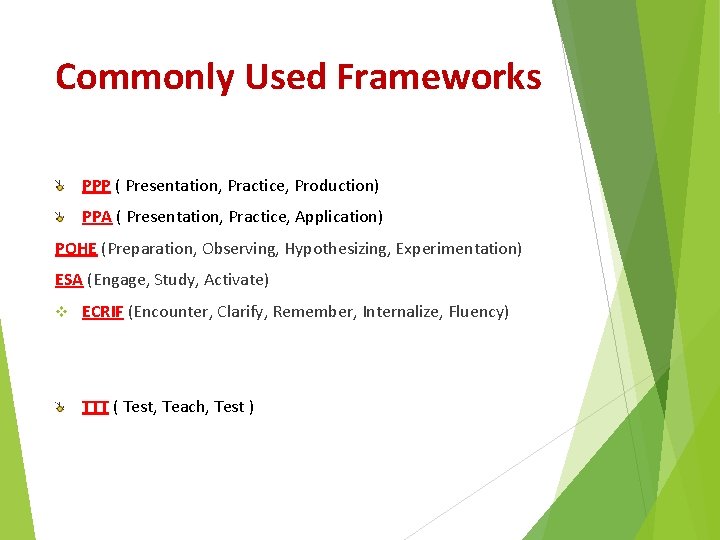
Commonly Used Frameworks PPP ( Presentation, Practice, Production) PPA ( Presentation, Practice, Application) POHE (Preparation, Observing, Hypothesizing, Experimentation) ESA (Engage, Study, Activate) v ECRIF (Encounter, Clarify, Remember, Internalize, Fluency) TTT ( Test, Teach, Test )
ECRIF Framework : Encounter Fluency Clarify ECRIF Framework Internalize Remember
ECRIF Framework It was developed by Josh Kurzweil and Mary Scholl between 2004 and 2005 as they wrote the book Understanding Teaching Through Learning. It is a way of looking at how students learn. Rather than prescribing what teachers should or should not do. It focuses on the learning process that students go through as they work with the target skill or knowledge rather than what the teacher is doing during the lesson.
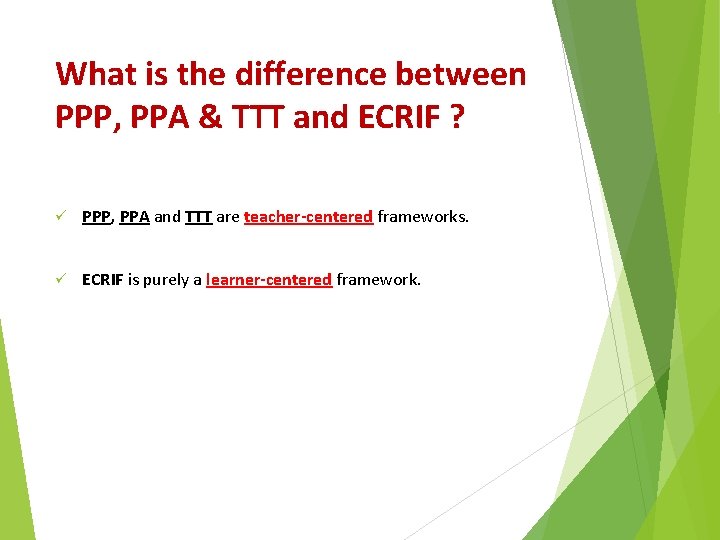
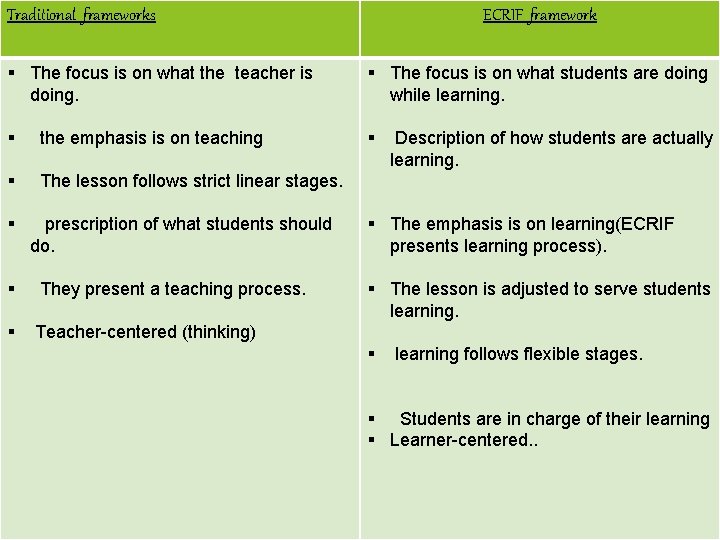
What is the difference between PPP, PPA & TTT and ECRIF ? ü PPP, PPA and TTT are teacher-centered frameworks. ü ECRIF is purely a learner-centered framework.
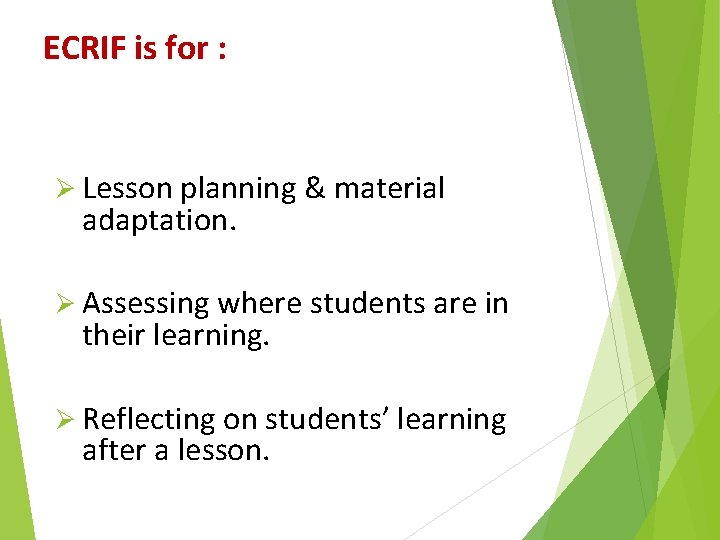
ECRIF is for : Ø Lesson planning & material adaptation. Ø Assessing where students are in their learning. Ø Reflecting on students’ learning after a lesson.
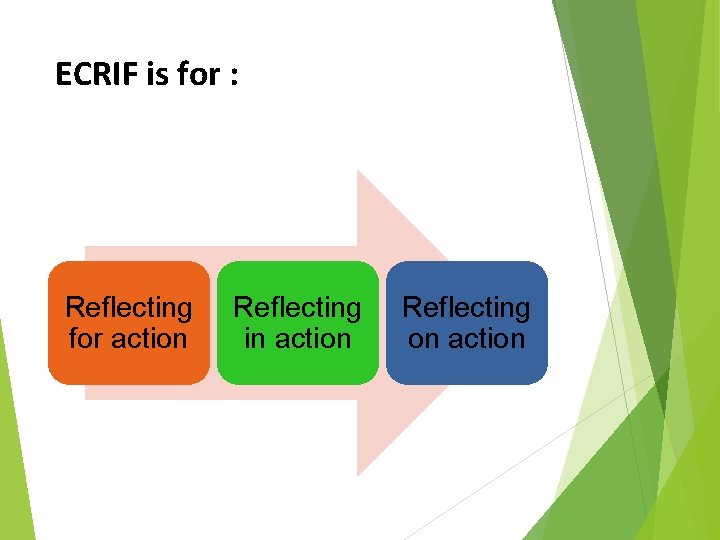
ECRIF is for : Reflecting for action Reflecting in action Reflecting on action
Stages of ECRIF Framework
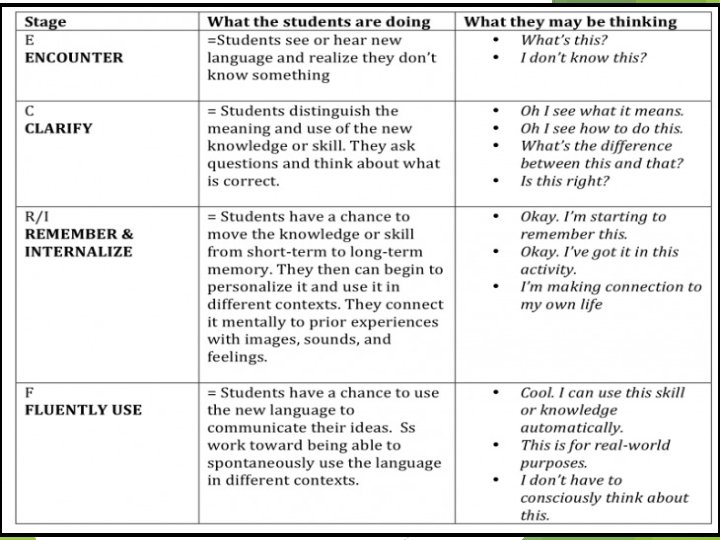
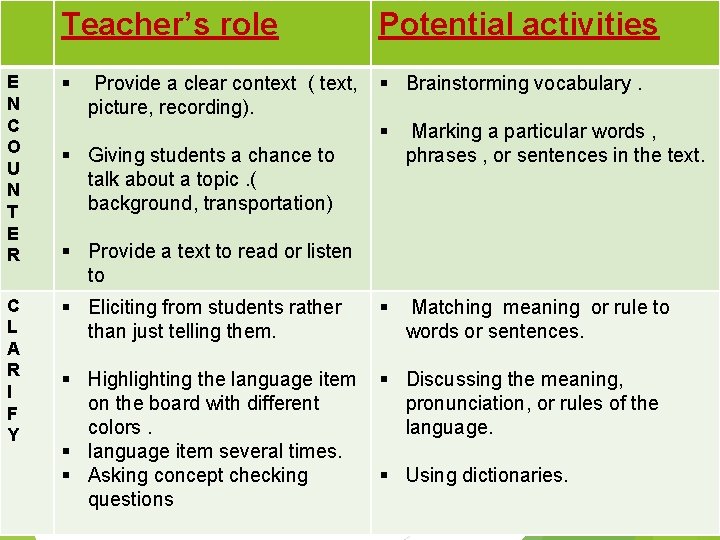
Encounter v The first time a learner encounters new material or information. v It involves three aspects: paying attention, noticing that there is something to be learned and then understanding what that is being learned. v The learner works to figure out what the vocabulary, grammar or skill is and what it involves.
Clarify v It occurs when learners make sense of the target language. (discovering the meaning, form and use of a word / a grammatical structure) v Clarify happens inside the learner. ( teachers help students clarify) v Teachers assess learners clarification/ understanding by asking CCQs.
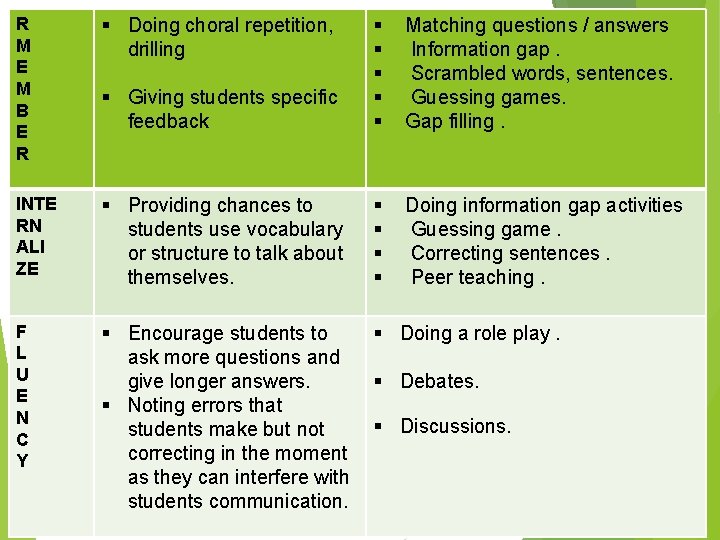
Remember v The clarified knowledge is stored in the short- term memory. v This stage is characterized by repetition, practicing and drilling the target language.
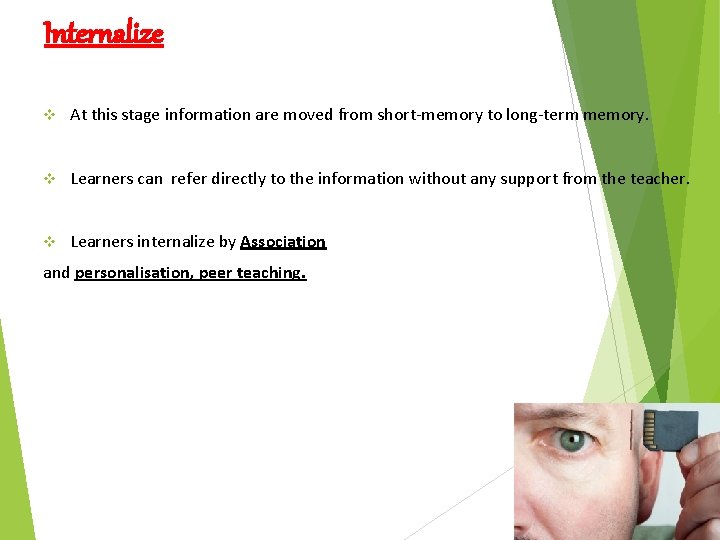
Internalize v At this stage information are moved from short-memory to long-term memory. v Learners can refer directly to the information without any support from the teacher. v Learners internalize by Association and personalisation, peer teaching.
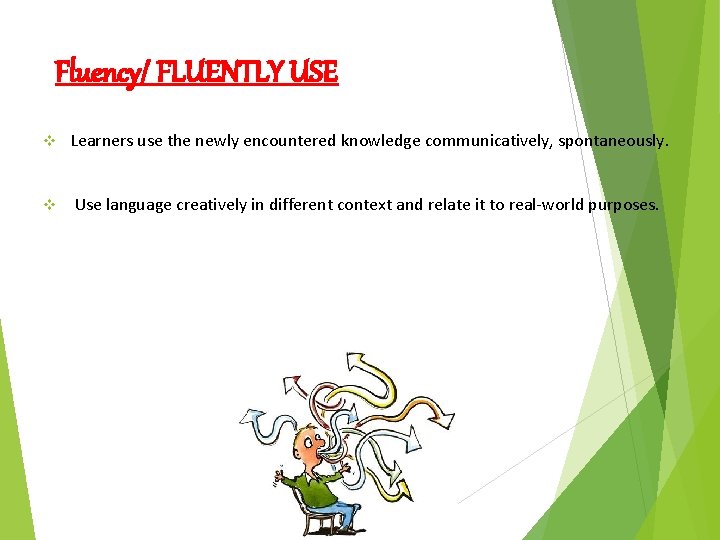
Fluency/ FLUENTLY USE v Learners use the newly encountered knowledge communicatively, spontaneously. v Use language creatively in different context and relate it to real-world purposes.
The Purpose of ECRIF The purpose of ECRIF is not to describe teacher behavior, but rather to provide a way of looking at what students are doing and thinking as they learn during lessons. →A shift in Teacher Thinking: E. g. The following Task provides and overview of possible student behavior and thinking at each stage.
Task 1 1. C 2. A 3. D 4. B
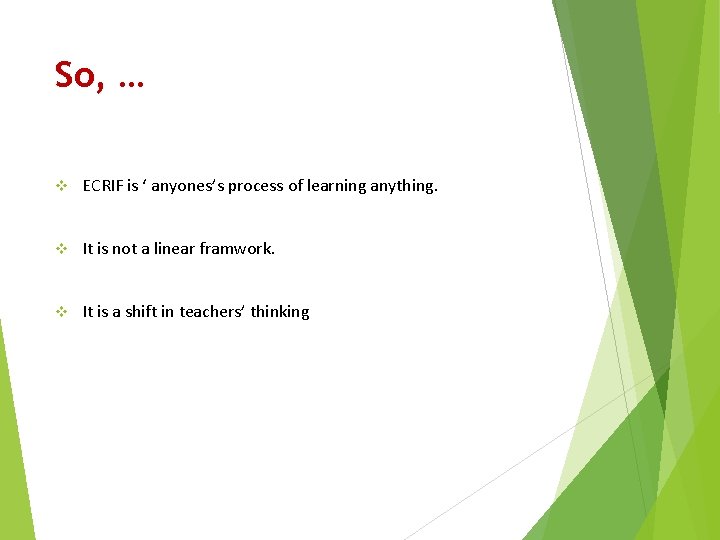
So, … v ECRIF is ‘ anyones’s process of learning anything. v It is not a linear framwork. v It is a shift in teachers’ thinking
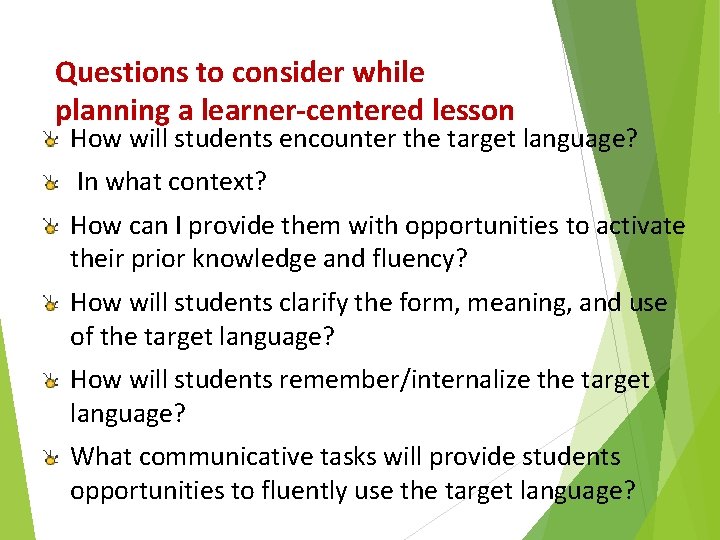
Questions to consider while planning a learner-centered lesson How will students encounter the target language? In what context? How can I provide them with opportunities to activate their prior knowledge and fluency? How will students clarify the form, meaning, and use of the target language? How will students remember/internalize the target language? What communicative tasks will provide students opportunities to fluently use the target language?
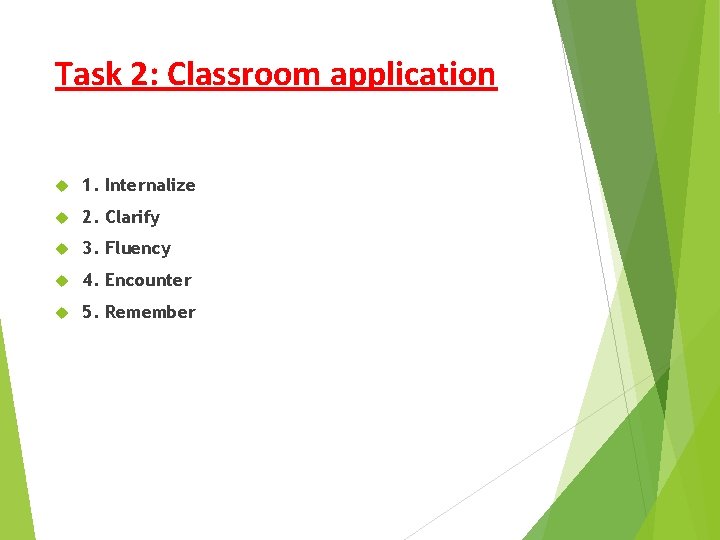
Task 2: Classroom application 1. Internalize 2. Clarify 3. Fluency 4. Encounter 5. Remember
Teacher’s role Potential activities E N C O U N T E R § § Brainstorming vocabulary. C L A R I F Y Provide a clear context ( text, picture, recording). § Marking a particular words , phrases , or sentences in the text. § Eliciting from students rather than just telling them. § Matching meaning or rule to words or sentences. § Highlighting the language item on the board with different colors. § language item several times. § Asking concept checking questions § Discussing the meaning, pronunciation, or rules of the language. § Giving students a chance to talk about a topic. ( background, transportation) § Provide a text to read or listen to § Using dictionaries.
R M E M B E R § Doing choral repetition, drilling § Giving students specific feedback § § § Matching questions / answers Information gap. Scrambled words, sentences. Guessing games. Gap filling. INTE RN ALI ZE § Providing chances to students use vocabulary or structure to talk about themselves. § § Doing information gap activities Guessing game. Correcting sentences. Peer teaching. F L U E N C Y § Encourage students to ask more questions and give longer answers. § Noting errors that students make but not correcting in the moment as they can interfere with students communication. § Doing a role play. § Debates. § Discussions.
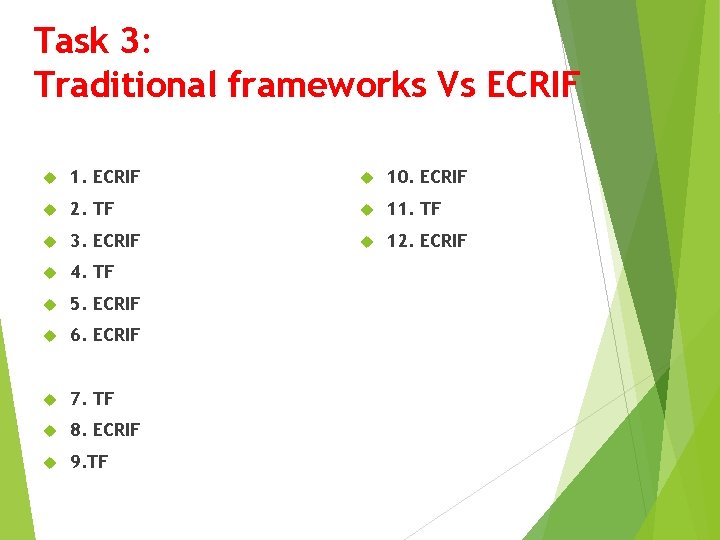
Task 3: Traditional frameworks Vs ECRIF 1. ECRIF 10. ECRIF 2. TF 11. TF 3. ECRIF 12. ECRIF 4. TF 5. ECRIF 6. ECRIF 7. TF 8. ECRIF 9. TF
Traditional frameworks ECRIF framework § The focus is on what the teacher is doing. § The focus is on what students are doing while learning. § the emphasis is on teaching § § The lesson follows strict linear stages. § prescription of what students should do. § They present a teaching process. § Teacher-centered (thinking) Description of how students are actually learning. § The emphasis is on learning(ECRIF presents learning process). § The lesson is adjusted to serve students learning. § learning follows flexible stages. § Students are in charge of their learning § Learner-centered. .
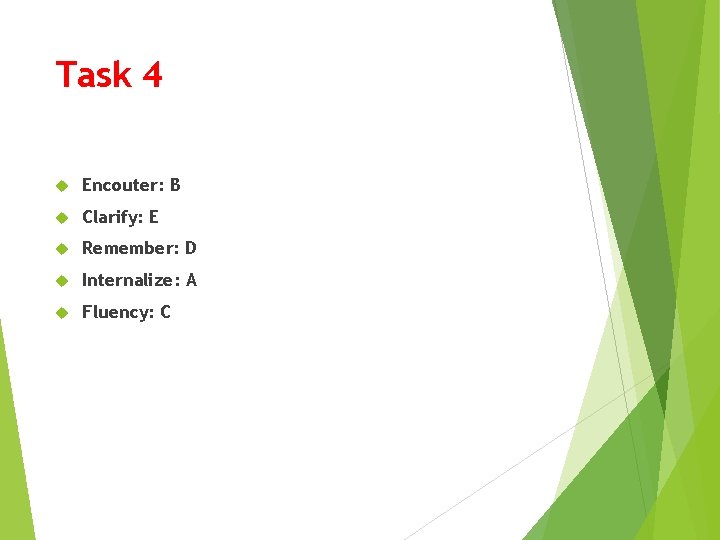
Task 4 Encouter: B Clarify: E Remember: D Internalize: A Fluency: C
Video
Conclusion The goal of the ECRIF framework is to help students learn new language and skills so that they can use them fluently (i. e. with relative ease and speed) and accurately (i. e. with the correct form and meaning) to communicate outside the classroom. It's a framework for understanding learning It's a lesson planning framework
Conclusion It can be used to assess the relation between the learner and the material It can be used as a guide to determine what kind of corrective feedback would be useful for the learner ECRIF is not a linear experience or framework, although at times can be used that way
References www. ecrif. com