
Ecosystems What is a Ecosystem n An ecosystem

- Slides: 23
Ecosystems
What is a Ecosystem? n An ecosystem is formed by the interactions between all living (biotic factors) and non-living things (Abiotic factors) in an area. n An ecosystem may include many communities with different populations.
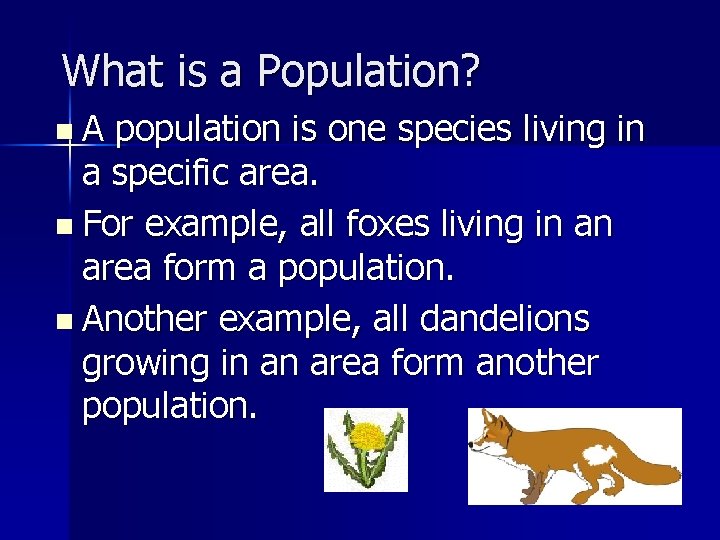
What is a Population? n. A population is one species living in a specific area. n For example, all foxes living in an area form a population. n Another example, all dandelions growing in an area form another population.
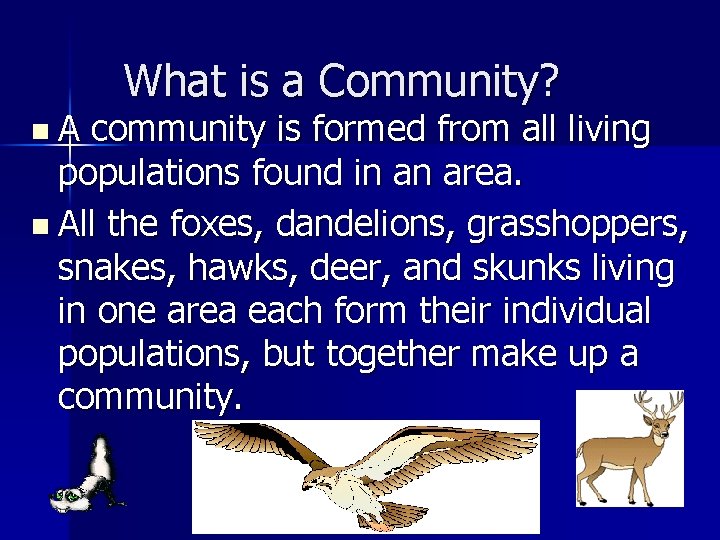
n. A What is a Community? community is formed from all living populations found in an area. n All the foxes, dandelions, grasshoppers, snakes, hawks, deer, and skunks living in one area each form their individual populations, but together make up a community.
What is Ecology? n Ecology is the study of how organisms interact with one another and with their environment.
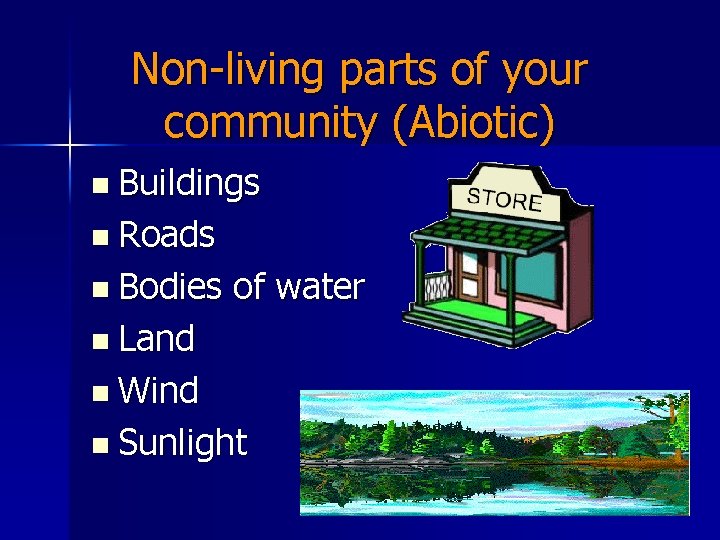
Non-living parts of your community (Abiotic) n Buildings n Roads n Bodies of water n Land n Wind n Sunlight
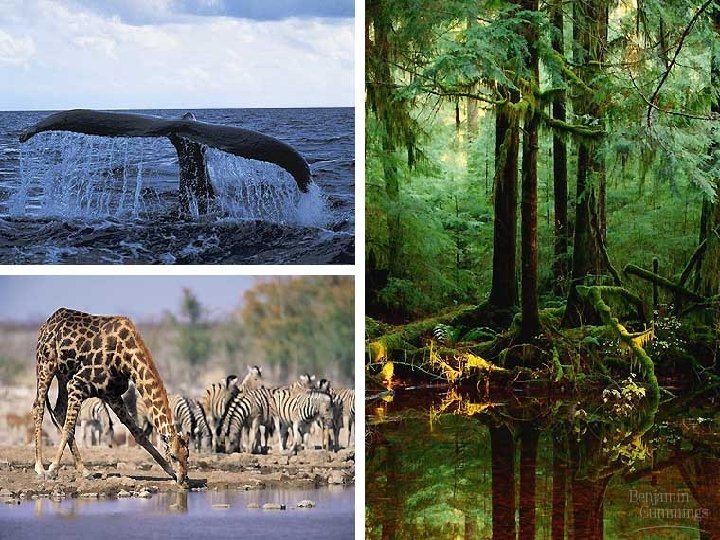
Abiotic factors affect distribution of species Abiotic factors of interest include: - Temperature (range from 0 to 45 C) - Water - Sunlight - Wind (increases heat & water loss) -Rocks and soil -Amount of oxygen in the water
Biome n Is a collection of ecosystems that are similar or related to one another. n Usually in the type of plants they support. The following are Canadian Biomes: – Tundra Biome – Boreal Forest Biome – Temperate Deciduous Forest Biome – Grassland Biome
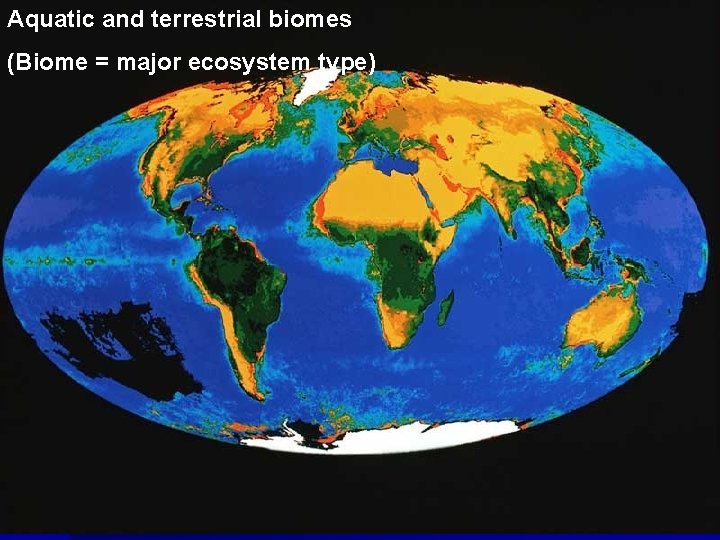
Aquatic and terrestrial biomes (Biome = major ecosystem type)
A. Aquatic biomes cover about 75% of the earth’s surface - Wetlands - Lakes - Rivers, streams - Oceanic pelagic biome - Coral reefs
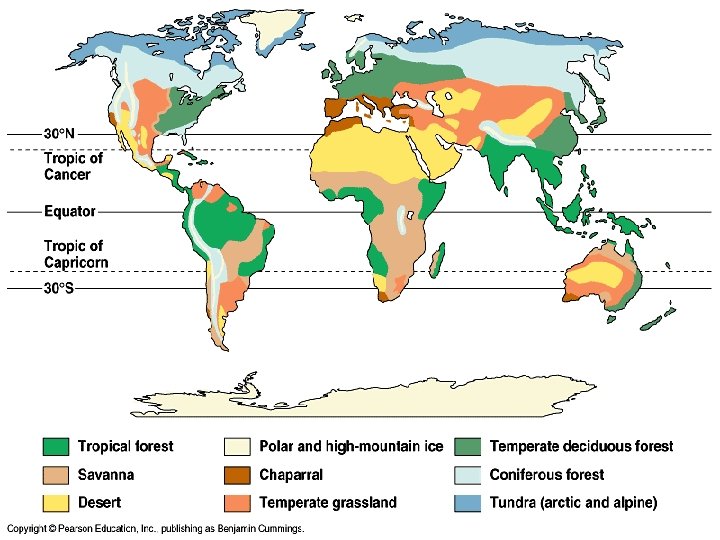
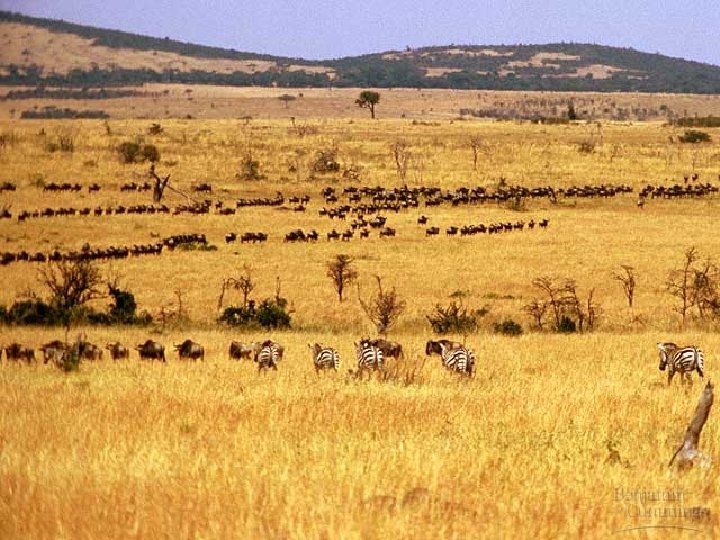
B. Terrestrial biomes - Tropical forest - Savanna - Desert - Chaparral - Temperate grassland - Temperate deciduous forest - Coniferous forest - Tundra
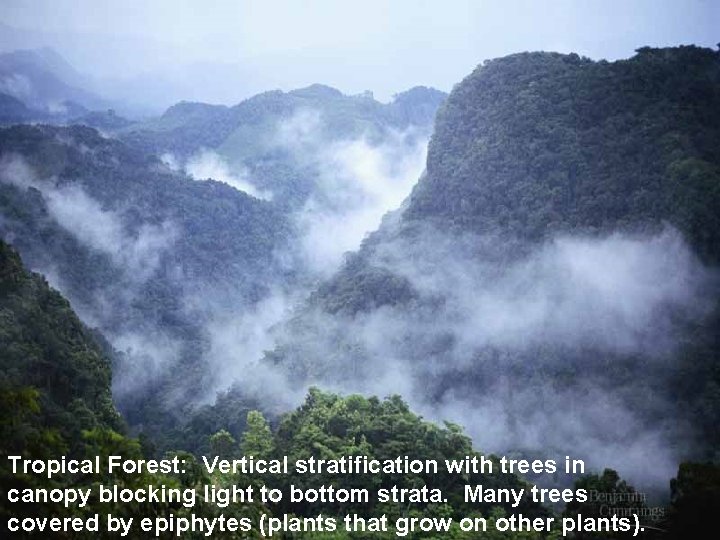
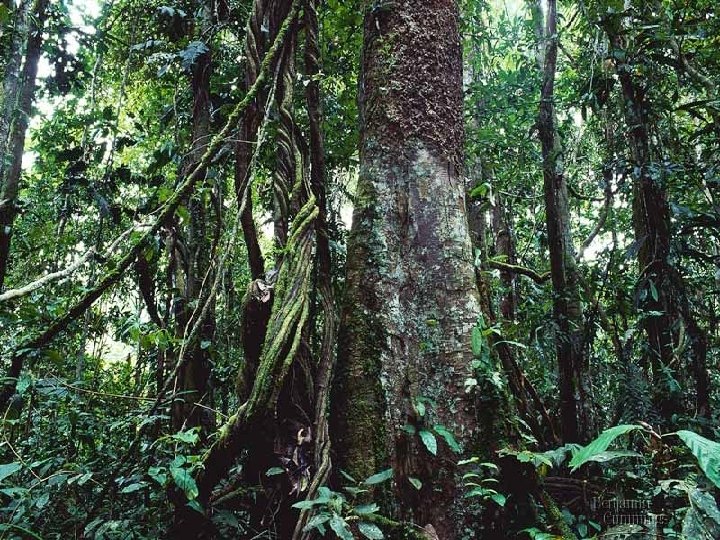
Tropical Forest: Vertical stratification with trees in canopy blocking light to bottom strata. Many trees covered by epiphytes (plants that grow on other plants).
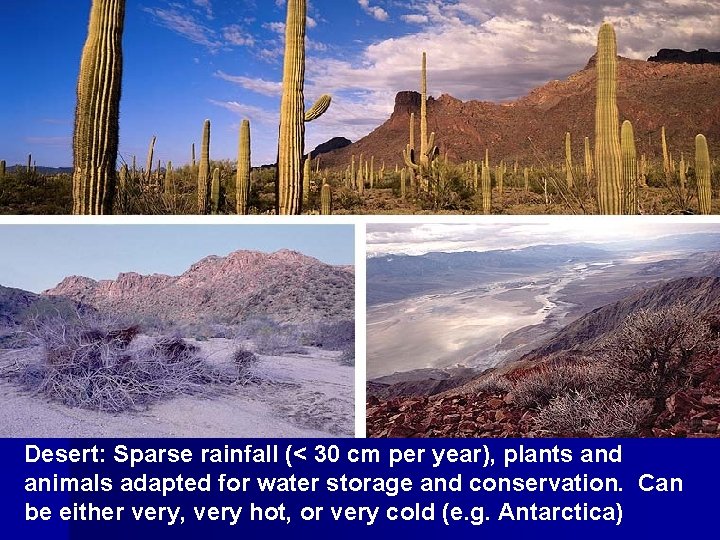
Desert: Sparse rainfall (< 30 cm per year), plants and animals adapted for water storage and conservation. Can be either very, very hot, or very cold (e. g. Antarctica)
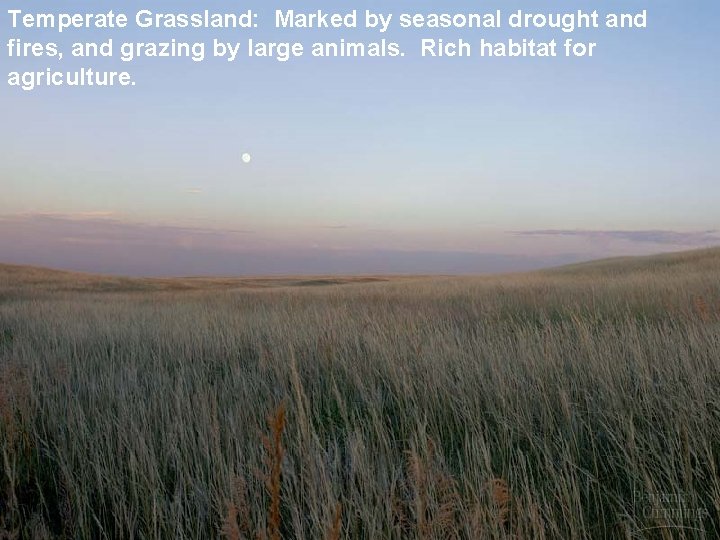
Temperate Grassland: Marked by seasonal drought and fires, and grazing by large animals. Rich habitat for agriculture.
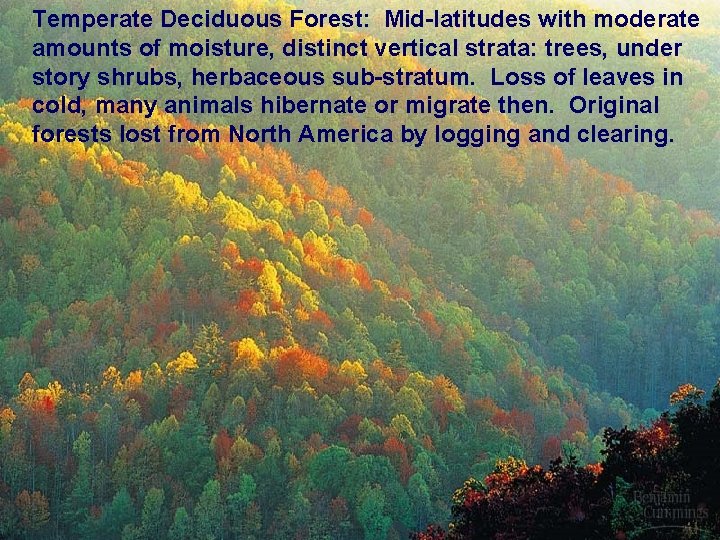
Temperate Deciduous Forest: Mid-latitudes with moderate amounts of moisture, distinct vertical strata: trees, under story shrubs, herbaceous sub-stratum. Loss of leaves in cold, many animals hibernate or migrate then. Original forests lost from North America by logging and clearing.
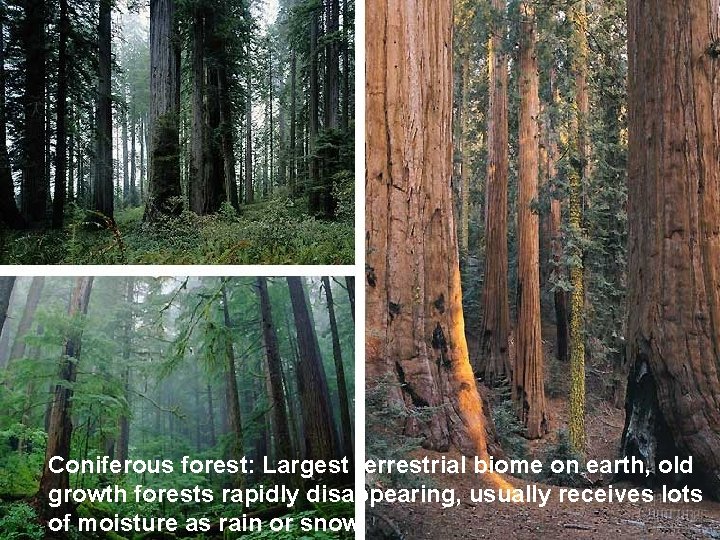
Coniferous forest: Largest terrestrial biome on earth, old growth forests rapidly disappearing, usually receives lots of moisture as rain or snow.
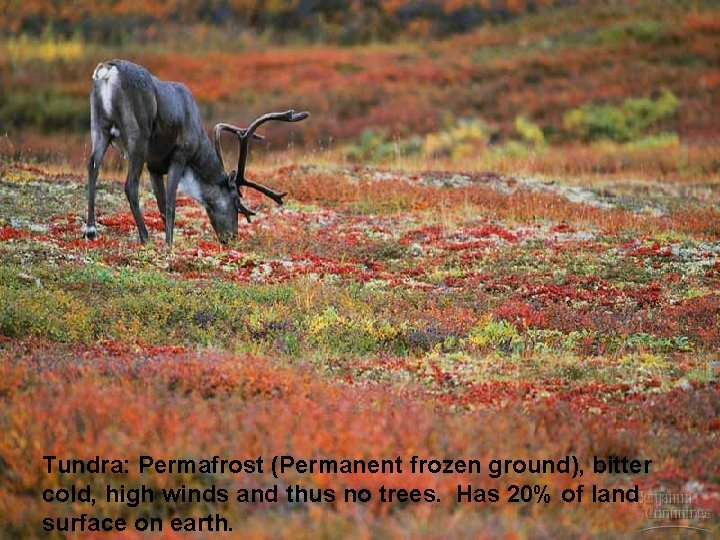
Tundra: Permafrost (Permanent frozen ground), bitter cold, high winds and thus no trees. Has 20% of land surface on earth.