
Ecosystems What Are They and How Do They
- Slides: 10
Ecosystems: What Are They and How Do They Work? Chapter 3 Sections 1 -4
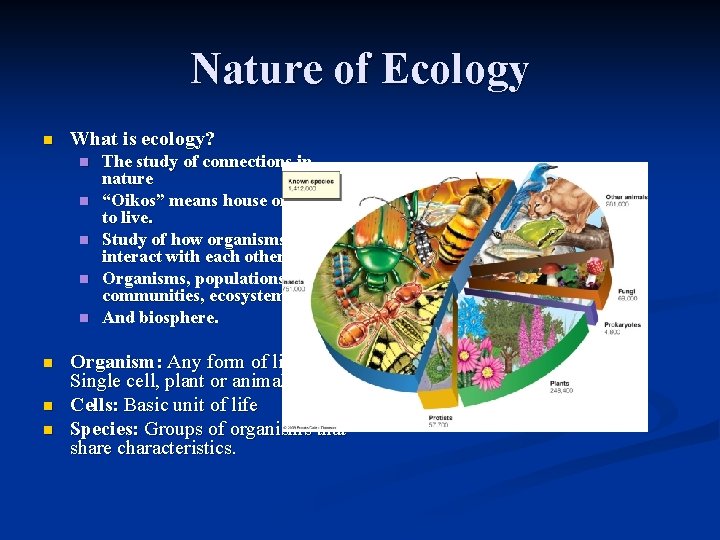
Nature of Ecology n What is ecology? n n n n The study of connections in nature “Oikos” means house or place to live. Study of how organisms interact with each other. Organisms, populations, communities, ecosystems, And biosphere. Organism: Any form of life. Single cell, plant or animal Cells: Basic unit of life Species: Groups of organisms that share characteristics.
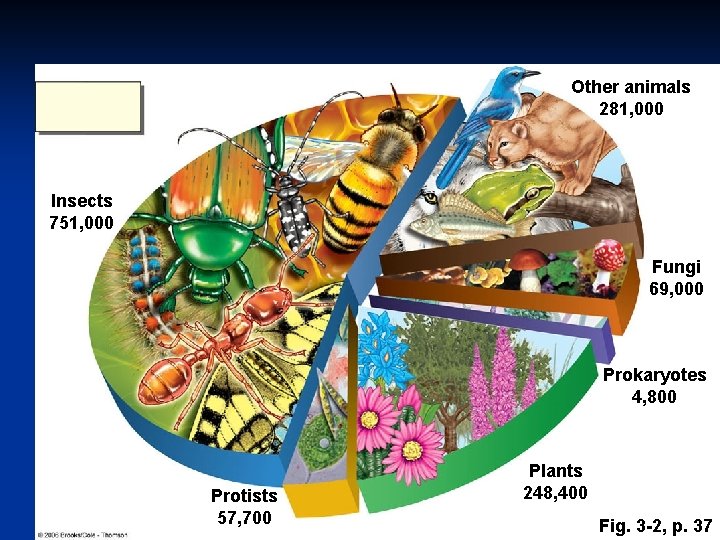
Other animals 281, 000 Insects 751, 000 Fungi 69, 000 Prokaryotes 4, 800 Protists 57, 700 Plants 248, 400 Fig. 3 -2, p. 37
Populations, Communities, and Ecosystems Populations: Group of individuals inhabiting the same area. n Genetic diversity: The physical variations among individuals in a population. n Biological community: All the populations of different species in an area n Ecosystems: Communities interacting with the natural environment of matter and energy. n Biosphere: All of earth’s systems interacting. n
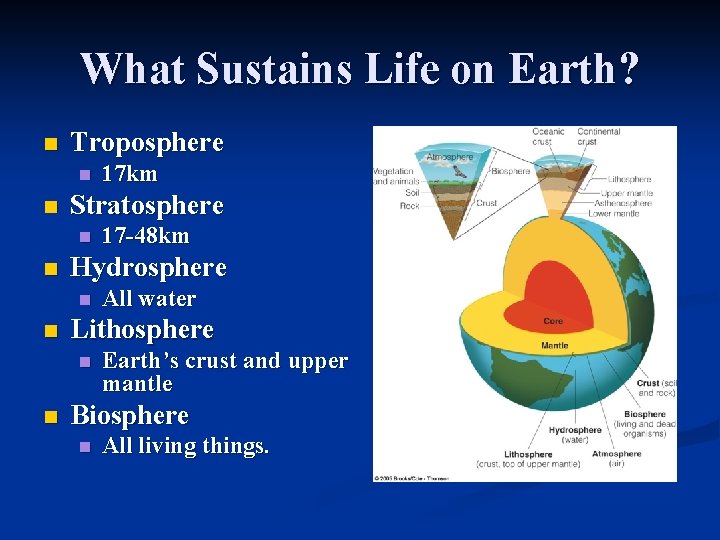
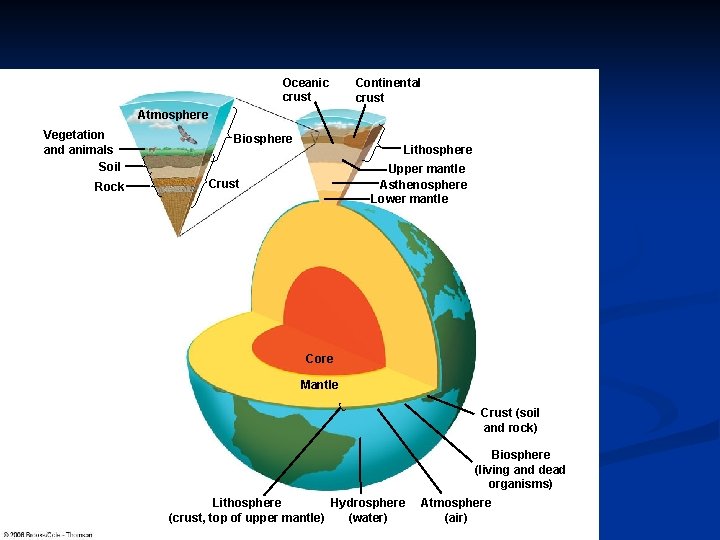
What Sustains Life on Earth? n Troposphere n n Stratosphere n n All water Lithosphere n n 17 -48 km Hydrosphere n n 17 km Earth’s crust and upper mantle Biosphere n All living things.
Oceanic crust Continental crust Atmosphere Vegetation and animals Soil Rock Biosphere Lithosphere Upper mantle Asthenosphere Lower mantle Crust Core Mantle Crust (soil and rock) Biosphere (living and dead organisms) Lithosphere Hydrosphere (crust, top of upper mantle) (water) Atmosphere (air)
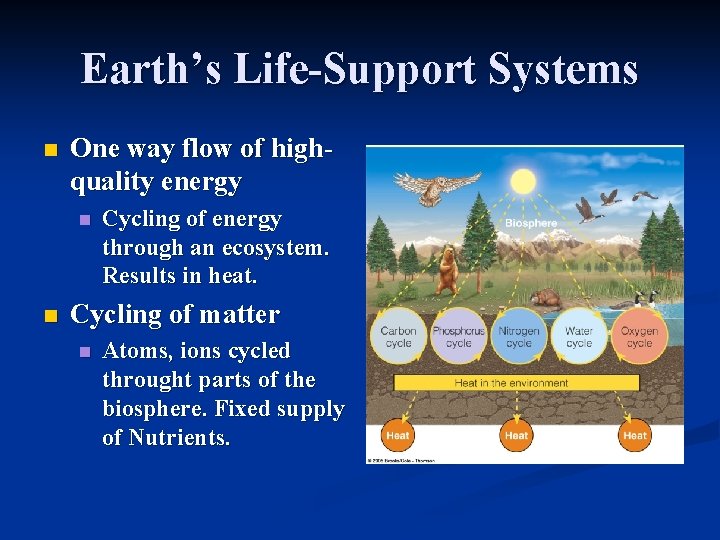
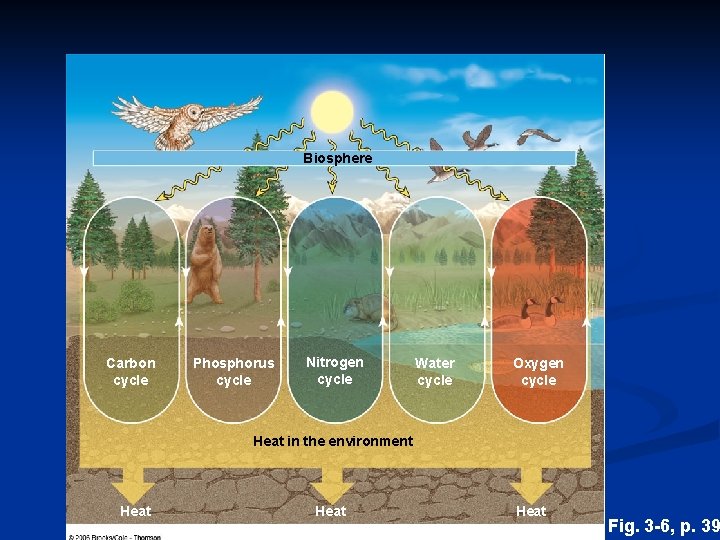
Earth’s Life-Support Systems n One way flow of highquality energy n n Cycling of energy through an ecosystem. Results in heat. Cycling of matter n Atoms, ions cycled throught parts of the biosphere. Fixed supply of Nutrients.
Biosphere Carbon cycle Phosphorus cycle Nitrogen cycle Water cycle Oxygen cycle Heat in the environment Heat Fig. 3 -6, p. 39
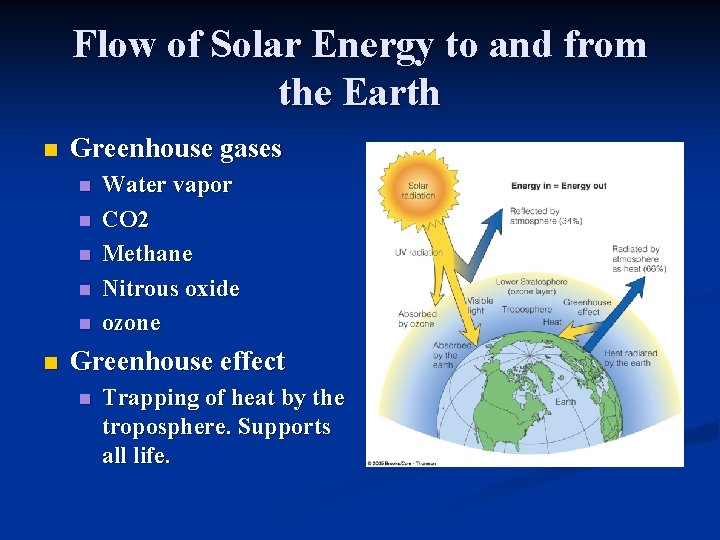
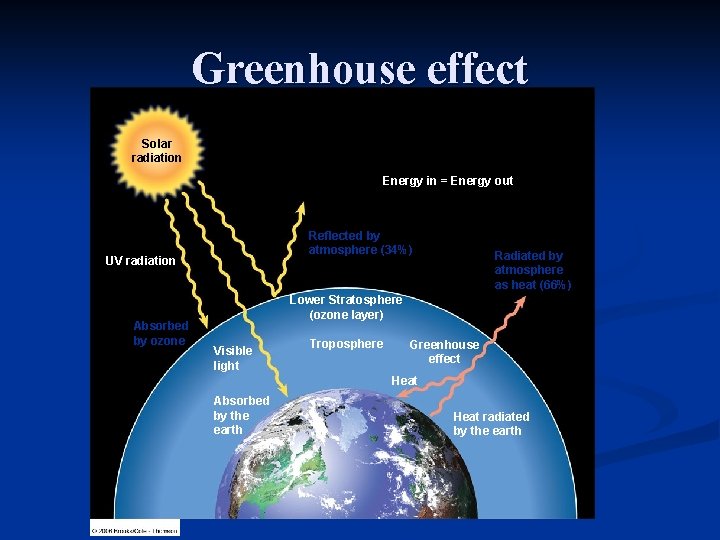
Flow of Solar Energy to and from the Earth n Greenhouse gases n n n Water vapor CO 2 Methane Nitrous oxide ozone Greenhouse effect n Trapping of heat by the troposphere. Supports all life.
Greenhouse effect Solar radiation Energy in = Energy out Reflected by atmosphere (34%) UV radiation Absorbed by ozone Radiated by atmosphere as heat (66%) Lower Stratosphere (ozone layer) Visible light Troposphere Greenhouse effect Heat Absorbed by the earth Heat radiated by the earth