
Ecosystems Power Point Lecture Presentations for Biology Eighth

Ecosystems Power. Point® Lecture Presentations for Biology Eighth Edition Neil Campbell and Jane Reece Lectures by Chris Romero, updated by Erin Barley with contributions from Joan Sharp Copyright © 2008 Pearson Education, Inc. , publishing as Pearson Benjamin Cummings
Ecosystems • An ecosystem consists of all the organisms living in a community, as well as the abiotic factors with which they interact. • Ecosystems range from a microcosm, such as an aquarium, to a large area such as a lake or forest. • Regardless of an ecosystem’s size, its dynamics involve two main processes: energy flow and chemical cycling. • Energy flows through ecosystems while matter cycles within them. Copyright © 2008 Pearson Education, Inc. , publishing as Pearson Benjamin Cummings
Physical laws govern energy flow and chemical cycling in ecosystems Laws of physics and chemistry apply to the transformations of energy and matter within the ecosystems, particularly energy flow. • The first law of thermodynamics states that energy cannot be created or destroyed, only transformed. Energy enters an ecosystem as solar radiation, is conserved, and is lost from organisms as heat. • The second law of thermodynamics states that every exchange of energy increases the entropy of the universe. In an ecosystem, energy conversions are not completely efficient, and some energy is always lost as heat. Copyright © 2008 Pearson Education, Inc. , publishing as Pearson Benjamin Cummings
Conservation of Mass • The law of conservation of mass states that matter cannot be created or destroyed. • Chemical elements are continually recycled within ecosystems. • In a forest ecosystem, most nutrients enter as dust or solutes in rain and are carried away in water. • Ecosystems are open systems, absorbing energy and mass and releasing heat and waste products. Copyright © 2008 Pearson Education, Inc. , publishing as Pearson Benjamin Cummings
Energy, Mass, and Trophic Levels • Autotrophs build organic molecules themselves using photosynthesis or chemosynthesis as an energy source. • Heterotrophs depend on the biosynthetic output of other organisms. • Energy and nutrients pass from primary producers (autotrophs) to primary consumers (herbivores) to secondary consumers (carnivores) to tertiary consumers (carnivores that feed on other carnivores). Copyright © 2008 Pearson Education, Inc. , publishing as Pearson Benjamin Cummings
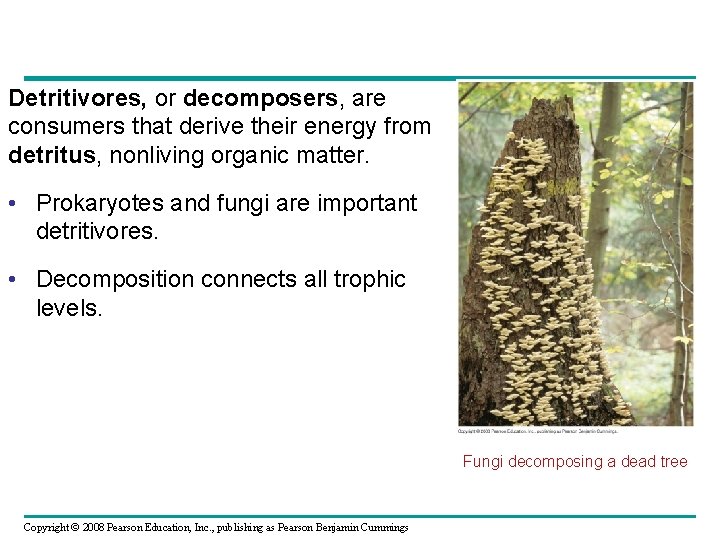
Detritivores, or decomposers, are consumers that derive their energy from detritus, nonliving organic matter. • Prokaryotes and fungi are important detritivores. • Decomposition connects all trophic levels. Fungi decomposing a dead tree Copyright © 2008 Pearson Education, Inc. , publishing as Pearson Benjamin Cummings
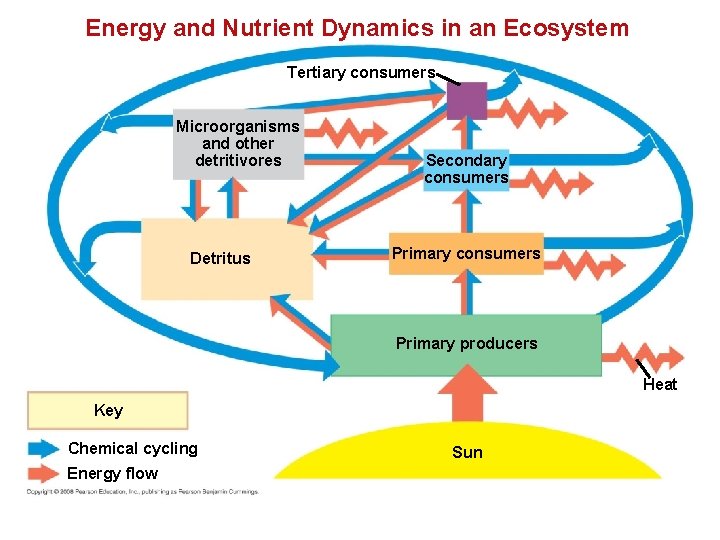
Energy and Nutrient Dynamics in an Ecosystem Tertiary consumers Microorganisms and other detritivores Detritus Secondary consumers Primary producers Heat Key Chemical cycling Energy flow Sun
Energy and other limiting factors control primary production in ecosystems • Primary production in an ecosystem is the amount of light energy converted to chemical energy by autotrophs during a given time period. The extent of photosynthetic production sets the spending limit for an ecosystem’s energy budget. • The amount of solar radiation reaching the Earth’s surface limits photosynthetic output of ecosystems. • Only a small fraction of solar energy actually strikes photosynthetic organisms, and even less is of a usable wavelength. Copyright © 2008 Pearson Education, Inc. , publishing as Pearson Benjamin Cummings
Gross and Net Primary Production • Total primary production is known as the ecosystem’s gross primary production = GPP • Net primary production = NPP is GPP minus energy used by primary producers for respiration. NPP = GPP – Respiration • Only NPP is available to consumers. • Standing crop is the total biomass of photosynthetic autotrophs at a given time. • Tropical rain forests, estuaries, and coral reefs are among the most productive ecosystems per unit area. • Marine ecosystems are relatively unproductive per unit area, but contribute much to global net primary production because of their volume. Copyright © 2008 Pearson Education, Inc. , publishing as Pearson Benjamin Cummings
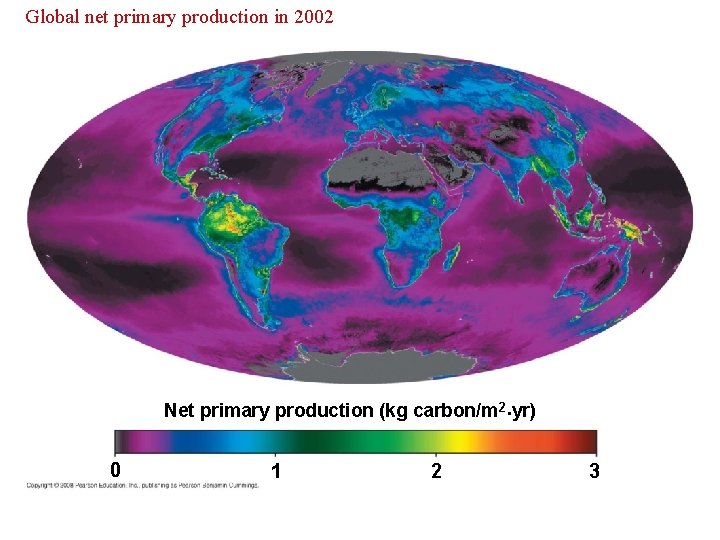
Global net primary production in 2002 Net primary production (kg carbon/m 2·yr) · 0 1 2 3
Primary Production in Aquatic Ecosystems • In marine and freshwater ecosystems, both light and nutrients control primary production. • Depth of light penetration affects primary production in the photic zone of an ocean or lake. Copyright © 2008 Pearson Education, Inc. , publishing as Pearson Benjamin Cummings
Nutrient Limitation • More than light, nutrients limit primary production in geographic regions of the ocean and in lakes. • A limiting nutrient is the element that must be added for production to increase in an area. • Nitrogen and phosphorous are typically the nutrients that most often limit marine production. • Nutrient enrichment experiments confirmed that nitrogen was limiting phytoplankton growth. Copyright © 2008 Pearson Education, Inc. , publishing as Pearson Benjamin Cummings
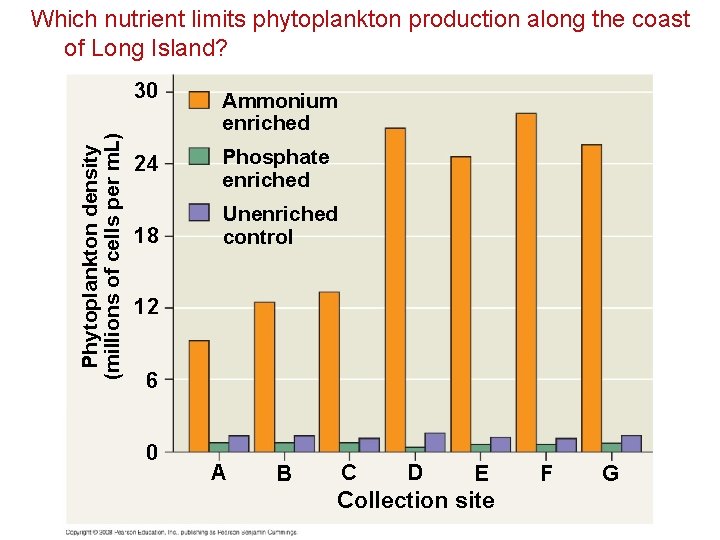
Phytoplankton density (millions of cells per m. L) Which nutrient limits phytoplankton production along the coast of Long Island? 30 Ammonium enriched 24 Phosphate enriched 18 Unenriched control 12 6 0 A B C D E Collection site F G
• Upwelling of nutrient-rich waters in parts of the oceans contributes to regions of high primary production. • The addition of large amounts of nutrients to lakes has a wide range of ecological impacts. • In some areas, sewage runoff has caused eutrophication of lakes, which can lead to loss of most fish species. Copyright © 2008 Pearson Education, Inc. , publishing as Pearson Benjamin Cummings
Primary Production in Terrestrial Ecosystems • In terrestrial ecosystems, temperature and moisture affect primary production on a large scale. • Actual evapotranspiration can represent the contrast between wet and dry climates. • Actual evapotranspiration is the water annually transpired by plants and evaporated from a landscape. It is related to net primary production. • On a local scale, a soil nutrient is often the limiting factor in primary production. Copyright © 2008 Pearson Education, Inc. , publishing as Pearson Benjamin Cummings
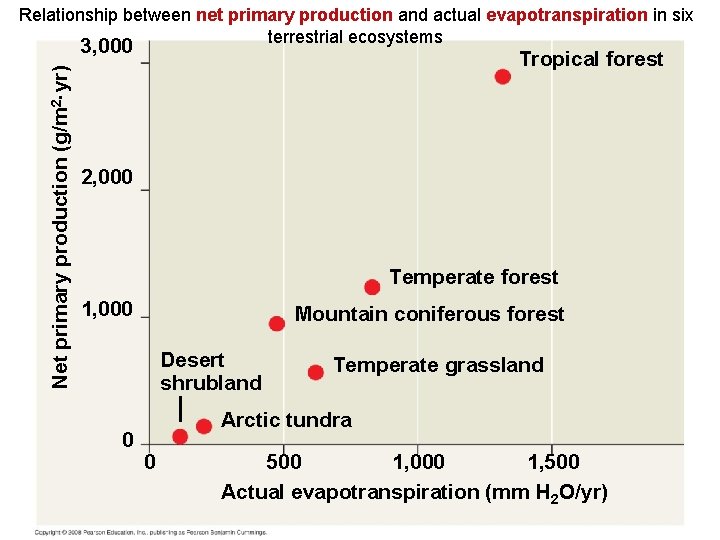
Relationship between net primary production and actual evapotranspiration in six terrestrial ecosystems Net primary production (g/m 2··yr) 3, 000 Tropical forest 2, 000 Temperate forest 1, 000 Mountain coniferous forest Desert shrubland 0 Temperate grassland Arctic tundra 0 500 1, 000 Actual evapotranspiration (mm H 2 O/yr)
Energy transfer between trophic levels is typically only 10% efficient • Secondary production of an ecosystem is the amount of chemical energy in food converted to new biomass during a given period of time. • When a caterpillar feeds on a leaf, only about one-sixth of the leaf’s energy is used for secondary production. • An organism’s production efficiency is the fraction of energy stored in food that is not used for respiration. Copyright © 2008 Pearson Education, Inc. , publishing as Pearson Benjamin Cummings
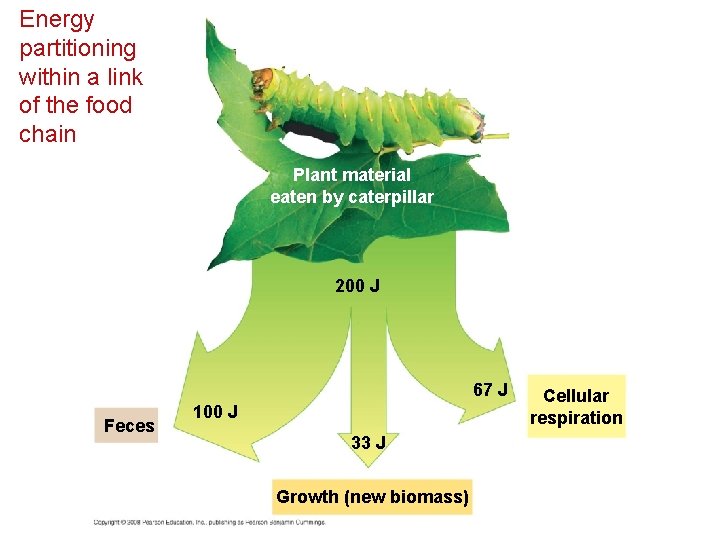
Energy partitioning within a link of the food chain Plant material eaten by caterpillar 200 J 67 J Feces 100 J 33 J Growth (new biomass) Cellular respiration
Trophic Efficiency and Ecological Pyramids • Trophic efficiency is the percentage of production transferred from one trophic level to the next. 10% Law of Energy Transfer • Trophic efficiency is multiplied over the length of a food chain. • Approximately 0. 1% of chemical energy fixed by photosynthesis reaches a tertiary consumer. • A pyramid of net production represents the loss of energy with each transfer in a food chain. Copyright © 2008 Pearson Education, Inc. , publishing as Pearson Benjamin Cummings
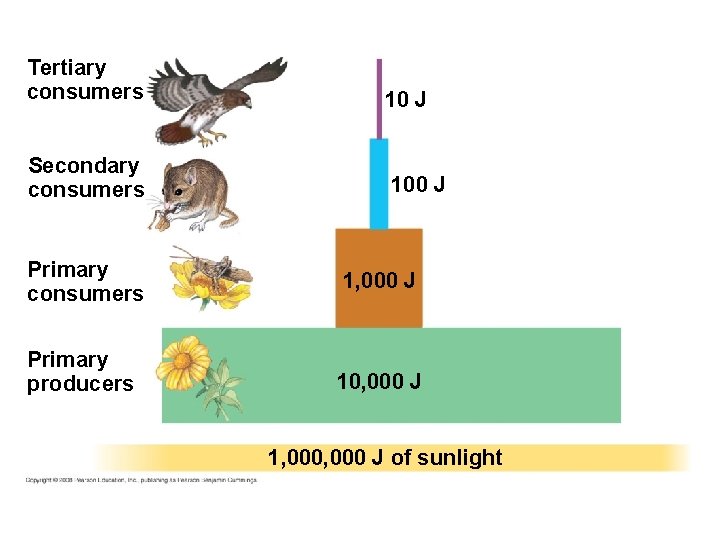
Tertiary consumers Secondary consumers 10 J 100 J Primary consumers 1, 000 J Primary producers 10, 000 J 1, 000 J of sunlight
• In a biomass pyramid, each tier represents the dry weight of all organisms in one trophic level. • Most biomass pyramids show a sharp decrease at successively higher trophic levels. . • Certain aquatic ecosystems have inverted biomass pyramids: producers (phytoplankton) are consumed so quickly that they are outweighed by primary consumers. • Turnover time is a ratio of the standing crop biomass to production. Copyright © 2008 Pearson Education, Inc. , publishing as Pearson Benjamin Cummings
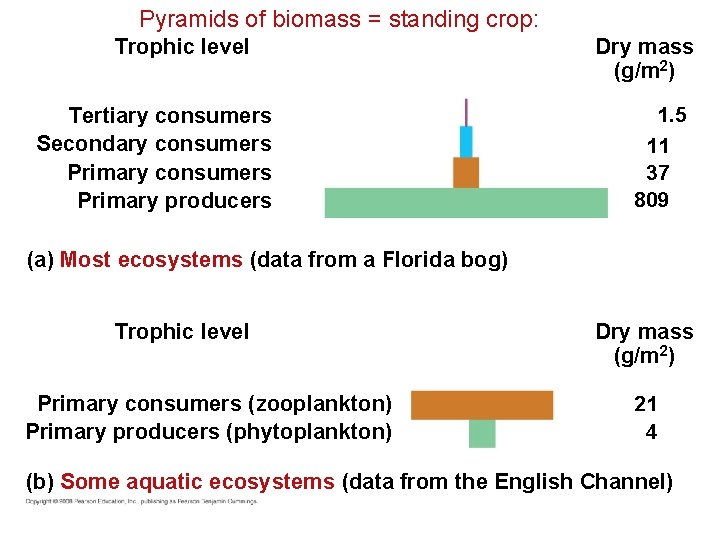
Pyramids of biomass = standing crop: Trophic level Tertiary consumers Secondary consumers Primary producers Dry mass (g/m 2) 1. 5 11 37 809 (a) Most ecosystems (data from a Florida bog) Trophic level Primary consumers (zooplankton) Primary producers (phytoplankton) Dry mass (g/m 2) 21 4 (b) Some aquatic ecosystems (data from the English Channel)
• Dynamics of energy flow in ecosystems have important implications for the human population. • Eating meat is a relatively inefficient way of tapping photosynthetic production. • Worldwide agriculture could feed many more people if humans ate only plant material. • Most terrestrial ecosystems have large standing crops despite the large numbers of herbivores. Copyright © 2008 Pearson Education, Inc. , publishing as Pearson Benjamin Cummings
The green world hypothesis proposes several factors that keep herbivores in check: – Plant defenses – Limited availability of essential nutrients – Abiotic factors – Intraspecific competition – Interspecific interactions Copyright © 2008 Pearson Education, Inc. , publishing as Pearson Benjamin Cummings
Biological and geochemical processes cycle nutrients between organic and inorganic parts of an ecosystem • Life depends on recycling chemical elements. • Nutrient circuits in ecosystems involve biotic and abiotic components and are often called biogeochemical cycles. Copyright © 2008 Pearson Education, Inc. , publishing as Pearson Benjamin Cummings
Biogeochemical Cycles • Gaseous carbon, oxygen, sulfur, and nitrogen occur in the atmosphere and cycle globally. • Less mobile elements such as phosphorus, potassium, and calcium cycle on a more local level. • A model of nutrient cycling includes main reservoirs of elements and processes that transfer elements between reservoirs. • All elements cycle between organic and inorganic reservoirs. Copyright © 2008 Pearson Education, Inc. , publishing as Pearson Benjamin Cummings
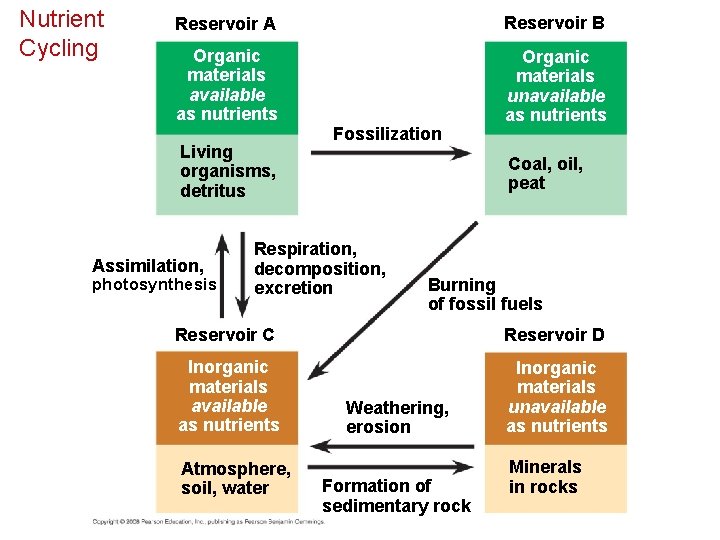
Nutrient Cycling Reservoir A Reservoir B Organic materials available as nutrients Organic materials unavailable as nutrients Living organisms, detritus Assimilation, photosynthesis Fossilization Coal, oil, peat Respiration, decomposition, excretion Burning of fossil fuels Reservoir C Reservoir D Inorganic materials available as nutrients Inorganic materials unavailable as nutrients Atmosphere, soil, water Weathering, erosion Formation of sedimentary rock Minerals in rocks
In studying cycling of water, carbon, nitrogen, and phosphorus, ecologists focus on four factors: – Each chemical’s biological importance – Forms in which each chemical is available or used by organisms – Major reservoirs for each chemical – Key processes driving movement of each chemical through its cycle. Copyright © 2008 Pearson Education, Inc. , publishing as Pearson Benjamin Cummings
The Water Cycle • Water is essential to all organisms. • 97% of the biosphere’s water is contained in the oceans, 2% is in glaciers and polar ice caps, and 1% is in lakes, rivers, and groundwater. • Water moves by the processes of evaporation, transpiration, condensation, precipitation, and movement through surface and groundwater. Copyright © 2008 Pearson Education, Inc. , publishing as Pearson Benjamin Cummings
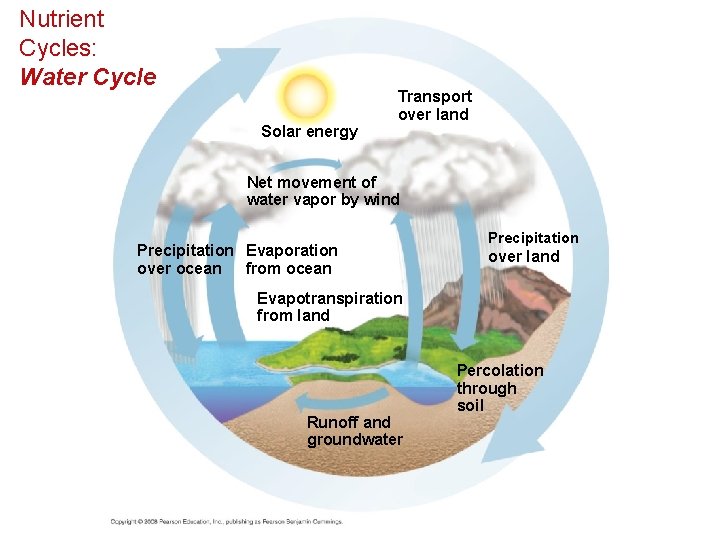
Nutrient Cycles: Water Cycle Solar energy Transport over land Net movement of water vapor by wind Precipitation Evaporation over ocean from ocean Precipitation over land Evapotranspiration from land Runoff and groundwater Percolation through soil
The Carbon Cycle • Carbon-based organic molecules are essential to all organisms. • Carbon reservoirs include fossil fuels, soils and sediments, solutes in oceans, plant and animal biomass, and the atmosphere. • CO 2 is taken up and released through photosynthesis and respiration; additionally, volcanoes and the burning of fossil fuels contribute CO 2 to the atmosphere. Copyright © 2008 Pearson Education, Inc. , publishing as Pearson Benjamin Cummings
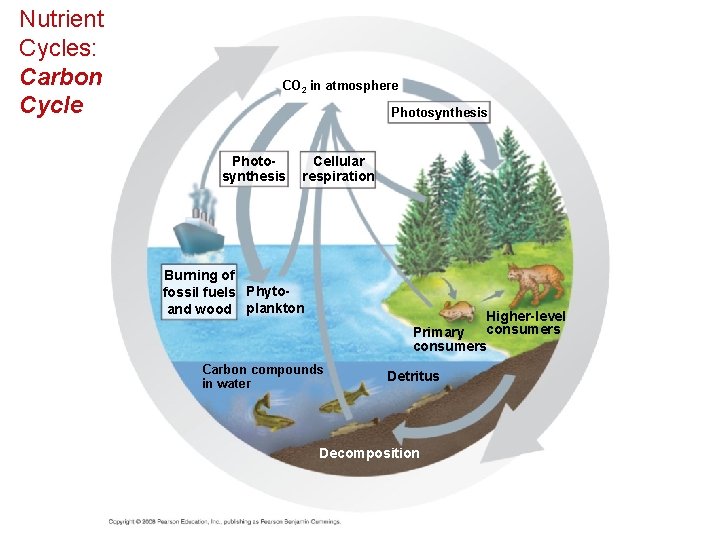
Nutrient Cycles: Carbon Cycle CO 2 in atmosphere Photosynthesis Cellular respiration Burning of fossil fuels Phytoand wood plankton Higher-level consumers Primary consumers Carbon compounds in water Detritus Decomposition
The Terrestrial Nitrogen Cycle • Nitrogen is a component of amino acids, proteins, and nucleic acids • The main reservoir of nitrogen is the atmosphere (N 2), though this nitrogen must be converted to NH 4+ or NO 3 – for uptake by plants, via nitrogen fixation by bacteria. • Organic nitrogen is decomposed to NH 4+ by ammonification, and NH 4+ is decomposed to NO 3– by nitrification. • Denitrification converts NO 3– back to N 2 Copyright © 2008 Pearson Education, Inc. , publishing as Pearson Benjamin Cummings
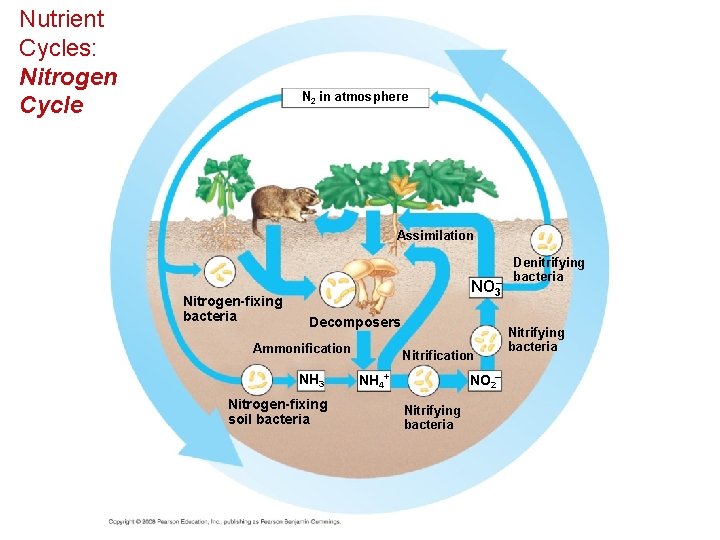
Nutrient Cycles: Nitrogen Cycle N 2 in atmosphere Assimilation Nitrogen-fixing bacteria NO 3– Decomposers Ammonification NH 3 Nitrogen-fixing soil bacteria Nitrification NO 2– NH 4+ Nitrifying bacteria Denitrifying bacteria Nitrifying bacteria
The Phosphorus Cycle • Phosphorus is a major constituent of nucleic acids, phospholipids, and ATP. • Phosphate (PO 43–) is the most important inorganic form of phosphorus. • The largest reservoirs are sedimentary rocks of marine origin, the oceans, and organisms. • Phosphate binds with soil particles, and movement is often localized. Copyright © 2008 Pearson Education, Inc. , publishing as Pearson Benjamin Cummings
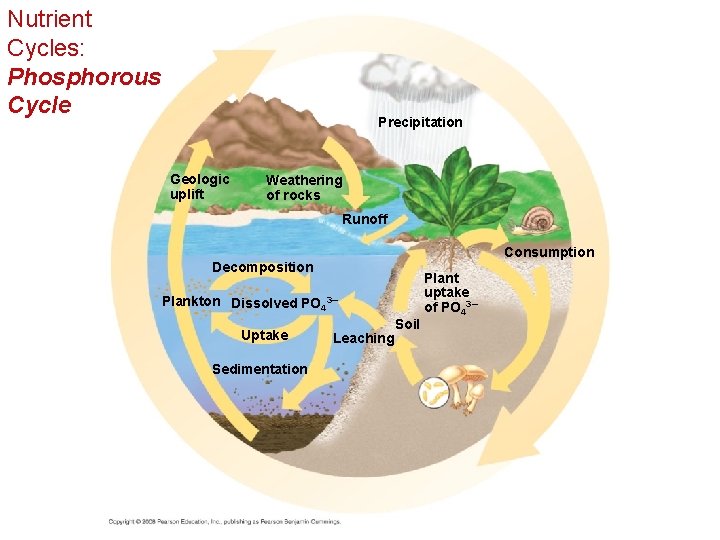
Nutrient Cycles: Phosphorous Cycle Precipitation Geologic uplift Weathering of rocks Runoff Consumption Decomposition Plankton Dissolved PO 43– Uptake Sedimentation Leaching Soil Plant uptake of PO 43–
Decomposition and Nutrient Cycling Rates • Decomposers = detritivores play a key role in the general pattern of chemical cycling. • Rates at which nutrients cycle in different ecosystems vary greatly, mostly as a result of differing rates of decomposition. • The rate of decomposition is controlled by temperature, moisture, and nutrient availability. • Rapid decomposition results in relatively low levels of nutrients in the soil. Copyright © 2008 Pearson Education, Inc. , publishing as Pearson Benjamin Cummings
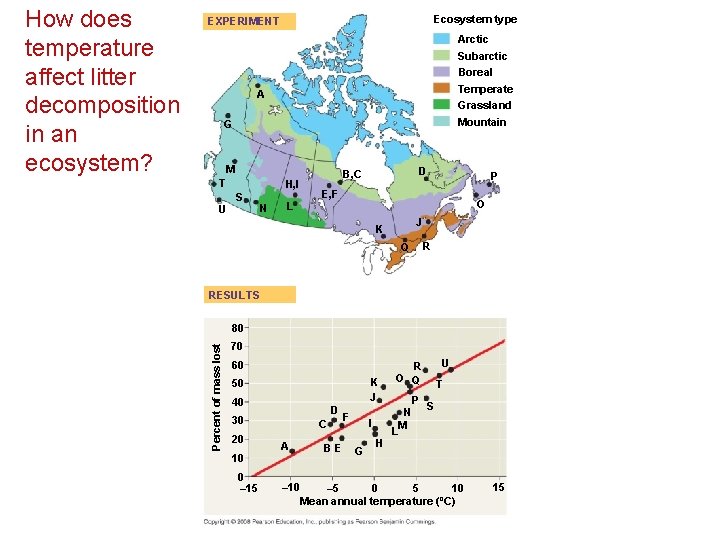
Ecosystem type EXPERIMENT Arctic Subarctic Boreal Temperate Grassland A Mountain G M T U H, I S N L D B, C P E, F O J K R Q RESULTS 80 Percent of mass lost How does temperature affect litter decomposition in an ecosystem? 70 60 K J 50 40 D 30 20 10 0 – 15 C A – 10 BE F I G H U R O Q N M L P T S – 5 0 5 10 Mean annual temperature (ºC) 15
Case Study: Nutrient Cycling in the Hubbard Brook Experimental Forest • Vegetation strongly regulates nutrient cycling. • Research projects monitor ecosystem dynamics over long periods. • The Hubbard Brook Experimental Forest has been used to study nutrient cycling in a forest ecosystem since 1963. • The research team constructed a dam on the site to monitor loss of water and minerals. Copyright © 2008 Pearson Education, Inc. , publishing as Pearson Benjamin Cummings
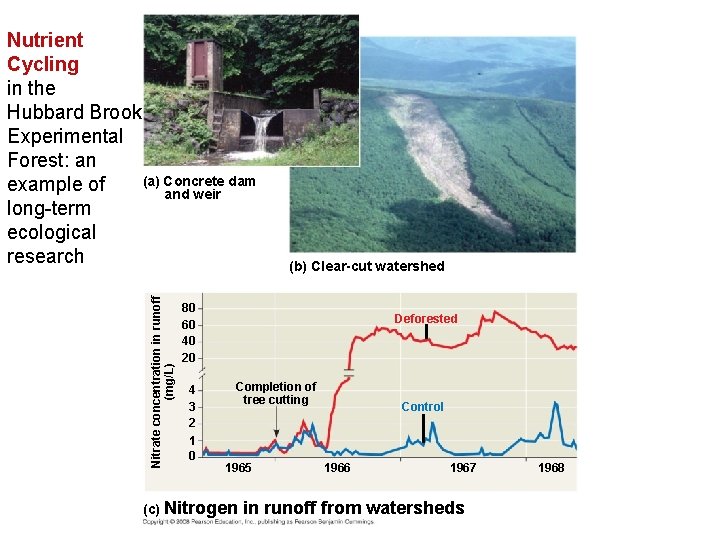
Nitrate concentration in runoff (mg/L) Nutrient Cycling in the Hubbard Brook Experimental Forest: an (a) Concrete dam example of and weir long-term ecological research (b) Clear-cut watershed 80 60 40 20 4 3 2 1 0 Deforested Completion of tree cutting 1965 (c) Nitrogen Control 1966 1967 in runoff from watersheds 1968
• In one experiment, the trees in one valley were cut down, and the valley was sprayed with herbicides. Net losses of water and minerals were studied and found to be greater than in an undisturbed area. • These results showed how human activity can affect ecosystems. • As the human population has grown, our activities have disrupted the trophic structure, energy flow, and chemical cycling of many ecosystems. • In addition to transporting nutrients from one location to another, humans have added new materials, some of them toxins, to ecosystems. Copyright © 2008 Pearson Education, Inc. , publishing as Pearson Benjamin Cummings
Agriculture and Nitrogen Cycling • The quality of soil varies with the amount of organic material it contains. • Agriculture removes from ecosystems nutrients that would ordinarily be cycled back into the soil. • Nitrogen is the main nutrient lost through agriculture; thus, agriculture greatly affects the nitrogen cycle. • Industrially produced fertilizer is typically used to replace lost nitrogen, but effects on an ecosystem can be harmful. Copyright © 2008 Pearson Education, Inc. , publishing as Pearson Benjamin Cummings
Contamination of Aquatic Ecosystems • Critical load for a nutrient is the amount that plants can absorb without damaging the ecosystem. • When excess nutrients are added to an ecosystem, the critical load is exceeded. • Remaining nutrients can contaminate groundwater as well as freshwater and marine ecosystems. • Sewage runoff causes cultural eutrophication, excessive algal growth that can greatly harm freshwater ecosystems. Copyright © 2008 Pearson Education, Inc. , publishing as Pearson Benjamin Cummings
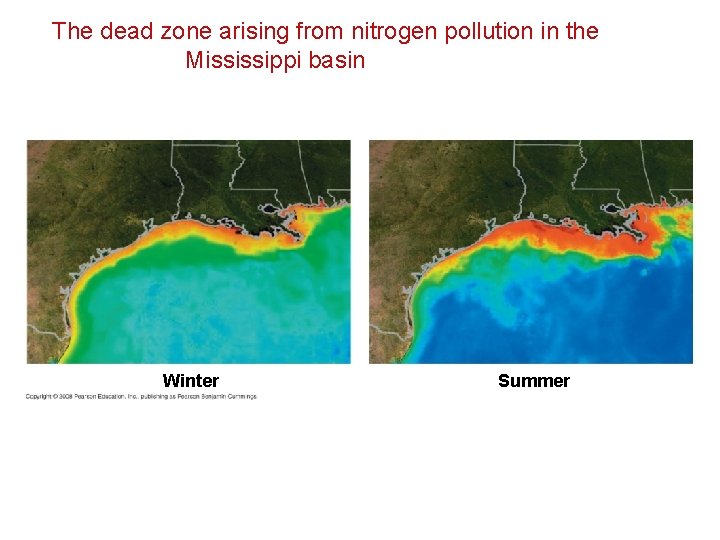
The dead zone arising from nitrogen pollution in the Mississippi basin Winter Summer
Acid Precipitation • Combustion of fossil fuels is the main cause of acid precipitation. • North American and European ecosystems downwind from industrial regions have been damaged by rain and snow containing nitric and sulfuric acid. • Acid precipitation changes soil p. H and causes leaching of calcium and other nutrients. • Environmental regulations and new technologies have allowed many developed countries to reduce sulfur dioxide emissions. Copyright © 2008 Pearson Education, Inc. , publishing as Pearson Benjamin Cummings
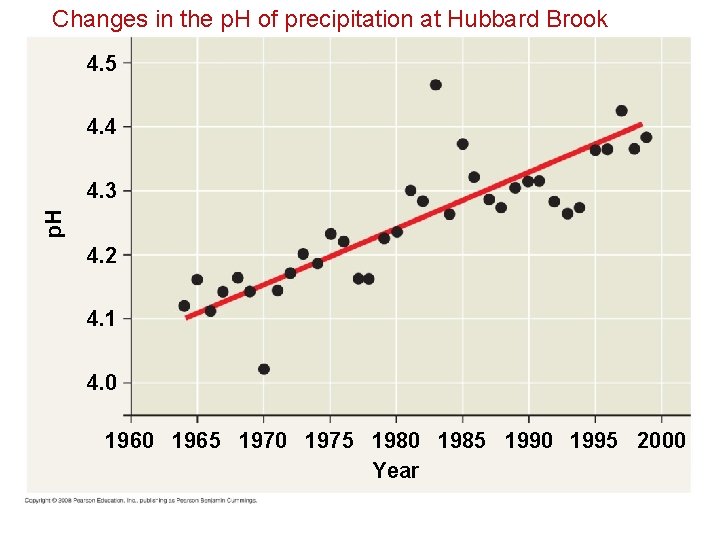
Changes in the p. H of precipitation at Hubbard Brook 4. 5 4. 4 p. H 4. 3 4. 2 4. 1 4. 0 1965 1970 1975 1980 1985 1990 1995 2000 Year
Toxins in the Environment • Humans release many toxic chemicals, including synthetics previously unknown to nature. In some cases, harmful substances persist for long periods in an ecosystem. • One reason toxins are harmful is that they become more concentrated in successive trophic levels. • Biological magnification concentrates toxins at higher trophic levels. • PCBs and many pesticides such as DDT are subject to biological magnification in ecosystems. Copyright © 2008 Pearson Education, Inc. , publishing as Pearson Benjamin Cummings
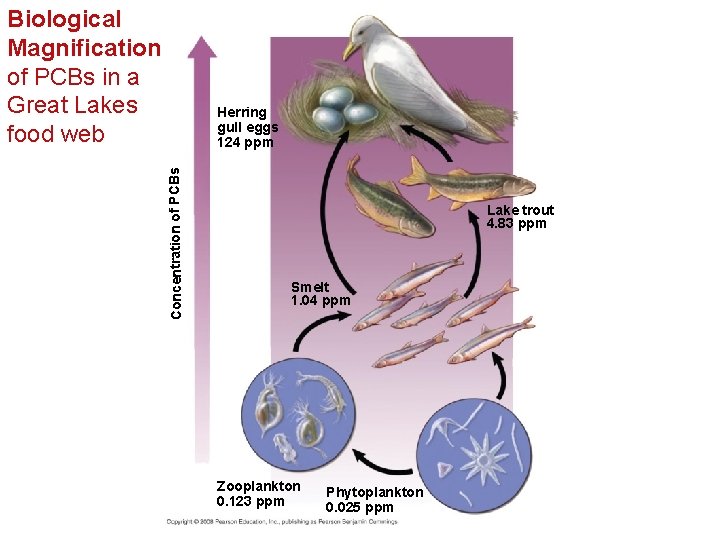
Biological Magnification of PCBs in a Great Lakes food web Concentration of PCBs Herring gull eggs 124 ppm Lake trout 4. 83 ppm Smelt 1. 04 ppm Zooplankton 0. 123 ppm Phytoplankton 0. 025 ppm
Greenhouse Gases and Global Warming • One pressing problem caused by human activities is the rising level of atmospheric carbon dioxide. • Due to the burning of fossil fuels and other human activities, the concentration of atmospheric CO 2 has been steadily increasing. Copyright © 2008 Pearson Education, Inc. , publishing as Pearson Benjamin Cummings
The Greenhouse Effect and Climate • CO 2, water vapor, and other greenhouse gases reflect infrared radiation back toward Earth; this is the greenhouse effect. • This effect is important for keeping Earth’s surface at a habitable temperature. • Increased levels of atmospheric CO 2 are magnifying the greenhouse effect, which could cause global warming and climatic change. Copyright © 2008 Pearson Education, Inc. , publishing as Pearson Benjamin Cummings
• Increasing concentration of atmospheric CO 2 is linked to increasing global temperature. Northern coniferous forests and tundra show the strongest effects of global warming. • A warming trend would also affect the geographic distribution of precipitation. • Global warming can be slowed by reducing energy needs and converting to renewable sources of energy. • Stabilizing CO 2 emissions will require an international effort. Copyright © 2008 Pearson Education, Inc. , publishing as Pearson Benjamin Cummings
Depletion of Atmospheric Ozone • Life on Earth is protected from damaging effects of UV radiation by a protective layer of ozone molecules in the atmosphere. • Satellite studies suggest that the ozone layer has been gradually thinning since 1975. • Destruction of atmospheric ozone probably results from chlorine-releasing pollutants such as CFCs (chloroflorocarbons) produced by human activity. Copyright © 2008 Pearson Education, Inc. , publishing as Pearson Benjamin Cummings
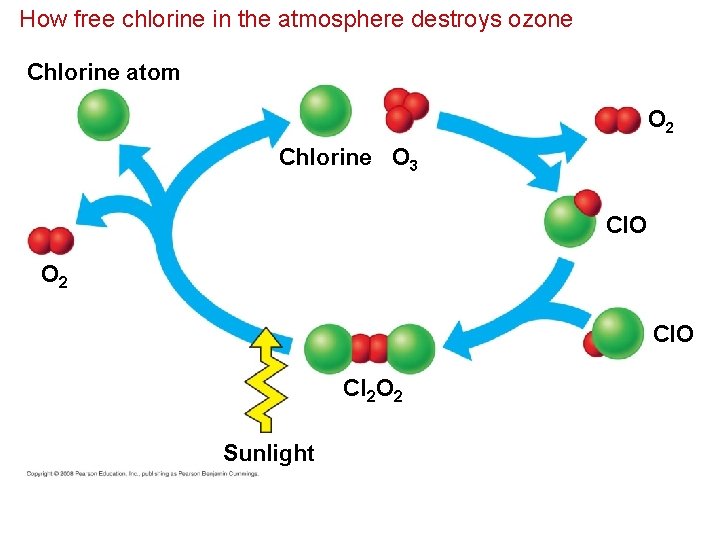
How free chlorine in the atmosphere destroys ozone Chlorine atom O 2 Chlorine O 3 Cl. O O 2 Cl. O Cl 2 O 2 Sunlight
• Scientists first described an “ozone hole” over Antarctica in 1985; it has increased in size as ozone depletion has increased. • Ozone depletion causes DNA damage in plants and poorer phytoplankton growth. • An international agreement signed in 1987 has resulted in a decrease in ozone depletion. Copyright © 2008 Pearson Education, Inc. , publishing as Pearson Benjamin Cummings
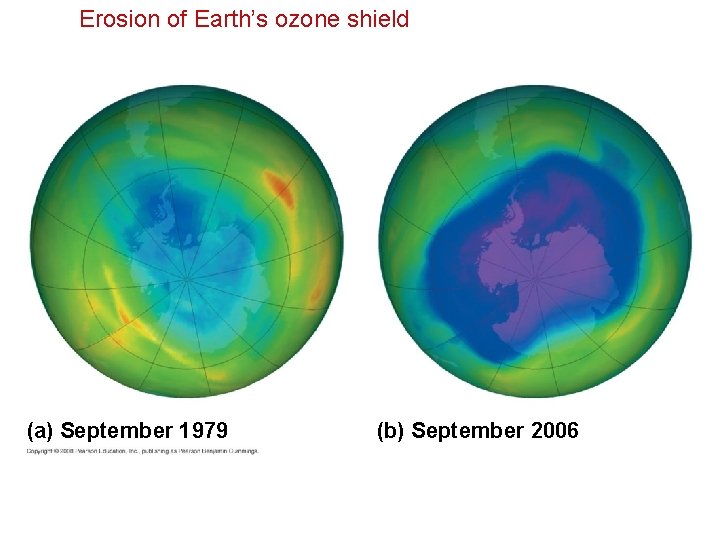
Erosion of Earth’s ozone shield (a) September 1979 (b) September 2006
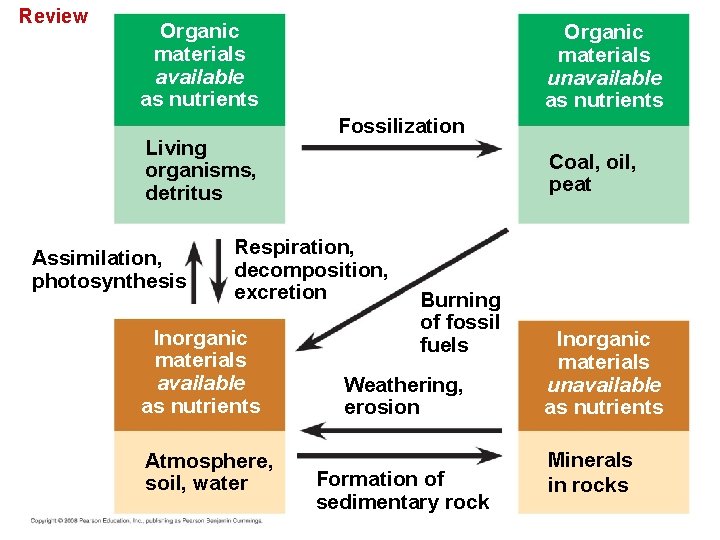
Review Organic materials available as nutrients Living organisms, detritus Assimilation, photosynthesis Organic materials unavailable as nutrients Fossilization Coal, oil, peat Respiration, decomposition, excretion Inorganic materials available as nutrients Atmosphere, soil, water Burning of fossil fuels Weathering, erosion Formation of sedimentary rock Inorganic materials unavailable as nutrients Minerals in rocks
You should now be able to: 1. Explain how the first and second laws of thermodynamics apply to ecosystems. 2. Define and compare gross primary production, net primary production, and standing crop. 3. Explain why energy flows but nutrients cycle within an ecosystem. 4. Explain what factors may limit primary production in aquatic ecosystems. 5. Distinguish between the following pairs of terms: primary and secondary production, production efficiency and trophic efficiency. 6. Explain why worldwide agriculture could feed more people if all humans consumed only plant material. 8. Describe the four nutrient reservoirs and the processes that transfer the elements between reservoir. Explain why toxic compounds usually have the greatest effect on top-level carnivores. 9. Describe the causes and consequences of ozone depletion. Copyright © 2008 Pearson Education, Inc. , publishing as Pearson Benjamin Cummings
- Slides: 57