
ECOSYSTEMS OF EARTH Terrestrial biomes Marine ecosystems and
ECOSYSTEMS OF EARTH Terrestrial biomes, Marine ecosystems, and Freshwater ecosystems
Biomes: • A regional type of biological community • Locations with the same biome have similar • • Climate Growth patterns Vegetation Similar life forms

What naturally governs biomes? • 1. Temperature • Yearly average and months below freezing are important • Effected by: • Latitude • Bands of similar biomes can be seen around the world • Altitude • Higher places are colder, etc. • Similar climates seen in high mountains world round • 2. Precipitation • When does the rain fall? • How much?

Terrestrial Biomes:
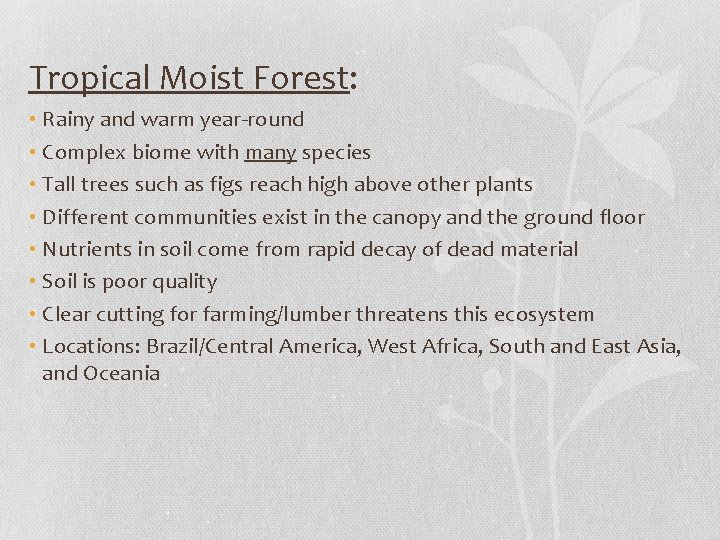
Tropical Moist Forest: • Rainy and warm year-round • Complex biome with many species • Tall trees such as figs reach high above other plants • Different communities exist in the canopy and the ground floor • Nutrients in soil come from rapid decay of dead material • Soil is poor quality • Clear cutting for farming/lumber threatens this ecosystem • Locations: Brazil/Central America, West Africa, South and East Asia, and Oceania

Tropical Seasonal Forest: • Hot year-round but with wet and dry seasons • Often involves monsoons (rain-bearing seasonal winds) • Forests are deciduous in dry seasons • Better for human habitation and farming • Many have been cleared • Locations: Mexico, India, SE Asia
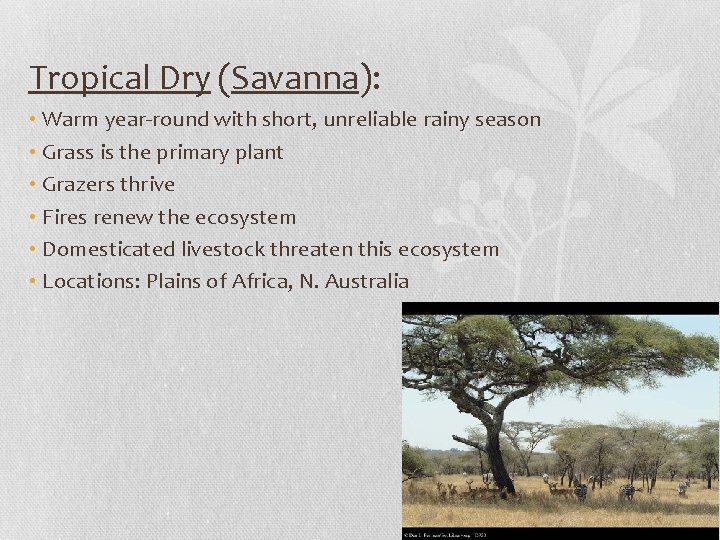
Tropical Dry (Savanna): • Warm year-round with short, unreliable rainy season • Grass is the primary plant • Grazers thrive • Fires renew the ecosystem • Domesticated livestock threaten this ecosystem • Locations: Plains of Africa, N. Australia
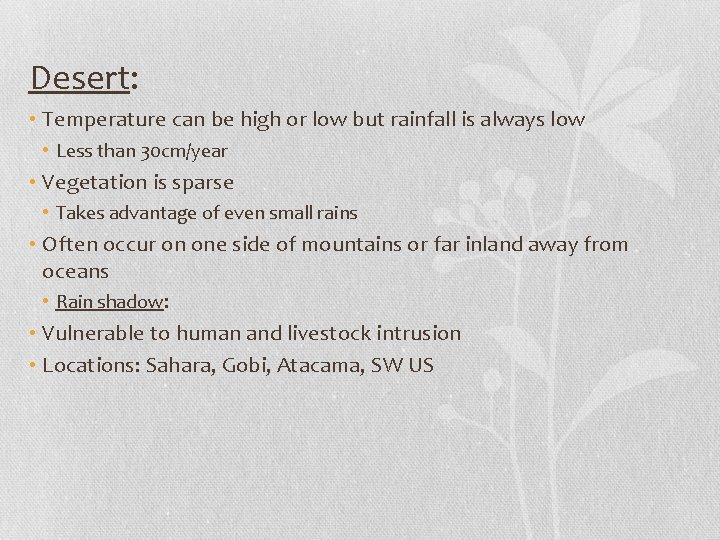
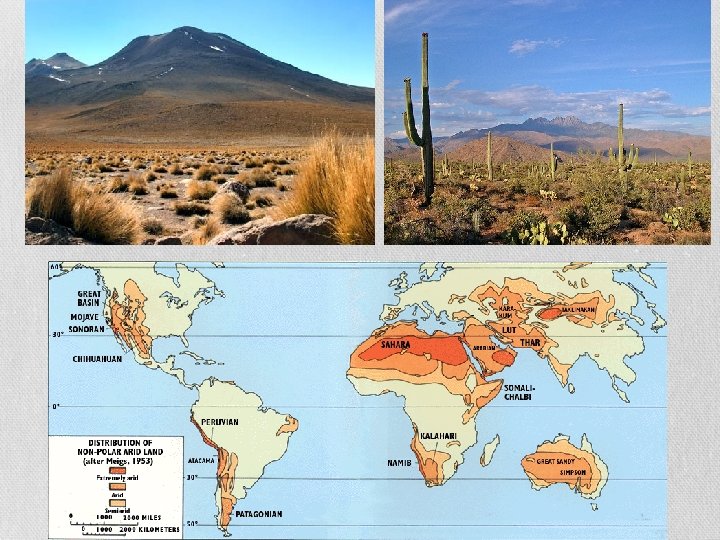
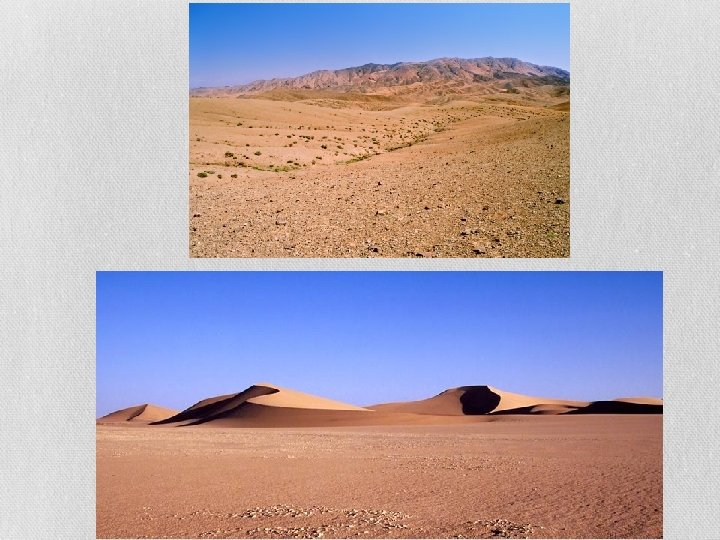
Desert: • Temperature can be high or low but rainfall is always low • Less than 30 cm/year • Vegetation is sparse • Takes advantage of even small rains • Often occur on one side of mountains or far inland away from oceans • Rain shadow: • Vulnerable to human and livestock intrusion • Locations: Sahara, Gobi, Atacama, SW US

Temperate Grassland: • Occur in areas with warm and cold seasons • Good amount of rain but not enough to support forests • Covered mainly in perennial grasses, shrubs, and forbs • Create fertile soil • Often cleared for cropland or overgrazed • Locations: Central N. America, Central Asia
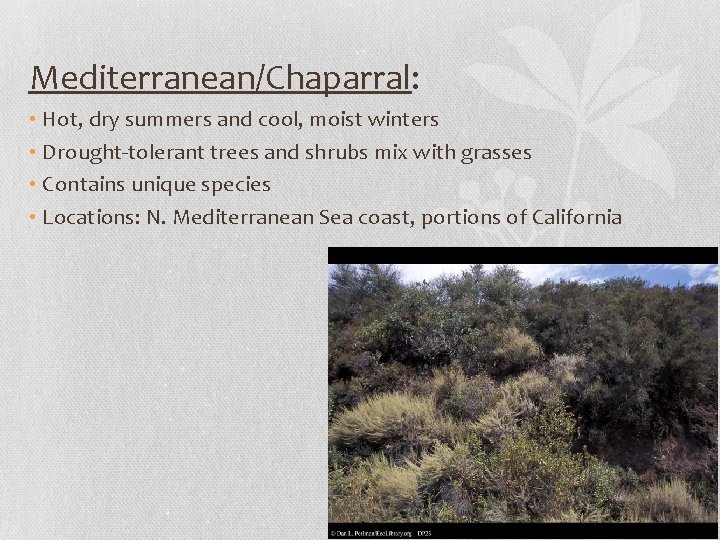
Mediterranean/Chaparral: • Hot, dry summers and cool, moist winters • Drought-tolerant trees and shrubs mix with grasses • Contains unique species • Locations: N. Mediterranean Sea coast, portions of California
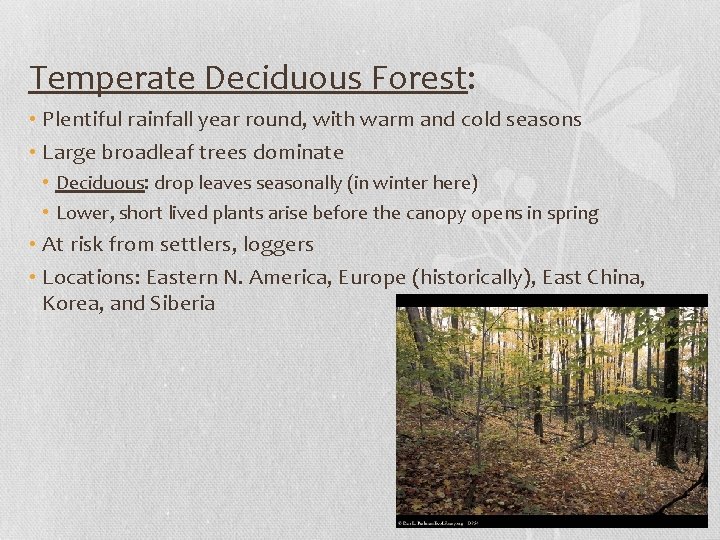
Temperate Deciduous Forest: • Plentiful rainfall year round, with warm and cold seasons • Large broadleaf trees dominate • Deciduous: drop leaves seasonally (in winter here) • Lower, short lived plants arise before the canopy opens in spring • At risk from settlers, loggers • Locations: Eastern N. America, Europe (historically), East China, Korea, and Siberia
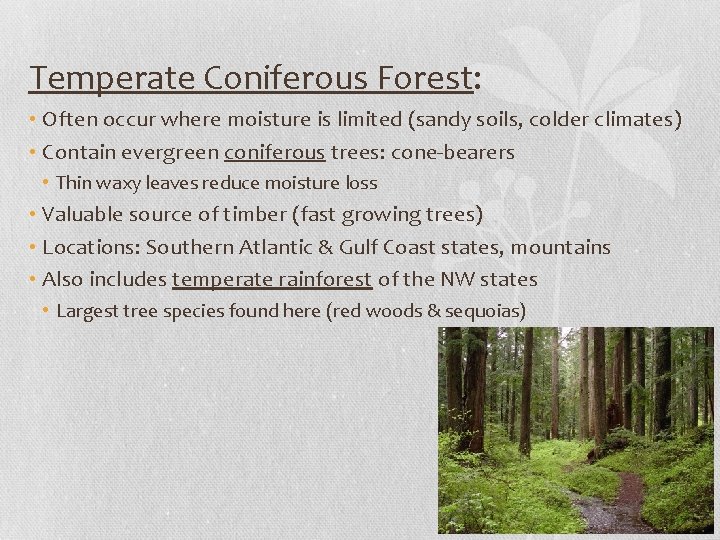
Temperate Coniferous Forest: • Often occur where moisture is limited (sandy soils, colder climates) • Contain evergreen coniferous trees: cone-bearers • Thin waxy leaves reduce moisture loss • Valuable source of timber (fast growing trees) • Locations: Southern Atlantic & Gulf Coast states, mountains • Also includes temperate rainforest of the NW states • Largest tree species found here (red woods & sequoias)
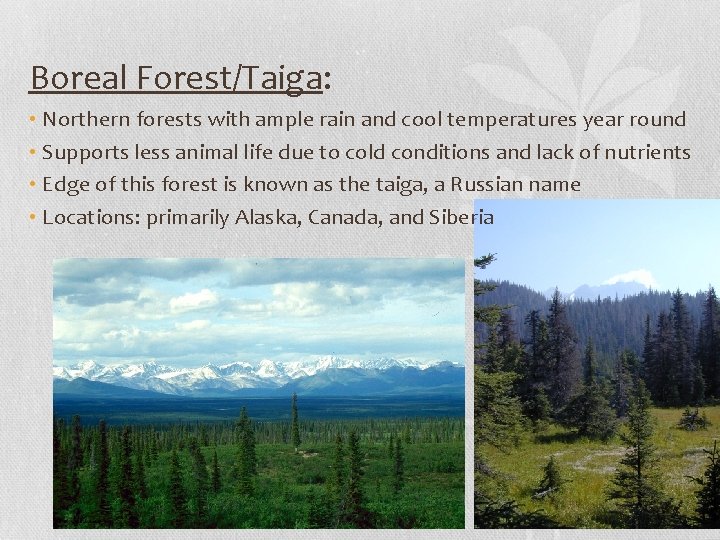
Boreal Forest/Taiga: • Northern forests with ample rain and cool temperatures year round • Supports less animal life due to cold conditions and lack of nutrients • Edge of this forest is known as the taiga, a Russian name • Locations: primarily Alaska, Canada, and Siberia
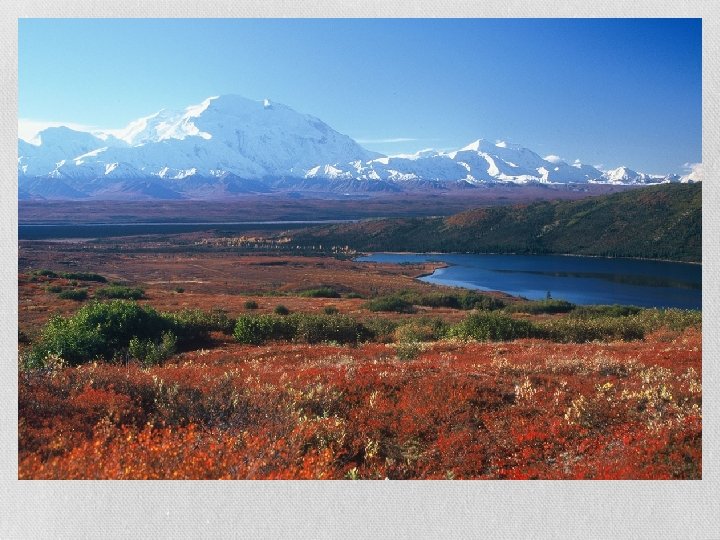
Tundra: • Temperatures stay below freezing most of the year • Only small, hardy vegetation survives (mosses, lichens, etc. ) • Soil remains frozen as permafrost • 2 Kinds • Artic: cold due to high latitudes • Serves as nesting site for waterfowl • Alpine: cold due to high elevation • Same vegetation w/ adaptations for height • Somewhat less threatened • Location: primarily Alaska, Canada, and N. Russia
Marine Ecosystems:
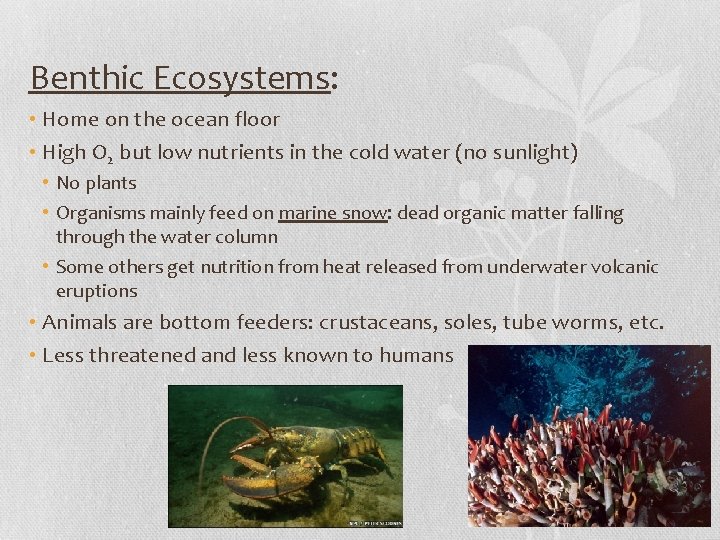
Benthic Ecosystems: • Home on the ocean floor • High O 2 but low nutrients in the cold water (no sunlight) • No plants • Organisms mainly feed on marine snow: dead organic matter falling through the water column • Some others get nutrition from heat released from underwater volcanic eruptions • Animals are bottom feeders: crustaceans, soles, tube worms, etc. • Less threatened and less known to humans
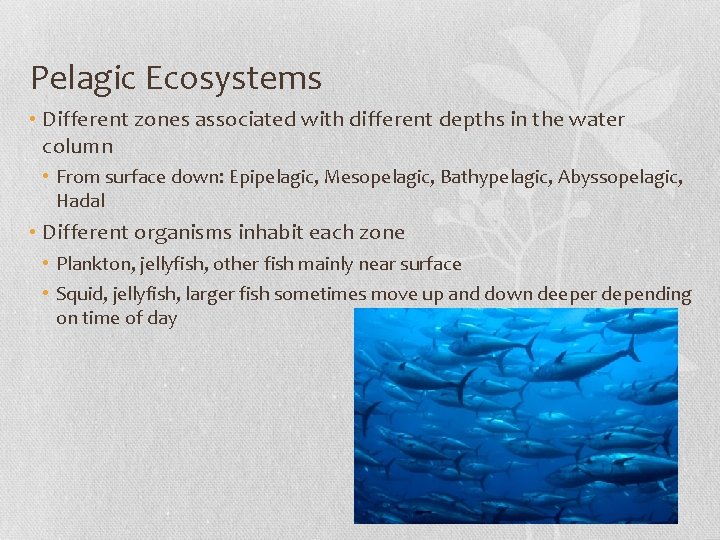
Pelagic Ecosystems • Different zones associated with different depths in the water column • From surface down: Epipelagic, Mesopelagic, Bathypelagic, Abyssopelagic, Hadal • Different organisms inhabit each zone • Plankton, jellyfish, other fish mainly near surface • Squid, jellyfish, larger fish sometimes move up and down deeper depending on time of day
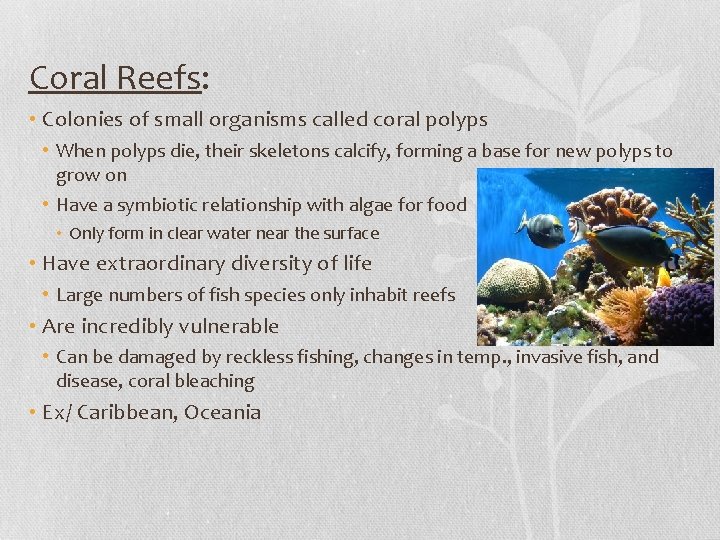
Coral Reefs: • Colonies of small organisms called coral polyps • When polyps die, their skeletons calcify, forming a base for new polyps to grow on • Have a symbiotic relationship with algae for food • Only form in clear water near the surface • Have extraordinary diversity of life • Large numbers of fish species only inhabit reefs • Are incredibly vulnerable • Can be damaged by reckless fishing, changes in temp. , invasive fish, and disease, coral bleaching • Ex/ Caribbean, Oceania
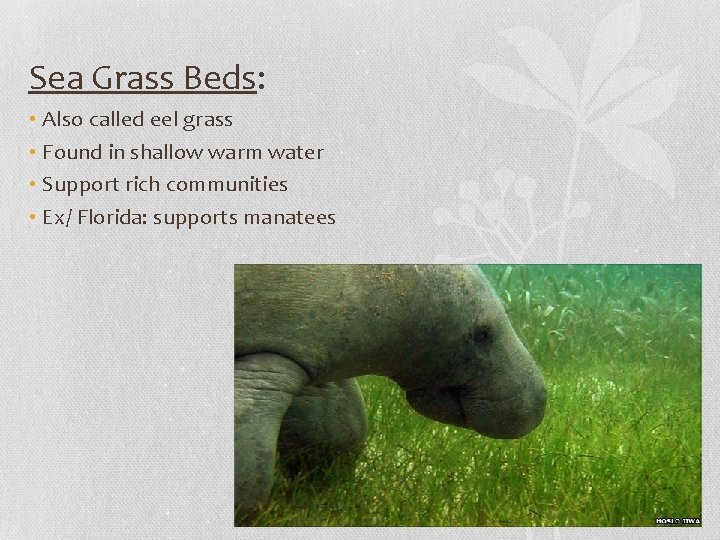
Sea Grass Beds: • Also called eel grass • Found in shallow warm water • Support rich communities • Ex/ Florida: supports manatees
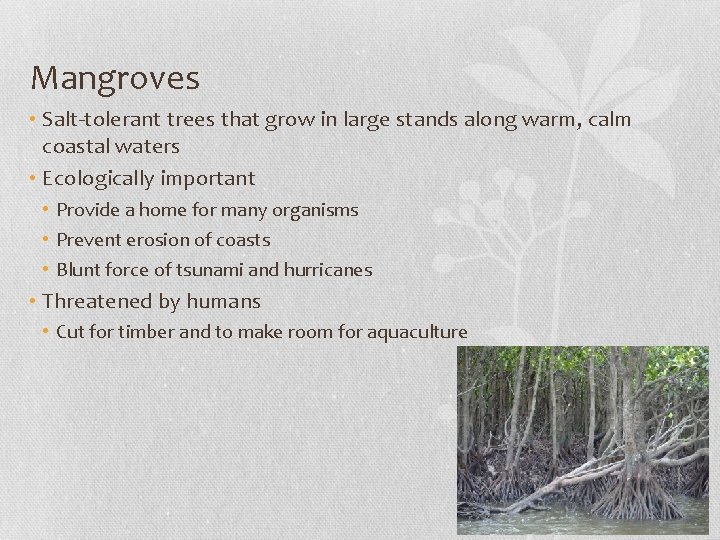
Mangroves • Salt-tolerant trees that grow in large stands along warm, calm coastal waters • Ecologically important • Provide a home for many organisms • Prevent erosion of coasts • Blunt force of tsunami and hurricanes • Threatened by humans • Cut for timber and to make room for aquaculture

Estuaries/Salt Marshes • Estuary: a bay at the mouth of a river where fresh and salt water mix • Salt marshes: shallow seaside wetlands that often flood with salt water • Both serve as a spawning ground for fish, jellyfish and crustaceans • Formerly were productive fishing grounds • Now many are overwhelmed with pollution
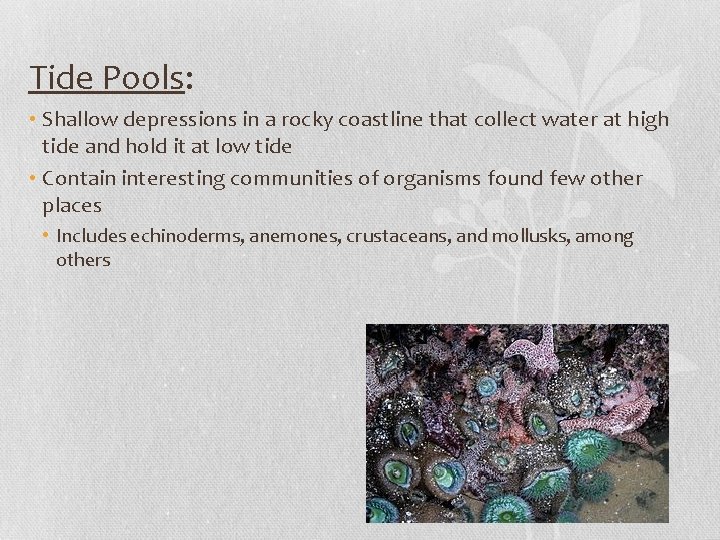
Tide Pools: • Shallow depressions in a rocky coastline that collect water at high tide and hold it at low tide • Contain interesting communities of organisms found few other places • Includes echinoderms, anemones, crustaceans, and mollusks, among others
Freshwater Ecosystems:
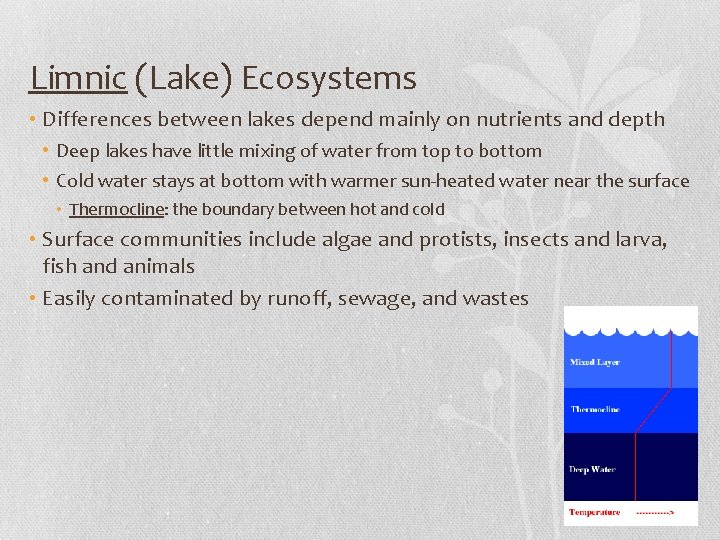
Limnic (Lake) Ecosystems • Differences between lakes depend mainly on nutrients and depth • Deep lakes have little mixing of water from top to bottom • Cold water stays at bottom with warmer sun-heated water near the surface • Thermocline: the boundary between hot and cold • Surface communities include algae and protists, insects and larva, fish and animals • Easily contaminated by runoff, sewage, and wastes
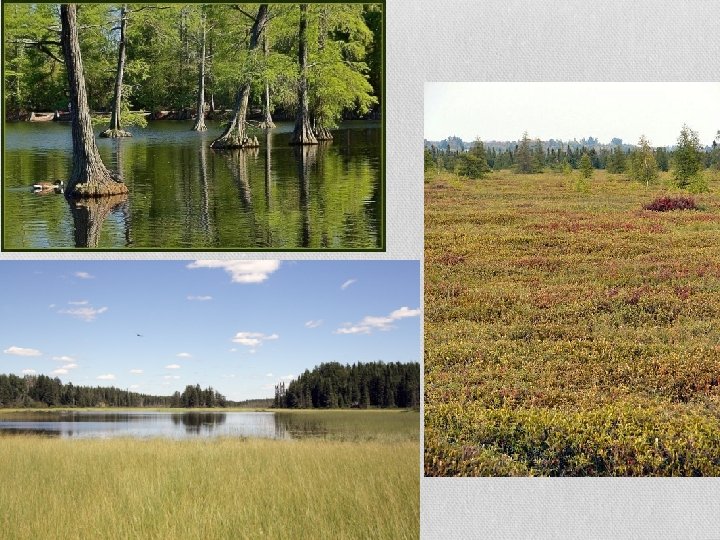
Wetlands • Shallow ecosystems with surface saturated and partly submerged • Get special protection from EPA, others • Crucial for wildlife, especially waterfowl • Retains storm water and filters out contaminants • Many have been drained for land use • Different types described based upon vegetation • Swamps: forested wetlands (trees) • Marshes: no trees; grasses and sedges • Bogs: water saturated ground composed of decayed organic material called peat • Fens: similar to bogs, but fed by groundwater
Streams and Rivers • Difference between rivers and streams is not distinct (rivers are bigger) • Parts • • Headwaters (Source): beginning of a river (highest point) Mouth: end of a river where it enters a larger body of water Bed: bottom surface Banks: edges • Conditions based upon nutrient availability • Water is well supplied with O 2 due to mixing from current • Materials constantly move downstream • Downstream waters are murkier and river is shallower and slower moving • All connected rivers and streams form a system • Called a watershed: all land drained by a system of rivers and streams
- Slides: 31