
Ecosystems Learning Outcomes Understand the meaning and components
- Slides: 12
Ecosystems Learning Outcomes: Understand the meaning and components of ecosystems. Categorise animals by their diet. Be able to create a food chain or food web. Understand what ecosystem services are and provide examples.
Ecosystems The Field Notebook: Scientists use field books as tools to keep a record of their observations in the field. They may be used for drawings, to collect data or develop questions. Your field book contains activity and information pages for you to complete during the lesson. Take the field book home with you and complete any activities you did not finish in the lesson.
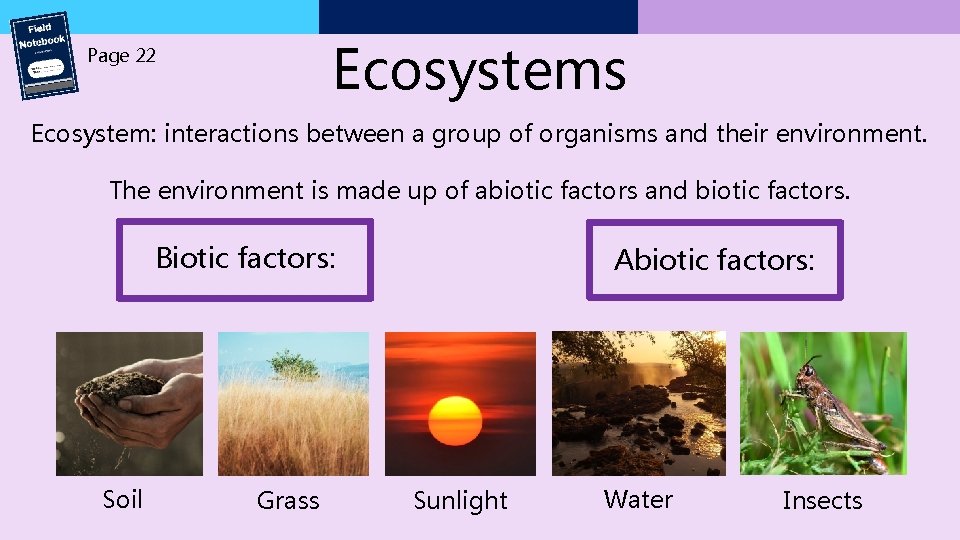
Ecosystems Page 22 Ecosystem: interactions between a group of organisms and their environment. The environment is made up of abiotic factors and biotic factors. Biotic factors: Soil Grass Abiotic factors: Sunlight Water Insects
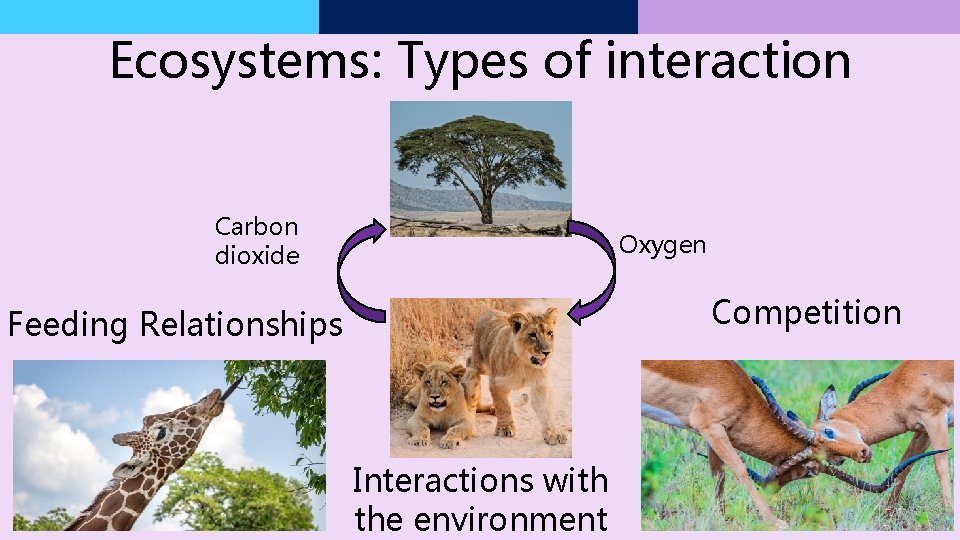
Ecosystems: Types of interaction Carbon dioxide Oxygen Competition Feeding Relationships Interactions with the environment
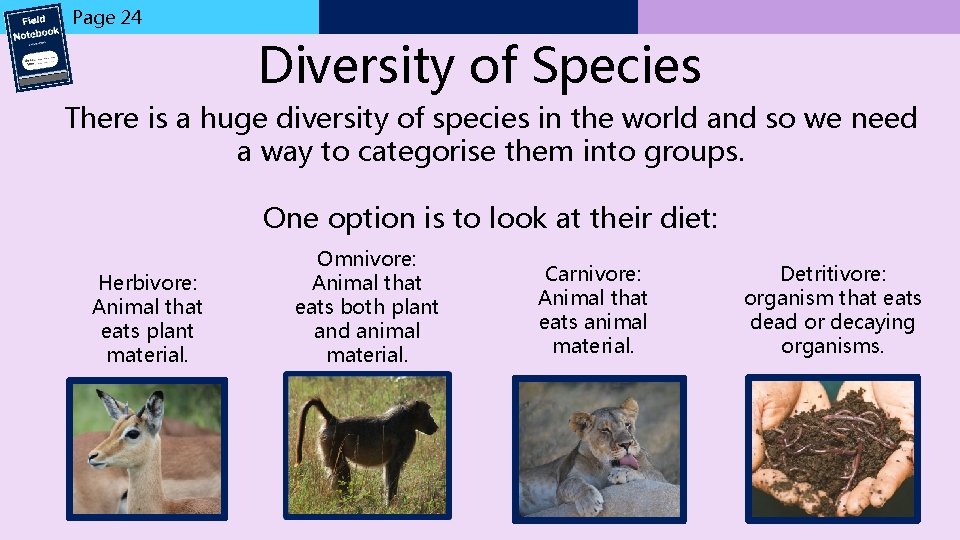
Page 24 Diversity of Species There is a huge diversity of species in the world and so we need a way to categorise them into groups. One option is to look at their diet: Herbivore: Animal that eats plant material. Omnivore: Animal that eats both plant and animal material. Carnivore: Animal that eats animal material. Detritivore: organism that eats dead or decaying organisms.
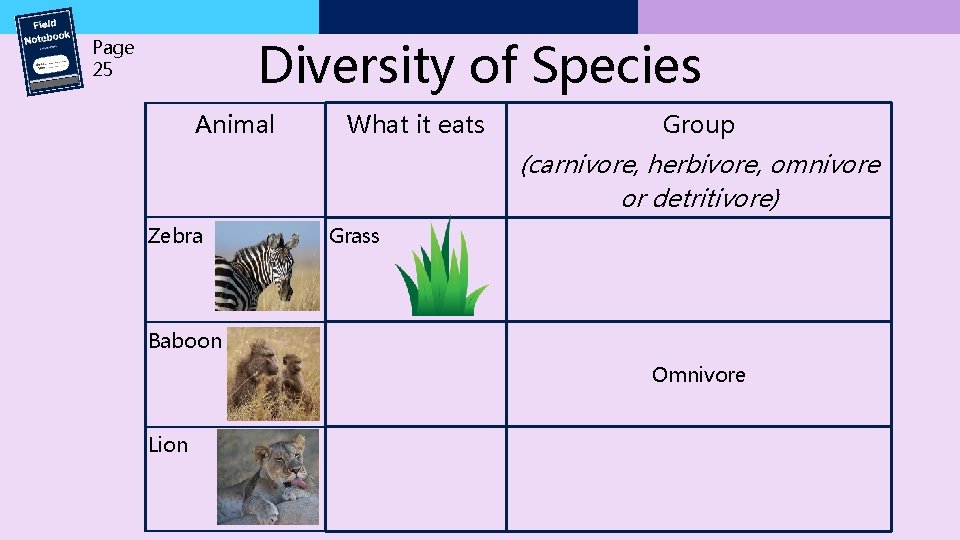
Diversity of Species Page 25 Animal What it eats Group (carnivore, herbivore, omnivore or detritivore) Zebra Grass Baboon Omnivore Lion
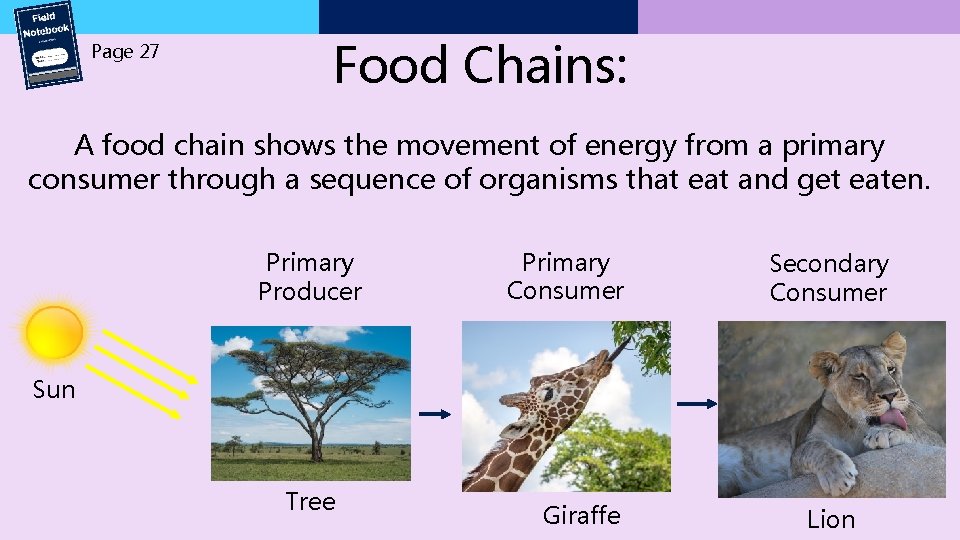
Page 27 Food Chains: A food chain shows the movement of energy from a primary consumer through a sequence of organisms that eat and get eaten. Primary Producer Primary Consumer Secondary Consumer Sun Tree Giraffe Lion
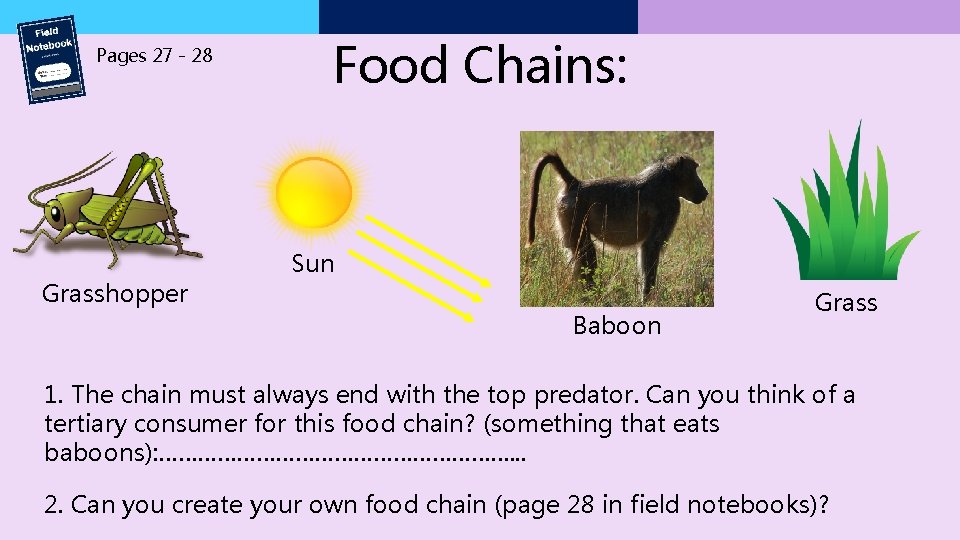
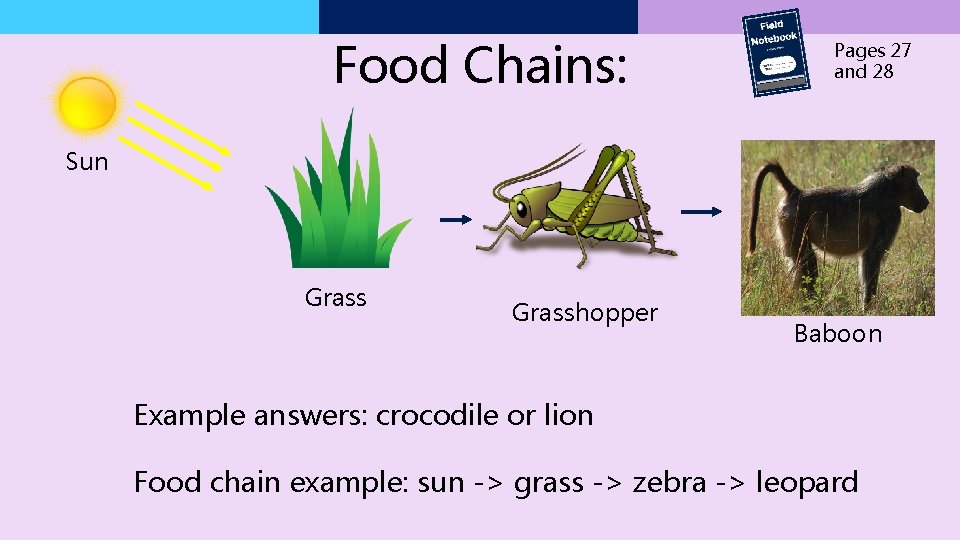
Pages 27 - 28 Grasshopper Food Chains: Sun Baboon Grass 1. The chain must always end with the top predator. Can you think of a tertiary consumer for this food chain? (something that eats baboons): ………………………. . . 2. Can you create your own food chain (page 28 in field notebooks)?
Food Chains: Pages 27 and 28 Sun Grasshopper Baboon Example answers: crocodile or lion Food chain example: sun -> grass -> zebra -> leopard
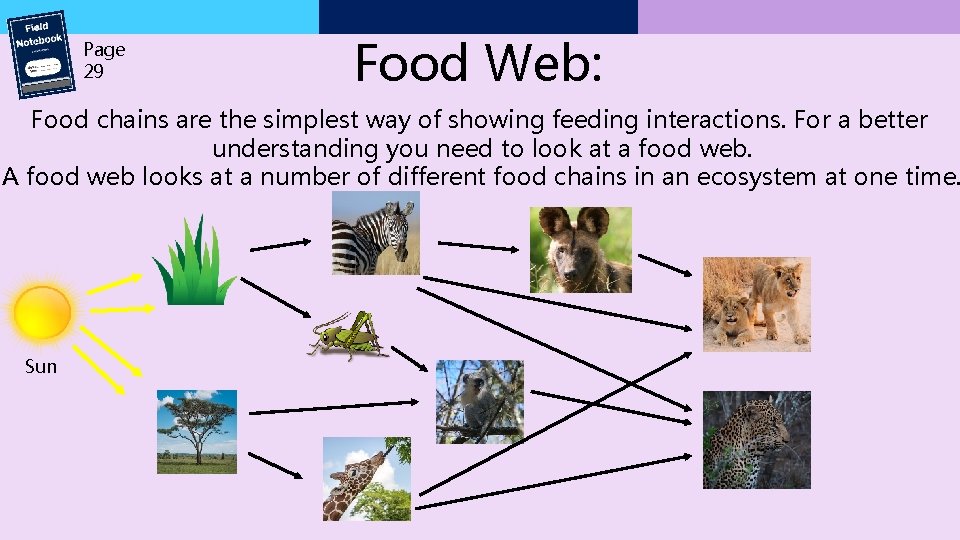
Page 29 Food Web: Food chains are the simplest way of showing feeding interactions. For a better understanding you need to look at a food web. A food web looks at a number of different food chains in an ecosystem at one time. Sun
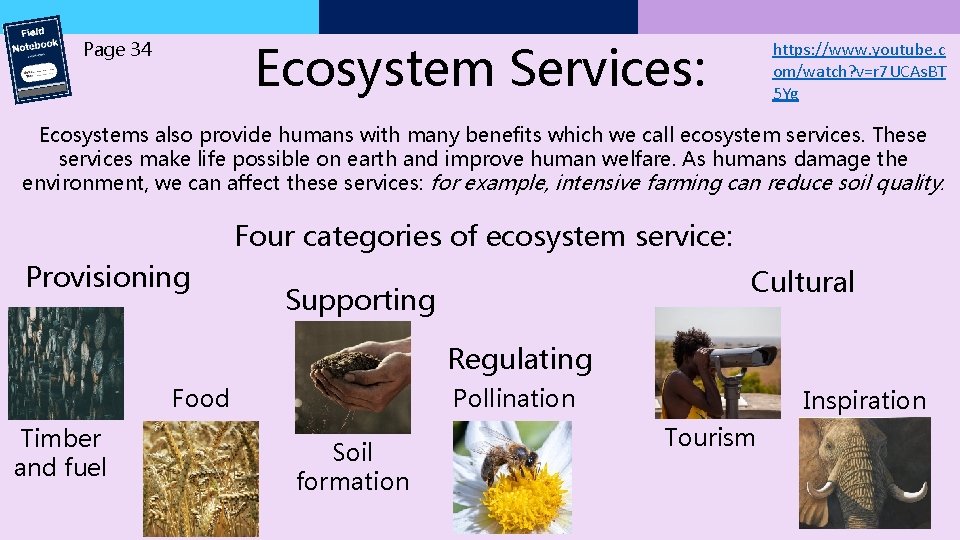
Ecosystem Services: Page 34 https: //www. youtube. c om/watch? v=r 7 UCAs. BT 5 Yg Ecosystems also provide humans with many benefits which we call ecosystem services. These services make life possible on earth and improve human welfare. As humans damage the environment, we can affect these services: for example, intensive farming can reduce soil quality. Four categories of ecosystem service: Provisioning Cultural Supporting Regulating Food Timber and fuel Pollination Soil formation Inspiration Tourism
What Have I Learnt? I know what an ecosystem is and can name biotic and abiotic factors. I can categorise animals by their diet. I can create simple food chains and food webs. I understand what is meant by ecosystem service and can give some examples.