
Ecosystems Is a biological community of interacting living
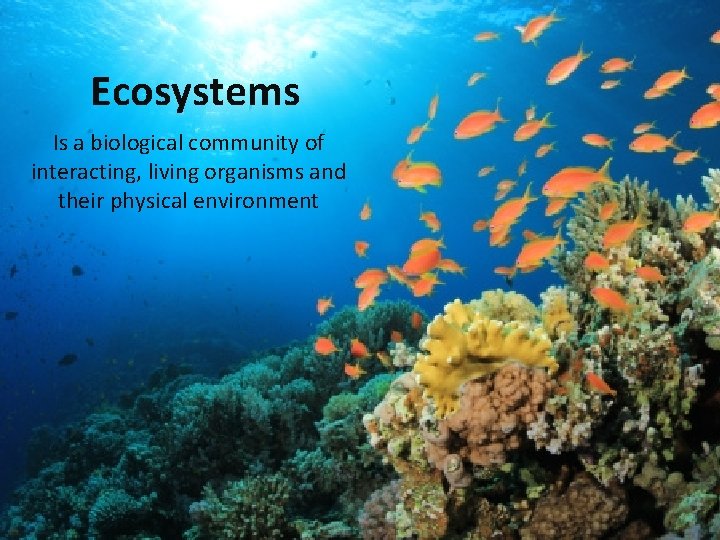
Ecosystems Is a biological community of interacting, living organisms and their physical environment
Ecosystems • Must have a continual input of energy • This energy usually comes from the sun • However, only 1% of energy from the sun, reaches producers
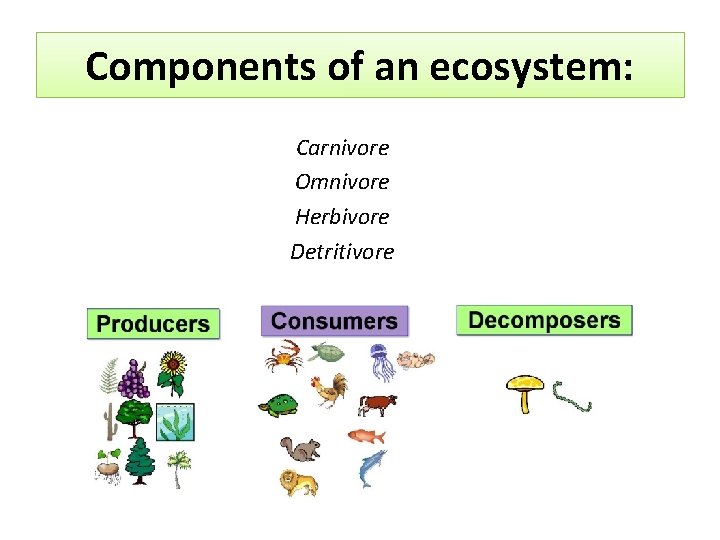
Components of an ecosystem: Carnivore Omnivore Herbivore Detritivore
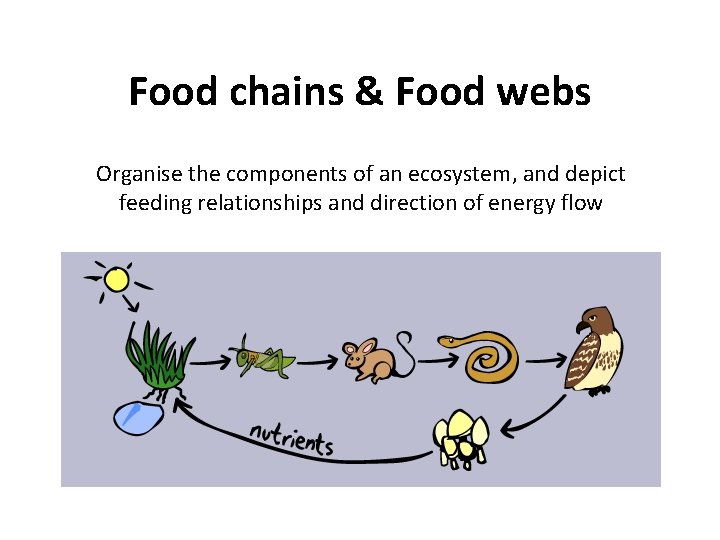
Food chains & Food webs Organise the components of an ecosystem, and depict feeding relationships and direction of energy flow
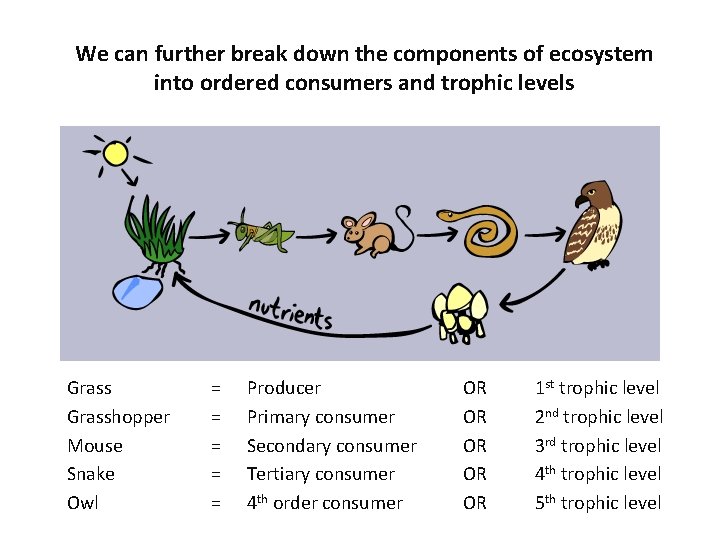
We can further break down the components of ecosystem into ordered consumers and trophic levels Grasshopper Mouse Snake Owl = = = Producer Primary consumer Secondary consumer Tertiary consumer 4 th order consumer OR OR OR 1 st trophic level 2 nd trophic level 3 rd trophic level 4 th trophic level 5 th trophic level
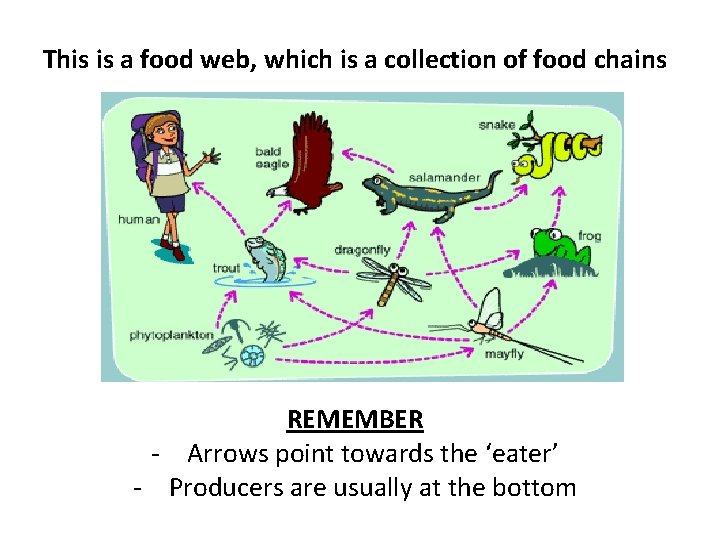
This is a food web, which is a collection of food chains REMEMBER - Arrows point towards the ‘eater’ - Producers are usually at the bottom
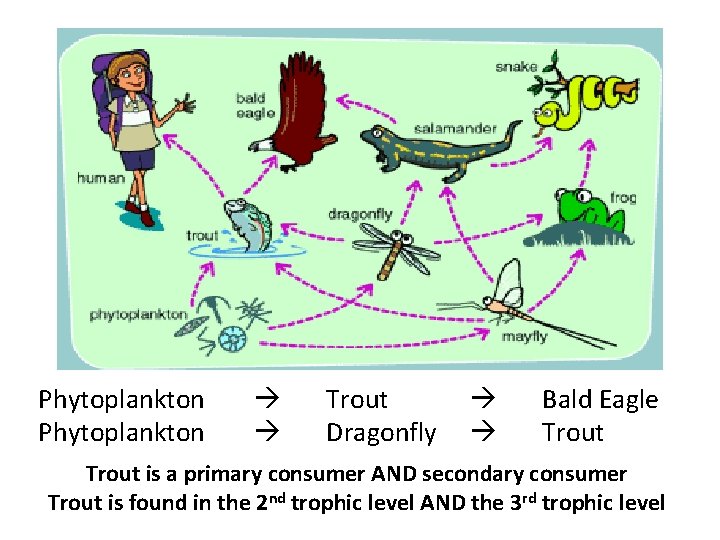
Phytoplankton Trout Dragonfly Bald Eagle Trout is a primary consumer AND secondary consumer Trout is found in the 2 nd trophic level AND the 3 rd trophic level
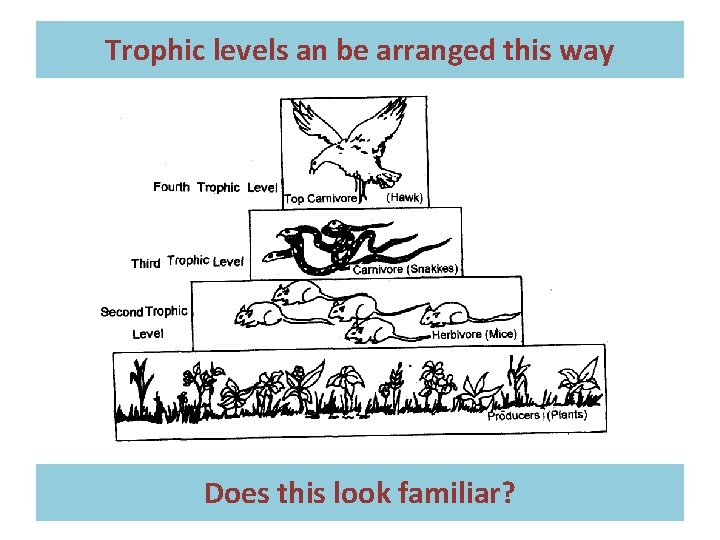
Trophic levels an be arranged this way Does this look familiar?
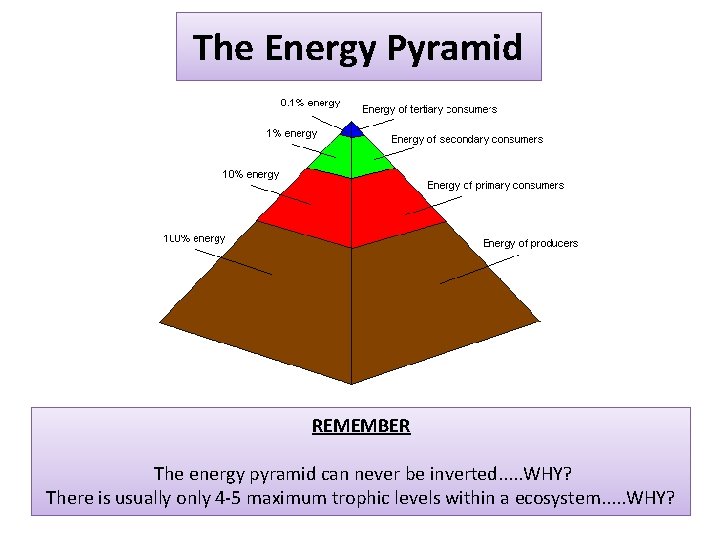
The Energy Pyramid REMEMBER The energy pyramid can never be inverted. . . WHY? There is usually only 4 -5 maximum trophic levels within a ecosystem. . . WHY?
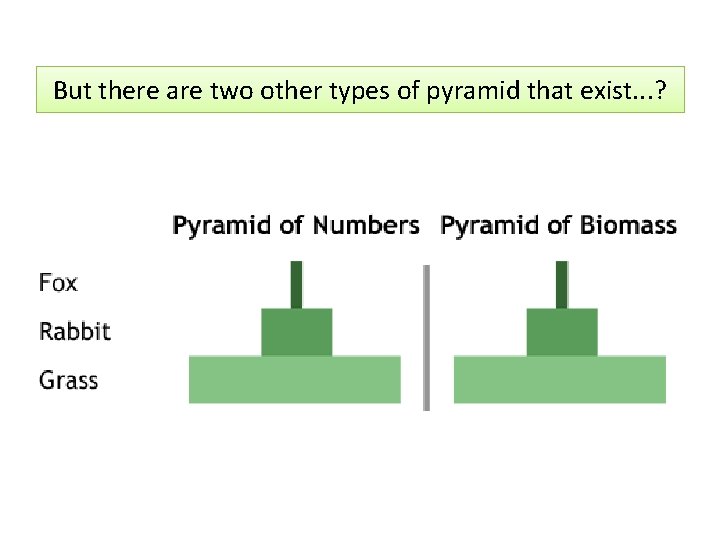
But there are two other types of pyramid that exist. . . ?
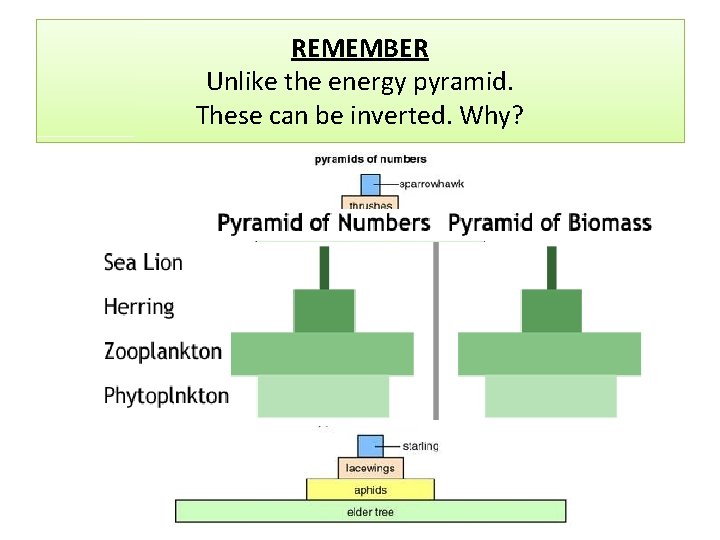
REMEMBER Unlike the energy pyramid. These can be inverted. Why?
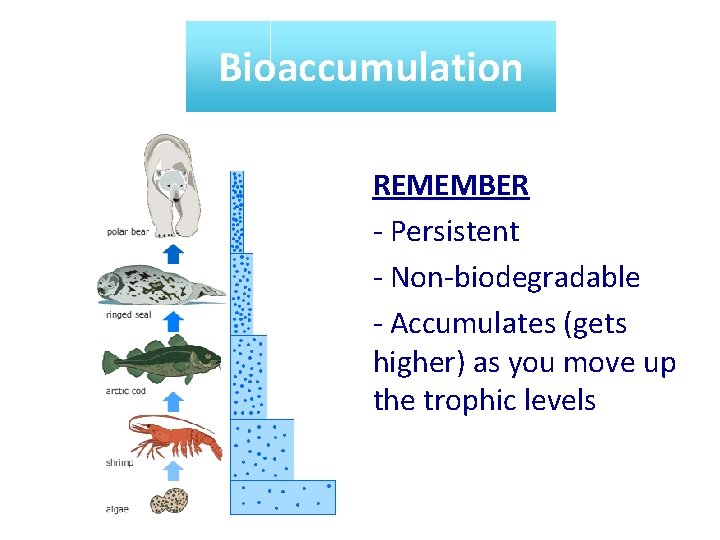
Bioaccumulation REMEMBER - Persistent - Non-biodegradable - Accumulates (gets higher) as you move up the trophic levels
Biogeochemical cycles • Bio: chemical is within a living organism or biological material • Geo: chemical is at some point within non-living component such as the air, soil or rock • Chemical: a chemical is being cycled • Matter is recycled. . Energy is not!
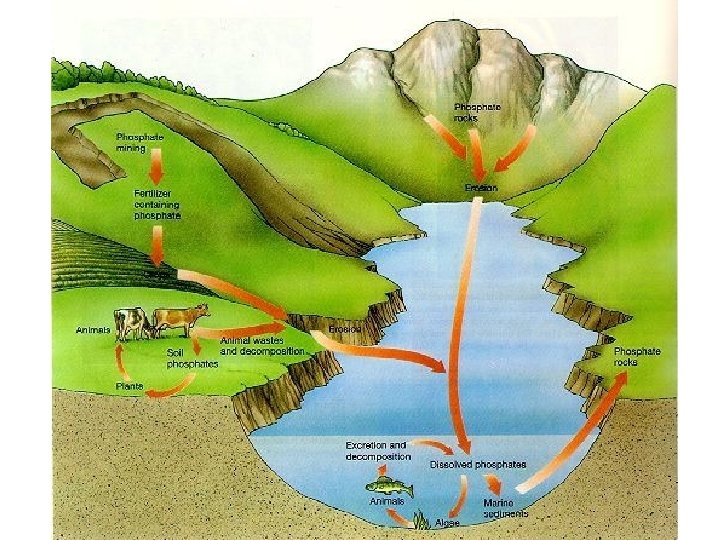
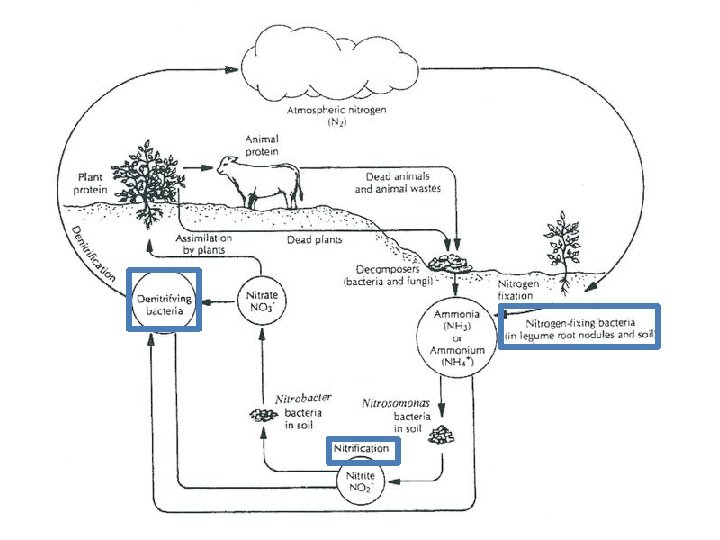
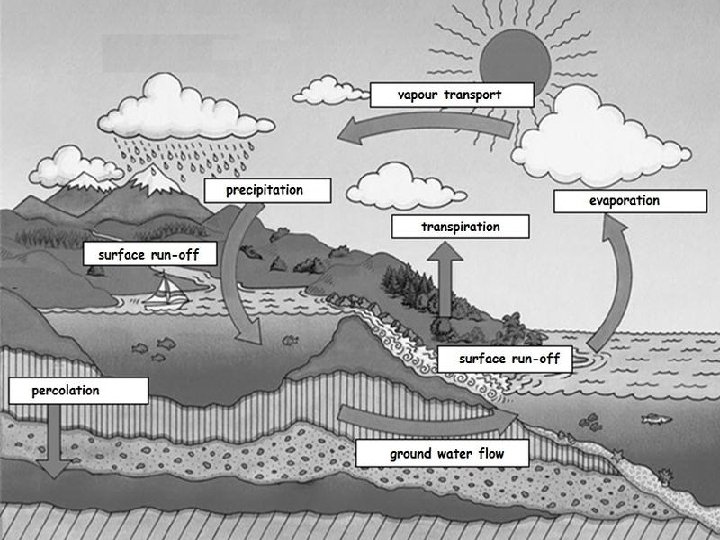
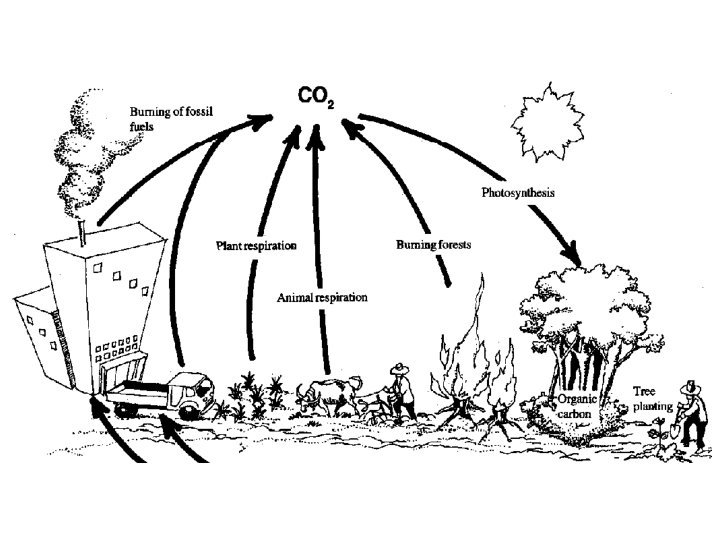
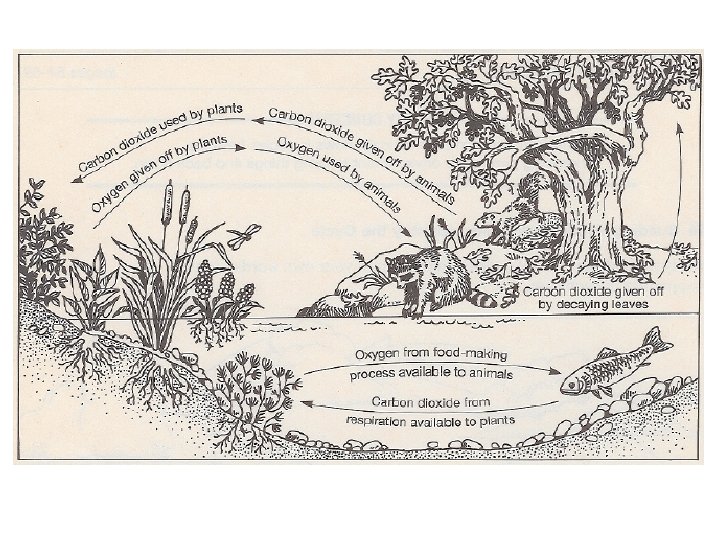

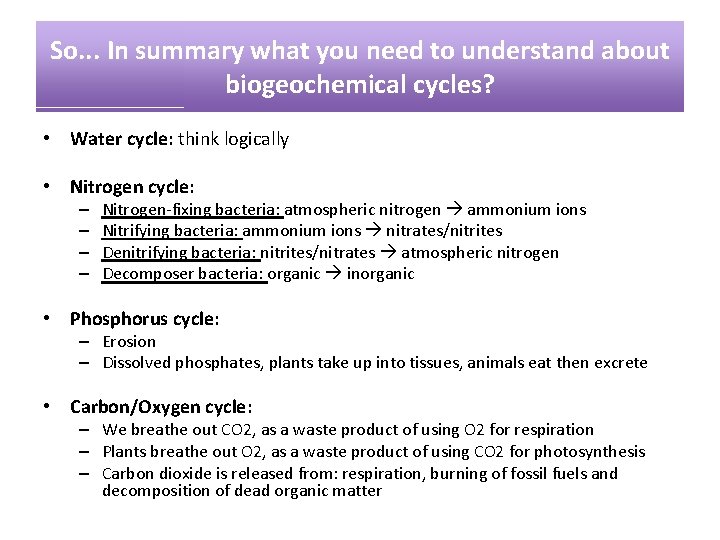
So. . . In summary what you need to understand about biogeochemical cycles? • Water cycle: think logically • Nitrogen cycle: – – Nitrogen-fixing bacteria: atmospheric nitrogen ammonium ions Nitrifying bacteria: ammonium ions nitrates/nitrites Denitrifying bacteria: nitrites/nitrates atmospheric nitrogen Decomposer bacteria: organic inorganic • Phosphorus cycle: – Erosion – Dissolved phosphates, plants take up into tissues, animals eat then excrete • Carbon/Oxygen cycle: – We breathe out CO 2, as a waste product of using O 2 for respiration – Plants breathe out O 2, as a waste product of using CO 2 for photosynthesis – Carbon dioxide is released from: respiration, burning of fossil fuels and decomposition of dead organic matter

- Slides: 21