
ECOSYSTEMS Ecosystem consists of all populations within a
- Slides: 14
ECOSYSTEMS Ecosystem = consists of all populations within a community together with their physical environment A network involving interactions of living and non living elements in a manner that sustains life
“To keep every cog and wheel is the first precaution to intelligent tinkering” ~ Aldo Leopold
HOW DOES AN ECOSYSTEM SUSTAIN LIFE? Matter and Energy Matter Essential elements that make up the bodies of living things − Carbon, hydrogen, phosphorus, calcium, potassium, iron, sodium, etc. Occur in soil, water, or both Green plants absorb and break down elements Energy Through photosynthesis and minerals, plants make sugars Green plants are the crucial link between the non-living world and all forms of animal life!!
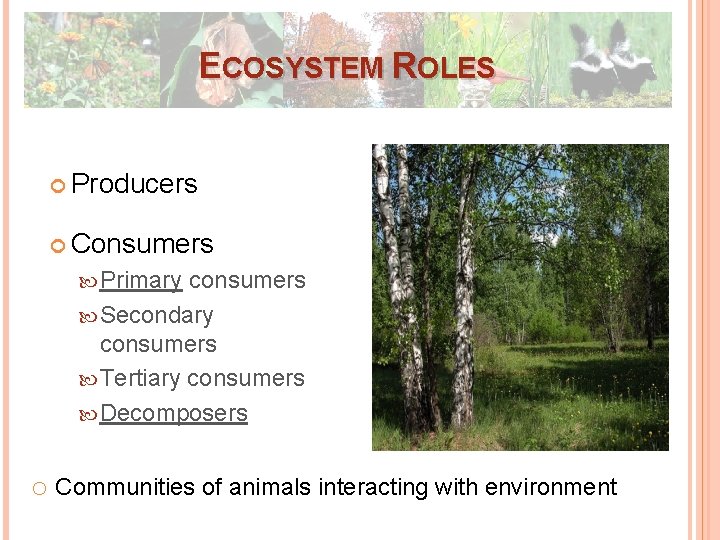
ECOSYSTEM ROLES Producers Consumers Primary consumers Secondary consumers Tertiary consumers Decomposers o Communities of animals interacting with environment
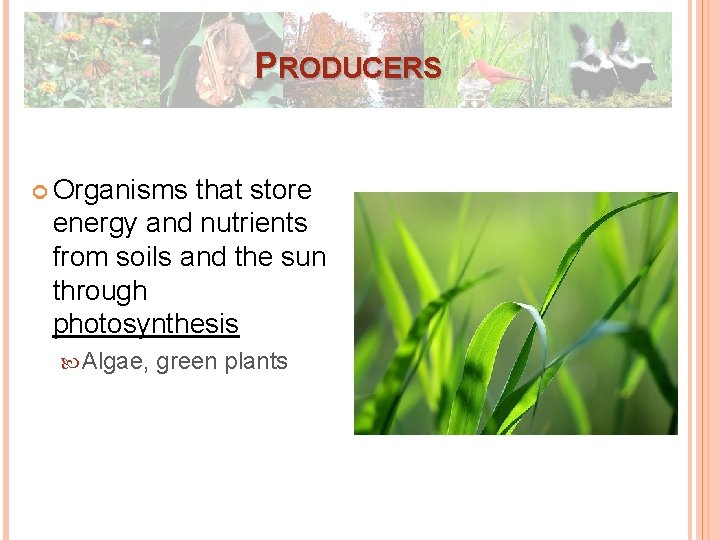
PRODUCERS Organisms that store energy and nutrients from soils and the sun through photosynthesis Algae, green plants
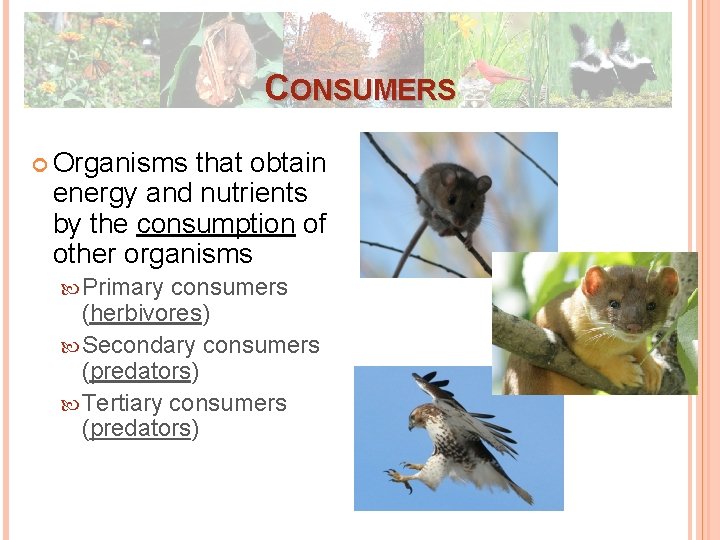
CONSUMERS Organisms that obtain energy and nutrients by the consumption of other organisms Primary consumers (herbivores) Secondary consumers (predators) Tertiary consumers (predators)
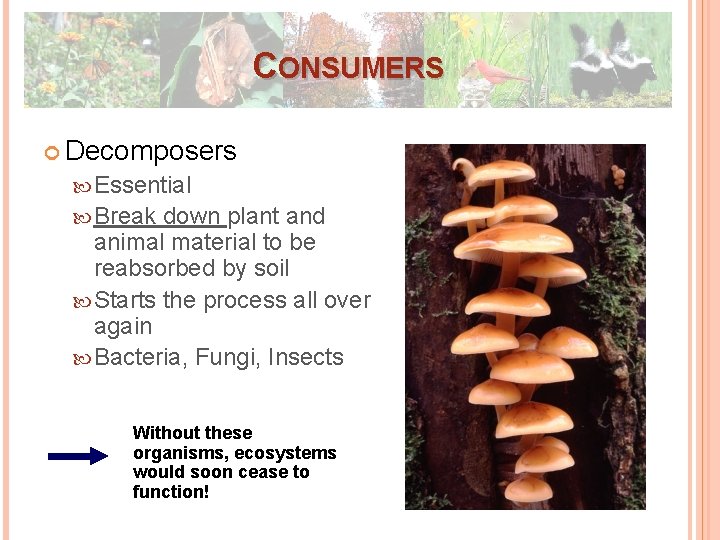
CONSUMERS Decomposers Essential Break down plant and animal material to be reabsorbed by soil Starts the process all over again Bacteria, Fungi, Insects Without these organisms, ecosystems would soon cease to function!
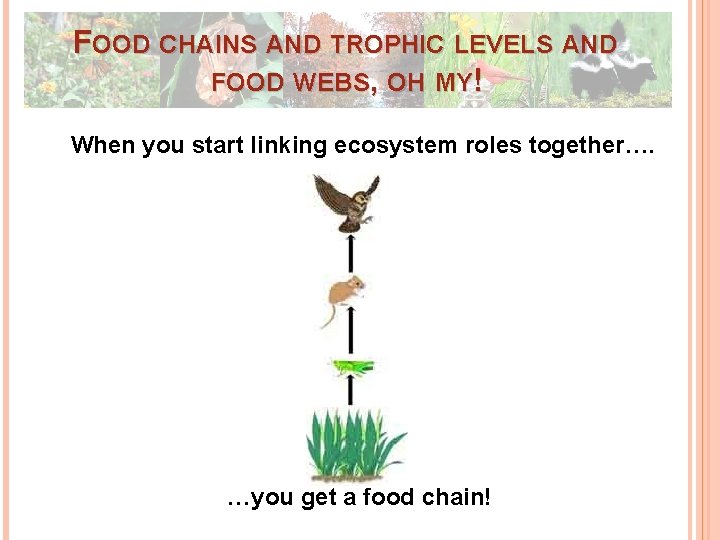
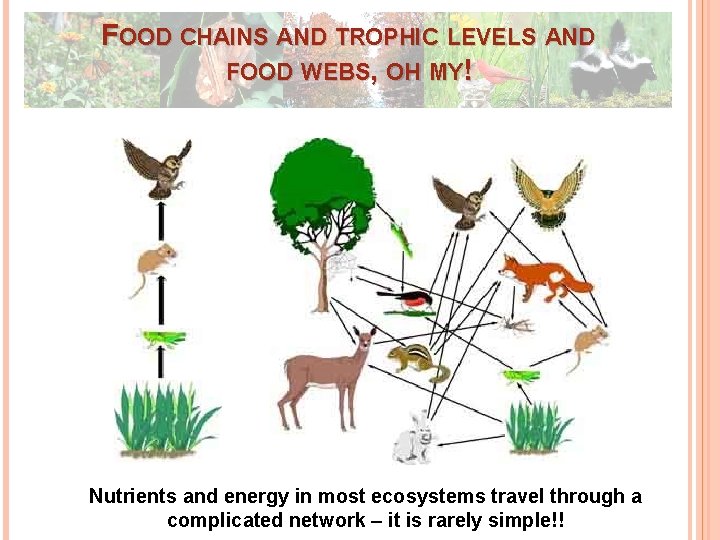
FOOD CHAINS AND TROPHIC LEVELS AND FOOD WEBS, OH MY! When you start linking ecosystem roles together…. …you get a food chain!
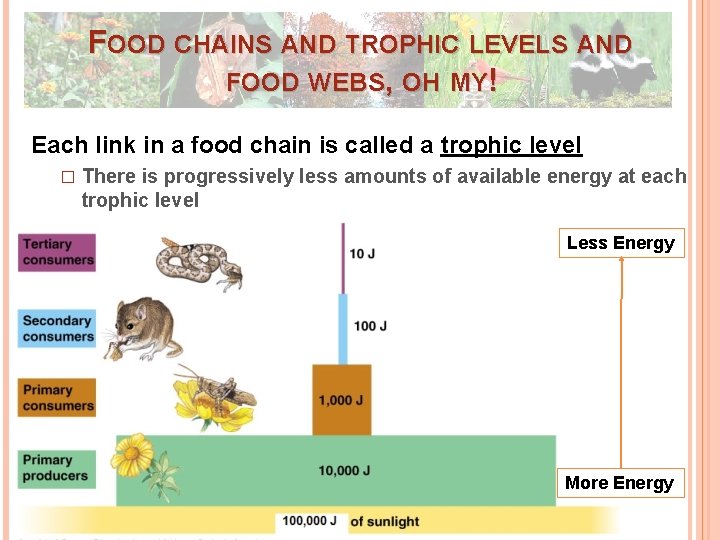
FOOD CHAINS AND TROPHIC LEVELS AND FOOD WEBS, OH MY! Each link in a food chain is called a trophic level � There is progressively less amounts of available energy at each trophic level Less Energy More Energy
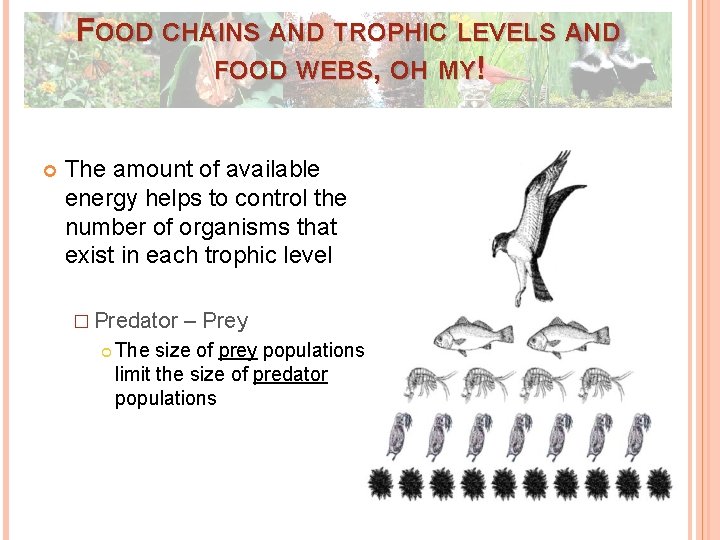
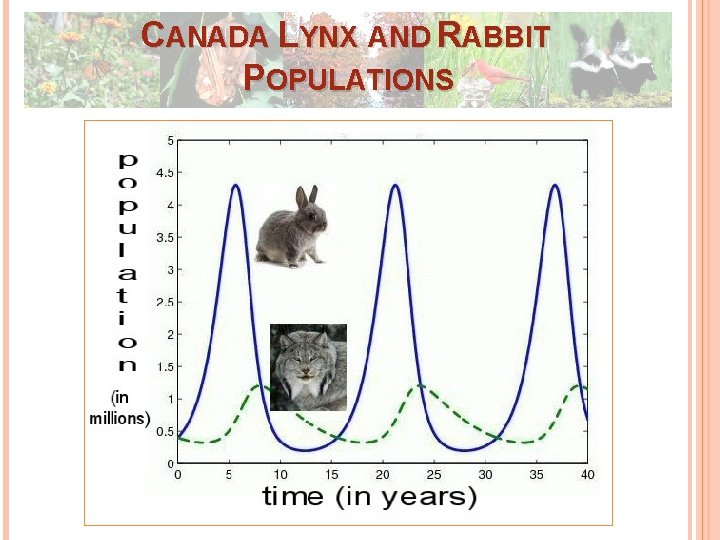
FOOD CHAINS AND TROPHIC LEVELS AND FOOD WEBS, OH MY! The amount of available energy helps to control the number of organisms that exist in each trophic level � Predator – Prey The size of prey populations limit the size of predator populations
CANADA LYNX AND RABBIT POPULATIONS
FOOD CHAINS AND TROPHIC LEVELS AND FOOD WEBS, OH MY! Nutrients and energy in most ecosystems travel through a complicated network – it is rarely simple!!
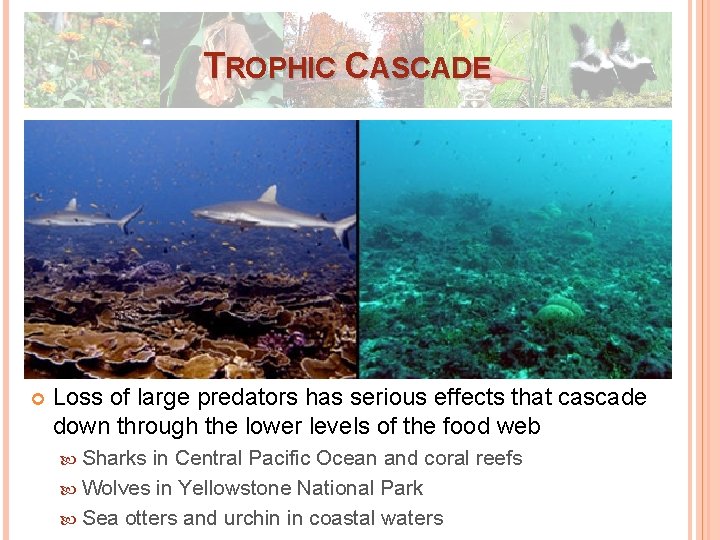
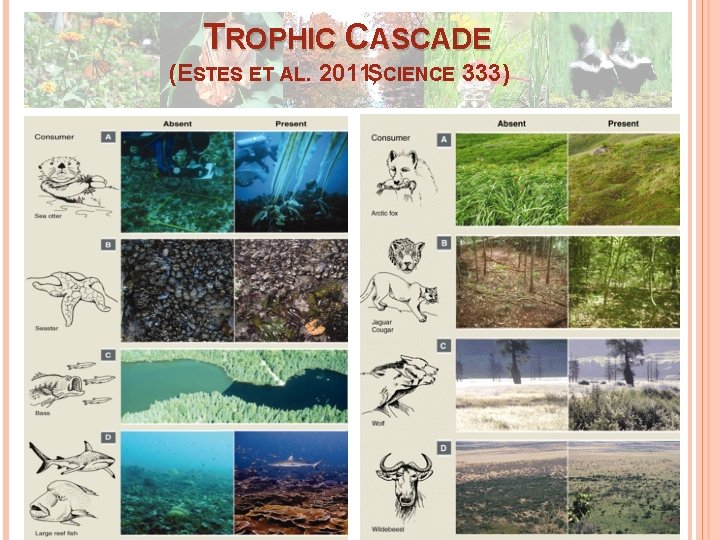
TROPHIC CASCADE Loss of large predators has serious effects that cascade down through the lower levels of the food web Sharks in Central Pacific Ocean and coral reefs Wolves in Yellowstone National Park Sea otters and urchin in coastal waters
TROPHIC CASCADE (ESTES ET AL. 2011, SCIENCE 333)